لماذا صيانة التكييف في Dubai أمر لا يمكن التفاوض عليه
إذا كنت تعيش في Dubai، فإن نظام التكييف لديك ليس رفاهية بل هو شريان حياة. من مايو حتى سبتمبر، تتجاوز درجات الحرارة عادة 40 درجة مئوية، والرطوبة التي تأتي من الخليج تضيف عبئًا إضافيًا على معدات التبريد في منزلك. سواء كنت تسكن في شقة عالية الارتفاع في Dubai Marina أو في فيلا في Arabian Ranches، فإن وحدات التكييف لديك تعمل بجهد ولفترات أطول مقارنة بمعظم المدن الأخرى في العالم.
هذا الطلب المستمر يترك أثره. تعمل الضواغط لأشهر دون توقف. تتجمع الأتربة والرمال على الملفات. تتسرب الجسيمات الدقيقة التي يحملها نسيم الصحراء إلى الفلاتر فتسدها. بدون صيانة منتظمة، تتراكم هذه المشاكل الصغيرة لتتحول إلى أعطال كبيرة، وأي عطل كبير في أغسطس هو آخر ما يرغب أي مقيم في Dubai بمواجهته.
في European Technical، نرى عواقب إهمال الصيانة كل أسبوع. يتصل بنا مستأجر في JVC لأن وحدته توقفت عن التبريد فجأة. تبلغ عائلة في Downtown Dubai عن رائحة غريبة عند تشغيل التكييف. يتلقى مالك عقار في Business Bay فاتورة كهرباء من DEWA تفوق المتوقع مرتين. في كل حالة تقريبًا، يعود السبب الجذري إلى تأخير أو إهمال أو عدم جدولة الصيانة.
الصيانة المنتظمة للتكييف تمنع هذه المشاكل قبل أن تبدأ. تحافظ على كفاءة النظام، وتطيل عمر المعدات، وتحسن جودة الهواء الداخلي، وتوفر المال على فواتير الطاقة وتكاليف الإصلاح الطارئ. السؤال ليس هل تحتاج إلى صيانة تكييف في، بل كم مرة يجب أن تحجزها وما هو السعر المناسب. كم مرة يجب أن تخدم تكييفك في Dubaiالقاعدة العامة في
بسيطة. يجب صيانة وحدات التكييف مرتين في السنة على الأقل. ومع ذلك، خلال فترات الاستخدام المكثف، والتي تعني في Dubai
حوالي ستة أشهر في السنة، يُنصح بإجراء فحوصات ربع سنوية. Dubai إليك كيف يتم ذلك عمليًا. Dubai بالنسبة للشقق في مناطق مثل
,
, أو Dubai MarinaLiving Circle، حيث تخدم وحدة سبليت واحدة أو نظام مجاري صغير مساحة غرفة أو غرفتين، قد تكفي خدمتان مهنيتان في السنة إذا كانت الوحدة جديدة وتستخدم بشكل خفيف. لكن إذا كنت تستخدم التكييف باستمرار من أبريل إلى أكتوبر، كما يفعل معظم السكان، فإن الفحص الربع سنوي هو الخيار الأكثر أمانًا وفعالية من حيث التكلفة. Business Bayبالنسبة للفيلات في Jumeirah , The Springs، أو
, حيث تخدم عدة وحدات سبليت أو نظام مجاري كبير مساحة أكبر، فإن الصيانة الربع سنوية خلال أشهر الصيف ضرورية. المنازل الأكبر تحتوي على وحدات أكثر، مجاري أكثر، ونقاط فشل محتملة أكثر. وحدة مهملة واحدة يمكن أن ترفع فاتورة DEWA بشكل كبير أو تتعطل تمامًا خلال موجة حر. Arabian Ranchesأفضل وقت لحجز خدمة كاملة هو قبل بداية الصيف. جدولة الصيانة الوقائية في مارس أو أبريل تعني أن نظامك نظيف، مضبوط، وجاهز للأشهر القادمة. خدمة كاملة ثانية في الخريف، حوالي أكتوبر أو نوفمبر، تساعد النظام على التعافي من عبء الصيف الثقيل وتجهزه للأشهر الباردة التي يقل فيها الاستخدام. Palm Jumeirahبين هاتين الخدمتين الكاملتين، تركز الفحوصات الربع سنوية الخفيفة على الأمور التي تتدهور بسرعة: حالة الفلاتر، نظافة الملفات، ضغط المبرد، والصرف. هذه الفحوصات أسرع وأقل تكلفة من الخدمة الكاملة، لكنها تكتشف المشاكل التي تسبب معظم الأعطال.
إذا كنت مالك عقار أو مدير ممتلكات يشرف على عدة وحدات، فإن عقد الصيانة السنوي هو الطريقة الأكثر عملية للبقاء على الجدول. يضمن صيانة كل عقار في الأوقات المناسبة، مع حفظ السجلات لاتفاقيات المستأجرين والامتثال للضمان.
كم تكلفة صيانة التكييف في
تختلف تكلفة صيانة التكييف فيحسب نوع الخدمة، حجم وتعقيد النظام، وحالة المعدات. فيما يلي تفصيل عملي لما يمكن أن يتوقعه سكان من تكاليف.
زيارة خدمة تكييف قياسية لشقة بغرفة نوم واحدة عادة ما تتراوح بين Dubai
و Dubai . تشمل هذه الخدمة فحصًا أساسيًا وصيانة لوحدة أو وحدتين سبليت، بما في ذلك تفتيش الوحدات الداخلية والخارجية، تنظيف الفلاتر، تنظيف الملفات، وتفريغ الصرف. Dubai التنظيف الموسمي، الذي يكون أكثر شمولاً ويشمل فحص مستوى المبرد، فحص التوصيلات الكهربائية، ومعايرة الترموستات، يكلف عادة بين
و AED 250 حسب عدد الوحدات ونوع النظام. AED 500تنظيف الفلاتر والإصلاحات البسيطة عادة ما تتراوح بين
و AED 350 . هذه الخدمة هي الأكثر شيوعًا والأقل تكلفة، كما أنها تقدم أكبر عائد على الاستثمار من حيث كفاءة الطاقة وأداء التبريد. AED 700 تنظيف وتعقيم المجاري، المعروف أحيانًا بالتنظيف العميق، يبدأ من حوالي
وقد يصل إلى عدة آلاف من الدراهم لفيلات كاملة ذات مجاري واسعة. هذه الخدمة تزيل العفن، الغبار، والبكتيريا من نظام المجاري، ويوصى بها كل AED 50 إلى AED 300شهرًا، أو بشكل أسرع إذا لاحظت روائح، انخفاض تدفق الهواء، أو أعراض حساسية.
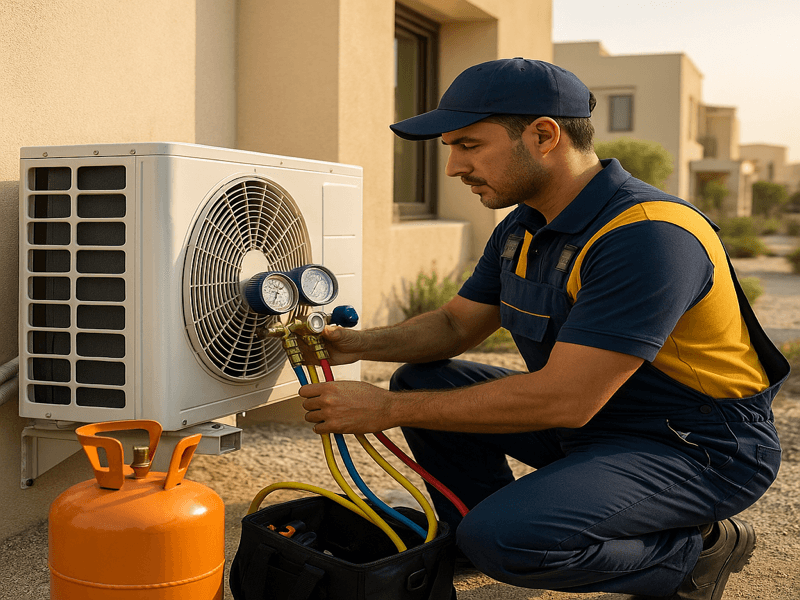
إعادة تعبئة المبرد عادة ما تكون تكلفة إضافية وليست مشمولة في أسعار الصيانة القياسية. حسب نوع المبرد والكمية المطلوبة، تتراوح عادة بين AED 550 و 12 . 18 الأنظمة الأكبر والأكثر تعقيدًا تكلف أكثر. الأماكن التجارية التي تحتوي على عدة ضواغط، مجاري واسعة، وتوصيلات كهربائية متقدمة تتطلب عمالة أكثر خبرة ووقتًا أطول. وينطبق نفس الأمر على الفيلات الكبيرة ذات أنظمة المجاري التي تخدم عدة غرف.
عامل مهم يؤثر على التكلفة هو حالة نظامك عند وصول الفني. كثير من الناس ينتظرون حتى يتوقف التكييف تمامًا قبل طلب الصيانة. عند هذه النقطة، تتحول المشاكل الصغيرة التي كانت ستكلف بضع مئات من الدراهم إلى أعطال كبيرة تتطلب إصلاحات مكلفة أو حتى استبدال الوحدة بالكامل. الصيانة المنتظمة تحافظ على التكاليف متوقعة وقابلة للإدارة. AED 200 إذا تعطل نظامك، فإن فريق إصلاح التكييف لدينا متاح لتشخيص المشكلة وإصلاحها بسرعة. لكن الحقيقة الصادقة هي أن معظم الإصلاحات الطارئة كان يمكن تجنبها بالصيانة في الوقت المناسب. AED 600فلاتر التكييف: التنظيف، الاستبدال، ومعرفة نوعها
أحد أكثر الأسئلة شيوعًا التي نتلقاها من سكان
هو عن الفلاتر. كم مرة يجب تغييرها؟ وكيف تعرف إذا كان تكييفك يحتوي على فلاتر؟
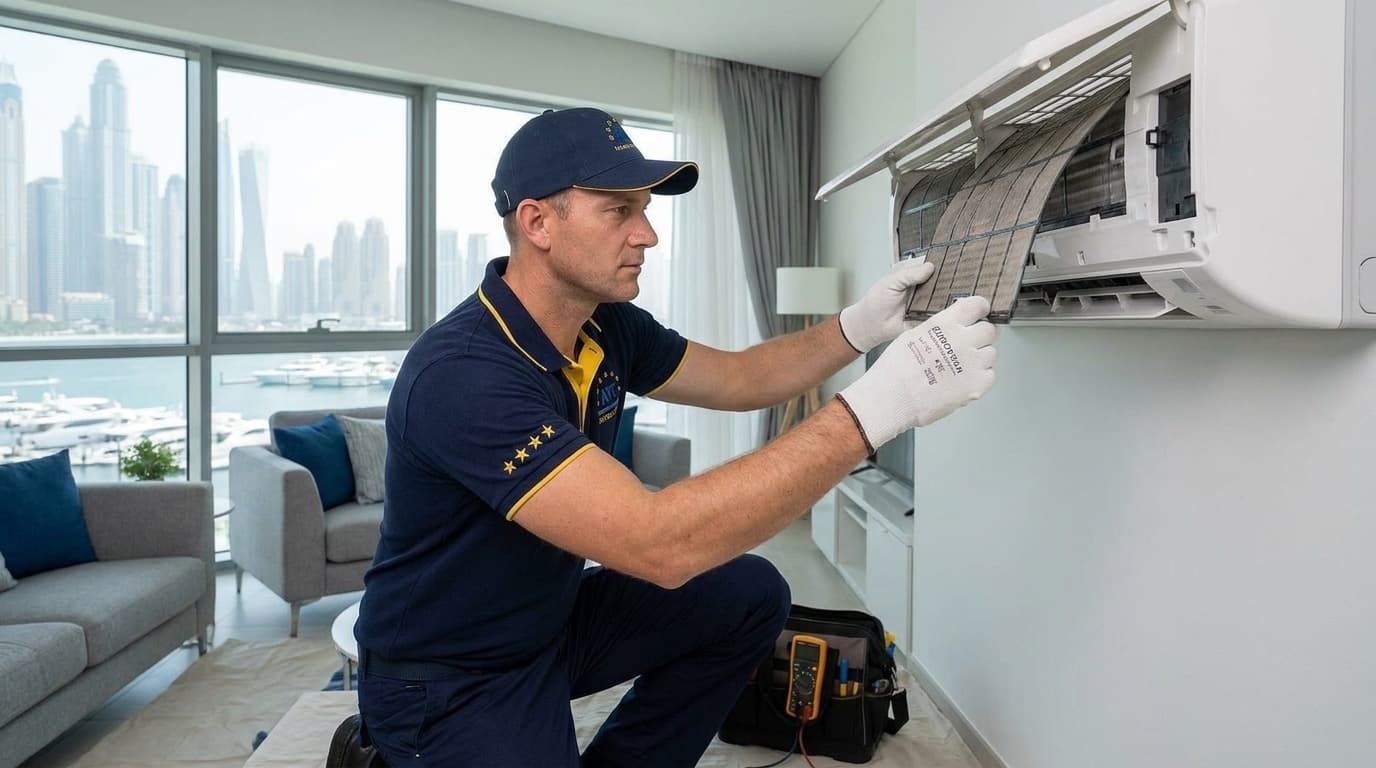
تقريبًا جميع أنظمة التكييف تحتوي على نوع من الفلاتر. هذه الفلاتر ضرورية لإزالة الجسيمات الصغيرة من الهواء، مما يحافظ على سلامته ونظافته لك ولعائلتك. في، حيث الغبار والرمال عوامل دائمة، تعمل الفلاتر بجهد وتتسخ بسرعة. معظم الفلاتر لا تحتاج إلى استبدال متكرر، لكنها تستفيد من التنظيف المنتظم. الفلتر المسدود يحد من تدفق الهواء، يجبر الضاغط على العمل بجهد أكبر، يزيد استهلاك الطاقة، ويقلل من كفاءة التبريد. في أسوأ الحالات، يمكن أن يسبب الفلتر المسدود بشدة تجمد الوحدة أو ارتفاع حرارة الضاغط.
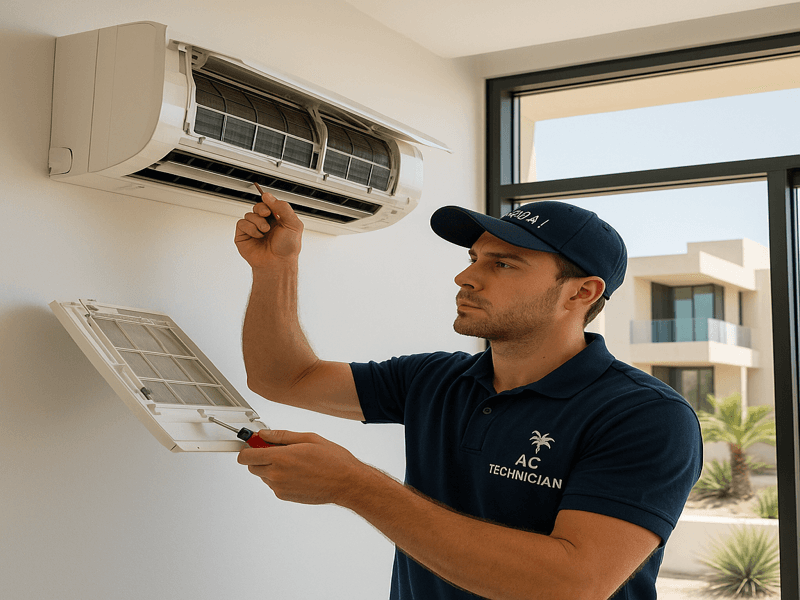
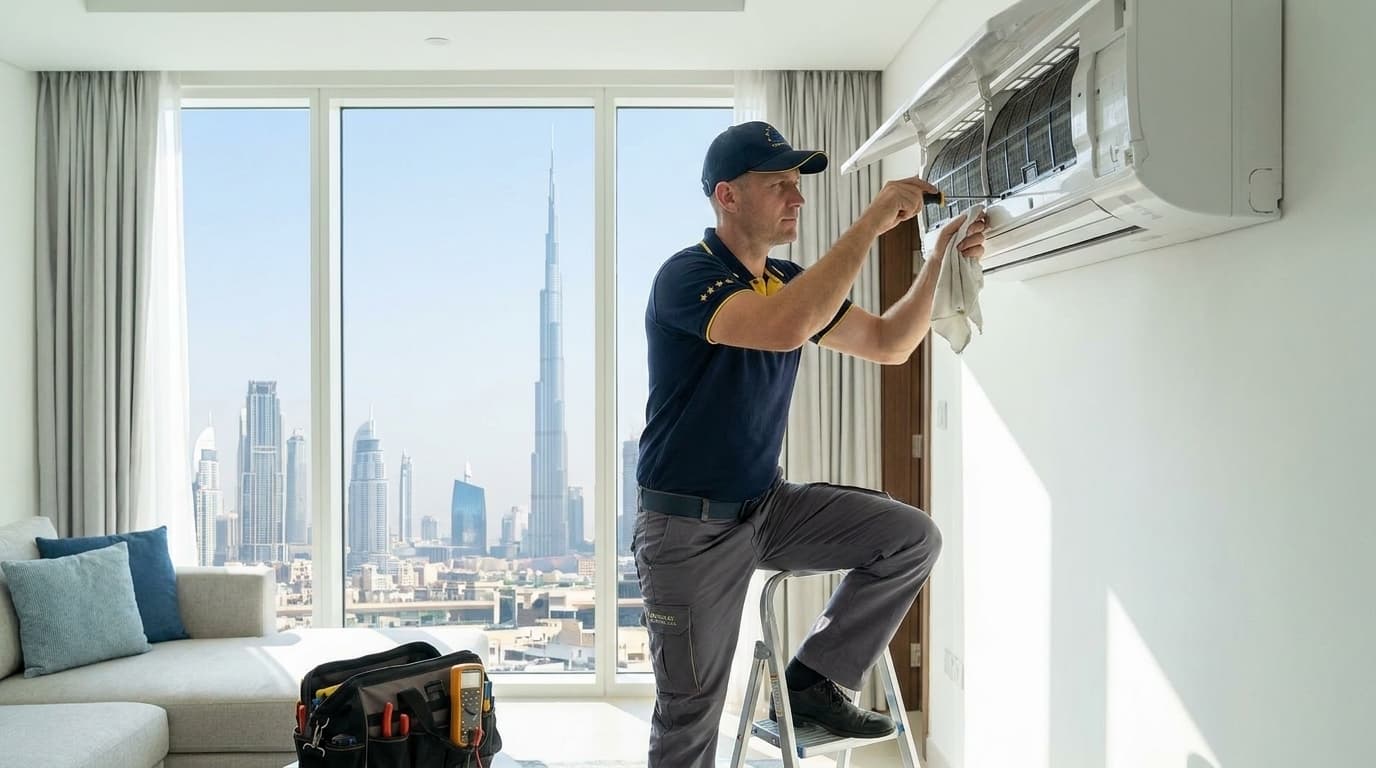
تنظيف الفلاتر جزء من معظم زيارات صيانة التكييف المنتظمة. سيقوم الفني بإزالة الفلاتر، تنظيفها جيدًا، وإعادة تركيبها. بالنسبة لوحدات السبلت السكنية القياسية، هذه مهمة سريعة. بالنسبة لأنظمة المجاري، العملية أكثر تعقيدًا بسبب وجود نقاط فلترة متعددة في شبكة المجاري.
إذا أردت فحص فلاترك بنفسك بين الخدمات، يمكنك عادةً العثور عليها خلف شبكة عودة الهواء في الوحدة الداخلية. افتح الشبكة، اسحب الفلتر، وامسكه أمام الضوء. إذا لم يمر الضوء من خلاله، فهو بحاجة إلى تنظيف. معظم الفلاتر السكنية يمكن غسلها بصابون خفيف وماء، ثم تجفيفها تمامًا قبل إعادة تركيبها. Dubai في المنازل التي يعاني سكانها من حساسية، الربو، أو حساسية من الغبار، يجعل الاهتمام المتكرر بالفلاتر فرقًا ملحوظًا. يختار بعض سكان
ترقية الفلاتر إلى نوعية أعلى تلتقط جسيمات أدق. يمكن لفنيك أن ينصحك إذا كان نظامك يدعم الفلاتر المحسنة. Dubaiما يمكنك فعله بين خدمات الصيانة المهنية
الصيانة المهنية ضرورية، لكن هناك عدة أشياء يمكنك القيام بها بين الزيارات للحفاظ على سير النظام بسلاسة وتقليل احتمال حدوث عطل.
اضبط الترموستات على درجة حرارة مثالية تبلغ
درجة مئوية. هذا هو المعدل المناسب لمنازل
. يحافظ على بيئة داخلية مريحة دون تحميل الضاغط فوق طاقته. كل درجة أقل تزيد استهلاك الطاقة بشكل ملحوظ، ومع الوقت يتراكم ذلك في فاتورة DEWA. Dubai نظف فلاترك بانتظام. حتى لو كان لديك عقد صيانة، فإن شطف الفلاتر بسرعة كل بضعة أسابيع خلال الصيف يساعد في الحفاظ على تدفق الهواء والكفاءة. هذا مهم بشكل خاص في الفيلات والشقق القريبة من المناطق المفتوحة أو مواقع البناء حيث تكون مستويات الغبار أعلى.
حافظ على وحدة التكييف الخارجية خالية من العوائق. وحدة المكثف على شرفتك أو السطح تحتاج إلى تدفق هواء غير مقيد. تأكد من عدم وجود شيء يحجبها. لا تضع أشياء فوقها أو تسند عليها. إذا كانت الوحدة على شرفة، أغلق أبواب ونوافذ الشرفة أثناء تشغيل التكييف لمنع دخول الهواء الدافئ والرطب إلى الداخل.
لا تتجاهل الأصوات أو الروائح غير المعتادة. إذا بدأ التكييف يصدر صوت طقطقة، طنين، أو طحن، أو لاحظت رائحة عفنة عند تشغيله، اتصل للصيانة. هذه علامات تحذيرية مبكرة. التعامل معها بسرعة يكلف عادة أقل من انتظار حدوث عطل كامل.
تجنب الاستخدام المفرط عندما يكون ذلك ممكنًا. إذا كنت ستغادر لعطلة نهاية الأسبوع أو تسافر لبضعة أيام، اضبط الترموستات على 24 درجة بدلاً من إيقاف الوحدة تمامًا. هذا يحافظ على درجة حرارة أساسية ويمنع النظام من العمل بجهد مفرط لتبريد شقة ساخنة عند عودتك. Dubai جدولة الصيانة الوقائية قبل الصيف. هذه هي الخطوة الأكثر فعالية التي يمكنك اتخاذها. صيانة النظام في مارس أو أبريل تعني دخوله موسم الذروة في حالة مثالية. تتجنب الازدحام، وتتجنب رسوم الطوارئ المرتفعة، وتقلل من خطر التعطل خلال أسخن أسابيع السنة.
للحصول على نظرة شاملة على الخدمات التي نقدمها في جميع أنحاء
، يمكنك أيضًا استكشاف صفحة خدمات صيانة المنازل العامة لدينا، التي تغطي السباكة، الكهرباء، الدهان، التنظيف، ومكافحة الآفات إلى جانب أعمال التكييف.
الأسئلة المتكررة
كم مرة يجب أن أخدم تكييفي في 27 ؟
يجب صيانة وحدات التكييف في
مرتين في السنة كحد أدنى. خلال فترات الاستخدام المكثف، خاصة في أشهر الصيف، يُنصح بإجراء فحوصات ربع سنوية. هذا الجدول يحافظ على كفاءة النظام ويقلل من خطر الأعطال المفاجئة خلال ذروة الطلب. Dubaiهل تشمل تكلفة صيانة التكييف إعادة تعبئة المبرد؟لا، عادة ما تكون إعادة تعبئة المبرد تكلفة إضافية. حسب نوع المبرد والكمية المطلوبة، تتراوح التكلفة عادة بين و
. سيقوم الفني بفحص مستويات المبرد أثناء الخدمة وينصحك إذا كانت هناك حاجة لإعادة تعبئة.
ما هو أفضل وقت لحجز صيانة التكييف في Dubai؟
أفضل وقت هو قبل الصيف، ويفضل في مارس أو أبريل. هذا يضمن أن يكون نظامك نظيفًا، مضبوطًا، وجاهزًا لحمل التبريد الثقيل القادم. خدمة ثانية في الخريف، حوالي أكتوبر، تساعد النظام على التعافي من ضغط الصيف. Dubai كم تكلفة خدمة تكييف قياسية لشقة في
؟
تكلفة زيارة الخدمة القياسية لشقة بغرفة نوم واحدة عادة ما تكون بين AED 200 و AED 600. تشمل هذه الخدمة فحص وتنظيف وحدة أو وحدتين سبليت، بما في ذلك تنظيف الفلاتر، تنظيف الملفات، وتفريغ الصرف.
كيف أعرف إذا كان تكييفي يحتوي على فلاتر؟ Dubaiتقريبًا جميع أنظمة التكييف تحتوي على فلاتر. في وحدة السبلت القياسية، يقع الفلتر خلف شبكة عودة الهواء في الوحدة الداخلية. يمكنك فتح الشبكة، سحب الفلتر، وفحصه. إذا لم يمر الضوء من خلال الفلتر، فهو بحاجة إلى تنظيف.
هل يمكن أن تزيد الفلاتر المتسخة فاتورة DEWA؟
نعم. الفلاتر المتسخة تحد من تدفق الهواء وتجبر الضاغط على العمل بجهد أكبر، مما يزيد من استهلاك الطاقة. تنظيف الفلاتر بانتظام هو أحد أبسط وأكفأ الطرق للحفاظ على انخفاض تكاليف التبريد خلال الصيف الطويل في Dubai .
AED 250 AED 500
Dubai