Plumbing Work in Dubai: What 2026 Holds for Homeowners
Dubai's plumbing landscape is shifting. The city's rapid expansion, from the high-rise corridors of Marina and Business Bay to the villa communities of Arabian Ranches and JVC, has placed growing demands on residential water systems. By 2026, plumbing work in Dubai is no longer just about fixing a leaking tap or unblocking a kitchen sink. It is about meeting higher standards, adopting smarter diagnostic tools, and keeping homes functional through one of the most demanding climates on the planet.
For residents and property owners, understanding how plumbing works in this city is increasingly important. The combination of intense summer heat, persistent humidity, hard water, and ageing infrastructure in some older buildings creates a unique set of challenges. Whether you live in a Downtown apartment or a villa in Arabian Ranches, the plumbing behind your walls and under your floors is something you will eventually need to understand, maintain, and repair.
This guide covers the standards shaping plumbing work in Dubai, the most common problems residents face, practical maintenance advice, and what a career in the trade looks like heading into 2026.
Dubai Plumbing Standards and Regulatory Context
Plumbing in Dubai does not exist in a free-for-all. Work is governed by building codes, municipal oversight, and utility provider requirements. The Dubai Municipality sets the technical framework for plumbing installations, covering pipe materials, drainage design, backflow prevention, and water heater safety. DEWA, the city's water and electricity provider, regulates the supply side, including meter connections and the standards for water consumption in residential properties.
For homeowners, this matters because unlicensed or non-compliant plumbing work can create serious problems. A poorly installed water heater, for example, can fail safety inspections and pose a risk in a sealed utility room during peak summer. Incorrectly routed drainage in a villa extension can lead to recurring blockages and even contamination of the mains supply if backflow prevention is missing.
In 2026, the trend is towards stricter enforcement and better documentation. Property owners undertaking renovations in areas like JVC or Business Bay are increasingly required to ensure that plumbing alterations meet current codes, not the standards that were in place when the building was first constructed. This is particularly relevant for older apartments in Marina and Downtown, where original pipework may be approaching the end of its serviceable life.
Using a licensed provider such as European Technical ensures that work is carried out to recognised standards. Our plumbing services cover everything from emergency repairs to planned upgrades, all done in line with Dubai Municipality and DEWA requirements.
Common Plumbing Problems in Dubai Homes and How to Fix Them
Dubai's climate and water quality produce a predictable set of plumbing issues. Being aware of them helps you act before a minor inconvenience becomes a costly repair.
Blocked Drains and Clogged Pipes
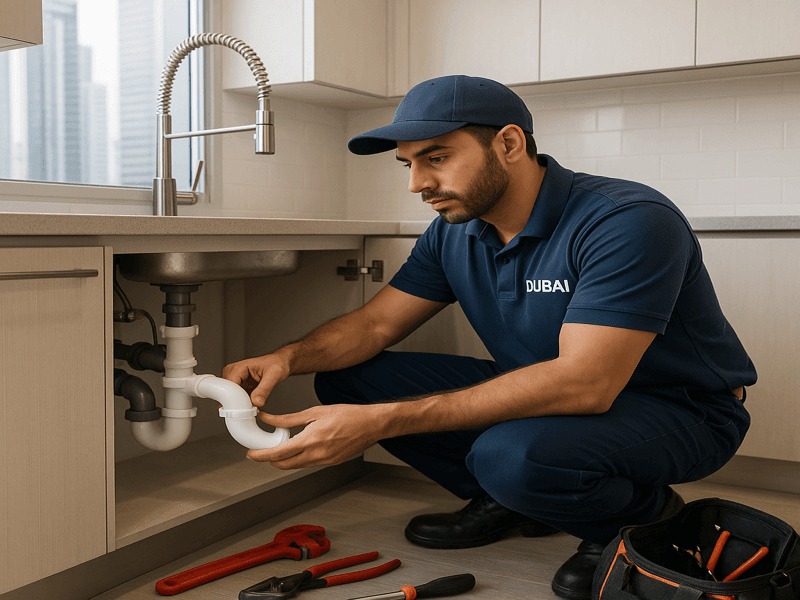
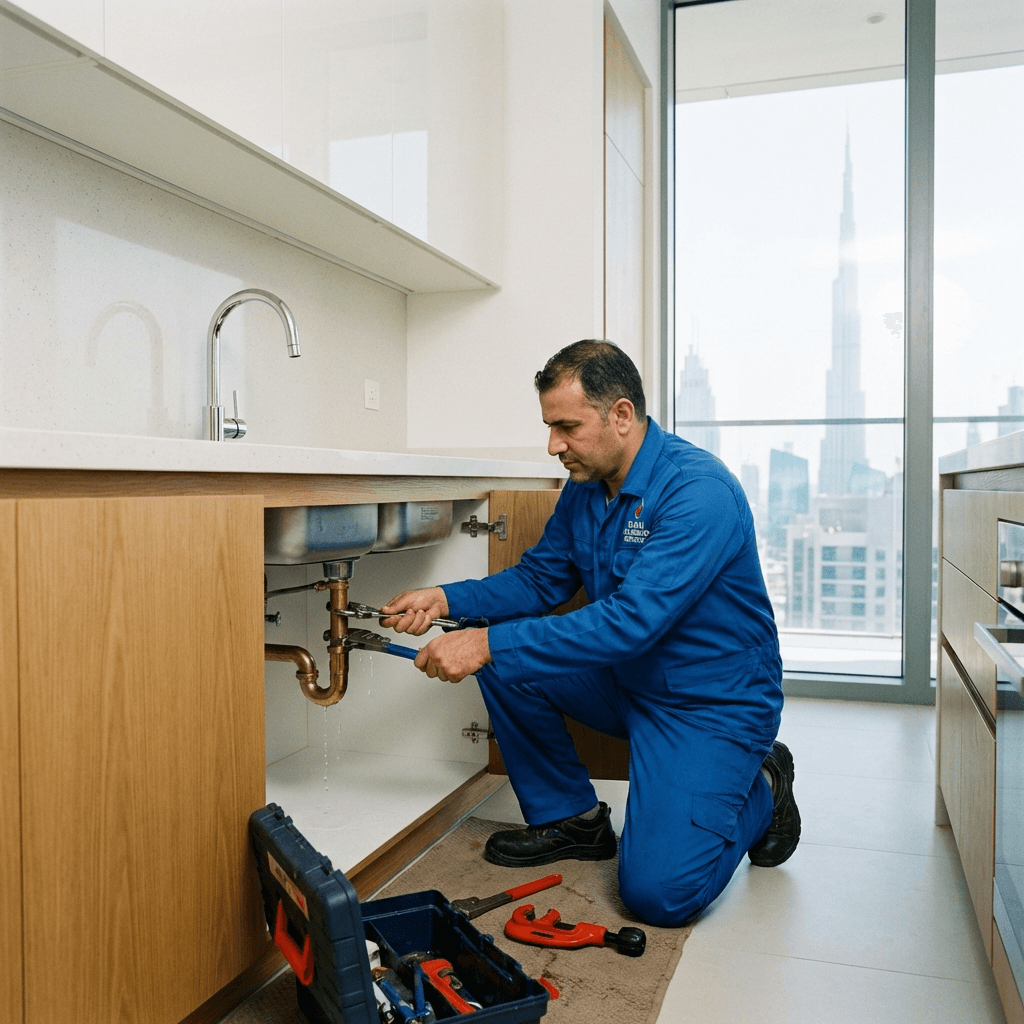
Blocked drains are among the most frequent plumbing complaints in Dubai. Kitchen sinks in apartments across Downtown and Business Bay often clog due to grease and food debris building up in the U-bend over time. Bathroom floor drains in Marina flats are notorious for collecting hair and soap scum, particularly in shared drainage stacks where problems on one floor can affect another.
For minor blockages, a plunger is often the first and simplest tool to try. It creates pressure that can dislodge soft clogs near the surface. Chemical drain cleaners are also available and can be effective for organic build-up, but they should be used with care. Repeated use can corrode older pipes, and the fumes are unpleasant in a sealed bathroom.
A natural alternative uses household items. Pouring baking soda followed by vinegar into the drain creates a fizzing reaction that can break down light clogs without harsh chemicals. Let it sit for fifteen minutes, then flush with hot water. This method is gentler on your pipes and safer for homes with children or pets.
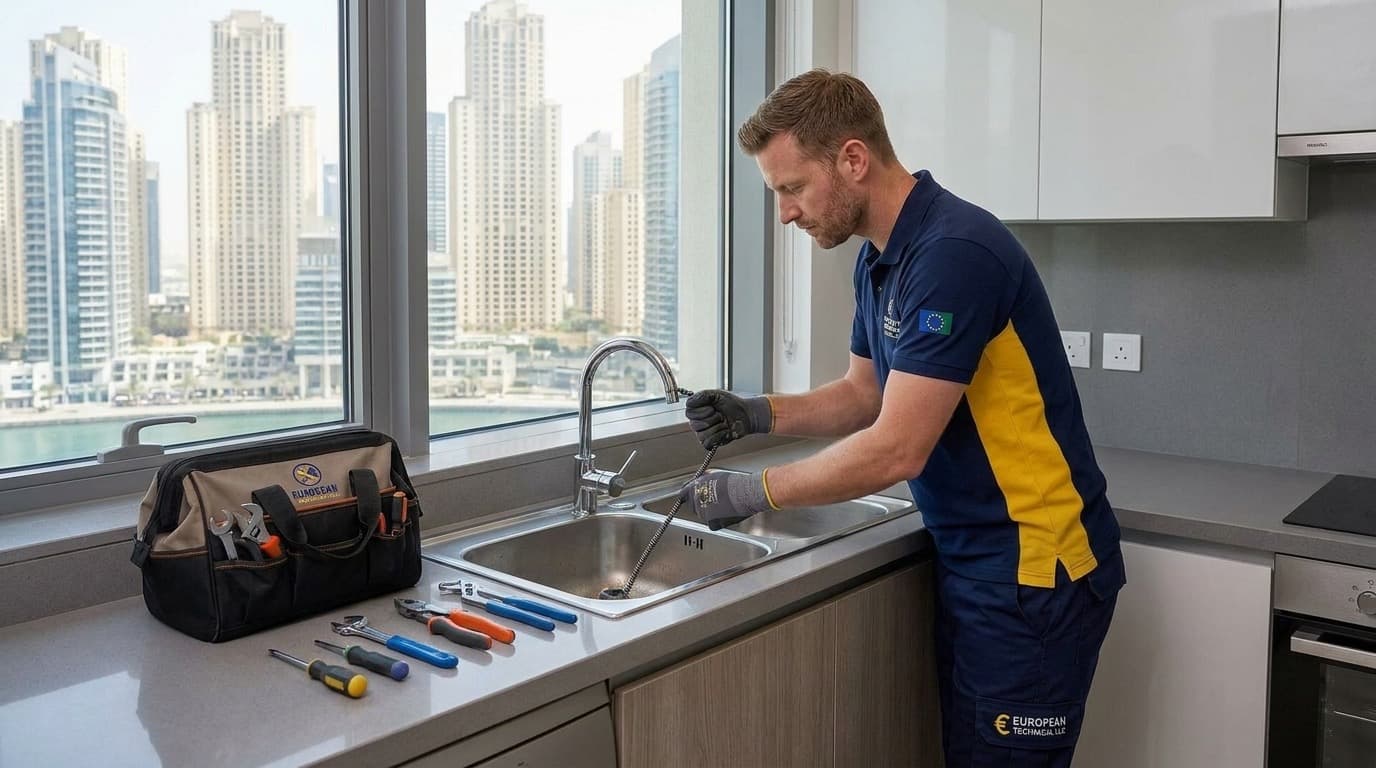
When a plunger or chemical approach does not work, the blockage may be deeper in the system. A drain snake, also called a plumbing auger, uses a flexible coil to reach further into the pipe and physically break apart or hook out the obstruction. Snaking and rodding are essential techniques for effective clogged bathroom drain repair, as they can reach soft clogs like hair and grease that are located well beyond the drain opening.
For severe or recurring blockages, professional intervention is necessary. Every European Technical service van carries high-pressure jetting equipment and pipe inspection cameras. Hydro-jetting forces water through the pipe at high pressure, clearing stubborn build-up and even tree roots in villa underground drainage. The camera lets the technician see exactly what is happening inside the pipe, so the diagnosis is accurate and the fix is targeted rather than guessed at.
Drain cleaning in Dubai starts at AED 150 for a standard service. We provide the full cost before starting work, so there are no surprises. For a slow-draining kitchen sink or a completely blocked main sewer line, the approach scales accordingly.
Water Leaks and Hidden Pipe Damage
Water leaks are a significant concern in Dubai villas, particularly in properties with underground pipework or extensive irrigation systems. A small leak beneath a concrete floor can waste water for weeks before any visible sign appears, by which point damage to surrounding structures may already be underway.
Modern leak detection in Dubai uses advanced technology for precise, non-invasive identification. Thermal imaging cameras detect temperature differences in surfaces caused by water escaping from pipes. Tracer gas is injected into the pipe system and then detected above ground at the point where the gas escapes through the leak. Both methods allow technicians to locate a leak without breaking open walls or floors on a trial-and-error basis.
Some providers offer fixed-cost, no-find-no-fee guarantees for leak detection. This means if the leak cannot be located, you do not pay for the detection service. This structure gives homeowners confidence that the diagnostic process is thorough and not padded out with unnecessary time charges.
Water Heater Failures
Water heaters in Dubai work hard. The incoming mains temperature in summer is already warm, and demand for hot water in winter places additional load on the system. Common problems include element failure in electric heaters, thermostat faults, and sediment build-up in the tank from hard water. A failing heater may produce lukewarm water, make unusual noises, or trip the electrical supply.
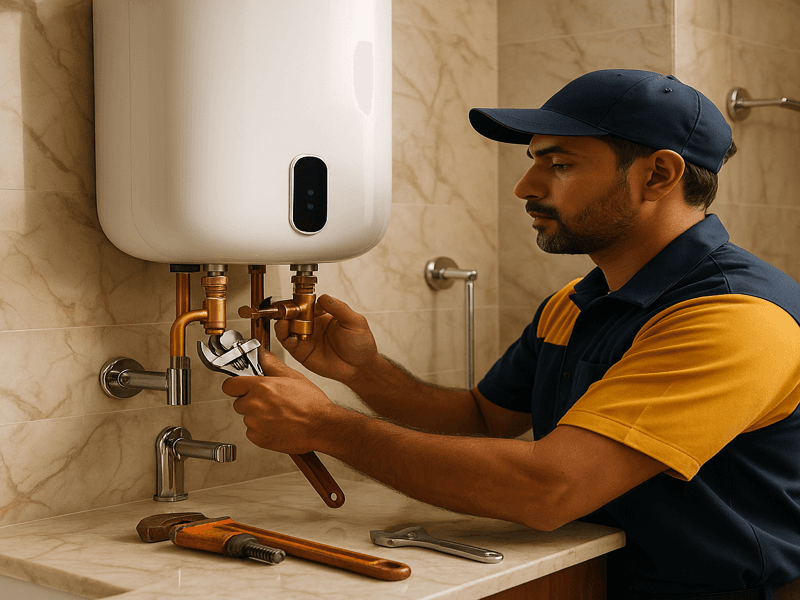
Repairing a water heater is not a DIY task. It involves both water and electrical connections, and incorrect handling can be dangerous. A licensed technician will diagnose the fault, replace the failed component, and check the safety valves and pipework connections before returning the unit to service.
Low Water Pressure
Low pressure is a frequent complaint in high-rise buildings, particularly in upper-floor apartments. Causes range from a faulty pressure regulator to sediment in the supply line or a partially closed valve somewhere in the system. In villas, a failing booster pump can be the culprit. Diagnosing the cause requires checking the supply at multiple points in the property to isolate where the pressure drop occurs.
Preventive Maintenance: Protecting Your Pipes from Heat and Humidity
Prevention costs less than repair. This is the single most important principle for property owners in Dubai, where the environment is actively hostile to plumbing infrastructure.
Schedule Regular Inspections
An annual inspection of your plumbing system identifies potential issues before they become emergencies. This includes checking visible pipework for corrosion, testing water pressure at multiple outlets, inspecting water heater connections, and examining outdoor irrigation lines in villa properties. For apartments, the inspection focuses on internal plumbing, drainage connections, and the condition of seals around sinks and baths.
An annual maintenance contract is the most practical way to keep on top of this. It bundles scheduled inspections and priority emergency response into a single agreement, so you are not left searching for a plumber at ten o'clock on a Sunday night when a pipe has burst.
Manage Hard Water Effects
Dubai's mains water is hard, meaning it contains high levels of calcium and magnesium. Over time, these minerals deposit as scale inside pipes, on showerheads, and in water heaters. Scale reduces flow, decreases heater efficiency, and eventually causes blockages that require mechanical cleaning.
Installing a water softener at the point of entry is the most effective long-term solution for villa owners. For apartment residents where whole-system treatment is not practical, regular descaling of showerheads and taps using a mild acid solution keeps fittings functional. Flushing the water heater tank annually removes accumulated sediment and extends the unit's service life.
Address Humidity in Utility Areas
Humidity in Dubai is relentless for much of the year. Utility rooms, kitchens, and bathrooms with poor ventilation create an environment where condensation forms on cold pipework. Over time, this moisture corrodes metal fittings and promotes mould growth in adjacent materials. Ensuring that extraction fans are functional and that utility spaces have adequate airflow is a simple but effective preventive measure.
Know What Not to Put Down the Drain
Most blockages are preventable. In the kitchen, grease and cooking oil should never go down the drain. They solidify in the pipe and create a lining that narrows the passage over time. In the bathroom, hair should be caught in a strainer rather than allowed to enter the waste pipe. These are small habits, but they make a measurable difference to how often you need professional drain cleaning.
For general upkeep around the home, from fixing a loose towel rail that could cause a leak if pulled from the wall, to resealing a bath edge where water is seeping into the gap, our handyman service handles the small tasks that prevent larger problems.
Consider the Broader Home System
Plumbing does not operate in isolation. Air conditioning condensate drains, for example, are a common source of water damage in Dubai apartments. When the condensate line blocks, water backs up and overflows from the indoor unit, often running down walls and into flooring. This is technically an AC issue, but the result is water damage that looks and behaves like a plumbing leak. Regular AC service including condensate line clearing prevents this crossover problem.
Building a Plumbing Career in Dubai
The plumbing trade in Dubai is evolving, and 2026 presents a genuine opportunity for skilled workers. The city's continued development, combined with the ageing of existing stock in established areas, means demand for qualified plumbers is steady and growing.
What the Work Involves
A plumber in Dubai handles installation, repair, and maintenance across residential and commercial properties. Day-to-day work ranges from unblocking drains and replacing faulty valves to installing complete water systems in new fit-outs. Emergency response is a significant part of the market, as water leaks and blockages do not wait for business hours.
The work requires physical fitness, problem-solving ability, and the patience to diagnose issues that are not immediately visible. A blocked drain on the third floor of a Marina tower might be caused by a problem in the shared stack on the ground floor. Finding that out requires methodical investigation, not guesswork.
Skills and Training
Technical training in pipe fitting, drainage design, water heater installation, and leak detection forms the core of the trade. In 2026, there is an increasing emphasis on diagnostic technology. Knowing how to operate a pipe inspection camera, interpret thermal imaging results, and use hydro-jetting equipment safely are skills that set a modern plumber apart from one who relies only on traditional methods.
Understanding local regulations is equally important. A plumber working in Dubai needs to know what the building code requires, how DEWA connections are managed, and what documentation is needed for renovations that alter plumbing infrastructure.
Working Conditions
Dubai's summer is unforgiving. Plumbers working on villa sites in Arabian Ranches or JVC may be dealing with outdoor pipework in temperatures exceeding 45 degrees. Indoor work in apartments is more controlled, but utility rooms and plant areas can still be extremely hot. The physical demands of the job are real, and safety practices, including hydration and appropriate protective equipment, are non-negotiable.
Career Path
Entry into the trade typically begins with an apprenticeship or a technical college qualification, followed by on-site experience under a licensed company. Progression comes with demonstrated competence across a range of tasks and the ability to handle emergency callouts independently. For those who develop both technical skill and customer communication ability, there is a clear path towards supervisory roles and eventually running a team or a business.
The market rewards reliability. A plumber who arrives on time, diagnoses accurately, and fixes the problem cleanly will build a reputation in a city where word of mouth among property owners and facility managers carries significant weight.
FAQ
How much does drain cleaning cost in Dubai?
Professional drain cleaning in Dubai starts at AED 150 for a standard blockage. The final cost depends on the severity of the blockage, the location of the problem within the pipe system, and the equipment required. European Technical provides the full cost before starting work, so you know exactly what you are paying for.
Can I fix a blocked drain myself?
For minor blockages, yes. A plunger can clear soft clogs near the drain opening, and a baking soda and vinegar mixture is a gentle natural option for light build-up. Chemical cleaners are available but should be used sparingly to avoid damaging older pipes. If the blockage is deep in the system, recurring, or causing water to back up into the property, call a professional. A drain snake or hydro-jetting machine is likely needed.
How is a hidden water leak detected without digging up floors?
Modern leak detection uses thermal imaging and tracer gas. Thermal cameras identify temperature changes on surfaces caused by escaping water. Tracer gas is injected into the pipe and detected above ground at the leak point. Both methods are non-invasive, meaning walls and floors are not opened unless the leak location has been confirmed.
What plumbing problems are most common in Dubai apartments?
Blocked kitchen sinks from grease build-up, clogged bathroom floor drains from hair and soap scum, low water pressure on upper floors, and water heater failures are the most frequent issues. In high-rise buildings, shared drainage stacks can also cause problems where a blockage on one floor affects multiple units.
Is an annual maintenance contract worth it for a Dubai home?
Yes. An annual maintenance contract covers scheduled inspections and typically includes priority emergency response. For property owners in Dubai, where heat and hard water accelerate wear on plumbing systems, regular inspection catches issues early. The cost of a contract is generally lower than the cost of a single emergency repair that could have been prevented.
Does European Technical offer emergency plumbing services in Dubai?
Yes. Emergency plumbing services are available for urgent issues such as burst pipes, severe blockages, and water leaks. Our service vans carry high-pressure jetting machines and pipe inspection cameras, so diagnosis and repair can begin on the same visit without waiting for additional equipment to arrive.