Why Painting Your Dubai Home Matters More Than You Think
Living in Dubai means your home takes a beating from the elements. The intense summer heat, high humidity along the coast, and the fine desert dust that finds its way into every corner of your apartment or villa all take their toll on your walls. Whether you live in a high-rise in Dubai Marina, a townhouse in Jumeirah Village Circle, or a villa in Arabian Ranches, the paint on your walls is your first line of defence against the climate.
Painting is not just about making a space look fresh. A good paint job protects your walls from moisture damage, prevents mould growth in humid areas like kitchens and bathrooms, and seals surfaces against the dust that circulates through your AC system. In a city where temperatures regularly exceed 45 degrees Celsius between June and September, the thermal expansion and contraction of your walls can cause hairline cracks that widen over time. Quality paint with the right primer acts as a flexible barrier that helps your walls cope with these temperature swings.
For many Dubai residents, repainting is also part of the end-of-tenancy process. Landlords and property managers in areas like Business Bay and Downtown Dubai expect walls to be returned in good condition. A professional painting service can save you from losing part of your security deposit over scuffed, marked, or faded walls.
How Dubai's Climate Affects Your Walls and Paint
Dubai's climate presents unique challenges that residents in cooler, drier countries simply do not face. Understanding these challenges helps you make better decisions about paint types, timing, and maintenance.
Humidity and Coastal Exposure
If you live in Dubai Marina, Palm Jumeirah, or any property near the coast, salt-laden air and high humidity are constant factors. Moisture penetrates poorly sealed walls and can cause paint to blister, peel, or develop unsightly bubbles. In extreme cases, you may notice dark patches forming on exterior-facing walls where condensation builds up. Using moisture-resistant primers and paints designed for high-humidity environments is essential in these locations.
Heat and Thermal Stress
The summer sun in Dubai is relentless. Exterior walls, particularly those facing west, absorb enormous amounts of heat during the day and release it at night. This cycle of expansion and contraction stresses the paint film and the underlying render. Over time, even premium exterior paints can fade, chalk, or crack. Interior walls are less exposed but still experience temperature fluctuations, especially in properties where AC units are switched off during extended travel or between tenancies.
Dust and Sand
Dubai's sandstorms, known locally as shamals, deposit fine dust on every surface. This dust settles on walls, particularly near windows and balconies. If your walls have a flat or matte finish, the dust tends to embed itself into the paint surface and becomes difficult to remove without marking the paint. Satin or eggshell finishes are easier to clean and more practical for Dubai homes, especially in high-traffic areas like hallways and living rooms.
AC and Ventilation Patterns
Your air conditioning system affects your walls more than you might realise. AC units remove moisture from the air, which is good for preventing mould, but they also create cold spots on walls directly beneath or beside vents. These temperature differentials can cause micro-condensation inside wall cavities. Ensuring your AC is properly maintained through an annual maintenance contract helps regulate indoor conditions and reduces stress on painted surfaces.
Preparing Walls for Painting: The Steps That Make or Break the Job
The single biggest factor separating a paint job that lasts five years from one that starts peeling after six months is preparation. Many property owners focus on the paint colour and finish but skip or rush the prep work. Here is what proper preparation involves.
Inspecting and Repairing Wall Cracks
Wall cracks are common in Dubai properties, particularly in newer buildings where the structure is still settling and in older villas where ground movement has occurred over time. Hairline cracks are mostly cosmetic, but wider cracks can indicate underlying issues that need attention.
To repair wall cracks before painting, fill cracks with a suitable filler, let it dry, sand smooth, and apply primer before painting. Use high-quality materials and follow proper techniques for best results. The type of filler matters: for hairline cracks, a fine surface filler is sufficient, but for wider cracks or those that recur, a flexible crack filler that can accommodate slight movement is a better choice.
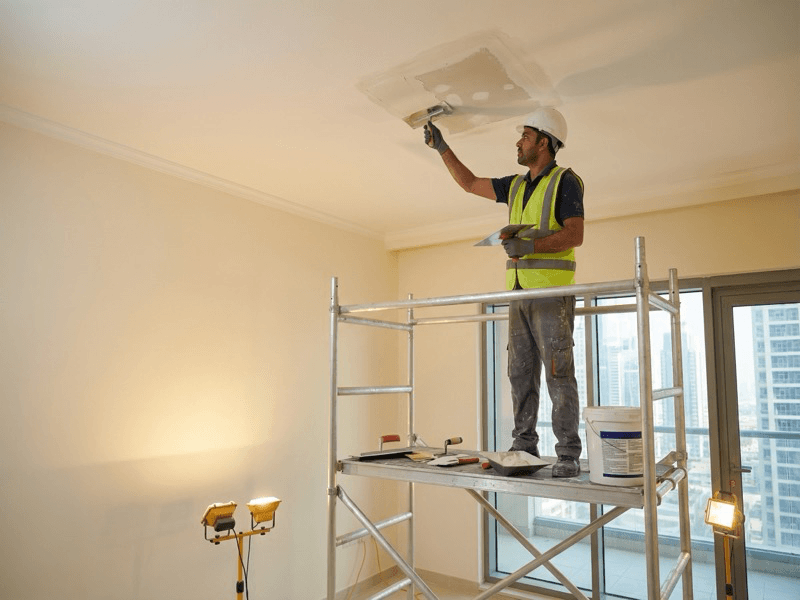
If you notice cracks that are wider than 3 millimetres or cracks that appear in a pattern radiating from door frames or window corners, it is worth having a professional assess whether there is a structural issue. A handyman can evaluate the severity and carry out minor repairs before the painting begins.
Cleaning and Degreasing
Walls in kitchens accumulate grease from cooking, and walls near AC vents collect dust that sticks to the paint surface. Before any primer or paint goes on, walls must be cleaned thoroughly. A mild detergent solution and a sponge are usually enough for living areas and bedrooms. For kitchens, a degreasing agent may be necessary to remove oily residue that would otherwise prevent paint from adhering properly.
Sanding and Smoothing
After filling cracks and cleaning, the wall surface should be lightly sanded to create a texture that the primer can grip. This is especially important if the existing paint has a glossy finish, as new paint will struggle to bond to a slick surface. Sanding also removes any raised edges around filled cracks or nail holes.
Priming
Primer is the bridge between the prepared surface and the topcoat. It seals the filler, provides a uniform surface for the paint, and improves colour consistency. In Dubai, using a primer with moisture-resistant properties is a wise choice for bathrooms, kitchens, and coastal properties. For walls that have been patched extensively, a primer prevents the repaired areas from showing through the final coat as dull spots or texture differences.
Masking and Protecting
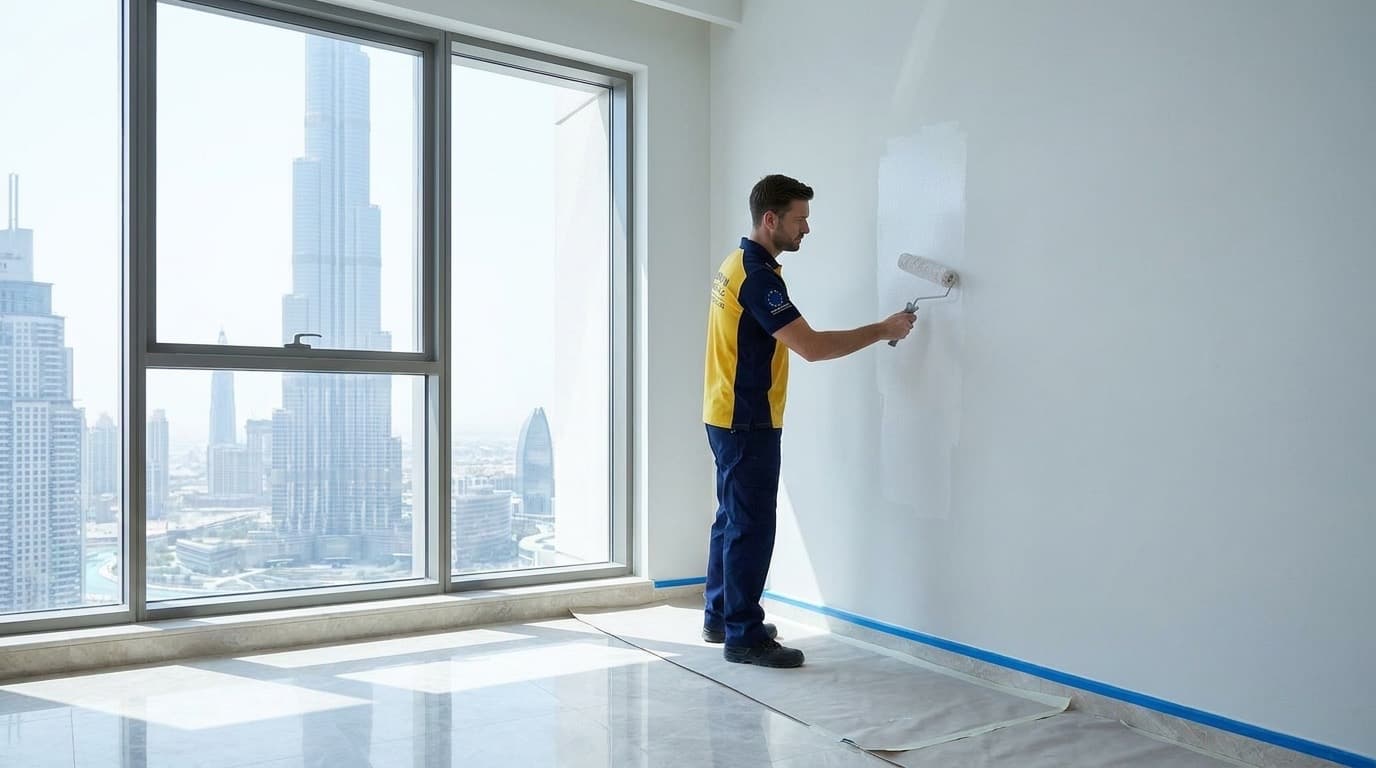
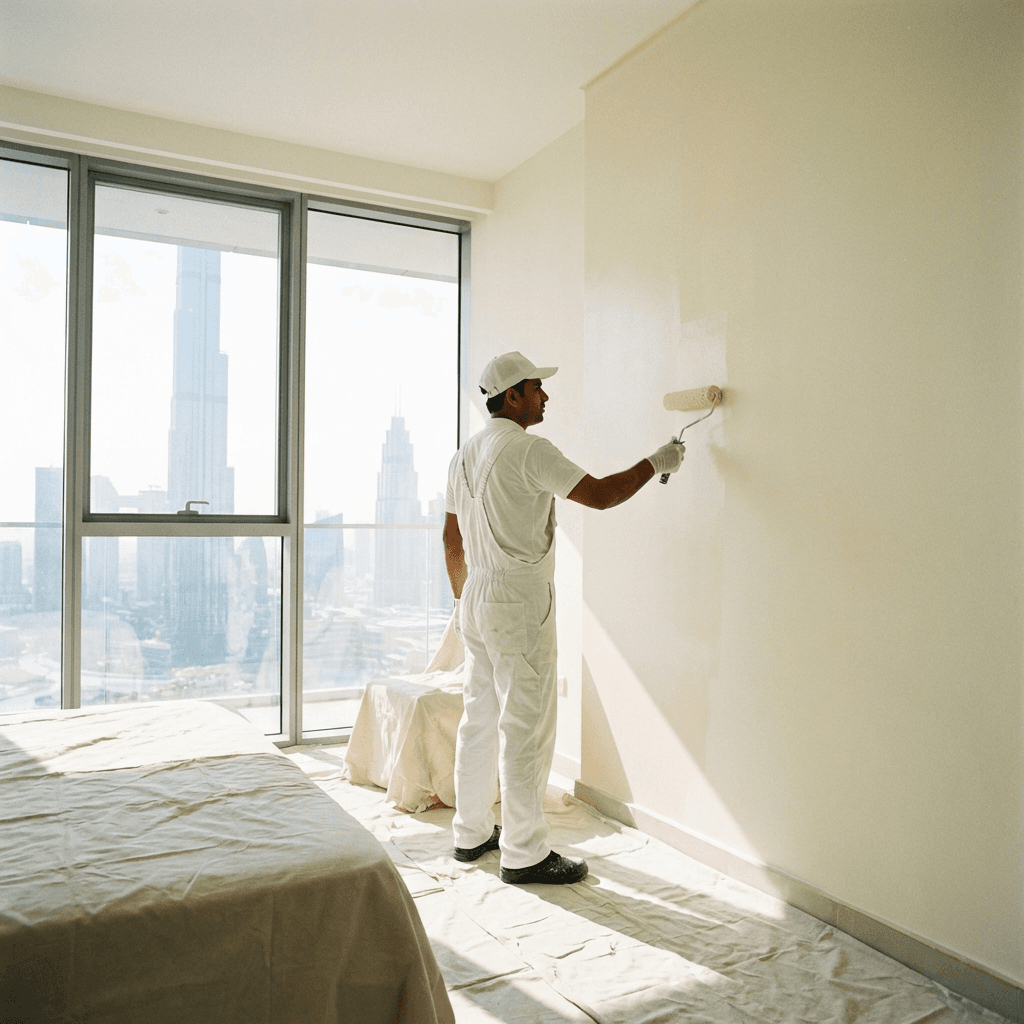
Professional painters spend a significant portion of their time masking. Skirting boards, light switches, door frames, window frames, and furniture all need protection. In Dubai apartments, where open-plan layouts are common, this step is particularly important because paint splatter can travel across large spaces. Drop sheets should cover the floor completely, and edges should be sealed with painter's tape rather than standard masking tape, which can leave residue if left on too long in the heat.
Choosing the Right Paint for Dubai Homes
Selecting paint involves more than picking a colour. The type of paint, its finish, and its formulation all affect how well it performs in Dubai's conditions.
Paint Types: Water-Based vs Oil-Based
Water-based paints, also called acrylic or latex paints, are the most common choice for interior walls in Dubai. They dry quickly, have low odour, and are easy to clean up. They also flex slightly with temperature changes, which helps them resist cracking. Oil-based paints are more durable and were traditionally used for trim, doors, and woodwork, but they take longer to dry, have a stronger smell, and are being phased out in many markets due to environmental regulations. For most interior wall painting in Dubai, water-based paints are the practical choice.
Finishes: Matte, Eggshell, Satin, and Gloss
The finish you choose affects both appearance and practicality. Matte finishes look elegant and hide wall imperfections well, but they are harder to clean and tend to hold dust in a city like Dubai. Eggshell and satin finishes offer a slight sheen that makes them wipeable and more resistant to marking. Semi-gloss and gloss finishes are highly durable and easy to clean but highlight every imperfection on the wall, so they require more thorough preparation.
For living rooms and bedrooms, eggshell is a popular middle ground. For kitchens, bathrooms, and children's rooms, satin or semi-gloss is more practical. For ceilings, a flat matte finish is standard because it does not reflect light and hides minor surface variations.
Colour Choices for Dubai Interiors
Light, neutral colours remain the most popular choice for Dubai properties, and for good reason. Whites, off-whites, and soft greys make rooms feel larger and brighter, which matters in apartments where natural light may be limited to one side. Warm neutrals like beige and taupe add cosiness without darkening the space. Accent walls in deeper tones like navy, forest green, or terracotta can add character to a living room or master bedroom without overwhelming the space.
If you are preparing a property for rental or sale, neutral colours are the safest choice. They appeal to the widest range of tenants and buyers and make the property feel well maintained. Bold colour choices are better suited to personal homes where you plan to stay for several years.
Paint Quality and Brands Available in Dubai
Dubai's hardware stores and building supply shops carry a wide range of paint brands, from economy options to premium lines. Investing in quality paint pays off because it covers better, lasts longer, and resists fading and cracking more effectively. Cheaper paints often require additional coats to achieve full coverage, which can erase any initial savings and extend the project timeline.
Premium paints also tend to have better wash resistance, meaning you can clean marks and scuffs without removing the paint itself. In a home with children or in a rental property where walls see heavy use, this durability is worth the extra cost.
Understanding Painting Costs in Dubai
Cost is naturally a key consideration for any painting project. The cost to paint a one-bedroom apartment in Dubai ranges from AED 800 to AED 1,100. For a two-bedroom apartment, it typically costs between AED 1,200 and AED 3,000. Prices vary based on size, paint quality, and labour.
Several factors influence where your project falls within these ranges. The condition of the existing walls is a major factor. If walls need extensive crack repair, filling, or sanding, the preparation time increases and so does the cost. The number of colours you choose also affects pricing, because each colour change requires cleaning or switching equipment and managing additional paint. Ceilings are often priced separately from walls because they require different equipment and techniques.
For villas in communities like Arabian Ranches, The Springs, or The Meadows, costs are higher simply because the wall area is larger. A typical three-bedroom villa might range from AED 2,500 to AED 6,000 depending on the scope of work and the paint quality selected.
If you are painting as part of a broader property refresh, combining services can be more efficient. European Technical offers a range of home maintenance services, and you can explore options for plumbing repairs or electrical work alongside your painting project to minimise disruption.
Timing Your Painting Project in Dubai
When you schedule your painting project matters. The best months for painting in Dubai are between November and March, when temperatures and humidity are lower. Paint dries more evenly and adheres better in moderate conditions. During summer months, the combination of heat and humidity can cause paint to dry too quickly on the surface while remaining wet underneath, leading to blistering and poor adhesion.
If you must paint during summer, professional painters adjust by working early in the morning or in the evening, using fans to improve ventilation, and choosing paints formulated for high-temperature application. AC should be running to maintain a stable indoor temperature and humidity level during and after the painting process.
Allow at least 24 to 48 hours for paint to fully cure before moving furniture back or touching the walls. Even though paint may feel dry to the touch within a few hours, it takes longer to reach full hardness and wash resistance.
Wall Decor and Feature Walls: Beyond Plain Paint
Once your walls are freshly painted, you may want to add visual interest beyond a flat colour. Feature walls, wall murals, and decorative elements can transform a plain room into a personalised space.
Wall murals have grown in popularity as an alternative to standard paint or wallpaper. A mural can depict anything from a nature scene to an abstract design, and it adds depth and character to a room. Peel-and-stick wallpaper murals are particularly appealing for renters because they can be removed without damaging the underlying paint, making them a practical option for Dubai tenants who want to personalise a space without risking their deposit.
For a simpler approach, accent shelves, mirrors, framed art, and wall sconces can all add interest to freshly painted walls. The key is to choose decor that complements the paint colour rather than competing with it. If your walls are a light neutral, you have flexibility to introduce bolder decor pieces. If you have already painted an accent wall in a strong colour, keep the surrounding decor more restrained.
When installing wall decor, be mindful of the wall type. Drywall partitions, common in Dubai apartments, require appropriate anchors for heavier items. Concrete walls, typical in older buildings and villa construction, need masonry drill bits and wall plugs. A professional handyman can install shelves, mirrors, and art securely without cracking the surrounding paint.
Maintaining Your Painted Walls
After investing in a quality paint job, proper maintenance extends the life of the finish. Here are practical tips for keeping painted walls looking fresh in Dubai.
Dust your walls regularly using a soft brush attachment on your vacuum cleaner or a microfiber duster. This prevents the fine Dubai dust from building up and embedding into the paint surface. For marks and scuffs, wipe gently with a damp sponge and mild soap. Avoid abrasive cleaners or scrubbing pads, which can dull the finish and remove paint.
In kitchens and bathrooms, check periodically for signs of mould or mildew, particularly in corners and near ceilings where air circulation is limited. If you spot mould, clean it promptly with a mild bleach solution and address the underlying moisture source. Ensuring your bathroom extractor fan and kitchen range hood are working properly helps prevent moisture buildup that damages paint.
Inspect walls annually for new cracks, particularly at the start of summer when thermal stress is highest. Hairline cracks caught early can be filled and touched up before they widen and require a full repaint. This is where an annual maintenance check is valuable, because a professional can identify and address minor issues before they become major problems.
FAQ
How often should I repaint my Dubai home?
Most interior walls in Dubai homes need repainting every 3 to 5 years, depending on the quality of the original paint, the level of use, and exposure to sunlight and humidity. High-traffic areas like hallways and living rooms may need attention sooner, while bedrooms and ceilings often last longer. If you notice fading, scuffing that does not clean off, or cracks reappearing, it is time to consider repainting.
Can I paint during Dubai's summer months?
Yes, but it requires extra care. Summer heat and humidity can cause paint to dry unevenly, blister, or fail to adhere properly. Professional painters work during cooler parts of the day, keep AC running to maintain stable indoor conditions, and use paints formulated for high temperatures. If you have flexibility, scheduling between November and March gives the best results.
What is the best paint finish for Dubai apartments?
Eggshell and satin finishes are the most practical choices for Dubai apartments. They offer a subtle sheen that is easy to clean, resists dust buildup better than matte finishes, and hides minor wall imperfections. Matte is suitable for ceilings and low-traffic rooms, while semi-gloss works well for kitchens, bathrooms, and trim.
How do I prepare walls with cracks before painting?
Fill cracks with a suitable filler, let it dry completely, sand the surface smooth, and apply primer before painting. For hairline cracks, a fine surface filler is sufficient. For wider or recurring cracks, use a flexible filler that can accommodate slight wall movement. If cracks are wider than 3 millimetres or follow a pattern, have a professional inspect for underlying structural issues before painting.
How much does it cost to paint an apartment in Dubai?
Painting a one-bedroom apartment in Dubai typically costs between AED 800 and AED 1,100. A two-bedroom apartment ranges from AED 1,200 to AED 3,000. Costs vary based on the size of the property, the condition of the walls, the paint quality selected, and the number of colours used. Villas and larger properties are priced based on wall area and scope of work.
Should I hire a professional painter or do it myself?
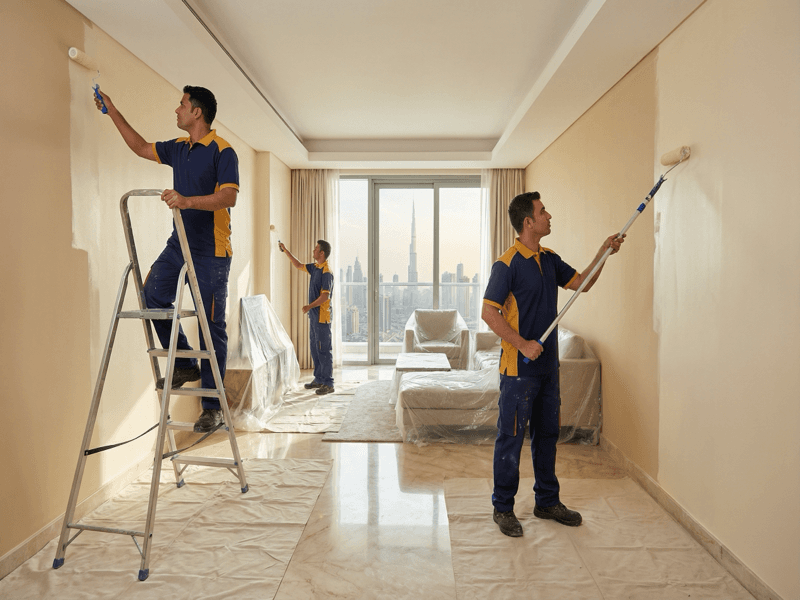
While DIY painting is possible, professional painters deliver better results in less time, particularly in Dubai where climate conditions require specific techniques and materials. Professionals handle preparation, crack repair, priming, cutting in, and clean-up, and they have the equipment to reach high ceilings safely. For end-of-tenancy or property sale painting, a professional finish helps ensure you meet landlord or buyer expectations.