Why Circuit Breakers Trip in Dubai Homes
A circuit breaker that trips once is a minor annoyance. One that keeps tripping is a warning sign you should not ignore.
Circuit breakers play a crucial role in protecting your home. They are safety devices designed to shut off power automatically when they detect an overload, a short circuit, or a ground fault. Without them, the wiring inside your walls could overheat, melt, or catch fire. So when a breaker trips, it is doing exactly what it was built to do. The problem is figuring out why it keeps happening.
If you have ever been in the middle of cooking dinner in your Dubai apartment when the lights suddenly snap off and the AC goes silent, you know the frustration. The culprit is almost always a tripped circuit breaker in your distribution board. In a city where summer temperatures regularly push past 45 degrees and air conditioning runs around the clock, your electrical system works harder than it would in almost any other climate. That extra demand pushes components closer to their limits.
Dubai apartments, especially those in older buildings in areas like JVC, Discovery Gardens, or Business Bay, trip breakers more frequently than most residents expect. Add older wiring in buildings that have not been upgraded in a decade, multiple high-draw appliances running simultaneously, and the picture becomes clear. Villa owners in communities like Arabian Ranches, Palm Jumeirah, or The Springs face their own set of challenges, as electrical work may require coordination with community management before any major changes can be made.
The good news is that most tripping issues are diagnosable and fixable. Let us walk through the common causes, what you can safely check yourself, and when it is time to call a professional electrician.
The Most Common Causes of Tripped Breakers
Too Many Appliances on One Circuit
This is the number one cause. Full stop.
An overload happens when you plug in too many high-wattage items into a single circuit at once. The circuit is only rated to carry a certain amount of current. When the combined draw of everything plugged in exceeds that rating, the breaker trips to prevent the wiring from overheating.
In Dubai homes, this scenario plays out constantly. We use many energy-intensive appliances on a daily basis:
- Electric kettles
- Air fryers
- Hairdryers
- Toasters
- Microwave ovens
- Washing machines
- Dishwashers
- Water heaters
- Air conditioners
- EV chargers
In smaller apartments, especially in areas like JVC or Discovery Gardens where kitchen appliances often share the same circuit, the problem is particularly common. You might have your kettle, toaster, and microwave all running off the same wall outlets. Turn them on at the same time and the breaker trips.
During the short winter months, some residents add space heaters to the mix. These draw a surprising amount of power and are a frequent trigger for tripped breakers between November and February.
The fix here is straightforward in theory: spread your appliances across different circuits. In practice, that means understanding which outlets in your home are on which circuit. If your kitchen has only one circuit feeding all the outlets, you may need to avoid running two high-wattage devices simultaneously. For a longer-term solution, an electrician can install additional circuits to distribute the load more evenly. Expect to pay anywhere from AED 350 to AED 800 per new circuit depending on the complexity of the run and the condition of your existing distribution board.
Short Circuits
A short circuit occurs when a hot wire comes into contact with a neutral wire or a ground wire. This creates a path of very low resistance, causing a sudden surge of current that trips the breaker instantly.
Short circuits can happen inside an appliance, inside a plug, or within the wiring behind your walls. They are more serious than simple overloads because they can generate significant heat and sparks. If a breaker trips and you notice a burning smell, discoloured outlets, or scorch marks around a socket, you likely have a short circuit somewhere on that circuit.
Common causes include damaged power cords, loose wire connections inside an outlet, worn-out appliance internals, or water getting into an electrical enclosure. In Dubai, humidity plays a role here too. Moisture can find its way into outdoor outlets, balcony light fittings, or poorly sealed junction boxes, creating conditions where short circuits develop over time.
Never attempt to fix a short circuit yourself unless you have proper training. This is a job for a qualified electrician who can trace the fault, repair or replace the damaged section, and verify the circuit is safe before re-energising it.
Ground Faults
A ground fault is similar to a short circuit but involves the hot wire touching the ground wire or a grounded portion of an electrical box. The current diverts from its intended path and flows into the grounding system, which trips the breaker.
Ground faults are particularly common in wet areas. Bathrooms, kitchens, laundry rooms, and outdoor spaces are all high-risk zones. In Dubai, where air conditioning units produce significant condensation, water accumulation near electrical components is a real concern. AC units on balconies or rooftops can develop ground faults if water pools near wiring or if the insulation on internal components degrades.
Residual current devices (RCDs) provide protection against ground faults by detecting even small imbalances between the live and neutral conductors. Modern distribution boards in Dubai should include RCD protection on circuits serving wet areas. If your home is older and does not have RCD protection, upgrading your distribution board is strongly recommended. A distribution board upgrade in Dubai typically costs between AED 1,500 and AED 4,000 depending on the number of ways, the brand, and whether new cabling is needed.
Old or Undersized Wiring
Many buildings in Dubai were constructed during periods of rapid development, and the electrical systems installed at the time may not have been designed for the loads we place on them today. A villa built in 2005 might have been wired for a lifestyle that did not include multiple air conditioning units running simultaneously, EV chargers in the garage, or home entertainment systems drawing constant power.
Older wiring that cannot handle modern electrical loads will cause breakers to trip repeatedly. The insulation on old wires can also become brittle over time, especially in ceiling spaces where temperatures soar during summer. Brittle insulation cracks, exposing conductors and creating short circuit or ground fault risks.
If your home is more than 15 years old and you are experiencing persistent tripping, have a licensed electrician inspect the condition and capacity of your wiring. They can assess whether the existing cables are adequate for your current usage or whether a partial or full rewiring is necessary. Full rewiring of a two-bedroom apartment in Dubai can range from AED 8,000 to AED 15,000, while a three or four-bedroom villa may cost AED 20,000 or more.
Faulty Appliances
Sometimes the problem is not your wiring at all. A single faulty appliance can cause repeated tripping. Internal components degrade, heating elements fail, and motors seize. When an appliance develops an internal fault, it can draw excessive current or create a short circuit every time you plug it in.
The way to identify a faulty appliance is simple. Unplug everything on the affected circuit. Reset the breaker. Then plug appliances back in one at a time. If the breaker trips when you plug in a specific device, you have found your culprit. Do not keep using that appliance. Have it repaired or replaced.
This methodical approach saves unnecessary callout fees and helps your electrician pinpoint the issue faster if you do need professional help.
Dubai-Specific Factors That Make Tripping Worse
Summer Heat and Electrical Resistance
Heat increases electrical resistance. As resistance rises, components work harder to carry the same current, generating even more heat. This feedback loop means that during Dubai summers, when ambient temperatures in ceiling spaces and utility cupboards can exceed 60 degrees, your electrical system is under maximum stress.
Air conditioners running continuously draw substantial current for hours on end. Combine that with refrigerators, water heaters, and washing machines, and you have a recipe for frequent tripping. Summer is the peak season for this complaint across Dubai apartments and villas alike.
Humidity and Moisture
Dubai's humidity levels, especially along the coast in areas like Dubai Marina, JBR, and Palm Jumeirah, can exceed 80 percent during certain months. Moisture in the air corrodes electrical contacts over time, degrades wire insulation, and creates conductive paths where none should exist.
Outdoor light fittings, balcony outlets, and AC condensate drainage areas are all vulnerable. Regular inspection of these components as part of an annual maintenance contract can catch moisture-related issues before they cause persistent tripping.
DEWA Compliance and Inspections
DEWA requires inspections and testing of electrical installations to ensure compliance with local regulations. DEWA follows IEC standards and issues connection agreements upon satisfactory completion of inspections. For new installations and major modifications, you must pass a DEWA inspection before the connection is energised.
This matters for tripping issues because if your electrical system has been modified without proper permits or inspections, you may have substandard work that does not meet DEWA requirements. Non-compliant installations are more likely to develop faults. Always use a licensed electrician who understands DEWA regulations and can ensure any work meets the required standards.
What You Can Safely Check Yourself
There are a few things you can do before calling a professional:
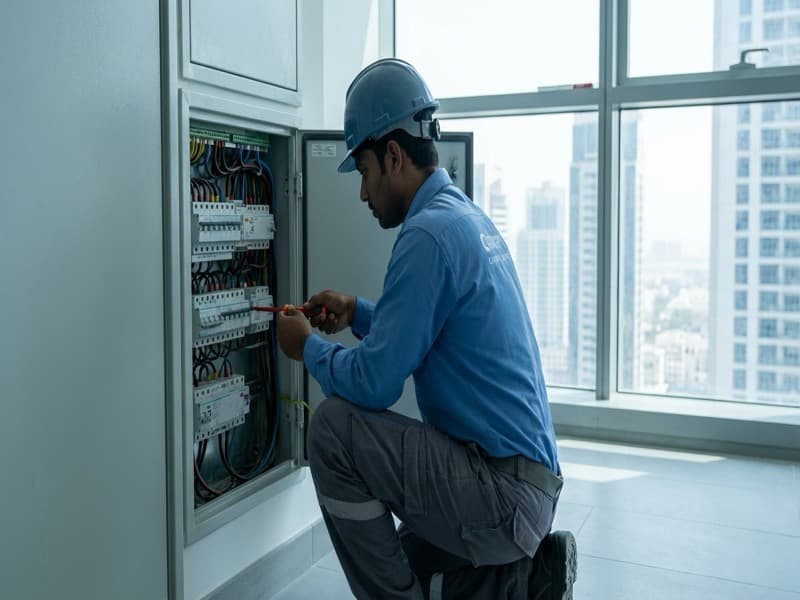
1. Identify which breaker tripped. Open your distribution board and look for a switch that has moved to the middle or off position. Note which circuit it controls.
2. Unplug everything on that circuit. Remove all devices and appliances from every outlet on the affected circuit.
3. Reset the breaker. Push the tripped switch fully to the off position first, then back to the on position.
4. Reconnect appliances one at a time. Plug in each device and wait a moment. If the breaker trips after connecting a particular appliance, that device is likely the problem.
5. Check for obvious damage. Look at plugs, cords, and outlets for signs of burning, melting, or discoloration.
If the breaker trips again immediately after resetting, even with nothing plugged in, stop. Do not keep resetting it. There is a fault in the wiring or the breaker itself that needs professional attention.
A handyman can help with minor tasks like replacing a damaged socket cover or checking that appliances are plugged into the correct outlets, but any work inside the distribution board or involving wiring changes must be carried out by a licensed electrician.
When to Call a Professional
Persistent tripping is not something to live with. If your breaker trips more than once a week despite your efforts to manage the load, you need professional help. The same applies if you notice any of the following:
- Burning smells near outlets or the distribution board
- Discoloured or scorched switch plates
- Buzzing or crackling sounds from outlets or the board
- Breakers that feel warm to the touch
- Breakers that will not stay reset
- Lights flickering or dimming when appliances turn on
These symptoms indicate underlying problems that will not resolve themselves. Ignoring them increases the risk of electrical fire, damage to expensive appliances, and injury to anyone in the property.
A professional electrician will perform a systematic diagnosis. They will test the circuit with a multimeter, check insulation resistance, verify earthing connections, inspect the distribution board for loose terminals, and assess whether the breaker itself has failed. Breakers can wear out over time, especially if they have tripped repeatedly. A worn breaker may trip at currents below its rated threshold, giving the false impression of an overload when the real problem is the breaker.
Replacing a single circuit breaker in Dubai typically costs AED 200 to AED 450 including parts and labour. A full distribution board inspection and safety check usually runs between AED 500 and AED 1,200 depending on the size of the board and the extent of testing required.
For property owners managing multiple units, consider scheduling regular electrical inspections as part of a broader maintenance plan. European Technical offers a full range of home maintenance services across Dubai, from electrical and plumbing to AC servicing and painting. Having a single reliable contractor handle all your property maintenance needs means issues are caught early and dealt with before they become costly emergencies.
Preventing Future Tripping Issues
Prevention is always cheaper than repair. Here are practical steps to reduce the likelihood of circuit breakers tripping in your Dubai home:
- Distribute loads across circuits. Avoid plugging multiple high-wattage appliances into the same outlet or circuit. If your kitchen only has one circuit, stagger usage.
- Upgrade old wiring. If your property is more than 15 years old, have the wiring assessed. Modern cables are rated for higher loads and have better insulation.
- Install additional circuits. If you have added EV chargers, extra AC units, or a home gym with heavy equipment, make sure your distribution board has dedicated circuits for these loads.
- Schedule annual electrical inspections. A yearly check of your distribution board, outlets, and major appliance connections catches problems early. This is particularly important before summer, when your system will be under maximum load.
- Replace ageing appliances. Old appliances are more likely to develop internal faults. If your water heater is more than 8 years old or your washing machine is struggling, replacement may be safer than repair.
- Keep moisture away from electrical components. Ensure outdoor outlets have weatherproof covers. Check that AC condensate drains are clear and not pooling near wiring. In coastal areas, consider corrosion-resistant fittings for exposed locations.
- Never disable or bypass a tripping breaker. This removes critical protection and significantly increases fire risk. Always address the root cause, never the symptom.
FAQ
Why does my circuit breaker keep tripping in my Dubai apartment?
The most common reason is an overloaded circuit, where too many high-wattage appliances run simultaneously on the same circuit. In Dubai, this frequently happens in kitchens where kettles, toasters, and microwaves share a single circuit. Other causes include short circuits, ground faults, old wiring that cannot handle modern loads, and faulty appliances. Summer heat increases electrical resistance and makes all of these issues worse, which is why tripping complaints peak between June and September.
How do I know if it is the appliance or the wiring causing the trips?
Unplug all appliances on the affected circuit and reset the breaker. Then plug appliances back in one at a time. If the breaker trips when you connect a specific device, that appliance is the problem and should be repaired or replaced. If the breaker trips even with nothing plugged in, the issue is in the wiring or the breaker itself, and you need a licensed electrician to diagnose it.
Is it dangerous to keep resetting a tripped circuit breaker?
Resetting a breaker once or twice to identify the cause is generally safe. However, repeatedly resetting a breaker that trips immediately is dangerous. Each trip indicates a fault that is generating excess heat or current. Continuously resetting it without fixing the underlying problem can damage wiring, overheat connections, and create a fire risk. If the breaker will not stay on, stop resetting it and call a professional.
How much does it cost to fix a tripping circuit breaker in Dubai?
The cost depends on the cause. Replacing a single faulty breaker typically costs AED 200 to AED 450. A full distribution board inspection and safety check runs AED 500 to AED 1,200. If the problem is old wiring that needs replacing, costs can range from AED 8,000 for a small apartment to AED 20,000 or more for a large villa. A professional diagnosis will give you an accurate quote before any work begins.
Can I fix a tripping breaker myself?
You can safely identify which breaker tripped, unplug appliances, and reset the breaker. You can also check for obvious signs of damage like scorch marks or burning smells. However, any work inside the distribution board, wiring changes, or repairs to electrical circuits must be carried out by a licensed electrician. Electrical work in Dubai is regulated by DEWA, and non-compliant work can result in failed inspections, insurance complications, and serious safety risks.
Does DEWA require electrical inspections for homes in Dubai?
Yes. DEWA requires inspections and testing of electrical installations to ensure compliance with local regulations and IEC standards. New installations and major modifications must pass inspection before the connection is energised. For existing homes, regular electrical inspections are recommended to maintain safety and compliance, especially in older properties where wiring may not meet current standards.