Why Dubai's Humidity Demands Special Paint Choices
Dubai's climate is unforgiving on interior walls. From May through September, temperatures routinely climb above 40°C and humidity levels hover between 60 and 90 percent along the coast. Whether you live in a Marina high-rise or a villa in Arabian Ranches, moisture finds its way into your walls through condensation, air conditioning runoff, and even groundwater seepage. The result is peeling paint, unsightly blistering, mould patches, and a finish that looks tired long before it should.
Choosing the right paint for Dubai's humidity is not just about colour selection. It is about selecting formulations that resist moisture, allow walls to breathe, and hold up against the thermal cycling that comes with moving between 45°C outdoor heat and 22°C air-conditioned interiors. This guide walks you through what works, what does not, and what it should cost to get the job done properly in Dubai.
How Dubai's Climate Affects Your Walls
Dubai sits on the Arabian Gulf, and that proximity to water means the air carries a heavy moisture load for much of the year. The problem is not just outdoor humidity. It is the interaction between that humidity and the aggressively cooled air inside your home or apartment.
When warm, moist air from outside meets a cool interior wall surface, condensation forms. This is especially common in bathrooms, kitchens, and near windows. Over time, that moisture penetrates the paint film and the plaster beneath it. You start to see bubbling, flaking, and dark patches where mould takes hold.
Properties in JVC, Business Bay, and Downtown Dubai are particularly vulnerable because many units have large glazing areas that amplify the temperature differential. Villas in communities like Arabian Ranches face a different but related challenge: exterior walls absorb heat during the day and release it at night, which drives moisture outward through the wall and pushes paint off from the inside.
The DEWA connection matters here too. Air conditioning systems that are not properly maintained produce excess condensation, and that water has to go somewhere. If your AC drain line is blocked or your unit is oversized for the space, you get higher indoor humidity and more stress on your painted surfaces. This is why many Dubai residents find that their paint problems accelerate during the peak summer months.
Understanding these mechanisms is the first step. The next is choosing paint that can actually cope with them.
Best Paint Types for Humid Dubai Walls
Not all paints are created equal, and the standard emulsion you might pick up at a hardware shop is not always up to the task in Dubai. Here is what works.
Moisture-Resistant Acrylic Emulsion
Acrylic-based paints are the workhorse of Dubai interior painting. They form a flexible film that expands and contracts with temperature changes, which is critical when your walls are cycling between 22°C and 35°C daily during summer. Quality acrylic emulsions also resist water penetration while still allowing the wall to breathe, meaning trapped moisture can escape rather than building up behind the paint.
Look for paints specifically labelled as moisture-resistant or bathroom-grade. These contain additives that inhibit mould growth and are designed to withstand the humid conditions that are standard in Dubai bathrooms and kitchens.
Anti-Mould and Fungal-Resistant Paints
If you have already dealt with mould patches on your walls, a standard repaint will not solve the problem. The mould will return. Anti-mould paints contain biocidal additives that prevent fungal growth on the paint surface. These are particularly useful in ground-floor apartments, bathrooms, and any wall that shares an edge with plumbing.
In Dubai, mould is not just a cosmetic issue. It can affect indoor air quality and trigger respiratory problems, especially in children and elderly residents. Using an anti-mould paint in high-risk areas is a practical investment.
Elastomeric Paint for Exterior Walls
For villa owners in Arabian Ranches, The Springs, or similar communities, exterior walls face direct sun, sandstorms, and humidity. Elastomeric paints are designed for exactly these conditions. They create a thick, flexible coating that bridges hairline cracks and resists water penetration from the outside. They also reflect a significant portion of solar radiation, which helps keep interior temperatures down and reduces the thermal stress on your walls.
Primer Matters as Much as the Topcoat
Even the best paint will fail if it is applied over an improperly prepared surface. In Dubai's conditions, a quality alkali-resistant primer is essential, especially on new plaster or after any dampness treatment. The primer seals the surface, prevents moisture from wicking through the wall, and gives the topcoat a stable base to adhere to. Skipping primer to save money is one of the most common reasons paint fails prematurely in Dubai homes.
If you are unsure which paint system suits your property, our painting team can assess your walls and recommend the right products for your specific conditions.
Preparing Walls Before Painting in Dubai
Paint preparation is where most Dubai painting jobs either succeed or fail. The climate makes this stage even more critical than it would be in a temperate country.
Crack Repair
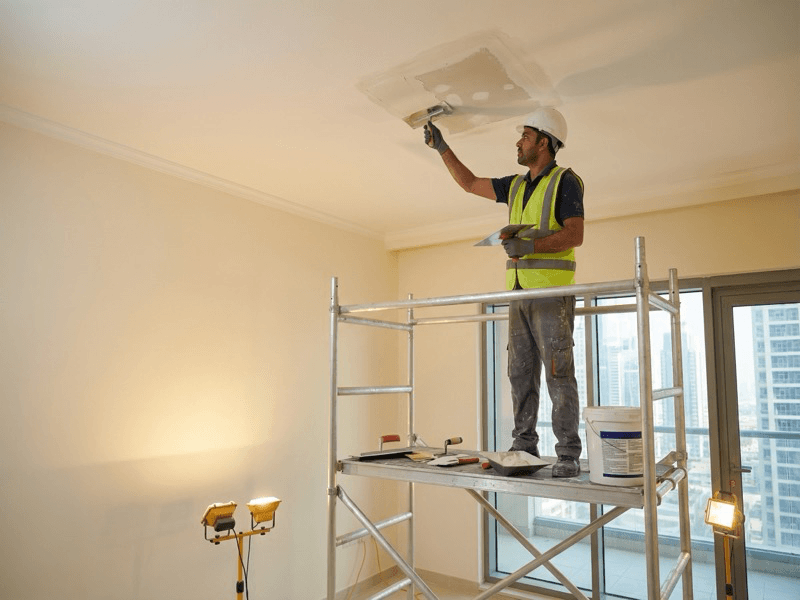
Wall crack repair is essential before painting to ensure structural integrity and a smooth finish. Dubai's thermal cycling causes plaster to expand and contract, and hairline cracks develop over time. These cracks are not just visual defects. They provide pathways for moisture to enter the wall structure, which leads to blistering and peeling paint.
Skilled professionals use high-quality fillers and techniques for effective crack repair. The process involves widening the crack slightly, cleaning it out, filling it with an appropriate compound, and sanding it flush before priming. For larger cracks, especially those that recur, a fibreglass mesh may be embedded in the filler to prevent reopening.
Treating Dampness and Mould
If your walls show signs of dampness, painting over them will only hide the problem temporarily. The source of moisture must be identified and addressed first. This could be a plumbing leak, a failed waterproofing membrane, condensation from an undersized AC unit, or rising damp from ground contact in ground-floor units.
Mouldy areas need to be treated with a fungicidal wash before any paint is applied. Simply painting over mould will not kill it, and it will grow through the new paint within weeks. If you suspect a hidden leak is contributing to your wall problems, our plumbing service can trace and resolve the source before you invest in repainting.
Surface Preparation
Walls should be clean, dry, and free of loose paint before any new coating goes on. In Dubai, where dust accumulation is a constant factor, this means washing walls down and allowing them to dry completely. Any loose or flaking paint must be scraped off, and the surface sanded to provide a key for the new paint.
This preparation work is labour-intensive, and it is one of the reasons that professional painting quotes can vary significantly. A cheap quote often means skipped preparation, and in Dubai's climate, that shortcut will cost you within a year.
Our handyman services cover crack repair, patching, and surface preparation as part of a proper painting workflow.
What Does Painting Cost in Dubai?
Painting costs in Dubai vary based on property size, paint quality, and the extent of preparation required. Here is what you can expect based on current market rates.
For apartment painting, a studio typically costs between AED 400 and AED 600. A one-bedroom apartment generally runs from AED 799 upward, while a two-bedroom apartment ranges from AED 900 to AED 1,200 for standard work. Larger apartments and those requiring extensive preparation can push costs to AED 2,000 or more. Some providers offer move-in and move-out painting packages starting as low as AED 399 for smaller units.
On a per-square-metre basis, standard interior painting in Dubai averages AED 10 to AED 30 per square metre. This rate typically includes paint, labour, and minor wall repairs. For a 1,200 square foot two-bedroom apartment, quotes from AED 900 to AED 2,500 are common depending on the paint specification and preparation needs.
Villa painting is a larger undertaking. Full villa painting projects typically range from AED 2,000 to AED 6,000, depending on the size of the property and whether exterior walls are included. Villas in communities like Arabian Ranches or The Springs often require elastomeric exterior paint, which is more expensive than standard interior emulsion but provides far better durability in Dubai's climate.
It is always advisable to get a clear breakdown of what a painting quote covers. Does it include primer? Does it cover crack repair? How many coats are included? Is the paint moisture-resistant or standard emulsion? These details make a significant difference to both the cost and the longevity of the finish.
For ongoing property care, an annual maintenance contract can help you stay ahead of paint degradation, AC issues, and other maintenance needs that compound over time. Regular inspections catch small problems before they become expensive repairs.
Tips to Make Paint Last Longer in Dubai Conditions
Even with the right paint, a few practical habits will extend the life of your walls significantly.
Keep AC Units Maintained
Your air conditioning system is the primary control for indoor humidity. If it is not functioning efficiently, humidity rises and your paint suffers. Clean or replace filters monthly during summer, and schedule professional AC servicing at least twice a year. A well-maintained AC unit keeps indoor humidity between 40 and 50 percent, which is the sweet spot for paint longevity.
Ventilate Bathrooms and Kitchens
Exhaust fans in bathrooms and kitchens are not optional in Dubai. They remove the moisture-laden air that cooking and showering generate. If your property does not have working exhaust fans, installing them should be a priority before repainting these areas.
Address Leaks Immediately
A small plumbing leak behind a wall can destroy an entire paint job within weeks. If you notice discolouration, bulging paint, or a musty smell, investigate immediately. The longer a leak persists, the more damage it does to both the paint and the underlying structure.
Choose Lighter Colours
Dark colours absorb more heat, which increases the temperature differential between the wall surface and the surrounding air. This accelerates thermal cycling and can shorten paint life, particularly on exterior walls. Lighter colours reflect heat and are more stable in Dubai conditions.
Schedule Repainting Strategically
The best time to repaint in Dubai is during the cooler months, from November to March. Lower humidity during this period means paint cures more evenly and achieves better adhesion. Painting during peak summer is possible with the right products, but curing times are longer and the risk of moisture-related failures is higher.
FAQ
What is the best paint for humid walls in Dubai?
Moisture-resistant acrylic emulsion is the best general-purpose paint for Dubai's humid conditions. It forms a flexible film that copes with temperature cycling and resists water penetration while allowing walls to breathe. For bathrooms and kitchens, use a dedicated anti-mould paint with fungicidal additives. For exterior villa walls, elastomeric paint provides superior protection against sun, sand, and humidity.
How much does it cost to paint an apartment in Dubai?
Apartment painting in Dubai typically costs between AED 400 and AED 4,000 depending on size and paint type. A studio ranges from AED 400 to AED 600, a one-bedroom starts around AED 799, and a two-bedroom generally costs between AED 900 and AED 1,200 for standard work. On a per-square-metre basis, expect to pay AED 10 to AED 30, with the rate usually including paint, labour, and minor repairs.
Why does paint peel in Dubai apartments?
Paint peels in Dubai apartments primarily due to moisture trapped behind the paint film. This happens when warm humid air condenses on cool interior walls, when AC units produce excess condensation, or when there are hidden plumbing leaks. Poor surface preparation, skipping primer, and using non-breathable paints also contribute to premature peeling. Addressing the moisture source and using appropriate paint systems prevents recurrence.
Do I need to repair wall cracks before painting?
Yes. Wall crack repair is essential before painting to ensure structural integrity and a smooth finish. Cracks provide pathways for moisture to enter the wall, which leads to blistering and peeling. A professional will widen, clean, fill, and sand each crack before applying primer. For recurring cracks, fibreglass mesh reinforcement may be needed.
How often should I repaint my Dubai home?
In Dubai's climate, interior paint typically lasts three to five years with proper preparation and quality materials. High-moisture areas like bathrooms and kitchens may need repainting every two to three years. Exterior villa walls painted with elastomeric paint can last five to seven years. Regular maintenance, including AC servicing and prompt leak repairs, extends the interval between repaints.
Can I paint over mould in Dubai?
No. Painting over mould will not kill it, and it will grow through the new paint within weeks. The mould must be treated with a fungicidal wash, the moisture source identified and resolved, and the surface allowed to dry completely before repainting. Using an anti-mould paint in affected areas helps prevent recurrence.