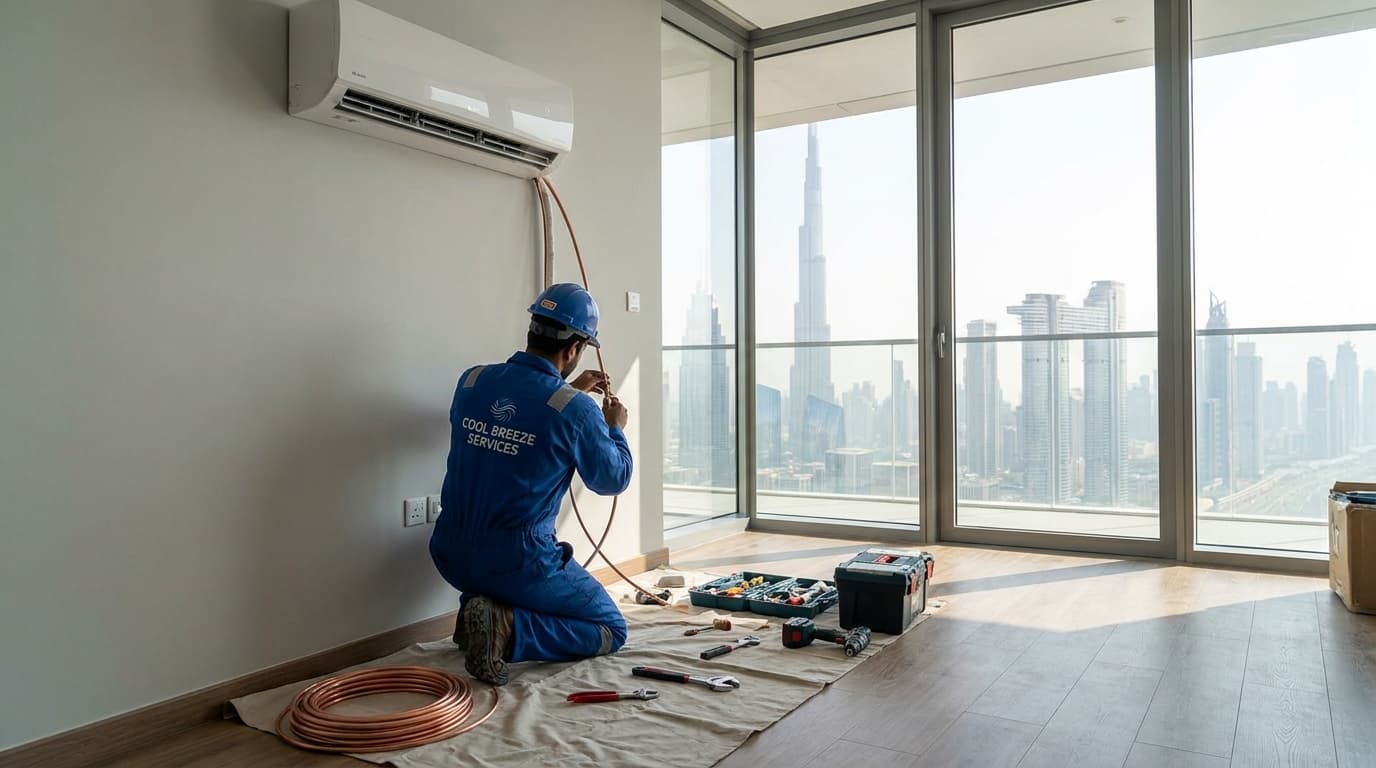
Getting a new AC installed in Dubai isn't like picking a unit off the shelf and plugging it in. Between the brutal summer heat, DEWA regulations, and the sheer variety of systems on the market, there's quite a lot to consider before spending your money. This guide covers what matters - without the sales pitch.
Why AC Installation in Dubai Is Different
Dubai isn't your average city for cooling. Between June and September, outdoor temperatures regularly exceed 45°C, and humidity in coastal areas like JBR and Dubai Marina can hit 90%. Your AC doesn't get a break. It runs almost year-round, and during peak summer, it works harder than anywhere else on the planet.
That means you can't afford to get the installation wrong. A poorly sized unit wastes electricity (and DEWA bills in Dubai aren't cheap). A badly installed system develops problems within months - refrigerant leaks, drainage issues, uneven cooling. Getting it right the first time saves you thousands of dirhams down the line.
Split AC vs Central AC: Which One for Your Property?
This is the first decision most people face, and the answer depends on your property type.
Split Units
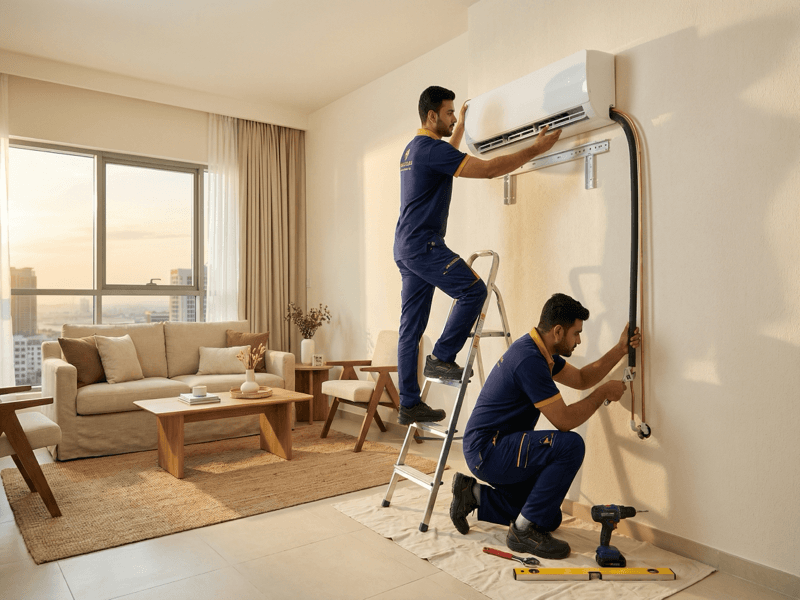
Split ACs are the go-to choice for apartments and smaller villas. Each unit cools a single room, with an indoor unit mounted on the wall and an outdoor compressor on the balcony or building exterior. They're affordable, relatively quick to install, and give you independent control over each room.
A typical split unit for a bedroom costs between AED 2,500 and AED 5,500 including installation, depending on the brand and cooling capacity. For a standard two-bedroom apartment in areas like JVC, Discovery Gardens, or Silicon Oasis, you're looking at three to four units.
Best for: Apartments, studios, individual rooms in villas, converted commercial spaces.Central (Ducted) Systems
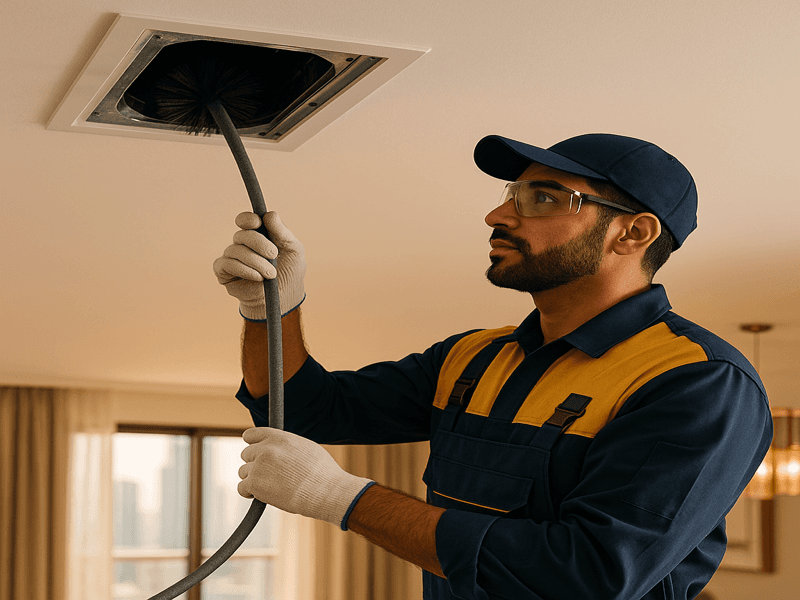
Central AC runs through ducts hidden in your ceiling, cooling the entire property from a single outdoor unit. Most villas in communities like Arabian Ranches, Dubai Hills, and Emirates Hills come with central systems already installed by the developer.
Replacing or upgrading a central system is a bigger job - expect AED 15,000 to AED 45,000 depending on villa size and ductwork condition. But for larger properties, central AC is more efficient and provides more even cooling throughout the home.
Best for: Villas, townhouses, large penthouses, commercial offices.Cassette and Floor-Standing Units
If you've got a shop, salon, or small office, cassette units (mounted in the ceiling) or floor-standing units might be your best option. They cool larger open areas effectively without the ductwork that central systems require.
Choosing the Right Size: BTU and Tonnage
This is where most people go wrong. Buying an AC based on price alone is a mistake. The unit needs to match your room size, ceiling height, sun exposure, and insulation quality.
Here's a rough guide for Dubai conditions:
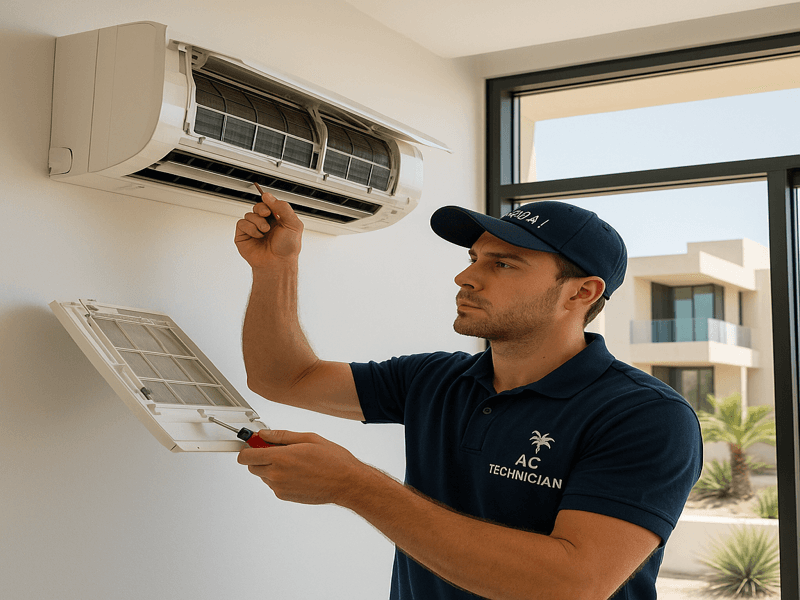
- Small bedroom (12-15 sqm): 1 ton / 12,000 BTU
- Master bedroom (18-25 sqm): 1.5 ton / 18,000 BTU
- Living room (30-40 sqm): 2 to 2.5 ton / 24,000-30,000 BTU
- Large open-plan area (50+ sqm): 3+ ton or multiple units
These figures assume standard ceiling heights of around 2.7 metres. If your property has double-height ceilings, floor-to-ceiling windows facing south, or poor insulation (common in older buildings in Deira and Bur Dubai), you'll need more cooling capacity.
An undersized unit runs constantly, never reaches the set temperature, and burns through electricity. An oversized unit short-cycles - switching on and off too frequently - which wears out the compressor faster and creates uneven temperatures.
The Installation Process: What Happens
A proper AC installation isn't a one-hour job. Here's what a professional installation looks like:
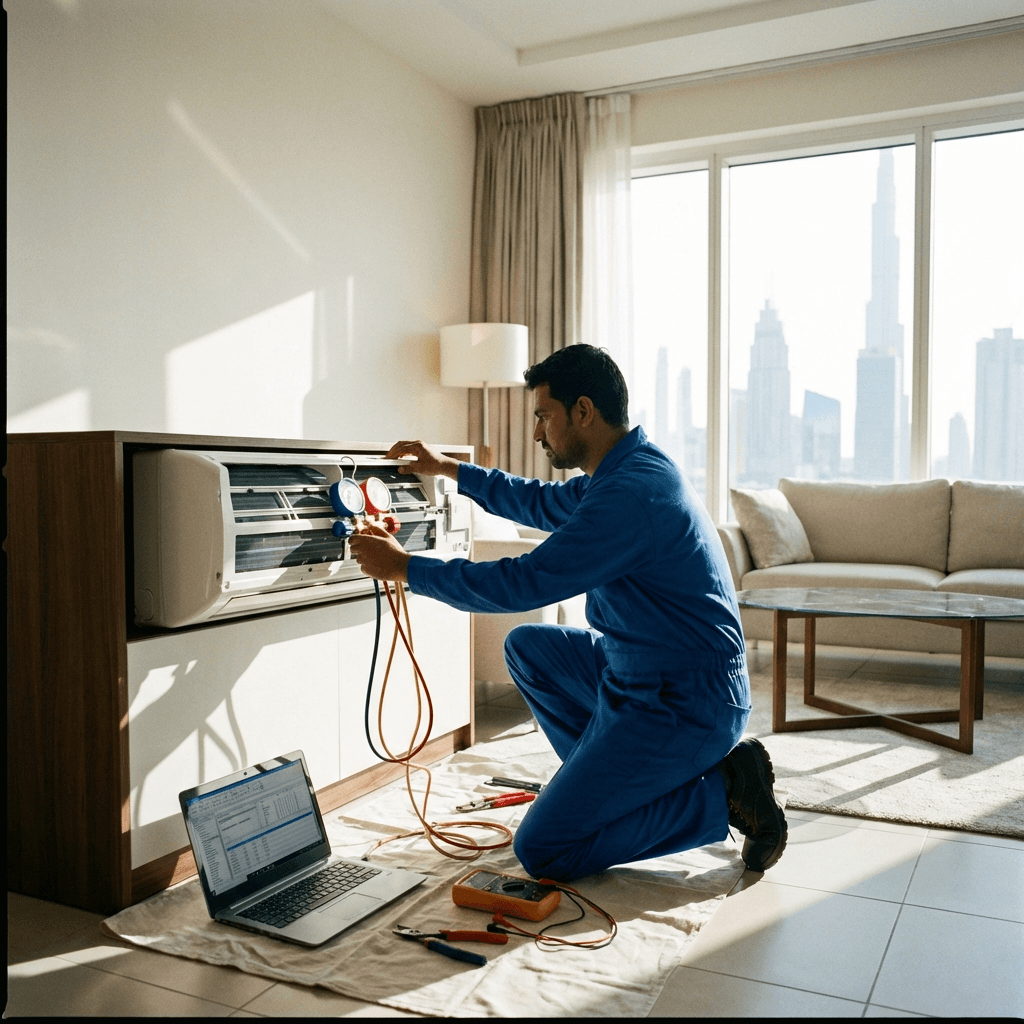
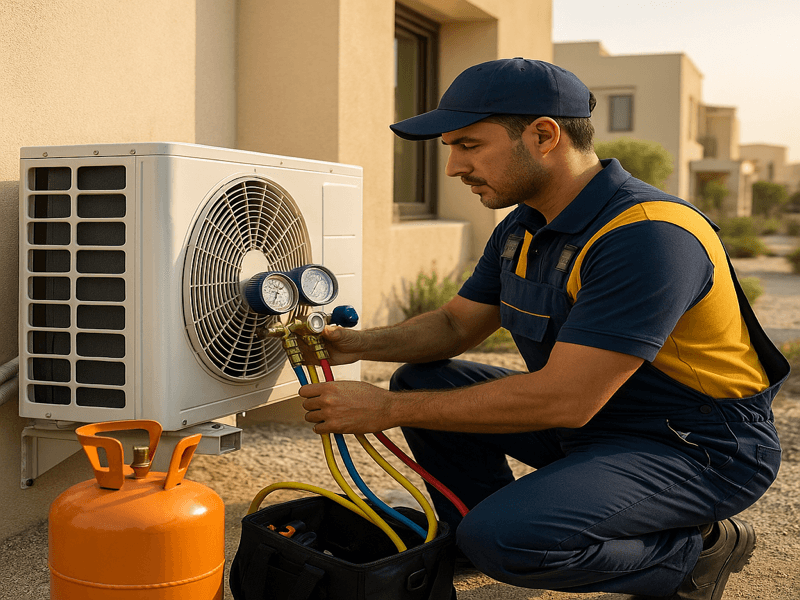
1. Site survey. A technician visits your property, measures the rooms, checks electrical capacity, identifies the best placement for indoor and outdoor units, and assesses the drainage route for condensation lines. 2. Electrical preparation. Each AC unit needs a dedicated circuit with the correct amperage. In older Dubai buildings, the existing wiring may not support newer high-capacity units. DEWA-compliant wiring isn't optional - it's a safety requirement. 3. Mounting and connection. The indoor unit is wall-mounted (for splits) or connected to ductwork (for central). Refrigerant lines are run between indoor and outdoor units, typically through a wall or ceiling cavity. The outdoor compressor is mounted on a bracket or placed on the building's designated AC platform. 4. Drainage. Every AC produces condensation, and in Dubai's humidity, that means a lot of water. The condensation line must drain properly - either to an existing drainage point or a dedicated pipe run. Blocked or poorly routed drainage is one of the most common installation problems and leads to water leaking inside. 5. Vacuum and charge. After connecting the refrigerant lines, the system is vacuumed to remove moisture and air, then charged with the correct amount of refrigerant (usually R410a for newer systems). Skipping the vacuum step is a red flag - it leads to reduced efficiency and compressor damage. 6. Testing. The system is run through a full cycle: cooling performance, thermostat accuracy, drainage flow, and noise levels. A good installer will walk you through the controls and recommended settings.What to Look for in an AC Installation Company
Dubai has hundreds of AC companies. Not all of them do quality work. Here's what separates the good from the rest:
- DEWA approval. Any electrical work connected to DEWA supply must be done by an approved contractor. Ask for their DEWA licence number.
- Warranty on labour. The AC manufacturer provides a warranty on the unit, but the installation itself should carry a separate workmanship guarantee. Look for at least 12 months on labour and piping.
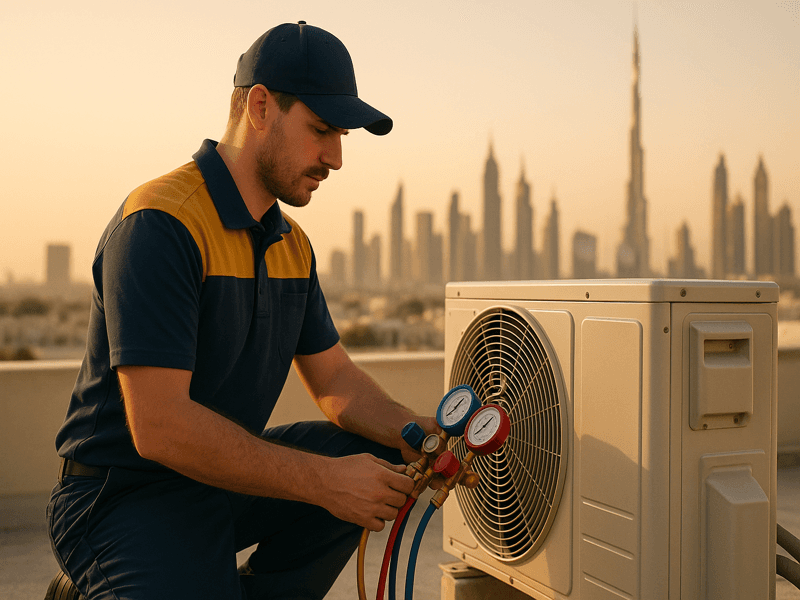
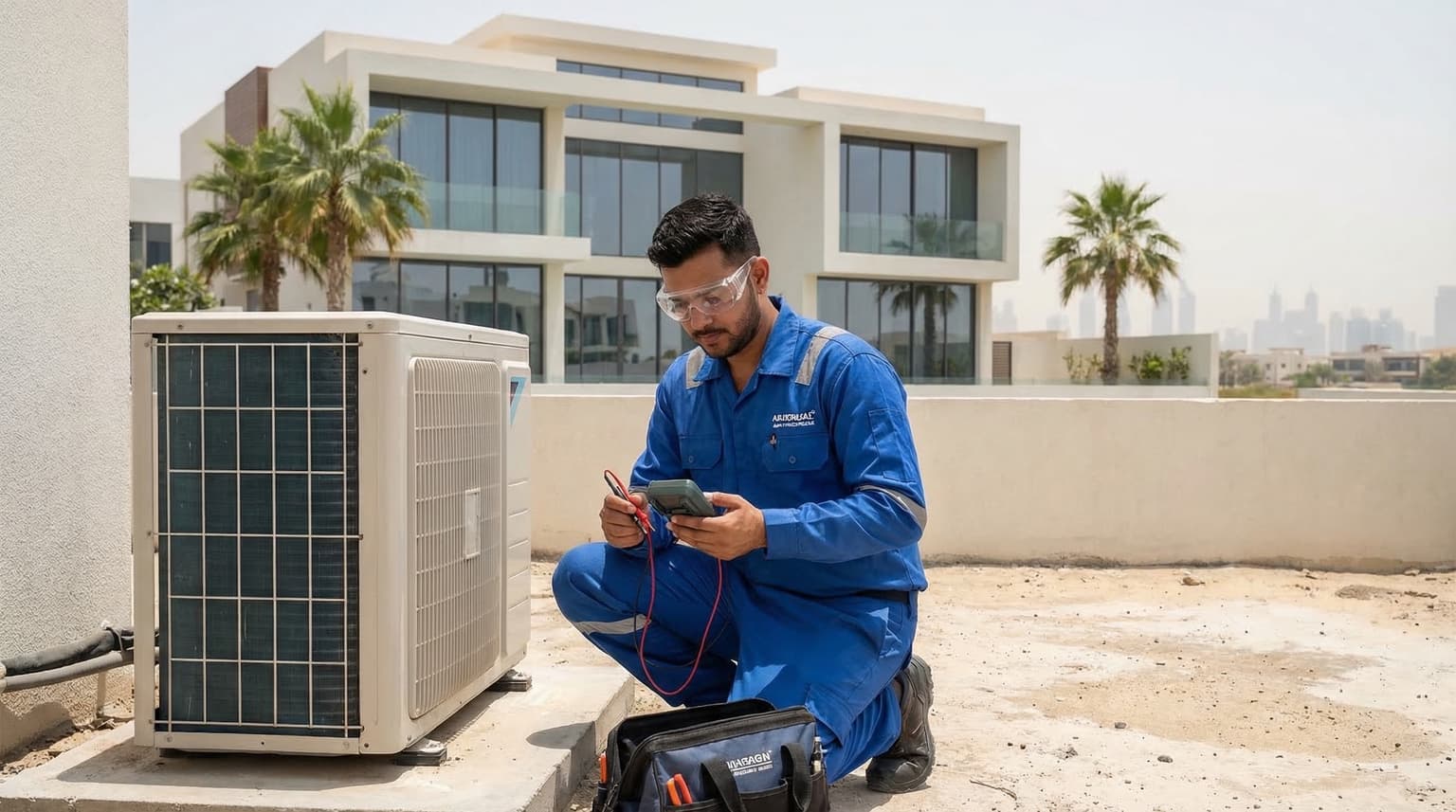
- Proper tools. Vacuum pumps, manifold gauges, pipe flaring tools, torque wrenches. If a technician shows up with just a spanner and a drill, think twice.
- Transparent pricing. Get a written quote that breaks down unit cost, installation labour, materials (copper piping, brackets, drainage fittings, electrical work), and any additional charges. "We'll see when we get there" isn't a quote.
Cost Breakdown: AC Installation in Dubai (2026)
Here's what you can expect to pay, materials and labour included:
| Work | Typical Cost (AED) |
|---|---|
| Split AC supply + install (1.5 ton) | 2,800 - 5,500 |
| Split AC install only (unit supplied) | 800 - 1,500 |
| Central AC replacement (3-bed villa) | 18,000 - 35,000 |
| Central AC replacement (5-bed villa) | 30,000 - 50,000 |
| Additional copper piping (per metre) | 80 - 150 |
| Electrical circuit addition | 500 - 1,200 |
| Condensation pump installation | 300 - 600 |
| Thermostat upgrade (smart) | 400 - 900 |
Prices vary by brand. Daikin and Carrier tend to be at the higher end. Gree and Midea offer solid performance at lower price points. For a mid-range sweet spot, many Dubai homeowners go with LG or Samsung.
Common Installation Mistakes to Avoid
Skipping the site survey. If an installer quotes you over the phone without seeing the property, they're guessing. Wrong sizing, wrong placement, wrong drainage route - all predictable problems. Indoor unit placement too close to the ceiling. The indoor unit needs at least 15cm clearance above it for airflow. Cramming it into a tight spot reduces efficiency and makes servicing difficult. Using the wrong refrigerant. Older systems used R22, which is being phased out. New units use R410a. Mixing refrigerants or topping up an R410a system with R22 damages the compressor. It happens more often than you would think. Poor drainage routing. The condensation line should slope downwards continuously. If it runs uphill at any point, water pools and eventually leaks. In apartments, this often shows up as water stains on the ceiling of the flat below - and an angry neighbour. Ignoring existing ductwork condition. When replacing a central AC, the ductwork matters just as much as the new unit. Damaged, leaky, or undersized ducts cancel out any efficiency gains from the new system. Have the ducts inspected before committing to a replacement.DEWA Regulations You Should Know
DEWA requires all AC installations to use approved equipment and be performed by licensed contractors. A few specifics worth knowing:
- Energy efficiency labels. DEWA enforces minimum efficiency standards. Units sold in the UAE carry star ratings - aim for 3 stars or higher. Higher-rated units cost more upfront but save significantly on monthly bills.
- Dedicated circuits. Each AC unit should have its own circuit breaker. Sharing a circuit with other appliances creates overload risks and violates DEWA standards.
- Permits for major work. Replacing a central system or running new electrical circuits in some buildings requires a DEWA permit. Your installer should handle this, but confirm before work begins.
When to Replace vs Repair Your AC
Not every AC problem means you need a new unit. But here are signs that replacement makes more financial sense than repair:
- The unit is over 10 years old and needs frequent repairs
- Repair costs exceed 40% of a new unit's price
- The system uses R22 refrigerant (increasingly expensive and hard to source)
- Your DEWA bills have climbed steadily despite regular servicing
- Cooling performance is noticeably worse, even after professional maintenance
- The unit makes loud or unusual noises during operation
If you're on the fence, a professional assessment can help. Sometimes a full AC service is all you need to restore performance. Other times, the numbers just point towards replacement.
FAQ
How long does AC installation take in Dubai?
A single split unit takes 3 to 5 hours, including electrical work and testing. Multiple units in an apartment take a full day. Central AC replacement in a villa typically takes 2 to 3 days, depending on ductwork complexity.
Can I install a split AC in my Dubai apartment myself?
Technically, you could mount the indoor unit. But connecting refrigerant lines, charging the system, and doing electrical work requires licensed professionals. DIY installation also voids manufacturer warranties and can violate building management rules.
How much does AC installation cost per unit in Dubai?
For a standard 1.5-ton split unit, expect AED 800 to AED 1,500 for installation only (if you supply the unit). With the AC unit included, total costs range from AED 2,800 to AED 5,500 depending on the brand and any additional electrical or piping work needed.
Do I need building approval to install a new AC?
In most apartment buildings, yes. Building management typically needs to approve outdoor compressor placement and any drilling through exterior walls. Villas in gated communities like Arabian Ranches or The Springs may also require community management approval.
What brand of AC is best for Dubai?
There's no single answer, but Daikin, Carrier, and Trane are popular for central systems due to their durability. For split units, LG, Samsung, Gree, and Midea all perform well in Dubai conditions. Prioritise the DEWA energy star rating over brand loyalty - a 5-star Midea will run cheaper than a 2-star premium brand.
Ready to Get Your AC Installed Properly?
If you're planning a new AC installation or need to replace an old system, European Technical can help. Our DEWA-approved technicians handle everything from the site survey to final testing, with transparent pricing and a workmanship guarantee.
Call us on 800 031 100 or send us a WhatsApp message to arrange a site visit. You can also book online - we'll get back to you within a few hours.
Published by European Technical Team