Dubai summers are no joke. Temperatures pushing past 45°C, humidity turning every outdoor moment into a steam bath. Your air conditioning stops being a luxury and becomes a flat-out necessity. Pick the right AC maintenance company and your unit runs efficiently for years. Pick the wrong one and you'll spend a miserable July week sweating while you wait for emergency repairs.
This guide covers what separates solid AC maintenance companies from poor ones, the right questions to ask before you sign anything, and realistic cost benchmarks across Dubai.
Why Dubai's Climate Is So Brutal on AC Equipment
Most residents underestimate how hard the climate is on air conditioning systems here. Six to eight months of near-continuous running, fighting ambient temperatures that most equipment wasn't originally tested at . It's a serious operational load.
Filters clog with fine desert dust, forcing the compressor to work harder and pull more DEWA electricity. Evaporator coils develop bacteria and mould over time, then push that straight into your living space. Refrigerant levels drop quietly until cooling efficiency falls. The condensate drain line sits ignored until it blocks and floods your ceiling.
A unit serviced twice a year routinely lasts 10 to 15 years in Dubai. Skip the maintenance and five years might be generous. The maths on preventative care are simple.
What a Proper Service Visit Should Include
Not all maintenance packages deliver the same value. A serious company includes the following as standard, not as paid extras tacked on at the end.
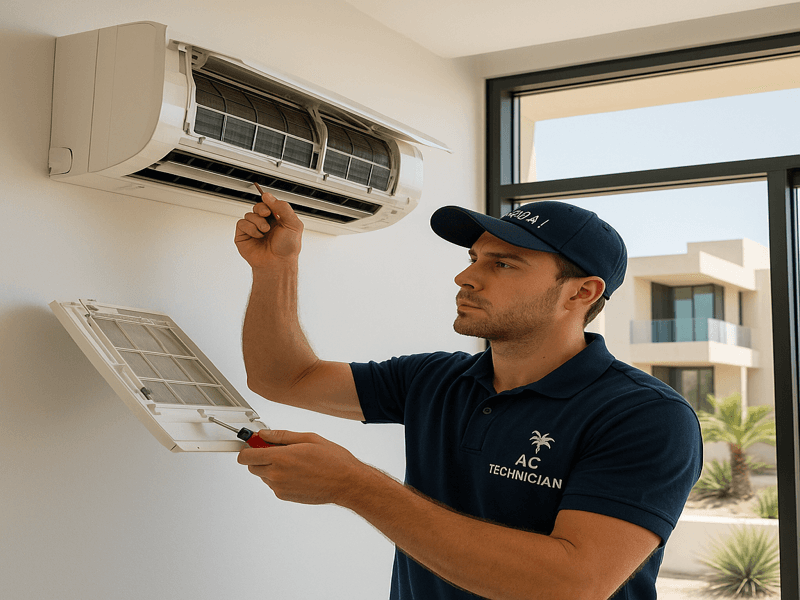
Filter cleaning and replacement should happen at every visit. Washing out or replacing filters is the bare minimum, yet it's the single change that most immediately improves airflow and reduces compressor strain.
Coil inspection and cleaning matters in Dubai more than in most places. Both the evaporator coils inside and condenser coils outside collect debris rapidly in this dusty environment. Heat transfer efficiency suffers, the unit works harder, energy bills climb. Proper cleaning requires coil-safe chemicals, not a garden hose.
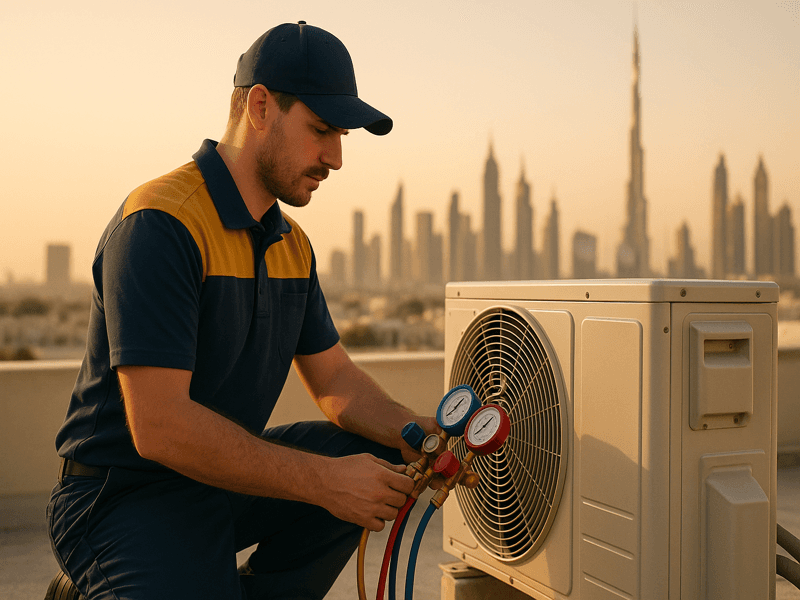
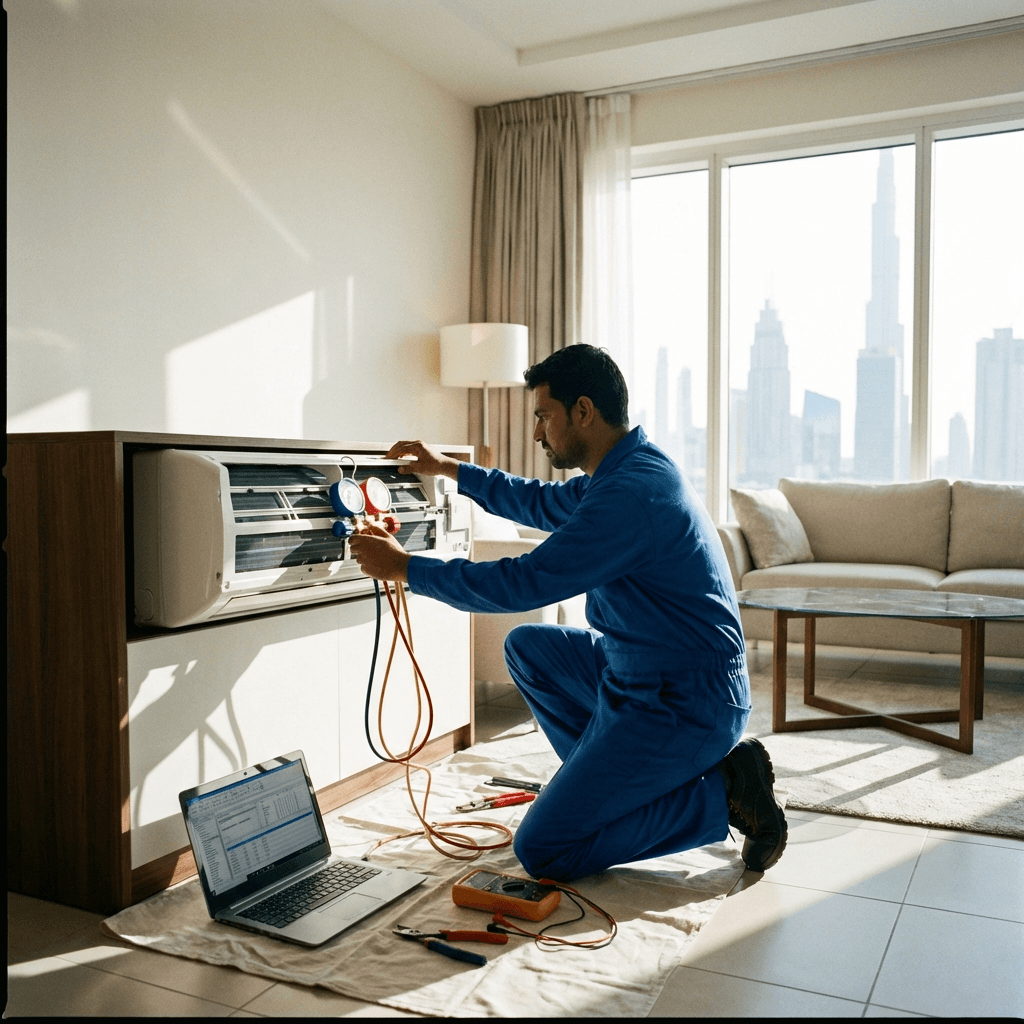
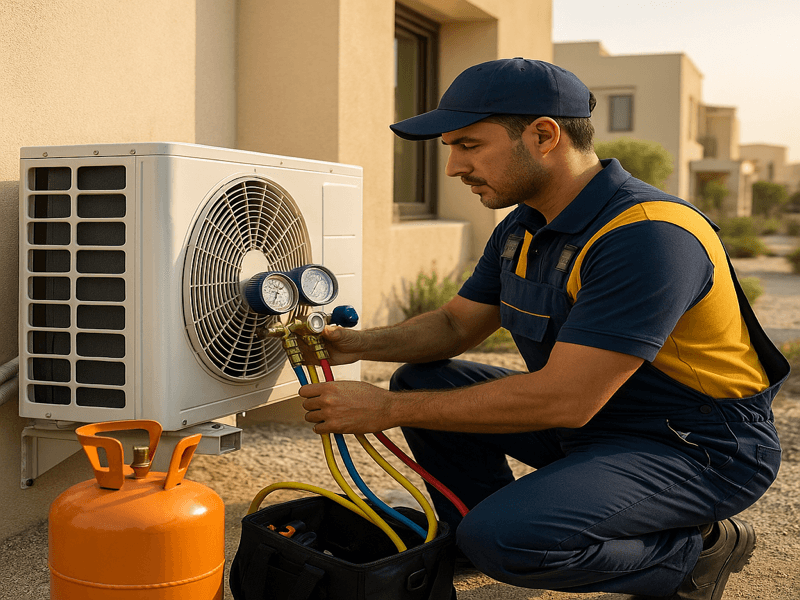
Refrigerant pressure checks come next. Low refrigerant is the most common reason ACs stop cooling properly. When pressure keeps dropping across consecutive visits, the right response is hunting for a leak, not endlessly topping up the gas.
Drainage system flush clears the condensate drain line before it blocks and backs water into walls or electrical components. This is critical during humid months, not optional.
Electrical inspection: terminal tightening, capacitor testing, thermostat checks. This prevents intermittent faults from turning into full failures.
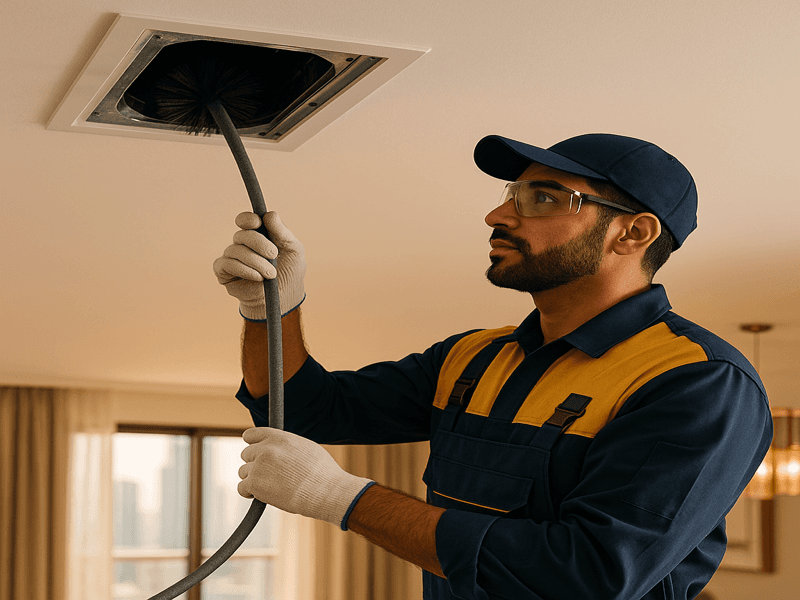
Annual duct inspection catches degraded duct sealing in older Dubai buildings before leaks waste significant cooling capacity.
Questions to Ask Before You Commit
Before signing a contract or booking a one-off service, a few direct questions reveal a lot about a company's standards.
Are your technicians DEWA-certified? For electrical work connected to AC systems, DEWA certification is a legal requirement. Hedging on this question is a clear sign to move on.
What exactly does the contract cover? Many basic packages cover labour only, with parts charged separately. Get the full inclusion list in writing before signing, and confirm whether emergency callouts are included.
Do you stock original manufacturer parts? Generic parts for Daikin, Gree, Carrier, and Hitachi can work, but OEM components carry manufacturer warranties. In our experience, they outlast aftermarket alternatives by a meaningful margin.
What's the emergency response time in peak summer? July and August see demand spike across the city. An honest answer here tells you a lot about the company's actual capacity versus what they promise in the sales conversation.
Have you worked with my building type before? Villa systems, district cooling connections in towers, and standard split units each behave differently when they fail. Experience across building types matters most when something unexpected happens mid-job.
Realistic Cost Ranges for 2026
Pricing varies based on building type, unit count, and what's included. These benchmarks are drawn from current Dubai market rates.
For a standard apartment with two or three split units, a single service visit runs AED 250 to AED 400 per unit. Annual contracts covering two visits per unit land between AED 400 and AED 700, depending on brand and equipment age.
Villas with four to six units typically pay AED 1,200 to AED 2,500 for an annual contract. Emergency callouts run AED 150 to AED 300 per visit, either included or billed separately.
Refrigerant top-up (R-410A) is almost always charged separately: AED 150 to AED 300 per unit. Compressor replacements run AED 800 to AED 2,500 depending on brand and tonnage, plus labour. That's usually where the repair versus replace conversation begins.
Warning Signs Worth Knowing
A handful of patterns show up consistently when AC maintenance goes wrong in Dubai.
Unusually cheap quotes hide something. That something is usually a plan to upsell refrigerant top-ups or parts the unit doesn't need. Itemised pricing given upfront is the baseline expectation from a reputable company.
Verbal agreements collapse when something expensive breaks, every time, without exception. Written contract terms covering what's included are not optional.
Scepticism is warranted when a company recommends replacing a unit under eight years old. Get a second opinion. Premature replacement recommendations are a genuine problem in this market.
Service records are how a good company tracks deteriorating trends before they become midnight emergencies. No records means no continuity and no accountability.
What European Technical Offers
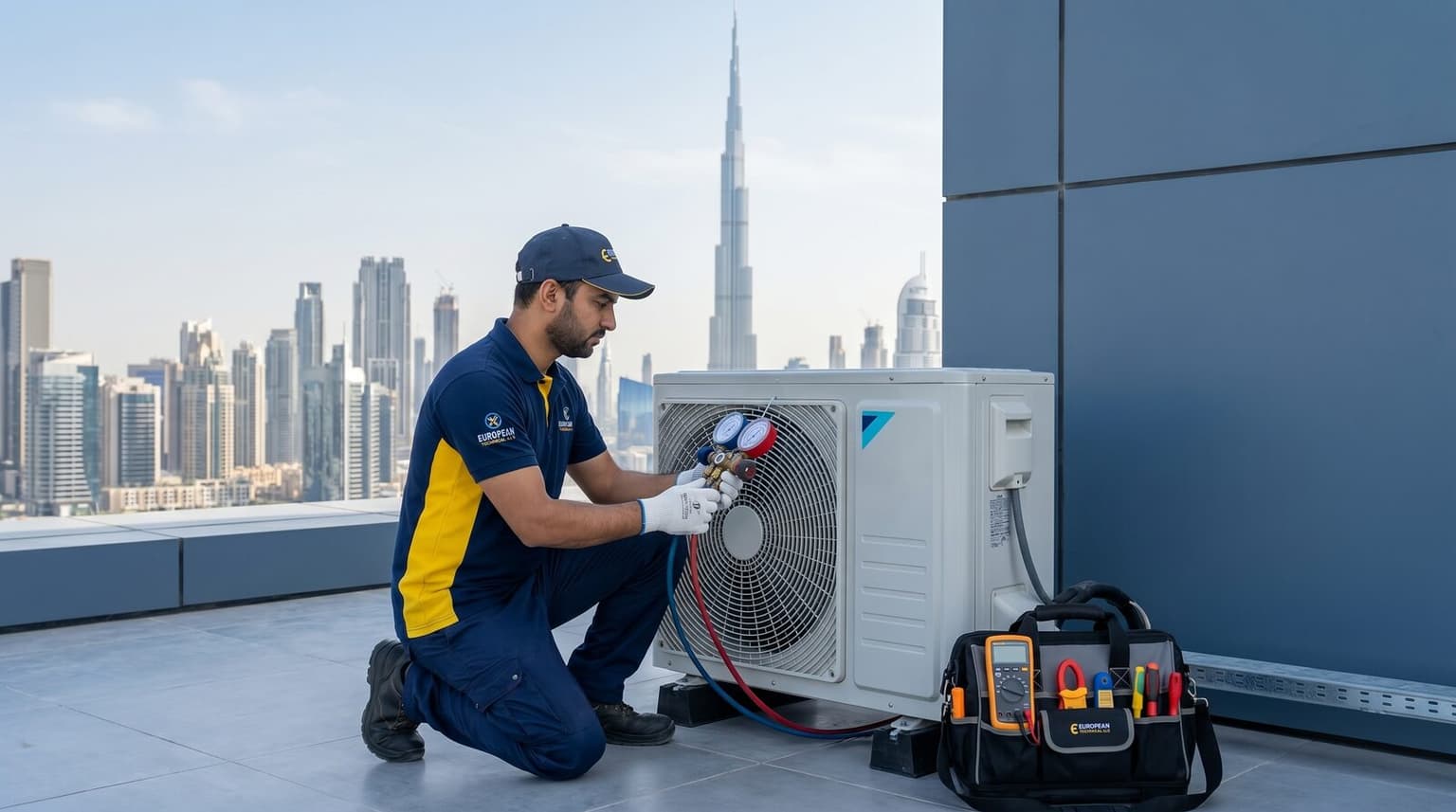
AC maintenance coverage across Dubai, from studio apartments in JVC and Discovery Gardens to villa complexes on the Palm and in Arabian Ranches. Technicians are trained and certified, and all major brand parts are kept on-site.
Every standard service visit covers filter cleaning, coil inspection, drainage flush, refrigerant pressure cheque, and electrical inspection. No hidden charges for work that belongs in the job.
Annual contracts start at AED 399 per unit per year, with two full service visits included and priority response for emergency callouts. Detailed service records are kept for every property, giving you a clear picture of equipment condition at any point.
Frequently Asked Questions
How often should AC units be serviced in Dubai?
Twice a year is the minimum. Once before summer, April to May, and once after, in October or November. Properties near active construction or in older buildings often need quarterly filter cleans in between to stay on top of dust buildup.
What's the difference between a service visit and an annual contract?
A one-off service covers what's done that day, billed per visit. An annual contract locks in scheduled maintenance at a lower per-visit rate, with priority response included. The contract makes clear financial sense once you have three or more units.
Will regular maintenance actually reduce my DEWA bill?
Yes, and often noticeably. In a three-bedroom apartment running well-maintained units versus poorly maintained ones, the difference in electricity consumption during summer can reach AED 50 to AED 150 per month.
How long does a typical service visit take?
About 30 to 45 minutes per unit. For a villa with five or six units, allow two to three hours. We give you an estimate before arriving.
My AC stopped working at midnight. What should I do?
Call +971 58 544 1160 or WhatsApp us at /whatsapp for emergency response.
Book Before the Heat Peaks
Waiting until July to think about maintenance means joining a very long queue. A service visit now, before temperatures hit their worst, will protect your equipment, cut your electricity bill, and give you peace of mind going into summer.
Call +971 58 544 1160, WhatsApp us at wa.me/971501685444, or book online. More information on our AC maintenance services is available on the website.
Published by the European Technical Team