Why Dubai's Climate Demands Special Paint Choices
Living in Dubai means accepting that the climate will test every element of your property. From June to September, temperatures routinely exceed 40 degrees Celsius and humidity levels remain consistently high. This combination of heat and moisture places extraordinary stress on interior and exterior walls alike.
In areas like Dubai Marina and Jumeirah Beach Residence, coastal humidity adds salt to the mix. Properties here face a constant battle against moisture penetrating paint films and causing blistering, peeling, and mould growth. Further inland, communities such as Arabian Ranches and Jumeirah Village Circle experience intense dry heat that can cause paint to chalk and fade rapidly.
The right paint choice makes a measurable difference. A quality paint system suited to Dubai conditions will protect your walls, maintain its colour for longer, and reduce the frequency at which you need to repaint. The wrong choice will start showing signs of failure within months.
Understanding Paint Types for High-Humidity Environments
Not all paints perform equally in humid conditions. The binder type, finish level, and formulation all determine how well a paint will resist moisture and maintain its appearance over time.
Acrylic Latex Paints
Acrylic latex paints are the most common choice for interior walls in Dubai homes. They offer good breathability, which allows trapped moisture to escape rather than becoming trapped behind the paint film. This breathability is essential in humid conditions where condensation can form on wall surfaces, particularly in bathrooms, kitchens, and laundry rooms.
Quality acrylic latex paints also resist mould and mildew growth better than oil-based alternatives. Many formulations now include antimicrobial additives that provide an extra layer of protection against the fungal growth that thrives in Dubai's humid months.
Moisture-Resistant and Kitchen-and-Bathroom Paints
For areas with direct and frequent moisture exposure, specialist moisture-resistant paints offer superior performance. These paints typically feature a more tightly bound polymer structure that creates a harder, less permeable surface. They withstand repeated cleaning and resist the staining that can occur from water splashes and condensation.
In Dubai kitchens, where cooking generates significant steam and airborne oils, a washable moisture-resistant paint will maintain its appearance far longer than standard emulsion. The same applies to bathrooms where shower steam creates consistently high humidity levels.
Low-VOC and Zero-VOC Options
Volatile organic compounds, or VOCs, are chemicals released by many paints as they dry. In Dubai's climate, where air conditioning keeps homes sealed for much of the year, choosing low-VOC or zero-VOC paints improves indoor air quality significantly. Many premium paint brands now offer low-VOC formulations that do not compromise on durability or moisture resistance.
This is particularly relevant for families with young children, asthma sufferers, or anyone sensitive to chemical odours. The curing period for low-VOC paints is also generally shorter, which means less disruption to your household during redecoration.
Interior Painting: Room-by-Room Guidance for Dubai Homes
Different rooms face different challenges. A one-size-fits-all approach to paint selection rarely delivers the best results in a Dubai property.
Living Areas and Bedrooms
For living rooms and bedrooms in communities like Downtown Dubai and Business Bay, a good quality matte or eggshell finish acrylic paint works well. These areas do not face direct moisture exposure but still need to cope with ambient humidity during the summer months.
Eggshell finishes offer a slight sheen that makes them more washable than flat matte paints, which is useful in homes with children. The subtle sheen also helps to hide minor wall imperfections that become more visible under the strong natural light typical of Dubai properties.
Kitchens and Bathrooms
Kitchens and bathrooms require paints specifically formulated for high-moisture environments. Look for paints labelled as bathroom, kitchen, or moisture-resistant. These typically have a satin or semi-gloss finish that creates a harder surface, repels water, and allows for regular cleaning without damaging the paint film.
In Dubai's climate, mould growth in bathrooms is a common problem. Paints with built-in mould inhibitors provide valuable protection, particularly in bathrooms with limited ventilation. Even with good extraction fans, the ambient humidity in Dubai means that moisture lingers longer than it would in drier climates.
Ceilings
Ceilings often show the first signs of humidity damage, particularly in bathrooms and kitchens where warm moist air rises. A specialist ceiling paint with moisture-resistant properties will prevent the yellowing and staining that can occur from repeated exposure to condensation.
Flat white ceiling paint remains the standard choice, but ensure you select a formulation that includes moisture resistance for any room where humidity is a concern.
Exterior Painting: Combating Sun, Sand, and Salt
Exterior walls in Dubai face the most punishing conditions. Intense UV radiation, sandstorms, high humidity, and temperature fluctuations all contribute to paint degradation. Exterior repainting is generally recommended every two to three years in Dubai due to these tough conditions, though some premium paint systems can extend this cycle.
Elastomeric Paints
For exterior masonry surfaces, elastomeric paints offer superior performance in Dubai's climate. These paints form a thick, flexible coating that can bridge hairline cracks and accommodate the slight expansion and contraction that occurs as walls heat up during the day and cool at night.
Elastomeric paints also provide excellent waterproofing properties, which is valuable during the rare but heavy rainfall Dubai experiences. The flexible film prevents water penetration while still allowing the substrate to breathe, reducing the risk of blistering and peeling.
UV-Resistant Formulations
UV radiation is one of the primary causes of paint degradation on Dubai exteriors. Quality exterior paints include UV-resistant pigments and binders that slow the fading and chalking process. Lighter colours naturally reflect more heat and UV radiation, which helps them maintain their appearance longer than darker shades.
For villas in communities like Arabian Ranches and The Springs, where exterior appearance significantly affects property value, investing in premium UV-resistant exterior paint pays dividends in reduced maintenance frequency and preserved curb appeal.
Salt and Sand Resistance
Coastal properties in areas like Dubai Marina and Palm Jumeirah face additional challenges from salt-laden air. Salt can penetrate paint films and cause underlying render to deteriorate. Paints with high resistance to salt spray and sand abrasion are essential for these locations.
For all exterior locations in Dubai, the paint must also withstand the abrasive effect of sand carried by wind during the frequent dust storms that occur throughout the year. Harder paint finishes resist this abrasion better than softer formulations.
Preparing Walls for Painting in Humid Conditions
Even the best paint will fail if applied to poorly prepared walls. In Dubai's climate, proper surface preparation is critical to achieving a durable finish.
Addressing Existing Moisture Issues
Before any painting begins, it is essential to identify and resolve the source of any existing moisture problems. Water stains, damp patches, and mould growth all indicate underlying issues that must be addressed. Painting over these problems without fixing the root cause will result in the new paint failing rapidly.
Common causes of moisture issues in Dubai properties include plumbing leaks, inadequate bathroom ventilation, gaps in exterior sealant, and condensation from air conditioning ducts. A thorough inspection should identify these issues before painting commences.
Wall Crack Repair
Wall cracks are common in Dubai properties due to thermal expansion and ground movement. Even hairline cracks can allow moisture to penetrate behind the paint film, causing blistering and peeling. Proper wall crack repair involves using quality filler and appropriate techniques to create a stable, smooth surface before painting.
For larger cracks, a flexible filler that can accommodate slight movement is preferable to rigid alternatives that will simply crack again. The repaired area should be sanded smooth and primed before the topcoat is applied.
Priming for Humidity Resistance
A quality primer creates the essential bond between the prepared wall surface and the topcoat. In humid environments, primer also provides an additional layer of moisture protection. For areas with existing mould or water damage, a stain-blocking primer will prevent discolouration from bleeding through the new paint.
Alkali-resistant primers are particularly important on new plaster and render, which are common in newly built Dubai properties. The alkaline nature of fresh cement-based surfaces can degrade standard primers, leading to adhesion failure.
The Cost of Quality Versus Frequent Repainting
Premium paints cost more upfront but can reduce long-term maintenance costs significantly. A typical interior painting project in a two-bedroom apartment in JVC might cost between AED 2,500 and AED 4,000 using quality materials, while the same project with budget paints might cost AED 1,500 to AED 2,500. However, the budget option may require repainting within two years, while the premium option could last four to five years.
For villa exteriors, the cost difference is even more significant because of the access equipment and labour involved. Extending the repaint cycle by even one year through better paint selection represents a meaningful saving.
This is where an annual maintenance contract can add real value. Regular inspections catch minor issues before they become major problems, and scheduled maintenance ensures your paintwork remains in good condition year round.
Why Professional Painting Makes Sense in Dubai
Dubai's climate creates painting challenges that go beyond simple decoration. The combination of heat, humidity, UV radiation, and sand requires specific knowledge of which products perform well in local conditions.
Professional painters understand how temperature and humidity affect paint application and curing. Paint applied during peak summer heat can dry too quickly, preventing proper film formation. Paint applied when humidity is very high may not cure properly, leading to adhesion problems. Experienced painters adjust their working hours and techniques to account for these factors.
There are also regulatory considerations. The Dubai Municipality and various homeowner associations have rules governing exterior painting, particularly in communities with unified design schemes. Professional painters are familiar with these requirements and can ensure compliance.
For landlords preparing properties for new tenants, professional painting ensures the property meets the standards expected in Dubai's competitive rental market. A poor-quality paint job can delay leasing and reduce achievable rent.
Similarly, if you are a tenant ending your tenancy, a professional paint job can help ensure you recover your full security deposit. Many tenancy disputes in Dubai centre on the condition of walls, and a documented professional paint job provides clear evidence of the property's condition.
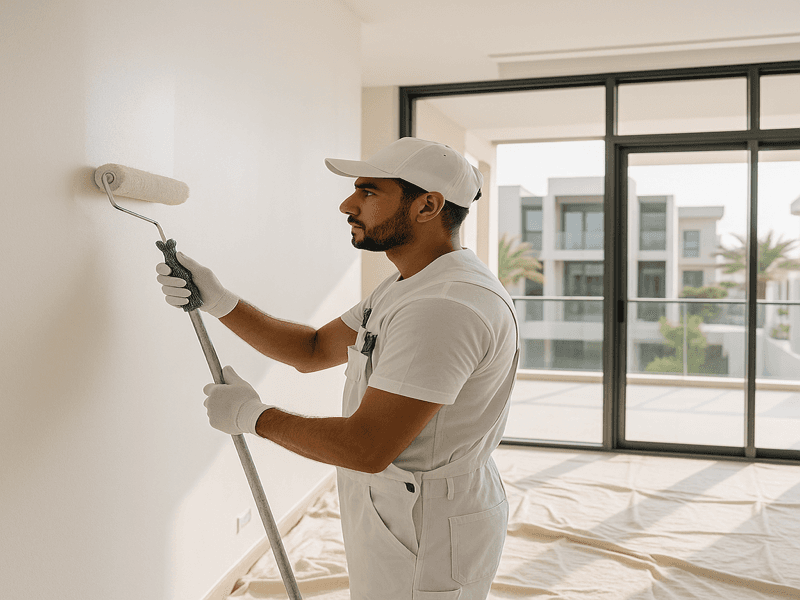
A skilled handyman can handle minor touch-ups and small repairs, but for full-room or whole-property painting, specialist painters deliver superior results. They have the equipment to achieve even coverage, the experience to select appropriate products, and the skills to handle the detailed work around fixtures and fittings.
Choosing Colours That Work in Dubai Light
Dubai's intense natural light affects how paint colours appear on walls. Colours that look subtle on a paint chart can appear much brighter and more saturated when applied across a large wall surface under strong sunlight.
Light colours remain the most popular choice for Dubai interiors because they reflect heat, make spaces feel larger, and cope well with the strong light. Whites, off-whites, and light greys are safe choices that work across most properties.
For exteriors, lighter colours are practical as well as aesthetic. They reflect more solar radiation, which reduces heat absorption and can contribute to lower cooling costs. They also show dust and sand less prominently than darker colours, which is a practical consideration given Dubai's frequent dust storms.
If you do choose darker colours, be prepared for more frequent maintenance. Dark exterior paints fade more quickly under UV exposure and show dust accumulation more readily.
Maintaining Painted Walls Between Repaints
Proper maintenance extends the life of any paint job. Regular cleaning removes the dust and grime that can trap moisture against paint surfaces and contribute to mould growth.
For interior walls, gentle cleaning with a soft cloth and mild detergent is sufficient for most marks. Avoid abrasive cleaners or scrubbing too vigorously, as this can damage the paint film. Address scuffs and marks promptly before they become ingrained.
For exterior walls, periodic washing removes the layer of dust that accumulates and can become embedded in the paint surface. This is particularly important after sandstorms. Low-pressure washing is effective, but avoid high-pressure washing that can damage the paint film.
Inspect walls regularly for early signs of problems such as hairline cracks, peeling, or mould growth. Addressing these issues early through a general maintenance service prevents them from developing into larger problems that require more extensive and expensive remediation.
Common Painting Mistakes to Avoid in Dubai
Several common mistakes reduce the lifespan of paint in Dubai properties. Avoiding these will help your paint job last longer and perform better.
Painting over mould without treating it first is perhaps the most common error. The mould will continue to grow beneath the new paint and reappear within weeks. Any mould must be thoroughly cleaned and the underlying moisture issue resolved before repainting.
Skipping primer is another frequent mistake, particularly on new plaster or previously unpainted surfaces. Primer provides the essential bond between substrate and topcoat. Without it, adhesion is compromised and the paint will peel prematurely.
Painting in unsuitable weather conditions also causes problems. While interior painting is less affected by weather, exterior painting should not be undertaken during high winds, dust storms, or when rain is forecast. Even in Dubai's typically dry climate, unexpected rainfall can ruin a freshly painted exterior.
Using the wrong paint type for the location is another issue. Standard emulsion paint in a bathroom will fail quickly, while exterior paint used indoors may emit higher levels of VOCs than is desirable for indoor air quality.
FAQ
How often should I repaint my villa exterior in Dubai?
Exterior repaints are generally recommended every two to three years in Dubai due to the harsh climate. Intense UV radiation, sandstorms, and humidity all accelerate paint degradation. Premium paint systems and proper surface preparation can extend this cycle, but regular inspections are advisable to catch any early signs of failure.
What type of paint is best for bathrooms in Dubai homes?
Moisture-resistant paints with a satin or semi-gloss finish are best for bathrooms in Dubai. These paints form a harder surface that repels water and resists mould growth. Look for formulations that include antimicrobial additives for extra protection against the fungal growth that thrives in humid bathroom conditions.
Can I paint my Dubai property during the summer months?
Interior painting can be done year-round in Dubai since air conditioning controls temperature and humidity. Exterior painting during peak summer requires careful planning. Paint should not be applied to surfaces that are too hot to touch, as it will dry too quickly and fail to form a proper film. Early morning application is often necessary during summer.
How do I prevent mould on painted walls in Dubai?
Preventing mould requires controlling moisture levels. Ensure bathrooms and kitchens have working extraction fans. Use air conditioning to reduce indoor humidity. Choose paints with mould-inhibiting additives for high-moisture areas. Address any plumbing leaks or water ingress promptly. Clean existing mould thoroughly with appropriate cleaners before repainting.
Is low-VOC paint suitable for Dubai's humid climate?
Yes, many low-VOC and zero-VOC paints now offer excellent moisture resistance and durability. The formulation of these paints has improved significantly, and premium brands offer low-VOC options specifically designed for high-humidity environments. They are a good choice for Dubai homes where air conditioning keeps spaces sealed for much of the year.
Do I need permission to paint the exterior of my Dubai villa?
Yes, in most communities you need approval from the relevant homeowner association or community management before painting exteriors. Many communities have approved colour schemes to maintain visual consistency. The Dubai Municipality also has regulations governing exterior building modifications. Check with your community management before commencing any exterior painting work.