Dubai runs on air conditioning. From May through October, your AC operates around the clock - often pulling 16 to 20 hours of daily runtime. That's roughly 3,600 hours per cooling season.
And yet most residents never open a filter panel, never peek inside a duct, and never wonder what exactly they're breathing in.
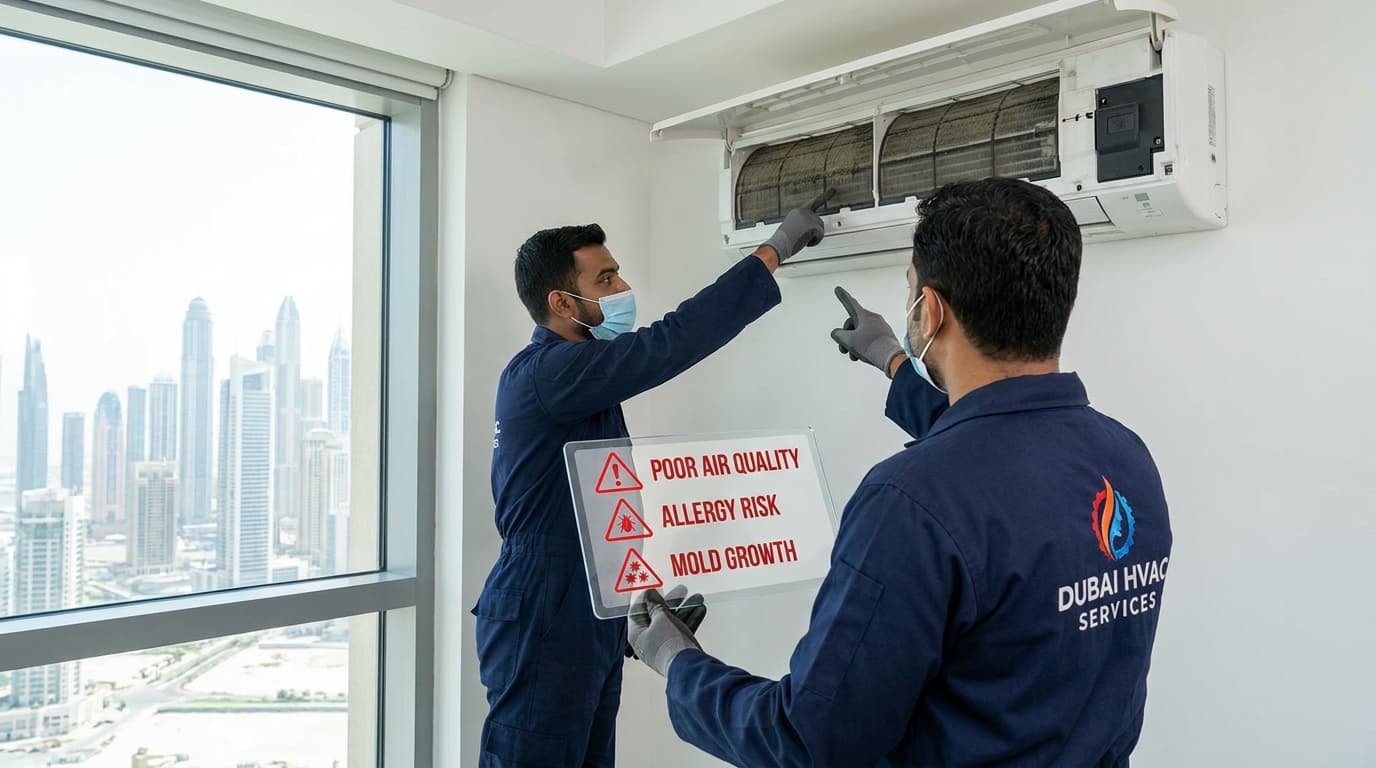
The uncomfortable truth: a neglected AC unit doesn't just cool your home poorly. It actively circulates contaminated air through every room, every hour, all day long. The health consequences range from persistent allergies to serious respiratory illness - and Dubai's extreme climate makes the problem worse than almost anywhere else on earth.
What Actually Grows Inside a Dirty AC Unit
Air conditioning systems work by pulling warm air across an evaporator coil, cooling it, and pushing it back into your living space. The coil sweats - constantly producing condensation in a dark, enclosed space.
That environment is paradise for biological growth.
Mould and Mildew
Mould colonies thrive on AC evaporator coils, drip trays, and the interior lining of ductwork. In Dubai, outdoor humidity regularly exceeds 80% during summer months, and that moisture enters the system every time the unit cycles. Species like _Aspergillus_, _Penicillium_, and _Cladosporium_ are routinely found in AC systems that haven't been serviced in six months or more.
When the fan blows, mould spores disperse through the supply vents and into the air you breathe.
Bacteria (Including Legionella)
Standing water in drip trays and condensate lines creates breeding conditions for bacteria. Legionella pneumophila - the bacterium responsible for Legionnaires' disease - proliferates in stagnant water between 20°C and 45°C. A blocked condensate drain in a Dubai summer sits comfortably in that range.
Legionnaires' disease causes severe pneumonia. It isn't common, but outbreaks tied to poorly maintained cooling systems are well documented across the Middle East.
Dust Mites and Allergens
Filters that haven't been cleaned in weeks accumulate dust, dead skin cells, pet dander, and pollen. This debris feeds dust mite populations that colonise the filter media and downstream ductwork. Their droppings - microscopic faecal particles - become airborne every time the blower activates.
For anyone with asthma or allergic rhinitis, this is a direct trigger.
Sand and Fine Particulate Matter
Dubai's desert geography means fine sand particles infiltrate buildings through every gap, crack, and open door. Standard AC filters capture the larger particles, but once a filter is clogged (which happens fast here), the system either bypasses the filter or recirculates the trapped material.
Residents in areas like JVC, Al Barsha, and Dubai Silicon Oasis - closer to open desert - report higher rates of dusty vents and coil fouling.
How Your Health Is Affected
Allergic Rhinitis and Chronic Sinusitis
That persistent stuffy nose, the sneezing fits, the post-nasal drip that won't clear - these are the hallmark symptoms of airborne allergen exposure. Multiple studies have linked poorly maintained AC systems to significantly higher rates of allergic rhinitis in building occupants.
In Dubai, the condition is so common that ENT clinics report a measurable spike in consultations every time summer humidity peaks. The root cause, in many cases, traces back to the AC.
Asthma Attacks
Mould spores, dust mite allergens, and fine particulates are all established asthma triggers. If someone in your household has asthma and your AC hasn't been serviced, you're running a known risk factor 24 hours a day.
Children are particularly vulnerable. Their airways are narrower, their breathing rate is faster, and they spend more time indoors during the hot months.
Sick Building Syndrome
This isn't a fringe diagnosis. The World Health Organisation defines Sick Building Syndrome (SBS) as a condition where building occupants experience acute health effects linked to time spent indoors, with no specific illness or cause identified.
Symptoms include headaches, dizziness, nausea, fatigue, difficulty concentrating, and irritation of the eyes, nose, or throat.
Research consistently points to HVAC systems as a primary contributing factor. Poor ventilation, contaminated ductwork, and recirculated indoor air compound the effect. In a city where people spend upward of 90% of their time indoors during summer, SBS isn't theoretical - it's a daily reality for many households.
Respiratory Infections
A dirty AC doesn't just irritate existing conditions - it can cause new ones. Bacterial contamination in the system leads to upper and lower respiratory tract infections. Persistent coughs, chest tightness, and recurring throat infections are common complaints from residents living with poorly maintained air conditioning.
Skin Irritation and Dryness
AC-related health effects go beyond the lungs. Over-cooled, under-humidified air combined with circulating contaminants causes eczema flare-ups, dry skin, and eye irritation. Dermatologists in Dubai frequently see patients whose symptoms improve simply by having their AC system cleaned.
Why Dubai Is a Worst-Case Scenario
Other cities use air conditioning. Dubai depends on it for survival. Several factors combine to make this a uniquely high-risk environment:
Year-round operation: Unlike temperate climates where AC runs four or five months, Dubai units operate nine to ten months per year. Some buildings never switch off entirely.
Extreme humidity swings: Summer humidity in coastal areas routinely hits 90%+. This creates far more condensation inside the system than a dry climate would.
Sand infiltration: Fine desert sand penetrates building envelopes and clogs filters faster than in any temperate city. A filter rated for three months in London may last four weeks in Dubai.
High-density living: Apartment buildings with shared duct systems amplify the problem. Contamination in one unit's ductwork can affect neighbouring apartments through interconnected plenum spaces.
24/7 sealed environments: Energy efficiency drives buildings to seal tightly. Fresh air intake is minimal. The result: whatever is in your AC system, you're breathing it on repeat.
Warning Signs Your AC Needs Attention
Don't wait for a health problem to tell you the AC is dirty. Watch for these indicators:
- Musty or sour smell when the unit starts - this is almost always mould.
- Visible dust on supply vent grilles, even after wiping them clean.
- Water dripping from the indoor unit or pooling near the base.
- Increased allergy symptoms that improve when you leave the building.
- Uneven cooling - some rooms cold, others warm - indicating blocked airflow.
- Higher electricity bills without a change in usage pattern. A clogged system works harder.
- Condensation or moisture on walls or ceilings near AC vents.
- The unit hasn't been serviced in six months or longer.
If you're seeing two or more of these signs, the system needs professional cleaning - not just a filter rinse.
What Professional AC Maintenance Actually Includes
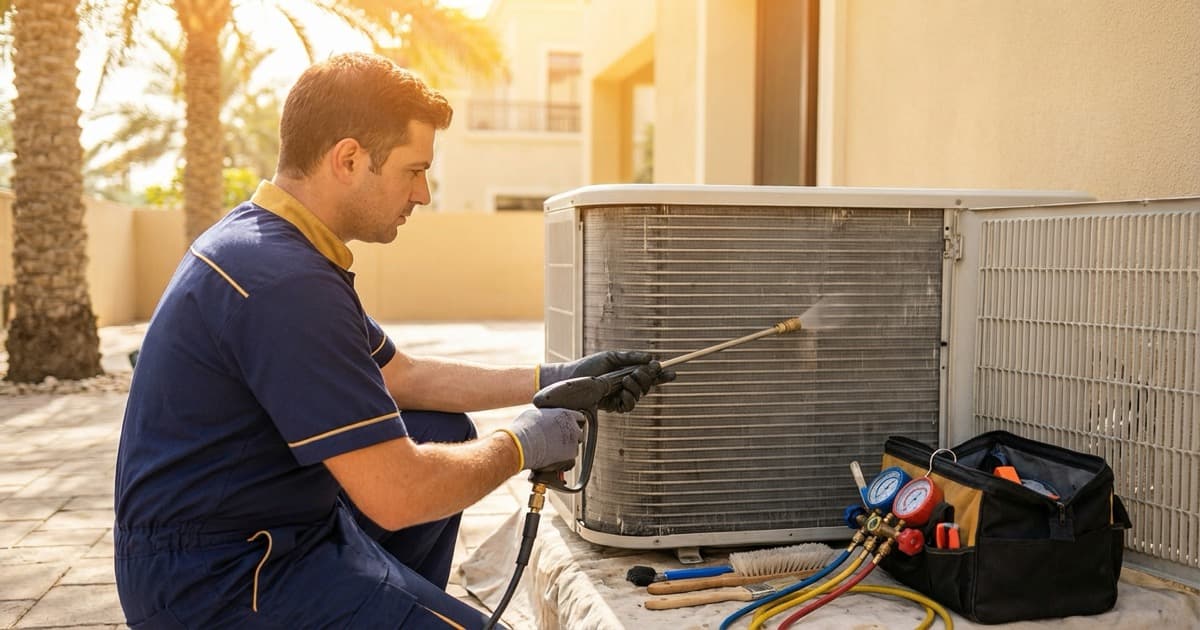
Running water over the filter at your kitchen sink isn't maintenance. Professional AC servicing involves a systematic inspection and deep cleaning of every component that affects air quality and system performance.
A proper service visit covers:
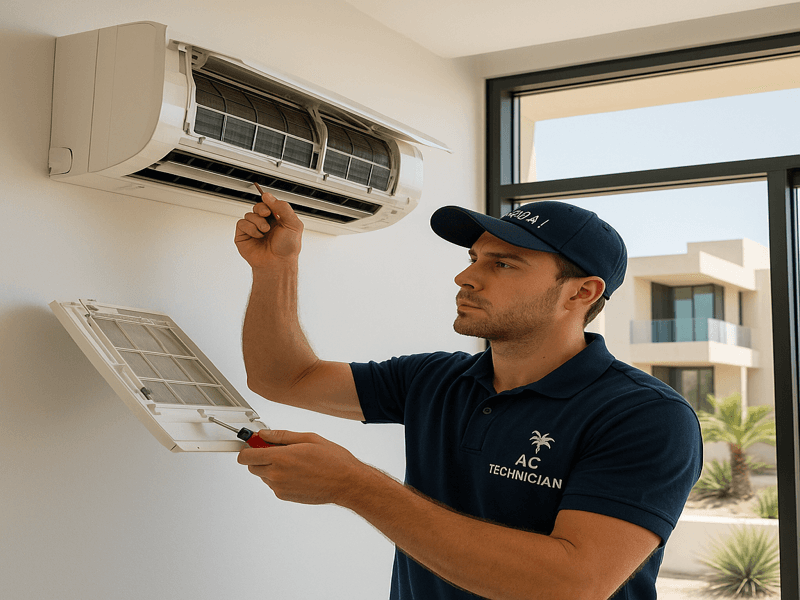
- Filter inspection and replacement - Checking filter condition, cleaning reusable types with appropriate solutions, and replacing disposable filters that are beyond recovery.
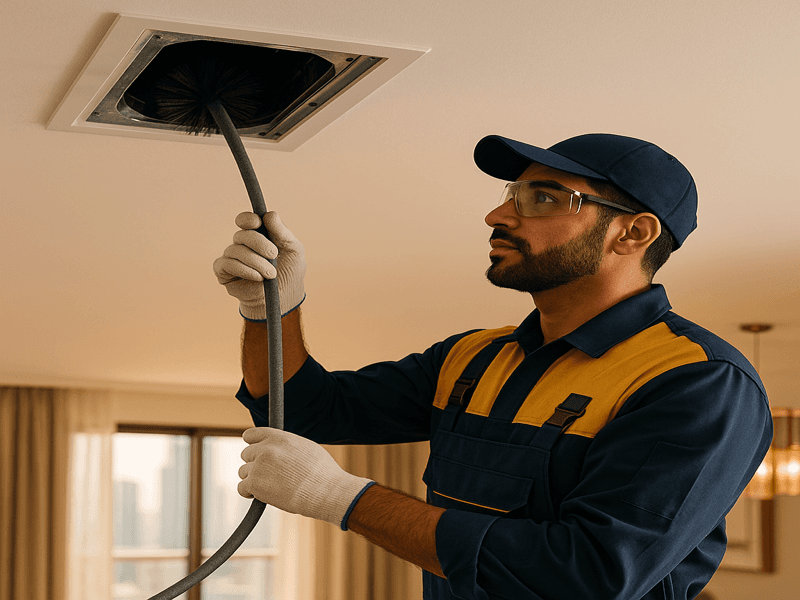
- Evaporator coil deep cleaning - Removing accumulated dirt, mould, and biofilm from the coil surface using specialised coil cleaning solutions. This is where most contamination lives.
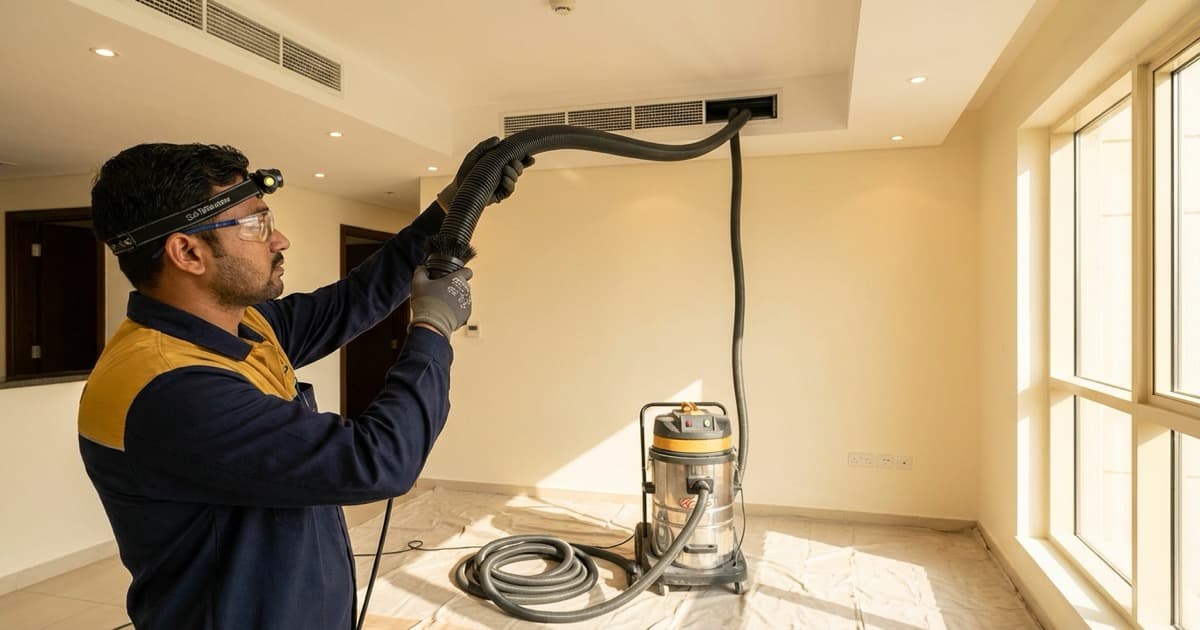
- Condensate drain line flush - Clearing the drain line with pressurised water or vacuum to prevent blockages that cause water damage and bacterial growth.
- Drip tray sanitation - Cleaning and treating the drip tray with anti-microbial solution to prevent standing water problems.
- Blower and fan cleaning - Removing built-up dust from the blower wheel and fan blades that reduce airflow and spread contaminants.
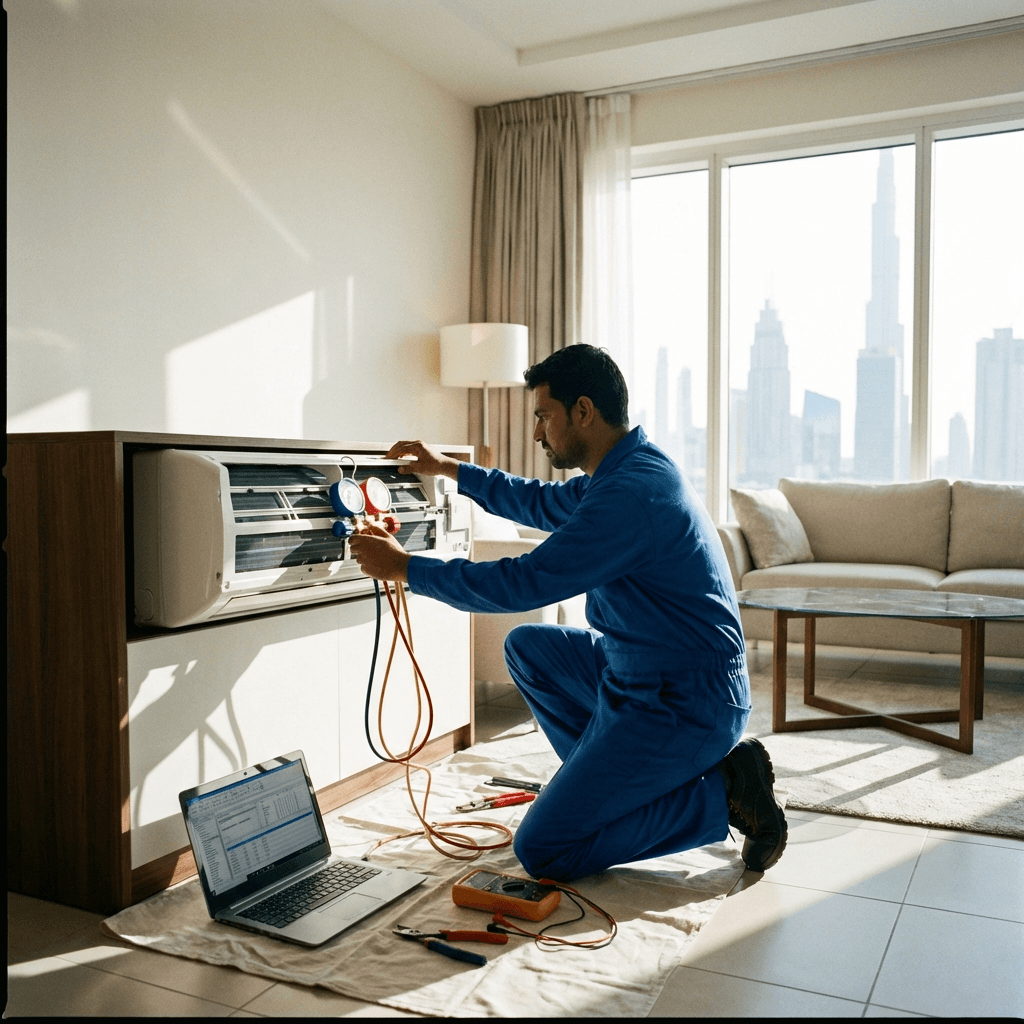
- Electrical connection cheque - Inspecting wiring, capacitors, and control boards for wear or damage.
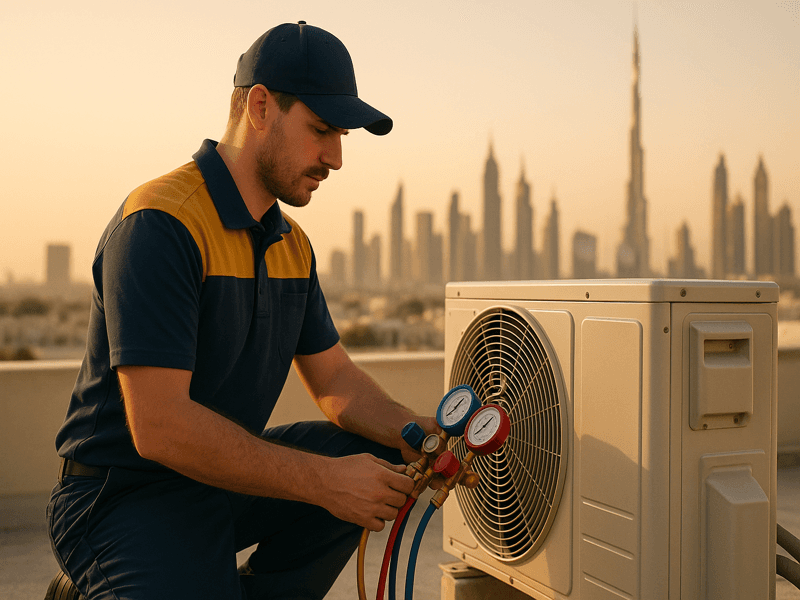
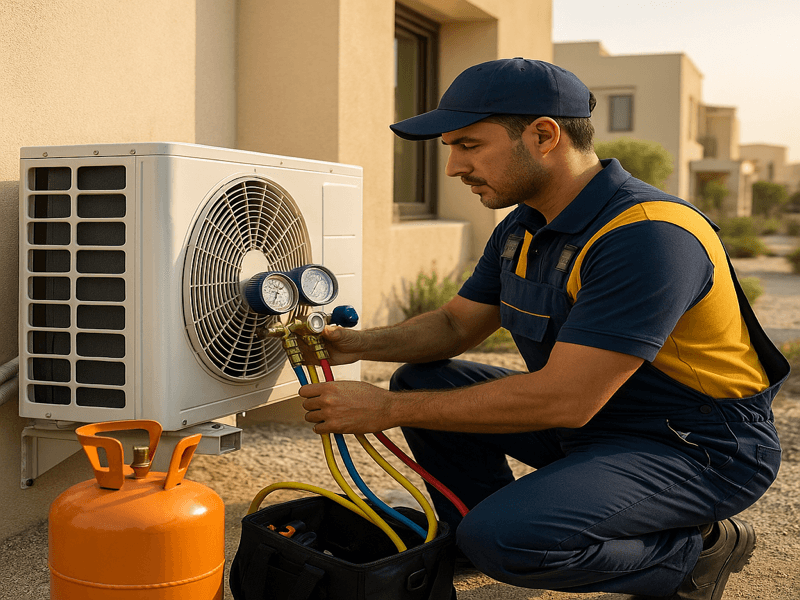
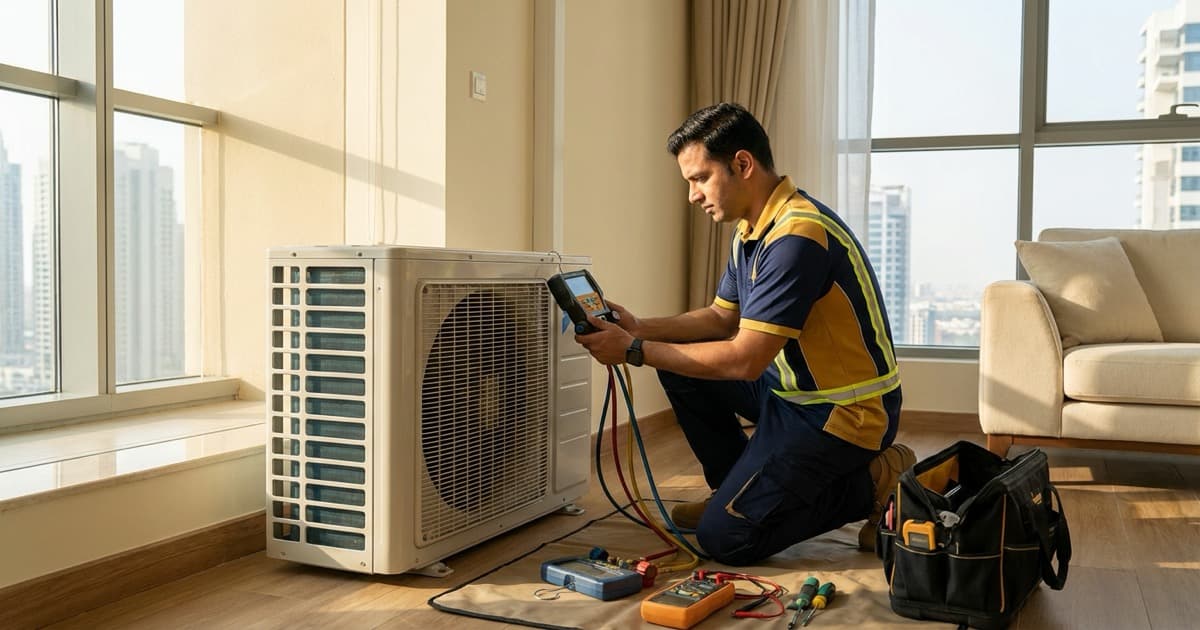
- Refrigerant pressure test - Verifying gas levels are within manufacturer specifications.
- Thermostat calibration - Confirming the system responds accurately to temperature settings.
- Overall system performance test - Measuring inlet and outlet temperatures to confirm the system is delivering rated cooling capacity.
The entire process takes between 45 minutes and two hours per unit, depending on the system type and condition.
How Often Should You Service Your AC in Dubai?
The standard recommendation for Dubai is every three to four months for residential split units, and monthly for units running in commercial or high-dust environments.
If your building is in a high-sand area, if you've pets, or if anyone in the household has respiratory conditions, lean toward the shorter interval.
Annual maintenance contracts (AMCs) are the most cost-effective approach. Rather than calling for reactive repairs after something breaks, an AMC covers scheduled visits throughout the year - catching problems early and keeping your system clean.
European Technical's AC maintenance service includes all the steps listed above, performed by licensed technicians who know Dubai's specific challenges. We service split units, ducted systems, central plants, and window units across every area of the city.
The Bottom Line
The air inside your home shouldn't make you sick. But in Dubai, where air conditioning isn't optional, a dirty AC system is a genuine health hazard.
The fix is straightforward: regular professional maintenance. Not once a year. Not when it breaks. On a consistent schedule that accounts for Dubai's extreme operating conditions.
If your last AC service was more than four months ago - or if you can't remember when it was - it's time to book a cleaning.
Your lungs will thank you.
Frequently Asked Questions
Can a dirty AC unit actually make you sick?
Yes. Dirty air conditioning units circulate mould spores, bacteria, dust mite allergens, and fine particulates through your indoor air. Documented health effects include allergic rhinitis, asthma attacks, respiratory infections, Sick Building Syndrome, and Legionnaires' disease in severe cases.
How often should AC units be cleaned in Dubai?
Every three to four months for residential split units. Monthly for commercial units or homes with pets, high dust exposure, or occupants with respiratory conditions. An annual maintenance contract is the most practical way to stay on schedule.
What are the signs of a dirty AC unit?
Musty or sour odours when the unit starts, visible dust on vents, water leaks from the indoor unit, worsening allergy symptoms indoors, uneven cooling across rooms, and unexplained increases in electricity bills.
Does AC cleaning improve air quality?
Significantly. Professional cleaning removes mould, bacteria, and accumulated debris from the coil, drip tray, and ductwork. Most people notice the difference in air freshness within hours of a proper service.
Is it enough to just clean the AC filter myself?
No. Filter cleaning addresses only one component. Mould grows on the evaporator coil, bacteria breed in the drip tray, and dust accumulates on the blower - none of which are accessible without professional tools and disassembly.
How much does AC maintenance cost in Dubai?
A single split unit service typically costs between AED 150 and AED 250, depending on the provider and scope of work. Annual maintenance contracts start from around AED 125 per month and include multiple visits, priority scheduling, and repair discounts.