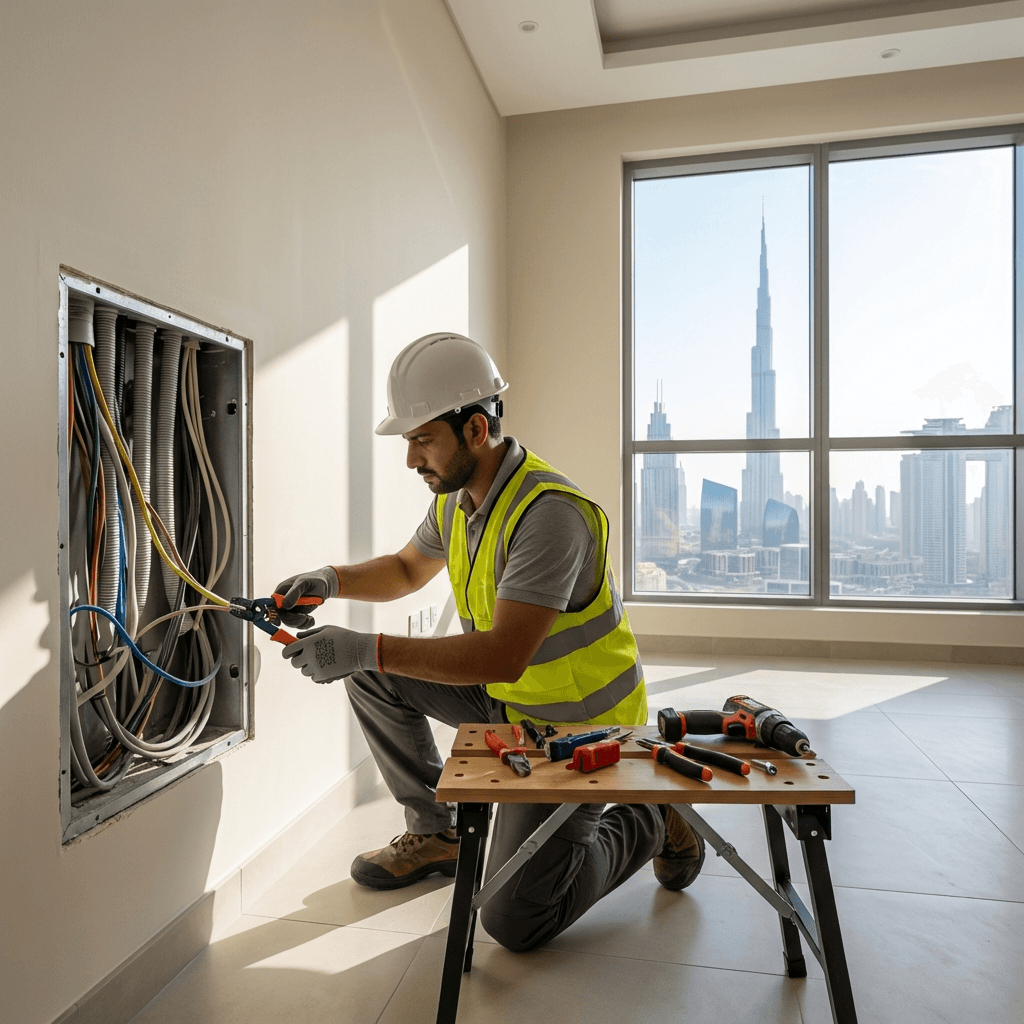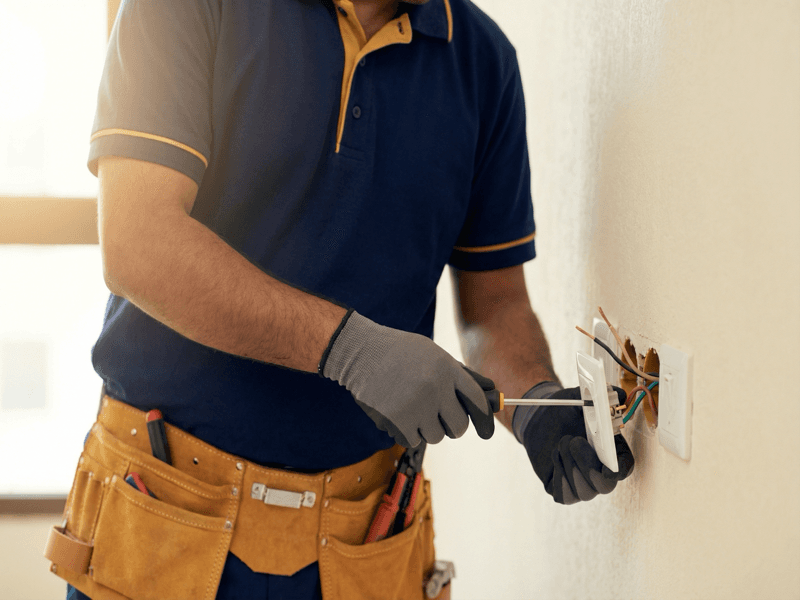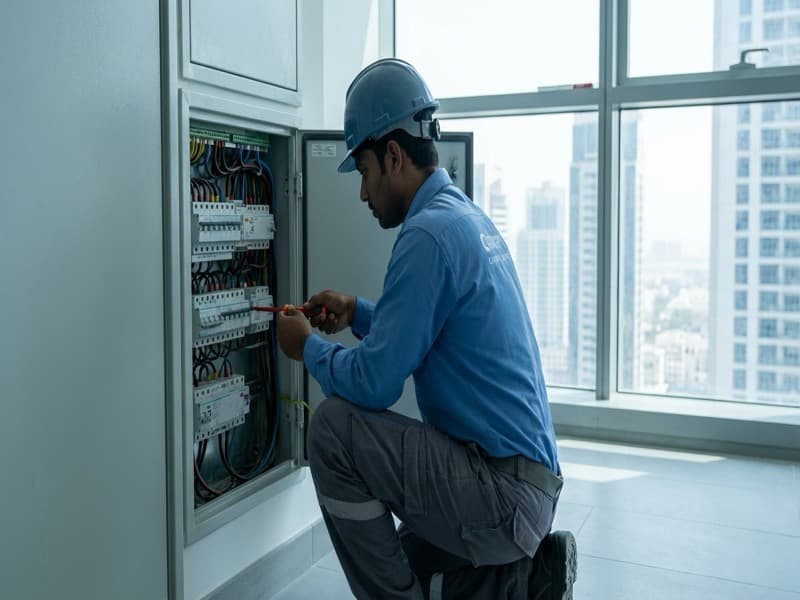
Every Dubai home runs on electricity. Your AC, water heater, refrigerator, washing machine, TV, and phone charger all pull power through the same walls. When something goes wrong, it's not always obvious.
Faulty wiring causes over 25,000 house fires in the UAE each year according to Dubai Civil Defence reports. The good news? Most electrical problems give clear warning signs before they become dangerous. Knowing what to look for can protect your home and your family.
This guide covers the most common electrical safety issues in Dubai properties, what they mean, and when you need a licensed electrician.
Why Dubai Homes Face Unique Electrical Risks
Dubai's climate and building patterns create specific electrical challenges:
Summer heat. When outdoor temperatures hit 45°C, your electrical system works harder. AC units, fridges, and fans run for months without a break. Cables heat up. Connections loosen. Circuit breakers trip more often.
Older buildings. Many apartments in Bur Dubai, Deira, and older parts of the city were built 15-25 years ago. Their electrical systems were not designed for modern loads -- multiple AC units, home offices, and high-power kitchen appliances.
DIY work. Previous owners or tenants sometimes take shortcuts. Loose connections, wrong wire gauges, and joints hidden behind walls show up regularly in resale properties. A proper electrical inspection before buying or renting catches these issues.
Humidity in coastal areas. Properties in Dubai Marina, JBR, Palm Jumeirah, and Jumeirah Bay face higher humidity. Moisture seeps into outdoor sockets, garden lighting, and switch boxes. Over time, this causes corrosion that leads to short circuits.
7 Warning Signs You Should Not Ignore
1. Flickering or Dimming Lights
A light that flickers now and then might need a new bulb. But if the same light flickers consistently, or multiple lights flicker at the same time, you have a wiring problem.
What it means: Loose connection in that circuit, or the circuit is overloaded. In older apartments, flickering when the AC compressor kicks in is a sign your system is nearing its capacity.
What to do: Start by checking the bulb. If that's not the issue, call a licensed electrician to inspect the circuit. Do not keep using a flickering light for weeks -- loose connections generate heat and can start fires inside your walls.
2. Warm or Hot Outlets and Switches
Touch your electrical outlets and light switches. They should be at room temperature. If any are warm or hot to the touch, stop using them immediately.
What it means: The outlet is drawing more current than it was designed for. This happens when too many devices are plugged into one outlet via power strips, or when the internal wiring is loose or damaged.
What to do: Unplug all devices from that outlet. Do not use it until a licensed electrician has inspected and repaired it. A hot outlet can melt its internal components within hours and start a fire.
3. Circuit Breakers That Trip Repeatedly
A circuit breaker that trips once in a while is doing its job. A breaker that trips every day or multiple times a week is telling you something is wrong.
What it means: You are either overloading that circuit, or there is a short circuit somewhere in the wiring. In Dubai apartments, the kitchen and living room circuits are the most commonly overloaded.
What to do: Note which breaker trips and what appliances are running when it happens. If you can reduce the load (turn off the AC, unplug the kettle) and it still trips, call an electrician. Replacing a breaker with a higher amperage one can start fires -- do not do it.
4. Burning Smell Near Electrical Panels or Outlets
A burning smell from any electrical component is an emergency. Turn off the power at the main breaker immediately and call a 24-hour electrician.
What it means: Insulation is melting inside the wall, or a connection is arcing. Both generate heat and smoke before a fire starts.
What to do: Kill the main breaker. Leave the area. Call European Technical on +971 58 544 1160. Do not turn the power back on until a licensed electrician has inspected and cleared the system.
5. Sparking When You Plug Something In
A small blue spark when you plug something in is normal -- it is the initial current draw. A large yellow or white spark, or a spark that happens every time, is not normal.
What it means: The outlet has internal damage or a short circuit. The sparking will get worse with each use.
What to do: Stop using that outlet. Have it replaced by a licensed electrician. The cost is typically AED 120-200 for a standard socket replacement -- cheap insurance against a house fire.
6. Buzzing or Humming Sounds
Electrical systems should be silent. If you hear a buzzing, humming, or crackling sound from an outlet, switch, or breaker panel, something is wrong.
What it means: Loose wiring is vibrating at 50Hz (the UAE mains frequency). The sound is electricity arcing across a gap. This generates heat and will eventually cause failure.
What to do: Track down where the sound is coming from. Call a licensed electrician. Do not put your ear close to the panel to listen -- breaker boxes can arc and explode.
7. Discoloured Sockets or Switch Plates
Look at the colour of your sockets and switches. Yellow, brown, or black marks around the edges are a sign of overheating.
What it means: The device has been running hot for a long time. The discolouration is scorching. In some cases, the plastic is already degrading.
What to do: Replace the outlet or switch immediately. Have an electrician cheque the wiring behind it. The damage may extend into the wall cavity.
What to Do in an Electrical Emergency
If you have active sparking, smoke, or a burning smell:
- Turn off the main circuit breaker immediately.
- If you cannot safely reach the panel, turn off the power at the metre box (located in the corridor for apartments, or external wall for villas).
- Evacuate the area. Do not try to put out an electrical fire with water.
- Call European Technical on +971 58 544 1160. Our emergency electricians arrive within 60 minutes across Dubai.
- Do not turn the power back on until the system has been inspected and cleared.
How to Prevent Electrical Problems
Most electrical emergencies are preventable with basic maintenance.
Schedule an Annual Electrical Inspection
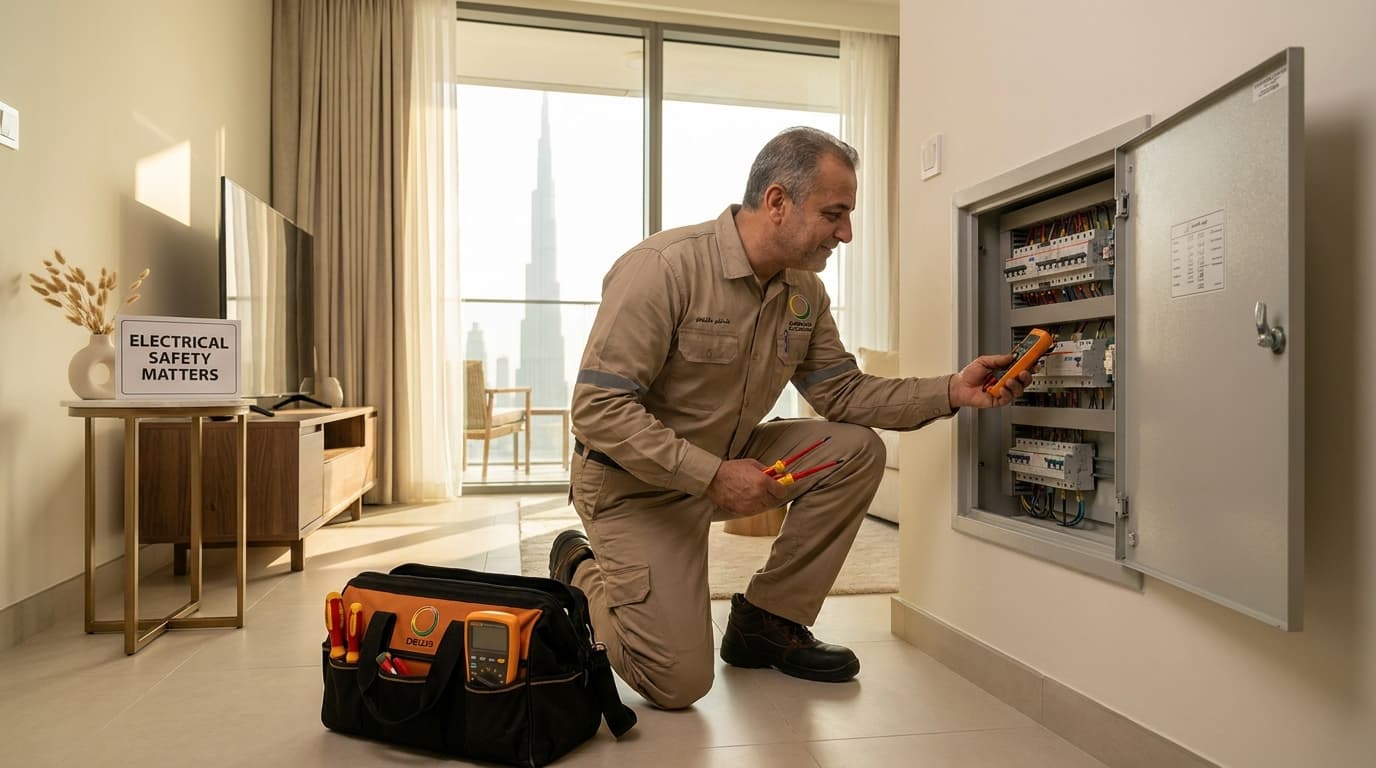
A licensed electrician checks your breaker panel, tests each circuit, inspects outlets and switches for signs of overheating, and verifies that your earthing system is working. An annual inspection costs AED 200-400 and takes about an hour for a standard apartment.
Spread the Load
Dubai kitchens and living rooms often have too many devices on one circuit. Spread high-power appliances across different outlets. Avoid daisy-chaining power strips. If you need more outlets, have an electrician install additional circuits rather than relying on extension cords.
Upgrade When You Renovate
If you are renovating your Dubai apartment or villa, upgrade the electrical panel and wiring to handle modern loads. This is especially important in older buildings where the original wiring was designed for a single AC unit and basic lighting.
Use Licensed Electricians
DIY electrical work is dangerous and illegal in the UAE. All electrical work must be carried out by a licensed, DEWA-compliant electrician. European Technical's electricians carry the required certifications for residential, commercial, and emergency work.
Electrical Safety Checklist for Dubai Homeowners
Download and run through this checklist once a month:
- [ ] No outlets or switches feel warm to the touch
- [ ] No flickering lights anywhere in the property
- [ ] No buzzing sounds from outlets, switches, or the breaker panel
- [ ] All sockets and switches are clean -- no discolouration or scorch marks
- [ ] No sparks when plugging or unplugging devices
- [ ] All circuit breakers stay in the ON position -- no unexplained tripping
- [ ] No burning smells near the electrical panel or any outlet
- [ ] No extension cords running under carpets or across doorways
- [ ] Smoke alarms are working and have fresh batteries
- [ ] Household members know where the main breaker is and how to turn it off
FAQ
How do I find a licensed electrician in Dubai?
European Technical employs licensed, background-checked electricians registered under SHAMS licence #2542059. Every job is insured and backed by a 90-day warranty. Call +971 58 544 1160 or book online at europeantechnical.ae.
How much does an electrician cost in Dubai?
Standard call-out fees range from AED 100-200 during business hours. Emergency call-outs (nights, weekends, public holidays) range from AED 200-400. Most standard repairs like socket replacement or switch repair cost AED 120-300. A full quote is provided before any work begins.
Do I need DEWA approval for electrical work in my apartment?
For minor repairs like replacing sockets or switches, no DEWA approval is needed. For major electrical work including new circuits, panel upgrades, or rewiring, DEWA approval is required. A licensed electrician handles this process.
When should I upgrade my electrical panel?
Consider an upgrade if your breakers trip regularly, your home was built before 2010, or you are adding high-power appliances like split AC units, a home office, or an electric vehicle charger.
Can I do my own electrical repairs in Dubai?
No. UAE law requires all electrical work to be carried out by licensed professionals. DIY electrical work voids insurance claims, risks fines from Dubai Municipality, and -- most importantly -- can kill.
European Technical provides licensed electrical services across Dubai, including emergency call-outs, inspections, rewiring, panel upgrades, and preventive maintenance. Same-day service available. Call +971 58 544 1160 or book online.