Fire Safety in Dubai Properties: Prevention, Equipment and SIRA Regulations
Every building in Dubai must meet fire safety standards enforced by Dubai Civil Defence (DCD). Whether you own a villa on Palm Jumeirah or rent an apartment in JVC, knowing these rules protects your family and keeps you on the right side of the law.
This guide covers what equipment you need, what inspections are required, and how to stay compliant with current regulations.
Dubai Civil Defence Requirements
DCD sets the fire safety code for all buildings in the emirate. The UAE Fire and Life Safety Code of practise (UAE FLSCP) is the primary reference document. Key requirements include:
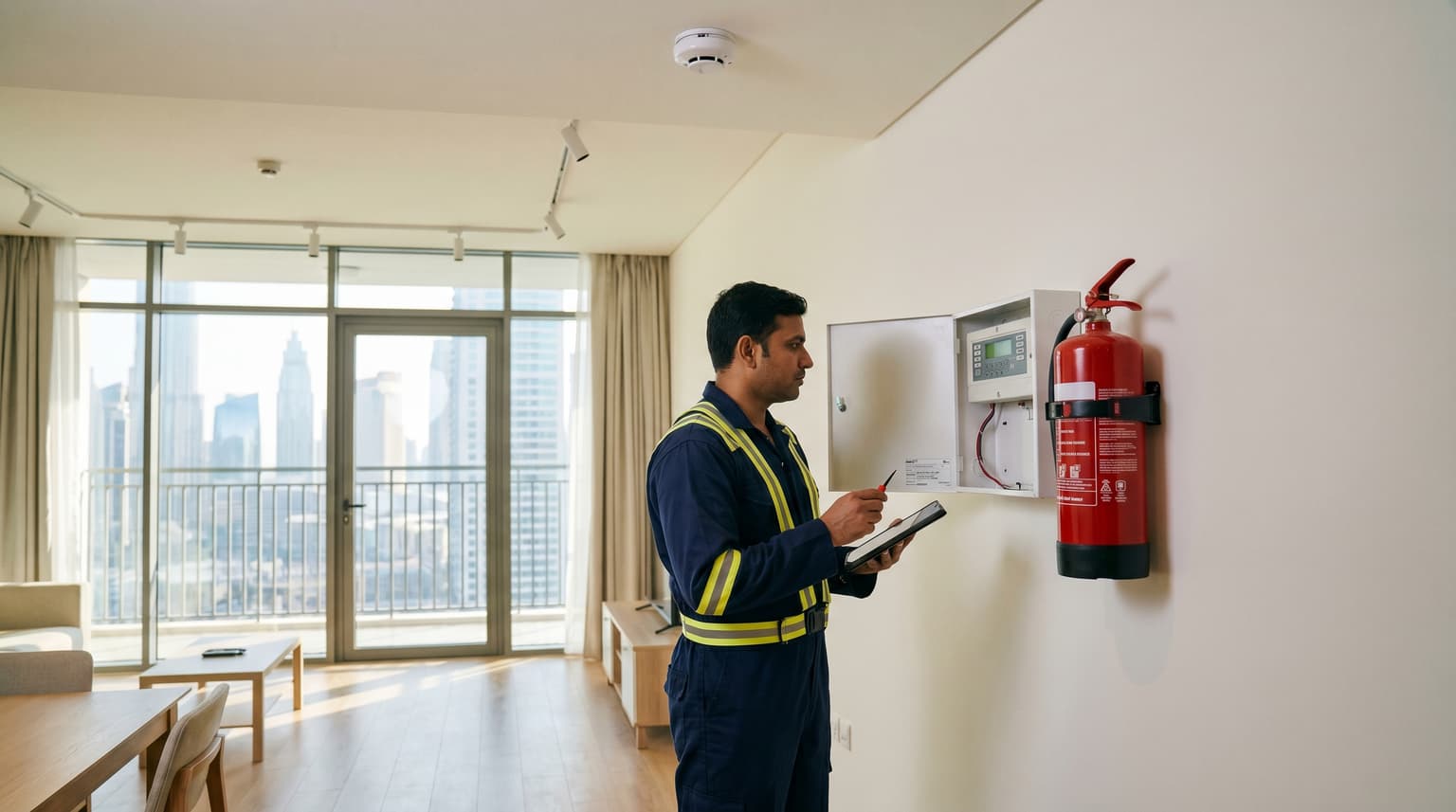
- Smoke detectors in every bedroom, hallway and living area
- Fire extinguishers on every floor (ABC dry powder for general use, CO2 near electrical panels)
- Fire blankets in kitchens, mandatory in villas and recommended in apartments
- Emergency exit signage that is illuminated and visible in the dark
- Fire doors rated to 30 or 60 minutes in shared corridors and stairwells
Villas have different requirements from apartments. High-rise buildings (above 23 metres) need sprinkler systems, fire pumps and pressurised stairwells. Villas typically need basic detection and portable extinguishers at minimum.
SIRA and Security System Integration
The Security Industry Regulatory Agency (SIRA) governs alarm systems in Dubai. If your fire alarm connects to a monitoring service or integrates with your security system, the installation company must be SIRA-approved.
This matters for:
- Monitored smoke and heat detection systems
- Integrated fire and security panels
- CCTV systems linked to fire alarm triggers
- Access control that releases doors during fire events
Using a non-SIRA-approved company means your system is technically non-compliant, and insurance claims could be rejected.
Tip: Ask any fire alarm installer for their SIRA licence number before signing a contract. You can verify it on the SIRA portal.
Fire Extinguisher Types and Placement
Not all fire extinguishers work on all fires. Using the wrong type can make things worse.
| Type | Best For | Not For |
|---|---|---|
| ABC Dry Powder | General fires, paper, wood, electrical, flammable liquids | Kitchen grease fires |
| CO2 | Electrical fires, server rooms | Paper, wood, fabric |
| Wet Chemical | Kitchen oil and grease fires | Electrical fires |
| Water | Paper, wood, fabric | Electrical, oil, grease |
Placement rules:
- One extinguisher per floor minimum
- Kitchen: wet chemical type within 2 metres of cooking area
- Garage: ABC dry powder near the entrance
- Electrical panel room: CO2 type
- All extinguishers must be wall-mounted, accessible, and tagged with the last inspection date
Inspection Schedule
Fire extinguishers need annual servicing by a DCD-approved company. The technician checks pressure, seals, hose condition, and powder/agent viability. A sticker with the service date goes on each unit.
Replace any extinguisher that:
- Has been discharged (even partially)
- Shows corrosion or dents on the cylinder
- Is older than 10 years (5 years for wet chemical types)
- Has a pressure gauge in the red zone
Smoke Detector Maintenance
Smoke detectors are the single most important fire safety device in any home. They give you the 2-3 minutes of warning that can mean the difference between a safe evacuation and a tragedy.
Monthly checks:
- Press the test button on each detector, if it does not sound, replace the battery immediately
- Ensure nothing is blocking the detector (shelves, decorations, paint)
Annual maintenance:
- Vacuum around the detector to clear dust from the sensor
- Replace batteries (even if they still work, do it every 12 months as routine)
- Replace the entire detector unit every 10 years
Common mistakes:
- Painting over smoke detectors during renovation (blocks the sensor entirely)
- Removing detectors during construction work and forgetting to reinstall them
- Placing detectors within 1 metre of air conditioning vents (drafts prevent smoke reaching the sensor)
Fire Doors: What Most People Get Wrong
Fire doors are rated to hold back fire and smoke for 30 or 60 minutes. They are required in:
- Corridors and stairwells of apartment buildings
- Between garages and living spaces in villas
- Kitchen entrances in commercial properties
- Server rooms and electrical switch rooms
A fire door only works if it closes properly. The single most common violation in Dubai buildings is fire doors propped open with wedges, boxes, or door stoppers. This completely defeats their purpose.
If your fire door:
- Does not close automatically, the closer mechanism needs replacing
- Has gaps around the frame, the intumescent strips may be damaged
- Makes a grinding noise, the hinges are worn
A qualified handyman or carpenter can replace door closers and adjust fire doors. But the intumescent strips (the seals that expand in heat to block smoke) should be replaced by a fire door specialist.
Evacuation Planning
Every household should have a basic evacuation plan. It does not need to be complicated:
- Identify two exits from every room (door and window)
- Pick a meeting point outside the building, a specific spot everyone knows
- Walk the route with your family at least once
- Keep keys accessible, deadlocked doors with keys removed are a major hazard in fires
- Never use lifts during a fire, stairs only
For villas, cheque that ground-floor windows can be opened from inside without tools. Many villas in Dubai have security grilles on windows, if yours do, make sure at least one window per room has a quick-release mechanism.
Electrical Fire Prevention
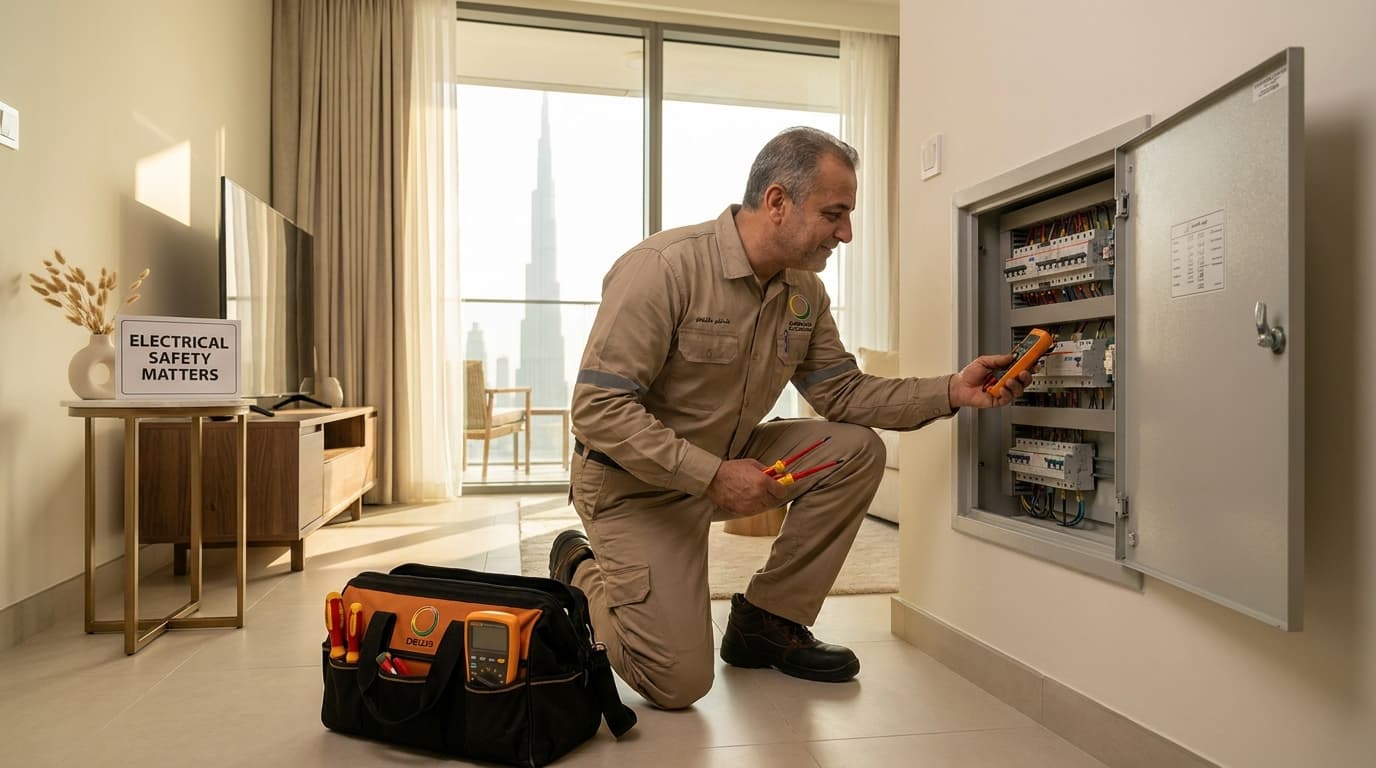
Electrical faults are the leading cause of residential fires in Dubai. The combination of heavy AC loads, old wiring in some buildings, and Dubai's extreme heat creates real risk.
Warning signs of electrical problems:
- Circuit breakers tripping repeatedly
- Flickering lights (especially when AC starts)
- Warm or discoloured switch plates
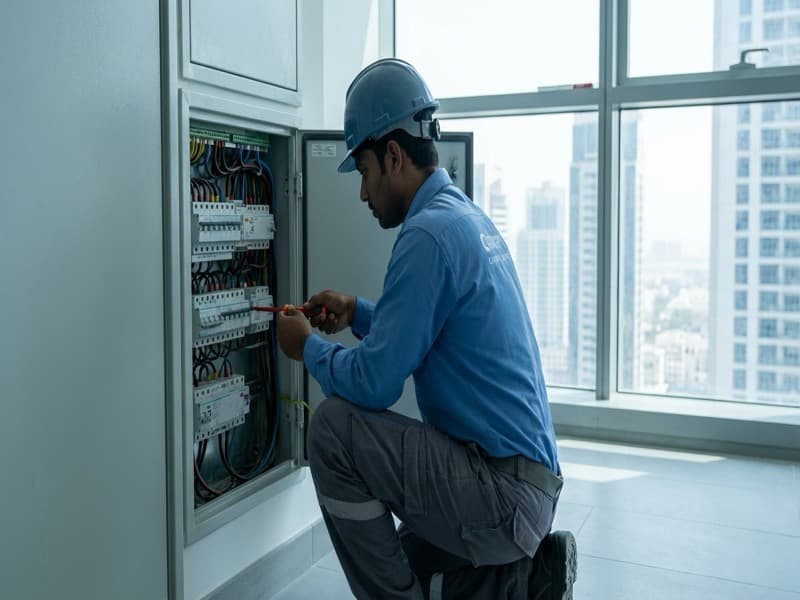
- Burning smell from outlets or the distribution board
- Sparks when plugging in appliances
If you notice any of these, call a qualified electrician immediately. Do not reset a tripped breaker more than twice, if it trips again, there is a fault that needs professional diagnosis.
Prevention basics:
- Never overload power strips or extension leads
- Replace any damaged cables immediately
- Keep flammable materials away from the distribution board (many people store shoes, bags, or cleaning supplies in the DB cupboard)
- Have your wiring inspected every 3-5 years, or after any renovation
Annual Fire Safety Checklist
Use this every January or at the start of your tenancy:
- Test all smoke detectors
- cheque fire extinguisher pressure gauges and service dates
- Verify fire doors close automatically and seal properly
- Inspect electrical distribution board for signs of heat damage
- Confirm SIRA-approved alarm system is serviced and active
- cheque that no fire exits are blocked
- Replace smoke detector batteries
- Review evacuation plan with family members
- Verify CCTV system is operational for post-incident review
- Schedule professional electrical inspection if overdue
What to Do If There Is a Fire
- Get everyone out. Do not collect belongings.
- Close doors behind you as you leave, this slows the fire.
- Call 997 (Dubai Civil Defence emergency number).
- Go to your meeting point and account for everyone.
- Do not re-enter the building for any reason.
For small fires (a pan fire, a candle igniting nearby fabric):
- Smother a pan fire with a fire blanket or a damp towel. Never use water on oil fires.
- Use the correct extinguisher type if the fire is small and contained.
- If the fire is larger than a wastepaper basket, leave and call 997.
Insurance and Compliance
Home insurance policies in Dubai typically require that you maintain fire safety equipment to a reasonable standard. If a fire occurs and the investigation finds that smoke detectors were removed, extinguishers were expired, or fire doors were propped open, your claim may be reduced or rejected.
Keep records of:
- Fire extinguisher service receipts
- Smoke detector replacement dates
- Any DCD inspection certificates
- SIRA alarm system service contracts
Store these digitally, paper records tend not to survive the event they are meant to document.
When to Call a Professional
Some fire safety work is straightforward, replacing smoke detector batteries, checking extinguisher gauges, clearing fire exits. But other tasks need a licensed professional:
- Electrical inspections and rewiring, always use a qualified electrician
- Fire alarm system installation and servicing, SIRA-approved companies only
- CCTV integration with fire systems, requires both CCTV expertise and fire system knowledge
- Fire door replacement and adjustment, ensure the rating is maintained after any modification
Dubai Civil Defence conducts random inspections on commercial properties and high-rise buildings. Villas are less frequently inspected, but that is not an excuse to cut corners. The equipment exists to protect people, not to satisfy a checklist.
Keep your property safe, keep your documentation current, and get your systems checked annually. That is the practical reality of fire safety in Dubai.