Home Automation Companies in Dubai: A Complete Buyer's Guide
Smart home technology has moved from a luxury feature in high-end developments to something that most Dubai residents can realistically install, regardless of whether they own or rent. But the market is crowded, and the gap between companies that actually deliver reliable, integrated systems and those that sell you a bag of incompatible gadgets is significant.
This guide covers what to look for when choosing a home automation company in Dubai, what the technology actually involves, and how to avoid the most common mistakes buyers make.
What Home Automation Actually Means in a Dubai Home
The term "home automation" gets used loosely. At one end, it refers to a single smart plug controlled from your phone. At the other, it means a fully integrated system where lighting, climate control, security cameras, access control, entertainment, and window blinds all work together through a single interface, and respond intelligently to your presence, time of day, and preferences.
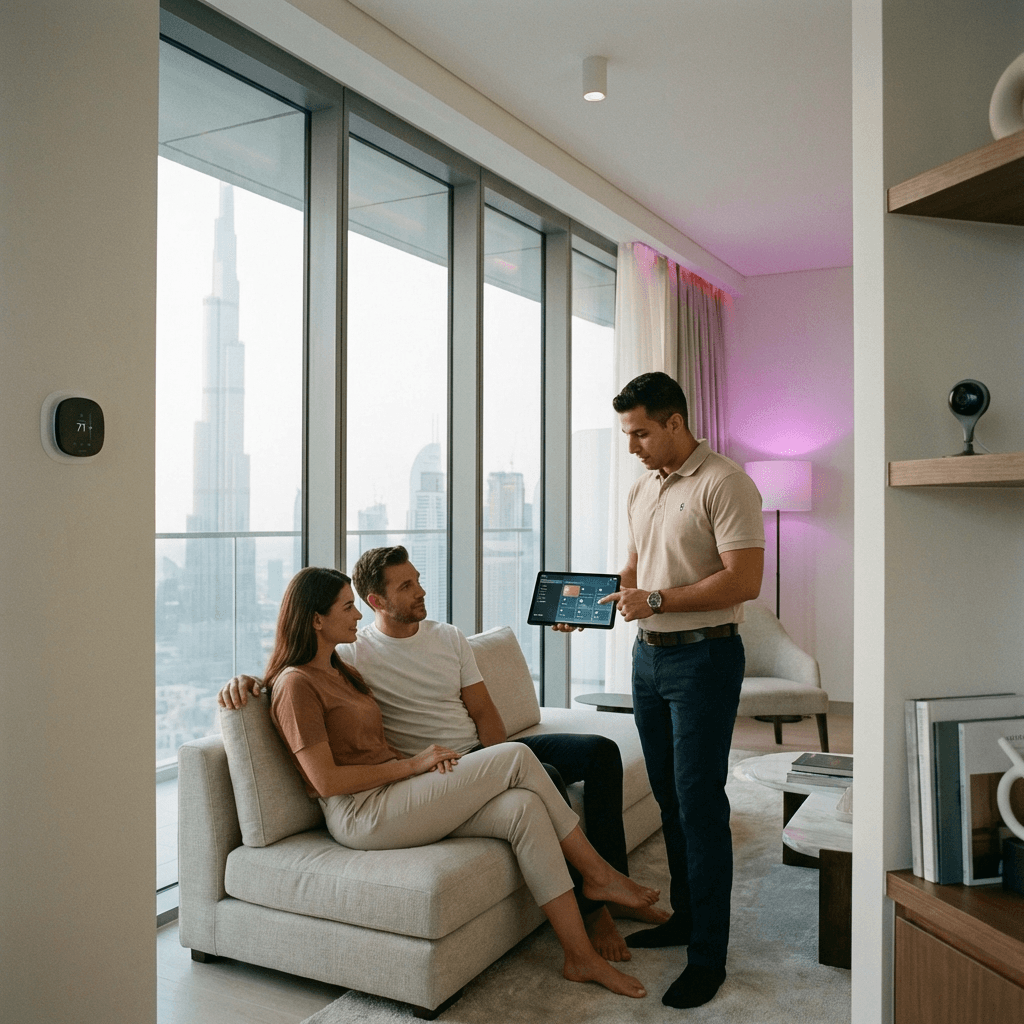
Most Dubai residents start somewhere in the middle: smart lighting in the main living areas, smart air conditioning control (critically important given DEWA bills in summer), video doorbell, and perhaps motorised blinds. From there, systems can expand.
What makes Dubai homes slightly different from UK or European installations is the heavy reliance on central AC systems, the prevalence of large floor plans in villa communities, and the fact that DEWA electricity costs make energy management automation genuinely worthwhile, not just a novelty.
Types of Home Automation Systems
Centralised Systems
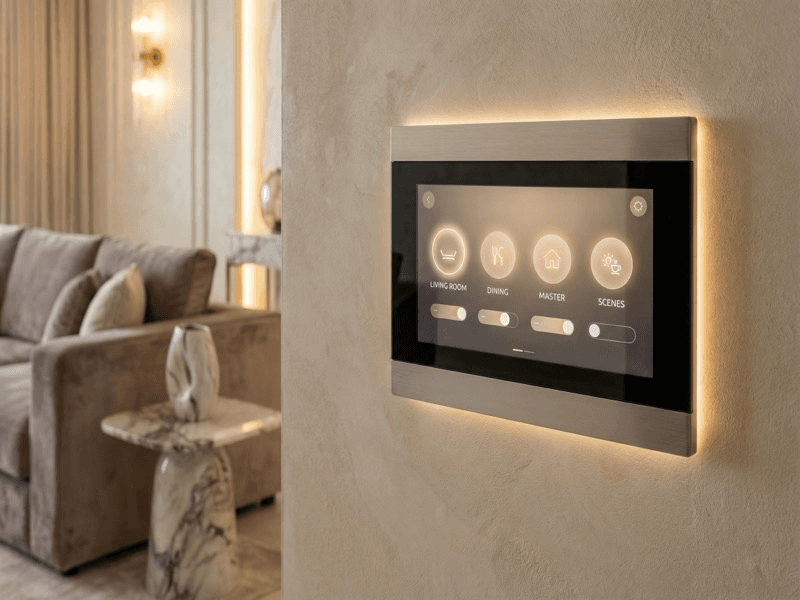
These are professionally installed, proprietary systems, brands like Control4, Crestron, and Lutron fall into this category. Everything runs through a central controller, programmed by a certified installer. They're powerful, reliable, and extremely flexible, but they require professional support for changes and come at a higher price point.
For a well-specified villa in Arabian Ranches or Emirates Hills, a full Control4 system covering lighting, AV, climate, and access can run from AED 50,000 to AED 200,000+ depending on scope.
Modular/Open Ecosystem Systems
These use common protocols like Zigbee, Z-Wave, or Matter, and devices from multiple manufacturers can work together. Brands like Philips Hue, Aqara, and various Google Home or Apple HomeKit-compatible devices fall here. A competent integrator can build a highly functional system using these platforms at a fraction of proprietary system costs.
A typical two-bedroom apartment setup with smart lighting, smart AC control, video doorbell, and a central hub might cost AED 5,000 to AED 15,000 including installation.
Retrofit vs. New-Build
If you're in a completed apartment in JVC or a villa in Mirdif, a retrofit is almost always the right path, adding smart devices to existing wiring and infrastructure without major civil works. New builds, or apartments under renovation, can take a more structured wired approach, which gives better reliability for lighting and switch control in particular.
What to Look for in a Home Automation Company in Dubai
1. Technical Certifications
For proprietary systems, certification matters. Control4 dealers, for example, must be trained and authorised by the manufacturer. Ask to see certification documentation. For open ecosystem integrators, look for evidence of prior installations, a portfolio, and a willingness to show you a working reference installation.
2. After-Sales Support
This is where many buyers get caught out. A system that works perfectly on installation day but develops issues six months later is only as good as the support available. Ask explicitly: "What happens if a device fails or needs reconfiguration? What's your response time? Do you charge for support calls?"
Reputable companies in Dubai will offer some form of annual maintenance agreement covering routine updates, device replacements, and configuration changes.
3. Compatibility and Future-Proofing
The smart home market moves quickly. Ensure that whatever is installed today can be expanded later, and that the company isn't locking you into proprietary hardware that only they can supply or service. Ask about the protocol the system uses (Zigbee, Z-Wave, Matter, KNX), and research its longevity.
4. Understanding of Dubai's Specific Infrastructure
A good local company understands how central AC systems work in Dubai apartments, how DEWA smart metres can be integrated, and the specifics of how buildings in different communities are wired. This matters when specifying smart switches, thermostats, and access control.
The Most Useful Smart Home Features for Dubai Residents
Smart AC Control
Given that air conditioning accounts for 60 to 70% of a typical Dubai household's electricity consumption, smart thermostat control delivers the most tangible return on investment. Scheduling AC to reduce when you leave for work and ramp back up before you return can cut DEWA bills meaningfully over a Dubai summer.
Brands compatible with most Dubai central AC systems include Sensibo, Tado, and certain Aqara and Nest units, depending on your system type.
Smart Lighting
Lighting automation makes sense both for convenience and energy efficiency. Motion-triggered lights in hallways and bathrooms, automated scene settings for evening and morning, and the ability to control everything remotely when you're away all add genuine value. Dimmable LED lighting with smart control is particularly popular in villas and larger apartments.
Access Control and Video Doorbells
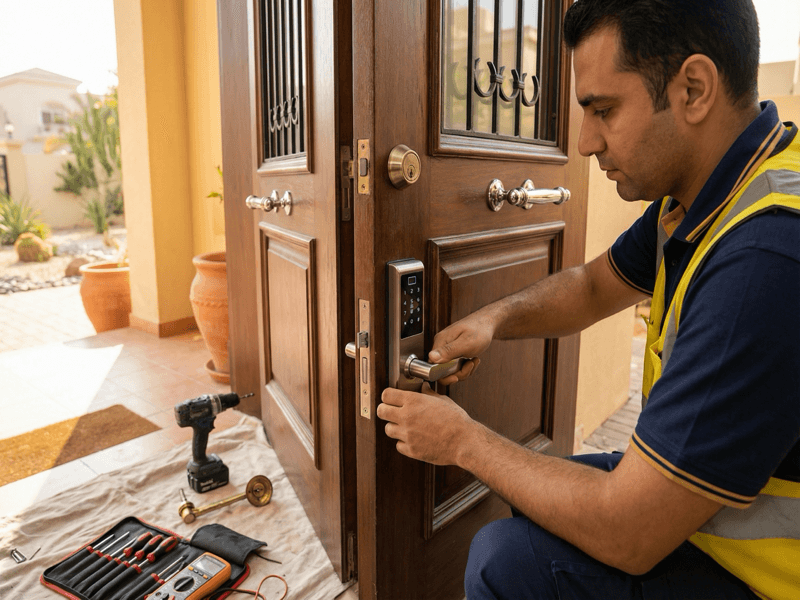
Smart video doorbells (Ring, Arlo, Reolink, and others) are increasingly standard in Dubai villas and apartments. Combined with smart lock systems, which can issue time-limited access codes for cleaners, maintenance technicians, or guests, they provide practical security management that makes sense for Dubai's busy, mobile-friendly lifestyle.
Automated Blinds and Curtains
Motorised window treatments are popular in Dubai given the intense solar gain through large windows, particularly in south and west-facing apartments. Automated blinds can be programmed to close during peak afternoon heat and open in the evening, reducing AC load and improving comfort.
Whole-Home Security Integration
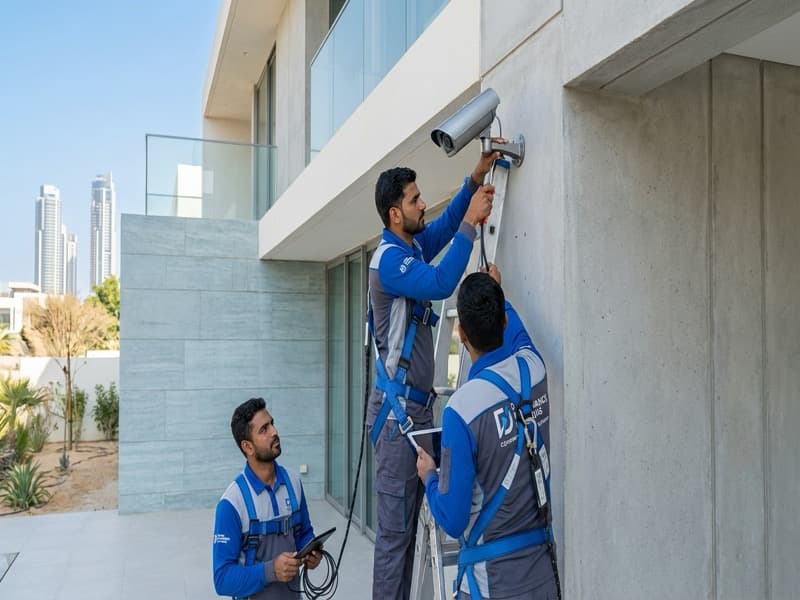
CCTV cameras, motion sensors, and smart access control can be integrated into a single monitoring platform, with alerts pushed to your phone wherever you are. For villa owners, perimeter monitoring combined with smart locks and intercom provides genuine peace of mind.
Common Mistakes When Hiring a Home Automation Company
Buying devices before hiring an integrator. Many homeowners buy smart bulbs, switches, and cameras from a retailer, then discover they don't communicate with each other or the app experience is fragmented. Work with an integrator first, even if it's just for a consultation.
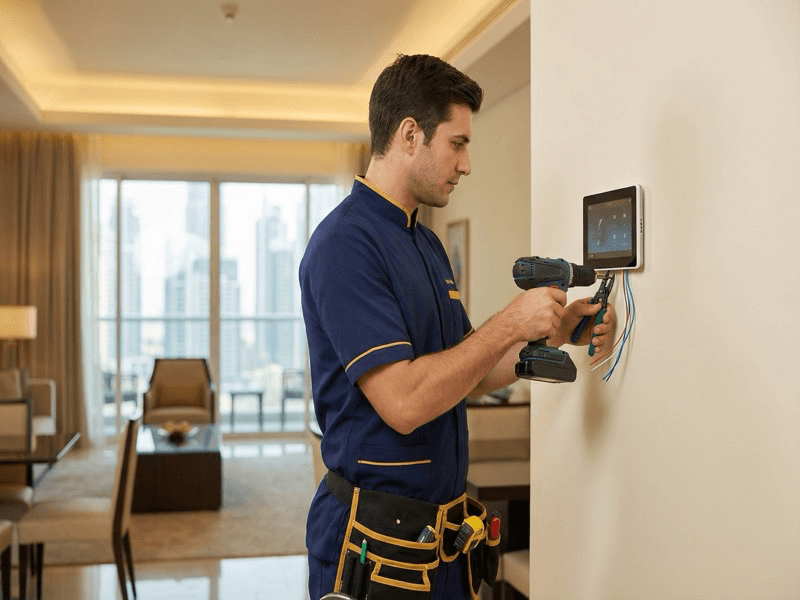
Underestimating the installation complexity. Smart switches require neutral wires that older UAE apartments often don't have. Running new cables through finished walls has a cost. A reputable company will assess your home before quoting.
Choosing on price alone. The cheapest quote often means the thinnest after-sales support. A system that needs constant troubleshooting quickly becomes more expensive than the premium option.
Ignoring Wi-Fi infrastructure. Smart home devices are only as reliable as your network. In a large villa or multi-floor apartment, poor Wi-Fi coverage leads to unreliable smart devices. Ask whether your integrator also assesses and upgrades network infrastructure.
Frequently Asked Questions
Can I have smart home automation in a rented apartment in Dubai?
Yes, in most cases. Wireless and battery-operated devices (smart plugs, smart bulbs, wireless sensors, video doorbells) can be installed and removed without affecting the property. For hardwired changes like smart switches and access control, you'll typically need landlord permission. Many landlords in Dubai welcome smart upgrades that improve the property's appeal.
How long does a typical home automation installation take?
A basic setup for a two-bedroom apartment, smart lighting, AC control, and video doorbell, typically takes one to two days. A full villa installation with integrated lighting, AV, security, and access control can take one to two weeks depending on scope and any necessary civil works.
Will home automation work with my existing AC system in Dubai?
This depends on your AC type. Smart thermostat adapters (like Sensibo) work with most split unit and cassette AC systems, which are common in Dubai apartments. Central ducted systems, common in villas, may need a different approach. A good integrator will assess compatibility during a site visit.
What happens if the internet goes down?
Well-designed systems maintain local control even without internet connectivity. Lighting switches still work as switches. Doors with smart locks have physical override options. Systems relying purely on cloud connectivity are more vulnerable, ask your integrator how the system behaves offline.
How much does a smart home system cost in Dubai?
Entry-level setups for an apartment start from around AED 3,000 to AED 5,000 including devices and installation. Mid-range fully integrated apartment systems run AED 10,000 to AED 25,000. Villa-wide systems with proprietary controllers, integrated AV, full lighting control, and access management start from AED 40,000 and scale upward based on scope.
Get a Smart Home Assessment in Dubai
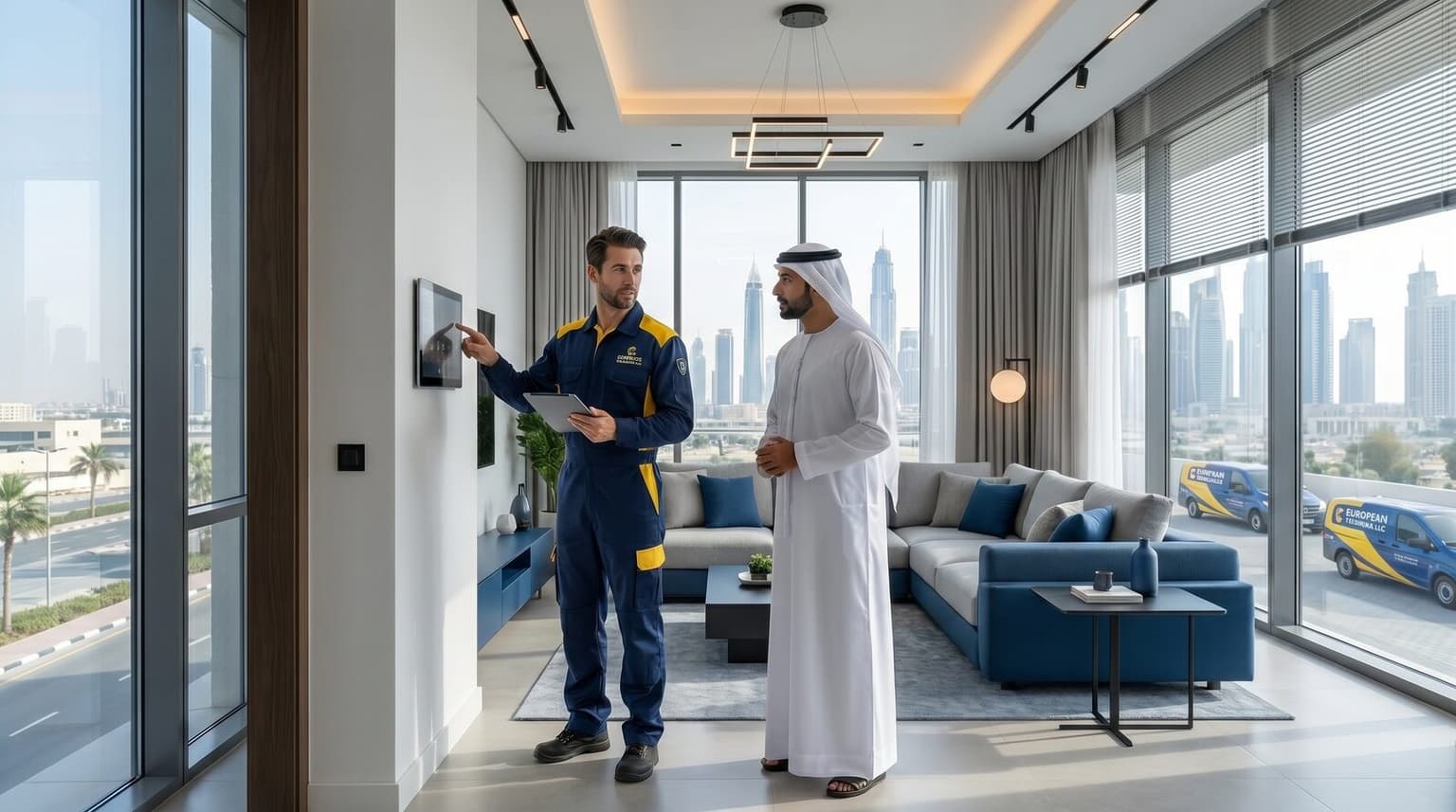
European Technical provides home automation consultations and installations across Dubai, covering everything from entry-level smart AC and lighting upgrades to full villa integration projects. Our team will assess your property, explain your options clearly, and provide a written quote with no obligation.
We work across JVC, Palm Jumeirah, Arabian Ranches, Downtown Dubai, Business Bay, The Springs, Mirdif, and all surrounding areas.
Call us on +971 58 544 1160 or reach us on WhatsApp to arrange a free site assessment.
Browse our full smart home services at /services/smart-home, or book directly online.
By European Technical Team