Why Kitchen Sink Blockages Are a Common Dubai Problem
Living in Dubai means dealing with unique challenges when it comes to home maintenance. The combination of hard water, high humidity, and the way we use our kitchens can lead to stubborn sink blockages. If you are in areas like Dubai Marina, JVC, Downtown, or Business Bay, you have probably faced a slow-draining or completely blocked kitchen sink at some point. The problem is not just inconvenient; it can also cause unpleasant smells, attract pests, and even lead to water damage if left untreated.
In this guide, we will walk you through the most effective ways to fix a kitchen sink blockage in Dubai, from simple DIY methods to knowing when to call a professional. We will also address the common issue of drain smells leaking into your apartment, which often goes hand in hand with blockages. By the end, you will have a clear action plan to keep your kitchen sink flowing freely and your home smelling fresh.
Understanding the Causes of Kitchen Sink Blockages in Dubai
Before you start any repair, it helps to understand why blockages happen in the first place. In Dubai, the main culprits are:
- Food waste and grease: Even with a sink strainer, small particles of food and cooking oil can build up over time. Grease solidifies as it cools, creating a sticky layer that traps other debris.
- Hard water scale: Dubai's water is known for being hard, meaning it contains high levels of calcium and magnesium. This can form limescale deposits inside pipes, narrowing the passage and making blockages more likely.
- Soap scum and detergent residue: Dish soap and washing-up liquid can combine with minerals in the water to form a thick, waxy substance that clings to pipe walls.
- Foreign objects: Small items like bottle caps, toothpicks, or even pieces of packaging can accidentally fall into the sink and cause a blockage.
- Building design issues: In older apartment buildings in areas like Bur Dubai or Deira, the drainage pipes may be narrow or have sharp bends that trap debris. In newer developments like Arabian Ranches or The Springs, the problem is often related to the main sewer line.
Understanding these causes will help you choose the right solution and prevent future blockages.
DIY Methods to Fix a Kitchen Sink Blockage
If your sink is draining slowly but not completely blocked, you can often fix it yourself with simple household items. Here are the most effective DIY methods for Dubai homes.
Boiling Water Flush
Sometimes the simplest solution works best. Pouring boiling water down the drain can dissolve grease and soap scum that have built up inside the pipes. Here is how to do it:
1. Boil a full kettle of water.
2. Remove any standing water from the sink basin.
3. Slowly pour the boiling water directly down the drain in two or three stages, allowing it to work for a few seconds between pours.
4. Wait for five minutes, then run hot tap water to see if the drain clears.
This method is safe for metal pipes but be cautious if you have PVC pipes under your sink, as extreme heat can damage them. If you are unsure, use hot (not boiling) water instead.
Plunger Technique
A plunger is a classic tool for clearing blockages. For a kitchen sink, you need a cup plunger (the type with a flat rubber cup). Follow these steps:
1. Remove the sink strainer or plug if possible.
2. Fill the sink with enough water to cover the rubber cup of the plunger.
3. Place the plunger over the drain and create a tight seal.
4. Push and pull vigorously for about 20 seconds.
5. Remove the plunger and check if the water drains freely.
If you have a double sink, block the other drain with a wet cloth to create better suction. This method works well for blockages that are close to the drain opening.
Baking Soda and Vinegar
This chemical-free method is great for breaking down organic matter and neutralising odours. Here is the process:
1. Pour half a cup of baking soda down the drain.
2. Follow with half a cup of white vinegar.
3. Immediately cover the drain with a plug or cloth to contain the fizzing reaction.
4. Wait for 15-30 minutes.
5. Flush with boiling water (or hot water for PVC pipes).
This method is safe for all pipe types and can be repeated weekly as a preventative measure.
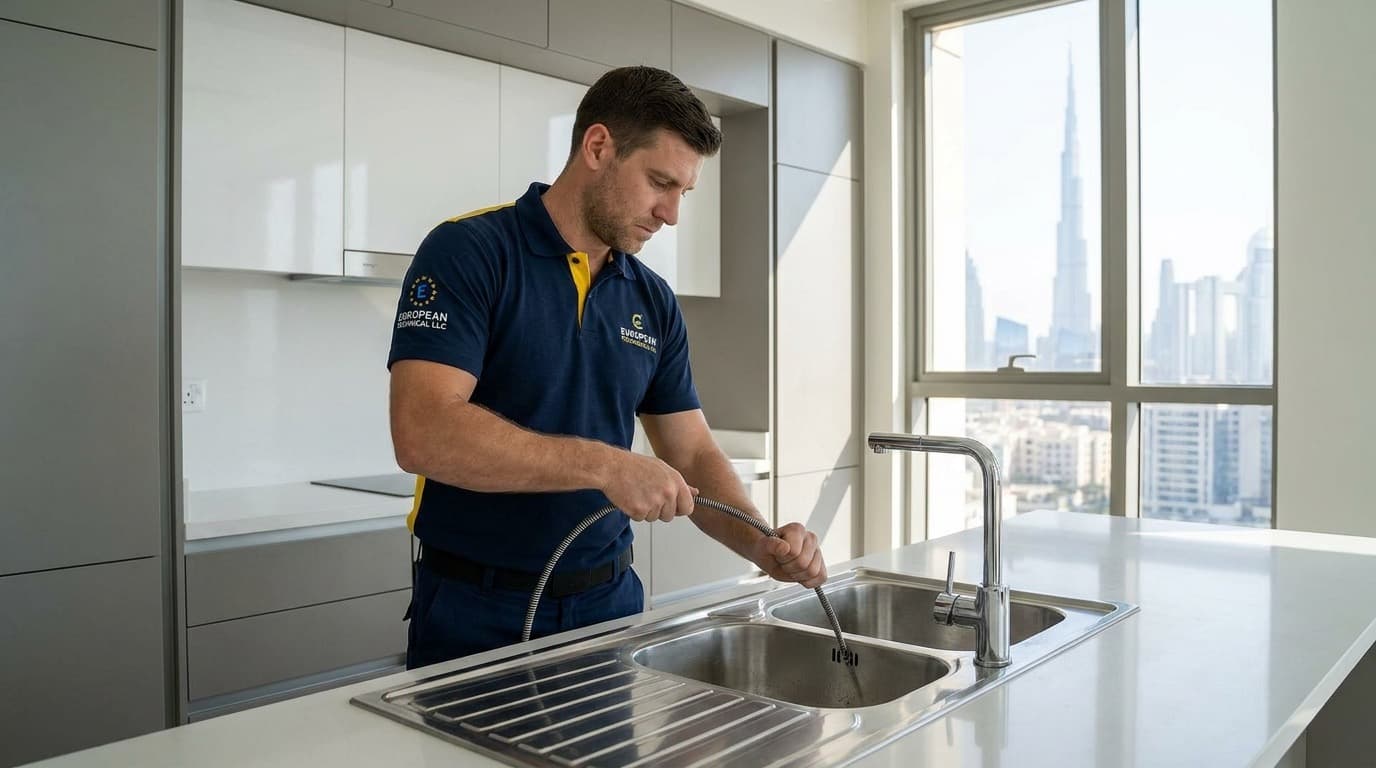
Drain Snake or Wire
For blockages that are deeper in the pipe, a drain snake (also called a plumber's snake) can be very effective. If you do not have one, you can use a long, stiff wire with a small hook at the end. Here is what to do:
1. Straighten a wire coat hanger or use a purpose-made drain snake.
2. Push it gently into the drain until you feel resistance.
3. Rotate and push to break up the blockage.
4. Pull out the snake and flush the drain with hot water.
Be careful not to scratch the inside of your pipes, especially if they are made of PVC. This method is best for blockages caused by solid objects or compacted debris.
When to Call a Professional Plumber in Dubai
DIY methods are great for minor blockages, but sometimes the problem is more serious. You should call a professional plumbing service if:
- The blockage is complete and water will not drain at all.
- You have tried multiple DIY methods with no success.
- There is a foul smell coming from the drain that does not go away.
- You notice water backing up into other drains or fixtures.
- The blockage keeps recurring despite regular cleaning.
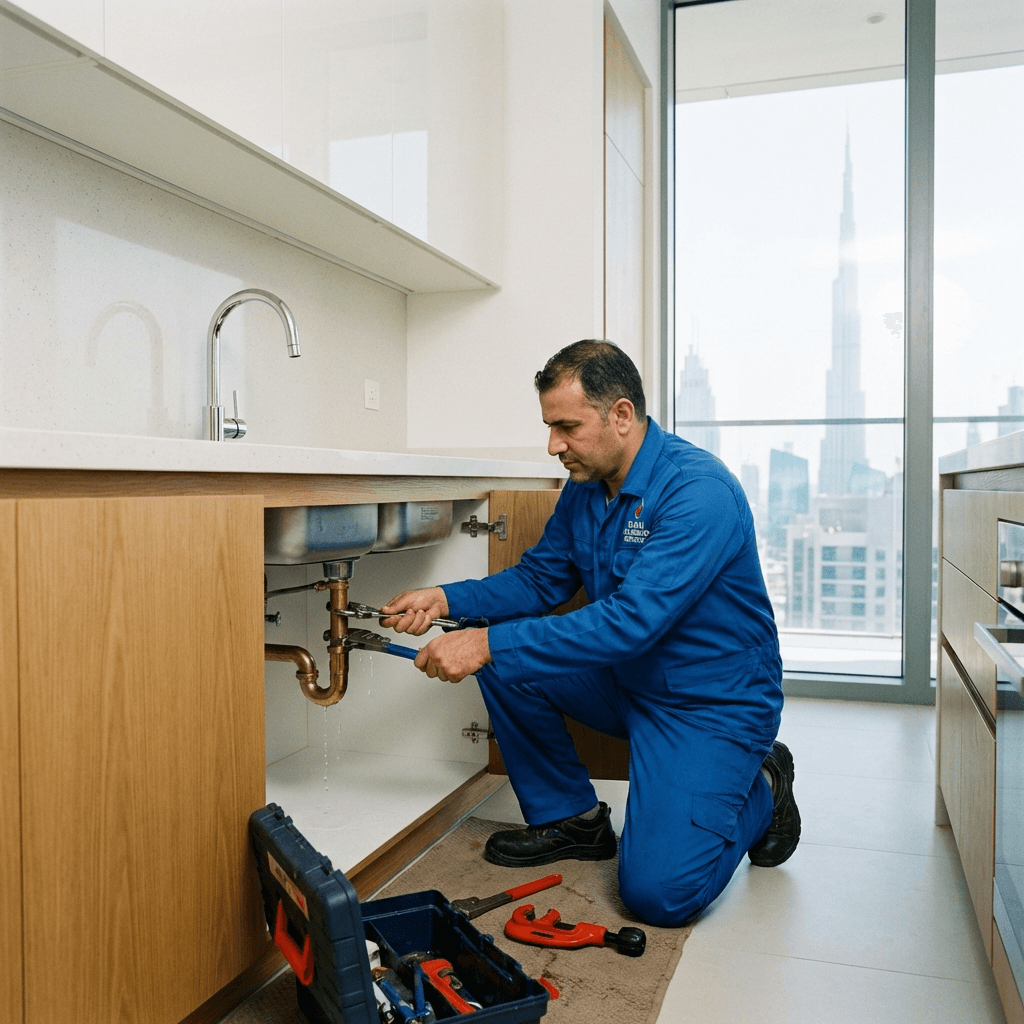
In Dubai, professional plumbers use specialised equipment like motorised drain cables, high-pressure water jetting, and CCTV cameras to inspect and clear blockages safely. This is especially important in apartment buildings where the blockage might be in the main building drain, not just your own pipe.
A reliable handyman service can also help with minor plumbing issues, but for severe blockages, a licensed plumber is the best choice. European Technical offers professional drain cleaning services across Dubai, including in Marina, JVC, Downtown, and Arabian Ranches. Our team uses manual drain snakes and motorised cables to break up blockages without damaging your pipes.
Dealing with Kitchen Sink Drain Smell in Dubai
A blocked sink often comes with an unpleasant smell, but sometimes the smell can be a problem on its own. Many Dubai residents report a drain smell leaking into their apartment, even after installing a filter. This is usually caused by:
- Bacteria and mould: Organic matter trapped in the pipes decomposes and produces gases.
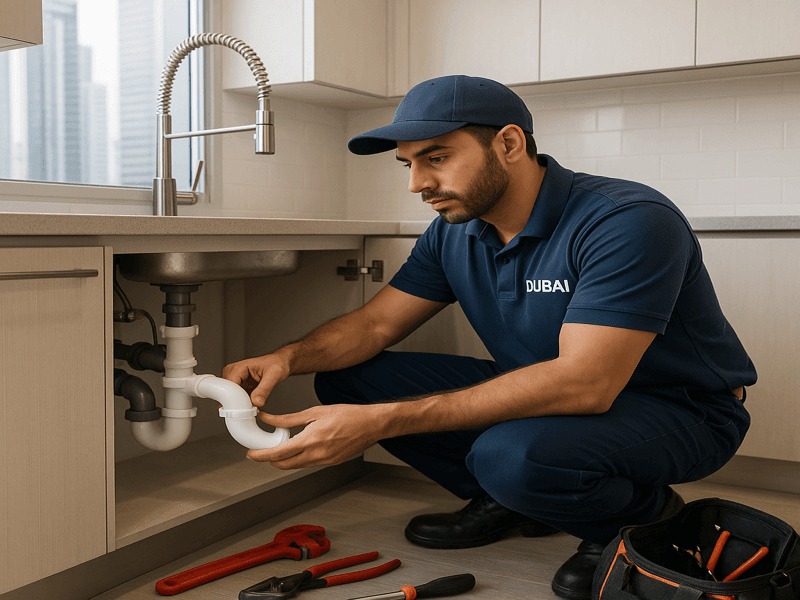
- Dry P-trap: The U-shaped pipe under your sink should always hold water to create a seal against sewer gases. If you have not used the sink for a while, the water can evaporate, allowing smells to rise.
- Blocked vent pipe: The plumbing system has a vent that allows air to flow. If this is blocked, sewer gases can be forced back into your home.
- Cracked or loose pipes: A small gap in the pipework can let smells escape.
To fix the smell, start by cleaning the drain with baking soda and vinegar as described above. Then check the P-trap: pour a cup of water down the drain to refill it if it is dry. If the smell persists, you may need a plumber to inspect the vent pipe or replace damaged sections.
In some cases, the smell comes from the building's main drain pipe, especially in older apartments. If this is the issue, you will need to contact your building management or a professional plumber who can access the main line. A filter alone will not solve the problem if the source is deeper in the system.
Preventing Future Blockages and Smells
Prevention is always better than cure. Here are some practical tips to keep your kitchen sink blockage-free in Dubai's climate:
- Use a sink strainer: Catch food scraps before they go down the drain. Empty the strainer into the bin, not the sink.
- Avoid pouring grease down the drain: Collect cooking oil in a container and dispose of it in the trash. Even small amounts can solidify and cause blockages.
- Run hot water after each use: This helps flush away grease and soap residue before it hardens.
- Clean the drain weekly: Pour a mixture of baking soda and vinegar down the drain, followed by hot water. This keeps pipes clear and neutralises odours.
- Schedule regular maintenance: Consider an annual maintenance contract with a trusted provider like European Technical. Regular inspections can catch small issues before they become major problems.
- Be mindful of what goes down the drain: Avoid putting coffee grounds, eggshells, pasta, rice, or fibrous vegetables like celery down the sink. These can clump together and create stubborn blockages.
The Cost of Fixing a Kitchen Sink Blockage in Dubai
The cost of fixing a kitchen sink blockage in Dubai varies depending on the severity and the service provider. Here is a rough guide:
- DIY methods: Almost free if you use household items like baking soda and vinegar. A plunger costs around AED 20-50 from a local hardware store.
- Professional drain cleaning: Expect to pay between AED 150 and AED 400 for a standard blockage in a kitchen sink. This usually includes a visit from a plumber and the use of a manual or motorised drain snake.
- Emergency call-out: If you need a plumber outside normal hours, prices can be higher, often starting at AED 300-500.
- CCTV inspection: If the blockage is recurring, a CCTV survey of the pipes can cost AED 300-600. This helps identify the exact cause, such as a collapsed pipe or tree root intrusion.
Always ask for a fixed price quote before work begins. Reputable companies like European Technical provide transparent pricing with no hidden fees.
FAQ
Can I use chemical drain cleaners in Dubai?
Chemical drain cleaners are available in Dubai supermarkets and hardware stores, but they are not recommended for regular use. They contain harsh chemicals that can damage PVC pipes, especially in older buildings. They also pose a risk to your health if fumes are inhaled. For most blockages, mechanical methods like plunging or snaking are safer and more effective.
How do I know if the blockage is in my pipe or the building's main drain?
If only your kitchen sink is affected, the blockage is likely in your own pipe. If other drains in your apartment (like the bathroom sink or shower) are also slow or backing up, the problem may be in the building's main drain. In this case, you need to contact your building management or a professional plumber who can access the main line.
Why does my kitchen sink smell even after I clean it?
A persistent smell usually indicates a problem deeper in the plumbing system. Common causes include a dry P-trap, a blocked vent pipe, or a crack in the pipework. Start by checking the P-trap and refilling it with water. If the smell continues, call a plumber to inspect the vent and pipes. For more tips, check our guide on kitchen sink drain smell solutions.
Is it safe to use a plunger on a kitchen sink?
Yes, a plunger is safe for kitchen sinks if used correctly. Make sure you have a cup plunger (not a toilet plunger) and create a good seal. If you have a double sink, block the other drain to improve suction. Avoid using a plunger if you have recently used chemical drain cleaners, as this can splash harmful chemicals back at you.
How often should I have my kitchen drains professionally cleaned?
For most Dubai homes, an annual professional cleaning is sufficient. However, if you notice slow drainage or recurring blockages, you may need more frequent service. An annual maintenance contract can include regular drain inspections and cleaning, saving you money in the long run.
What should I do if the blockage is caused by hard water scale?
Hard water scale can be difficult to remove with DIY methods. Professional plumbers use high-pressure water jetting or specialised descaling solutions to break down limescale. Installing a water softener can also help prevent future scale buildup. If you live in an area with very hard water, like parts of Dubai Marina or JVC, consider this as a long-term solution.