Plumbing Emergency in Dubai? Exactly What to Do
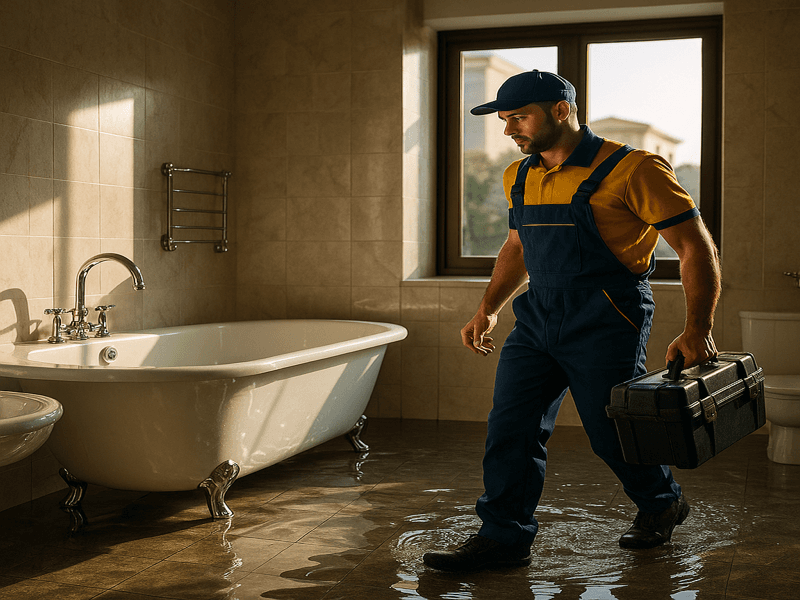
A burst pipe at 2am. A toilet overflow on a Friday. A water heater that dumps 100 litres onto your bathroom floor. Plumbing emergencies don't wait for business hours, and in Dubai -- where apartments sit directly above other apartments -- the damage compounds fast. We handle emergency plumbing calls across Dubai 24/7, and the biggest factor in how much damage you'll face is what you do in the first 10 minutes.
This guide walks you through the most common plumbing emergencies in Dubai, how to limit damage immediately, where your shut-off valves are (because most people don't know until they need them), and what emergency repairs actually cost.
First Response: Find and Shut Your Main Water Valve
Before anything else, you need to know where your main water shut-off valve is. When water is spraying everywhere, you don't have time to Google it.
Dubai Apartments
In most Dubai apartments, the main shut-off valve is in one of these locations:
- Under the kitchen sink: Two valves (hot and cold) that control the kitchen supply. Turning these off stops water to the kitchen only.
- Behind the toilet: A single valve on the wall behind the toilet. Stops water to that toilet only.
- In the utility/laundry area: Many apartments in Emaar, Nakheel, and Damac developments have a central utility cupboard with the main isolation valve. Look for a red or blue-handled valve on the main water line.
- On the riser in the corridor: In some buildings -- particularly in JLT, Business Bay, and Dubai Marina -- the main apartment isolation valve is in a utility box in the hallway or communal riser cupboard outside your front door. You may need building security to open it.
- In the ceiling void (older buildings): Older buildings in Bur Dubai, Deira, and parts of Karama have the main valve in the ceiling -- accessible through a service hatch, usually in the bathroom.
Dubai Villas
Villas in communities like Arabian Ranches, The Springs, Jumeirah Park, and Al Barsha typically have:
- DEWA metre box: The main water isolation valve is at the DEWA metre, usually near the front boundary wall or in a utility room.
- Garden tap isolation: A separate valve for the external garden water supply, often near the pool pump room or garage.
- Individual floor isolations: Larger villas (Palm Jumeirah, Emirates Hills) often have separate isolation valves for each floor, usually in a utility cupboard or behind access panels.
Do this right now: Before you need it, walk around your home and locate every shut-off valve. Turn each one off and on once to make sure it works -- valves that haven't been turned for years can seize.
Emergency 1: Burst Pipe
Water gushing from a pipe inside a wall, under a floor, or from a visible supply line.
Immediate Steps
- Shut the main water valve -- every second counts. A burst pipe can discharge 10-20 litres per minute.
- Turn off the water heater -- if it's a hot water pipe burst, the heater can be damaged by running dry.
- Open a tap downstairs (if you have one) to drain remaining water from the pipes and reduce pressure.
- Move furniture and electronics away from the water. Prioritise electronics and wooden furniture.
- Contact your building management if you're in an apartment. They need to know in case the unit below is affected.
- Call a plumber for emergency repair.
Common Causes in Dubai
- Corroded pipes: Older buildings (pre-2005) in areas like Deira, Karama, Satwa, and older parts of Jumeirah often have galvanised steel pipes that corrode from inside. You can't see the damage until the pipe bursts.
- High water pressure: Some Dubai buildings have water pressure exceeding 6 bar, particularly on lower floors. Sustained high pressure weakens joints and fittings over time.
- Poor-quality fittings: In buildings constructed during the 2005-2009 boom, fast-tracked construction sometimes meant lower-quality fittings that fail after 15-20 years. We're seeing a wave of these failures across Jumeirah Lakes Towers and Dubai Marina right now.
- Water hammer: A banging sound when taps close quickly. The pressure shock damages pipe connections over time. Installing a water hammer arrestor is a simple preventive measure.
Emergency 2: Blocked Drain or Sewage Backup
Water not draining, or worse -- sewage backing up through floor drains, toilets, or shower drains. This is a health hazard and building management should be notified immediately.
Immediate Steps
- Stop using all water in the apartment -- every tap, washing machine, dishwasher. Adding more water makes the backup worse.
- Do not flush toilets.
- If sewage is backing up through floor drains, cover them with wet towels to slow the flow and contain the smell.
- Open windows for ventilation. Sewage gases include hydrogen sulfide, which is harmful in enclosed spaces.
- Notify building management -- the blockage may be in the shared stack, not your apartment.
Common Causes in Dubai
- Grease buildup: Cooking oil poured down kitchen sinks solidifies in drain pipes. This is the number one cause of kitchen drain blockages across Dubai.
- Wet wipes and sanitary products: Despite being marketed as "flushable," wet wipes don't break down and create blockages in soil stacks. Apartment buildings in every Dubai community deal with this.
- Tree root intrusion: In villas with mature gardens -- common in Jumeirah, Umm Suqeim, and older parts of Arabian Ranches -- tree roots grow into underground sewer lines through joints and cracks.
- Shared stack blockage: In apartment buildings, all units on a vertical line share a soil stack. A blockage anywhere in the stack affects units above and below. Upper floors can't drain; lower floors get backup from above.
- Construction debris: In newly handed-over buildings, we sometimes find construction material (concrete, plaster, grout) in drain lines from the construction phase.
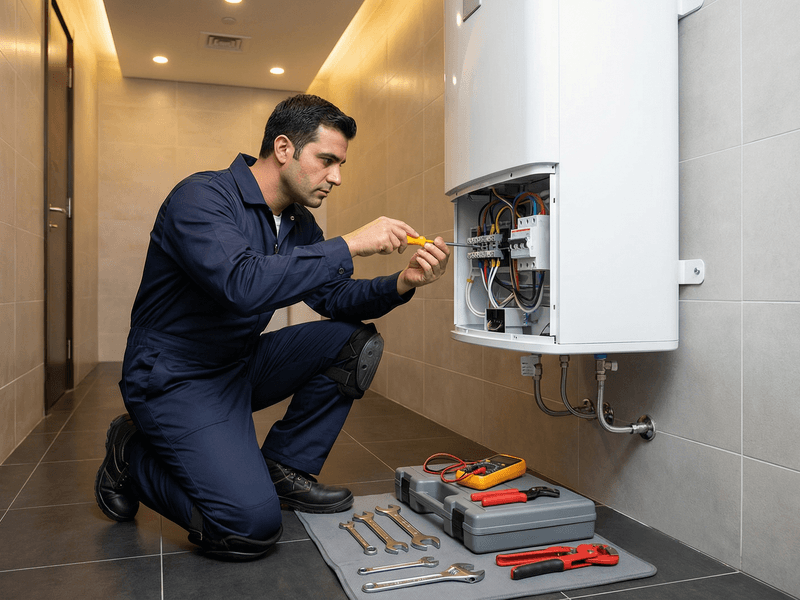
Emergency 3: Water Heater Failure
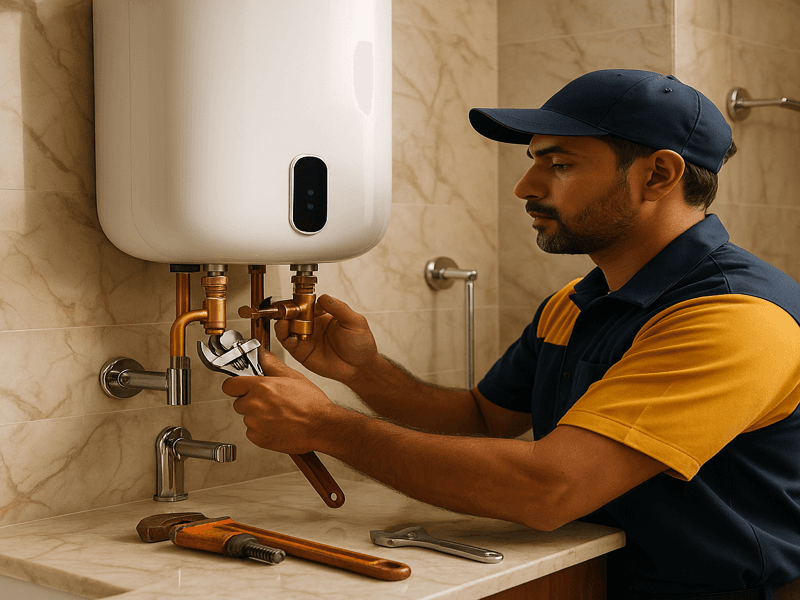
Water heater leaking, overheating, or not producing hot water. In Dubai, most apartments have electric storage water heaters (tank-type) mounted on bathroom walls or in utility areas.
Immediate Steps for a Leaking Water Heater
- Turn off the electrical supply to the water heater at the circuit breaker. Water and electricity together are lethal.
- Shut the cold water inlet valve on top of the heater to stop it refilling.
- Open a hot tap to relieve pressure inside the tank.
- Place towels and containers under the unit to catch drips.
Common Water Heater Problems
- Tank corrosion and leaks: Water heater tanks in Dubai typically last 5-8 years. The sacrificial anode rod corrodes (by design) to protect the tank, but once it's fully depleted, the tank itself corrodes. By the time you see a drip from the base of the heater, the tank is gone -- it can't be repaired, only replaced.
- Pressure relief valve dripping: The safety valve on the side of the heater releases water when internal pressure or temperature exceeds safe limits. Frequent dripping means the water pressure is too high (install a pressure reducing valve) or the valve itself is faulty.
- No hot water: The heating element has burned out. This is a straightforward replacement -- AED 200-400 including parts and labour. Takes about 45 minutes.
- Thermostat failure: Water is either lukewarm or scalding. The thermostat that regulates temperature has failed. Also a straightforward repair.
Emergency 4: Toilet Overflow
The toilet fills up and overflows onto the bathroom floor. Act fast.
Immediate Steps
- Don't flush again. The most common mistake -- people flush a second time hoping it clears. It doubles the overflow.
- Shut the valve behind the toilet by turning it clockwise. This stops the cistern from refilling.
- If the valve is stuck, lift the cistern lid and manually lift the float arm to stop water flow.
- Use a plunger with firm, consistent strokes. A flanged plunger (with an extended rubber lip) works far better than a flat cup plunger for toilets.
- If plunging doesn't work, do not try drain chemicals -- they rarely work on toilet blockages and can damage the porcelain and pipes. Call a plumber.
Emergency Plumbing Costs in Dubai
| Service | Cost Range (AED) | Notes |
|---|---|---|
| Emergency callout (after hours / weekend) | 200 - 400 | Callout fee, applied to repair |
| Standard callout (business hours) | 100 - 200 | Usually credited against repair |
| Drain unblocking (snake/jetting) | 200 - 500 | Depends on severity and access |
| Burst pipe repair (exposed pipe) | 300 - 700 | Copper or PEX replacement section |
| Burst pipe repair (concealed in wall) | 500 - 2,000 | Includes wall opening and patching |
| Water heater replacement | 600 - 1,500 | Supply and install, 50-80L capacity |
| Water heater element replacement | 200 - 400 | Same-day repair |
| Toilet unblocking | 150 - 350 | Manual or mechanical clearing |
| Toilet replacement (supply and fit) | 500 - 1,500 | Depends on fixture quality |
| Pressure reducing valve installation | 300 - 600 | Protects entire apartment |
| CCTV drain inspection | 500 - 1,000 | Camera survey to locate blockage |
Preventing Plumbing Emergencies
Most plumbing emergencies are preventable with basic maintenance:
- Never pour cooking oil down the drain. Let it cool, put it in a container, and dispose of it with general waste.
- Install drain strainers on shower and kitchen sink drains. Hair and food particles are the top two causes of blockages.
- Replace water heater anode rods every 2-3 years. Costs AED 100-200 and doubles the heater's lifespan.
- Test shut-off valves annually. Turn them off and on to make sure they work. A seized valve during an emergency is as useless as no valve at all.
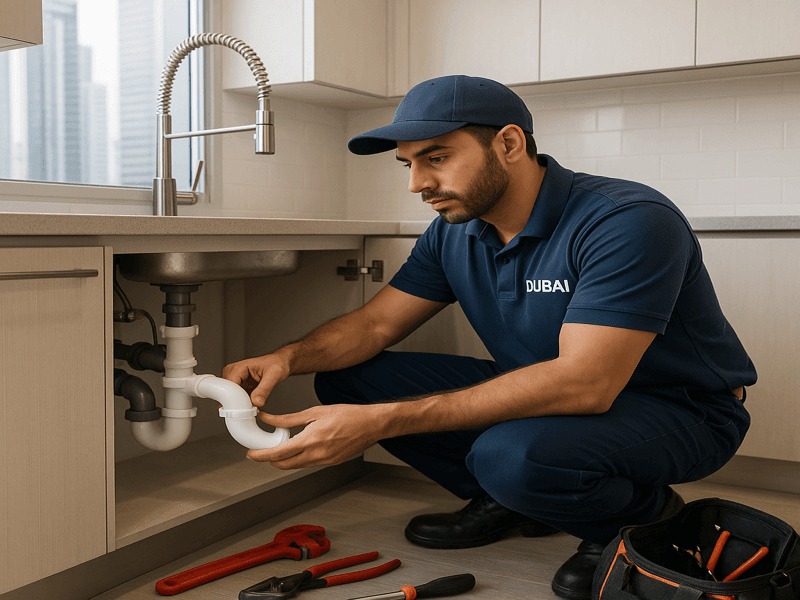
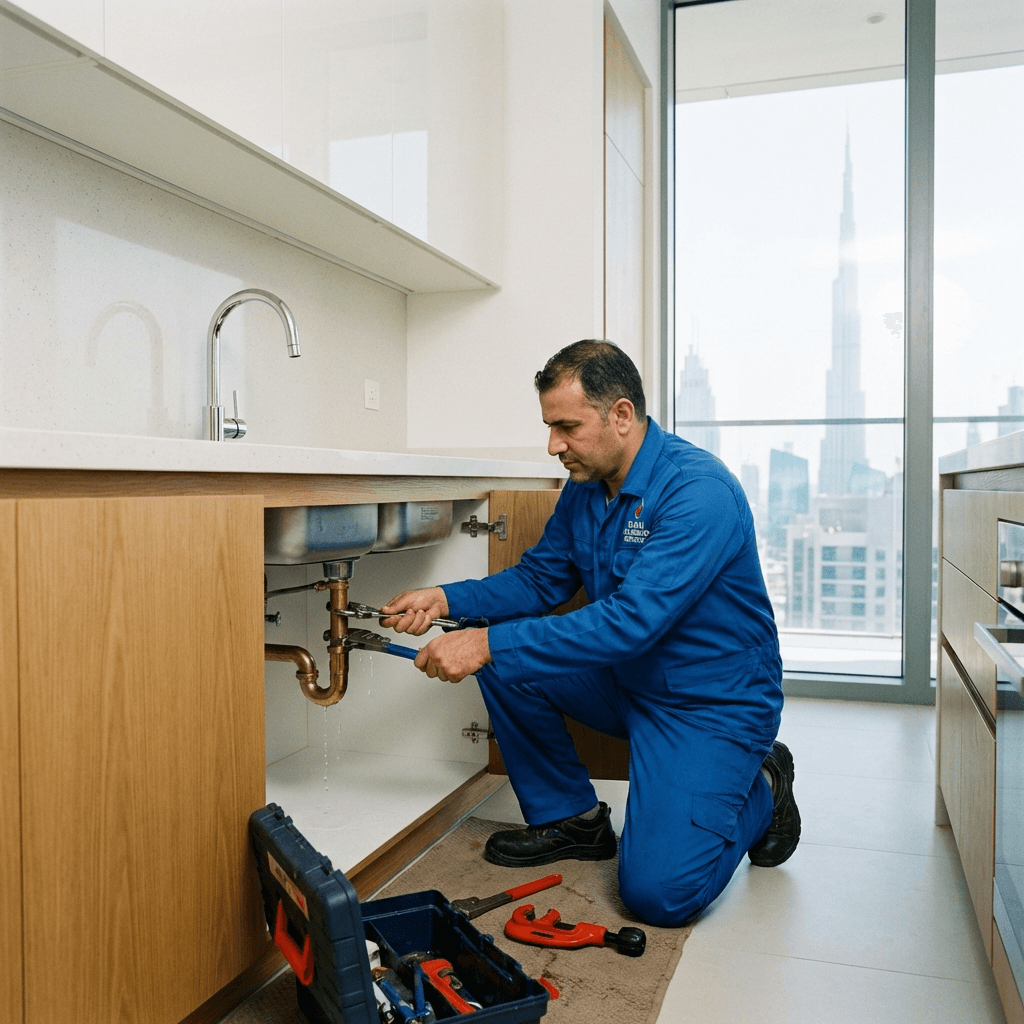
- cheque under sinks monthly. A small drip at a connection joint is a 5-minute fix with a wrench. Left alone, it becomes a flood.
- Know your building management emergency number. Most Dubai residential buildings have a 24/7 maintenance line. Save it in your phone now.
24/7 Emergency Plumbing in Dubai
European Technical provides round-the-clock emergency plumbing services across Dubai. Our plumbers carry the tools and common parts needed for immediate repairs -- we don't show up just to assess and then schedule a second visit.
We service all Dubai areas including Dubai Marina, JBR, Downtown, Business Bay, JLT, Arabian Ranches, The Springs, Jumeirah Village Circle, Palm Jumeirah, Al Barsha, Motor City, Dubai Silicon Oasis, International City, Discovery Gardens, and all other communities.
Emergency plumbing line: 04 234 6783 -- Available 24/7, including weekends and public holidays.
European Technical -- Licensed by Dubai Municipality. Serving Dubai since 2018.