Why Waterproofing Matters More in Dubai Than Anywhere Else
Dubai's climate is a strange contradiction water damage. You'd think a desert city wouldn't have waterproofing problems. You'd be wrong.
Between the humidity that regularly hits 90% along the coast, the intense condensation from AC systems running around the clock, and those increasingly heavy rainstorms we've been getting (remember the flooding in April 2024?), waterproofing is one of the most overlooked - and most expensive to fix - maintenance issues in Dubai properties.
I've seen villas in Arabian Ranches with roof membranes that failed after just three years. Apartments in JVC with bathroom leaks that destroyed the flat below. Townhouses in DAMAC Hills where water seeped through balcony tiles and rotted out the structural steel underneath. Every single one of these was preventable with proper waterproofing.
If you own property in Dubai - or you're managing one - this guide covers everything you need to know about waterproofing services, costs, methods, and when to act before a small problem turns into a six-figure repair bill.
Common Waterproofing Problems in Dubai Properties
Roof and Terrace Leaks
This is the big one. Dubai's flat-roof building style means water pools instead of running off. The waterproof membrane on most roofs has a lifespan of 8-15 years depending on the material and installation quality. But here's what most homeowners don't realise: the UAE's extreme UV exposure degrades roof membranes much faster than in temperate climates.
Villas in Emirates Hills, The Springs, and Mirdif are particularly vulnerable because they tend to be older builds with original membranes that are well past their expiry date. If you notice damp patches on your top-floor ceiling during or after rain, your roof membrane has almost definitely failed.
Bathroom Waterproofing Failures
According to Dubai Municipality building codes, all wet areas must have waterproof membranes extending at least 200mm up the walls and across the entire floor. Despite this requirement, we find failed or inadequate bathroom waterproofing in roughly 40% of the properties we inspect.
The tell-tale signs: bubbling paint on the wall of the room below a bathroom, a musty smell that won't go away, or discoloured patches on ceilings. In apartments, this often becomes a dispute between neighbours - because your leaking bathroom is their ruined ceiling.
Basement and Podium Level Water Ingress
If you live in a villa with a basement - common in Al Barsha, Umm Suqeim, and Jumeirah - water ingress through foundation walls is a real concern. The water table in parts of Dubai is surprisingly high, and during the winter months when there's more rainfall, hydrostatic pressure can force water through even small cracks in the concrete.
Balcony and Planter Box Leaks
This one catches a lot of apartment owners off guard. Built-in planter boxes and balconies with tiled finishes often develop leaks at the junction between the waterproof membrane and the drain outlet. In buildings across Dubai Marina, JBR, and Downtown, you'll find entire floors dealing with water stains because the original waterproofing was done cheaply during construction.
Waterproofing Methods Used in Dubai
Bituminous Membrane (Torch-On)
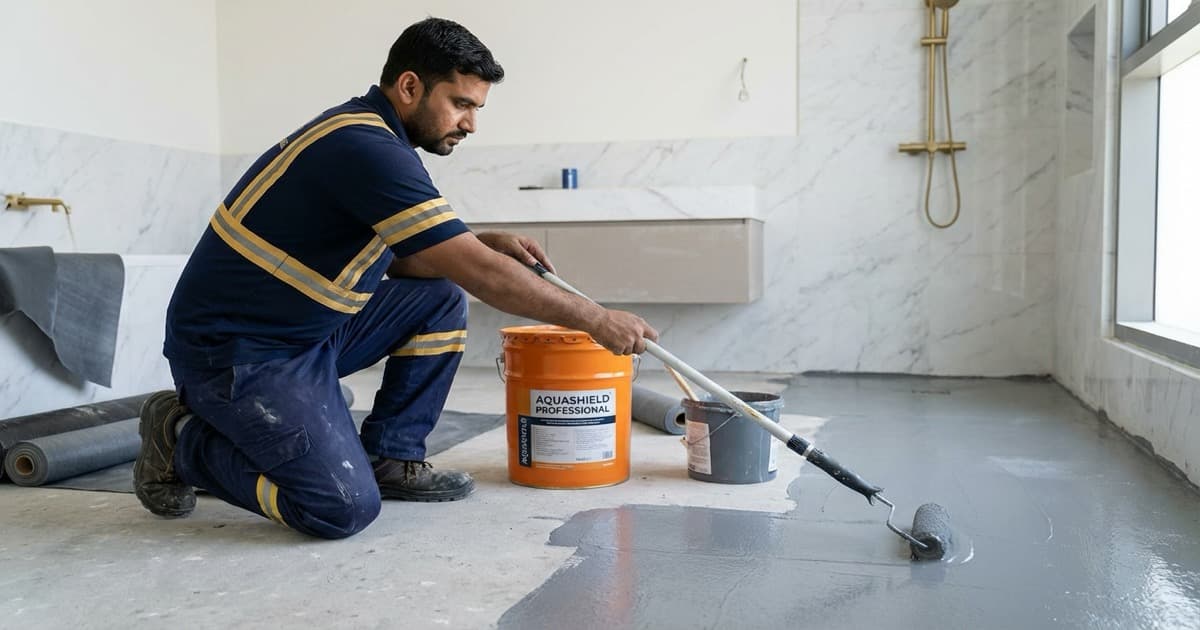
This is the most common method for rooftops and terraces in Dubai. Rolls of modified bitumen are heated with a gas torch and applied in overlapping layers. When done properly, a torch-on membrane lasts 10-15 years in Dubai conditions.
Cost: AED 25-45 per square metre (material and labour) Best for: Flat roofs, terraces, car parks Lifespan: 10-15 years
Liquid Membrane Coating
A brushable or sprayable waterproof coating that forms a continuous, smooth layer. This works well for irregular surfaces, around penetrations (pipes, cables), and as a repair solution for existing membranes.
Brands commonly used in Dubai include Sika, Fosroc, and BASF. The quality difference between brands is real - cheaper alternatives often crack within 2-3 years under UV exposure.
Cost: AED 15-35 per square metre Best for: Bathrooms, balconies, planters, repair work Lifespan: 5-10 years
Cementitious Waterproofing
A cement-based coating mixed with waterproofing additives. This is the standard for internal wet areas - bathrooms, kitchens, laundry rooms. It's rigid, so it works best where there's minimal structural movement.
Cost: AED 12-25 per square metre Best for: Internal wet areas, water tanks, swimming pools Lifespan: 10-20 years (when not exposed to UV)
Polyurethane (PU) Coating
A high-performance liquid membrane that remains flexible after curing. PU coatings handle thermal expansion better than most alternatives, which is a big deal in Dubai where roof surface temperatures can swing from 20°C at night to 70°C during a summer afternoon.
Cost: AED 35-60 per square metre Best for: Roofs with high thermal movement, exposed terraces Lifespan: 10-15 years
Crystalline Waterproofing
This is a newer technology where chemicals react with moisture in the concrete to form crystals that block water pathways. Products like Xypex and Penetron fall into this category. The advantage? It's self-healing - minor cracks get sealed as the crystals grow.
Cost: AED 30-50 per square metre Best for: Foundations, basements, water tanks Lifespan: Permanent (the crystals remain active as long as the concrete exists)
How Much Does Waterproofing Cost in Dubai?
What you'll actually pay in 2026. These are real numbers from recent projects - not the made-up figures you'll find on most blogs.
Roof Waterproofing (Full Replacement)
- Apartment building roof (per unit share): AED 2,000-5,000
- Villa roof (200-400 sqm): AED 8,000-18,000
- Townhouse roof (100-200 sqm): AED 4,000-9,000
Bathroom Waterproofing
- Standard bathroom (4-6 sqm): AED 1,500-3,000
- Master bathroom (8-12 sqm): AED 2,500-5,000
- Including tile removal and re-tiling: Add AED 3,000-8,000
Terrace and Balcony
- Small balcony (5-10 sqm): AED 1,500-3,500
- Large terrace (20-50 sqm): AED 5,000-15,000
- Rooftop terrace with drainage work: AED 10,000-25,000
Basement Waterproofing
- Interior drainage system: AED 15,000-40,000
- External membrane (requires excavation): AED 25,000-80,000
- Injection waterproofing (crack repair): AED 3,000-10,000
When to Waterproof: The Dubai Calendar
Timing matters more than most people think. The smart schedule:
October to March (Ideal Window) This is when you should do all major waterproofing work. Temperatures are moderate (which helps membranes cure properly), it's the period leading into the rain season, and contractors are less busy than during the summer rush.
April to May (Pre-Summer Rush) If you missed the winter window, do it now before the extreme heat sets in. Torch-on membranes are harder to apply properly when surface temperatures exceed 50°C.
June to September (Emergency Only) Only waterproof during summer if you're dealing with an active leak. The heat affects material performance and worker productivity. If you must do it, insist on early morning application (before 9 AM) or evening work.
Dubai Municipality Requirements You Need to Know
Dubai's building codes are specific about waterproofing, and if you're renovating, you need to comply:
- All wet areas must have a waterproof membrane before tiling
- Roof waterproofing must be tested with a 48-hour flood test before handover
- Balcony waterproofing must be continuous - no breaks at door thresholds
- Swimming pools need dual-layer waterproofing systems
- Water tanks must have food-grade waterproof coatings
If your building was handed over without proper waterproofing documentation, your building management company should be pushing the developer for rectification under the 10-year structural warranty that RERA mandates.
Warning Signs Your Property Needs Waterproofing
Don't wait for the ceiling to collapse. Watch for these early indicators:
- Damp patches that appear after rain and fade when it dries - this is water finding its way in through the structure
- Musty or mouldy smell in bathrooms or near exterior walls - moisture is trapped somewhere
- Paint bubbling or peeling on walls and ceilings, especially in rooms below bathrooms or terraces
- Efflorescence (white crystalline deposits) on concrete or brick walls - mineral salts being carried by water migration
- Cracked or lifting tiles on balconies and terraces - water underneath is expanding and contracting with temperature changes
- Rising damp at ground level - common in older villas, shows as a tide mark on walls up to about 1 metre high
- Rust stains appearing on concrete - water is reaching the reinforcing steel, which is a structural issue
- Applying sealant around bathroom fixtures (silicone, not caulk)
- Touching up liquid membrane on small cracks or chips
- Applying water-repellent spray to exterior walls
- Resealing tile grout in showers
- Full roof membrane replacement
- Bathroom waterproofing under tiles (this requires proper detailing around drains and wall junctions)
- Basement waterproofing (getting it wrong means water damage to your foundation)
- Any waterproofing that requires a Dubai Municipality permit
- Swimming pool waterproofing
- Free inspection and quote - we assess the existing waterproofing, identify failure points, and give a detailed scope of work with transparent pricing
- Material selection guidance - we recommend the right system for your specific situation, not just the cheapest option
- Professional application - our waterproofing team are trained and certified by material manufacturers
- Flood testing - every job includes a proper test before we hand it back
- 10-year warranty - because we stand behind our work
How to Choose a Waterproofing Contractor in Dubai
This is where a lot of people get burned. Waterproofing is one of those trades where the difference between good and bad work is invisible until it fails - often years later. What to look for:
Licensing: The contractor should hold a valid Dubai trade licence for waterproofing works. General maintenance licences don't always cover specialist waterproofing.
Material sourcing: Ask which brands they use and whether they're an approved applicator. Companies like Sika and Fosroc have certified applicator programmes - using one gives you an extended material warranty.
Testing protocol: Any reputable contractor will include a flood test (also called a ponding test) after waterproofing. For roofs, this means ponding water to a depth of 50mm for 48 hours and checking for leaks below. If they don't mention testing, walk away.
Warranty: You should get a minimum 5-year workmanship warranty on top of the material manufacturer's warranty. At European Technical, our waterproofing work carries a 10-year warranty because we trust our materials and our applicators.
Previous work: Ask for photos and references from completed projects in your area. Waterproofing a villa in Emirates Hills is different from waterproofing a penthouse terrace in Dubai Marina - experience with your property type matters.
DIY vs Professional Waterproofing
Let me be honest: some waterproofing tasks are perfectly fine to DIY. Others are absolutely not.
DIY-Friendly:
Always Hire a Professional:
What European Technical Offers for Waterproofing
We handle waterproofing across Dubai - from studio apartments in JVC to luxury villas on Palm Jumeirah. Our approach:
Whether it's a leaking bathroom in Downtown Dubai, a villa roof in The Springs that needs re-membraning, or a new-build terrace in MBR City that needs waterproofing from scratch - give us a call.
Call +971 58 544 1160 for a free waterproofing assessment, or WhatsApp us at +971 56 370 2548. We'll get back to you within the hour with a site visit time that works for your schedule.