When to DIY vs Call a Professional: Dubai Home Repairs Guide
YouTube makes every home repair look easy. Watch a 10-minute video, grab some tools, and save hundreds of dirhams by doing it yourself, right?
Sometimes yes. Often no. And occasionally you'll turn a AED 200 repair into a AED 2,000 disaster because you didn't know what you didn't know.
Living in Dubai adds layers of complexity: extreme temperatures stress materials differently, building codes have specific requirements, and some work requires licensed professionals or invalidates warranties if done DIY. Making the wrong call on when to DIY versus hiring a professional can cost you significantly.
This guide helps you make that decision correctly.
The Core Question: What Can Actually Go Wrong?
Before deciding DIY or professional, ask: "What's the worst-case outcome if I mess this up?"
If the answer is:
- "I'll have to redo it" → Probably safe DIY if you're willing to invest the time
- "It might not work perfectly" → DIY is reasonable
- "I could damage expensive equipment" → Lean toward professional
- "I could cause water damage" → Probably professional
- "I could start a fire or electrocute myself" → Definitely professional
- "I could invalidate my property insurance" → Professional only
Risk assessment beats false confidence every time.
Always DIY: Low-Risk, High-Frequency Tasks
These repairs are safe, simple, and economical to do yourself:
Filter Cleaning and Replacement
What: AC filters, kitchen exhaust filters, dryer lint screens, vacuum filters
Why DIY: Takes 5-10 minutes, requires no tools, impossible to mess up, saves AED 50-150 per service call
How often: Monthly for AC during summer, quarterly for others
Cost if you hire someone: AED 100-200 per visit DIY cost: Zero (just your time)
Light Bulb Changes
What: Any standard bulb replacement
Why DIY: Requires no expertise, minimal risk
Exception: High ceilings requiring tall ladders or boom lifts (hire someone with proper equipment - falling isn't worth the savings)
Basic Caulking and Sealing
What: Resealing around sinks, tubs, windows
Why DIY: Caulk guns cost AED 30, caulk tubes AED 15-25. Simple to apply, low consequences if imperfect
When to call pro: If removing old caulk reveals water damage, rot, or mould (indicates bigger problem)
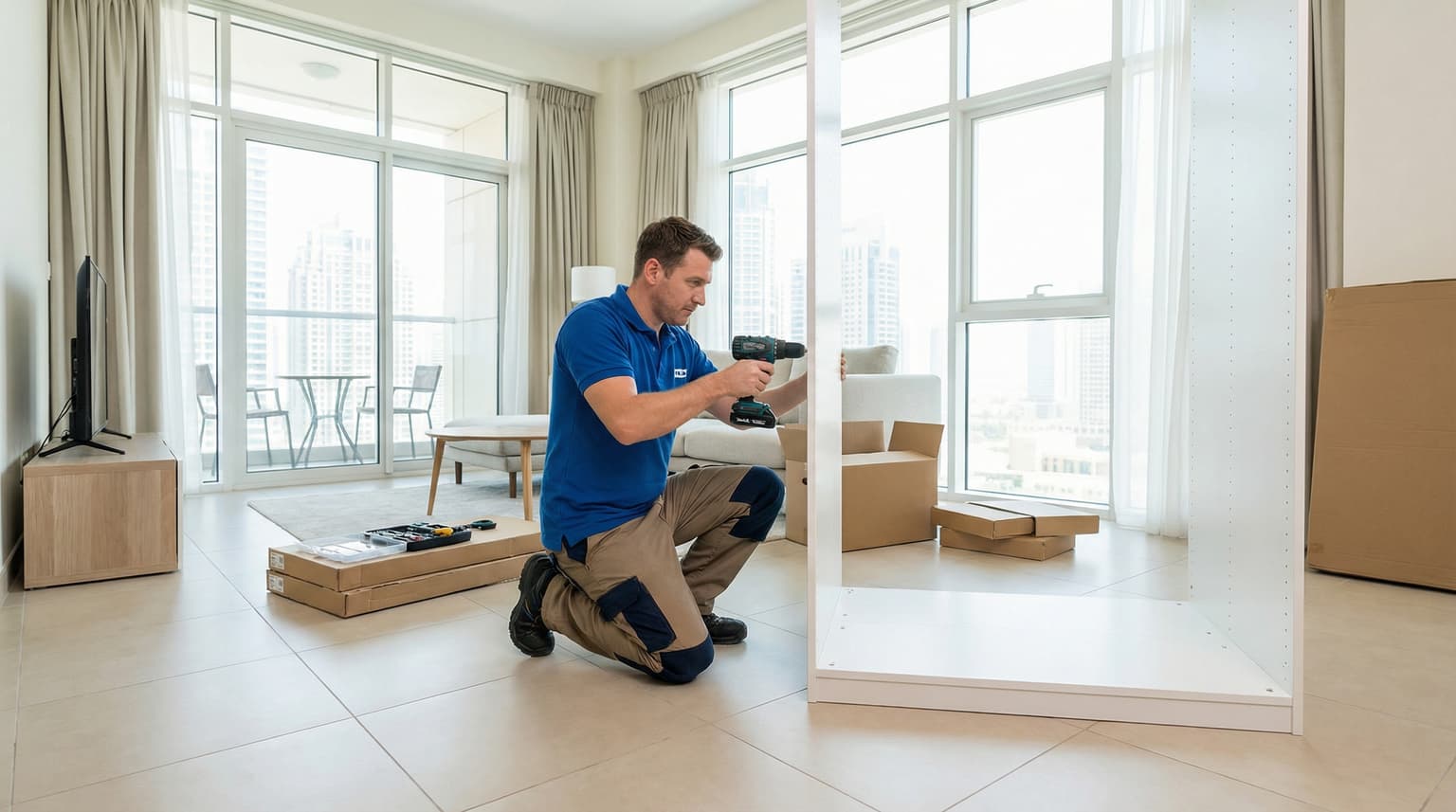
Furniture Assembly
What: IKEA, flat-pack furniture
Why DIY: Instructions are detailed, tools are provided or basic, only consequence of error is wobbly furniture
When to call pro: Large items requiring multiple people, or if you genuinely hate this task (life's too short to suffer through assembling an IKEA wardrobe if it makes you miserable)
Picture Hanging and Minor Wall Mounting
What: Photos, small shelves, lightweight items
Why DIY: Requires basic drill, appropriate wall anchors, patience
When to call pro: TVs (expensive equipment, needs perfect leveling and secure mounting), heavy shelving, or mounting on tile (easy to crack)
Usually DIY: Moderate Skill, Clear Instructions
These tasks reward effort if you're handy and willing to learn:
Toilet Fill Valve Replacement
What: Fixing constantly running toilet
Why DIY is reasonable: Replacement parts cost AED 30-60, job takes 30-60 minutes, YouTube tutorials are excellent
Risk: Worst case is small water spill and reinstalling old parts
When to call pro: If the problem isn't the fill valve (leak at base, cracked tank, flange issues)
Professional cost: AED 200-400 DIY cost: AED 30-60 plus 1 hour
Door Hardware Replacement
What: Handles, locks, hinges
Why DIY is reasonable: Mostly straightforward, existing holes guide new hardware placement
When to call pro: Security doors requiring specialised locks, UPVC door adjustments (tricky), or if you can't get old hardware off (rounded screws, stuck bolts)
Curtain and Blind Installation
What: Hanging curtain rods, roller blinds
Why DIY is reasonable: Straightforward measuring and mounting
When to call pro: Motorized blinds (electrical work), large/heavy treatments requiring precision, or mounting into tile (crack risk)
Thermostat Replacement
What: Upgrading to programmable or smart thermostat
Why DIY is reasonable: Usually plug-compatible with existing wiring, instructions are clear
When to call pro: If wiring isn't standard, system is complex (zoned or multi-stage), or you're uncomfortable with any electrical work
Professional cost: AED 300-600 DIY cost: AED 0 (just device cost)
Sometimes DIY: Depends on Your Skill and Tools
These require honesty about your capabilities:
Painting Interior Walls
DIY if: You've time, patience, and willingness to do prep work properly (cleaning, taping, filling holes)
Call pro if: You want perfect results, have high ceilings or complex spaces, need colour consultation, or value your time more than the AED 2,000-5,000 you'll save
Reality cheque: Good paint job is 80% prep, 20% painting. Most DIY jobs look DIY because people skip the tedious prep work.
Tile Repair (Small Area)
DIY if: You can match existing tiles, have proper tools (tile cutter, trowel, grout float), and it's a small area (under 1 square metre)
Call pro if: Large area, complex pattern, can't match tiles exactly, or tile is on floor (floor tiles require precise leveling)
Risk: Poorly set tiles come loose, incorrect grout causes moisture problems
Appliance Troubleshooting
DIY if: Issue is clearly simple (clogged filter, tripped breaker, disconnected hose)
Call pro if: You're not certain of the diagnosis, repair requires part replacement, appliance is under warranty (DIY voids it), or appliance involves water + electricity
General rule: Diagnosis is often DIY (costs nothing to cheque obvious issues), but repairs typically need professionals
Usually Call a Professional: High Risk or Complexity
Anything Involving Gas
What: Gas water heaters, stoves, connections
Why always professional: Gas leaks cause explosions and deaths. Licensed gas fitters have training, insurance, and equipment to work safely.
Dubai reality: Unauthorized gas work violates building codes and insurance policies. If something goes wrong, you're personally liable.
Never DIY gas work. Ever.
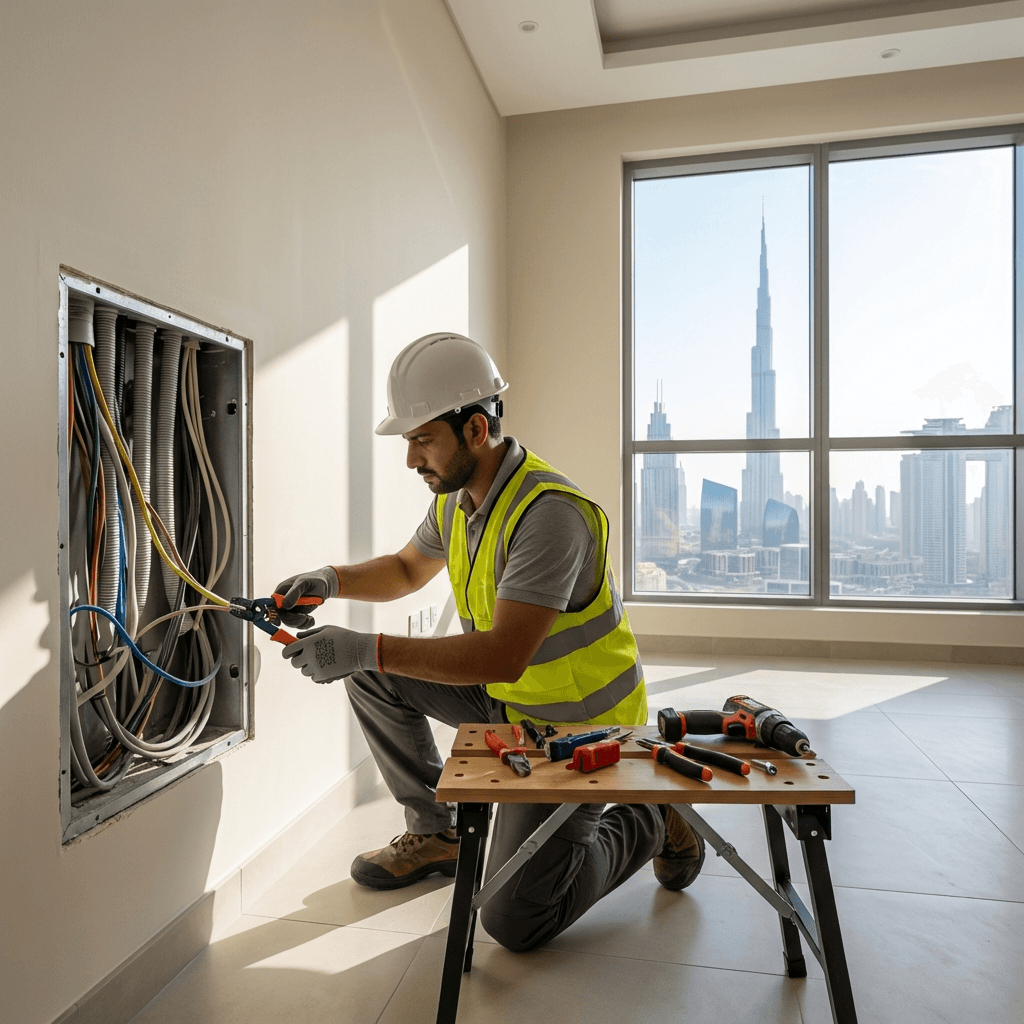
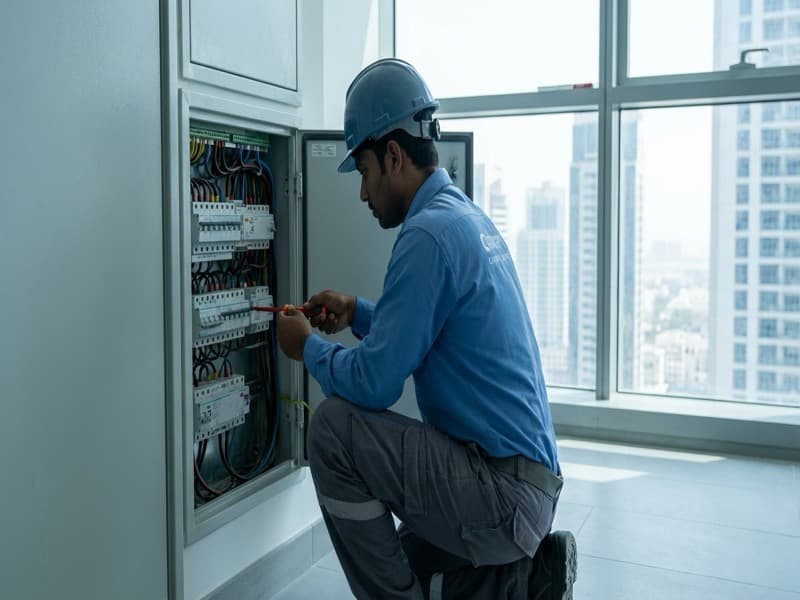
Major Electrical Work
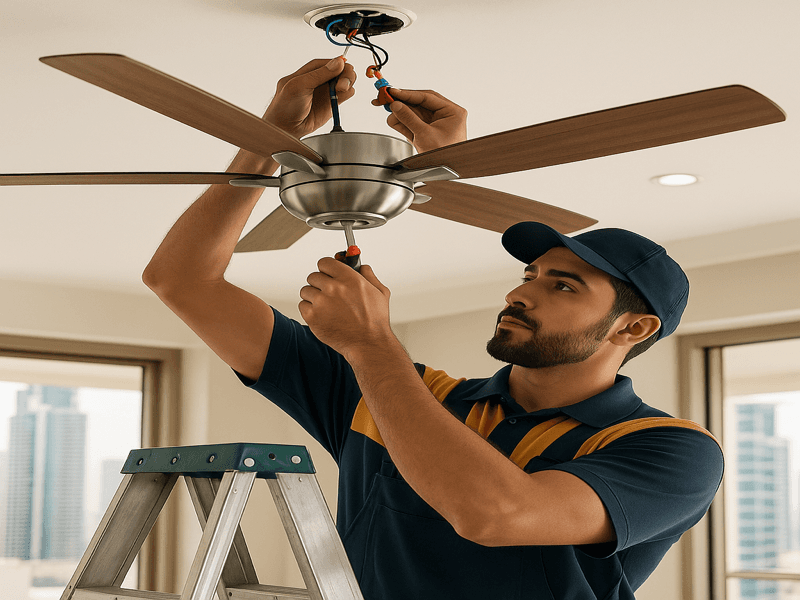
What: New circuits, panel work, rewiring, ceiling fan installation requiring new electrical
Why professional: Electrical fires kill people and destroy property. Dubai building codes require DEWA-approved electricians for permitted work.
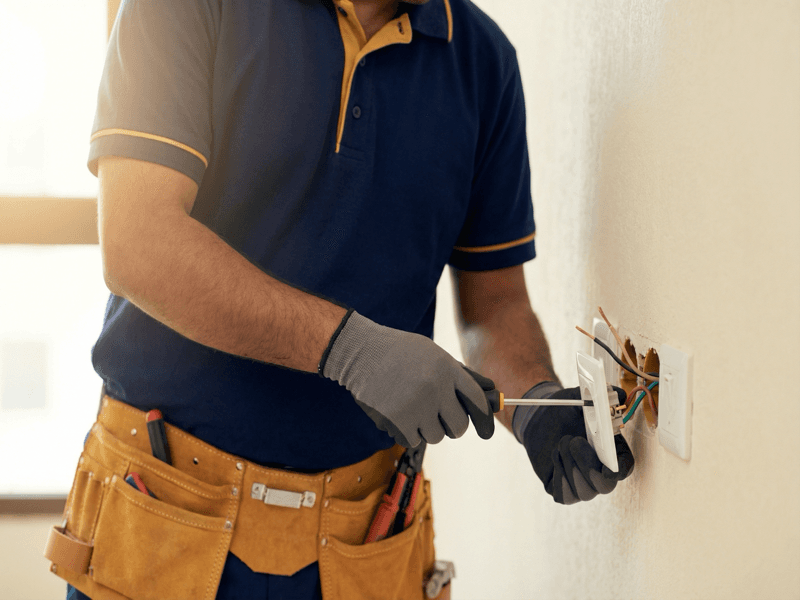
What counts as "major": Anything beyond changing outlets, switches, or light fixtures on existing circuits
DIY exceptions: Changing switches, outlets, or fixtures on existing circuits IF you're comfortable with electrical work and follow proper safety (breaker off, voltage tested)
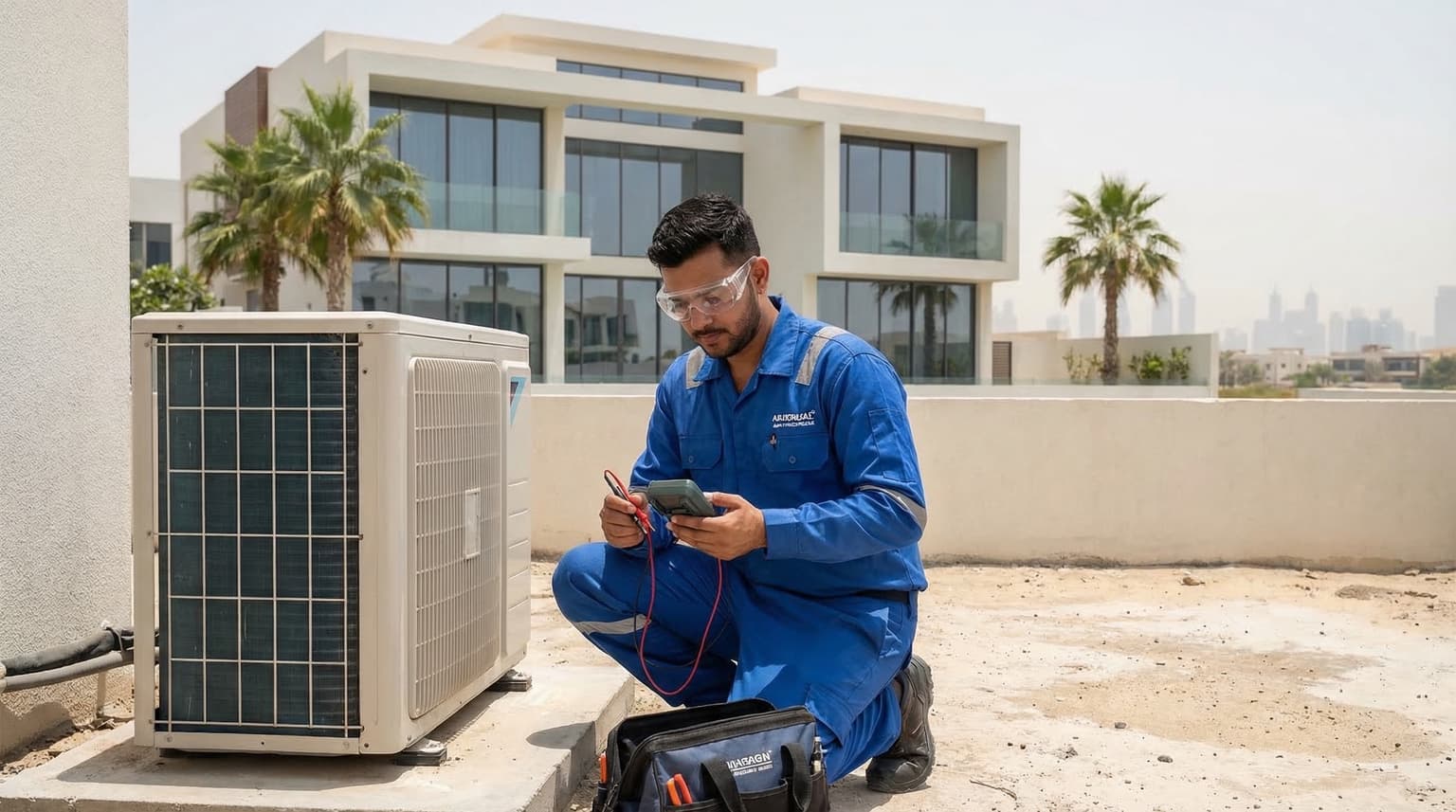
AC Refrigerant Work
What: Charging refrigerant, leak detection, compressor replacement
Why professional: Requires specialised equipment, technical training, and refrigerant handling certification. DIY is illegal and dangerous.
Can void warranty: Almost all AC manufacturers void warranties for unauthorized work
DIY scope limit: Filter cleaning, basic outdoor unit washing. Everything else is professional territory.
Professional AC repair services handle refrigerant work safely and legally.
Water Heater Installation or Major Repair
What: Installing new water heater, replacing tank, major component repairs
Why professional: Combines plumbing, electrical/gas, and code compliance. Errors cause flooding, fire, or gas leaks.
DIY limit: Temperature adjustment, drain valve replacement (with main water off)
Major Plumbing (Pipe Replacement, Relocations)
What: Replacing main lines, moving fixtures, opening walls for pipe access
Why professional: Mistakes cause expensive water damage, require opening/repairing walls correctly, need code compliance
DIY plumbing limit: Fixture replacements on existing connections (taps, showerheads, toilet fill valves), drain cleaning
Structural Repairs
What: Foundation work, load-bearing wall modifications, major ceiling/floor repairs
Why always professional: Structural errors endanger building integrity and occupant safety. Requires engineering assessment and municipal approval.
No DIY exceptions here.
Dubai-Specific Considerations
Building Codes and Permits
Require professionals:
- Major electrical work (DEWA-approved contractors)
- Plumbing alterations affecting mains
- Structural modifications
- Any work requiring municipality permits
DIY work not meeting codes causes problems when selling property or filing insurance claims.
Climate and Material Challenges
Dubai's extreme heat affects:
- Adhesives and caulks (need heat-resistant formulations)
- Exterior paint (requires special Dubai-climate paints)
- Waterproofing (critical due to occasional heavy rain + heat cycling)
Professionals know which materials work in local conditions. DIY using wrong products fails quickly.
Warranty and Insurance Implications
Manufacturer warranties often require authorised service. DIY repair voids warranty.
Home insurance may deny claims if damage resulted from unauthorized or substandard DIY work.
cheque before proceeding: Does DIY void warranties or affect insurance?
labour Costs vs Western Countries
Dubai's labour costs are moderate compared to Western countries. The financial case for DIY is weaker here than in expensive labour markets.
Example: Toilet repair costs AED 200-300 professionally in Dubai vs £150-200 (AED 700-900) in UK. The savings from DIY are less compelling, making professional service more attractive if you value your time.
The Time and Frustration Factor
Honest self-assessment questions:
- Do I actually enjoy this type of work? If no, why suffer through it?
- Do I've the right tools already? Buying tools for one job changes the economics.
- How much is my time worth? If you earn AED 200/hour professionally, spending 4 hours to save AED 300 is a losing proposition.
- What's my track record? If past DIY projects went poorly, this one probably will too.
- Will I actually do it, or will it sit undone for months? Procrastination cost exceeds professional service cost.
Be honest. There's no shame in paying someone to do work you could technically do but genuinely don't want to.
When DIY Goes Wrong
Common escalation patterns:
Pattern 1: Diagnosis Error
- You think it's Problem A, order parts, spend time replacing things
- It was actually Problem B
- Now you've wasted time, money, and still need to call a professional
Pattern 2: In Over Your Head
- Job starts fine, then you encounter unexpected complexity
- You're halfway through and can't put it back the way it was
- Professional now charges more to fix your partial attempt plus solve original problem
Pattern 3: Collateral Damage
- While fixing Issue A, you accidentally break Component B
- Cost is now original repair + component replacement + potential damage remediation
If you're 30 minutes into a DIY job and it's not going well, stop. Call a professional then, not after you've made it worse.
The Smart Hybrid Approach
Often the best path is combination:
DIY the diagnosis and simple stuff:
- cheque obvious issues (tripped breakers, clogged filters, loose connections)
- Replace simple components if cause is clear
- Do the prep work (moving furniture, removing old materials)
Hire professional for execution:
- Technical diagnostics and repairs
- Code-compliant installation
- Warranty-preserved work
Example: AC not cooling well
- DIY: cheque filter (clogged? clean it), verify thermostat settings, cheque circuit breaker
- If those don't solve it → Call professional for refrigerant cheque, coil cleaning, compressor assessment
This approach saves money on simple fixes while avoiding disasters from complex repairs.
Making the Final Call
Use this decision tree:
- Is it safe? (No injury/fire/flood risk if wrong) → Continue evaluating
- Not safe → Hire professional
- Is it legal? (No code violations, permit requirements) → Continue
- Requires permits/licensed work → Hire professional
- Do I've skills and tools? → Continue
- No → Hire professional unless willing to learn/buy tools
- Is failure expensive? → Continue
- Could damage expensive equipment/property → Hire professional
- Do I actually want to do this?
- Yes → DIY
- No → Hire professional
When in doubt, call for a consultation. Many contractors provide quotes or assess situations for free or minimal fee. That AED 100-200 consultation might save you AED 2,000+ in mistakes.
For reliable professionals across multiple trades, handyman services handle many common repairs in one visit.
Final Thoughts
DIY culture celebrates self-sufficiency, but wisdom knows when to ask for help. The smartest approach isn't "always DIY" or "always hire someone" - it's making informed decisions based on risk, skill, tools, time, and honest self-assessment.
Some jobs genuinely are easy wins for DIY (filter changes, basic caulking, furniture assembly). Others are false economies where your "savings" cost far more than professional service would have.
Know the difference, and you'll save money without creating expensive disasters. That's the real DIY skill worth developing.