Home Security Assessment Checklist for Dubai Properties
Security isn't just about preventing burglaries. In Dubai, home security encompasses entry point vulnerabilities, electronic system weaknesses, emergency preparedness, and even privacy from opportunistic observation. ent identifies gaps before they're exploited.
This guide provides a room-by-room checklist to evaluate your property's security, practical improvements for common vulnerabilities, and guidance on when to upgrade from basic to advanced systems.
Why Dubai Properties Need Security Assessment
Dubai consistently ranks among the world's safest cities, but that doesn't make individual properties immune to security issues.
Common vulnerabilities in Dubai homes:
- Construction-related access: Many properties have balconies, service entrances, or utility areas that were secure during occupancy but become access points after construction workers or handymen have keys/knowledge
- Shared building access: Apartment buildings have multiple entry points, delivery access, and service areas that bypass main lobby security
- Domestic staff access: Maids, drivers, and maintenance workers often have keys, creating access-management challenges
- Holiday absence: Dubai's transient population means extended empty periods during summer or holiday travel
- High-value concentration: Properties contain electronics, jewellery, and personal items worth significantly more than typical burglary risk would justify
A proper security assessment addresses all these factors, not just "can someone break my front door."
Starting Point: Your Security Audit
Before walking through your home, establish baseline questions:
- Who has keys or access? List everyone: family members, domestic staff, building management, previous tenants (if you didn't rekey), landlord, maintenance contractors
- What are you protecting? Identify high-value items, important documents, and items with sentimental/irreplaceable value
- What's your budget? Security ranges from free behavioural changes to AED 20,000+ smart systems
- What's your risk profile? Ground-floor villa? High-rise apartment? Gated community? Regular travel?
Your honest answers determine where to focus assessment efforts.
Exterior Assessment (Villas and Ground-Floor Units)
Walk the property perimeter before entering. Burglars scout exteriors looking for easy entry and privacy from observation.
Boundary and Fencing
cheque for:
- Fence height and climb difficulty: Standard 1.8-2m fencing provides psychological deterrent, not physical barrier. Can someone scale it easily?
- Fence condition: Gaps, weak sections, or damaged areas create entry points
- Gate security: Simple latches vs proper locks with deadbolts
- Visibility through fencing: Full privacy prevents observation but also hides intruders once inside
Improvements:
- Add lock to gate mechanisms (many rely on simple latches)
- Install anti-climb toppings where legal (cheque villa community rules)
- Repair weak fence sections - opportunistic entry exploits existing damage
- Consider motion-activated exterior lighting along fence lines
Entry Points: Doors and Windows
Front door assessment:
- Door material: Solid core wooden or steel doors resist forced entry far better than hollow alternatives
- Frame strength: Even solid doors fail if frames are weak or poorly anchored
- Lock quality: Single-cylinder locks provide minimal security. Look for deadbolts with at least 25mm throw
- Strike plate: Is it secured with standard screws (weak) or long screws into wall studs (strong)?
- Visibility: Can neighbours or passersby see someone attempting entry, or is the door hidden?
Back and side doors:
- Often weaker than front doors because residents assume "no one goes back there"
- Service entrances for maids or deliveries may have inferior locks
- Kitchen or utility room doors may be hollow-core or have simple slide bolts
- Visibility is usually low - ideal for unauthorized entry attempts
Windows:
- Ground-floor windows: Can they be opened from outside? Are they locked when you're away or asleep?
- Window locks: Many Dubai properties have simple catches that flip open - inadequate for security
- Sliding windows: These often lack proper locking mechanisms beyond a simple latch
- Grilles or bars: Common in older properties; ensure they're properly secured and haven't been loosened over time
- Bathroom and utility windows: Often overlooked but large enough for entry
Immediate improvements:
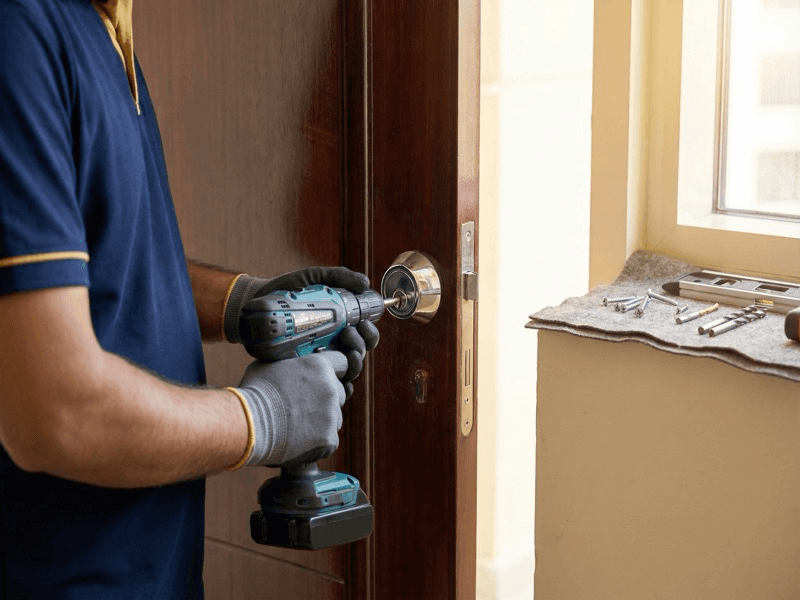
- Upgrade all exterior door locks to deadbolts (minimum)
- Add secondary locking mechanisms to sliding doors (track blocks or keyed locks)
- Install window locks on all accessible ground-floor windows
- Ensure all exterior door hinges are interior-mounted (exterior hinges can be removed by attackers)
- Verify strike plates use 75mm screws into wall framing, not just surface material
Lighting and Visibility
Assess:
- Are entry points well-lit at night?
- Do you've dark corners around the property perimeter?
- Is exterior lighting manual (you must remember to turn it on) or automatic?
- Can neighbours or street see your entry points?
Improvements:
- Install motion-activated exterior lighting at all doors and along pathways
- Add dusk-to-dawn lights for consistent perimeter illumination
- Trim bushes and trees that create hiding spots near entry points
- Consider smart lighting systems that simulate occupancy when you're away
Garage and Storage Areas
cheque:
- Garage door mechanism: Can it be manually opened from outside?
- Door from garage into house: Often treated as "interior" door with weak locks
- Storage shed security: Tools inside can be used to break into the main house
- Visibility: Can neighbours see if someone is attempting garage access?
Improvements:
- Keep garage-to-house door locked with deadbolt (treat it as an exterior door)
- Upgrade garage door mechanisms to prevent manual override from exterior
- Secure valuable tools in locked cabinets inside garage
- Consider garage door sensor integrated with security system
Interior Assessment (All Property Types)
Once inside, security focuses on controlling access and detecting unauthorized entry.
Main Entrance and Lobby (Apartments)
Evaluate:
- Building entrance security: Manned desk? Key card access? Simple intercom?
- Elevator access control: Can anyone press any floor button, or is it restricted?
- Stairwell security: Are fire stairs accessible from parking or delivery areas?
- Visitor management: How does building track guest access?
You can't change building-level security, but awareness informs your unit-level defenses. If building security is weak (simple intercom, no lobby desk), invest more in your unit-level security.
Your Unit Front Door
Assess:
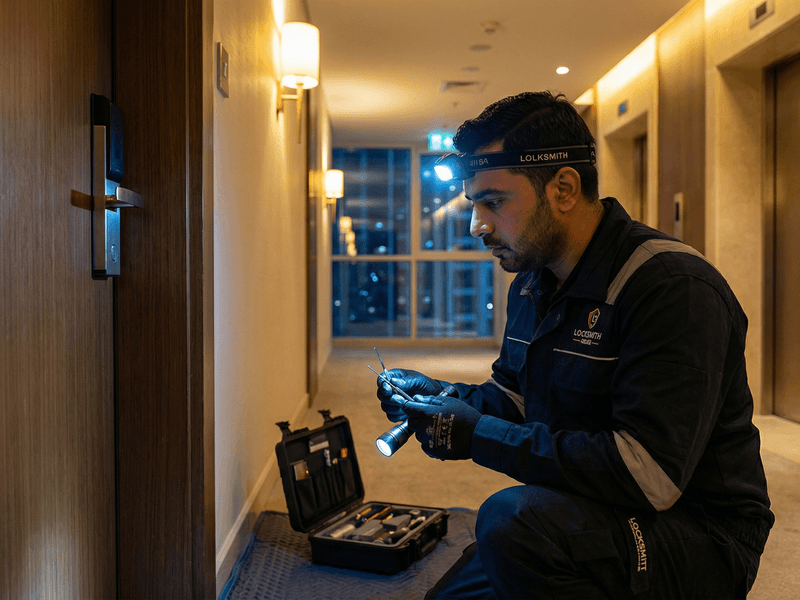
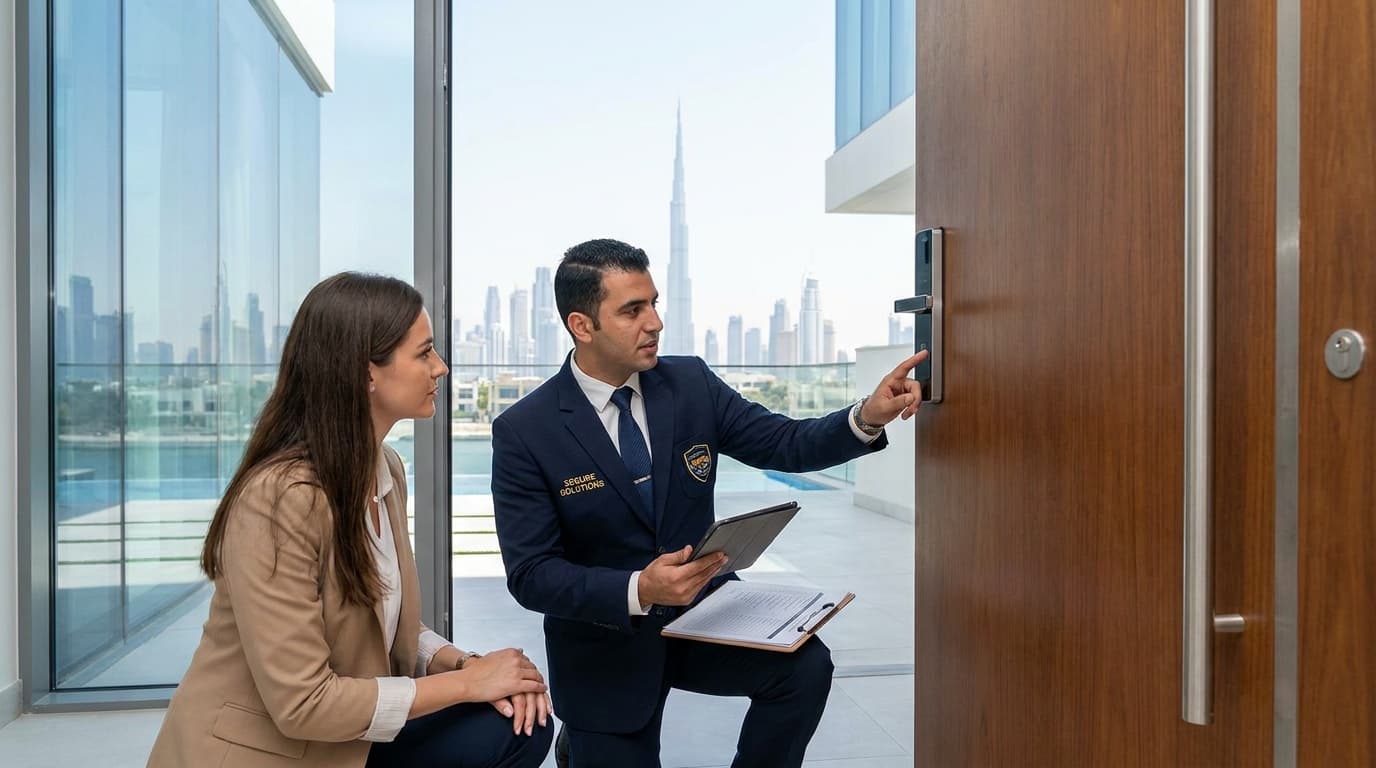
- Lock type: Spring latch (inadequate), single deadbolt (minimum), multi-point locking system (excellent)
- Door viewer (peephole): Can you see clearly who's outside? Wide-angle? Adequate lighting?
- Chain or door limiter: Allows partial opening to verify visitors
- Smart features: Video doorbell or smart lock?
Improvements:
- Add video doorbell for visual verification without opening door
- Upgrade to multi-point locking system if possible (consult landlord if renting)
- Ensure door viewer provides clear, wide-angle vision
- Consider smart lock with remote access and entry logging
Interior Room Security
Bedroom security (often overlooked):
- Do bedroom doors have locks for privacy/safety?
- Is there a way to secure yourself in bedroom if someone enters the home?
- Can you reach phone or communication device if locked in?
- Do bedroom windows open for emergency exit?
Safe storage:
- Where do you store valuables, important documents, medications?
- Is storage truly secure (locked safe) or just hidden (drawer, closet)?
- Could a burglar find your "hiding spots" in a quick search?
- Is your safe bolted down or just sitting on a shelf?
Improvements:
- Install keyed locks on bedroom doors if you've children or live alone
- Purchase a proper safe (minimum 30kg or wall-mounted) for valuables and documents
- Store medications in locked cabinet if you've household staff
- Keep important documents (passports, insurance papers) in fireproof safe
Utility and Service Areas
Common vulnerabilities:
- Maid's room with exterior door access
- Laundry or utility room windows left unlocked
- Storage areas on balconies or exterior spaces
- Access to building utility shafts or service ducts (apartments)
Improvements:
- Treat service area doors as exterior doors with proper deadbolts
- Ensure utility windows have locks and keep them engaged
- Don't store ladders or tools in easily accessible exterior areas
- In apartments, verify service access points are properly secured
Electronic Security Systems
After addressing physical security, consider electronic monitoring and deterrence.
CCTV Cameras
Assessment questions:
- Do you've cameras? If so, where are they positioned?
- Do they record continuously or only on motion detection?
- How long are recordings stored?
- Can you view live feed remotely?
- Are cameras visible (deterrent) or hidden (evidence gathering)?
Effective camera placement:
- Main entrance: Captures everyone entering/exiting
- Back or side doors: Coverage of vulnerable entry points
- Driveway or parking: Monitors vehicle area and approach to house
- Living areas with valuable items: Interior coverage if break-in occurs
- Common areas in villas: Corridors, stairs
Improvements:
- Upgrade to network-connected cameras with remote viewing capability
- Ensure cameras have night vision for 24/7 coverage
- Position cameras where they can't easily be disabled or spray-painted
- Add proper signage indicating CCTV monitoring (deterrent effect)
CCTV installation services ensure proper positioning and system integration.
Alarm Systems
Evaluate existing system:
- Entry point sensors: Are all exterior doors and accessible windows covered?
- Motion detectors: Positioned to detect hallway/room movement?
- Control panel location: Easy for you to access, hard for intruder to disable?
- Monitoring: Self-monitored (alerts to your phone) or professional service?
- Testing: When did you last test the system fully?
Common alarm weaknesses:
- Forgotten or disabled sensors (moved furniture, removed devices during renovations)
- Weak control panel passwords (default codes never changed)
- No cellular backup (alarm reports via internet, which burglars can disable)
- Inadequate sensor coverage (focused on main entrance, ignoring other access points)
Improvements:
- Test entire system monthly (trigger each sensor, verify alerts work)
- Change default codes and passwords immediately
- Add glass-break sensors for windows without individual sensors
- Ensure system has cellular or dual-path communication backup
- Integrate alarm with smart home for automated lighting/camera activation
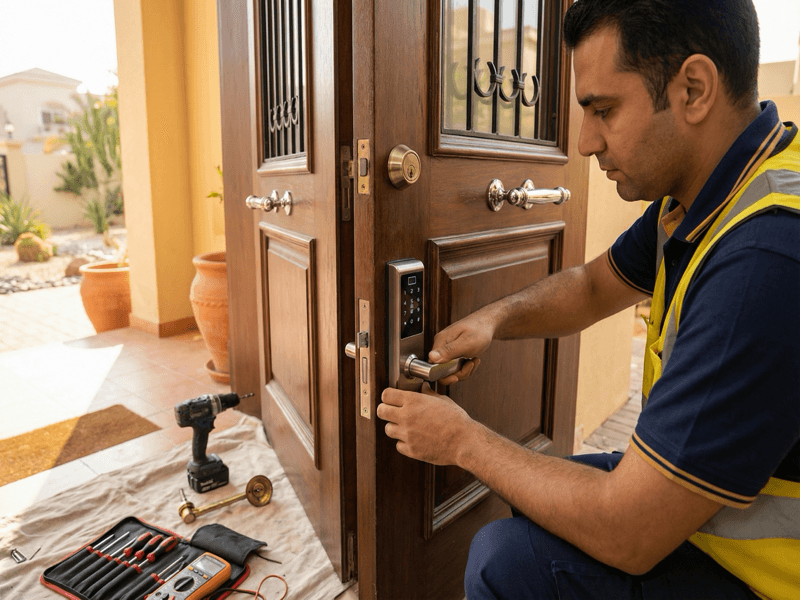
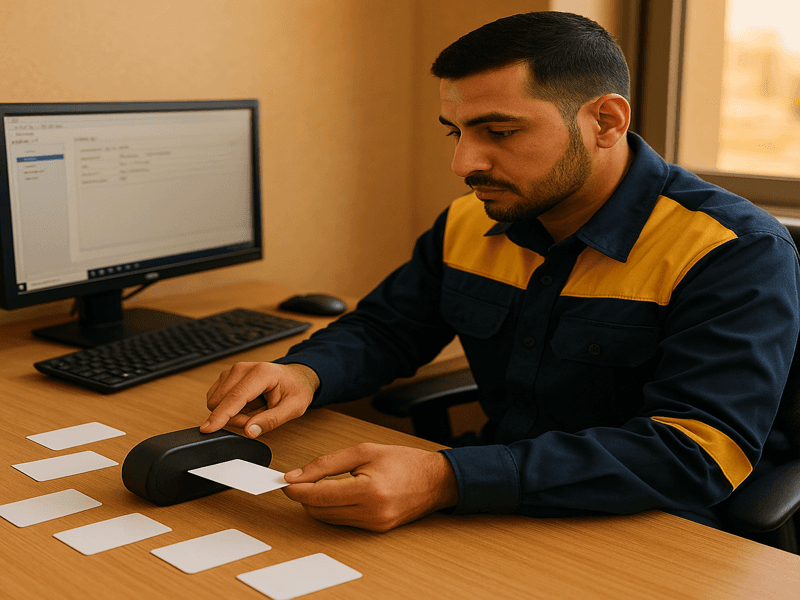
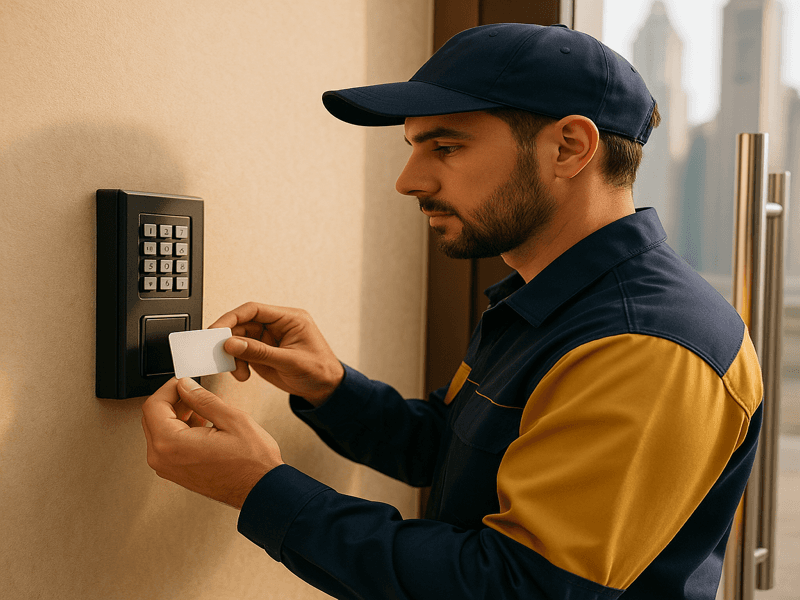
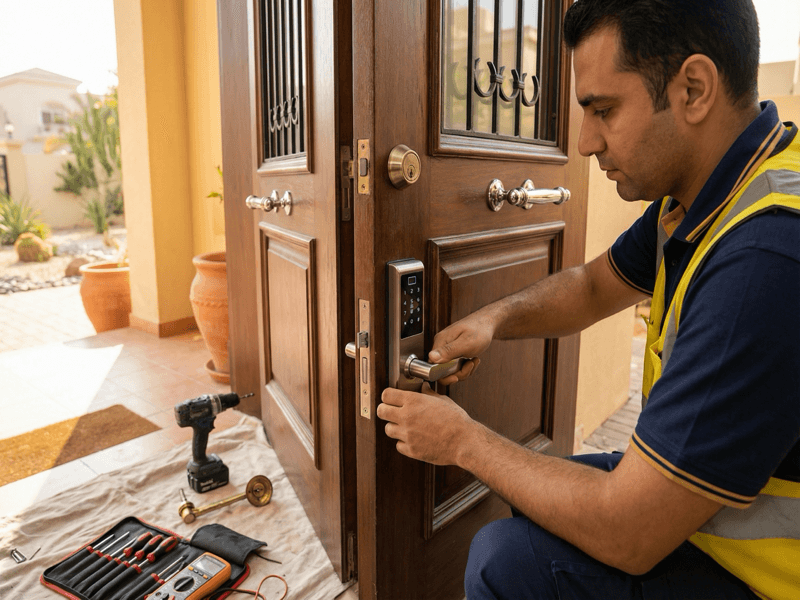
Smart Locks and Access Control
Current setup:
- Key-based locks: Who has copies? Can you track access?
- Smart locks: Do you receive entry notifications? Can you grant temporary access?
- Access logs: Can you see who entered and when?
Improvements:
- Upgrade to smart locks with remote control and access logging
- Use temporary access codes for domestic staff (revocable without rekeying)
- Enable entry/exit notifications to your phone
- Integrate with other smart systems (lights, cameras, alarm)
Integration and Smart Home Security
Modern security integrates multiple systems:
- Arriving home: Smart lock disengages, lights turn on, alarm disarms automatically
- Motion detected while away: Cameras begin recording, lights activate, alarm sounds, notification sent
- Leaving home: "Away mode" arms alarm, locks all doors, sets temperature to energy-saving mode
Assessment questions:
- Are your security devices standalone or integrated?
- Can you control everything from one app/system?
- Do devices work together intelligently?
- What happens if your internet fails?
Worth considering:
- Central smart home hub (Google Home, Apple HomeKit, Samsung SmartThings)
- Professional integration for complex setups
- Backup communication paths (cellular, not just WiFi)
- Local processing capability (doesn't depend entirely on cloud services)
Access Management and Behavioural Security
Technology is only part of the equation. Human behaviour creates or closes security gaps.
Key Management
Current state audit:
- How many keys exist for your property?
- Who has them?
- When did previous tenants/owners/staff leave? Were locks rekeyed?
- Are keys labelled with your address (security risk if lost)?
- Where do you store spare keys?
Best practices:
- Rekey locks when moving into new property (always)
- Limit physical key distribution
- Never leave keys under mats, in planters, or in "hidden" exterior spots
- Track who has keys and collect them promptly when no longer needed
- Consider digital locks to eliminate physical key distribution
Domestic Staff and Service Provider Access
Considerations:
- Do housekeepers, maintenance workers, or drivers have unsupervised access?
- How do you track when staff enter/exit?
- Are valuables and documents secured from internal access?
- Do service providers (AC technician, plumber) need supervision?
Risk mitigation:
- Use smart locks with temporary codes for regular staff
- Store valuables and documents in locked safes
- Consider cameras in common areas (cheque UAE privacy laws)
- Supervise service provider visits when possible
- Verify credentials of contractors before allowing access
Travel and Extended Absence
When you're away:
- Who knows you're travelling? (Social media posts announce empty homes)
- Is mail or deliveries piling up outside?
- Are lights on timers or appear obviously empty?
- Who is checking on the property?
Best practices:
- Don't announce travel on public social media
- Hold mail or have someone collect it
- Use smart lighting to simulate occupancy patterns
- Have trusted person or service cheque property during long absences
- Ensure alarm and cameras are fully operational before leaving
Dubai-Specific Security Considerations
Building security standards vary widely:
- High-end apartments have 24/7 security, CCTV in common areas, controlled access
- Older buildings may have simple intercom systems with minimal control
- Villa communities range from gated with security patrols to open-access neighbourhoods
Understand your building/community baseline before investing. Strong building security reduces need for heavy unit-level investment.
Legal considerations:
- UAE privacy laws affect camera placement (can't record neighbours' windows/entrances)
- Some alarm systems require registration with police
- Building modifications often need landlord approval
- Gated communities have design restrictions on exterior security features
Cultural factors:
- Domestic staff access is common and must be managed thoughtfully
- Extended summer travel is normal - properties sit empty for months
- High property turnover in rental market means frequent key distribution
Creating Your Security Action Plan
After completing your assessment, prioritise improvements:
Immediate (Free to Low Cost):
- Rekey locks if previous tenant/owner had keys
- Test all existing locks and replace weak ones
- Establish key management rules
- Set up entry/exit notifications if you've smart devices
- Remove exterior hiding spots near entry points
Short-Term (Under AED 2,000):
- Install deadbolts on all exterior doors
- Add window locks to accessible windows
- Purchase a proper safe for valuables
- Install motion-activated exterior lighting
- Consider video doorbell
Medium-Term (AED 2,000-8,000):
- Upgrade to smart locks on main entry points
- Add CCTV cameras at key positions
- Install or upgrade alarm system with professional monitoring
- Integrate smart home devices for automation
Long-Term (AED 8,000+):
- Complete smart home security integration
- Whole-home CCTV system with professional installation
- Advanced alarm system with multiple sensors and backup communication
- Fence/gate upgrades (villas)
- Security consultation for high-value properties
When to Hire Security Professionals
DIY is appropriate for:
- Basic lock upgrades
- Simple camera installation
- Smart lock setup
- Behavioural security improvements
Call professionals for:
- Complete security system design
- Multi-device integration
- Alarm system installation with monitoring
- Properties with high-value contents or high-risk profiles
- Legal compliance concerns
Professional security system installation ensures proper coverage and system integration.
Maintenance and Testing
Security systems degrade over time:
Monthly checks:
- Test alarm system fully (trigger sensors, verify alerts)
- Review camera footage quality and positioning
- Verify smart locks operate correctly
- cheque exterior lighting function
Quarterly:
- Replace alarm system batteries
- Clean camera lenses
- Review and update access codes
- Test backup power systems
Annually:
- Professional system inspection and maintenance
- Review and update security plan based on changes
- Rekey locks if staff turnover occurred
- Assess new technology or system upgrades
Final Thoughts
Home security isn't about building a fortress. It's about creating layers of deterrence and detection that make your property less attractive than the one next door while enabling you to respond quickly if something does happen.
In Dubai's low-crime environment, most security benefits come from deterring opportunistic access and managing the many people who legitimately need entry to your home (staff, contractors, maintenance workers). Smart access control, good physical locks, and behavioural awareness often matter more than elaborate alarm systems.
Start with your assessment checklist, prioritise based on your specific vulnerabilities and budget, and set up improvements systematically. Perfect security doesn't exist, but informed, layered security makes you a hard target - and that's usually enough.