How to Prevent Mould in Your Dubai Home
Learning how to prevent mould in Dubai is important for any resident, particularly those living in coastal areas or older buildings. Despite the desert climate, mould is a common problem in Dubai homes, driven by the intense use of air conditioning creating cold surfaces, high seasonal humidity, and sometimes poor building ventilation.
Why Does Mould Grow in Dubai?
Mould requires moisture, a food source (organic material such as paint, drywall, wood, or dust), and the right temperature. Dubai homes provide all three in certain conditions:
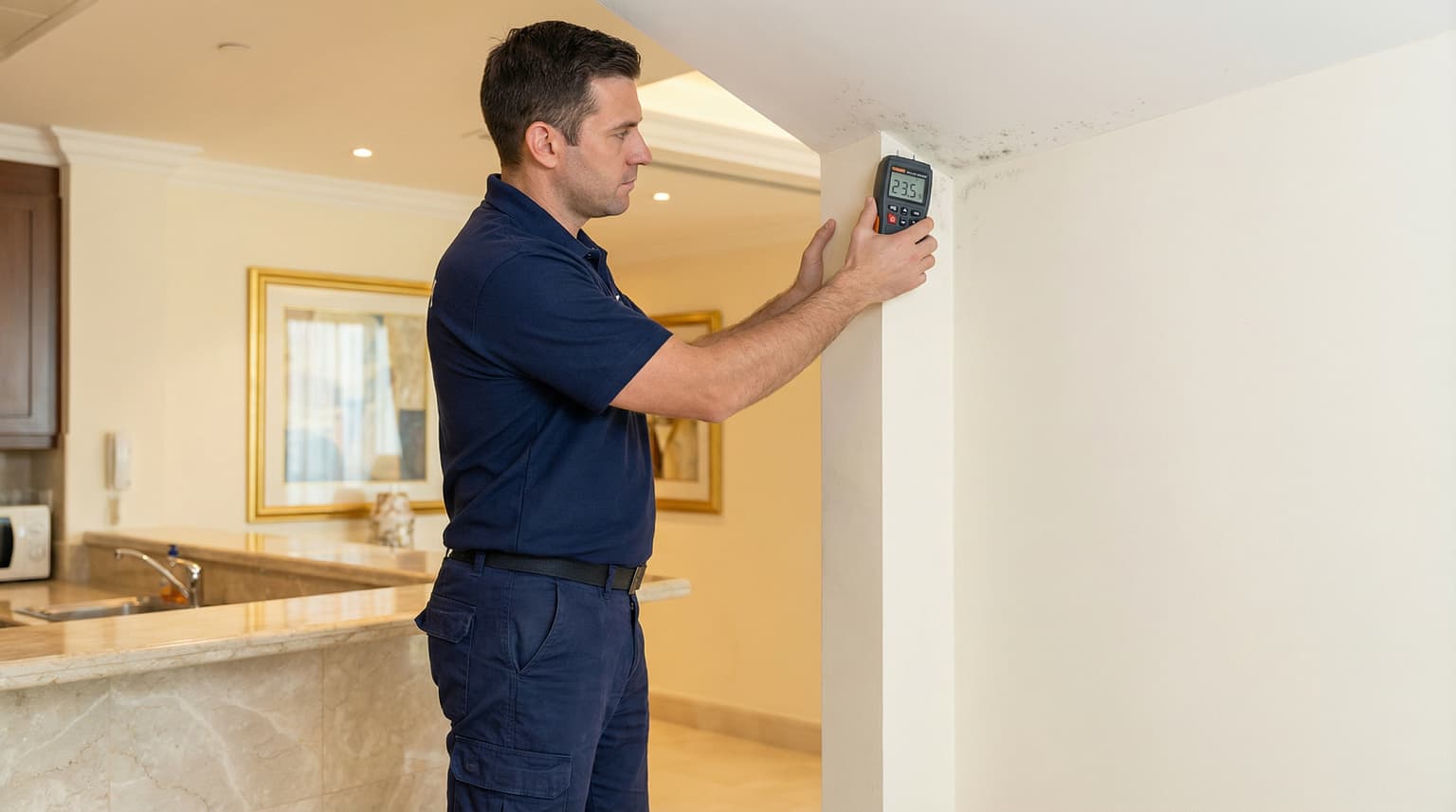
- Condensation from AC systems: Cold AC air meets warm, humid air at thermal bridges in the building fabric, creating condensation on walls, particularly in corners and behind furniture close to exterior walls.
- Inadequate ventilation: Many Dubai apartments have sealed windows for AC efficiency but insufficient mechanical ventilation, allowing moisture from cooking, showering, and occupants to build up.
- AC system mould: A poorly maintained AC evaporator coil provides an ideal environment for mould, which is then distributed around the room by the fan.
- Plumbing leaks: Slow leaks within walls or under floors create persistently damp conditions perfect for mould growth.
- Summer humidity: Coastal humidity in Dubai peaks in August and September, with relative humidity regularly above 80% at certain times.
Where to Look for Mould in a Dubai Property
- Ceiling and wall corners, particularly in bedrooms facing the exterior
- Behind and around wardrobes placed against exterior walls
- Bathroom ceiling and around the shower/bath area
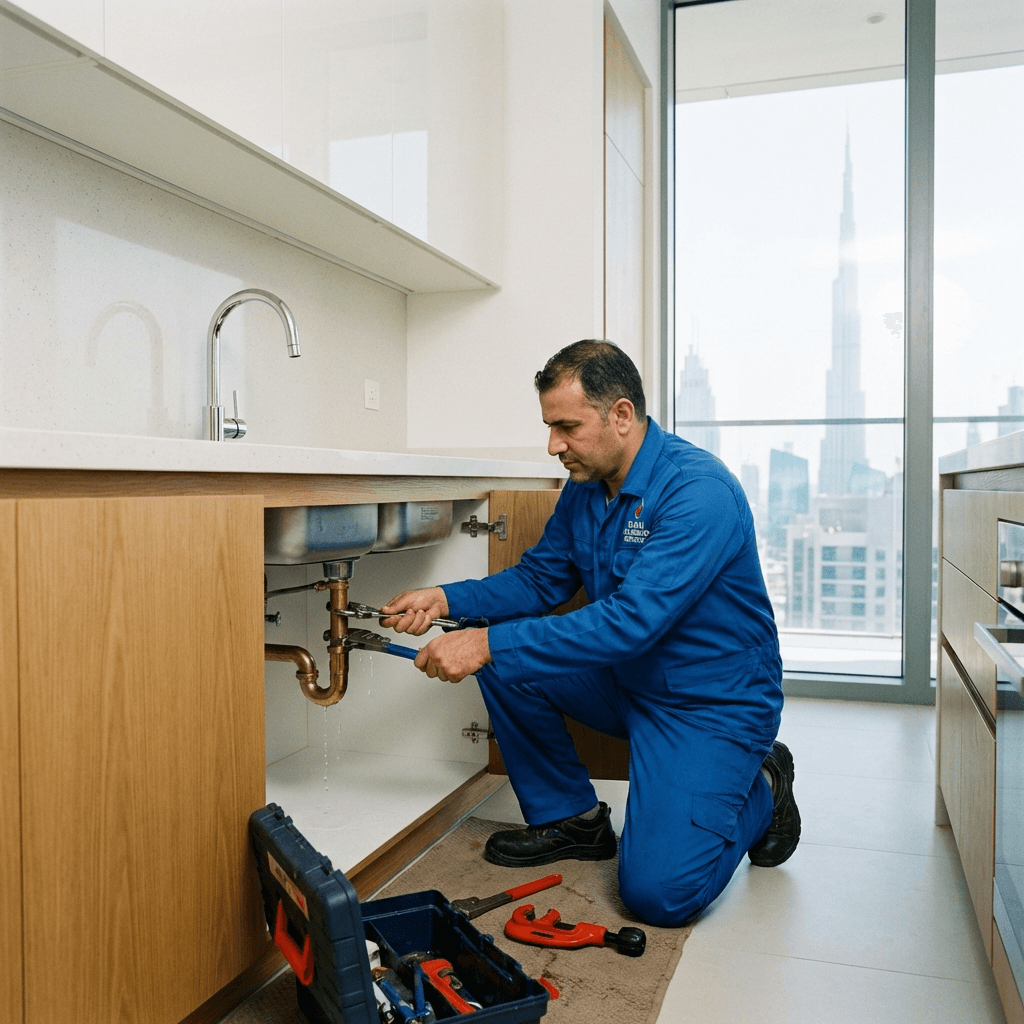
- Under sinks and inside kitchen base units (plumbing leaks)
- Inside AC systems (visible as black spots on the indoor unit louvres)
- On the underside of mattresses in poorly ventilated bedrooms
Practical Prevention Measures
- Do not set the AC below 20°C: Very cold surfaces dramatically increase condensation risk. Keep the thermostat at 22°C or above, particularly overnight.
- Ventilate bathrooms: Run the extractor fan during and for 20 minutes after showering. If there is no extractor fan, open the bathroom door after showering.
- Air the property regularly: Even in Dubai, opening windows for 15 to 30 minutes on cooler winter mornings (November to March) helps remove stale, moisture-laden air.
- Leave space behind furniture: Wardrobes and beds placed flush against exterior walls restrict airflow and create cold spots where condensation and mould develop. Leave at least 5cm of clearance.
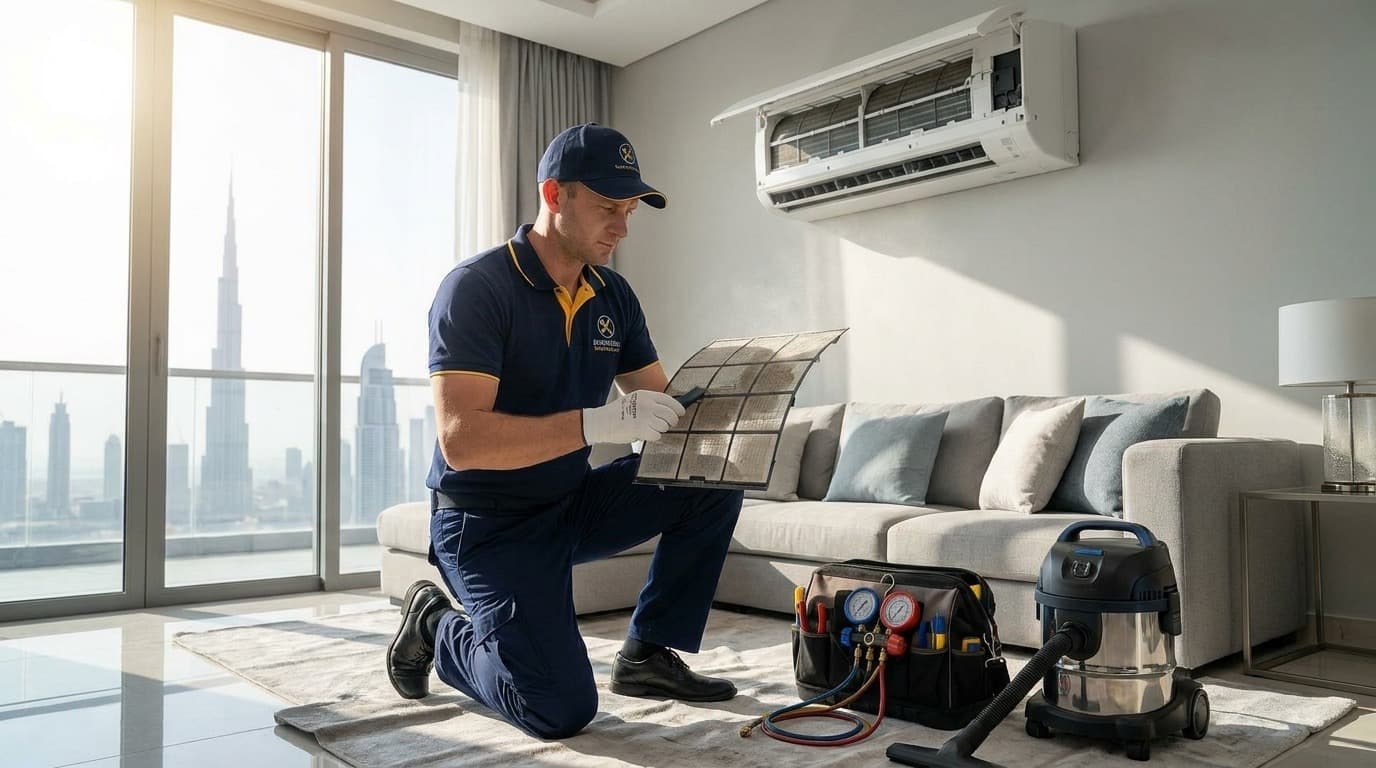
- Service your AC regularly: A clean coil resists mould growth. Regular servicing with biocide treatment of the drain pan reduces the chance of the AC itself becoming a mould source.
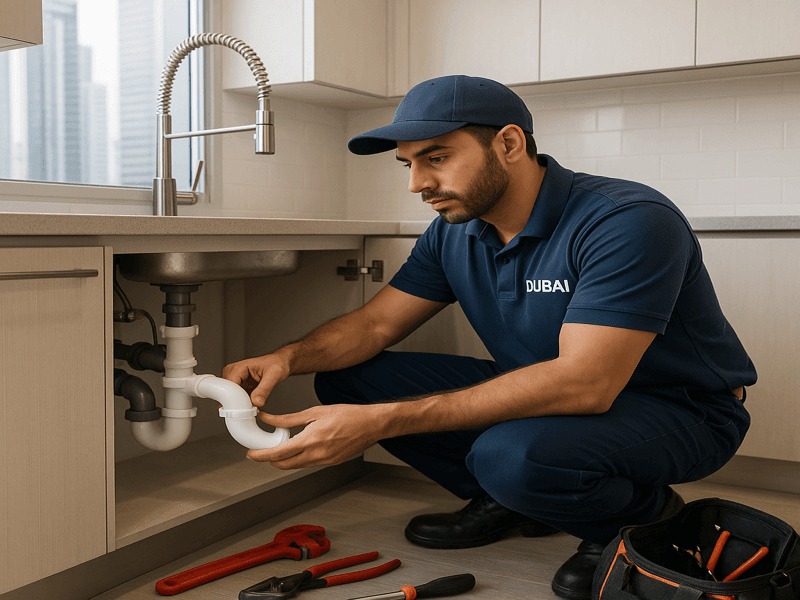
- Fix leaks immediately: Any plumbing leak, no matter how small, should be fixed within 24 to 48 hours to prevent mould establishment in the surrounding materials.
Treating Existing Mould
For small surface mould patches on tiles or paintwork, a diluted bleach solution (1 part bleach to 10 parts water) with scrubbing typically removes surface mould. Always wear gloves and ensure ventilation when using bleach. After treating, dry the surface thoroughly.
For mould that has penetrated the paint surface or into drywall, surface treatment is insufficient. The affected area needs to be cut out, treated, and replastered, addressing the underlying moisture cause first. Painting over mould without treating it will result in regrowth within weeks.
When to Call European Technical
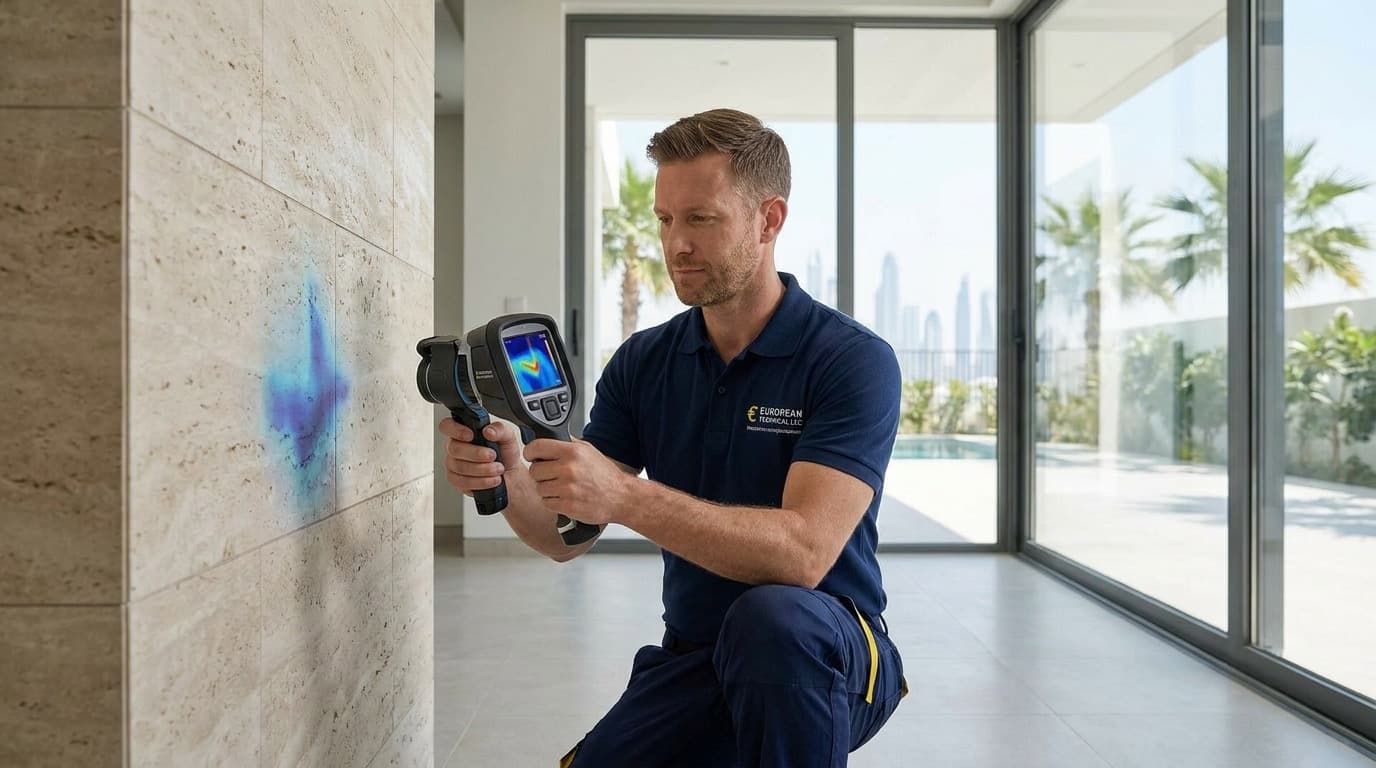
Contact our maintenance team if mould covers more than a small surface area, if mould is recurring despite treatment, if mould appears to be coming from within the wall rather than on the surface, or if there is a suspected plumbing leak causing the moisture. We can identify the moisture source, carry out remediation, and repaint affected surfaces with mould-resistant paint.
Frequently Asked Questions
Is mould dangerous in a Dubai home?
Mould produces spores and in some cases mycotoxins that can irritate the respiratory system. For healthy adults, minor mould exposure is typically manageable. However, individuals with asthma, allergies, or compromised immune systems may have more significant reactions. Large mould infestations should always be professionally remediated.
Can anti-mould paint prevent mould in Dubai?
Anti-mould paint contains biocide additives that inhibit surface mould growth. It is a useful preventive measure in high-risk areas such as bathrooms and exterior-facing walls. However, it does not address the underlying moisture problem, and mould will eventually grow even on anti-mould paint if the moisture source is not resolved.
My landlord says it is my responsibility to deal with mould. Is this correct?
It depends on the cause. If the mould is caused by a structural issue (inadequate insulation, roof leak, plumbing fault within the building fabric), it is generally the landlord’s responsibility. If caused by insufficient ventilation by the tenant, it may be considered a tenant responsibility. Disputes about mould responsibility are common in Dubai tenancy cases. Documenting the issue with photographs and an independent assessment report is advisable.
Conclusion
Mould prevention in Dubai requires controlling moisture through proper AC management, ventilation, prompt leak repairs, and regular maintenance. European Technical can help identify and resolve the root causes of mould in your Dubai home. Contact us for a home inspection and maintenance service.
Need Help? Contact European Technical Today
Our experienced technicians are available 7 days a week across Dubai. Whether you need a quick repair or a full service, we are here to help.
- Call us: 800 031 100 (toll-free)
- WhatsApp: Send us a message
- Book online: Schedule a visit