Why Dubai's Humidity Demands a Different Paint Choice
Living in Dubai means dealing with intense summer heat and high humidity levels, especially near the coast or in areas like Dubai Marina, Jumeirah, and Business Bay. The moisture in the air can wreak havoc on interior and exterior walls if you use the wrong paint. Peeling, blistering, mould, and mildew are common complaints among homeowners who skimp on paint quality. The key is to choose a paint that resists moisture, allows walls to breathe, and withstands the unique climate. This guide explains exactly what to look for, based on real Dubai conditions and practical experience.
Understanding the Enemy: Humidity and Your Walls
Dubai's humidity often exceeds 70% during summer months, and in coastal areas it can reach 90% or more. This moisture doesn't just sit on surfaces; it penetrates paint films, especially if the paint is low-quality or not designed for wet conditions. Over time, this leads to:
- Bubbling and peeling - Moisture trapped under the paint causes it to lift.
- Mould and mildew growth - Dark spots that are unsightly and unhealthy.
- Chalking - A powdery residue on exterior walls.
- Efflorescence - White salt deposits that appear when moisture moves through masonry.
To avoid these problems, you need a paint system that includes a suitable primer and a topcoat formulated for high humidity. For most Dubai homes, a quality washable water-based acrylic or latex paint works well for interior walls. For bathrooms and kitchens, a high-quality acrylic latex in a satin or semi-gloss finish is the best choice. For exterior walls, elastomeric coatings provide superior protection.
Interior Walls: The Best Paint for Living Areas and Bedrooms
For general interior walls in Dubai, such as those in JVC, Downtown, or Arabian Ranches, a washable water-based acrylic or latex paint is ideal. These paints are durable, easy to clean, and resist moisture better than basic emulsions. Look for brands that offer a 'scrubbable' finish, so you can wipe off dust and fingerprints without damaging the paint. A matte or eggshell sheen works well for living rooms and bedrooms, as it hides imperfections and provides a soft look.
However, for rooms with higher moisture levels, such as bathrooms and kitchens, you need a step up. The best paint for high-humidity bathrooms is a high-quality acrylic latex specifically designed for kitchens and baths, paired with a satin or semi-gloss finish. This combination creates a waterproof coating that resists steam and splashes. If your bathroom has poor ventilation, consider using a mould-resistant paint additive or a specialist damp-proof primer like Coo-Var Anti-Damp Paint on affected areas before painting.
Exterior Walls: Why Elastomeric Coatings Are Essential
Dubai's exterior walls face the full force of the sun, heat, and humidity. Standard paint will crack and peel within a year or two. The best exterior paint for Dubai is an elastomeric wall coating. These coatings are thick, flexible, and form a waterproof barrier that expands and contracts with temperature changes. They also bridge small cracks and prevent water ingress, which is critical for villas and buildings in areas like Arabian Ranches or The Springs.
Elastomeric coatings are available in a range of colours and finishes, and they can be applied over most existing surfaces after proper preparation. They are more expensive than standard paint, but the long-term savings on repainting and repairs make them a wise investment. For a typical villa exterior, expect to pay between AED 15 and AED 30 per square foot for a professional application, depending on the brand and complexity.
Bathrooms and Kitchens: The Critical Role of Sheen and Primer
Bathrooms and kitchens are the most challenging rooms in any Dubai home. Steam from hot showers and cooking oils can quickly ruin a low-quality paint. Here's what works:
- Sheen: Use satin or semi-gloss. These finishes are more moisture-resistant than matte and easier to clean. Gloss is also an option but can highlight wall imperfections.
- Paint type: 100% acrylic latex paint designed for kitchens and baths. This is a waterproof coating that withstands humidity.
- Primer: Use a moisture-resistant primer, such as an epoxy or acrylic-based one, before painting. For walls with existing damp issues, a specialist anti-damp primer is essential.
If your bathroom has a window or fan, use it during and after showers to reduce moisture load on the paint. Even the best paint cannot compensate for a sealed, steamy room.
The Importance of Surface Preparation in Dubai's Climate
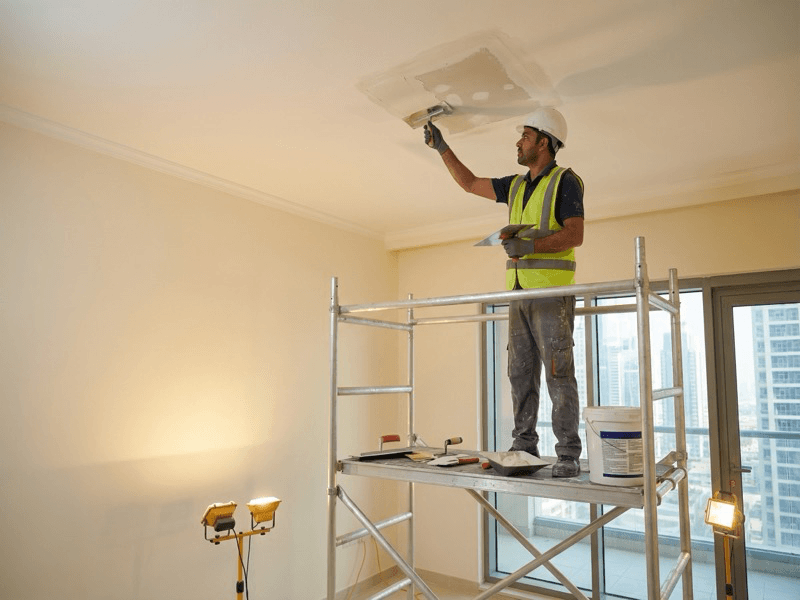
No paint will perform well if the wall surface is not properly prepared. In Dubai, many homes have gypsum board (drywall) or plastered block walls. Before painting:
1. Check for dampness - Use a moisture meter or look for signs of efflorescence or mould. If damp is present, fix the source (leaking pipes, poor waterproofing) first.
2. Clean the surface - Remove dust, grease, and any loose paint. A mild detergent solution works well.
3. Repair cracks and holes - Use a suitable filler and sand smooth.
4. Apply a primer - Use a moisture-resistant primer for bathrooms and kitchens, and a bonding primer for glossy surfaces.
5. Allow proper drying time - In humid conditions, paint takes longer to dry. Wait at least 4-6 hours between coats, and avoid painting on extremely humid days if possible.
Choosing the Right Paint Brand and Product
While we don't endorse specific brands, reputable international and local brands available in Dubai include Jotun, Dulux, and Benjamin Moore. For bathrooms, Benjamin Moore Aura has a strong reputation for humidity resistance. For exterior walls, Jotun's elastomeric range is popular. Always check the product label for 'mould-resistant', 'washable', and 'suitable for high humidity'.
If you are unsure, consult a professional painting service. European Technical offers expert painting services tailored to Dubai's climate, including surface preparation, primer application, and topcoat selection. We also provide handyman services for minor repairs before painting.
Cost Considerations for Painting in Dubai
Painting costs in Dubai vary depending on the area, paint quality, and labour. Here are rough estimates:
- Interior walls (per room): AED 800-2,500 for a standard bedroom, including labour and mid-range paint.
- Bathroom painting: AED 500-1,200, depending on size and if mould treatment is needed.
- Exterior villa painting: AED 5,000-15,000 for a typical 3-bedroom villa, using elastomeric coating.
- Primer and preparation: Additional AED 200-500 per room if extensive prep is required.
These prices are indicative; always get a detailed quote from a licensed contractor. European Technical provides transparent pricing and free site inspections.
Maintenance Tips for Painted Walls in Dubai
Once your walls are painted correctly, a little maintenance goes a long way:
- Wipe down walls in kitchens and bathrooms monthly with a damp cloth to remove grease and mould spores.
- Check for cracks after summer - thermal expansion can cause minor cracking. Touch up promptly.
- Improve ventilation - Use extractor fans in bathrooms and kitchens, and open windows when possible.
- Repaint every 3-5 years for interior walls, and every 5-7 years for exterior walls, depending on exposure.
When to Call a Professional
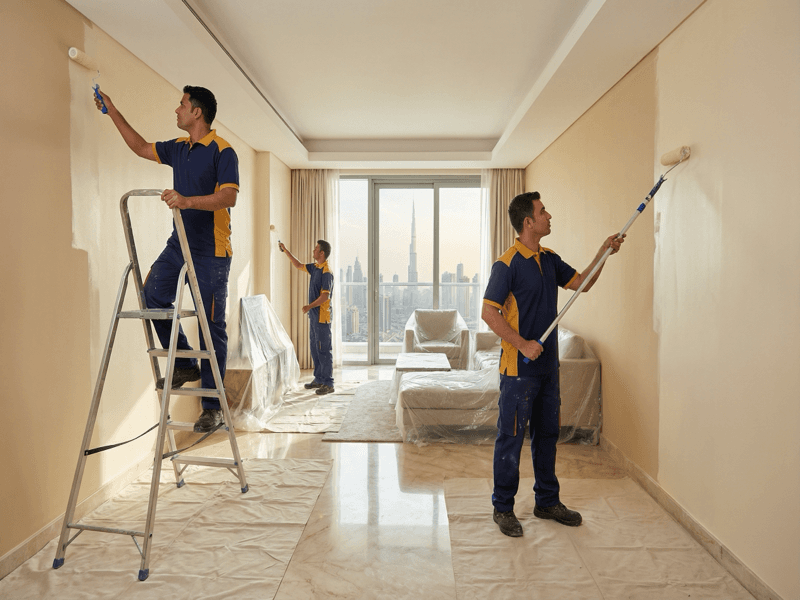
While DIY painting is possible for small rooms, Dubai's humidity makes professional expertise valuable. A licensed contractor can:
- Identify hidden damp issues.
- Recommend the correct paint system for your specific wall type.
- Apply paint evenly and with proper drying times.
- Use commercial-grade equipment for a smooth finish.
European Technical's annual maintenance contract includes painting touch-ups and inspections, helping you keep your property in top condition year-round.
FAQ: Best Paint for Dubai Humidity Walls
What is the best paint for interior walls in Dubai's humidity?
A quality washable water-based acrylic or latex paint with a matte or eggshell finish works well for living areas. For bathrooms and kitchens, use a high-quality acrylic latex in satin or semi-gloss.
Can I use standard emulsion paint in a Dubai bathroom?
No. Standard emulsion lacks moisture resistance and will peel or mould quickly. Use a paint specifically labelled for kitchens and baths, with a satin or semi-gloss sheen.
How do I prevent mould on painted walls in Dubai?
Use a mould-resistant paint, ensure good ventilation, and apply a moisture-resistant primer. If mould appears, clean with a bleach solution and repaint with anti-mould paint.
Is elastomeric coating worth the extra cost for exterior walls?
Yes. It provides superior waterproofing and flexibility, lasting 5-7 years compared to 2-3 years for standard paint. It's a cost-effective long-term solution for Dubai's climate.
Do I need a primer before painting in humid conditions?
Absolutely. A moisture-resistant primer seals the wall, prevents damp from bleeding through, and helps the topcoat adhere. Skip this step and you risk peeling.
How often should I repaint my Dubai home?
Interior walls every 3-5 years, exterior walls every 5-7 years. Bathrooms may need repainting sooner if ventilation is poor.
For professional advice and painting services tailored to Dubai's climate, contact European Technical. We help homeowners in Marina, JVC, Downtown, and beyond keep their walls looking fresh and protected.