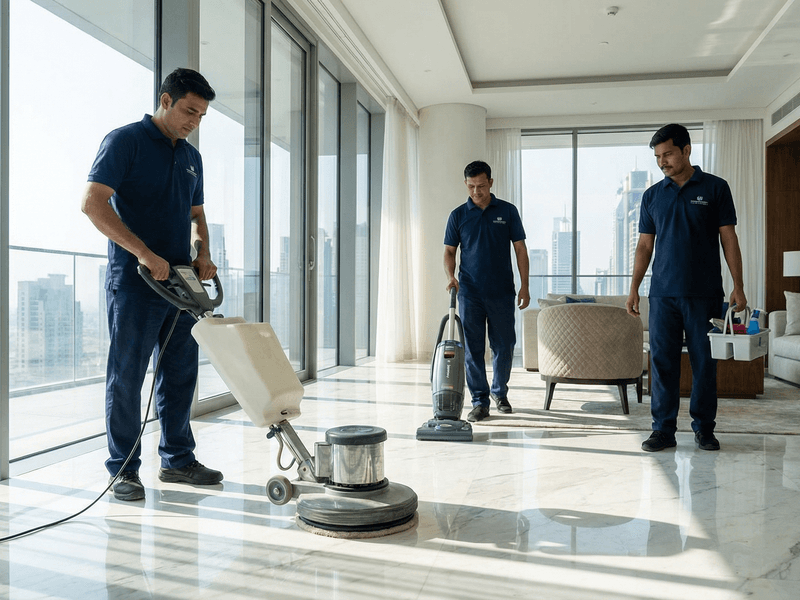
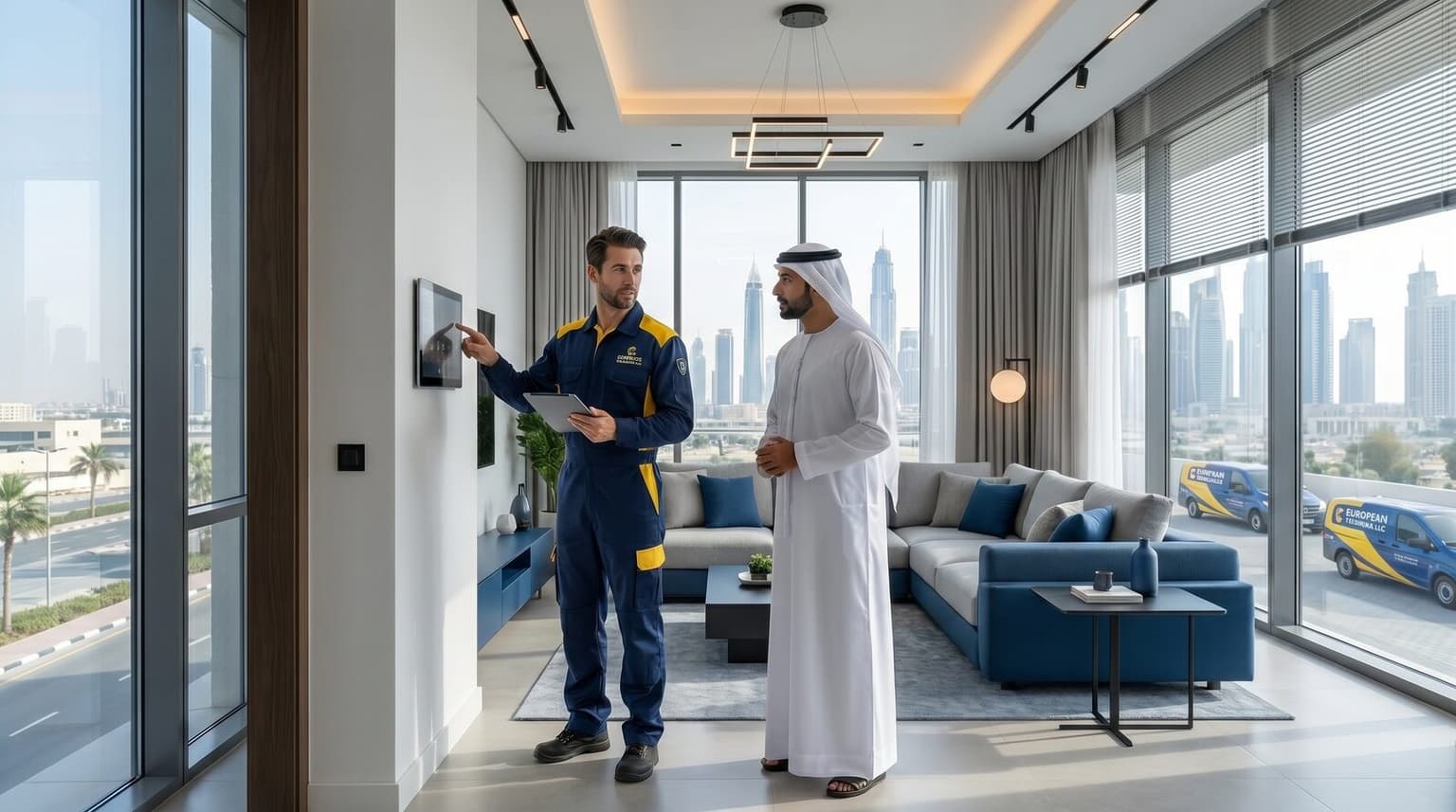
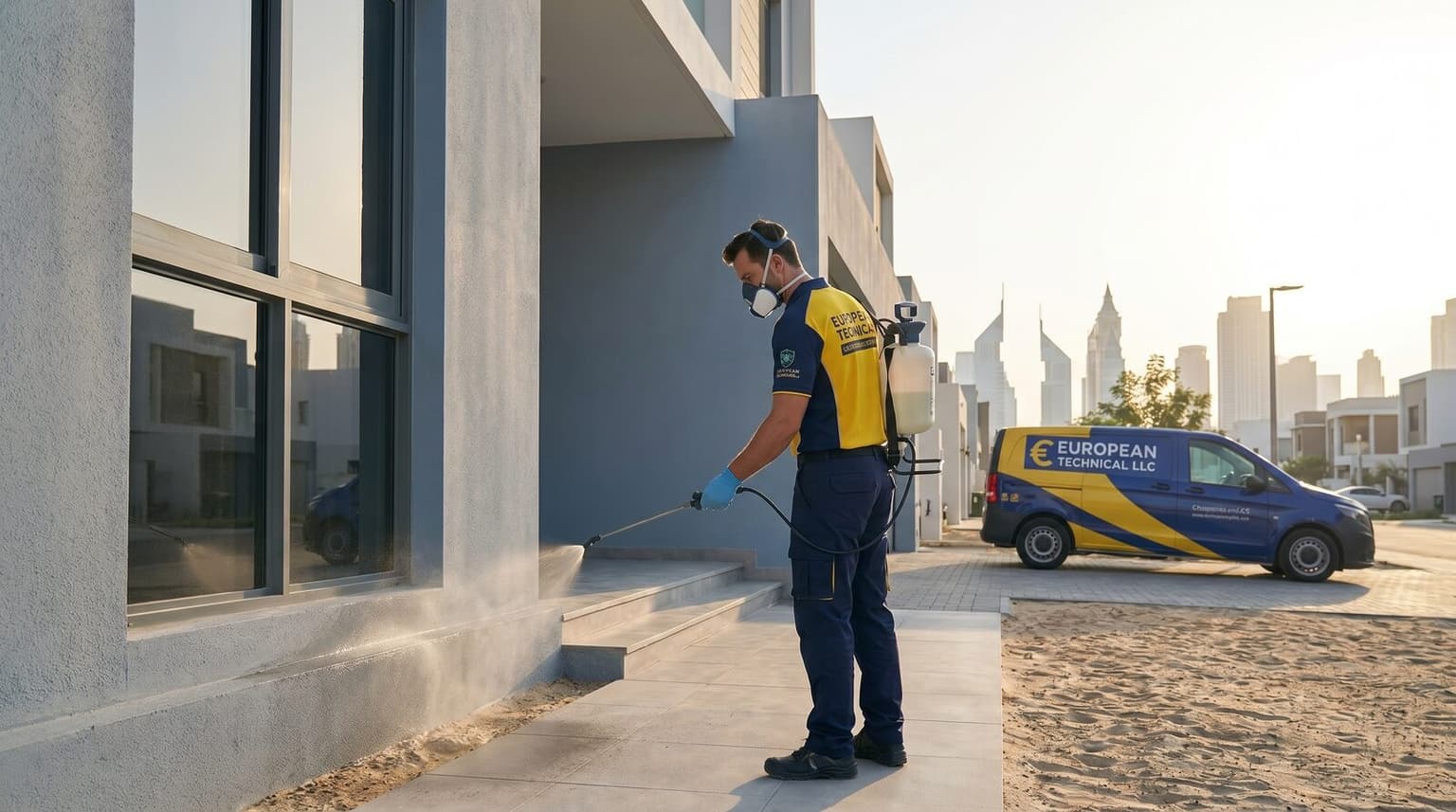
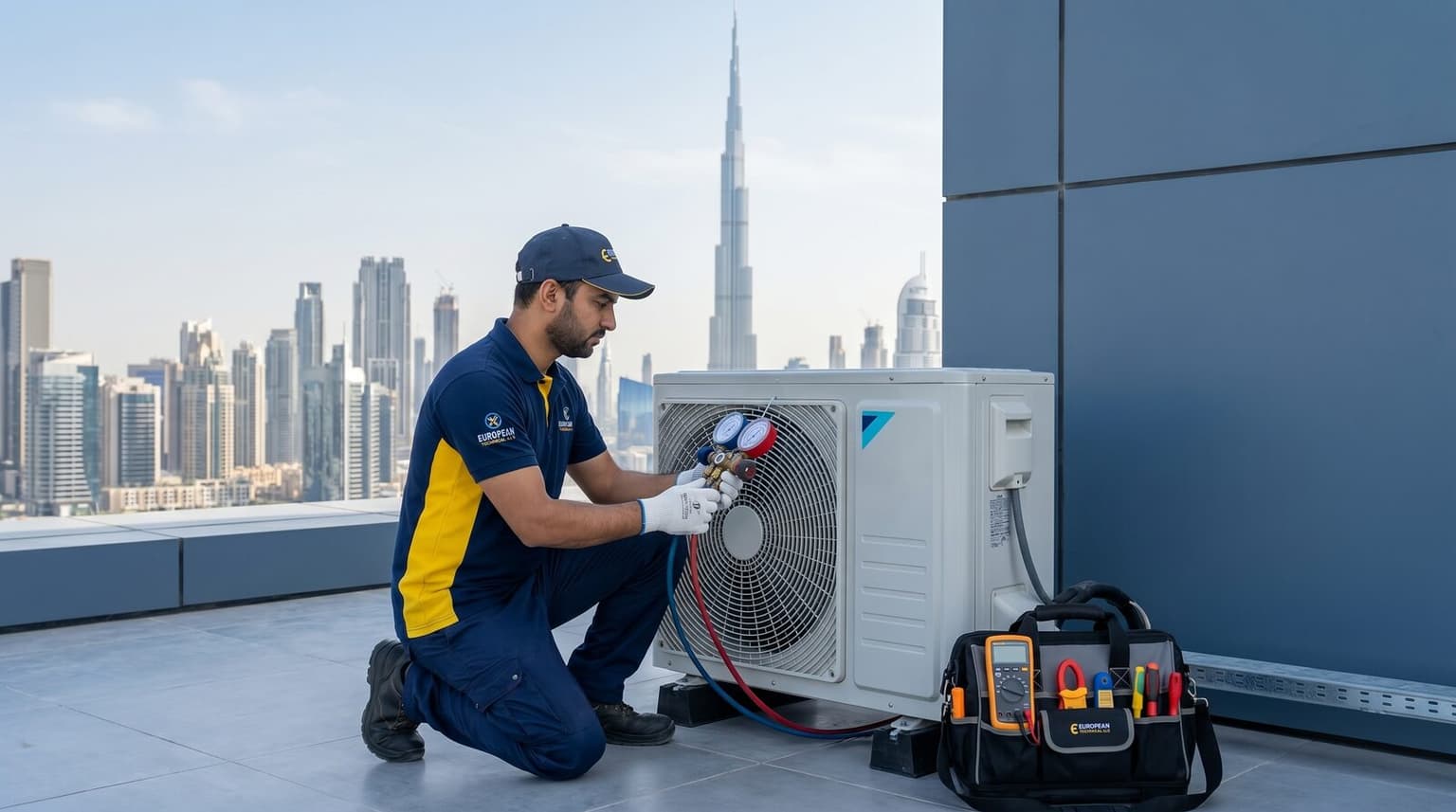
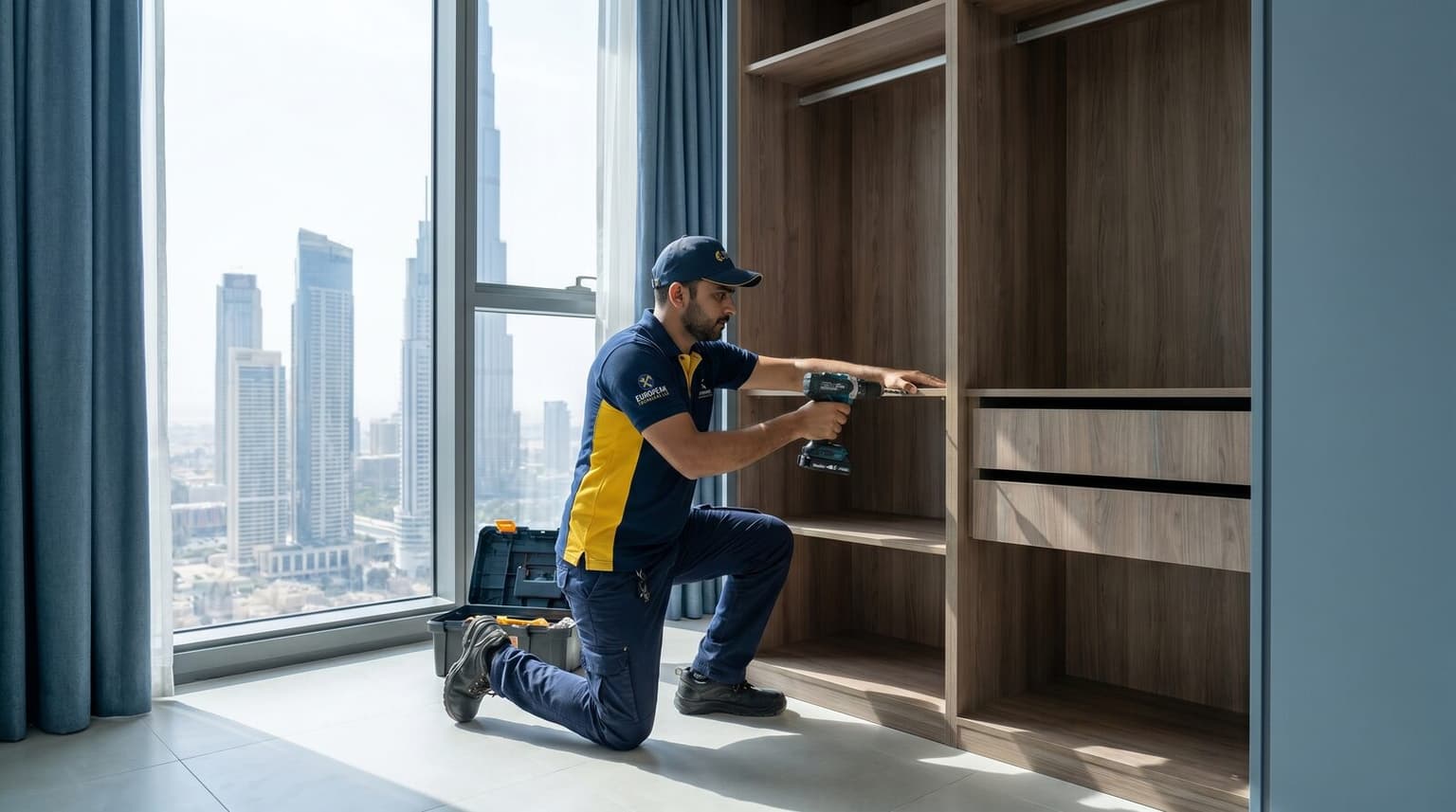
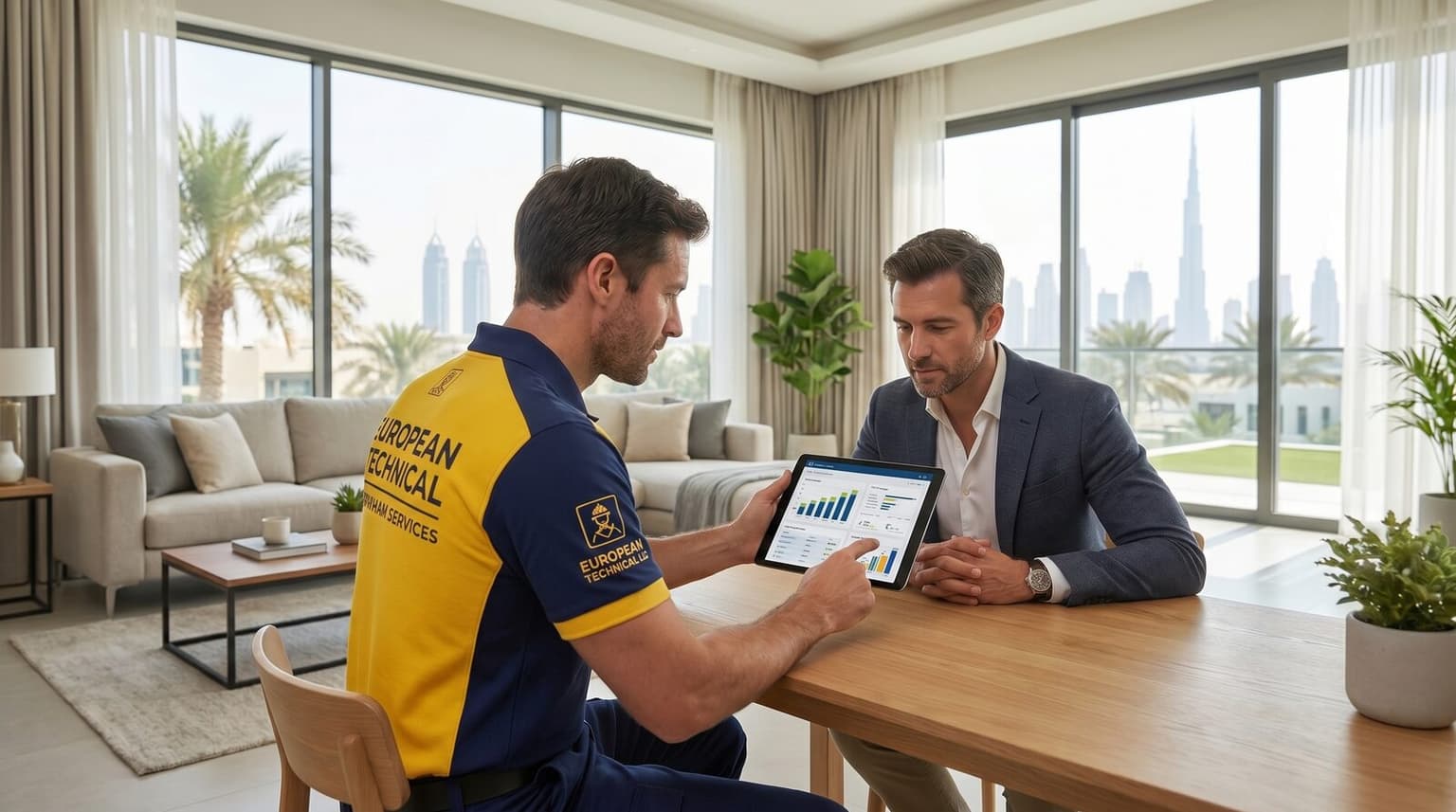
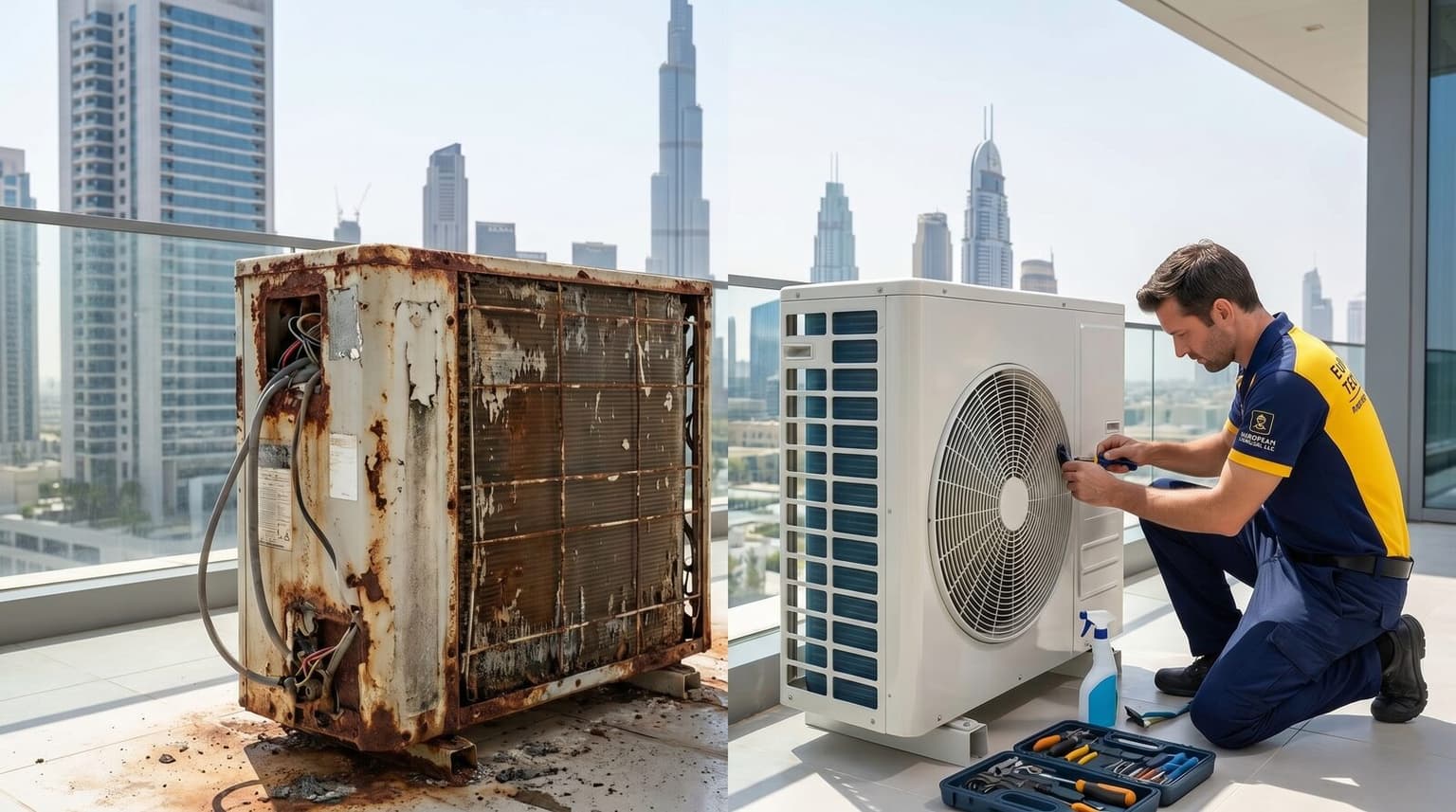
Managing an apartment building in Dubai means juggling dozens of maintenance issues at once - across multiple units, common areas, and shared systems that all need attention simultaneously. A single residential AMC handles one unit. A building-wide annual maintenance contract is a different beast entirely.
If you manage a residential building in Dubai - whether it's a 20-unit mid-rise in Al Barsha or a 200-unit tower in Dubai Marina - understanding how AMC contracts work at scale is one of the most important cost and operational decisions you'll make.
This guide covers everything property managers need to know: how building AMCs are structured, what they should cover, how to manage them effectively, and where most property managers go wrong.
Why Building AMCs Are Different from Unit AMCs
A standard apartment AMC covers the systems inside one unit - the AC, plumbing fixtures, electrical fittings, and appliances. The tenant or owner pays, the maintenance company services that unit, done.
A building-wide AMC is structured around the building as an entity. It covers:
- Common areas - lobbies, corridors, stairwells, car parks
- Shared systems - central AC plants, water pumps, fire suppression, lifts (often separate contracts), roof drainage
- Multiple units - either en masse (all units under one contract) or as a managed portfolio where the property manager coordinates individual unit contracts
- Facilities management - regular inspections, scheduled preventive maintenance, reactive response with defined SLAs
The complexity multiplies when you're dealing with Dubai's building regulations, owner-tenant dynamics, and the responsibility question: who pays for what?
The Three Models of Building AMC in Dubai
Property managers in Dubai typically operate under one of three structures:
1. Full Building Contract (FM Model)
The property management company signs a single AMC with a facilities management provider covering the entire building - common areas, shared systems, and all units. This is common in large towers managed by single entities or in buildings where the developer retains ownership.
Advantages:
- One invoice, one point of contact
- Better pricing through volume
- Consistent service quality across the property
- Simplified owner reporting
Disadvantages:
- Higher upfront cost negotiation
- Complex scope definition to avoid gaps
- Harder to hold specific contractors accountable
2. Common Area AMC + Unit-Level Coordination
The property manager holds an AMC for common areas and shared systems, then either coordinates separate unit AMCs on behalf of owners or leaves unit maintenance to individual owners/tenants.
This is the most common setup in Dubai's mixed-ownership buildings - particularly in developments where individual units are sold to separate investors.
Advantages:
- Clear separation of building vs unit responsibility
- Owners retain control over their unit contracts
- Easier cost allocation
Disadvantages:
- Coordination overhead when unit issues affect common systems
- Service quality varies across units
- Multiple contractors on site creates access management headaches
3. Managed Portfolio Model
The property management company signs AMCs on behalf of a portfolio of units under their management, negotiating bulk pricing with a single preferred contractor. Each owner is billed separately but receives the benefit of portfolio-level pricing.
This is increasingly common among Dubai property management firms managing 50+ units across multiple buildings.
Advantages:
- Best of both worlds - individual accountability, bulk pricing
- Easier to standardise service quality
- Stronger negotiating position with contractors
Disadvantages:
- Administrative complexity
- Owner buy-in required
- Risk of liability if contractor underperforms on any unit
What a Building AMC Should Cover
When you're structuring an AMC for an apartment building, the scope needs to address every system that affects habitability and compliance. The standard coverage system:
Common Area Maintenance
- Lobby, lift lobby, and corridor lighting
- Car park lighting and ventilation
- Entrance door mechanisms and intercoms
- External facades (basic cleaning and minor repairs)
- Roof waterproofing inspection
- Fire exit signage and emergency lighting
- Drainage and waste systems (building-level)
Mechanical and Electrical Systems
- Central AC plant or chiller system maintenance (quarterly servicing minimum)
- Booster pump and water pump servicing
- Electrical distribution board inspection
- Generator testing and servicing (if applicable)
- Earthing and surge protection checks
Plumbing Infrastructure
- Main water supply line inspection
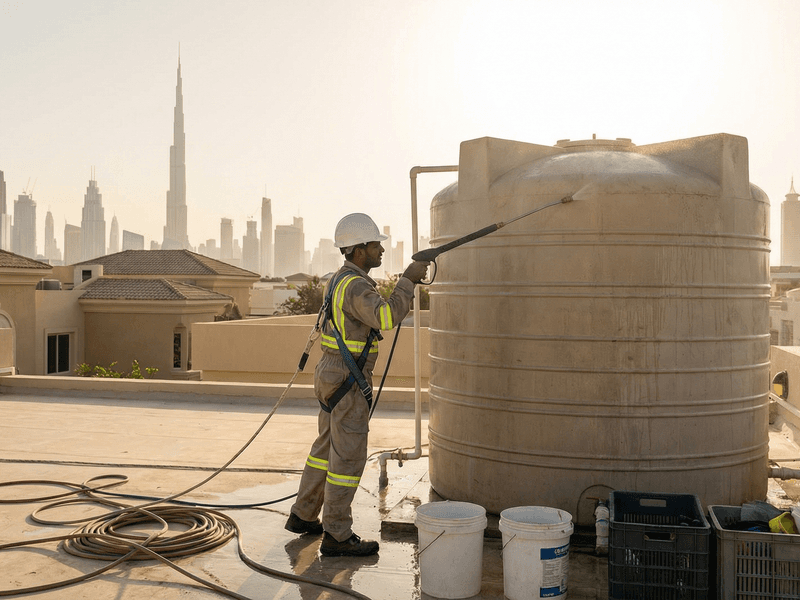
- Overhead and underground tank cleaning (annually - required by Dubai Municipality regulations)
- Building-level drainage system checks
- Pressure testing of riser lines
Unit-Level Coverage (if included)
When unit maintenance is bundled in, the AC maintenance, plumbing, and electrical services should be clearly scoped per unit - with documented limits on parts replacement vs service calls.
SLA Management: The Part Most Property Managers Get Wrong
The biggest failure point in building AMC management isn't the initial contract - it's the lack of SLA enforcement throughout the year.
When you sign an AMC, you're buying a promise: that the contractor will respond within X hours, complete Y number of preventive visits, and resolve Z category of issues within defined timeframes. If you're not tracking this, you're not getting what you paid for.
What Good SLAs Look Like for Building AMCs
| Issue Category | Target Response | Target Resolution | |---|---|---| | Emergency (lift failure, flood, power outage) | 1-2 hours | 4-8 hours | | High priority (AC failure in summer, major leak) | 2-4 hours | 24 hours | | Standard reactive | 24-48 hours | 3-5 days | | Preventive maintenance visits | Scheduled | Per schedule |
These aren't industry standards - they're negotiation targets. The best contractors will commit to them. Those who won't are telling you something.
Tracking SLA Performance
At minimum, property managers should maintain:
- A job log with date/time of every call and every response
- Monthly preventive visit confirmation (signed technician sheets)
- Photo evidence of completed work for common area issues
- Quarterly review meetings with the contractor
Digital CAFM (Computer-Aided Facilities Management) systems are worth the investment for buildings with 50+ units. But a shared spreadsheet works for smaller properties.
Bulk Pricing: What to Expect for Building Contracts
Building-level AMCs are priced on a per-unit or per-square-metre basis, depending on the contractor and scope. A rough guide for Dubai market rates in 2026:
Common area AMC only:
- Small building (up to 30 units): AED 15,000-30,000/year
- Medium building (30-100 units): AED 30,000-70,000/year
- Large tower (100+ units): AED 70,000-200,000+/year (depends heavily on shared systems complexity)
Per-unit bundled AMC (AC + plumbing + electrical):
- Studio/1BR unit: AED 1,200-1,800/year per unit
- 2BR unit: AED 1,800-2,500/year per unit
- 3BR+ unit: AED 2,500-3,500/year per unit
Volume discounts typically kick in at 20+ units. At 50+ units under a single contract, you should be negotiating 15-25% below standard retail pricing.
The key lever is exclusivity - contractors will sharpen their pencils if you commit to a single provider for your entire portfolio rather than splitting work across multiple companies.
Coordinating Owners and Tenants
In Dubai's mixed-ownership buildings, property managers sit at the intersection of three parties: the property management company, individual owners (who may or may not be present), and tenants (who experience the maintenance issues directly).
Clear communication protocols are:
For Owners
- Annual contract overview: what's covered, what's not, cost allocation
- Quarterly reports: preventive maintenance completed, reactive calls handled
- Renewal recommendations: scope changes, pricing adjustments
For Tenants
- Clear escalation path: how to report issues, expected response times
- What's their responsibility vs building responsibility vs unit owner responsibility
- Approved contractors list (to prevent tenants arranging unauthorised work)
One of the most common disputes in Dubai property management is a tenant calling a random handyman for an issue that should have been covered under the building AMC - and then claiming the cost. A clear written protocol prevents this.
Dubai Regulatory Compliance
Property managers in Dubai have specific regulatory obligations around building maintenance. The AMC structure should address:
Dubai Municipality (DM) Requirements:
- Annual water tank cleaning certificates (required for all residential buildings)
- Periodic fire safety system maintenance records
- Lift maintenance records (typically handled by specialist contractors with DED/DM compliance)
DEWA Requirements:
- Electrical installation compliance checks
- Generator maintenance records for backup power systems
Real Estate Regulatory Authority (RERA):
- Service charge budgets must include adequate maintenance provisions
- Owners Association (OA) buildings have specific requirements for maintaining building systems
When your AMC contractor understands these compliance requirements, they build the documentation trails automatically. If they don't, you're creating that compliance risk yourself.
Red Flags When Evaluating Building AMC Providers
Not all FM companies are equipped for building-scale contracts. Watch for these warning signs:
Scope gaps - Contracts that exclude "consumables" broadly, leaving ambiguity about whether filter replacements, small parts, or gaskets are included. Negotiate explicit limits: e.g., parts included up to AED 200 per visit.
Thin SLAs - Response time commitments with no penalty clauses. A contractor who won't back their SLA with any consequence isn't confident in their ability to meet it.
No dedicated site presence - For large buildings (100+ units), a contractor who doesn't assign a dedicated or semi-dedicated technician to your property will always deprioritise you when their teams are stretched. This happens every summer when AC calls spike.
Subcontracting without disclosure - Some AMC providers win the contract and immediately subcontract 70% of the work to day-rate technicians. Ask directly: who will physically do the work? Are they on your payroll or subcontracted?
Weak documentation - If a contractor can't show you sample job completion reports, technician visit logs, and parts usage tracking from an existing client, they're not running the administrative side properly.
The AC Component: Your Biggest Variable Cost
In Dubai, HVAC is typically 40-60% of a building's maintenance spend. Managing the AC component of a building AMC well is the single highest-impact skill a property manager can develop.
Key considerations:
- Chiller vs split unit buildings - Central chiller buildings have fundamentally different AMC requirements than split-unit buildings. Chiller contracts are typically specialist (and separate), while split unit maintenance is standard.
- Summer surge planning - April to October in Dubai means 3-4x normal call volumes. Your AMC contractor needs dedicated summer capacity, not just standard team deployment.
- Coil cleaning frequency - The Dubai environment (dust, salt air in coastal areas) demands quarterly coil cleaning minimum. Annual coil cleaning is insufficient and will lead to compressor failures.
- Refrigerant tracking - Building-level refrigerant usage should be tracked and reported. Frequent top-ups indicate leaks that need fixing, not just refilling.
Common Area Aesthetics: Beyond Mechanical Systems
Property managers sometimes underestimate the value of including aesthetic upkeep in the AMC scope. Common area paint, tile grout repair, light fixture replacement - these affect tenant retention and property values.
Consider including painting and decorating services and general handyman services within the building AMC scope, with clear annual budgets. A common area refresh every two years costs a fraction of the tenant turnover it prevents.
Cleaning services - particularly water tank cleaning - should be explicitly written into any Dubai building AMC. The annual water tank cleaning requirement isn't optional; it's a municipality mandate with inspection consequences.
Structuring the Contract: What to Negotiate
When you're ready to sign, here's what to push for:
Clear scope document - Line-by-line breakdown of what's included vs excluded. No vague "general maintenance" line items.
Defined escalation matrix - Who do you call at 2am for an emergency? What's the contractor's out-of-hours response process?
Quarterly KPI reviews - Build in a structured review meeting every 90 days with the right to adjust scope or flag performance issues.
Step-in rights - If the contractor fails to respond within agreed SLA and you need to call someone else, the AMC contractor should cover the cost. This clause creates real accountability.
Termination for cause - If the contractor consistently misses SLAs, you need a clean exit path. 30-60 days' notice for cause (with documented evidence) is reasonable.
Price escalation caps - Multi-year contracts should include explicit caps on annual price increases, typically CPI-linked or fixed at 3-5% maximum.
When to Review or Retender Your Building AMC
Even good contractors get complacent. Property managers should formally review their building AMC every 2-3 years at minimum, and immediately if:
- Response times are consistently exceeding SLA
- Preventive visits are being skipped or completed superficially
- Tenants are escalating maintenance complaints beyond normal frequency
- Costs are rising faster than contract terms justify
- The contractor's key personnel have changed (new management often changes service quality)
Retendering every 3 years keeps contractors competitive and surfaces pricing improvements. You don't always need to switch - but the process of getting alternative quotes gives you use.
Conclusion
A well-structured apartment building AMC is one of the highest-use investments a property manager can make in Dubai. It reduces emergency response costs, keeps shared systems compliant, improves tenant retention, and protects asset values.
The key is treating the contract as an ongoing management relationship, not a one-time transaction. Define clear scope, enforce SLAs, track performance, and review annually.
If you're managing an apartment building in Dubai and want to look at building-wide AMC options, European Technical's AMC team works with property managers across all building sizes - from boutique complexes to large residential towers.