What Dubai Municipality Requires for Pest Control in Residential Buildings
Dubai Municipality (DM) takes pest control seriously. The regulations are stricter than most residents realise, and building owners or management companies that ignore them face fines starting at AED 500 and going up to AED 50,000 for repeated violations.
Whether you own a villa, manage a building, or rent an apartment, here is what the rules actually say and what they mean for you.
The Annual Pest Control Certificate
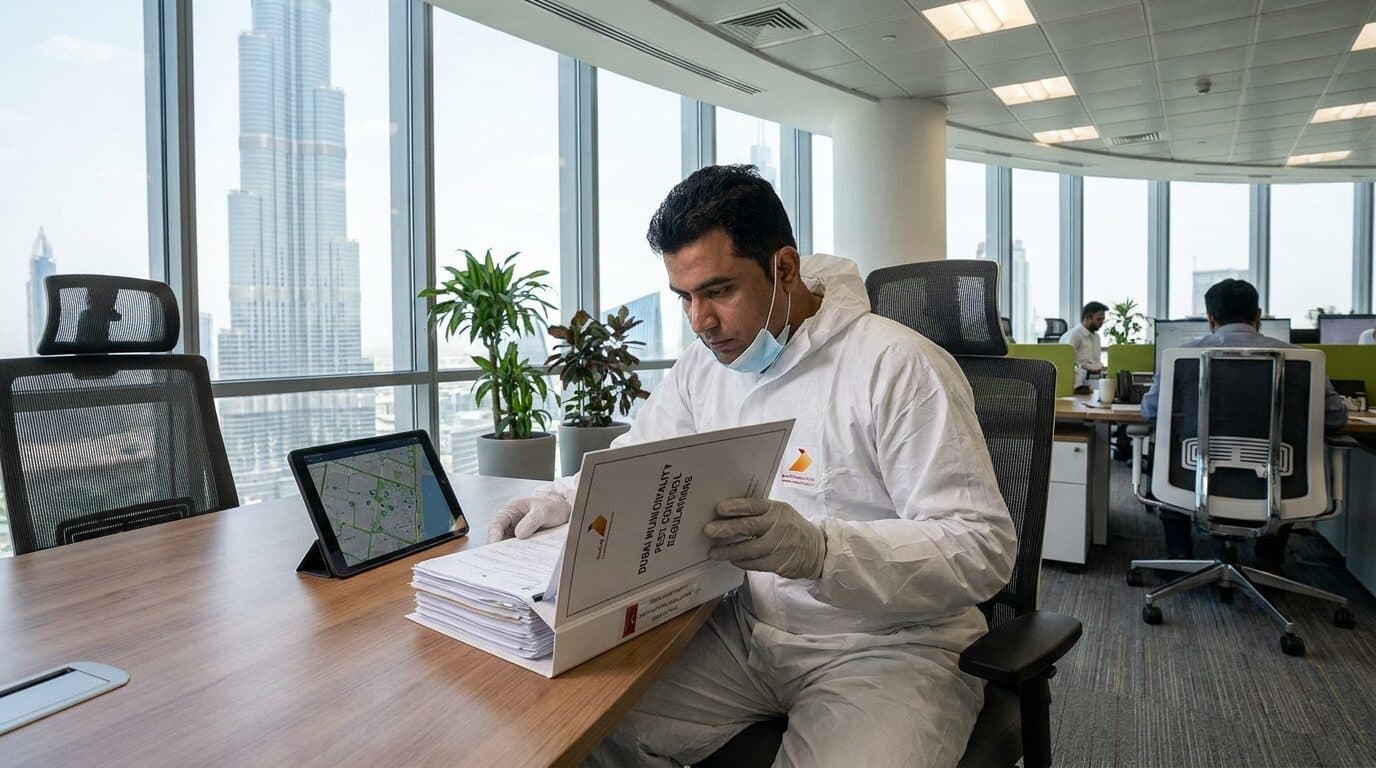
Every residential building in Dubai must have a valid pest control certificate. This is not optional, it is a licensing requirement enforced by DM's Public Health Department.
Who needs one:
- All apartment buildings and residential towers
- Villa compounds and gated communities
- Individual villas (recommended, and sometimes required by home insurance)
- Hotels, serviced apartments, and holiday homes
What it involves:
- A DM-approved pest control company conducts treatment
- The company files the treatment record with DM's digital system (Montaji)
- A certificate is issued confirming treatment date, chemicals used, and expiry
- Certificates are typically valid for 12 months
Who pays:
- For apartment buildings: the building owner or management company (covered by service charges)
- For villas: the owner or tenant, depending on the tenancy contract
Approved Chemicals Only
DM maintains a list of approved pesticides. Companies cannot use anything outside this list. The approved chemicals are:
- Registered with the UAE Ministry of Climate Change and Environment
- Tested for safety in residential environments
- Applied at concentrations specified in the product registration
Banned or restricted substances include many products freely available in other countries. If a pest control company offers to use a product that is "extra strong" or "imported from abroad," ask to see the DM approval number. If they cannot provide one, use a different company.
Common approved active ingredients for residential use:
- Imidacloprid, cockroaches, ants
- Fipronil, cockroaches, termites
- Deltamethrin, general crawling insects, mosquitoes
- Cypermethrin, general insects, spiders
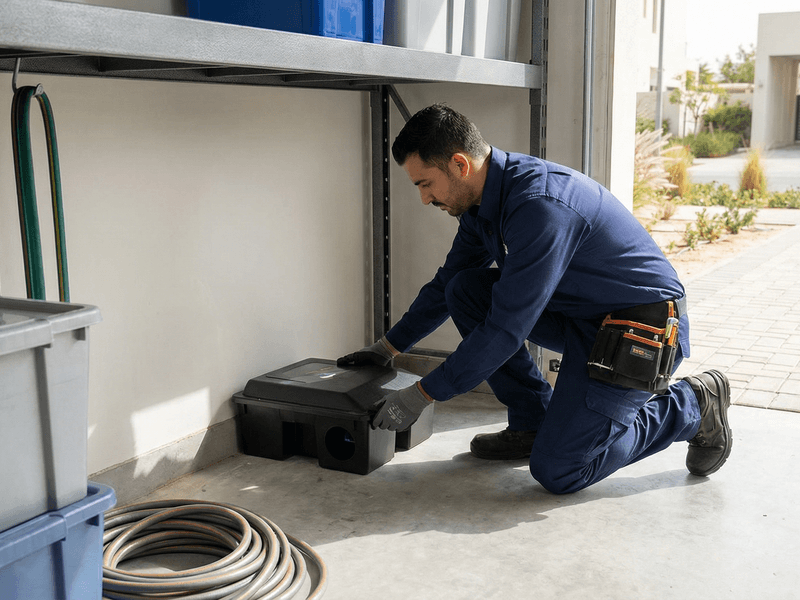
- Brodifacoum, rodents (bait stations only, not loose poison)
Gel baits for cockroaches are preferred over spray treatments in kitchens and food preparation areas because they are targeted and do not contaminate surfaces.
DM-Approved Companies
Only companies licensed by Dubai Municipality can provide valid pest control certificates. The licence is specific:
- The company must hold a valid DM pest control licence (not just a general trade licence)
- Technicians must have individual DM certification
- The company must use the Montaji system to record treatments
How to cheque: Ask the company for their DM licence number. You can verify it through DM's online portal or by calling 800-900.
Using an unlicensed company means:
- No valid certificate is issued
- If a pest-related health issue occurs, you have no legal protection
- Building inspection failure and potential fines
- Insurance claims may be rejected
Building Management Responsibilities
Building managers and owners' associations have specific obligations:
Regular treatment schedule:
- Common areas (lobby, corridors, parking, garbage rooms) must be treated on a fixed schedule, typically monthly or quarterly
- Garbage rooms require more frequent treatment (monthly minimum)
- Swimming pool areas and gardens need seasonal mosquito treatment
Record keeping:
- Treatment records must be maintained and available for DM inspection
- Records must include: date, areas treated, chemicals used, company name, technician certificate number
- Digital records through Montaji are increasingly required
Reporting obligations:
- Any serious infestation (bedbugs in multiple units, rodents, termites) must be reported to DM
- DM may send inspectors to verify treatment is adequate
- Failure to report or treat a known infestation is a violation
What Tenants Should Know
As a tenant in Dubai, your pest control rights and responsibilities include:
Your rights:
- Building common areas should be treated regularly by building management
- You can request proof of the building's pest control certificate
- If pests are entering your unit from common areas due to management negligence, the cost of treatment may be recoverable
Your responsibilities:
- In-unit pest control is typically the tenant's responsibility (cheque your tenancy contract)
- Keep your unit clean, food debris and standing water attract pests
- Report infestations to building management promptly
- Allow access for building-wide treatment when scheduled
When the landlord should pay:
- If the pest problem existed before you moved in
- If it is caused by a building defect (blocked drains, wall cavities, unsealed pipe penetrations)
- If it is a building-wide infestation that individual treatment cannot resolve
Common Pests in Dubai Residential Buildings
| Pest | Frequency | Risk Level | Typical Treatment |
|---|---|---|---|
| Cockroaches (German) | Very common | Moderate (hygiene) | Gel bait, spray barrier |
| Cockroches (American) | Common in villas | Low-moderate | Perimeter spray, drain treatment |
| Ants | Very common | Low | Gel bait, perimeter barrier |
| Bed bugs | Increasing | High (health) | Heat treatment + chemical |
| Termites | Moderate in villas | High (structural) | Soil treatment, bait stations |
| Mosquitoes | Seasonal (summer) | Moderate (disease) | Larvicide, fogging |
| Rodents | Moderate in older areas | High (health) | Bait stations, exclusion |
| Pigeons | Very common | Moderate (hygiene) | Netting, spikes, deterrents |
Fines and Enforcement
DM enforcement has increased significantly in recent years. Common violations and fines:
- No valid pest control certificate: AED 500 first offence, increasing for repeats
- Using unapproved chemicals: AED 2,000-10,000 depending on severity
- Operating without a DM pest control licence: AED 10,000-50,000
- Failure to treat a reported infestation: AED 1,000-5,000
Buildings that repeatedly fail inspections can have their occupancy certificate reviewed.
Booking the Right Service
When booking pest control for your home, verify:
- The company holds a current DM pest control licence
- They will issue a DM-registered certificate
- They use approved chemicals appropriate for residential properties
- They provide a written treatment report
- They offer a callback guarantee (if pests return within 30 days, they re-treat at no cost)
For villa owners, an annual contract with quarterly treatments is the most cost-effective approach. For apartments, a single annual treatment is usually sufficient if the building management handles common areas properly.
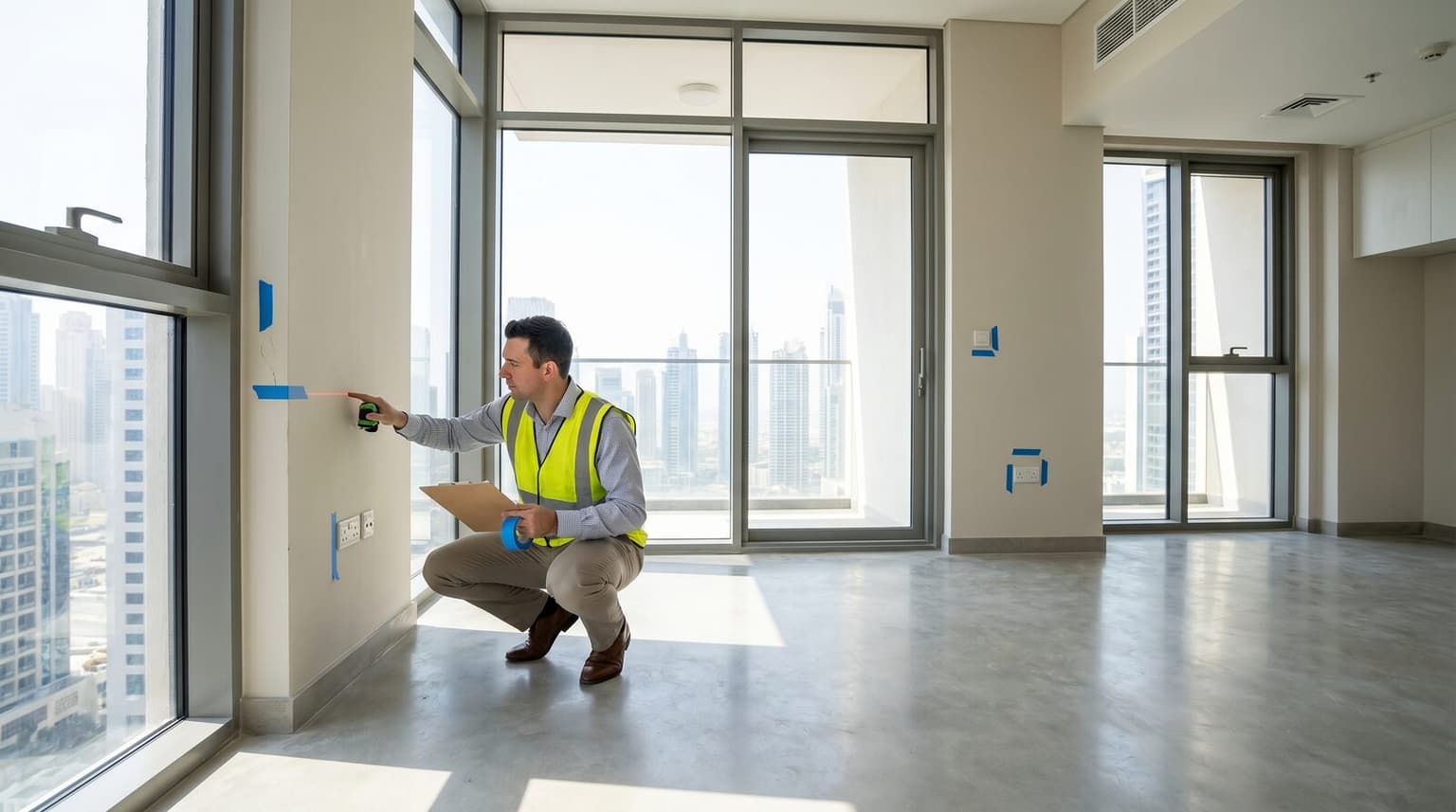
If you are seeing persistent pests despite treatment, the root cause may be structural, unsealed pipe entry points, drain issues, or gaps in the building fabric. A general maintenance inspection can identify and seal these entry points, making chemical treatment more effective.
Prevention works better than reaction. Regular professional treatment, good hygiene, and a sealed building keep pests out of your home and keep you on the right side of DM regulations.