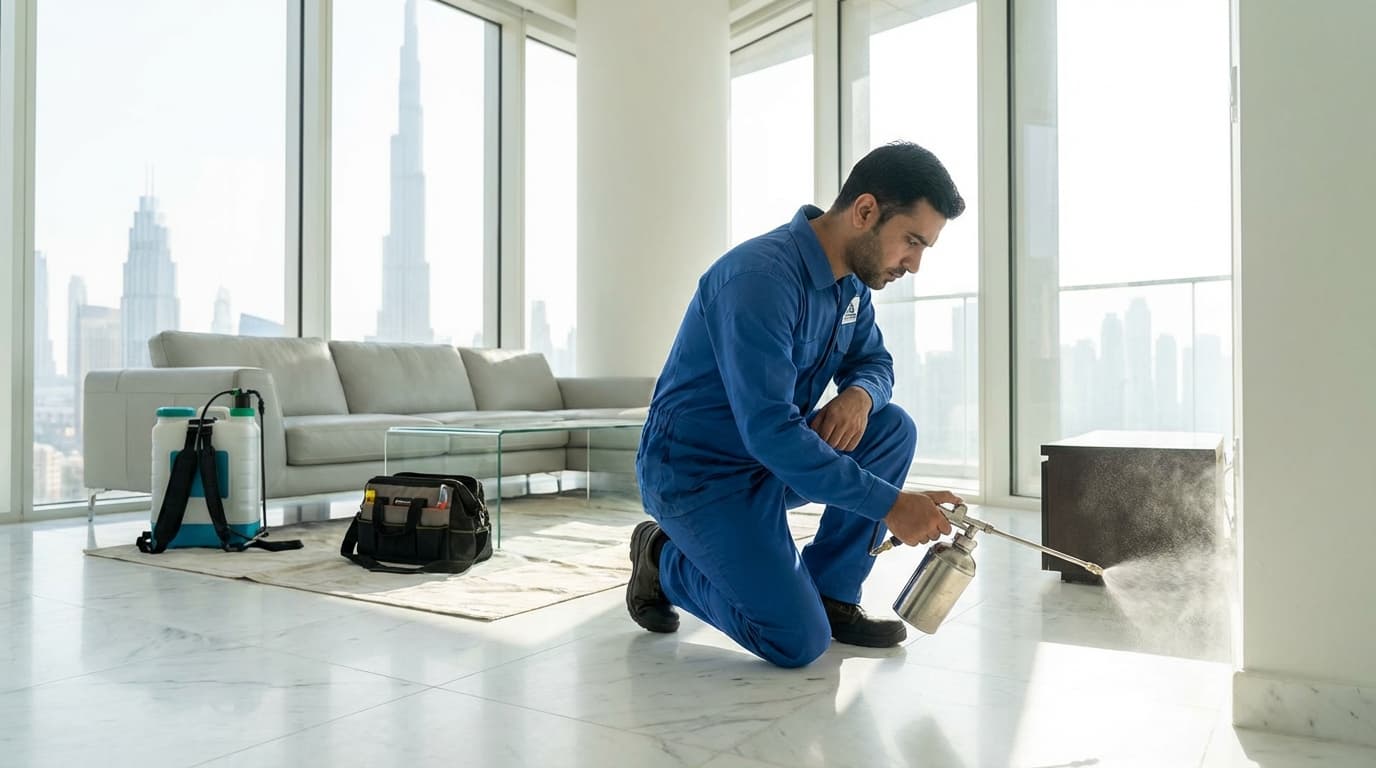
Dubai's climate creates a year-round battle against pests. Between the extreme summer heat, coastal humidity, and rapid urban development, properties across the emirate face constant pressure from cockroaches, termites, bed bugs, rodents, and ants. Whether you own a villa in Arabian Ranches or rent an apartment in Dubai Marina, pest infestations aren't a matter of if - they're a matter of when.
This guide covers everything you need to know about pest control in Dubai: what you're dealing with, what it costs, what the law requires, and how to keep your property protected long-term.
Why Pest Control in Dubai Is Different
Most cities deal with seasonal pest surges. Dubai deals with overlapping pest cycles driven by a subtropical desert climate where temperatures regularly exceed 45°C and humidity along the coast can hit 90%. That combination creates conditions where multiple pest species thrive simultaneously.
Three factors make pest control in Dubai uniquely challenging:
1. Construction Activity Dubai's constant development displaces pest populations from one area to the next. A new tower going up in Business Bay can push rodent colonies into surrounding residential buildings overnight. Major infrastructure projects along Sheikh Zayed Road and in Dubai South have created migration corridors for cockroaches and rats.
2. Dense Urban Living High-rise towers in JBR, Downtown Dubai, and Dubai Marina share plumbing risers, waste chutes, and cable ducts that act as highways for cockroaches and rodents. A single infested unit on the 15th floor can spread German cockroaches to dozens of neighbouring apartments within weeks.
3. Climate-Driven Behaviour During summer months (June through September), outdoor pests like ants, cockroaches, and rodents move indoors seeking water and cooler temperatures. Properties with poorly sealed entry points - particularly ground-floor units and villas - see dramatic spikes in indoor pest activity during this period.
Common Pests in Dubai Properties
Cockroaches
The two species you'll encounter most often in Dubai are the German cockroach (Blattella germanica) and the American cockroach (Periplaneta americana).
German cockroaches are the smaller, light-brown variety found inside kitchens, bathrooms, and anywhere with moisture and food debris. They reproduce rapidly - a single female can produce up to 400 offspring in her lifetime - and they're the primary cockroach problem in apartments and restaurants across Deira, Bur Dubai, and newer developments alike.
American cockroaches are the larger, reddish-brown species that often enter through drains, sewage lines, and ground-floor gaps. Villas in communities like Arabian Ranches, The Springs, Jumeirah Village Circle, and Al Barsha frequently deal with these, particularly during the summer months when they migrate indoors from landscaped areas.
Treatment approach: Gel bait treatments combined with residual sprays in harbourage areas. For severe infestations, a targeted flush-and-treat programme over 2-3 visits is standard.
Bed Bugs
Dubai's position as a global tourism and business hub makes bed bugs a persistent problem. Hotels, serviced apartments, and residential buildings in areas with high tenant turnover - think JBR, DIFC, and Dubai Marina - see regular bed bug introductions.
Bed bugs travel in luggage, second-hand furniture, and clothing. They're notoriously difficult to eliminate because they hide in mattress seams, headboard joints, electrical outlets, and even behind wallpaper. A female bed bug lays 200-500 eggs during her lifetime, and the bugs can survive months without feeding.
Signs of infestation: Small blood spots on sheets, dark faecal stains along mattress seams, a sweet musty odour in the bedroom, and of course - itchy welts appearing in clusters or lines on exposed skin.
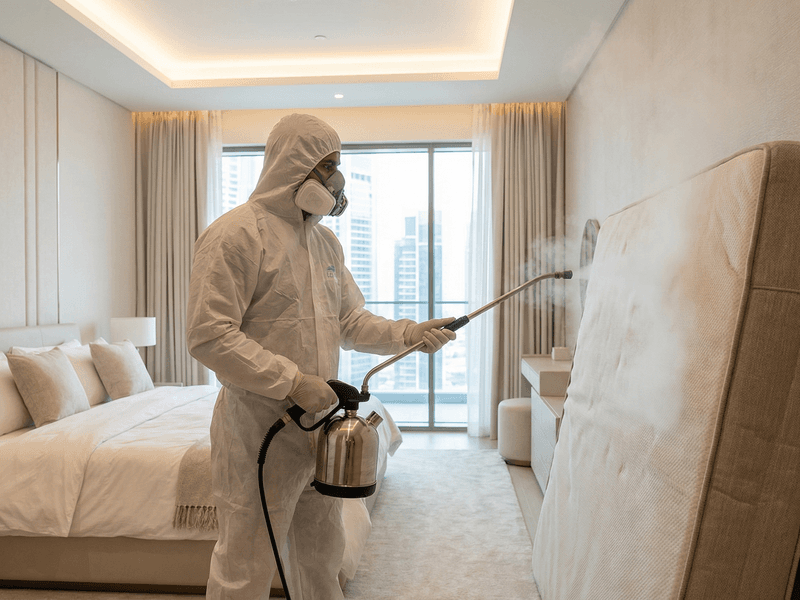
Treatment approach: Heat treatment (raising room temperature above 55°C) is the most effective single-visit method. Chemical treatments using residual insecticides require 2-3 visits spaced 10-14 days apart to catch newly hatched nymphs.
Rodents
Rats and mice are a significant concern in both older neighbourhoods and newer communities. Brown rats (Rattus norvegicus) dominate in areas near waterways and older commercial districts like Deira and Naif, while roof rats (Rattus rattus) are common in villa communities with palm trees and dense landscaping.
Properties near active construction sites face elevated rodent risk. Communities bordering Dubai's desert fringe - Dubai Hills Estate, Damac Hills, Town Square - often deal with desert-adapted rodent species moving in from undeveloped land.
Health risks: Rodents carry Salmonella, Leptospirosis, and Hantavirus. Their gnawing damages electrical wiring (a documented fire hazard), plumbing, insulation, and stored goods.
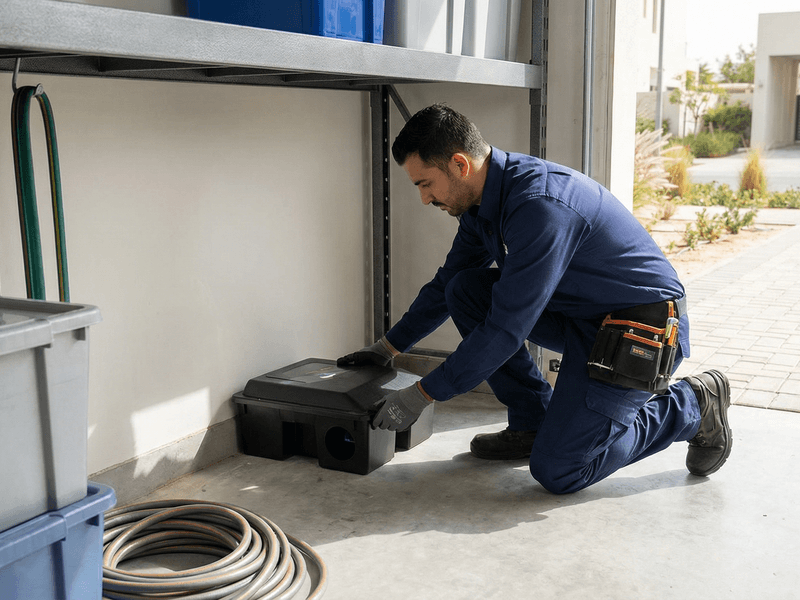
Treatment approach: Integrated approach combining tamper-resistant bait stations, snap traps in targeted locations, and exclusion work (sealing entry points). Rodent-proofing a property - blocking gaps around pipes, cable entries, and door sweeps - is as important as any chemical treatment.
Termites
Subterranean termites are arguably the most destructive pest in Dubai. The species most commonly found here's Psammotermes hypostoma, a desert-adapted termite that builds extensive underground colonies.
Termites cause millions of dirhams in structural damage annually across Dubai. Villa communities built on reclaimed or sandy soil - including parts of Emirates Hills, Palm Jumeirah, and Arabian Ranches - are particularly vulnerable. Termites can work undetected for months or years, hollowing out wooden door frames, skirting boards, and structural timbers from the inside.
Warning signs: Mud tubes along foundation walls, hollow-sounding wood when tapped, discarded wings near windows (especially after rain), and bubbling or cracking paint on wooden surfaces.
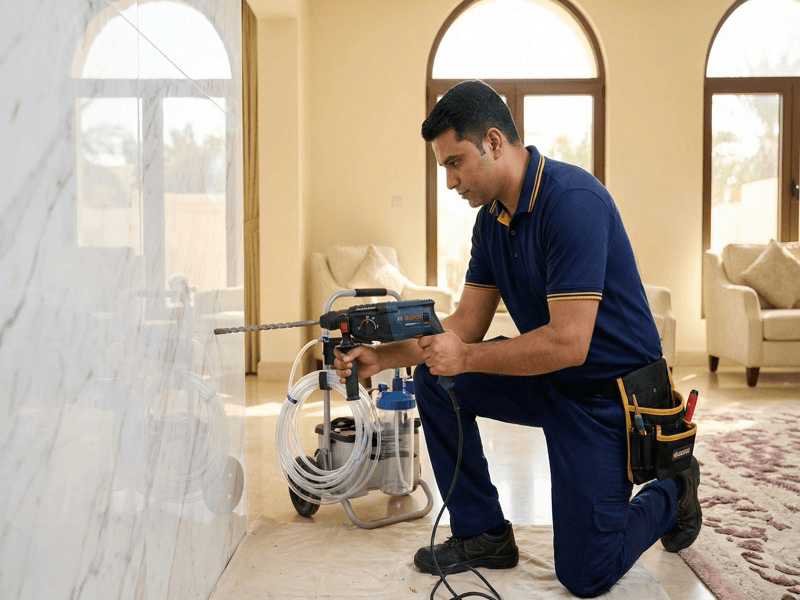
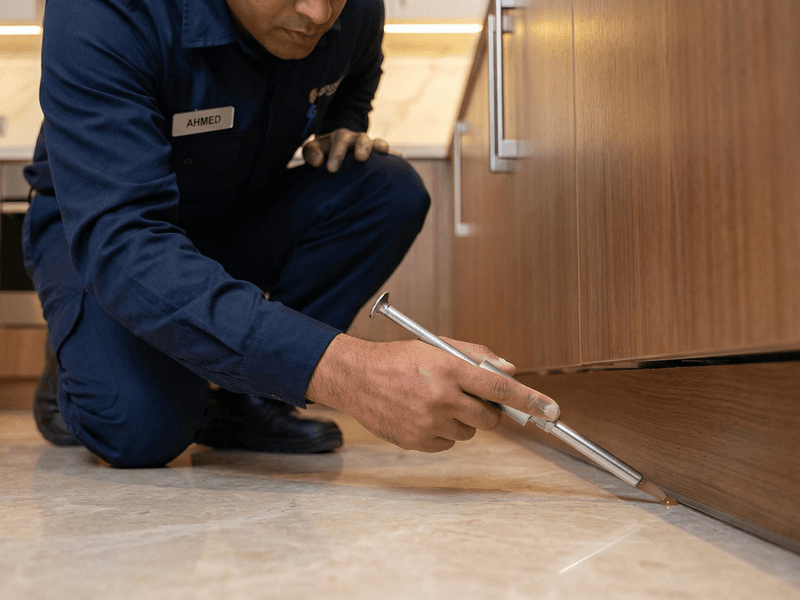
Treatment approach: Soil treatment with liquid termiticide around the building perimeter, or installation of a termite baiting system. For active infestations, direct chemical injection into affected timbers combined with perimeter treatment. Annual inspections are strongly recommended for all villa properties.
Ants
Several ant species cause problems in Dubai. Black garden ants invade kitchens and pantries, often trailing from landscaped areas through door frames and window seals. Carpenter ants can damage wooden structures, though they're less common than termites. Fire ants occasionally establish colonies in garden areas, posing a sting risk to children and pets.
Villas with gardens in communities like Mirdif, Al Barsha, Jumeirah Park, and Mudon deal with ant invasions year-round, with peak activity during the cooler months (November through March) when ants are most active outdoors.
Treatment approach: Perimeter spray treatment around the building exterior, targeted gel bait application at entry points, and granular bait treatment in garden areas. Addressing landscaping issues - like mulch or soil banked against exterior walls - is critical for long-term control.
Seasonal Pest Patterns in Dubai
Understanding Dubai's pest calendar helps you plan preventive treatments rather than reacting to infestations after they've taken hold.
January - March (Winter)
Active pests: Ants, rodents, termite swarms (after rain)
What happens: Cooler temperatures (15-25°C) bring peak ant activity. Rodents that moved indoors during the mild winter become more visible. If winter rain occurs, termite swarmers (winged reproductive termites) may emerge - a key indicator of established colonies nearby.
April - May (Spring)
Active pests: Cockroaches (increasing), ants, flies, mosquitoes
What happens: Rising temperatures trigger cockroach breeding cycles. Standing water from irrigation systems and any lingering rain creates mosquito breeding sites. This is the ideal window for preventive pest treatments before summer.
June - September (Summer)
Active pests: Cockroaches (peak), bed bugs, rodents, flies, mosquitoes, stored product pests
What happens: Extreme heat (40-50°C) drives outdoor pests indoors. Cockroach activity peaks. Humidity along coastal areas (Dubai Marina, JBR, Palm Jumeirah) creates ideal conditions for German cockroach reproduction. Stored food pests like weevils and flour beetles become problematic in pantries and commercial kitchens.
October - December (Autumn)
Active pests: Ants (increasing), cockroaches (declining), rodents
What happens: Temperatures cool, outdoor ant activity resumes. Rodents begin seeking indoor shelter as nights get cooler. This is the second key treatment window - a thorough pest control service before winter helps prevent indoor infestations during the cooler months.
Pest Control Costs in Dubai: What to Expect
Pricing varies based on property size, pest type, and severity of infestation. Here's what the Dubai market looks like in 2026:
Residential Properties
| Service | Studio/1BR Apartment | 2-3BR Apartment | 3-4BR Villa | 5+ BR Villa |
| General pest control (spray) | AED 150-250 | AED 250-400 | AED 400-600 | AED 600-900 |
| Cockroach gel treatment | AED 200-350 | AED 350-500 | AED 500-750 | AED 750-1,200 |
| Bed bug treatment | AED 500-800 | AED 800-1,500 | AED 1,200-2,000 | AED 2,000-3,500 |
| Bed bug heat treatment | AED 1,500-2,500 | AED 2,500-4,000 | AED 3,500-6,000 | AED 5,000-8,000 |
| Rodent control | AED 300-500 | AED 400-700 | AED 600-1,000 | AED 800-1,500 |
| Termite treatment | N/A | N/A | AED 3,000-6,000 | AED 5,000-12,000 |
| Anti-termite soil treatment (new build) | N/A | N/A | AED 5,000-10,000 | AED 8,000-20,000 |
| Annual pest control contract | AED 800-1,200 | AED 1,200-1,800 | AED 1,800-3,000 | AED 3,000-5,000 |
Commercial Properties
Commercial pest control pricing depends heavily on the type of business, square footage, and regulatory requirements:
- Restaurants and cafés: AED 500-1,500 per visit, with monthly contracts typically AED 1,000-3,000/month
- Offices: AED 300-800 per visit depending on floor area
- Warehouses: AED 1,000-5,000+ depending on size and commodity stored
- Hotels: Custom contracts based on room count and facility scope, often AED 5,000-15,000/month
What affects pricing:
- Property size and layout complexity
- Type of pest (bed bugs and termites cost significantly more than general pest treatments)
- Severity of infestation (established colonies require multiple visits)
- Products used (eco-friendly and low-odour formulations typically carry a premium)
- Contract vs. one-off service (annual contracts reduce per-visit costs by 20-40%)
Dubai Municipality Pest Control Regulations
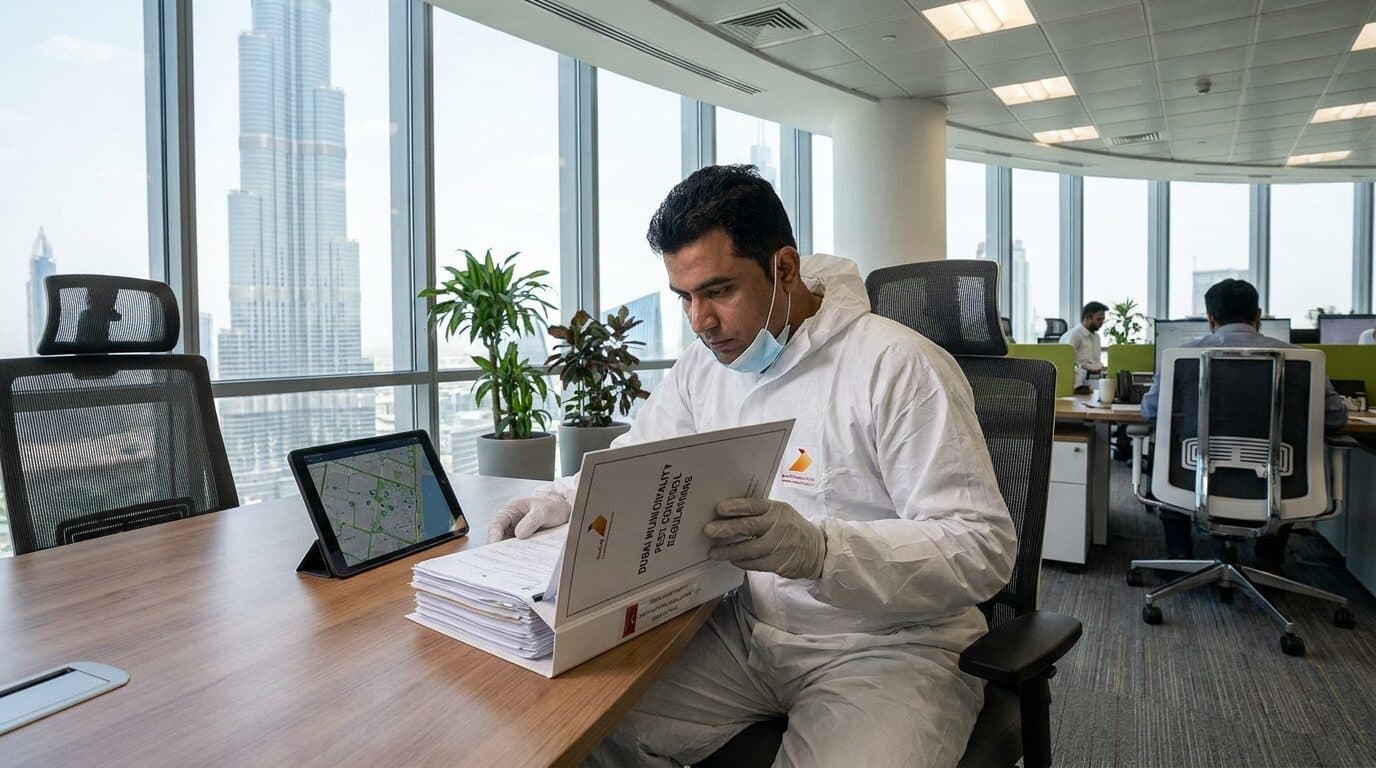
Pest control in Dubai is regulated by Dubai Municipality's Public Health and Safety Department. Both property owners and pest control companies must comply with specific requirements.
For Pest Control Companies
All pest control operators in Dubai must hold a valid licence issued by Dubai Municipality. This includes:
- Company trade licence with pest control activity listed
- Technician approval cards - every technician must pass Dubai Municipality exams covering pest biology, chemical safety, and application methods
- Approved chemical list - only pesticides registered and approved by Dubai Municipality may be used. Products must carry valid registration numbers
- Treatment records - companies must maintain detailed records of every treatment, including chemicals used, concentrations, and application areas
For Property Owners and Managers
- Food establishments are required to maintain active pest control contracts with licensed operators. Dubai Municipality Food Safety Department inspectors check pest control records during routine inspections
- Building owners and facilities managers are responsible for maintaining common areas free from pest harbourage. Failure to address pest complaints can result in fines
- New construction - pre-construction anti-termite soil treatment is mandatory for all new buildings in Dubai, as per Dubai Municipality building regulations
HACCP and Food Safety Compliance
Restaurants, hotels, food production facilities, and catering companies operating in Dubai must maintain pest control documentation as part of their HACCP (Hazard Analysis and Critical Control Points) compliance. This includes:
- Monthly pest control service reports
- Pest sighting logs
- Bait station location maps
- Corrective action records for any pest activity detected
Using an unlicensed pest control provider - or attempting DIY pest control in a food establishment - can result in violations, fines, and even temporary closure orders from Dubai Municipality.
DIY vs. Professional Pest Control: When to Call an Expert
Some pest issues can be managed with store-bought products. Others absolutely require professional intervention.
When DIY Might Work
- Occasional ants entering through a specific point - seal the entry and apply ant bait from a hardware store
- A single cockroach sighting in a clean home - place gel bait stations in the kitchen and monitor
- Mosquitoes in the garden - eliminate standing water, use larvicide dunks in planters and drains
When You Need a Professional
- Multiple cockroach sightings during daytime (indicates a large colony)
- Any bed bug activity - DIY bed bug treatment has an extremely low success rate
- Rodent activity - droppings, gnaw marks, or sounds in walls/ceiling
- Termite signs - mud tubes, damaged wood, swarmers. Never delay termite treatment
- Recurring infestations despite previous treatment
- Commercial or food-handling premises - regulatory compliance requires licensed operators
The cost difference between early professional treatment and delayed intervention after a pest population has established itself can be ten-fold. A straightforward cockroach gel treatment at AED 350 is far preferable to a full fumigation at AED 2,000+ after months of unchecked breeding.
How to Choose a Pest Control Company in Dubai
Not all pest control providers deliver the same quality of service. Here's what to verify:
1. Dubai Municipality Licence Ask for the company's pest control licence number and verify their technicians hold valid approval cards. Any legitimate company will provide this without hesitation.
2. Treatment Plan (Not Just a Spray) A competent provider conducts an inspection before quoting. They identify the pest species, locate harbourage and entry points, and recommend a targeted treatment plan. If someone shows up, sprays everywhere for 10 minutes, and leaves - that's not professional pest control.
3. Product Transparency You've the right to know what chemicals are being applied in your home. Professional companies provide Safety Data Sheets (SDS) upon request and can explain their product choices, especially important for homes with children, pregnant women, or pets.
4. Warranty and Follow-Up Reputable companies warranty their treatments and include follow-up visits. For cockroaches, a standard warranty is 30-90 days. For termites, warranties typically run 3-5 years with annual inspections.
5. Integrated Pest Management (IPM) Approach The best providers don't just spray chemicals - they identify structural vulnerabilities, recommend exclusion measures, and address environmental factors contributing to pest pressure. This approach delivers longer-lasting results.
Pest Prevention: Protecting Your Dubai Property Year-Round
Professional treatment handles existing infestations. Prevention keeps them from returning.
For Apartments
- Seal gaps around pipes under kitchen and bathroom sinks using silicone caulk
- Fix leaking taps and pipes - moisture attracts cockroaches and silverfish
- Don't leave food out overnight - including pet food bowls
- Clean behind appliances monthly - the gap behind the fridge and under the oven are cockroach harbourage hotspots
- Report pest sightings to building management - shared infestations in common areas undermine individual unit treatments
- Request that building management treat common areas - garbage rooms, meter rooms, and service corridors need regular treatment
For Villas
Everything above, plus:
- Maintain landscaping with a gap between mulch/soil and exterior walls
- Inspect and seal weep holes in boundary walls (common rodent entry points)
- Treat garden areas for ants and subterranean pests quarterly
- Install door sweeps on all exterior doors - a 5mm gap under a door is enough for a cockroach
- Schedule annual termite inspections - particularly for properties over 5 years old
- Keep swimming pool equipment rooms clean and free of stored cardboard (a favourite cockroach harbourage)
- Arrange regular deep cleaning to eliminate hidden food debris and organic matter that sustains pest populations
For Commercial Properties
- Implement a documented pest management programme with scheduled inspections
- Maintain door seals and air curtains at all entrances
- Train staff on pest sighting reporting procedures
- Store goods on raised shelving (minimum 15cm off the floor, 30cm from walls)
- Ensure waste management procedures include sealed bins and regular removal
- Include pest control in your annual maintenance contract to bundle services and ensure regular scheduled inspections
The Connection Between Cleaning and Pest Control
Pest control treatments and cleanliness work together. One without the other produces poor results.
A property that receives quarterly pest control but has grease buildup behind the oven, food debris under the dishwasher, and crumbs in pantry corners will continue attracting cockroaches regardless of how many chemicals are applied. Conversely, a spotlessly clean property without professional pest treatment remains vulnerable to pests entering from neighbouring units, construction sites, or landscaped areas.
The most effective approach combines regular professional deep cleaning with a structured pest control programme. Deep cleaning targets the hidden organic matter - behind appliances, inside cabinets, under furniture - that sustains pest populations between treatments.
For commercial kitchens and food establishments, this combination isn't optional. Dubai Municipality inspectors assess both hygiene standards and pest control documentation during food safety audits.
Annual Maintenance Contracts: The Smart Approach to Pest Control
One-off pest treatments solve immediate problems. Annual maintenance contracts (AMCs) prevent them from recurring.
An AMC for pest control typically includes:
- Scheduled quarterly or bi-monthly treatments timed to Dubai's seasonal pest patterns
- Emergency call-outs between scheduled visits at no additional charge
- Annual termite inspection (for villas and ground-floor properties)
- Documentation for landlords, property managers, and food safety compliance
- Priority scheduling during peak pest seasons
For property owners managing multiple units or entire buildings, AMCs significantly reduce the total cost of pest management while maintaining consistent protection. For tenants, an AMC included in your rental agreement means you never have to organise individual treatments - the scheduled service handles prevention automatically.
Bundling pest control into a broader property maintenance contract that includes AC servicing, plumbing checks, and electrical maintenance creates a single-provider solution that's simpler to manage and typically more cost-effective than engaging separate specialists for each discipline.
Pest Control for Specific Property Types in Dubai
High-Rise Apartments (Dubai Marina, JBR, Downtown, Business Bay)
Primary threats: German cockroaches, bed bugs, occasional rodents on lower floors.
High-rises present unique challenges because shared infrastructure - waste chutes, plumbing risers, fire escape routes - connects every unit. A cockroach infestation on one floor can spread vertically through the entire building.
Recommendation: Individual unit treatment combined with building-wide common area management. If your building management doesn't maintain a pest control contract for common areas, raise it with the Owners Association.
Villa Communities (Arabian Ranches, The Springs, Emirates Hills, Al Barsha)
Primary threats: Subterranean termites, ants, cockroaches, rodents, occasional snakes and scorpions.
Villas have more entry points and more exposed perimeter than apartments. Garden areas, boundary walls, pool equipment rooms, and outdoor storage all create pest harbourage opportunities.
Recommendation: Quarterly general pest treatment, annual termite inspection, and perimeter rodent management. Address landscaping issues that create pest bridges to the structure.
Townhouses (Jumeirah Village Circle, Town Square, Damac Hills, Mudon)
Primary threats: Similar to villas but with shared walls adding neighbour-to-neighbour transmission risk (like apartments).
Townhouses combine the worst of both worlds from a pest perspective: the exposed perimeter of a villa with the shared-wall dynamics of an apartment building.
Recommendation: Treat as a villa for perimeter pest management, but coordinate with immediate neighbours for maximum effectiveness. Shared boundary walls should be treated from both sides.
Commercial & Retail (DIFC, Sheikh Zayed Road, Al Quoz, Deira)
Primary threats: Cockroaches, rodents, stored product pests, flies.
Commercial properties face higher pest pressure from goods receiving, customer traffic, food waste, and shared loading bays. Regulatory requirements add compliance obligations that residential properties don't face.
Recommendation: Monthly professional pest management with documented inspection reports, staff awareness training, and structural maintenance to seal entry points.
Frequently Asked Questions About Pest Control in Dubai
1. How often should I get pest control done in Dubai?
For general residential pest control, quarterly treatments (every 3 months) provide consistent year-round protection. Properties with higher risk factors - ground-floor location, proximity to construction, villa with garden - may benefit from bi-monthly service. Food establishments require monthly treatments as a minimum for regulatory compliance.
2. Is pest control mandatory in Dubai?
For food businesses, yes - maintaining an active pest control contract with a Dubai Municipality-licensed provider is a regulatory requirement. For residential properties, it's not legally mandatory but strongly advisable. Landlords are generally responsible for ensuring habitable conditions, which includes addressing pest infestations.
3. How much does pest control cost in Dubai?
General pest treatment for a standard apartment ranges from AED 150-400 per visit. Villas typically run AED 400-900. Specialist treatments like bed bug heat treatment or termite soil treatment cost significantly more - AED 1,500-8,000+ depending on property size and severity. Annual contracts reduce per-visit costs by 20-40% compared to one-off bookings.
4. What should I do to prepare for a pest control treatment?
Clear kitchen countertops and remove items from under sinks. Cover or store exposed food, pet bowls, and baby items. Move furniture slightly away from walls in rooms being treated. For bed bug treatments, wash all bedding and clothing in hot water (60°C+) and follow your technician's specific preparation instructions - these vary by treatment method.
5. Is it safe to stay home during pest control treatment?
For standard spray treatments, you'll typically need to vacate the treated areas for 2-4 hours and ventilate thoroughly upon return. Gel bait applications are low-risk and don't usually require leaving the property. Heat treatments for bed bugs require full evacuation of the room or unit during the process. Always follow your technician's specific guidance, especially in homes with infants, pregnant women, or pets.
6. Are the chemicals used in pest control safe for children and pets?
Licensed pest control companies in Dubai use products approved by Dubai Municipality's Public Health and Safety Department. Modern formulations are significantly safer than older products, and professional application methods minimise exposure risk. But, standard precautions include keeping children and pets away from treated surfaces until they're fully dry (typically 1-2 hours), and always informing your technician about children, pets, and any health conditions before treatment.
7. Why do I keep seeing cockroaches even after pest control treatment?
Several factors can cause this. In apartments, cockroaches may be re-entering from untreated neighbouring units or common areas. Gel bait treatments intentionally attract cockroaches to the bait - you may see increased activity for 1-2 weeks as cockroaches feed on treated bait and spread it through the colony. If activity continues beyond 2-3 weeks post-treatment, request a follow-up visit - the treatment may need reinforcement or there may be untreated harbourage areas.
8. Can I do pest control myself in Dubai?
For minor issues like occasional ants, store-bought products can provide temporary relief. But, for established infestations of cockroaches, any bed bug activity, rodents, or termites, professional treatment is strongly recommended. DIY pest control for commercial or food-handling premises can result in Dubai Municipality violations. Over-the-counter products also lack the residual effectiveness and targeted application methods that professional treatments provide.
9. What's the difference between pest control and fumigation?
General pest control involves targeted application of products to specific areas where pests harbour, feed, and travel. Fumigation involves sealing a field and introducing a lethal gas concentration that eliminates all pest life stages - it's used for severe infestations, particularly in warehouses, shipping containers, and food storage facilities. Fumigation is more expensive, more disruptive, and requires full evacuation. Most residential pest issues are resolved with standard targeted treatments, not fumigation.
10. How do I know if I've termites?
Look for mud tubes (pencil-width tunnels of soil and wood particles) running along foundation walls, support pillars, or plumbing pipes. Tap wooden door frames and skirting boards - hollow sounds indicate internal damage. Check for discarded wings near windows, especially after rain. Bubbling paint on wooden surfaces and tight-fitting doors or windows (from termite damage warping the frame) are also indicators. If you suspect termites, arrange a professional inspection immediately - delays can result in significant structural damage.
11. Does pest control work in one visit?
It depends on the pest and severity. A preventive general pest treatment takes effect immediately. Cockroach gel bait treatments show full results within 2-3 weeks as the bait spreads through the colony. Bed bug treatments typically require 2-3 visits. Rodent control programmes run 4-8 weeks to fully resolve. Termite treatments are effective from the first application but require ongoing monitoring. Reputable companies set clear expectations about timeline and include follow-up visits in their service agreement.
12. Should I get pest control before moving into a new apartment or villa in Dubai?
Absolutely. A move-in pest treatment is one of the smartest investments you can make. Properties that have been vacant - even for a few weeks - often harbour cockroaches and potentially bed bugs from previous occupants. Villas may have developed termite or rodent activity during vacancy. A thorough treatment before you move furniture in is far more effective (and less disruptive) than treating around your belongings after you've settled in. Pair this with a professional move-in deep clean for the best start in your new home.
13. What time of year is best for pest control in Dubai?
There's no bad time - pests are active year-round in Dubai's climate. But, the two most strategic windows are April-May (before summer drives outdoor pests indoors) and October-November (before cooler weather triggers rodent and ant activity). Starting an annual pest control programme during these windows gives you a head start on seasonal pest pressure.
Protect Your Property with Professional Pest Control
Pest infestations don't resolve themselves, and they rarely improve with time. Early intervention costs less, causes less disruption, and prevents the health risks and property damage that established pest populations create.
European Technical provides licensed, professional pest control services across Dubai - from studio apartments in Dubai Marina to large villas in Emirates Hills, and commercial facilities of all sizes. Our technicians hold Dubai Municipality approval cards, use registered products, and follow Integrated Pest Management protocols that deliver lasting results.
Whether you need a one-off treatment for an immediate problem or want to set up an annual maintenance contract that keeps your property protected year-round, we're here to help.
Call us today or request a free inspection to get started.