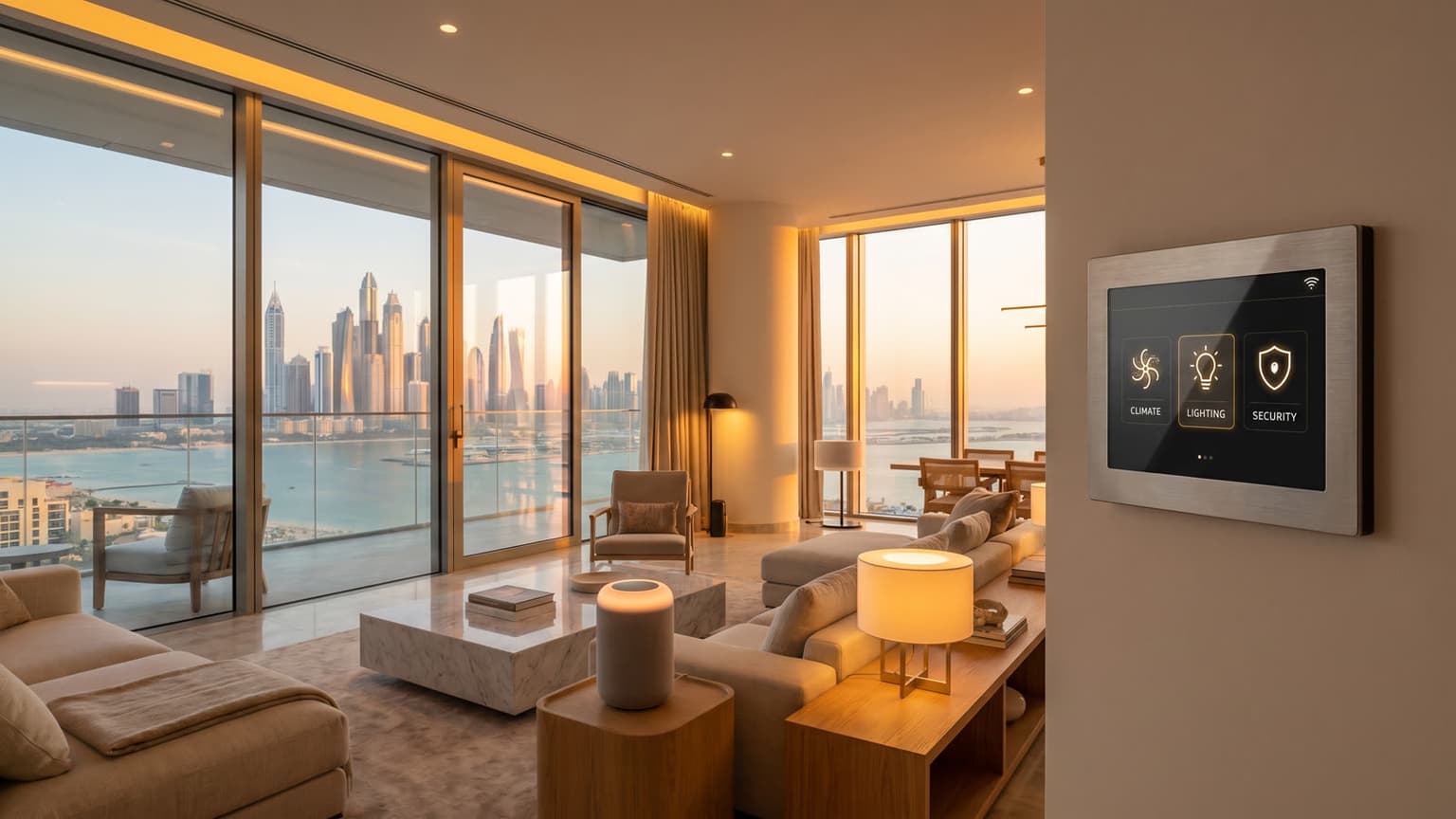
If you've been thinking about turning your Dubai property into a smart home, you aren't alone. Home automation in Dubai has gone from a luxury villa add-on to something that tenants in JVC apartments are asking their landlords about. The technology has matured, the costs have dropped, and with DEWA bills climbing every summer, the energy savings argument practically makes itself.
But here's the thing. Most articles about home automation read like they were written by the product marketing team at Google or Amazon. They tell you smart homes are "the future" without telling you what it actually costs to set one up in a two-bedroom flat in Business Bay, or whether your building's Wi-Fi can even handle it.
This guide covers the real numbers, the real challenges, and the practical steps to get home automation working in Dubai properties - from studio apartments to six-bedroom villas.
What Counts as Home Automation in Dubai?
Home automation is any system that lets you control lighting, climate, security, or appliances through a central hub, phone app, or voice commands. In Dubai, the most common setups fall into three categories:
Basic (AED 2,000 to AED 8,000): Smart lighting, a couple of smart plugs, a voice assistant like Alexa or Google Home, and maybe a smart thermostat. This is what most people start with.
Mid-range (AED 8,000 to AED 25,000): Automated blinds, smart locks, a full CCTV system, multi-room audio, and an integrated app that ties everything together. Popular with villa owners in Arabian Ranches and Jumeirah.
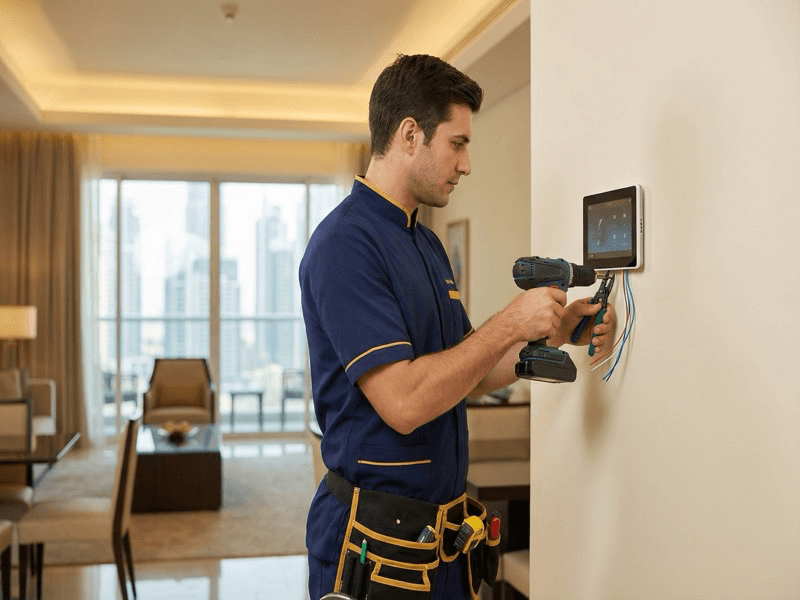
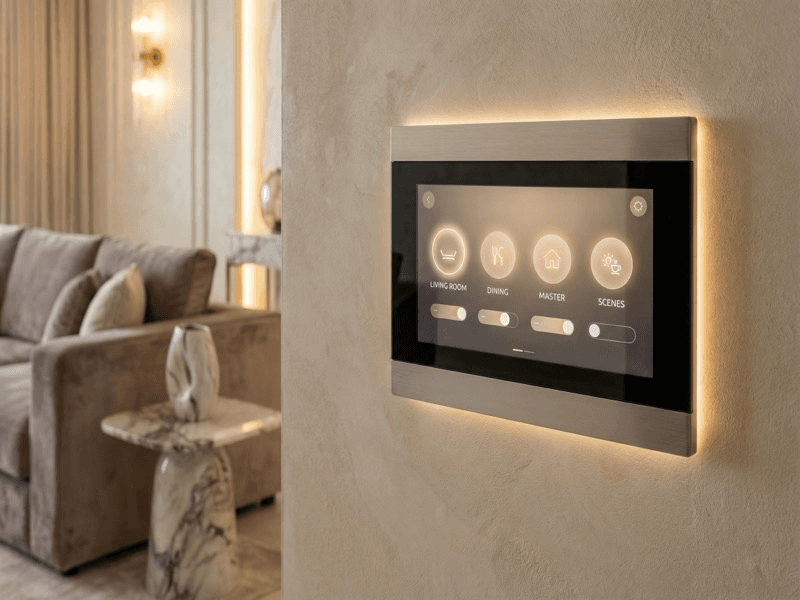
Full system (AED 25,000 to AED 100,000+): Centralised control via KNX, Crestron, or Control4. Motorised curtains across every room, automated irrigation, multi-zone AC control, and a dedicated touchscreen panel. Common in new builds on Palm Jumeirah and Emirates Hills.
The price gap is wide because "home automation" can mean a AED 150 smart bulb or a AED 80,000 whole-house system. Knowing where your needs sit saves you from overspending or under-building.
Why Home Automation Makes Particular Sense in Dubai
Dubai's climate and lifestyle create specific use cases that don't apply in London or Sydney:
DEWA Bill Reduction
The average villa owner in Dubai spends AED 2,500 to AED 5,000 per month on DEWA during summer. Smart thermostats and automated AC scheduling can reduce cooling costs by 15 to 25 percent. That's AED 375 to AED 1,250 in monthly savings during peak months. A smart thermostat pays for itself within a single summer.
Motion sensors that turn off lights in empty rooms, smart plugs that kill standby power, and automated blinds that close during peak sun hours all chip away at the bill. One of our clients in Mirdif cut their annual DEWA bill by AED 6,400 after installing automated blinds and smart AC controls.
Security for Frequent Travellers
Dubai residents travel more than most. Smart security keeps eyes on your property from anywhere in the world. Video doorbells, smart locks with temporary access codes for cleaners, and motion-triggered cameras with phone alerts mean you're never truly away.
Dealing with Maintenance Remotely
Water leak sensors aren't glamorous, but they're possibly the most valuable smart device you can install in Dubai. A burst pipe in an empty apartment during August can cause AED 50,000 in damage before anyone notices. A AED 200 water sensor paired with an automatic shut-off valve catches it in minutes.
The Most Popular Home Automation Systems in Dubai
Not every system works equally well here. Wi-Fi reliability, local support, and compatibility with UAE electrical standards all matter.
Apple HomeKit
Works well if your household is fully Apple. Limited device selection compared to alternatives, but the privacy controls are strong and the app is clean. Best for: people who already own iPhones and iPads and want something that just works.
Google Home
The widest device compatibility in the UAE market. Works with Nest thermostats, most smart bulb brands, and dozens of third-party devices. Google Assistant handles multiple languages, which matters in Dubai's multilingual households. Best for: mixed-device households and anyone who wants maximum flexibility.
Amazon Alexa
Strong in the UAE with good Arabic language support. The Echo range is widely available, and Skills integration means you can control everything from AC to curtains. Best for: households that want voice control as the primary interface.
KNX and Crestron (Professional Grade)
These are wired systems installed during construction or major renovation. They cost significantly more but offer rock-solid reliability that Wi-Fi systems can't match. KNX is the standard specified by many Dubai developers for premium properties. Best for: new builds, major renovations, and anyone who wants a system that will work flawlessly for 15+ years.
Room-by-Room Automation Priorities for Dubai Homes
You don't need to automate everything at once. Where to start based on the biggest impact:
Living Areas
- Smart lighting (AED 150 to AED 400 per room): Scheduled to dim in the evening, automatic off when empty
- Automated blinds (AED 1,200 to AED 3,000 per window): Close during peak sun (10 AM to 4 PM) to reduce AC load
- Smart AC control (AED 500 to AED 1,500): Zone control so you aren't cooling rooms nobody uses
Bedrooms
- Smart lighting with sleep schedules: Gradually dim to warm tones before bedtime
- Smart AC: Pre-cool the room 30 minutes before you arrive, set to energy-saving mode while sleeping
- Blackout blind automation: Especially useful in Dubai where morning light hits hard by 5:30 AM in summer
Kitchen
- Water leak sensors (AED 150 to AED 300): Under the sink and behind the dishwasher
- Smart plugs for appliances (AED 80 to AED 150 each): Monitor energy use and kill standby power
- Smart smoke detectors: Linked to phone alerts, not just the building alarm
Entrance and Security
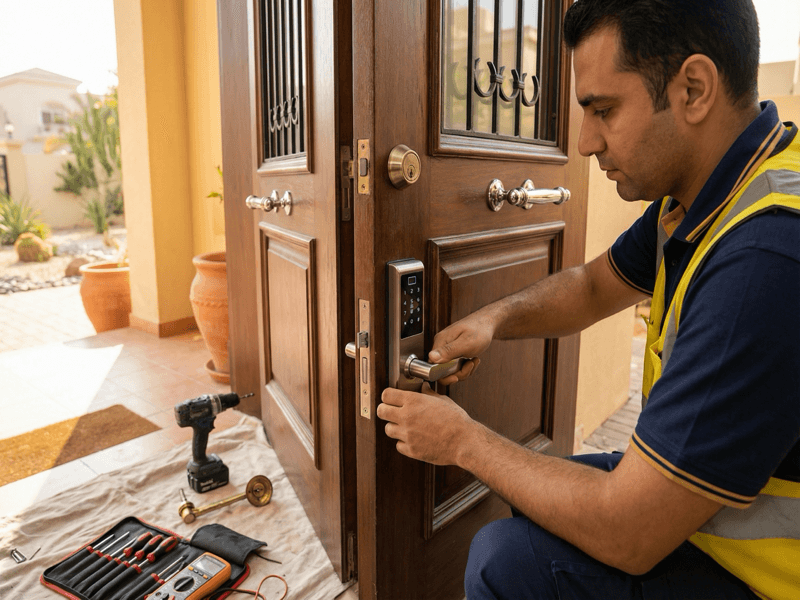
- Smart locks (AED 1,500 to AED 4,000): Keypad or fingerprint access, temporary codes for visitors and cleaning staff
- Video doorbell (AED 600 to AED 1,200): See who is at the door from anywhere
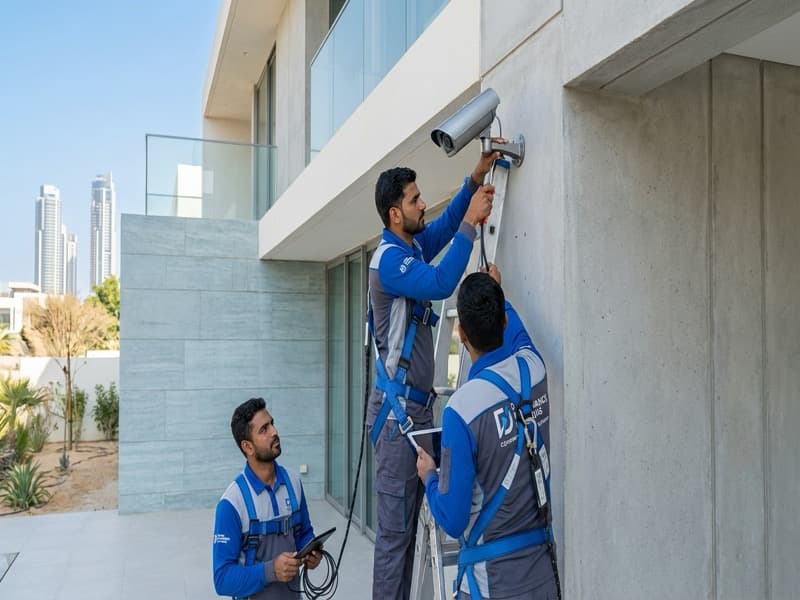
- CCTV cameras (AED 2,000 to AED 8,000 for a full system): We recommend wired POE cameras for reliability
Common Mistakes When Setting Up Home Automation in Dubai
Having installed smart home systems across hundreds of properties in Dubai, here are the mistakes we see most often:
Relying entirely on Wi-Fi. Dubai apartments often have thick concrete walls that kill Wi-Fi signals. If your smart lock is on the far side of the flat from your router, it will drop connection regularly. Solution: invest in a mesh Wi-Fi system or use Zigbee/Z-Wave devices that create their own mesh network.
Ignoring the electrical standard. UAE uses 220-240V with Type G (three-pin) sockets. Some imported smart devices are built for 110V North American systems. Always cheque voltage compatibility before buying.
Forgetting about guest access. In Dubai, your property might have a maid, a nanny, a building maintenance crew, and occasional guests all needing different levels of access. Plan your smart lock and security system with multiple user profiles from the start.
No backup plan for internet outages. If your entire home runs on cloud-based automation and your internet goes down, you're stuck. Good systems have local processing as a fallback, so basic functions like lights and AC still work offline.
Buying the cheapest option from Dragon Mart. We've replaced more budget smart switches from Dragon Mart than we can count. They work for a few months, then fail. Stick to established brands with UAE warranty support.
Do You Need a Professional Installer?
For basic setups - a few smart bulbs, an Alexa, a video doorbell - you can do it yourself. Most devices today are plug-and-play.
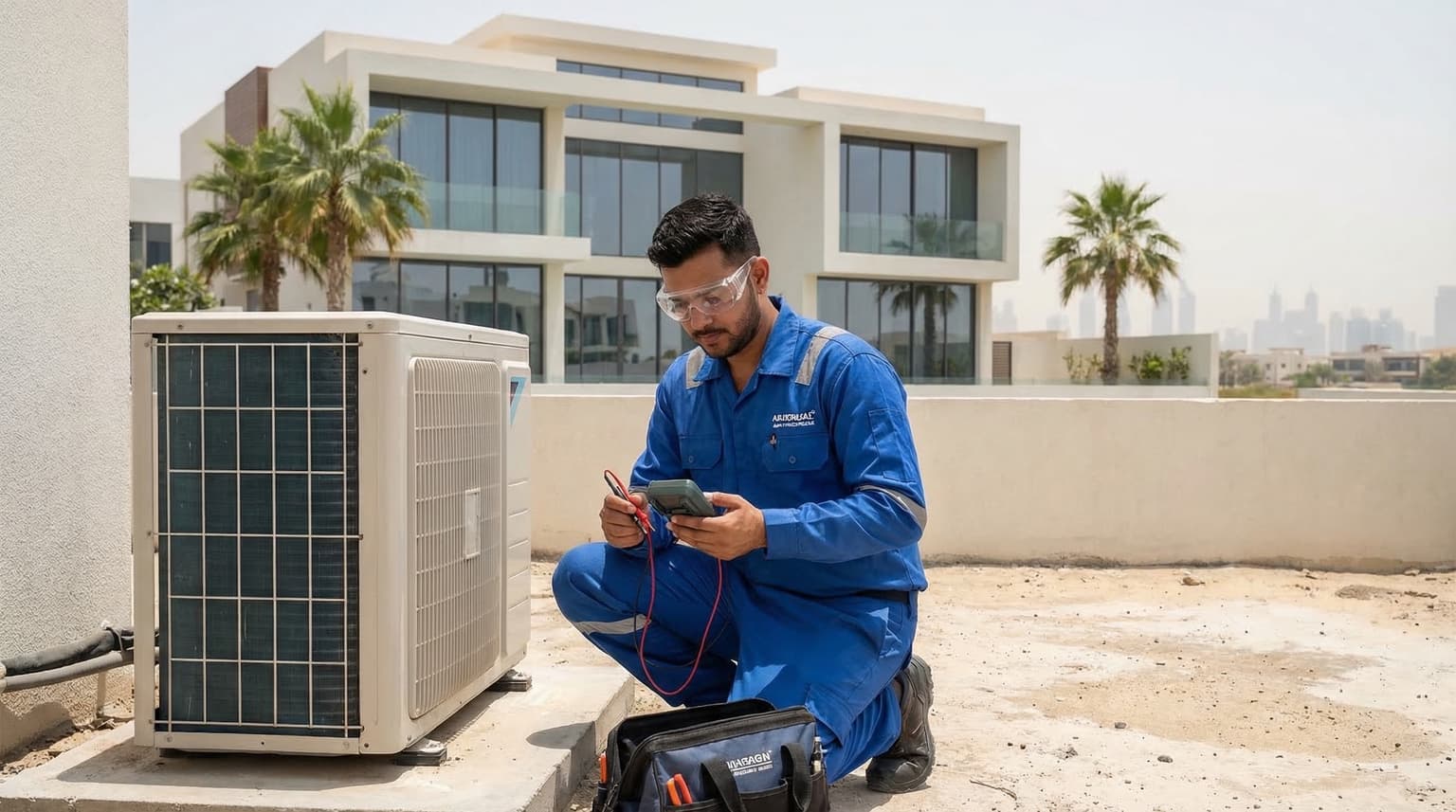
For anything beyond that, professional installation saves you headaches. Automated blinds need precise measurement and motor selection. CCTV systems need proper cable runs and NVR setup. Whole-house systems like KNX require certified electricians who understand the protocol.
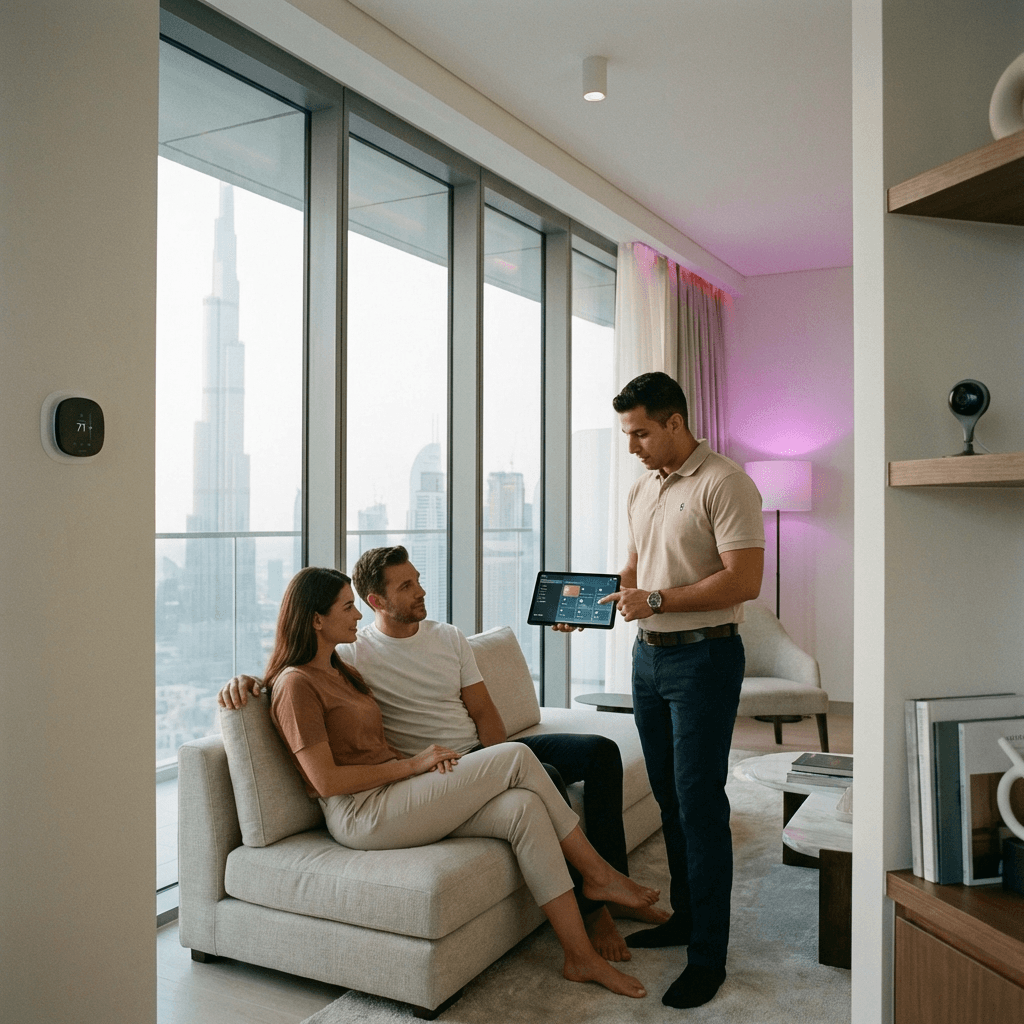
At European Technical, we handle everything from simple smart home consultations to full KNX installations. Our electricians are trained on the major platforms and can advise on what actually works in your specific property.
Tenant vs Owner: What You Can and Can't Do
If you're a tenant: You can install any wireless, non-permanent devices. Smart bulbs, smart plugs, wireless cameras, portable sensors. Anything that doesn't require drilling or rewiring. Some landlords will approve permanent installations if you ask - especially if it adds value to the property.
If you're an owner: You've full freedom. For villas, consider running Cat6 cable and smart switch wiring during any renovation. Retrofitting is always more expensive than building it in from the start.
Landlords renting out property: Smart locks with changeable codes between tenants, water leak sensors, and smart thermostats are worth the investment. They protect your asset and make the property more attractive to tenants.
How to Get Started with Home Automation in Dubai
Step 1: Assess your Wi-Fi. Run a speed test in every room. If you're getting below 20 Mbps in any room, sort out your network first with a mesh system.
Step 2: Pick your system. Choose Apple, Google, or Amazon as your primary platform. Mixing platforms creates compatibility nightmares.
Step 3: Start small. Begin with the highest-impact items: smart thermostat, automated blinds in sun-facing rooms, and a water leak sensor. See how you go for a month before expanding.
Step 4: Plan your budget. A solid basic setup costs AED 3,000 to AED 5,000. A mid-range system runs AED 10,000 to AED 20,000. Full KNX installations start at AED 30,000 and go up from there.
Step 5: Book a consultation. If you're spending more than AED 5,000 or want anything hardwired, get professional advice first. A 30-minute consultation can save you thousands in wrong purchases.
Frequently Asked Questions
How much does basic home automation cost in Dubai?
A basic smart home setup covering lighting, a voice assistant, and a couple of smart plugs costs between AED 2,000 and AED 8,000 depending on the size of your property. A mid-range system with automated blinds, smart locks, and CCTV runs AED 8,000 to AED 25,000.
Can I install home automation in a rented apartment in Dubai?
Yes, as long as you stick to wireless and non-permanent devices. Smart bulbs, plugs, wireless cameras, and portable sensors don't require any modification to the property. For permanent installations like smart switches or wired cameras, you'll need your landlord's written approval.
Does home automation actually reduce DEWA bills?
It does, measurably. Smart thermostats and automated AC scheduling typically reduce cooling costs by 15 to 25 percent. Automated blinds that close during peak sun hours further reduce AC load. Our clients consistently report annual DEWA savings of AED 3,000 to AED 7,000 after full automation.
Which smart home system works best in Dubai?
Google Home offers the widest device compatibility and good multilingual support, making it the most flexible choice for Dubai households. Apple HomeKit is excellent if your household is all-Apple. For permanent, high-end installations, KNX remains the industry standard specified by major Dubai developers.
Do I need a professional to install home automation?
For basic setups with smart bulbs and voice assistants, no. For automated blinds, CCTV systems, smart lock installations, or any hardwired system, yes. Professional installation ensures correct voltage compatibility, proper network configuration, and reliable long-term operation. Call us on +971 58 544 1160 or WhatsApp us for a free assessment.
Ready to Automate Your Dubai Home?
al's smart home team can help. We handle consultation, supply, installation, and ongoing support.
Browse our full smart home and automation services or book a consultation to get started. You can also cheque our CCTV installation guide and smart home maintenance tips for more information.
Call +971 58 544 1160 or WhatsApp us - we respond within the hour.