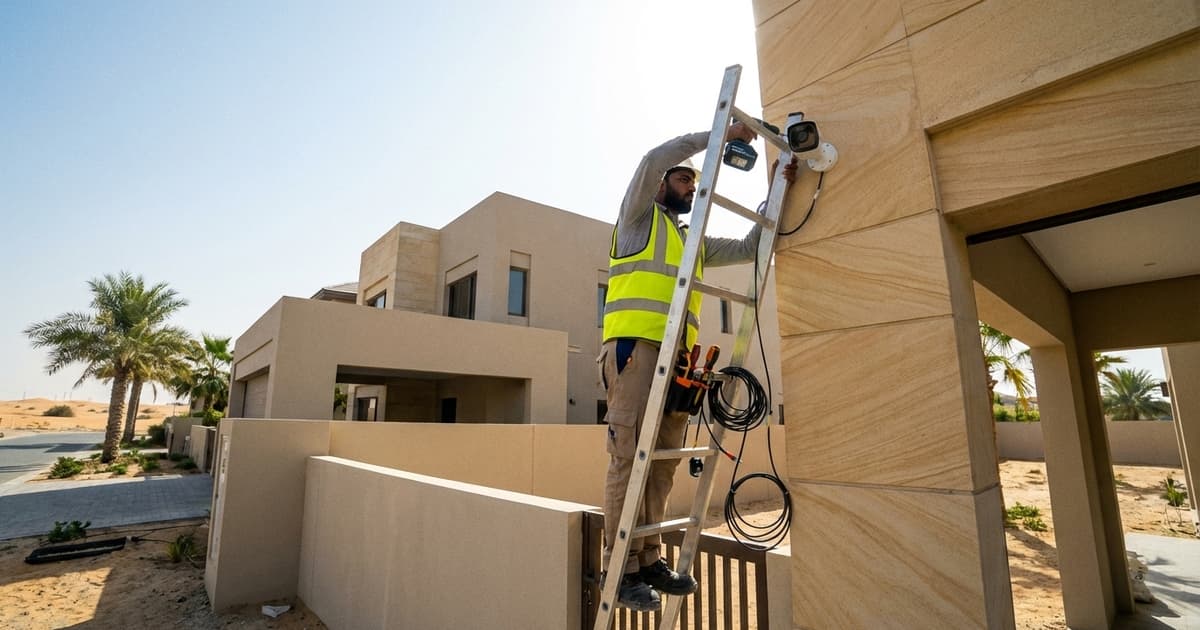
CCTV camera installation in villa communities and apartment buildings across Dubai has grown significantly over the past five years. With more families moving to residential developments like Arabian Ranches, Dubai Hills Estate and Jumeirah Village Circle, home security has become a priority. Dubai Police actively encourages residents to install CCTV systems as part of crime prevention initiatives, and most insurance providers offer discounts for properties with working camera coverage. The Security Industry Regulatory Agency (SIRA) regulates commercial installations, meaning businesses, warehouses and retail premises must use licensed contractors. Residential CCTV systems do not require SIRA approval, but homeowners must still follow privacy regulations and avoid pointing cameras at neighbouring properties or public areas beyond their boundary.
Types of CCTV Systems Available in Dubai
Analogue CCTV cameras are the most affordable option, typically offering 720p or 1080p resolution. They connect to a DVR (digital video recorder) using coaxial cables and work well for basic security needs, though image quality drops over longer cable runs. Analogue systems are often installed in smaller apartments, shops and budget villa setups where remote viewing is not a priority.
IP cameras are network-based devices that transmit footage over Ethernet or WiFi. They support resolutions from 1080p up to 4K Ultra HD, making them ideal for identifying faces, number plates and fine details. IP cameras connect to an NVR (network video recorder) and allow remote viewing through mobile apps from anywhere in the world. Most villa installations in Dubai now use IP cameras because of their image quality and flexibility.
Wireless CCTV cameras rely on WiFi for both video transmission and, in some models, power. They are easy to install without drilling holes or running cables through walls, which makes them popular for tenants and apartment dwellers. However, wireless systems depend entirely on a stable WiFi connection, and thick villa walls or long distances from the router can cause dropouts. Battery-powered wireless cameras need recharging every few weeks, which is less practical for permanent installations.
PoE (Power over Ethernet) cameras are considered the most reliable option for villa security. A single Ethernet cable delivers both power and data, reducing cable clutter and simplifying installation. PoE systems do not rely on WiFi, so they work even if the internet connection drops. They are less vulnerable to interference and provide stable, high-quality footage. Most professional CCTV installers in Dubai recommend PoE systems for long-term reliability.
Popular brands in the UAE include Hikvision and Dahua, both Chinese manufacturers offering solid performance at mid-range prices. Uniview is another budget-friendly option with good night vision capabilities. Axis is the premium choice, used in commercial properties and high-end villas, with advanced analytics and weatherproofing. For DIY installations, Ring and Eufy offer plug-and-play wireless options that connect to smartphone apps without needing professional setup.
How Many Cameras Do You Need
A typical villa in Dubai needs between four and eight cameras to cover all entry points and vulnerable areas. The minimum setup includes one camera at the front gate, one covering the main entrance door, one monitoring the parking area and one at the rear garden or service entrance. Larger villas with five or six bedrooms often add cameras for the side garden, pool area and external stairways. Corner-mounted cameras provide the widest coverage, and positioning them at second-floor level makes them harder to tamper with.
Apartment residents usually install one or two cameras. A single camera covering the main entrance is sufficient for studio and one-bedroom units. Two-bedroom apartments benefit from a second camera on the balcony, especially in ground-floor or low-rise buildings where access from outside is easier. Doorbell cameras like Ring or Eufy are popular in apartments because they do not require complex wiring and can be removed when moving out.
Warehouses, offices and retail premises need eight to sixteen cameras or more depending on the size of the property. Commercial installations must comply with SIRA regulations, which means hiring a licensed contractor and submitting installation plans to the authorities. Shops in malls typically install cameras at the entrance, checkout counter, storage area and above high-value displays.
A typical coverage plan for a four-bedroom villa in Dubai would place two cameras at the front (gate and entrance), one covering the driveway and parking, one at the rear garden, and one monitoring the side access or pool area. This provides full perimeter coverage without blind spots.
Cost Breakdown for CCTV Installation in Dubai
A basic four-camera system with installation costs between AED 2,500 and AED 5,000. This typically includes four 1080p IP or PoE cameras, an NVR with 1TB storage, cables, mounting brackets and labour. The lower end of this range applies to analogue systems or DIY wireless setups, while professional PoE installations with branded equipment sit at the higher end.
An eight-camera villa system ranges from AED 5,000 to AED 12,000 depending on camera quality, whether the system is wireless or PoE, and the complexity of the installation. Villas with thick walls, long cable runs or multi-storey layouts require more labour time and materials, which increases the price. Adding outdoor-rated cameras with advanced night vision or PTZ (pan-tilt-zoom) functionality also pushes costs higher.
Premium 4K systems cost between AED 8,000 and AED 20,000. These setups use high-resolution cameras with AI features like person detection, vehicle recognition and facial identification. Premium systems often include larger NVRs with 4TB or 8TB storage, allowing months of footage retention without overwriting. Installation for premium systems takes longer because of the additional configuration and network setup required.
Monthly cloud storage subscriptions range from AED 30 to AED 100 depending on the number of cameras and how much footage you want to store. Cloud storage is useful for off-site backups in case the NVR is stolen or damaged, but it requires a stable internet connection and adds ongoing costs. Many villa owners prefer local NVR storage, which is a one-time cost of AED 500 to AED 1,500 depending on hard drive capacity.
Installation labour is usually between AED 500 and AED 1,500 depending on the number of cameras, cable routing difficulty and whether the installer needs to drill through concrete or external walls. Some companies include installation in the package price, while others charge separately. Always confirm whether VAT, cabling and configuration are included in the quoted price.
Legal Requirements for CCTV in Dubai
Homeowners cannot point cameras at neighbouring properties, shared corridors or public footpaths beyond their boundary. Dubai privacy laws protect individuals from being recorded without consent on private property that is not their own. If your camera accidentally captures part of a neighbour's garden or balcony, you must adjust the angle or apply privacy masking through the camera settings.
Recording audio is illegal without the consent of everyone being recorded. Most CCTV cameras have built-in microphones, but you should disable audio recording unless you have explicit permission from anyone entering the monitored area. This is especially important for commercial premises where employees and customers are present.
SIRA licensing is mandatory for any company installing CCTV systems in commercial properties, including offices, warehouses, retail shops and industrial facilities. Only SIRA-licensed contractors can submit installation plans and obtain approvals for commercial projects. Residential installations do not require SIRA approval, but hiring a licensed contractor ensures the system meets technical and legal standards.
Data storage regulations require that CCTV footage is kept secure and not shared with third parties without a legal reason. In the event of a crime, you may be asked to provide footage to Dubai Police. Some homeowner associations in gated communities have additional rules about camera placement and whether footage can be shared with security staff.
Dubai Municipality building regulations require that cameras mounted on external walls do not obstruct drainage, ventilation or access routes. In some developments, property management approval is needed before installing visible cameras on balconies or shared external areas. Check your tenancy agreement or community guidelines before proceeding with installation.
When to Call European Technical
If you need a professional CCTV installation in a villa, apartment or commercial property, European Technical provides full system design, installation and ongoing support. Our team works with all major brands and can recommend the best setup for your property size, budget and security needs. We handle cable routing, network configuration and integration with existing smart home systems.
Visit our Security Systems page for more details or book now to get a free site survey and quote.
Frequently Asked Questions
Do I need SIRA approval for home CCTV installation?
No, residential CCTV systems do not require SIRA approval. SIRA licensing only applies to commercial properties like offices, shops and warehouses. However, using a SIRA-licensed contractor for your home installation ensures higher quality and compliance with technical standards.
What is the best camera for Dubai heat?
Outdoor-rated IP cameras with an IP66 or IP67 weatherproof rating are designed to handle Dubai temperatures, which can exceed 45°C in summer. Brands like Hikvision, Dahua and Axis produce cameras tested for Gulf climates. Make sure the camera has proper ventilation and avoid installing it in direct afternoon sun where possible.
Can I view my cameras on my phone when I am abroad?
Yes, most IP camera systems allow remote viewing through mobile apps. Your NVR or camera system needs to be connected to the internet, and you will need to install the manufacturer's app on your phone. Some systems require port forwarding or cloud services, which your installer can configure during setup.
How long does CCTV installation take?
A four-camera system in a villa typically takes four to six hours including cable routing and configuration. Larger installations with eight or more cameras can take a full day. Wireless systems are faster to install but take longer to configure and test for stable WiFi coverage.
Should I choose wired or wireless cameras?
Wired PoE cameras are more reliable, offer better image quality and do not depend on WiFi, making them the best choice for permanent villa installations. Wireless cameras are convenient for apartments or rental properties where you cannot run cables, but they are less stable and require regular battery changes or recharging unless plugged into mains power.
Get Your CCTV System Installed Today
Whether you need a basic four-camera setup or a full villa security system with remote monitoring, European Technical can design and install a solution that fits your property. Call 800 031 10015 or message us on WhatsApp here to book a free consultation and quote.