Understanding DEWA Electrical Inspection Requirements in Dubai
If you own a property in Dubai--whether it is a villa in Arabian Ranches, an apartment in Dubai Marina, or a townhouse in JVC--you will eventually need to deal with DEWA electrical inspections. These inspections are a mandatory part of any new electrical installation, major renovation, or connection to the grid. They exist to ensure safety, prevent fire and shock hazards, and maintain the reliability of Dubai's power network. This guide explains exactly what DEWA requires, how the process works, and what you need to do to pass first time.
Why DEWA Electrical Inspections Matter
DEWA (Dubai Electricity and Water Authority) sets the standards for all electrical work in the emirate. Their regulations are based on the seventeenth edition of the IET Wiring Regulations, adapted for Dubai's climate and infrastructure. The objective is to safeguard persons and property from hazards arising from the use of electricity. In a city where summer temperatures exceed 45°C and humidity often tops 80%, electrical systems face unique stresses. Poor wiring can lead to short circuits, fires, or electrocution. DEWA inspections catch these risks before they become disasters.
For property owners, a DEWA approval is also a legal requirement. Without it, you cannot get a permanent connection or complete a sale. Landlords and tenants alike should understand the process to avoid delays and extra costs.
The DEWA Inspection Process Step by Step
Step 1: Design and Documentation
Before any work begins, a certified electrical engineer must design the installation to comply with DEWA's Wiring Regulations. This includes selecting appropriate cables, circuit breakers, and equipment that meet the standards specified in DEWA's regulations. The design must be submitted to DEWA along with a load schedule and single-line diagram. For properties in Business Bay or Downtown, where high-rise buildings have complex electrical rooms, the documentation is particularly detailed.
Step 2: Installation by a Licensed Contractor
Only a licensed electrical contractor can carry out the installation. European Technical, for example, provides electrical services that comply with DEWA standards. The contractor must use materials that meet DEWA-approved specifications. All wiring, accessories, and equipment must be suitable for Dubai's environment--corrosion-resistant, heat-tolerant, and properly rated.
Step 3: Contractor's Own Inspection and Testing
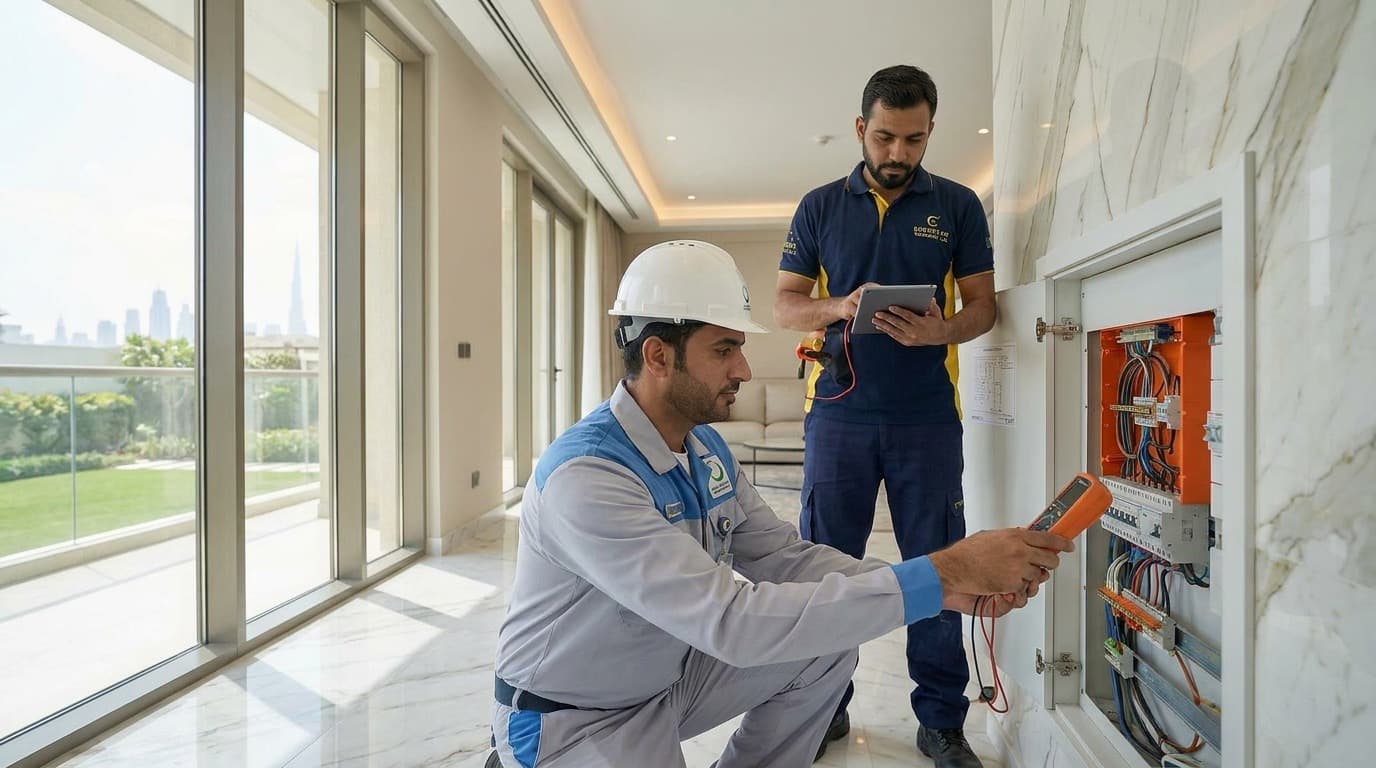
Before DEWA even sees the installation, the contractor must carry out a full inspection and testing of the entire electrical system. This is a critical step. DEWA states clearly: "Contractors shall carry out inspection and testing of the entire electrical installation prior to requesting for DEWA inspection." This includes checking continuity, insulation resistance, polarity, earth fault loop impedance, and operation of protective devices. A certified engineer must sign off on the results and submit documentation to DEWA.
Step 4: DEWA Inspection
Once the contractor confirms everything is in order, DEWA officials visit the site. They verify compliance with the approved design and regulations. They check the main distribution board, earthing system, wiring, and any special installations like swimming pools or air conditioning units. For properties with a basement substation--common in larger villas or commercial buildings--DEWA requires the transformer room to be in the first basement only, with the LV electrical room adjacent to the substation.
Step 5: Approval or Re-inspection
If the installation passes, DEWA issues an approval and connects the supply. If there are issues, a re-inspection is required. The first inspection may be free of charge, but subsequent re-inspections and re-testing incur charges. These fees add up quickly, so it pays to get it right the first time.
Common Reasons for DEWA Inspection Failures
Many property owners in Dubai face delays because of avoidable mistakes. Here are the most common issues:
- Incorrect cable sizing: Cables must be rated for the load and ambient temperature. In Dubai's heat, derating factors apply.
- Poor earthing: A proper earth electrode and bonding are essential. DEWA checks earth resistance values.
- Non-compliant equipment: Using cheap accessories that lack DEWA approval is a sure way to fail.
- Incomplete documentation: Missing test certificates or load schedules will halt the process.
- Access issues: DEWA inspectors need clear access to all panels and equipment. Cluttered electrical rooms cause delays.
A professional handyman can help with minor fixes, but for major electrical work, always use a licensed contractor.
Special Requirements for Different Property Types
Villas (e.g., Arabian Ranches, Emirates Hills)
Villas often have private substations or large LV panels. DEWA requires the LV electrical room to be adjacent to the substation space. For pools and outdoor lighting, additional bonding and RCD protection are mandatory. The garden area may need separate circuits for pumps and lighting.
Apartments (e.g., Dubai Marina, JVC)
In multi-storey buildings, the main electrical room is shared. DEWA inspects the building's common infrastructure, but individual apartment installations must still comply. If you are renovating your flat, you need a separate inspection for your unit's distribution board and wiring.
Commercial Properties (e.g., Business Bay, Downtown)
Commercial spaces have higher load demands and more complex systems. DEWA requires a dedicated transformer room if the load exceeds a certain threshold. Emergency lighting, fire alarms, and HVAC systems all fall under inspection scope.
How to Prepare for a DEWA Electrical Inspection
Preparation is key to passing on the first attempt. Follow these practical steps:
1. Hire a licensed contractor: Only DEWA-registered contractors can submit documentation. European Technical offers annual maintenance contract services that include pre-inspection checks.
2. Use approved materials: Check that all cables, switches, sockets, and panels carry DEWA approval marks.
3. Test before the inspection: Your contractor should perform a full suite of tests and provide a signed test certificate.
4. Organise documentation: Have the single-line diagram, load schedule, equipment datasheets, and test results ready.
5. Clear the area: Ensure the electrical room, meter cupboard, and all access points are unobstructed.
6. Check earthing: Verify that the earth electrode resistance is below 1 ohm for most installations.
Costs and Timelines
The cost of a DEWA inspection varies. Initial inspections may be free, but re-inspections typically cost between AED 200 and AED 500 depending on the scope. Contractor fees for testing and documentation range from AED 500 to AED 2,000 for a standard villa. The timeline from submission to inspection is usually 5-10 working days, but can be longer during peak seasons like summer when demand is high.
The Role of a Certified Engineer
DEWA requires that all documentation be submitted by a certified electrical engineer. This engineer takes responsibility for the design and compliance. If you are a property owner, you cannot bypass this step. Your contractor should have an engineer on staff or work with a consultancy. The engineer's seal on the test certificate is what DEWA looks for.
What Happens After Approval?
Once DEWA approves the installation, they connect the supply and issue a final bill. You then receive a DEWA account and can start using electricity. Keep all documentation for future reference--you may need it for property sales or insurance claims. For ongoing maintenance, consider a service plan to keep your electrical system in top condition.
Common Myths About DEWA Inspections
- Myth: Only new builds need inspections. Fact: Any significant electrical work--like upgrading a distribution board or adding a new circuit--requires DEWA approval.
- Myth: The contractor handles everything. Fact: While the contractor does the work, you as the property owner are ultimately responsible for compliance.
- Myth: DEWA inspections are just a formality. Fact: DEWA inspectors are thorough. They check every detail, from cable glands to label colours.
FAQ
What does DEWA check during an electrical inspection?
DEWA officials verify that the electrical installation complies with their Wiring Regulations. They check the main distribution board, earthing system, cable sizes, protective devices, and the overall safety of the installation. They also review documentation like test certificates and load schedules.
How much does a DEWA re-inspection cost?
The first inspection may be free, but each subsequent re-inspection and re-testing incurs charges. These fees typically range from AED 200 to AED 500, depending on the scope of work. The exact amount is set by DEWA and can change, so check their latest tariff.
Can I do my own electrical work and still pass a DEWA inspection?
No. DEWA requires all electrical installations to be carried out by a licensed contractor. DIY work is not permitted and will fail inspection. Always hire a DEWA-registered contractor like European Technical to ensure compliance.
What happens if my installation fails the DEWA inspection?
If the installation fails, the contractor must rectify the issues and request a re-inspection. You will need to pay the re-inspection fee. Common fixes include correcting wiring errors, replacing non-compliant equipment, or improving earthing. Once fixed, DEWA will re-inspect.
How long does a DEWA inspection take?
The inspection itself usually takes 30 minutes to an hour for a standard villa or apartment. However, the overall process from submission to approval can take 5-10 working days. For complex commercial installations, it may take longer.
Do I need a DEWA inspection for a small repair like changing a socket?
No. Minor repairs like replacing a socket or light switch do not require DEWA inspection. However, any work that involves new wiring, additional circuits, or changes to the main distribution board does require inspection. When in doubt, consult a licensed electrician.
Final Thoughts
DEWA electrical inspections are not something to fear. They are a safeguard for your property and your family. By understanding the requirements, hiring a qualified contractor, and preparing properly, you can pass with confidence. Whether you are building a new villa in Arabian Ranches or renovating an apartment in JVC, the same principles apply. For professional help with electrical installations, inspections, and maintenance, European Technical is your trusted partner in Dubai. We also offer general maintenance services through our handyman team and can set you up with an annual maintenance contract to keep everything running smoothly. Stay safe, stay compliant, and enjoy the comfort of your Dubai home.