Why Your AC Stops Cooling During a Dubai Summer
It is 2 PM on a July afternoon. The temperature outside is pushing 48°C. You walk into your apartment in Dubai Marina expecting that familiar blast of cool air, only to find your AC blowing warm or barely managing to take the edge off the heat. In a city where air conditioning is not a luxury but an absolute necessity, a system that fails to cool can quickly become a serious problem.
Dubai presents a uniquely demanding environment for air conditioning equipment. The combination of extreme summer heat, persistent dust, and high humidity along the coast means your AC works harder here than it would in almost any other city in the world. When the cooling performance drops, the root cause usually traces back to a handful of common issues that are well understood and, in many cases, preventable.
Whether you live in a high-rise in Business Bay, a villa in Arabian Ranches, or an apartment in JVC, the underlying causes of poor cooling tend to be the same. Understanding what is happening inside your system helps you know when to attempt a simple fix and when to call for professional ac repair.
Dirty Air Filters: The Most Frequent Culprit
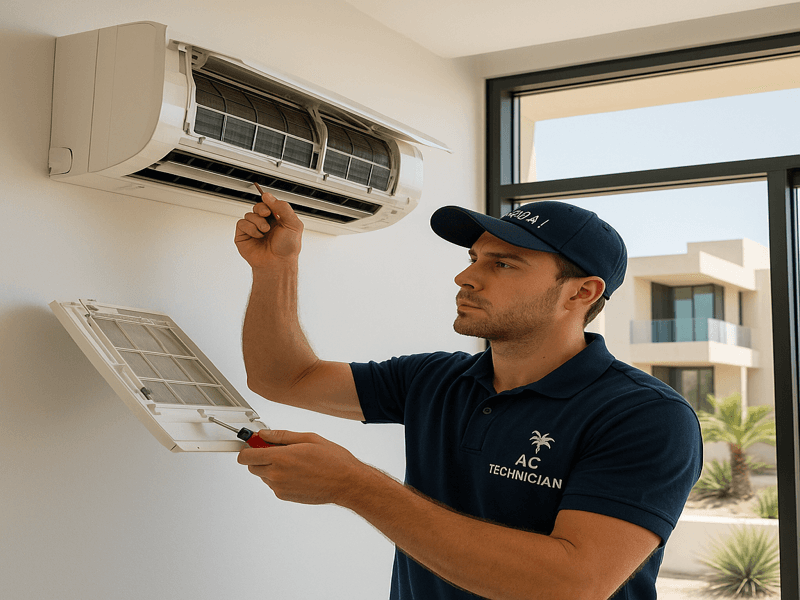
If your AC is running but the room temperature refuses to drop, the first thing to check is the air filter. Dirty or clogged air filters are the single most common cause of poor cooling performance in Dubai homes, particularly during the summer months when the system is running almost constantly.
Air filters trap dust, sand particles, and airborne debris before they enter the cooling system. In Dubai's dusty climate, these filters fill up much faster than they would in a less demanding environment. A clogged filter restricts airflow through the system, which means less cool air reaches your living space. The AC motor works harder to pull air through the blockage, and the cooling capacity drops significantly.
You might notice weak airflow from your vents, unusual noises from the indoor unit, or a room that simply never reaches the temperature you have set on the thermostat. In some cases, a severely blocked filter can cause the evaporator coil to freeze over, which stops cooling altogether.
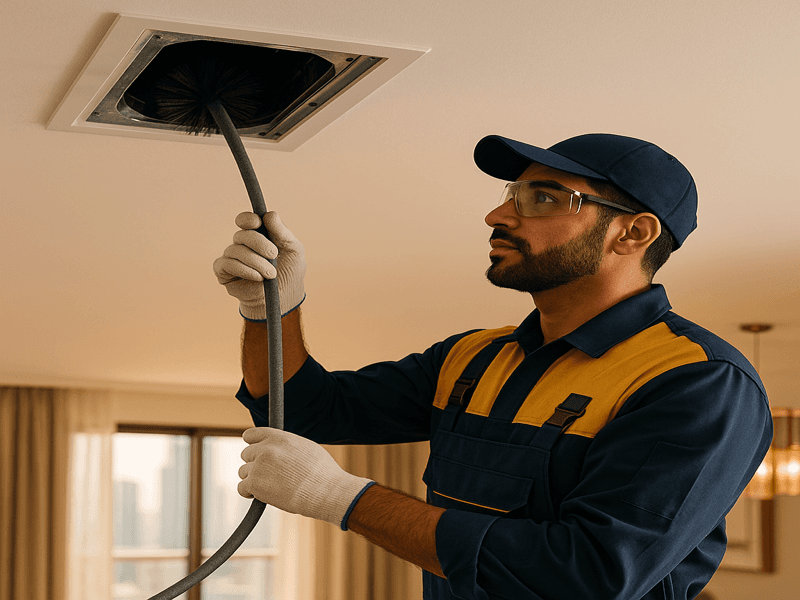
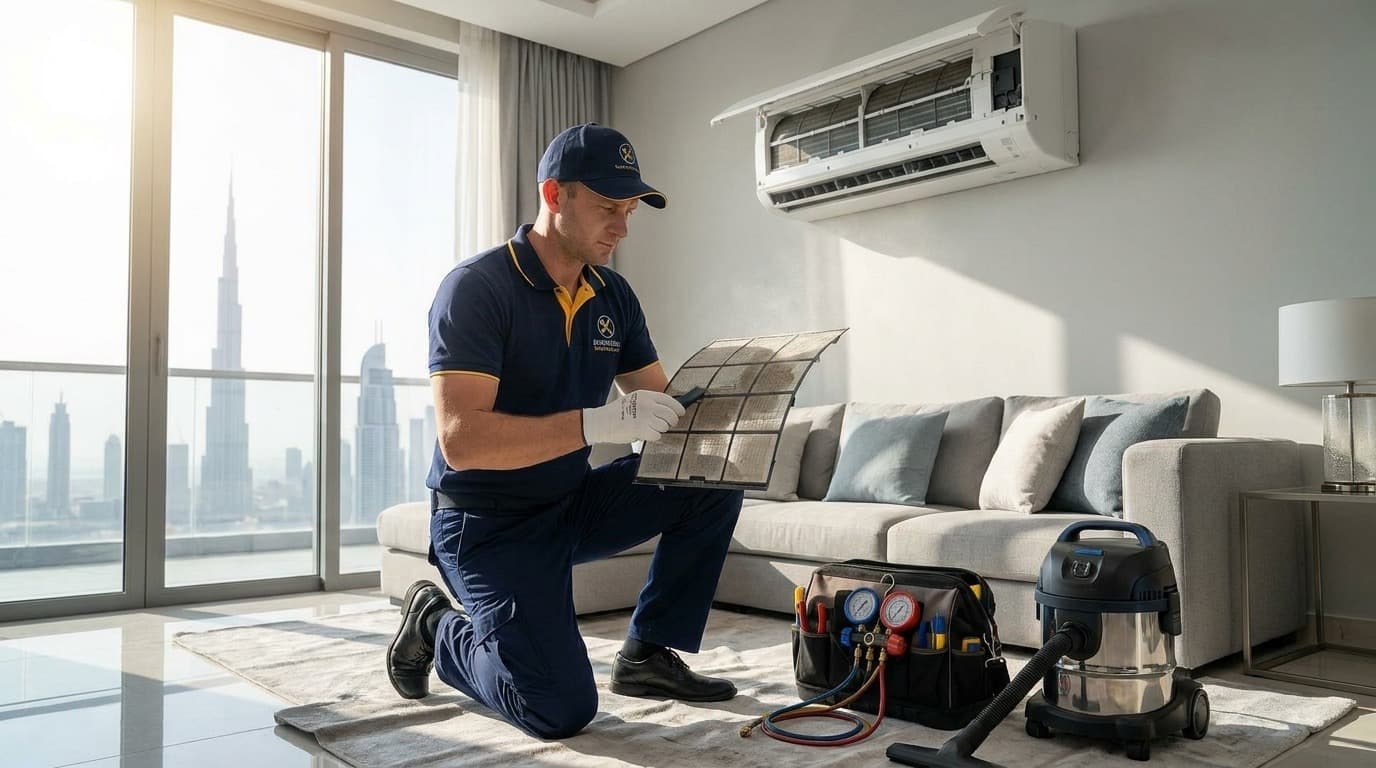
The fix is straightforward. Check your filters every two to four weeks during summer. Most filters in Dubai split and window units can be removed, vacuumed, and washed with mild soap and water. Let the filter dry completely before reinserting it. If the filter is damaged or has been in use for over a year, replace it. This single step resolves a surprising number of cooling complaints.
For residents in apartments where the building management handles AC maintenance, it is still worth asking when the filters were last cleaned. Many cooling problems in Dubai trace back to a simple oversight in the maintenance schedule.
Low Refrigerant Levels and Gas Leaks
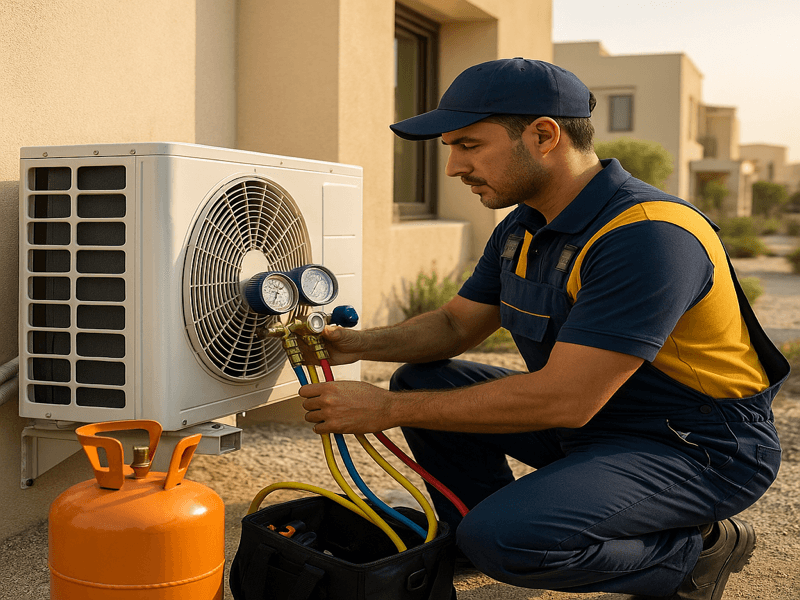
The refrigerant, commonly referred to as AC gas, is the substance that actually absorbs heat from your indoor air and releases it outside. If the refrigerant level drops, your AC cannot cool effectively no matter how long it runs. You might feel air coming from the vents, but it will not be cold enough to lower the room temperature.
Low refrigerant is almost always caused by a leak somewhere in the system. Refrigerant does not get consumed or burn away during normal operation. If your system is low on gas, it means there is a hole or crack in a coil, a loose fitting, or a failing valve allowing the gas to escape.
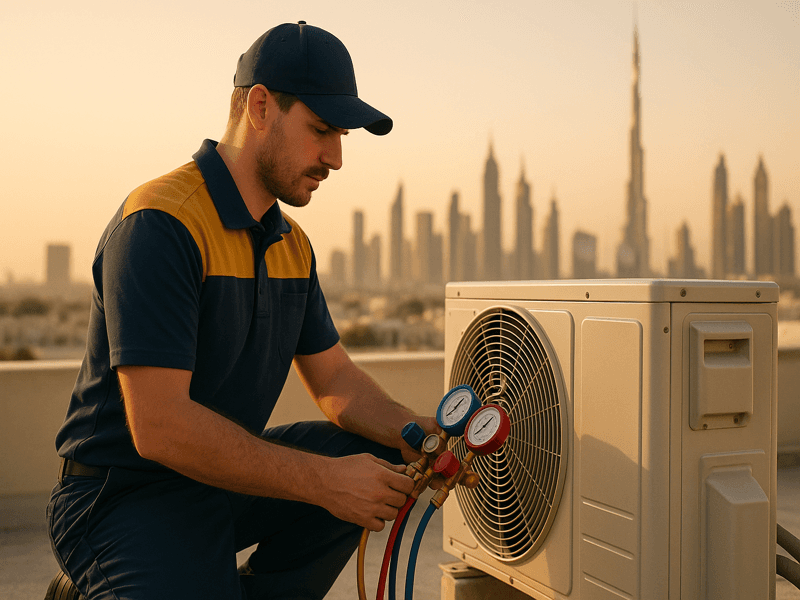
Signs of low refrigerant include warm air from the vents, ice buildup on the copper pipes connected to the outdoor unit, hissing sounds near the indoor or outdoor unit, and higher electricity bills as the system runs longer trying to reach the set temperature. Some residents also notice that their AC can manage 18°C in winter but struggles to get below 22°C in summer. That gap often points to a system that is not performing at full capacity due to insufficient refrigerant.
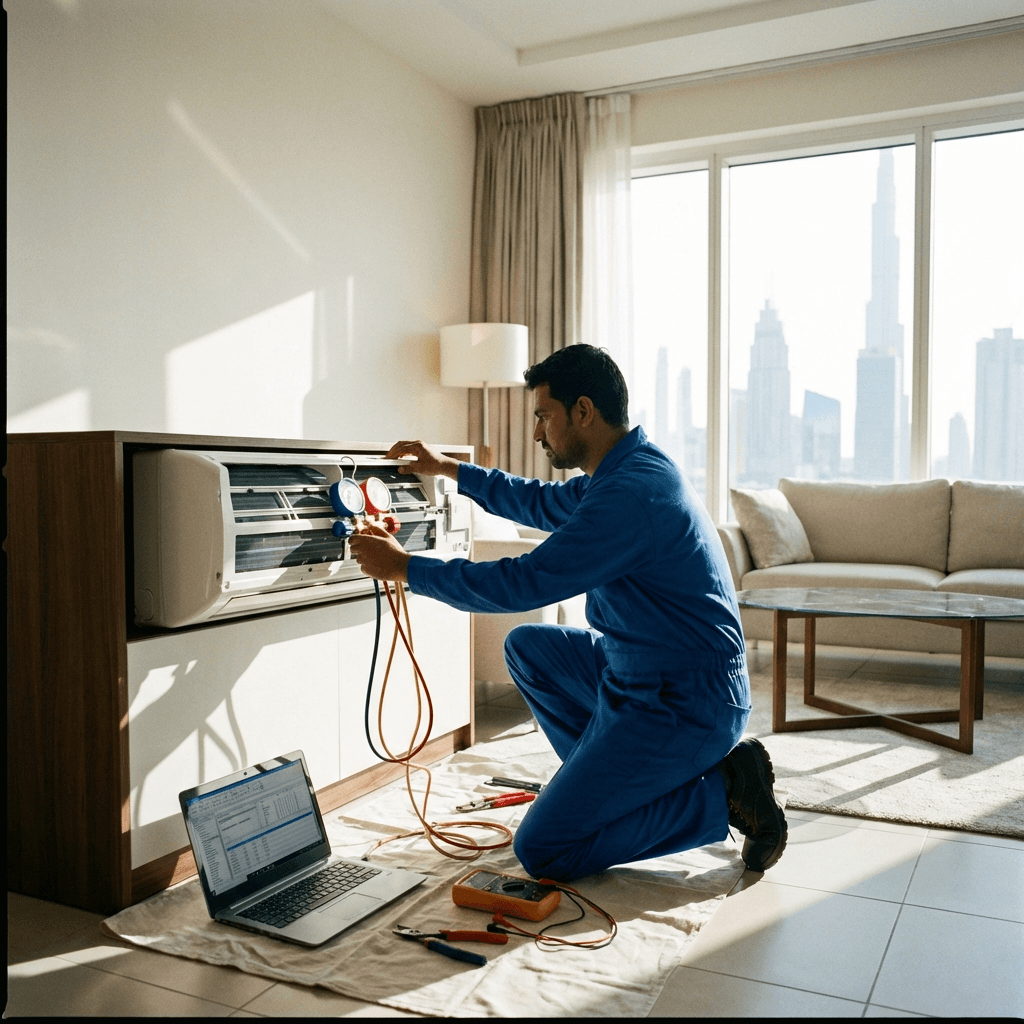
Recharging refrigerant is not a DIY task. It requires a licensed technician to identify the leak, seal it, and recharge the system with the correct type and quantity of gas. Using the wrong refrigerant or overcharging the system can cause serious damage to the compressor, which is the most expensive component to replace. If you suspect a refrigerant issue, arrange for a professional inspection rather than continuing to run the system.
Contaminated Coils and Blocked Outdoor Units
Your air conditioner has two sets of coils. The evaporator coil sits inside the indoor unit and absorbs heat from your room. The condenser coil is in the outdoor unit and releases that heat into the outside air. Both coils can become contaminated, and when they do, cooling performance suffers.
In Dubai, the outdoor condenser coil is particularly vulnerable. Dust, sand, and debris accumulate on the thin metal fins, creating an insulating layer that traps heat inside the unit. The condenser cannot release heat efficiently, so the entire cooling cycle slows down. You might notice the outdoor unit making more noise than usual, or the area around it feeling excessively hot.
Indoor evaporator coils can also become dirty, especially if the air filter has been neglected. A dirty evaporator coil absorbs less heat from your room, which means the air returning to your space through the vents is not as cool as it should be. In severe cases, the coil can freeze over completely, blocking airflow and stopping cooling altogether.
Cleaning coils requires more than a quick wipe. The fins are delicate and easily bent. Professional technicians use specialised chemical cleaners and fin combs to restore the coils without causing damage. If you live in a villa in Arabian Ranches or a townhouse in JVC, make sure the area around your outdoor unit is clear of plants, furniture, and stored items. Restricted airflow around the condenser is a common but easily fixed cause of poor cooling.
Regular ac maintenance includes coil cleaning as part of the standard service. Having this done before summer begins can prevent the majority of cooling failures that occur during June, July, and August.
Thermostat Problems and Electrical Faults
Sometimes the AC system itself is working fine, but the thermostat is giving it incorrect instructions. Thermostat issues are a common cause of cooling complaints, and they can be tricky to diagnose because the symptoms overlap with other problems.
If your AC does not respond when you change the temperature setting, runs continuously even when the room is already cold, or shows a temperature reading that does not match how the room actually feels, the thermostat may be faulty. Thermostats can lose calibration over time, develop loose wiring connections, or fail entirely. In older Dubai apartments, thermostats that have been in place for years may simply need replacement.
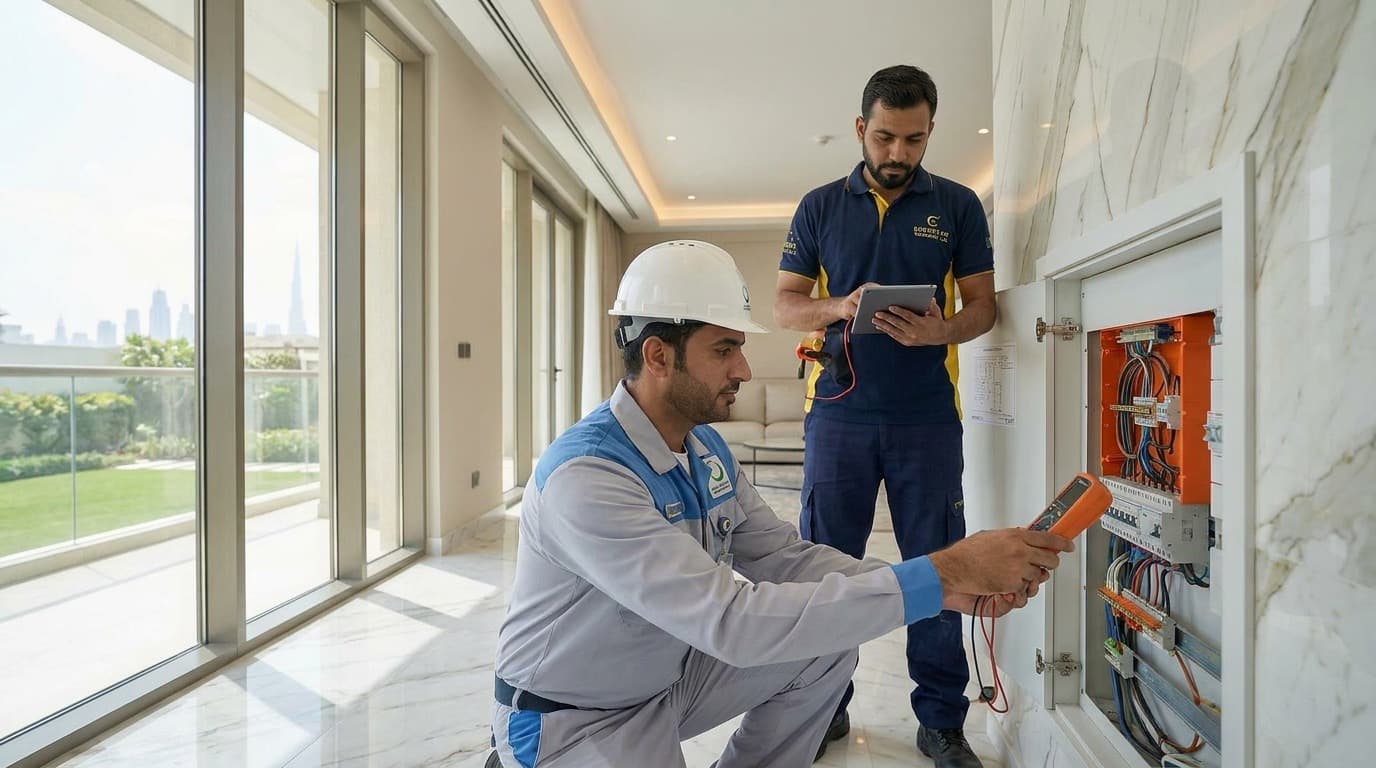
Electrical faults can also prevent the AC from cooling. A tripped breaker, a blown capacitor, or a failing contactor can stop the outdoor unit from running while the indoor unit continues to blow air. Since the indoor fan operates on a separate circuit, you will feel air from the vents but it will not be cold. If you notice that the outdoor unit is silent while the indoor unit is running, or if the breaker trips repeatedly when the AC starts, you likely have an electrical issue that needs professional attention.
Do not attempt to reset breakers repeatedly or open electrical panels yourself. Electrical faults in AC systems should be handled by a qualified technician who can safely diagnose and repair the issue.
The Impact of Dubai's Climate on AC Performance
Dubai's climate places demands on air conditioning systems that go beyond what most equipment was originally designed to handle. Summer temperatures regularly exceed 45°C, and the heat does not let up at night. Your AC runs for months without a break, maintaining indoor temperatures 20 to 25 degrees below the outside air.
Humidity adds another layer of difficulty. Coastal areas like Dubai Marina, Jumeirah, and Palm Jumeirah experience higher humidity levels than inland communities. When humidity is high, your AC has to remove moisture from the air as well as cool it. This extra load reduces the effective cooling capacity of the system. A unit that copes well in October may struggle in August simply because the moisture load has increased.
Dust is the third factor. Fine sand and dust particles infiltrate outdoor units, coat coils, clog filters, and settle in ductwork. Even homes that are kept meticulously clean will have dust entering the AC system through the return air path. This is why regular maintenance is not optional in Dubai. It is a necessity for keeping your system running at a level that can cope with the climate.
Some residents notice that their AC can only manage around 18°C in summer even though it could reach 16°C in winter. This is often a capacity issue. The system is sized to handle a certain heat load, and when outside temperatures push into the high 40s, the demand exceeds what the unit can deliver. In these cases, improving insulation, sealing gaps around doors and windows, and using blackout curtains can reduce the heat load and help the AC perform better.
When to Call a Professional
Some AC issues can be addressed with basic homeowner maintenance. Cleaning or replacing filters, checking thermostat settings, and ensuring the area around the outdoor unit is clear are all steps you can take yourself. However, many cooling problems require professional diagnosis and repair.
If you have cleaned the filters and the AC is still not cooling, if you suspect a refrigerant leak, if the outdoor unit is not running, or if the breaker keeps tripping, it is time to call a technician. Continuing to run a struggling system can cause secondary damage that turns a minor repair into a major one.
For Dubai residents, having a reliable maintenance company on hand is essential during summer. European Technical provides licensed AC services across Dubai, from emergency repairs to scheduled maintenance. An annual maintenance contract is one of the most effective ways to prevent cooling failures. Regular inspections catch problems early, keep filters and coils clean, and ensure refrigerant levels are correct before the peak summer heat arrives.
Properties in areas like Downtown Dubai, Business Bay, and JVC benefit particularly from scheduled maintenance because the AC systems in these buildings often serve multiple zones and run continuously. A maintenance contract typically includes two or three visits per year, filter cleaning or replacement, coil cleaning, refrigerant level checks, and a full system inspection. The cost of a contract is usually less than the price of a single emergency repair call during peak summer.
You can also arrange a one-off AC service if your system is underperforming and you want a professional assessment before committing to a maintenance plan.
Preventing AC Cooling Problems Before They Start
Prevention is always cheaper and less stressful than repair. The most important step you can take is to maintain your AC system regularly rather than waiting for it to fail. In Dubai's climate, that means checking filters monthly during summer, scheduling a professional service at least twice a year, and addressing any changes in cooling performance immediately rather than hoping they will resolve themselves.
Pay attention to early warning signs. If your AC takes longer to cool the room than it used to, if you hear unusual sounds, if you notice water dripping from the indoor unit, or if your electricity bill suddenly increases without a change in usage, something has changed in your system. These symptoms rarely improve on their own.
Keep the area around your outdoor condenser unit clear. Do not place plants, storage boxes, or drying racks near it. Ensure that furniture inside your home does not block return air grilles or supply vents. Restricted airflow is one of the simplest problems to fix but one of the most common causes of poor cooling.
If you are a tenant, report AC issues to your building management or landlord promptly. Most buildings in Dubai have a maintenance team or a contracted service provider, but they can only act if they know there is a problem. If you own your property, take responsibility for scheduling maintenance directly. Waiting until July to service your AC is a gamble that many Dubai residents lose every year.
Finally, consider the age of your system. AC units in Dubai have a shorter lifespan than in milder climates because of the constant demand. A system that is over eight to ten years old may simply be reaching the end of its serviceable life. If you are facing repeated repairs and rising electricity bills, it may be more cost effective to replace the unit rather than continue patching it up.
FAQ
Why is my AC running but not cooling my Dubai apartment?
The most common reasons are a dirty air filter, low refrigerant levels, or contaminated coils. Start by checking and cleaning the air filter, as this is the easiest fix and the most frequent cause. If the filter is clean and the AC still only blows warm or mildly cool air, you likely need a professional to check the refrigerant level and inspect the coils. In Dubai's climate, filters can clog within a few weeks, so regular cleaning is essential.
How often should I clean my AC filters in Dubai?
During summer, check your filters every two to four weeks. Dubai's dusty environment means filters fill up much faster than in other cities. If you live near the coast or in an area with ongoing construction, you may need to clean them more frequently. A clean filter improves cooling, reduces electricity consumption, and prevents the evaporator coil from freezing.
Can high humidity stop my AC from cooling properly?
Yes. High humidity forces your AC to work harder because it has to remove moisture from the air as well as lower the temperature. Coastal areas like Dubai Marina and Palm Jumeirah are particularly affected. When humidity is high, your AC may struggle to reach the set temperature even though the system is functioning correctly. Improving insulation and reducing the heat load with curtains or blinds can help the system cope.
How do I know if my AC needs more refrigerant gas?
Signs of low refrigerant include warm air from the vents, ice on the copper pipes connected to the outdoor unit, hissing sounds, and longer running times without reaching the target temperature. If your electricity bill rises sharply without a change in usage, this can also indicate a refrigerant issue. Only a licensed technician can safely check refrigerant levels, locate leaks, and recharge the system.
Is it worth getting an annual maintenance contract for AC in Dubai?
Yes. An annual maintenance contract typically includes regular filter cleaning, coil cleaning, refrigerant checks, and system inspections. In Dubai's climate, these checks prevent the majority of summer cooling failures. The cost of a contract is usually lower than a single emergency repair during peak season, and it extends the life of your equipment. For property owners and long-term residents, it is a practical investment.
What temperature should my AC be able to reach in a Dubai summer?
Most residential AC systems in Dubai are designed to maintain an indoor temperature of 22°C to 24°C when outside temperatures are at their peak. If your AC previously reached 16°C in winter but can only manage 18°C in summer, this may be a capacity limitation rather than a fault. However, if the system cannot get below 25°C or takes hours to cool a room, there is likely a maintenance issue that needs attention.