Home Insulation in Dubai: Reducing Energy Bills and Improving AC Efficiency
Dubai residents often pay 3-5 times more for cooling than comparable homes in temperate climates, yet most properties have minimal insulation. While building codes now mandate insulation standards, properties built before 2010 typically have inadequate thermal protection. Understanding where heat enters your home and setting up targeted insulation improvements can cut DEWA bills by 20-40% while making indoor spaces more comfortable.
Why Insulation Matters in Dubai's Climate
Dubai presents unique insulation challenges compared to cold climates where insulation primarily prevents heat loss. Here, insulation must block extreme heat gain from:
- Direct solar radiation: Roofs and west-facing walls can exceed 70°C surface temperature
- Radiant heat transfer: Hot surfaces radiate heat to cooler interior surfaces
- Air infiltration: Hot outdoor air entering through gaps forces AC to work continuously
- Thermal bridging: Concrete and metal conduct heat directly through building elements
A poorly insulated Dubai villa can gain 20,000+ watts of heat during peak afternoon hours. Your AC must remove this heat continuously, consuming massive electricity while struggling to maintain comfortable temperatures.
Where Dubai Homes Lose Cooling Efficiency
Roofs and Ceilings
Roofs absorb 60-70% of total building heat gain in Dubai. Dark-coloured roofs can reach 75°C while ambient temperature is 45°C. Without adequate insulation, ceiling temperatures inside homes hit 35-40°C, radiating heat downward even when AC runs continuously.
Signs of Poor Roof Insulation:
- Upstairs rooms noticeably warmer than ground floor
- AC runs constantly but temperature won't drop below 24-25°C
- Ceiling surfaces feel warm to touch
- Significant temperature difference between upstairs and downstairs (more than 2-3°C)
Walls and Façades
External walls exposed to afternoon sun can reach 60°C. West and southwest-facing walls create the worst heat gain, especially in mid-rise apartments where window-to-wall ratios are high.
Glass curtain wall buildings are particularly problematic - standard single-pane or basic double-glazed windows provide minimal insulation value in Dubai's heat.
Windows and Glazing
Windows account for 25-35% of cooling load in typical Dubai residences. Solar heat gain through glass is 10-20 times greater than through insulated walls. Large windows and floor-to-ceiling glazing popular in modern architecture create enormous cooling demands.
Air Leakage Points
Conditioned air escapes and hot air infiltrates through:
- Gaps around windows and door frames
- Penetrations for AC lines, electrical, and plumbing
- Recessed lighting fixtures
- Electrical outlets on external walls
- Attic access hatches
- Poorly sealed ductwork
Air infiltration can account for 15-25% of cooling costs in poorly sealed properties.
Insulation Materials for Dubai Conditions
Not all insulation works well in Dubai's climate. Material selection must consider heat resistance, moisture behaviour, and longevity under extreme temperatures.
Roof Insulation Options
Polyurethane Foam (PU/PUF):
- R-value: 6-7 per inch
- Best thermal performance available
- Moisture resistant
- Adheres to irregular surfaces
- Cost: AED 35-55 per square metre installed
- Expected life: 20+ years
Extruded Polystyrene (XPS):
- R-value: 5 per inch
- Excellent moisture resistance
- Good compressive strength
- Cost: AED 25-40 per square metre
- Expected life: 25+ years
Expanded Polystyrene (EPS):
- R-value: 3.5-4 per inch
- Budget-friendly option
- Adequate for moderate requirements
- Cost: AED 15-25 per square metre
- Expected life: 15-20 years
Reflective Foil Insulation:
- Works by reflecting radiant heat
- Effective in combination with air gaps
- Budget option for existing homes
- Cost: AED 12-20 per square metre
- Must have air field to function (25mm minimum)
Not Recommended: Fiberglass batts trap moisture in humid conditions, compress over time, and provide poor performance in Dubai heat. Mineral wool similarly performs poorly and creates dust concerns.
Wall Insulation
For New Construction or Major Renovations:
- Rigid foam boards (XPS/PU): 25-50mm thickness
- Spray foam: fills cavities and seals air gaps
- Insulated concrete forms (ICF): excellent but expensive
For Existing Buildings:
- Exterior insulation with render system (EIFS)
- Interior foam board with gypsum finish
- Reflective paint systems (modest improvement only)
External insulation is more effective than internal but requires building management approval in apartment blocks.
Window Treatments and Glazing
Window Film:
- Blocks 50-80% of solar heat gain
- Maintains visibility
- Cost: AED 35-80 per square metre installed
- Reduces fading of furnishings
- Can be retrofitted to existing windows
Double Glazing with Low-E Coating:
- Reduces heat gain by 40-60% vs. single pane
- Noise reduction benefit
- Cost: AED 350-600 per square metre
- Best during window replacement
- Argon-filled gaps improve performance
External Shading:
- Blocks sun before it reaches glass
- Motorized blinds or fixed shading
- Most effective solution
- Cost varies widely by system
DIY Insulation Improvements
Several cost-effective improvements don't require contractors:
Weatherstripping and Sealing
Air Sealing Priority Areas:
- Window and door frames (foam tape or caulk)
- AC line penetrations (spray foam)
- Electrical outlets on external walls (foam gaskets)
- Baseboards along external walls (caulk)
- Attic hatches (weatherstrip and insulation cover)
Cost: AED 200-500 in materials Typical savings: 5-10% on cooling bills Payback period: 3-6 months
Reflective Roof Coating
Cool roof coatings reflect 60-85% of solar radiation:
- Apply to clean, dry roof surface
- Recoat every 3-5 years
- Cost: AED 10-20 per square metre DIY
- Temperature reduction: 10-15°C on roof surface
White or light-coloured coatings work best. Avoid dark colours that absorb heat.
Door Draft Stoppers
Gaps under doors allow significant air infiltration:
- Install door sweeps on external doors
- Use draft stoppers at base of interior doors leading to cooled spaces
- Cost: AED 20-50 per door
- Immediate comfort improvement
Thermal Curtains and Blinds
Heavy curtains with thermal backing block radiant heat:
- Keep closed on sun-facing windows during day
- Lighter colours reflect more heat
- Track-mounted curtains seal better than rod-hung
- Cost: AED 80-200 per window
Cellular or honeycomb blinds trap air for additional insulation value.
Professional Insulation Projects
Major improvements require professional installation:
Roof Insulation Installation
Typical villa roof insulation project:
- Remove loose gravel/debris
- Repair any roof damage
- Install vapour barrier if needed
- Apply foam or board insulation
- Protective coating over insulation
- Cost: AED 18,000-35,000 for 3-bedroom villa
- Expected savings: 25-35% on cooling costs
- Payback period: 3-5 years
Attic Insulation
For homes with accessible attic spaces:
- Seal air leakage points first
- Install insulation between joists
- Add radiant barrier to underside of roof
- Ensure ventilation remains adequate
- Cost: AED 8,000-15,000
- Expected savings: 15-25% on cooling costs
External Wall Insulation
High-impact project for apartment and villa walls:
- Add rigid insulation board to exterior
- New render and paint finish
- Significant thermal improvement
- Cost: AED 65-120 per square metre
- Requires building approval for apartments
AC System optimisation With Insulation
Insulation upgrades should accompany AC system review:
Right-Sizing AC Units
Over-insulated homes might have oversized AC units that:
- Cycle on/off too frequently (reduces efficiency)
- Fail to dehumidify properly (comfort suffers)
- Consume more electricity than necessary
After major insulation improvements, consult AC professionals to verify your cooling capacity still matches your reduced load. You might be able to reduce AC capacity during next replacement, saving thousands.
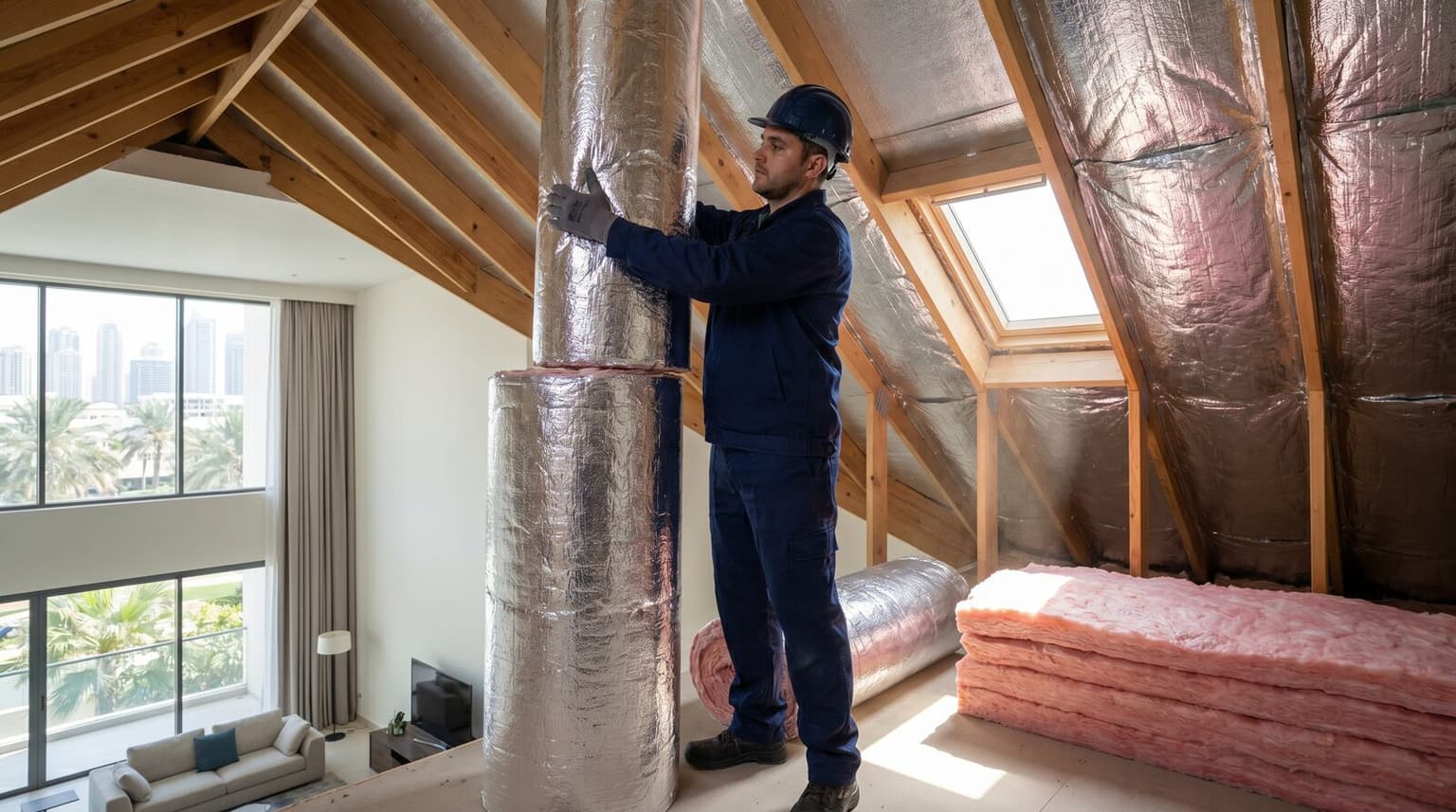
Duct Insulation and Sealing
Ductwork running through unconditioned spaces loses 15-30% of cooling capacity:
- Seal duct joints with mastic (not duct tape, which fails)
- Insulate ducts in attics and external areas
- Repair crushed or disconnected sections
- Cost: AED 2,000-6,000 for typical villa
- Savings: 10-20% on cooling costs
Smart Thermostat Integration
Insulated homes maintain temperature longer:
- programme temperature setbacks when away
- Pre-cool during cheaper rate periods
- Smaller temperature swings improve comfort
- Monitor actual usage to verify savings
DEWA Tariff optimisation
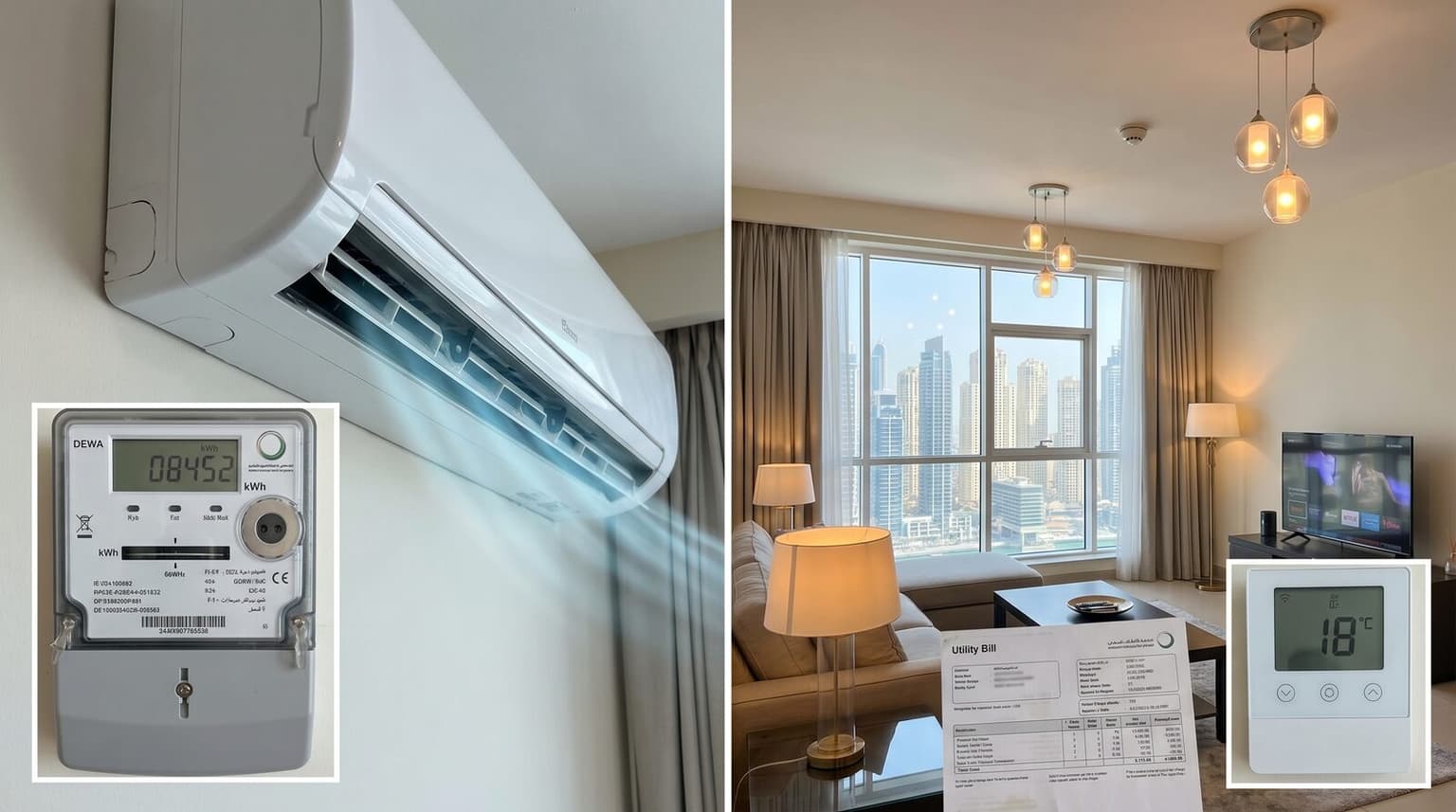
Understanding DEWA slab rates helps prioritise insulation:
Residential Tariffs (2024):
- 0-2,000 kWh: 23 fils/kWh
- 2,001-4,000 kWh: 28 fils/kWh
- 4,001-6,000 kWh: 32 fils/kWh
- 6,000+ kWh: 38 fils/kWh
Reducing consumption below slab thresholds saves at the highest rate. A villa consuming 8,000 kWh/month saves more per kWh reduced than a villa consuming 3,000 kWh/month.
Calculate your average monthly consumption from past bills. If you consistently exceed 4,000 kWh, insulation improvements deliver faster payback.
Building Code Requirements
Dubai Municipality updated insulation requirements in 2014:
Minimum Standards:
- Roofs: R-5.5 to R-7 depending on roof type
- Walls: R-2 to R-3.5 depending on construction
- Windows: Maximum U-factor 3.5 (better is lower)
Properties built before these codes often have minimal or no insulation. Older buildings benefit most from upgrades.
Return on Investment Analysis
Small Projects (AED 2,000-5,000):
- Weatherstripping and sealing
- Window film installation
- Thermal curtains
- Payback: 6-18 months
Medium Projects (AED 10,000-25,000):
- Attic insulation
- Duct sealing and insulation
- Roof coating
- Payback: 2-4 years
Large Projects (AED 30,000-80,000):
- Complete roof insulation
- Window replacement
- External wall insulation
- Payback: 4-7 years
Beyond energy savings, insulation improves:
- Comfort (more even temperatures)
- AC equipment life (reduced runtime)
- Property value (documented energy efficiency)
- Noise reduction (secondary benefit)
Common Mistakes to Avoid
Installing Insulation Without Air Sealing: Air leakage negates insulation benefits. Seal first, insulate second.
Blocking Ventilation: Roofs and attics need ventilation to prevent moisture buildup. Insulation must not block airflow paths.
Wrong Material Selection: Fiberglass and mineral wool absorb moisture in Dubai's humidity. Use closed-cell foams and rigid boards.
Ignoring Windows: Insulating walls and roof but leaving single-pane windows creates marginal improvement.
DIY Spray Foam: Professional application ensures proper thickness and coverage. DIY foam kits rarely perform as specified.
Professional Assessment and Implementation
Effective insulation strategies require analysis of your specific property:
- Thermal imaging to locate heat infiltration points
- AC load calculation based on actual heat gain
- Cost-benefit analysis of different improvement options
- Coordination with AC system optimisation
For complete energy efficiency improvements including insulation assessment and installation, European Technical's services cover evaluation through implementation.
Immediate Action Steps
- analyse your DEWA bills: Calculate average monthly consumption and costs
- Identify problem areas: Which rooms are hardest to cool? cheque roof access, windows, and walls.
- Start with air sealing: Weatherstrip and caulk gaps (immediate benefit)
- Add window treatments: Thermal curtains on sun-facing windows
- Get professional assessment: For major projects, thermal imaging identifies priorities
Insulation improvements pay for themselves through lower DEWA bills while making your home more comfortable. Start with high-impact, low-cost improvements and progress to major projects as budget allows. The investment improves both your daily comfort and your property's long-term value.