Who Fixes What in a Dubai Rental?
Every month, tenants across Dubai get into disputes with landlords about who pays for a broken AC, a leaking pipe, or a faulty electrical socket. Half the time, neither party knows the actual rules. The other half, one side is bluffing. This guide lays out exactly what you're responsible for as a tenant in Dubai, what the landlord must cover, and how to protect your security deposit from deductions you shouldn't be paying.
Your Lease Agreement Is the Starting Point
Dubai's rental market is governed by RERA (Real Estate Regulatory Agency, part of Dubai Land Department). Law No. 26 of 2007 and its amendments set the framework, but your individual lease (Ejari-registered) can specify additional terms as long as they don't contradict the law.
Key legal principle: Under Article 16 of Law No. 26 of 2007, the landlord is responsible for the property's maintenance unless the lease agreement states otherwise. But most standard RERA lease contracts in Dubai do shift minor maintenance to the tenant. Read your lease carefully — especially the maintenance clause, usually found in articles 7-10.
If your lease was drafted by a large property management company (like Wasl, Nakheel, Meraas, or Emaar), it likely includes a detailed breakdown. Smaller landlords using generic templates from Ejari tend to leave it vague, which is where disputes start.
Tenant Responsibilities — What You Pay For
As a tenant in Dubai, you're generally responsible for day-to-day upkeep and minor repairs. Here's the breakdown:
AC Maintenance
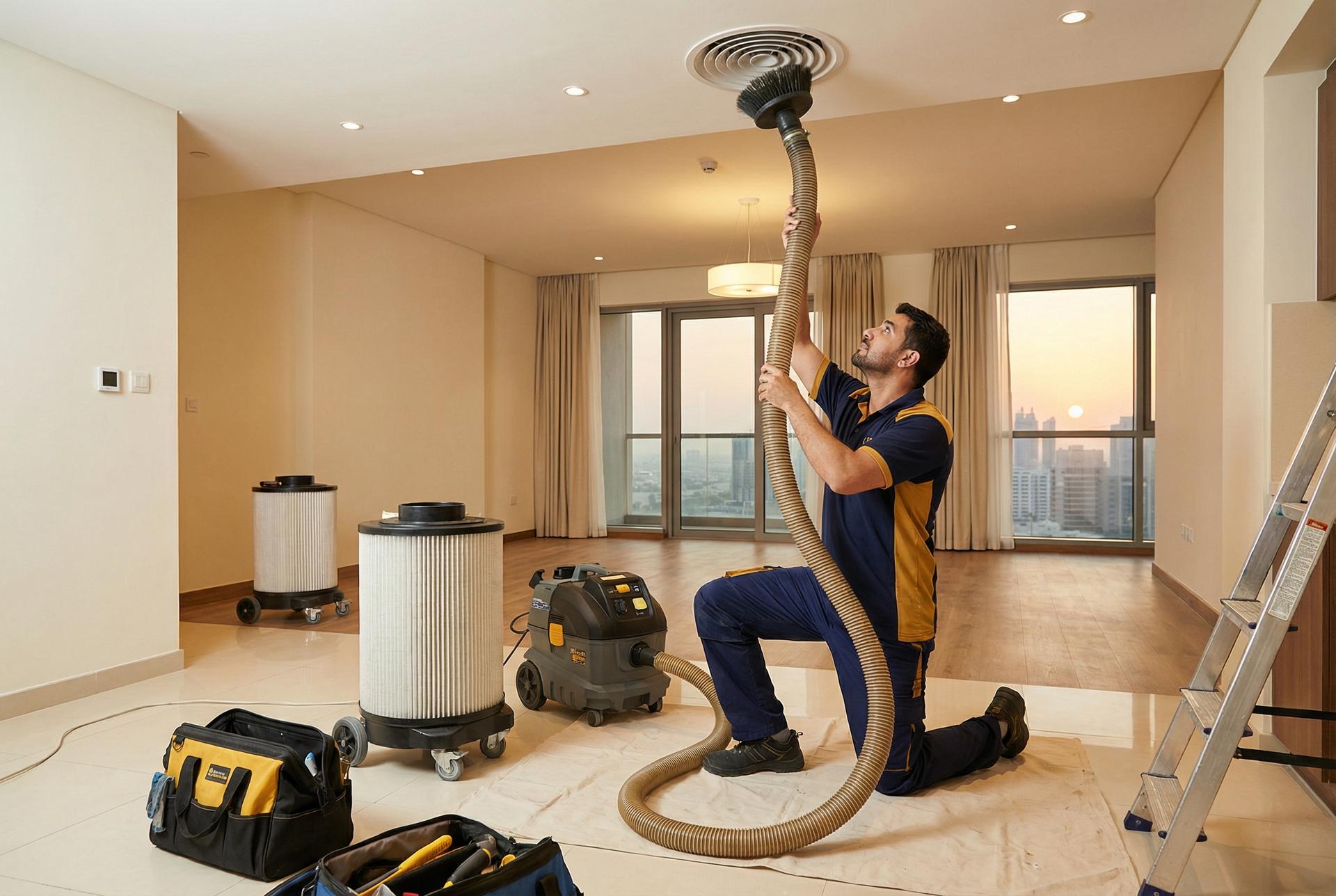
- Regular servicing — filter cleaning, basic coil wash, condensate drain clearing. This is your cost. Budget AED 300-600 per service for a typical apartment.
- Annual maintenance contracts (AMCs) — many landlords require you to hold one. Some buildings (like Emaar or Nakheel-managed towers) include AC servicing in the service charge, but most don't.
- Tip: Keep receipts for every AC service. When you move out, these prove you maintained the system. Without them, the landlord can deduct AC servicing costs from your deposit.
DEWA (Dubai Electricity and Water Authority)
- All consumption costs — electricity, water, and sewerage charges are 100% the tenant's responsibility.
- DEWA connection and disconnection — you pay the connection fee when moving in (AED 100 for an apartment, AED 300 for a villa, plus a refundable deposit of AED 2,000 for apartments or AED 4,000 for villas).
- District cooling (Empower, Palm Utilities, etc.) — treated like a utility. You register and pay directly. Connection deposits vary: AED 2,000-5,000 depending on the unit size.
- DEWA green billing — the landlord may have installed solar panels or smart meters, but you still pay the actual consumption billed to the premises.
Minor Repairs (Under AED 500)
- Replacing light bulbs, fuses, and batteries in smoke detectors
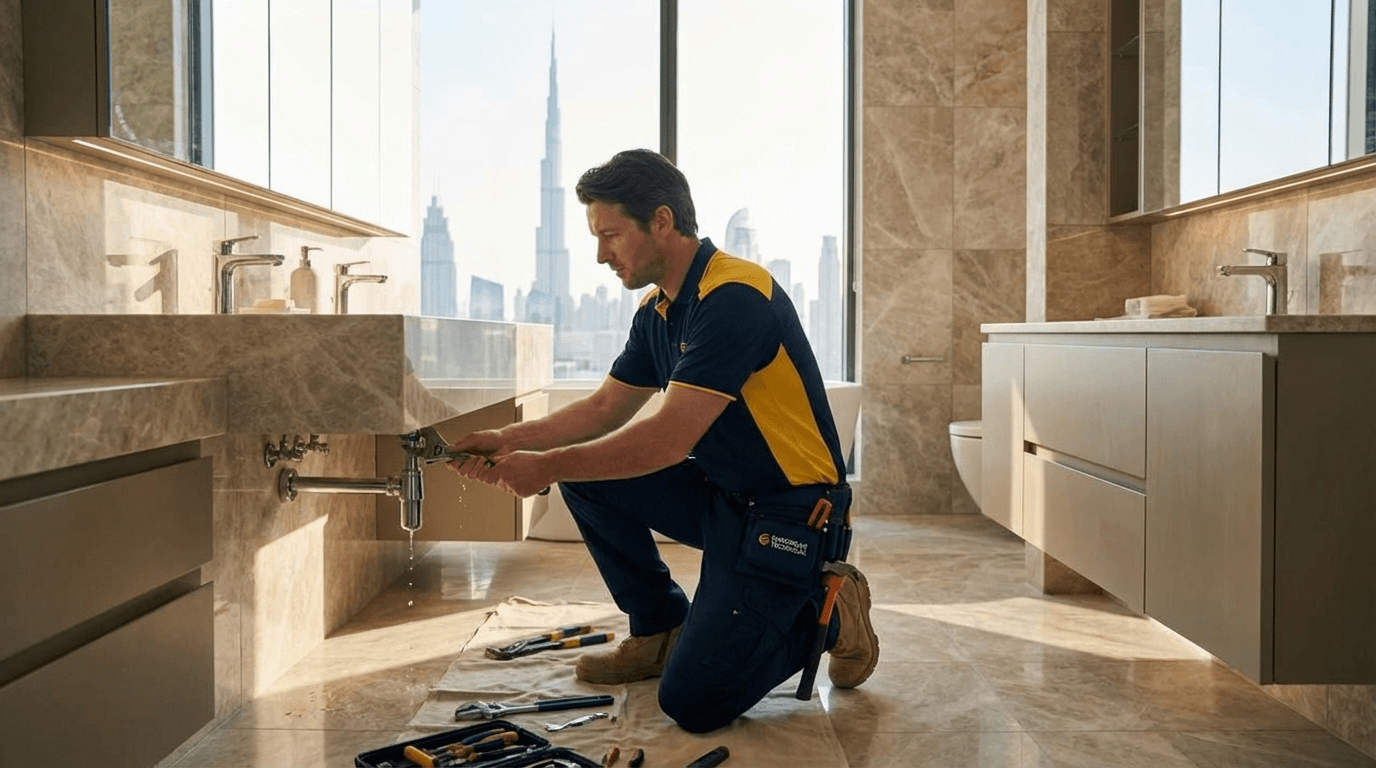
- Fixing dripping taps (new washers or cartridges)
- Unblocking sinks and toilets (unless caused by a structural defect)
- Replacing shower hoses, toilet seats, door handles
- Patching small wall holes from picture hooks
- Garden maintenance in villas (unless explicitly excluded in the lease)
Pest Control
- Routine pest control inside your unit is your responsibility. Most people book quarterly treatments — AED 150-300 per visit for an apartment.
- If the infestation originates from common areas or building structure (e.g., termites in the building frame, cockroaches from the garbage room), that's the landlord's or building management's problem.
Cleaning and General Upkeep
- Internal cleaning, obviously
- Balcony maintenance (keeping drains clear, not hanging items that violate building rules)
- Maintaining appliances you brought into the unit
- Keeping the unit ventilated to prevent mould (a common issue in Marina, JBR, and Palm-facing apartments during humid months)
Landlord Responsibilities — What They Pay For
Under Dubai law and standard lease terms, the landlord is responsible for maintaining the property's structural integrity and major systems.
Structural Maintenance
- Walls, floors, ceilings, foundations
- Windows and external doors (frame and glass — not locks you damaged)
- Roof leaks and waterproofing
- Balcony structural integrity
- Building facade issues
Major AC Repairs and Replacement
- Compressor failure — if a compressor dies from age or manufacturing defect, the landlord pays. If it dies because you never serviced the unit, they'll argue it's your fault (and they'll probably win at the Rental Dispute Settlement Centre).
- Unit replacement — when an AC unit reaches end of life (typically 10-15 years), replacement is the landlord's cost.
- Ductwork and major pipework — structural AC infrastructure is the landlord's responsibility.
- The grey area: Gas top-ups and minor part replacements (fan motors, PCBs) often fall into dispute. If your lease is silent on it, push back — these are wear-and-tear items, not tenant damage.
Plumbing (Major)
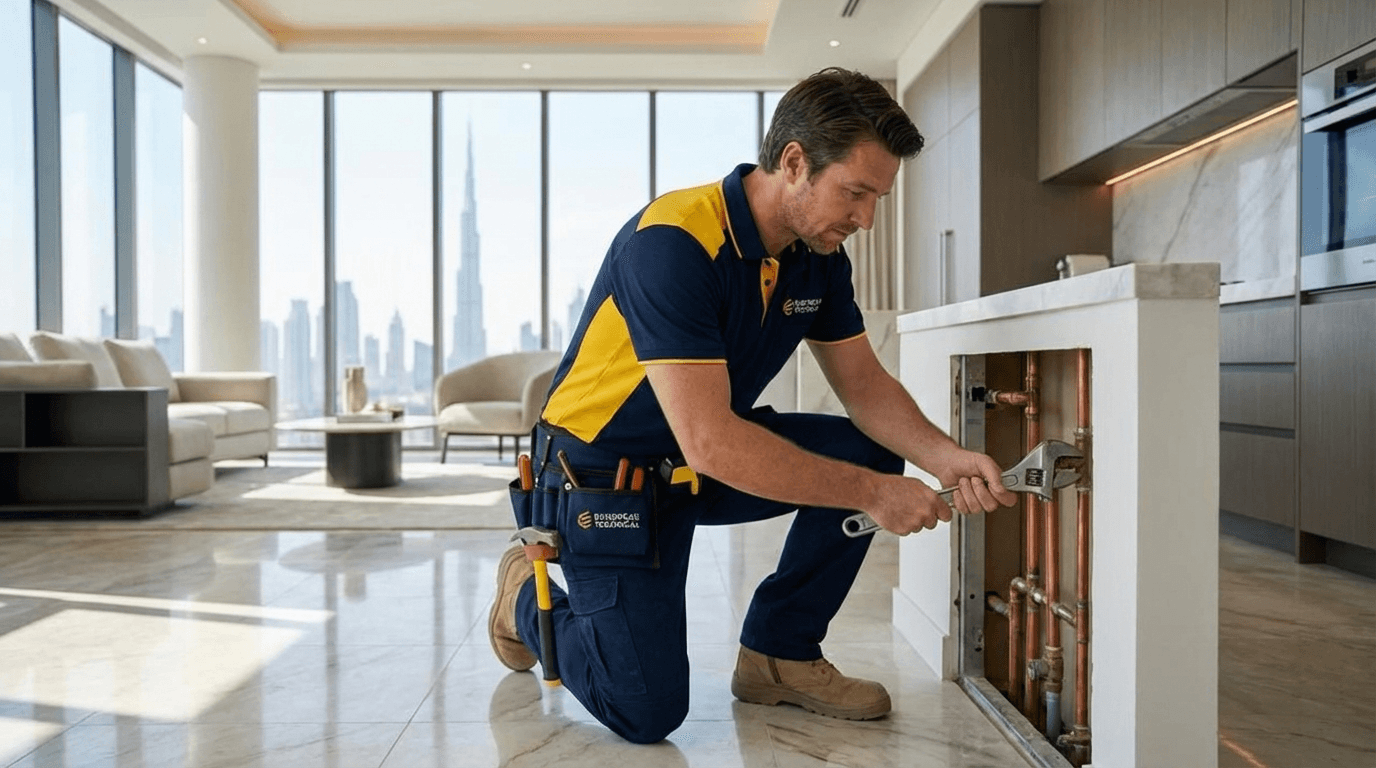
- Pipe bursts inside walls
- Sewer line blockages (main stack, not your toilet)
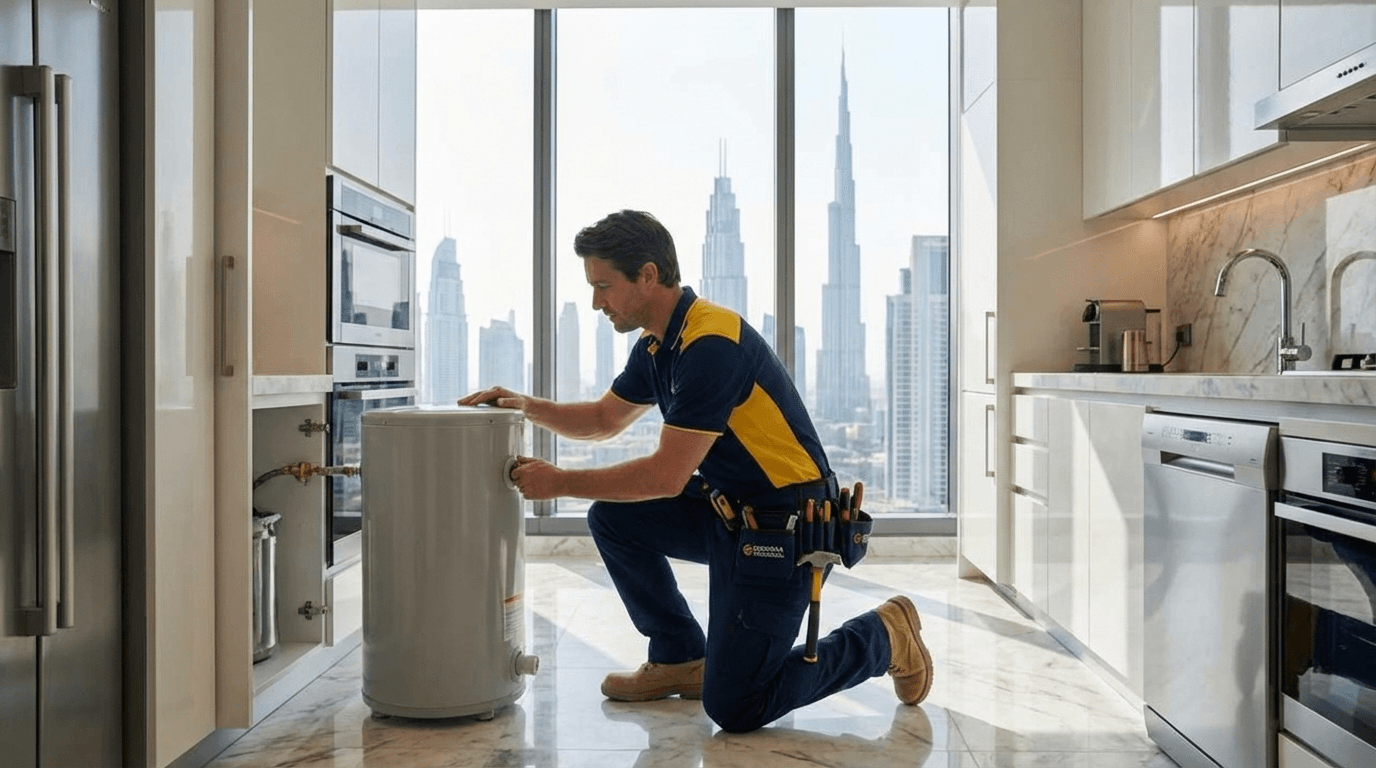
- Water heater replacement (if landlord-supplied)
- Water pump failures (villa main pump)
- Leaks from upstairs neighbours (building management handles, but your landlord should pursue on your behalf)
Electrical (Major)
- Main electrical panel (DB box) issues
- Wiring behind walls
- Faulty sockets or switches (not ones you broke)
- DEWA meter issues (contact DEWA directly for meter faults)
Appliances Supplied by the Landlord
- If the apartment came with a dishwasher, washing machine, oven, or fridge — the landlord replaces them when they fail from normal use. You maintain them (descale, clean filters), but replacement is their cost.
- Document everything at move-in. Take photos of every appliance, note the brand and model, and include them in a move-in inventory signed by both parties. Without documentation, disputes are your word against theirs.
The Grey Areas — Where Most Disputes Happen
Mould
Dubai's humidity from June to September causes mould in poorly ventilated apartments, especially in bathrooms without exhaust fans and bedrooms where wardrobes sit against external walls. If the mould is caused by a building defect (lack of insulation, poor waterproofing), the landlord pays. If it's because you kept windows closed and never ran the AC or exhaust fan, it's on you. In practice, buildings in Marina and JBR have widespread mould issues from design — push the landlord on this.
Water Heater Failure
Most leases say the landlord replaces the water heater but the tenant maintains it (annual flushing, anode rod replacement). A water heater in Dubai typically lasts 5-8 years due to hard water. If yours fails from age, that's the landlord. If it fails because it was never flushed and the element corroded from calcium buildup, they'll push back.
Painting at Move-Out
Landlords love to deduct painting costs from the deposit. Here's the reality: normal wear and tear is not the tenant's cost. If you lived in the unit for 2+ years, some wall scuffing is expected. If you painted a feature wall bright red or left large holes from wall-mounted TVs, that's fair to deduct. RERA's position is that landlords cannot charge for normal depreciation.
Kitchen and Bathroom Fixtures
Chipped countertops, stained grout, worn cabinet hinges — these are wear and tear after several years. Cracked glass cooktops from dropped pots, burned countertops from hot pans, broken cabinet doors from misuse — those are tenant damage.
Protecting Your Security Deposit
The standard security deposit in Dubai is 5% of annual rent for unfurnished and 10% for furnished properties. Here's how to avoid losing it unfairly:
At Move-In
- Take photos and video of every room — walls, floors, ceilings, fixtures, appliances. Include timestamps. Email them to yourself and the landlord/property manager so there's a dated record.
- Complete a move-in inventory checklist — list every defect, scratch, stain, and broken item. Both parties sign it.
- Test everything — run all AC units, flush all toilets, test hot water in every bathroom, try all light switches, run the dishwasher and washing machine if supplied. Report issues in writing within 48 hours.
- Note DEWA meter readings — screenshot the readings in the DEWA app on the day you move in.
During Your Tenancy
- Report maintenance issues in writing. WhatsApp is fine, but email is better for records. Keep a folder of all maintenance requests and responses.
- Keep all receipts — AC servicing, plumbing repairs, pest control. These prove you maintained the property.
- Never make structural changes without written permission. Installing a ceiling fan, adding a bidet spray, or wall-mounting a TV bracket counts as modification. Get approval first.
- Fix small things promptly. A dripping tap left for 6 months becomes water damage to the cabinet below. That's on you.
At Move-Out
- Book a professional deep cleaning — AED 300-600 for an apartment, AED 500-1,200 for a villa. This prevents the most common deposit deduction. Keep the receipt.
- Book a final AC service — and keep the receipt. If the landlord claims the AC wasn't maintained, your dated service records are your defence.
- Attend the move-out inspection in person. Walk through with the landlord or property manager. Agree on any issues face-to-face rather than receiving a surprise deduction list weeks later.
- Take move-out photos and video — same as move-in, every room, timestamps.
- Get the deposit timeline in writing. RERA doesn't specify an exact refund period, but 30-60 days is standard. If the landlord stalls beyond 90 days, file a complaint with the Rental Dispute Settlement Centre (RDC) at Dubai Land Department.
How to File a Maintenance Dispute
If your landlord refuses to handle a repair that's legally their responsibility:
- Send a written request — email or registered letter. State the issue, when it started, and that it's the landlord's responsibility under the lease and Law No. 26 of 2007.
- Give them 15 days to respond.
- If no response, file with RDC — Rental Dispute Settlement Centre, Dubai Land Department. Filing fee is 3.5% of annual rent (minimum AED 500, maximum AED 20,000). You can file online through the Dubai REST app.
- In urgent cases (no water, no electricity, sewage backup, safety hazard), you can request an expedited hearing. You can also arrange the repair yourself and deduct the cost from rent — but get legal advice before doing this, as it's risky without proper documentation.
Maintenance Checklist for Dubai Tenants
Print this or save it. Run through it quarterly:
| Area | Check | Frequency |
|---|---|---|
| AC units | Clean filters, test cooling, check for water leaks | Monthly (summer), quarterly (winter) |
| Plumbing | Check under all sinks for leaks, flush toilets, test hot water | Monthly |
| Electrical | Test all switches, check for flickering lights, test GFCI/RCD buttons | Quarterly |
| Water heater | Check for rust or leaks at base, test pressure relief valve | Every 6 months |
| Windows and doors | Check seals, hinges, locks | Every 6 months |
| Smoke detectors | Test button, replace batteries | Every 6 months |
| Kitchen appliances | Clean dishwasher filter, descale washing machine, clean oven | Monthly |
| Balcony drains | Clear debris, test water flow | Before and during rainy season (Dec-Mar) |
| Pest control | Visual inspection, book treatment if needed | Quarterly |
| Walls and ceiling | Check for cracks, mould, water stains | Quarterly |
Real Costs of Tenant Maintenance in Dubai
Budget these annual costs on top of your rent:
| Item | Typical Annual Cost |
|---|---|
| AC maintenance (2-3 services) | AED 600 - 1,500 |
| AC annual maintenance contract | AED 800 - 1,500 |
| Pest control (4 quarterly visits) | AED 600 - 1,200 |
| Minor plumbing repairs | AED 200 - 500 |
| Light bulbs and small electrical | AED 100 - 300 |
| Deep cleaning (move-out) | AED 300 - 600 |
| Water heater flush | AED 150 - 300 |
| Total estimated | AED 2,750 - 5,900 |
This is on top of DEWA, district cooling, internet, and service charges. Factor it into your housing budget — most tenants don't, and then get hit with a large deposit deduction at move-out because nothing was serviced.
Need a Hand With Maintenance?
European Technical handles AC servicing, plumbing, electrical, and general maintenance for tenants and landlords across Dubai. We issue proper receipts that hold up for deposit claims, and our technicians are Dubai Municipality licensed.
If you're a tenant and your landlord isn't responding to maintenance requests, we can provide condition reports and documentation that support your case at the Rental Dispute Centre.
Call us on 04 234 6783 for a service booking or annual maintenance contract. Licensed by Dubai Municipality.