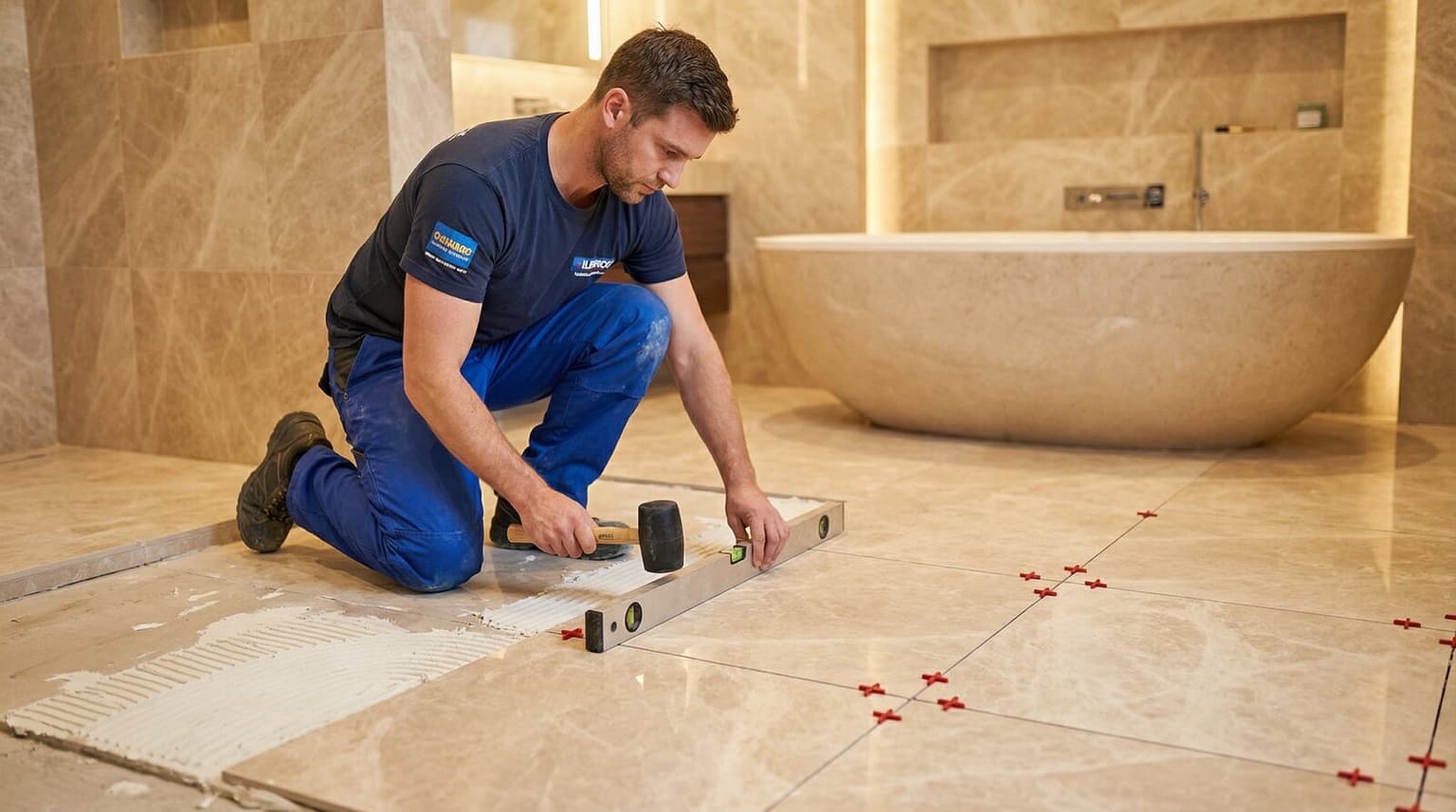
If you own property in Dubai, tile damage isn't a question of "if" - it's a question of "when." Between the punishing summer humidity, constant AC cycling, and the sheer volume of tiled surfaces in the average villa or apartment, cracked grout and loose tiles are practically a rite of passage for Dubai homeowners.
This guide covers everything you need to know about tile fixing in Dubai: what causes the damage, what repairs actually cost, which problems you can handle yourself, and when it makes sense to call a professional tile contractor.
Why Tiles Fail in Dubai: The Real Causes
Dubai's climate and construction environment create a unique set of pressures on tiled surfaces. Understanding why tiles fail helps you catch problems early - and avoid paying for the same repair twice.
Humidity and Temperature Swings
Dubai's outdoor temperatures regularly exceed 45°C in summer, while indoor spaces sit at 22-24°C thanks to air conditioning. That differential - sometimes 20+ degrees between a balcony and the room behind it - causes expansion and contraction in both the tile and the substrate beneath it. Over months and years, this thermal cycling loosens adhesive bonds and cracks grout lines.
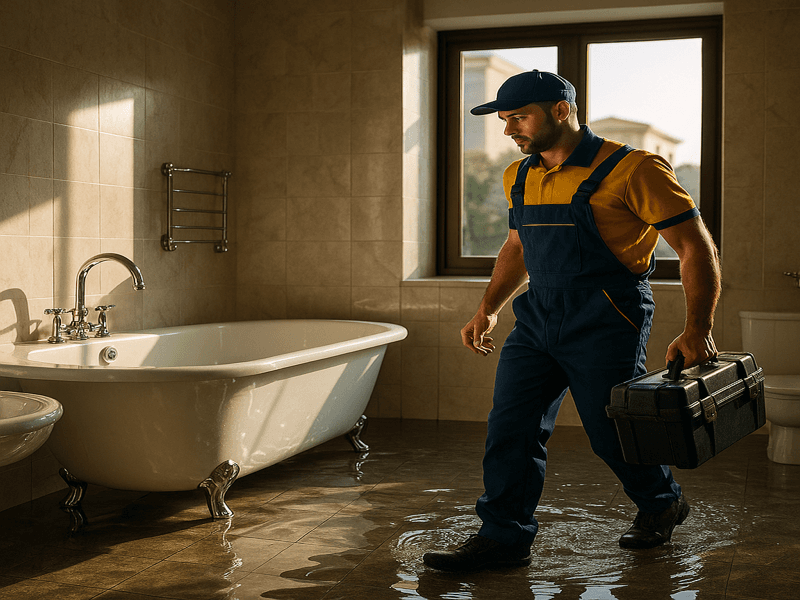
Bathrooms take the worst of it. Steam from hot showers combined with AC-cooled walls means moisture constantly moves through grout and into the substrate. If the original waterproofing membrane was thin or poorly applied (common in fast-build developments from the 2006-2010 era), water finds its way behind tiles and the adhesive fails.
Poor Original Installation
Not all tile installations in Dubai were done to the same standard. In buildings constructed during the boom years, speed often took priority over technique. Common shortcuts include:
- Insufficient adhesive coverage - adhesive applied only to the centre of a tile rather than full-bed coverage, leaving air pockets that eventually cause hollow spots
- Wrong adhesive type - using standard cement adhesive where flexible adhesive was needed (balconies, pool surrounds, areas with movement joints)
- Missing expansion joints - large tiled areas need expansion gaps to absorb movement. Without them, tiles push against each other and crack or tent
- Inadequate substrate preparation - tiles laid directly on dusty or unprimed screeds, resulting in weak bonds that fail within a few years
Water Damage and Leaks
Water is the number one enemy of tile installations in Dubai. Leaking pipes behind walls, failed shower waterproofing, and even condensation from poorly insulated AC ducts all introduce moisture where it shouldn't be. Once water gets behind tiles, adhesive breaks down, mould grows in the substrate, and tiles begin to lift.
In villas with swimming pools, the deck tiles around the pool edge are especially vulnerable. Pool water is chemically treated, and chlorinated splash-back degrades standard grout faster than plain water would.
Settling and Structural Movement
Newer buildings in Dubai - particularly those built on reclaimed land areas like Dubai Marina, JBR, and parts of Palm Jumeirah - can experience minor structural settling in the first five to ten years. Even a fraction of a millimetre of movement can crack rigid tile installations, especially in large-format porcelain tiles (60x60 cm and above) that have very little flex tolerance.
Types of Tile Fixing Services in Dubai
"Tile fixing" covers a range of work, from minor grout repairs to stripping and re-tiling an entire bathroom. What each service involves and when you would need it.
Grout Repair and Regrouting
What it's: Removing old, cracked, or mouldy grout and replacing it with fresh grout. When you need it: Discoloured grout lines, cracked grout that crumbles when you press it, visible mould between tiles that doesn't respond to cleaning. What is involved: A technician uses a grout rake or oscillating tool to remove the old grout to a depth of at least 3-4 mm, then applies new grout, cleans the surface, and seals it. For bathrooms, epoxy grout is recommended over cement grout - it costs more but resists water and mould far better. Typical areas: Bathroom floors and walls, kitchen backsplashes, balcony tiles.Individual Tile Replacement
What it's: Removing one or more damaged tiles and replacing them with matching tiles. When you need it: A single cracked tile, a chipped tile in a high-traffic area, or a tile that has come completely loose. What is involved: The damaged tile is carefully cut out to avoid disturbing neighbours. The old adhesive is chiselled off the substrate, new adhesive is applied (full-bed method), the replacement tile is set, levelled, and grouted. The challenge is often finding a matching tile - if the building is more than five years old, the exact tile may be discontinued. A good contractor will try to source a close match or suggest taking a tile from an inconspicuous area (inside a cupboard, under a washing machine) and using the new tile there instead.Hollow Tile Re-bonding
What it's: Fixing tiles that sound hollow when tapped but haven't yet cracked or lifted. When you need it: You notice a hollow, drum-like sound when you tap tiles with your knuckle. This means the adhesive beneath has partially failed - the tile is still in place but no longer bonded to the floor or wall. What is involved: For small areas, a technician can drill small holes in the grout line, inject tile adhesive or epoxy resin beneath the tile to re-bond it, then seal the drill holes. For larger areas of hollow tiles, removal and re-laying is usually more reliable.Bathroom and Kitchen Re-tiling
What it's: Stripping all existing tiles from a bathroom or kitchen and installing new ones. When you need it: Widespread tile failure, a renovation, waterproofing failure behind shower walls, or simply updating the look of a dated bathroom. What is involved: Full strip-out of existing tiles (often including removal of old waterproofing membrane), substrate repair, new waterproofing application, tile layout planning, full installation, grouting, and sealing. For bathrooms, this typically takes 5-7 days. For kitchens (floor and backsplash only), 2-4 days.Outdoor and Pool Tile Fixing
What it's: Repairing or replacing tiles on balconies, terraces, driveways, and pool surrounds. When you need it: Cracked or lifting tiles on outdoor surfaces, tiles that become dangerously slippery when wet, or pool edge tiles that have come loose. What is involved: Outdoor tile work requires UV-resistant and flexible adhesive, plus proper drainage slopes. Pool tile work must use pool-grade adhesive rated for permanent water immersion. Outdoor repairs should be scheduled for the cooler months (October-March) when adhesive curing conditions are best.How Much Does Tile Fixing Cost in Dubai?
Pricing varies based on the scope of work, tile material, and the area being repaired. Here are realistic 2026 prices from the Dubai market:
Grout Repairs
| Service | Cost (AED) |
|---|---|
| Bathroom grout repair (standard, up to 10 sqm) | 500 - 1,200 |
| Bathroom regrouting with epoxy grout (up to 10 sqm) | 1,500 - 3,000 |
| Kitchen backsplash regrouting | 400 - 800 |
| Balcony grout repair | 600 - 1,500 |
Individual Tile Replacement
| Service | Cost (AED) |
|---|---|
| Single tile replacement (floor, standard ceramic) | 150 - 350 |
| Single tile replacement (wall, standard ceramic) | 150 - 300 |
| Single tile replacement (large-format porcelain 60x60+) | 250 - 500 |
| Natural stone tile replacement (marble, travertine) | 400 - 800+ |
| Tile sourcing fee (if matching tile needs to be found) | 100 - 300 |
Full Re-tiling
| Service | Cost per sqm (AED) |
|---|---|
| Standard ceramic tiles (supply + install) | 120 - 200 |
| Porcelain tiles (supply + install) | 180 - 350 |
| Natural stone - marble (supply + install) | 350 - 700 |
| Mosaic tiles - bathroom feature wall | 250 - 500 |
| Outdoor/balcony anti-slip tiles (supply + install) | 150 - 280 |
Additional Costs
| Item | Cost (AED) |
|---|---|
| Old tile removal and disposal | 30 - 60 per sqm |
| Waterproofing membrane (bathrooms) | 40 - 80 per sqm |
| Substrate repair/levelling | 30 - 50 per sqm |
| Minimum call-out / assessment fee | 100 - 200 |
Common Tile Problems by Property Type
Villas
Villas in communities like Arabian Ranches, Jumeirah Village Circle, and The Springs tend to have the most tile issues simply because they've more tiled area - entrance halls, multiple bathrooms, kitchens, balconies, pool decks, and sometimes external cladding. The most frequent villa tile problems are:
- Pool deck tiles lifting due to thermal expansion
- Bathroom tiles failing behind showers (waterproofing membrane breakdown)
- Entrance hall tiles cracking under heavy foot traffic
- Garage floor tiles cracking from vehicle weight on insufficiently reinforced substrates
Apartments
High-rise apartments in areas like Downtown Dubai, Business Bay, and JLT typically have smaller tiled areas but still face issues:
- Bathroom floor tiles loosening due to building settling
- Balcony tiles cracking from sun exposure and thermal cycling
- Kitchen floor tiles near dishwashers and sinks failing from repeated water exposure
- Hollow tiles in hallways and living areas (usually an installation defect from the original fit-out)
Townhouses
Townhouses in communities like Damac Hills, Town Square, and Mudon combine some villa and apartment challenges:
- Ground floor tiles cracking where the slab meets the foundation
- Shared wall areas where neighbouring unit renovations cause vibration damage
- Garden patio tiles lifting in summer heat
Tile Fixing in Dubai: DIY vs. Professional
When You Can Do It Yourself
Small grout repairs and minor cosmetic fixes are reasonable DIY jobs if you're handy: