Electricity powers everything in a modern Dubai home , from air conditioning and kitchen appliances to lighting and home entertainment systems. But with that convenience comes responsibility. Electrical faults are one of the leading causes of residential fires in the UAE, and understanding how to keep your home electrically safe is just as important as knowing how to use your appliances.
This guide covers everything Dubai homeowners and tenants need to know about electrical safety: common hazards, warning signs, DEWA regulations, and when to call a professional electrician.
Common Electrical Hazards in Dubai Homes
Dubai's climate and construction patterns create specific electrical risks that homeowners should be aware of.
Overloaded Circuits
Dubai summers push electrical systems to their limit. Between air conditioning units running continuously, refrigerators cycling, and other appliances working overtime, circuits can become overloaded. This is especially common in older villas and apartments where the electrical infrastructure wasn't designed for the current load.
The most obvious sign of an overloaded circuit is a tripping breaker. If your circuit breaker trips repeatedly, particularly during summer afternoons when the AC is working hardest, you may have an overloaded circuit.
Faulty Wiring in Older Properties
Properties built before 2010 may have aluminium wiring instead of the safer copper wiring that is now standard. Over time, aluminium connections can loosen, creating resistance that leads to overheating. This is a serious fire risk that requires professional inspection.
Water and Electricity in Bathrooms and Kitchens
Bathrooms and kitchens are the highest-risk areas for electrical accidents because of the proximity of water and power. In Dubai, where bathrooms often have wall-mounted water heaters and kitchens house multiple appliances, ensuring proper earthing and RCD (Residual Current Device) protection is essential.
Substandard Electrical Work
Hiring unlicensed handymen for electrical work is a common but dangerous practise in Dubai. Improper installations, incorrect wire gauges, and poor connections can lead to short circuits, equipment damage, and fires. Always use a DEWA-registered electrician for any electrical work.
Warning Signs Your Electrical System Needs Attention
Your home's electrical system gives warning signs before a serious problem develops. Watch for these indicators:
- Flickering or dimming lights when appliances turn on may indicate a loose connection or an overloaded circuit.
- Frequently tripping circuit breakers suggest a circuit is overloaded or there is a short circuit somewhere in the system.
- Warm or discoloured wall plates around switches and sockets point to overheating connections behind the wall.
- Burning smells from any electrical outlet or appliance require immediate attention. Turn off the power at the breaker and call an electrician.
- Buzzing or sizzling sounds from switches, sockets, or the breaker panel indicate arcing electricity , a serious fire hazard.
- Sparks when plugging in appliances may be normal occasionally, but frequent or large sparks mean the socket needs replacing.
- Shocks or tingles when touching appliances suggest an earthing problem that needs urgent repair.
If you notice any of these signs, do not ignore them. Contact a licensed electrician in Dubai to inspect your system.
DEWA Regulations and Electrical Safety Standards
Dubai's electricity and water authority, DEWA, sets strict standards for electrical installations in the emirate. Understanding these requirements helps you stay compliant and safe.
DEWA-Approved Electricians
All electrical work in Dubai must be carried out by a DEWA-approved contractor. This applies to new installations, modifications, and repairs. Using a non-approved electrician can void your property insurance and may result in fines.
A DEWA-approved electrician will issue a completion certificate for any work done, which is required for DEWA inspection and compliance.
Earth Leakage Protection
DEWA regulations require all circuits in Dubai properties to be protected by Residual Current Devices (RCDs), also known as earth leakage breakers. These devices detect small imbalances in electrical current and cut power within milliseconds if a fault is detected , potentially saving lives.
Periodic Inspection Requirements
While homeowners are not legally required to have periodic electrical inspections, DEWA recommends having your electrical system checked every five years for villas and every ten years for apartment buildings. Older properties and those with frequent electrical issues should be inspected more often.
Common Electrical Problems and Their Solutions
Power Keeps Tripping
If your power keeps tripping, the first step is to identify which circuit is affected. Unplug all devices on that circuit, reset the breaker, and plug them back in one at a time. If the breaker trips when you plug in a specific appliance, that appliance likely needs repair or replacement.
If the breaker trips with nothing plugged in, you may have a wiring fault that requires professional diagnosis.
Socket Not Working
A dead socket could be caused by a tripped GFCI (Ground Fault Circuit Interrupter), a blown fuse in the socket itself, or a loose wire connection. Check nearby sockets and reset any GFCI buttons you find. If that doesn't work, call an electrician.
Light Switch Not Working Properly
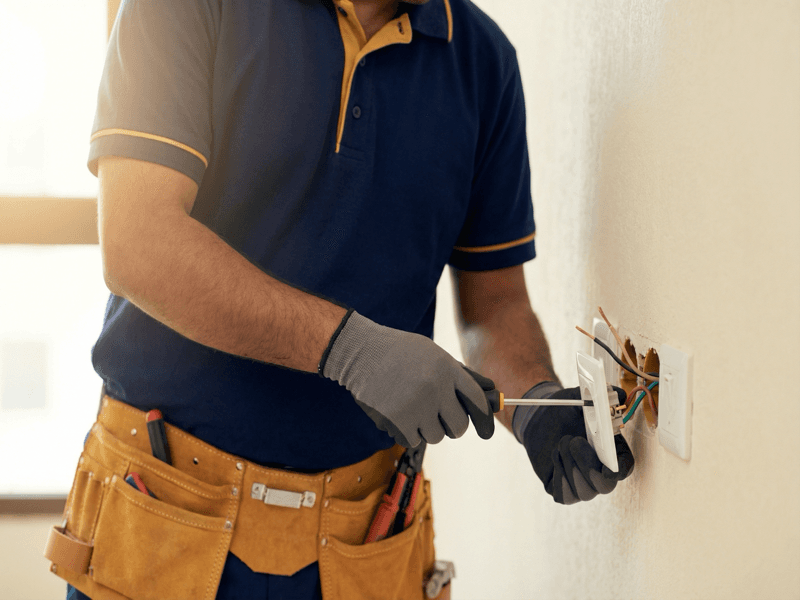
Switches that feel loose, stick, or only work intermittently should be replaced. These symptoms indicate worn internal components that can eventually fail completely or cause arcing.
Ceiling Fan Issues
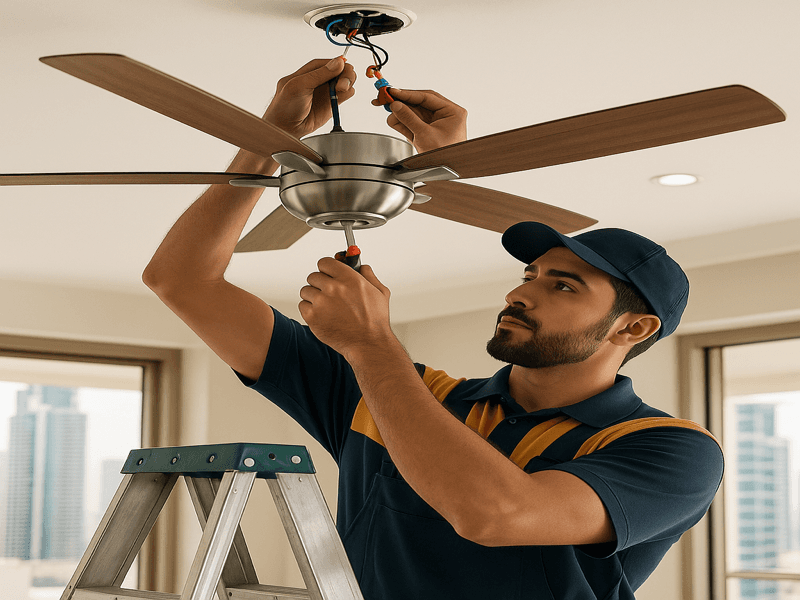
Wobbly ceiling fans, fans that don't change speed, or fans that hum loudly often have electrical connection issues or worn capacitors. These are relatively straightforward fixes for a qualified electrician.
Electrical Safety Tips for Every Dubai Home
Install Surge Protection
Dubai's power grid experiences voltage fluctuations, particularly during summer storms and construction work in new developments. Whole-house surge protectors installed at the main breaker panel protect your appliances and electronics from voltage spikes.
Use Appliances According to Their Ratings
Every socket in your home has a maximum current rating, typically 13 amps for standard UAE sockets. Plugging multiple high-wattage appliances into a single socket through extension leads can exceed this rating and cause overheating.
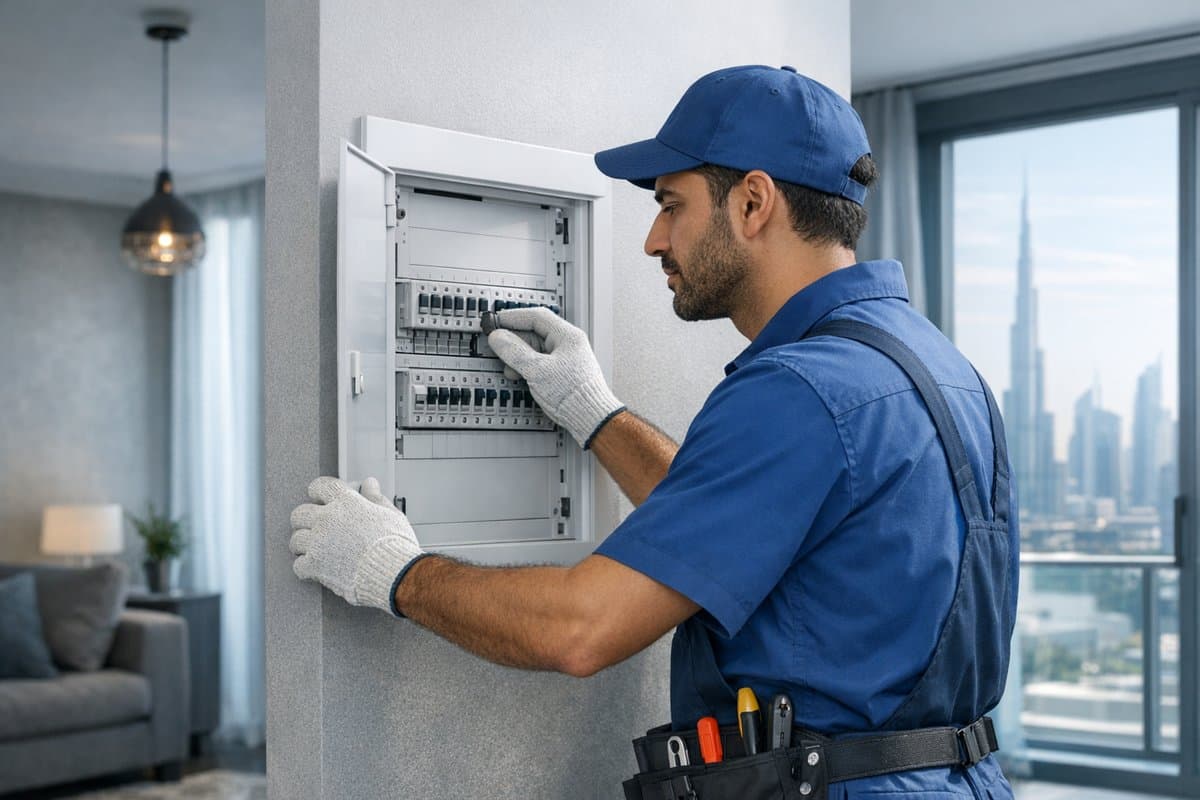
Keep Electrical Panels Accessible
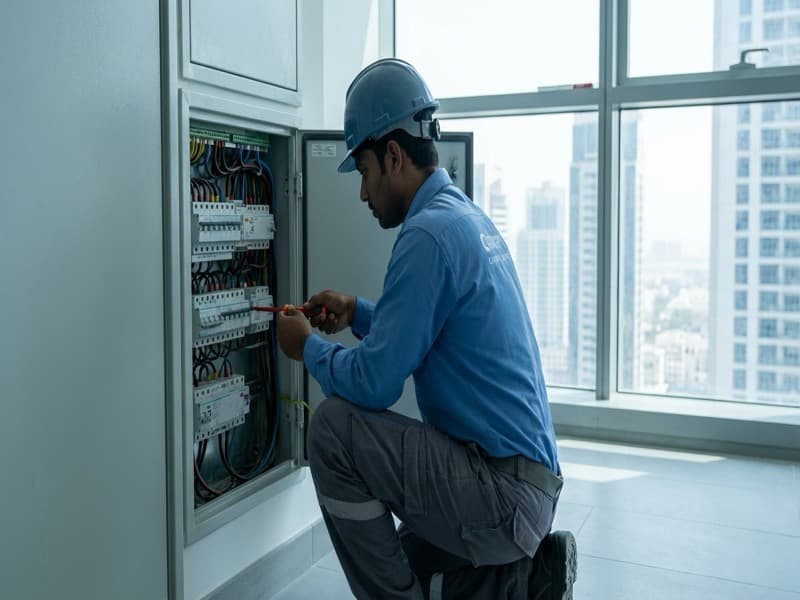
Your circuit breaker panel should be easily accessible at all times. Do not store boxes, furniture, or other items in front of it. In an emergency, you need to be able to reach the main shut-off switch quickly.
Test Your RCDs Monthly
Press the "test" button on your RCD or earth leakage breaker once a month. It should trip immediately, cutting power to the protected circuit. If it does not trip, the device is faulty and needs replacement.
Use the Right Bulbs
Each light fitting has a maximum wattage rating printed on a sticker or label. Using a bulb with a higher wattage than specified can cause overheating and fire. LED bulbs are the safest option as they produce less heat than incandescent or halogen alternatives.
Child-Proof Your Sockets
If you have young children, install socket covers or tamper-resistant sockets throughout your home. Children exploring with fingers or metal objects can receive serious shocks from unprotected sockets.
Outdoor Electrical Safety
For villas with gardens, pools, or outdoor kitchens, ensure all outdoor sockets and lighting fixtures are weatherproof and rated for outdoor use. Outdoor circuits must be protected by dedicated RCDs. Pool equipment and lighting should be installed by a specialist electrician.
When to Call European Technical
Some electrical issues can be handled by a competent DIY approach , replacing a light bulb or resetting a tripped breaker, for example. But anything involving wiring, breaker panels, or persistent problems requires a licensed professional.
Call European Technical if you experience:
- Frequent breaker tripping that you cannot resolve by redistributing appliance loads
- Burning smells from anywhere in your electrical system
- Warm sockets or switch plates that may indicate overheating wiring
- Any electrical issue in a bathroom or kitchen, where water proximity increases risk
- Installation of new circuits, ceiling fans, or major appliances
- Upgrading your electrical panel to handle increased loads from new AC units or appliances
Our team of DEWA-compliant electricians provides electrical services across all Dubai communities, including Palm Jumeirah, Arabian Ranches, Jumeirah, Dubai Marina, and Emirates Hills. We are available for both scheduled maintenance and emergency electrical repairs.
Frequently Asked Questions
How do I find a DEWA-approved electrician in Dubai?
Look for contractors registered with DEWA's approved contractor list. European Technical is a DEWA-compliant electrical service provider. You can also verify an electrician's credentials through DEWA's official website.
Is it safe to use extension leads permanently?
No. Extension leads are designed for temporary use only. For permanent installations, have additional sockets installed by a qualified electrician.
How often should I have my home's electrical system inspected?
DEWA recommends inspections every five years for villas and every ten years for apartment buildings. However, if your property is older than ten years or you experience frequent electrical issues, annual inspections are advisable.
Why does my circuit breaker keep tripping in summer?
Dubai's summer heat puts heavy demand on your electrical system, especially from air conditioning units. If your breaker trips frequently during summer, your system may be overloaded and may need a panel upgrade or additional circuits.
Can I do my own electrical repairs in Dubai?
Minor tasks like replacing a light switch or socket are legal for homeowners, but any work on the main electrical panel, rewiring, or new circuit installation must be carried out by a DEWA-approved electrician.
What should I do if I smell burning from an outlet?
Turn off the power at the main breaker immediately. Do not use the outlet. Call an emergency electrician right away. Burning smells indicate overheating or arcing, both of which can cause fires.
Does home insurance cover electrical fires in Dubai?
Most comprehensive home insurance policies in Dubai cover electrical fires, provided the electrical installation was carried out by a DEWA-approved contractor. Check your policy for specific terms and exclusions.
Need Professional Electrical Help?
At European Technical, we take electrical safety seriously. Our licensed electricians serve all areas of Dubai with prompt, reliable service. Whether you need a routine safety inspection, emergency repairs, or new electrical installations, we are here to help.
Phone: +971 58 544 1160
WhatsApp: /whatsapp
Book an electrician online or call us for same-day service across Dubai.