Electrical Wiring Dubai: A Homeowner's Guide to Safe Installations
Electrical wiring is one of those areas of home maintenance that most residents in Dubai rarely think about , until something goes wrong. A tripping circuit breaker, a warm socket, flickering lights, or the smell of burning plastic are all signs that something in the wiring system deserves prompt attention. Left unresolved, faulty wiring is one of the leading causes of residential fires across the UAE.
This guide covers how electrical wiring works in Dubai properties, the most common problems, what DEWA regulations say about who can carry out electrical work, and how to identify when a repair or upgrade is needed.
How Residential Electrical Wiring Works in Dubai
Dubai properties follow UAE ESMA wiring standards, which align closely with British IET Wiring Regulations (BS 7671). Most residential buildings operate on a 230V, 50Hz single-phase supply, with larger villas typically having a three-phase supply for heavy appliances and central air conditioning systems.
A typical apartment or villa has the following wiring components:
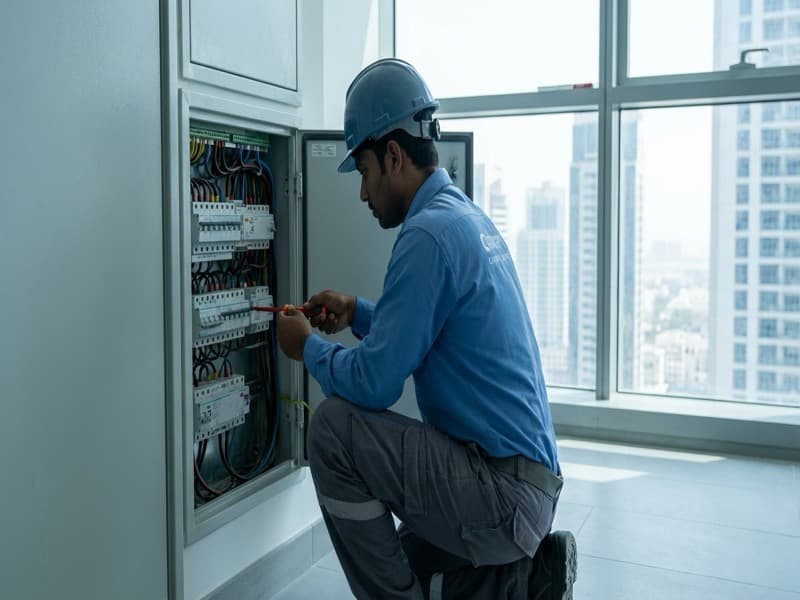
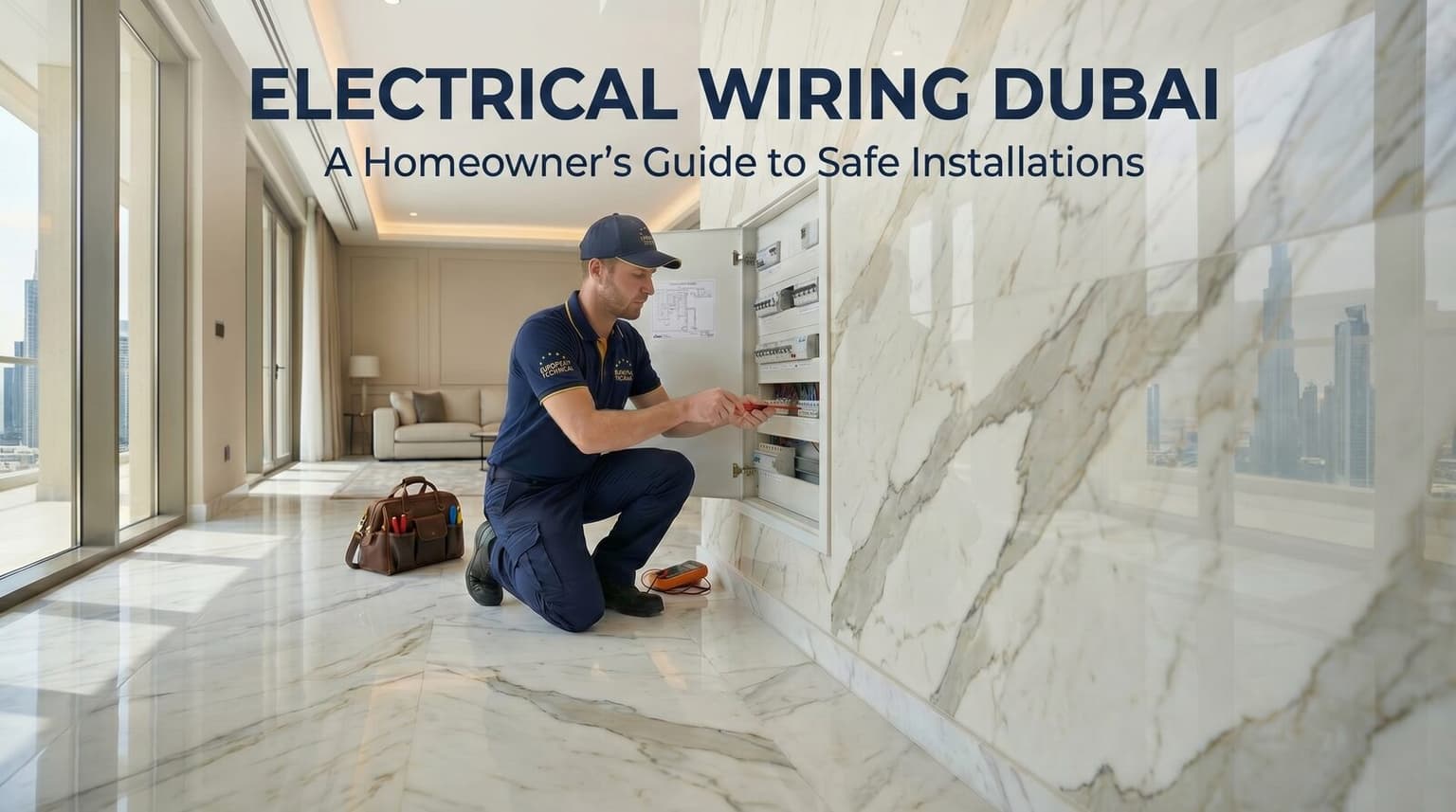
Main distribution board (MDB) , The metal panel in your utility room or entrance hall that contains your main circuit breaker and individual circuit breakers for each zone (bedrooms, kitchen, living areas, AC units). In older buildings this may be a simple fuse box rather than MCB breakers.
Ring circuits , Wall sockets in living areas and bedrooms are typically wired in a ring formation, allowing load to travel in either direction. This reduces cable size requirements and improves distribution of current.
Radial circuits , Kitchen appliances, washing machines, and air conditioning units typically have their own dedicated radial circuit running directly from the distribution board to a single outlet.
Earth bonding , Metal pipework, structural steel, and appliance housings are connected to a common earth to prevent electric shock if a live conductor touches metalwork.
DEWA Regulations: Who Can Do Electrical Work in Dubai?
Dubai Electricity and Water Authority (DEWA) requires that all electrical installations, modifications, and repairs be carried out by a DEWA-approved contractor. This applies to:
- New cable runs and socket installations
- Modification of the main distribution board
- Installation of additional circuit breakers
- Earthing and bonding work
- Any work on the supply cables entering the property
European Technical is a DEWA-approved electrical contractor operating across Dubai. See our electrical services page for the full range of work we carry out.
Common Electrical Wiring Problems in Dubai Properties
1. Overloaded Ring Circuits
Many apartments in Dubai were built before the widespread adoption of home entertainment systems, electric ovens, and multiple air conditioning units. Ring circuits designed for modest loads are now being asked to supply far more appliances, leading to frequent tripping and warm cables.
Signs: Circuit breaker trips regularly, sockets warm to touch, multiple appliances on one circuit stop working simultaneously.
Fix: A licensed electrician can add a dedicated circuit for high-draw appliances, or replace undersized cable with a higher-rated alternative.
2. Outdated Wiring Insulation
Properties built before 2000 may have aluminium wiring or older PVC insulation that has become brittle with age and heat. Dubai's climate accelerates insulation degradation, particularly in roof spaces where temperatures can reach 70°C in summer.
Signs: Flickering lights that do not correspond to a loose bulb, visible cracking or discolouration of cables in roof spaces, persistent burning smell from sockets or light fittings.
Fix: Full rewiring of affected circuits using modern copper cable and heat-resistant insulation.
3. Incorrect Earthing or Missing Earth Connections
Some older properties, particularly in Deira, Bur Dubai, and areas developed before stringent earthing requirements, have wiring that is live and neutral only, with no earth conductor. This is a shock risk, especially in bathrooms and kitchens where water contact is possible.
Signs: Electric shock or tingling sensation when touching metal fixtures, appliances tripping their built-in RCD, earth fault indication on the distribution board.
Fix: Retrospective earth bonding and supplementary protective bonding in wet areas.
4. Faulty or Undersized Distribution Boards
Older fuse-based boards or early MCB boards do not provide the protection levels required by current UAE regulations. In particular, the absence of Residual Current Devices (RCDs) is a risk in bathrooms, outdoor sockets, and any circuits near water.
Signs: Fuses blow rather than MCBs trip, no RCD protection on bathroom or outdoor circuits, board warm to touch.
Fix: Distribution board replacement with a modern unit incorporating MCBs and RCDs as required by current ESMA standards.
5. Damaged Sockets and Light Switches
Sockets and switches in high-use areas , entrance halls, kitchens, living rooms , take repeated mechanical stress. Cracked faceplates, loose connections at the back-box, and worn contacts increase resistance and can cause heat buildup.
Signs: Sparking at socket when plugging in, socket faceplate warm or discoloured, switch does not latch properly.
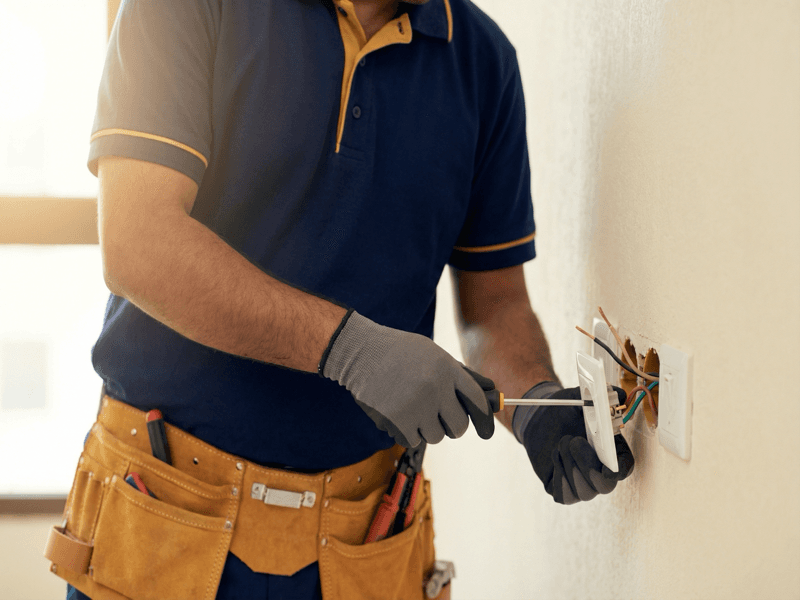
Fix: Socket or switch replacement. This is a straightforward repair that should still be carried out by a qualified electrician to ensure correct termination.
Typical Costs for Electrical Work in Dubai
The following ranges are typical for residential work in Dubai. Prices depend on property size, accessibility, and the complexity of the installation.
| Task | Typical Range (AED) |
|---|---|
| Socket replacement (per socket) | 80 , 200 |
| Adding a new socket (existing circuit) | 250 , 600 |
| New dedicated circuit from board | 600 , 1,500 |
| Distribution board replacement | 1,500 , 4,000 |
| Partial rewire (one room) | 800 , 2,500 |
| Full villa rewire | 8,000 , 25,000 |
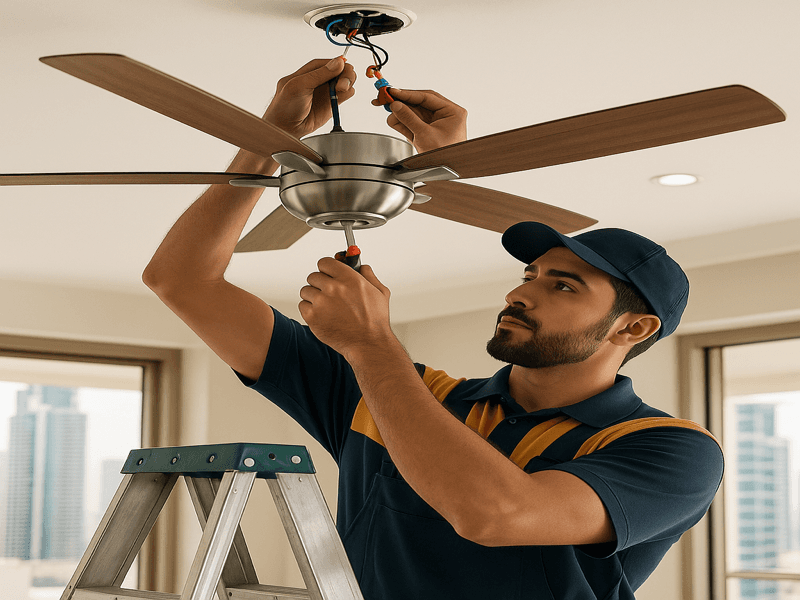
| Ceiling fan installation | 200 , 500 |
| Outdoor socket installation | 400 , 900 |
An accurate quotation requires an inspection of your distribution board and the affected areas. European Technical offers free on-site assessments for electrical work above AED 500.
Electrical Safety Tips for Dubai Residents
Do not overload socket adaptors. Multi-socket extension leads are commonly used in Dubai apartments where socket density is low, but stacking multiple adaptors increases the risk of overheating. Use a surge-protected power bar with a built-in fuse.
Test your RCDs monthly. Modern distribution boards have a test button on each RCD. Press it to confirm the circuit trips and reset correctly. This takes 10 seconds and could save your life.
cheque cable routing before drilling. Cables in Dubai apartments are commonly run horizontally and vertically from sockets and switches , but older properties do not always follow this convention. Use a cable detector before drilling into walls.
Replace damaged flexible leads promptly. Extension leads and appliance power cords with cuts, kinks, or exposed copper should be replaced immediately, not taped over.
Ensure bathroom zones are respected. UAE regulations define zones around baths and showers where only low-voltage fittings and SELV circuits are permitted. Non-compliant fittings in these zones are a common hazard in older properties.
When to Call European Technical
Electrical work should never be delayed when there are active warning signs. Contact us if:
- A circuit breaker trips repeatedly and does not stay reset
- You smell burning plastic or see scorch marks around sockets or fittings
- You receive a mild shock from a metal fixture or appliance casing
- Lights flicker or dim without an obvious cause
- You are planning a kitchen renovation, bathroom fit-out, or extension that requires new circuits
- Your DEWA supply application requires an approved electrical inspection certificate
Call +971 58 544 1160 or message us on WhatsApp for a same-day response.
Frequently Asked Questions
Can I replace a socket or light switch myself in Dubai?
Replacing a socket or switch faceplate without touching the wiring is technically a minor task, but any work that involves opening a back-box or modifying a circuit should be carried out by a DEWA-approved electrician. Insurance policies and tenancy agreements in Dubai often specify that electrical work must be carried out by a licensed contractor.
How do I know if my wiring is earthed correctly?
An electrician can test earthing with a simple earth loop impedance test using a calibrated metre. This takes a few minutes per circuit and gives a definitive answer. It is a standard part of any electrical inspection.
How long does it take to rewire a room in Dubai?
A single room rewire typically takes four to eight hours depending on ceiling void access and the number of circuits involved. A full villa rewire is typically a two- to four-day job.
My circuit breaker keeps tripping. What should I do?
First, identify which breaker is tripping and which appliances are on that circuit. If unplugging appliances stops the tripping, the issue is likely overload. If the breaker trips with nothing plugged in, or immediately on reset, there is a fault in the wiring that requires professional investigation.
Do I need DEWA approval for a small home modification?
Any modification to fixed wiring , new socket, new circuit, change to the distribution board , requires a DEWA-approved contractor and must be recorded. Minor repairs to existing fittings do not typically require a new approval, but work should still be carried out by a qualified electrician.
Safe, Certified Electrical Work Across Dubai
Whether you need a single socket replaced, a distribution board upgraded, or a full rewire following a renovation, European Technical's DEWA-approved electricians carry out all work to current UAE standards and provide the compliance certification you need.
Book an electrical inspection or repair online, or call +971 58 544 1160 , available seven days a week across all Dubai areas.