Energy Efficiency Guide for Dubai Homes: Reducing DEWA Bills
Dubai residents face some of the world's highest per-capita energy consumption, driven primarily by constant air conditioning demands in extreme heat. The average Dubai villa can consume 2,000-4,000 kWh monthly during summer - translated to DEWA bills of AED 800-2,000 or more. Apartments fare better but still see AED 400-1,000 monthly bills in peak months.
The good news: most homes waste 20-40% of energy through inefficiency that's fixable without major renovation. This guide identifies the biggest energy drains in Dubai homes and provides actionable solutions that reduce consumption and costs while maintaining comfort.
Understanding Your DEWA Bill
Before improving, understand what you're paying for:
DEWA charges structure:
- Electricity consumption (fils per kWh, tiered pricing)
- Water consumption (fils per gallon, tiered pricing)
- Sewerage charges (percentage of water bill)
- Housing fee (5% of electricity and water charges)
- Municipality fee (percentage of total)
- Fuel surcharge (variable, reflects energy costs)
Tiered pricing means volume matters: Higher consumption pushes you into higher price tiers. The difference between 2,000 kWh and 2,500 kWh isn't just 25% more cost - it can be 35-40% more because you move into higher-rate tiers.
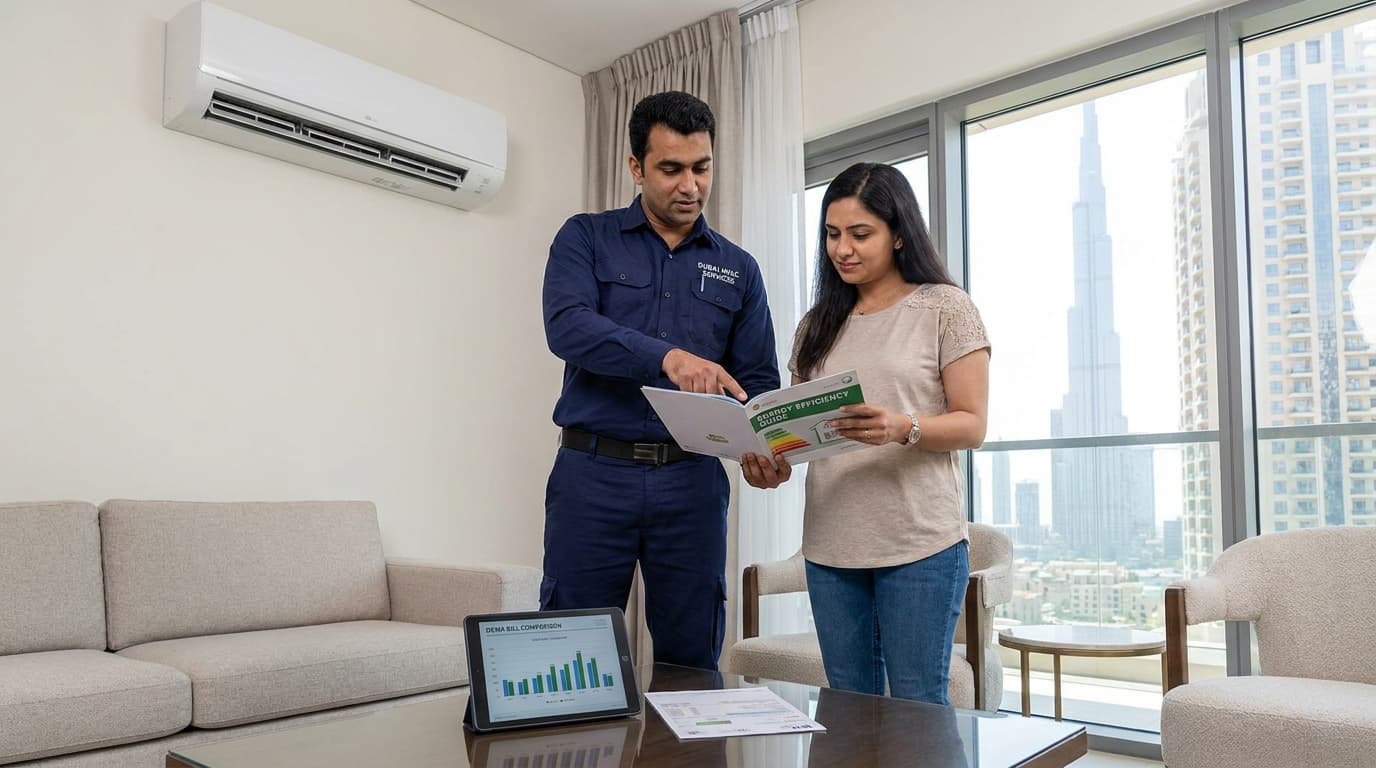
cheque your bill for:
- Monthly consumption trends (identifies seasonal patterns and sudden changes)
- Comparison to similar properties (DEWA shows average consumption for similar homes)
- Peak consumption days (when do you use most energy?)
Download the DEWA app for real-time consumption tracking. Seeing daily usage helps identify energy-wasting behaviours and equipment failures immediately rather than waiting for monthly bills.
The Big Three: AC, Water Heating, and Appliances
Three categories account for 90% of Dubai home energy consumption:
- Air conditioning: 60-70% of total (higher in peak summer)
- Water heating: 15-20% (especially in winter when heaters run more)
- Refrigeration and appliances: 15-20%
Lighting, electronics, and other uses typically represent only 5-10% of consumption. While LED bulbs and switching off devices help, they're not where major savings live.
To cut your bill significantly, focus on the big three. Small changes elsewhere are marginal.
AC Optimisation: Your Biggest Savings Opportunity
System Efficiency Basics
Your AC efficiency depends on:
- System age and condition
- Proper sizing for field
- Regular maintenance
- Operating habits
- Home insulation and air sealing
AC efficiency degrades over time: A 10-year-old AC can use 40-50% more energy than new units to achieve the same cooling. If your AC is over 8 years old and monthly bills are high, replacement often pays for itself in 3-4 years through energy savings alone.
Operating Temperature and Habits
Temperature settings have massive impact:
- 24°C vs 22°C: Approximately 15-20% energy difference
- 26°C vs 24°C: Additional 10-15% savings
- Every degree warmer saves roughly 8-10% energy
The math: Villa cooling bill of AED 1,200/month in summer. Setting temperature from 22°C to 24°C saves approximately AED 180-240 monthly. Over 5 summer months, that's AED 900-1,200 annual savings.
Reality cheque on comfort: Most people acclimate to 24°C within 3-5 days. The perceived discomfort of "warmer" settings is temporary. Your wallet's discomfort from high bills is permanent.
Smart habits:
- Use ceiling fans to make 24-25°C feel comfortable (air movement perception)
- Close curtains/blinds on sun-facing windows to reduce cooling load
- Don't set AC to 18°C "to cool faster" - it doesn't work that way and wastes energy
- Use programmable or smart thermostats to raise temperature when away or asleep
System Maintenance
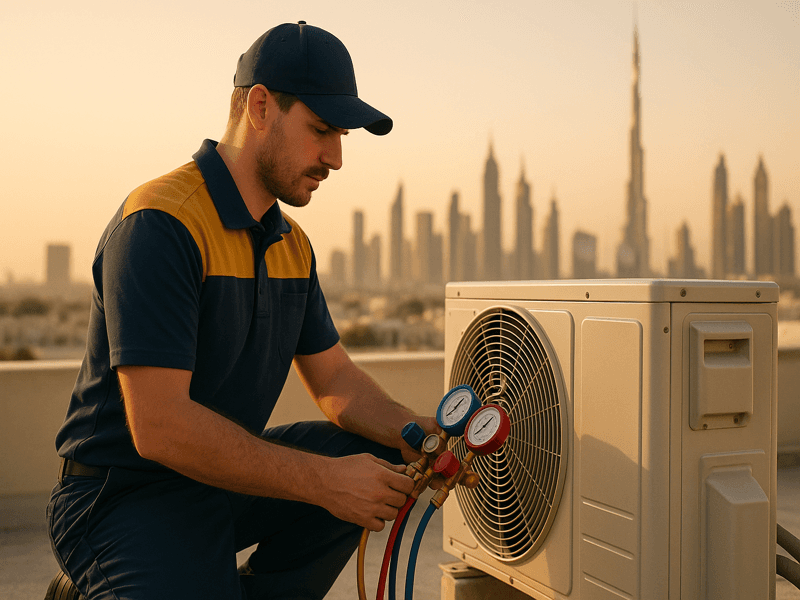
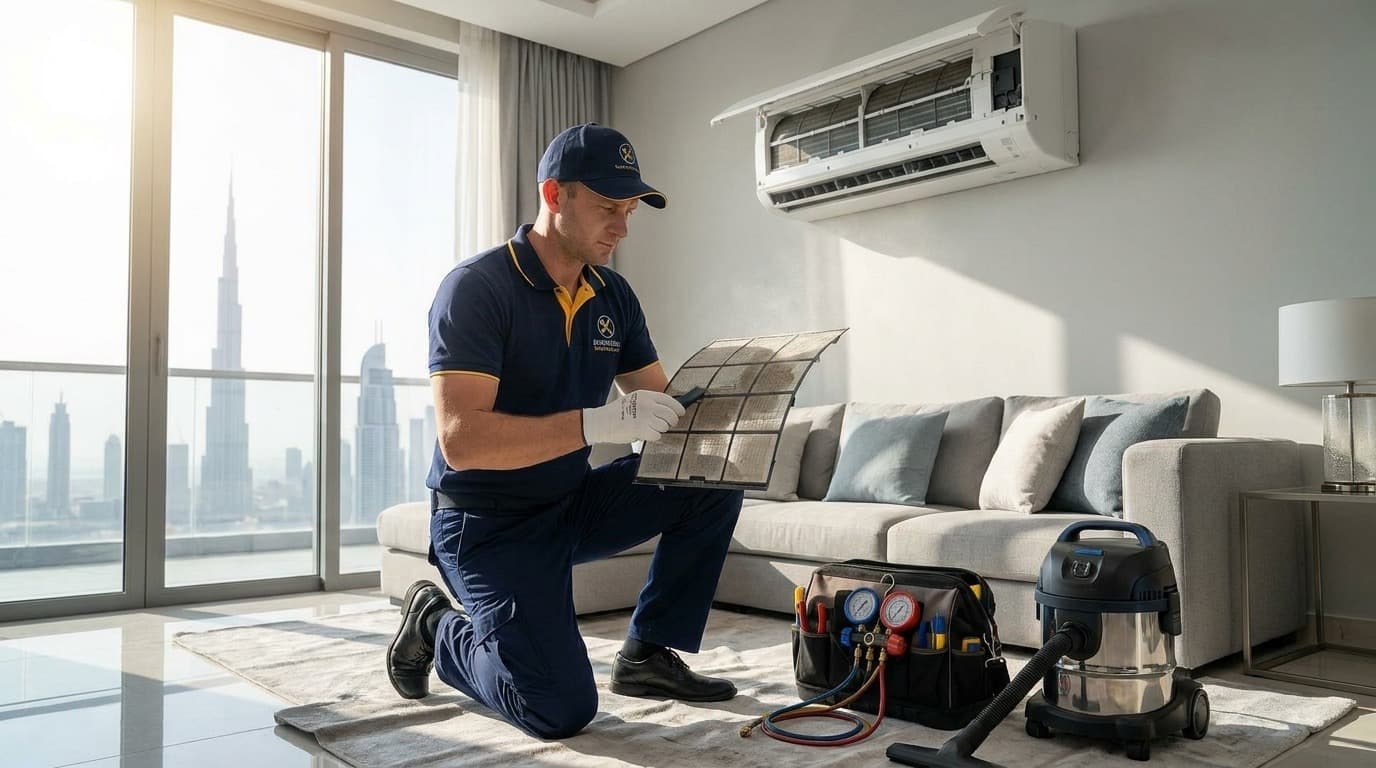
Regular maintenance improves efficiency by 10-25%:
Monthly (DIY):
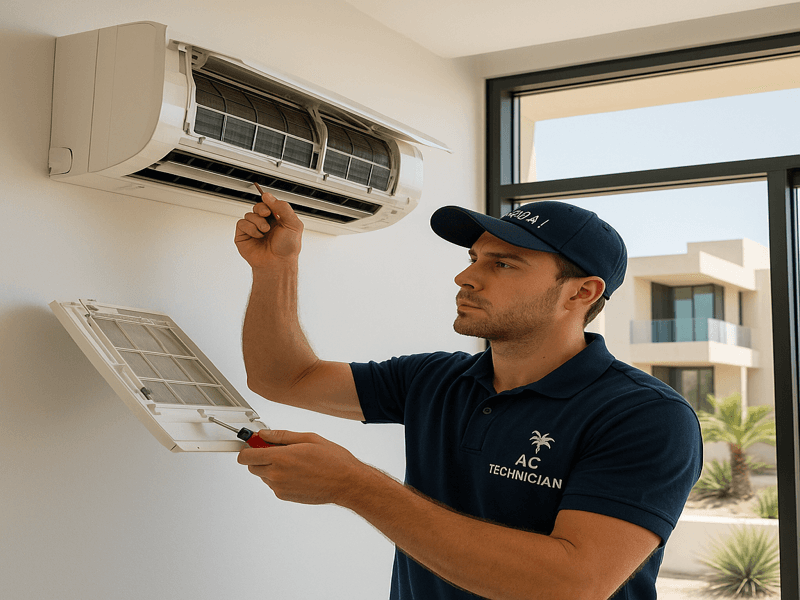
- Clean or replace AC filters (clogged filters reduce efficiency 10-15%)
- Inspect for unusual noises or weak airflow
- cheque outdoor units aren't blocked by debris
Quarterly (DIY or professional):
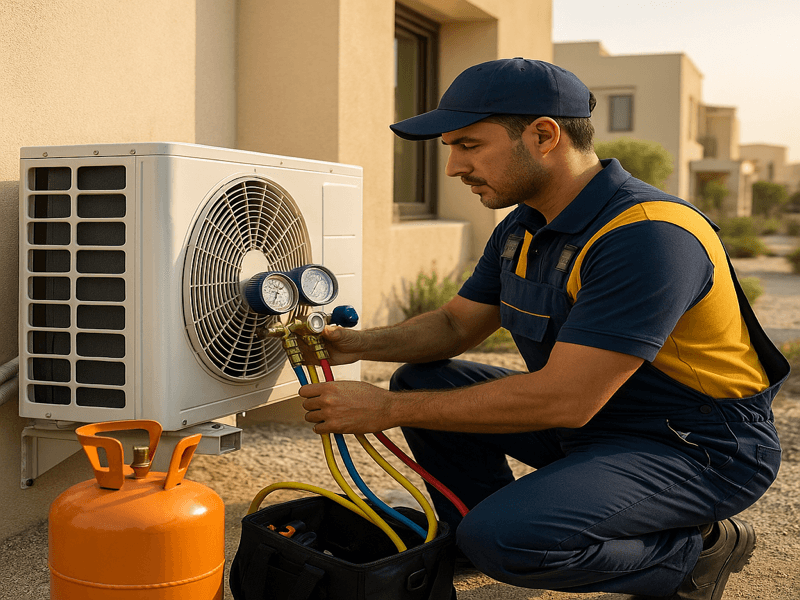
- Clean outdoor condenser coils (dust and sand reduce efficiency)
- Inspect and clear condensate drain lines
- cheque refrigerant lines for damage
Annually (professional):
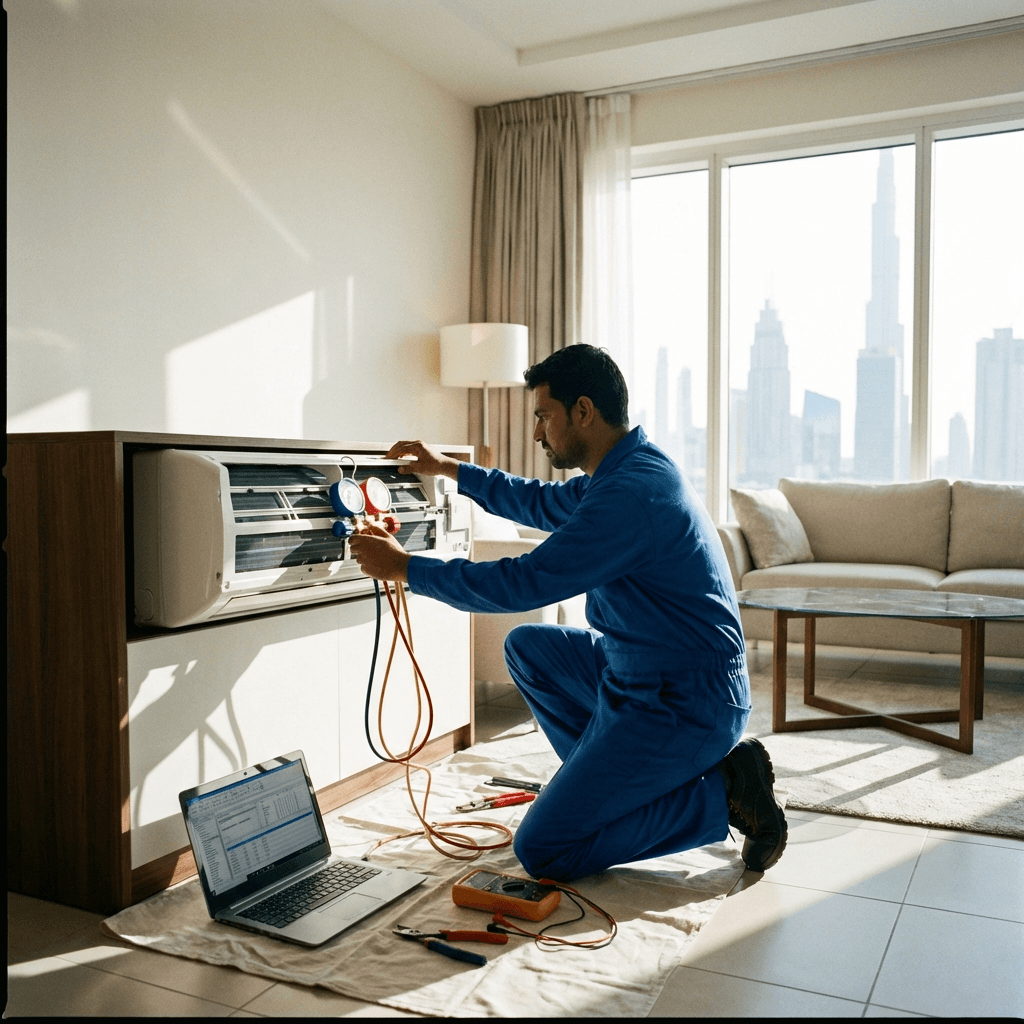
- Complete system service including refrigerant cheque
- Clean indoor evaporator coils
- cheque electrical connections and controls
- Verify proper refrigerant charge
Cost vs savings: Professional AC maintenance costs AED 200-400 annually. A poorly maintained system can waste AED 100-200 monthly in excess energy. The service pays for itself in 2-3 months.
Book annual AC maintenance before summer to ensure peak efficiency when it matters most.
System Sizing and Capacity
Undersized systems waste energy: Running constantly to (never quite) maintain temperature, they consume maximum power continuously with minimal effect.
Oversized systems also waste energy: Short-cycling (turning on/off frequently) rather than running steady-state efficient cycles, they never reach best efficiency and cause temperature swings.
Proper sizing requires calculation based on:
- Room/building square footage
- Ceiling height
- Insulation quality
- Sun exposure and window area
- Occupancy and equipment heat loads
If your system runs 24/7 in summer but never achieves comfortable temperature, it's likely undersized. Professional load calculation determines correct capacity.
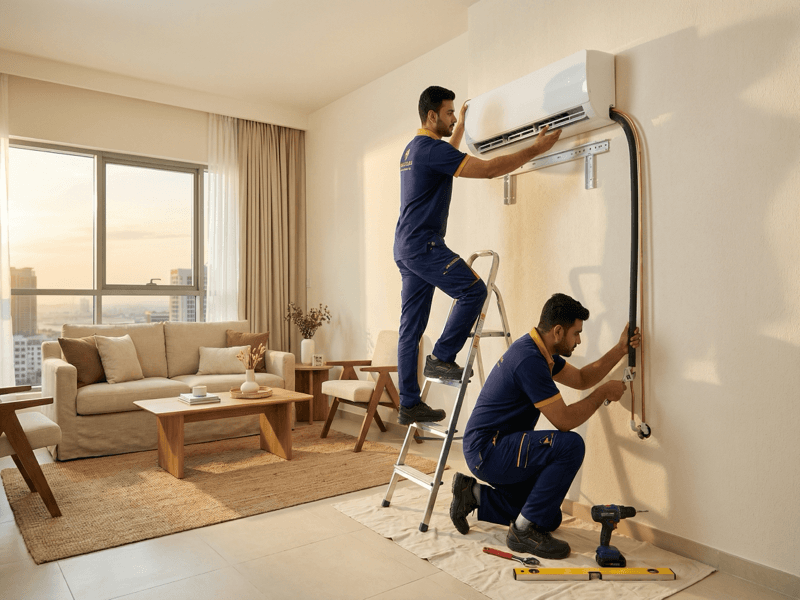
If you're replacing or adding AC capacity, invest in high-efficiency units (5-star rated). Initial cost premium pays back through lower operating costs.
Ductwork and Venting (Central Systems)
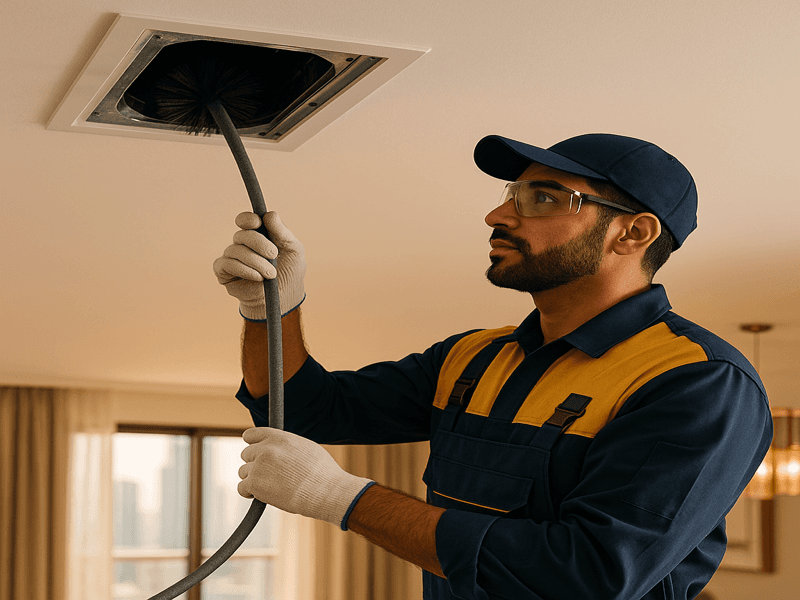
Leaky or poorly insulated ducts waste 20-30% of cooled air:
cheque for:
- Visible duct damage or disconnections
- Poor insulation on ducts in hot spaces (attics, utility areas)
- Dirty or damaged duct insulation
- Registers that blow weak air (indicates upstream leaks)
Solutions:
- Seal duct joints with mastic (not duct tape, which fails in heat)
- Insulate ducts in unconditioned spaces properly
- Have professional duct pressure test to identify hidden leaks
Cost: Duct sealing for typical villa runs AED 2,000-5,000, saves 15-25% of AC energy costs annually.
Smart AC Controls
Programmable and smart thermostats improve operation:
Features that save energy:
- Automatic temperature scheduling (warmer when away, cooler before arrival)
- Geofencing (raises temperature when you leave, cools before return)
- Usage learning (adapts to your patterns)
- Remote control (adjust from anywhere to avoid cooling empty home)
Typical savings: 10-20% of AC costs through better operation management.
Cost: Smart thermostat installation runs AED 800-2,000 depending on system complexity.
Home Insulation and Air Sealing
Your AC works against heat entering your home. Reduce heat gain, reduce AC load.
Window Treatments
Windows are massive heat-gain sources:
- Direct sun through windows can raise room temperature 5-8°C
- Glass conducts heat even without direct sun
- Poorly sealed windows leak cooled air constantly
Effective solutions:
Curtains and blinds:
- Thermal-backed curtains reduce heat gain 20-30%
- Blackout curtains provide maximum benefit
- Reflective blinds bounce heat away
- Keep closed on sun-facing windows during peak sun hours
Window film:
- Rejects 50-70% of solar heat
- Reduces glare without darkening rooms excessively
- Blocks UV without blocking view
- Cost: AED 50-150 per square metre installed, pays back in 2-4 years
Double glazing:
- Replaces single-pane windows with insulated dual-pane units
- Reduces heat gain 40-50%
- Cost: AED 400-800 per square metre, long payback but adds property value
Priority: Treat west and south-facing windows first - these see maximum sun exposure.
Door and Window Sealing
Air leaks waste cooling:
cheque for gaps:
- Run hand around closed windows and doors feeling for air movement
- On sunny day, darken room and look for light leaking around frames
- cheque window and door frames for visible gaps
Weatherstripping solutions:
- Self-adhesive foam strips for window gaps: AED 20-50 per window
- Door sweeps for bottom gaps: AED 30-80 per door
- Threshold seals for exterior doors: AED 50-150 per door
ROI: Materials cost AED 300-600 for typical apartment, save 5-10% AC energy annually.
Wall and Ceiling Insulation
Most Dubai homes have minimal insulation - a construction legacy from when energy was cheap.
Where insulation matters most:
- Top floor ceilings (roof heat soaks through)
- Exterior walls, especially sun-facing
- Floors above parking or storage in apartments
Retrofit options:
- Ceiling insulation: blown-in or board insulation between ceiling and roof
- Wall insulation: internal or external insulation panels (internal more common for retrofits)
- Reflective barriers: radiant heat shields in roof spaces
Reality cheque: Major insulation retrofits are expensive (AED 15,000-40,000 for villas) with long payback periods. Prioritise if:
- You own and plan long-term occupancy
- Current bills are exceptionally high despite other optimisations
- Property will benefit from increased value
For renters or shorter-term residents, focus on cheaper sealing and window treatments.
Water Heating Efficiency
Water heating is your second-biggest energy consumer:
Temperature Settings
Most water heaters are set hotter than necessary:
- Typical factory setting: 60-65°C
- Comfortable and safe: 50-55°C
- Every 5°C reduction saves approximately 5-10% water heating energy
Lower temperature benefits:
- Reduced energy consumption
- Slower scale buildup (extends heater life)
- Less risk of scalding
Trade-off: Temperatures below 50°C may encourage bacterial growth in tanks. 50-55°C balances safety, comfort, and efficiency.
Usage Habits
Hot water consumption directly drives costs:
Reduce usage:
- Shorter showers (every minute saved = ~10 litres hot water)
- Fix dripping hot water taps immediately
- Use cold water for laundry when possible
- Wash dishes efficiently (don't run hot water continuously while scrubbing)
Insulate hot water pipes in unconditioned spaces to reduce heat loss during delivery.
System Efficiency
Tank water heaters lose heat continuously through tank walls:
Improvements:
- Tank insulation jacket: AED 100-200, reduces standby losses 10-15%
- Timer control: Heat water only when needed (morning/evening), not 24/7
- Cost: AED 150-300 for timer, saves 20-30% of water heating energy
Heat pump water heaters (if replacing): Use 50-60% less energy than resistance element heaters but cost AED 3,000-6,000. Payback typically 4-7 years.
Solar water heating (if installing): Excellent investment for Dubai's sun exposure. Systems cost AED 8,000-15,000 for typical villa, reduce water heating costs 60-80%. Government incentives sometimes available.
Appliance Efficiency
Refrigerators and Freezers
Run 24/7, so efficiency matters:
Optimisation:
- Keep 70-80% full (thermal mass moderates temperature swings)
- Don't set colder than necessary (3-4°C fridge, -18°C freezer adequate)
- Ensure door seals are intact (test by closing door on paper - should resist pulling out)
- Clean condenser coils annually (dust reduces efficiency)
- Keep refrigerator away from heat sources (oven, direct sun, dishwasher)
If replacing: Choose 5-star energy-rated model. A new efficient refrigerator uses 40-60% less energy than 10-year-old models.
Typical savings: New efficient refrigerator saves AED 15-30 monthly vs old inefficient model.
Washing Machines and Dishwashers
Hot water cycles drive costs:
- Cold water washing adequate for most laundry
- Heat dishwasher water with appliance's internal heater if more efficient than water heater (depends on units)
Run full loads only - half-full loads waste water and energy per item washed.
Energy-efficient models use 25-40% less water and energy than standard models.
Ovens and Cooking
Ovens are energy-intensive:
- Use microwave or air fryer for small quantities (80% less energy than full oven)
- Don't preheat longer than necessary
- Use oven light to cheque food instead of opening door (loses heat)
- Turn off oven 5-10 minutes before cooking completes (residual heat finishes cooking)
Induction cooktops (if replacing): 85-90% energy efficiency vs 60-70% for electric resistance or 40-50% for gas.
Lighting and Electronics
Smaller impact, but easy wins:
Lighting
LED bulbs use 75-85% less energy than incandescent, 40-50% less than CFL:
- LED lifespan: 15,000-50,000 hours vs 1,000-2,000 for incandescent
- Payback period: 6-12 months through energy savings
- Replace all high-use lights immediately, replace others as they fail
Smart lighting:
- Automation ensures lights off when not needed
- Dimming capability further reduces consumption
- Typical savings: 20-30% of lighting costs
Electronics and Standby Power
"Phantom loads" from devices in standby:
- TVs, cable boxes, game consoles, computers, printers, chargers
- Each device draws 3-20 watts continuously
- Typical home: 50-100 watts total standby load = AED 15-30 monthly
Solutions:
- Power strips to fully shut off device clusters
- Smart plugs that cut power on schedule or when not in use
- Unplug chargers when not actively charging
Don't obsess over standby power - it's 2-3% of total bill. Address it after AC, water heating, and appliances.
Solar Power: Long-Term Investment
Dubai's solar potential is great: 300+ sunny days annually, high electricity costs, and government net-metering programmes create favourable economics.
Residential Solar Systems
Typical system sizes and costs:
- 5 kW (apartment, small villa): AED 25,000-35,000
- 10 kW (medium villa): AED 45,000-65,000
- 15+ kW (large villa): AED 65,000-100,000+
Payback period: Typically 6-10 years depending on consumption, system size, and electricity rates.
DEWA Shams Dubai programme:
- Allows rooftop solar with grid connection
- Net metering: Excess solar feeds grid, credited against consumption
- Application and approval process through DEWA
Considerations:
- Requires property ownership (landlords won't install for tenants)
- ROI improves with higher consumption (solar offsets expensive high-tier rates)
- Panel degradation ~0.5-0.7% annually (gradual output decline)
- Dubai climate: Dust reduces efficiency 5-10% (regular cleaning needed)
Is solar worth it?
- If you own, plan 10+ year occupancy, and have high bills: Usually yes
- If renting or short-term: No - payback exceeds your occupancy
- If bills are already low through efficiency: Marginal - limited savings to offset
Behaviour Changes: Free Savings
No-cost actions that reduce consumption:
Daily habits:
- Keep AC at 24°C minimum (acclimate over a week if currently lower)
- Close curtains on sunny windows during midday
- Turn off lights, TVs, and electronics when leaving rooms
- Take shorter, cooler showers
- Run dishwasher and washing machine with full loads only
- Air-dry clothes instead of using dryer when possible
Lifestyle adjustments:
- Cook during cooler evening hours (reduces AC load from cooking heat)
- Use outdoor spaces during morning/evening rather than midday (reduces AC usage)
- Adjust AC when sleeping (body requires less cooling when asleep)
- Turn off AC in unused rooms
Savings potential: 10-20% reduction through consistent behavioural changes alone.
Annual Efficiency Audit
Schedule yearly review of energy performance:
Analyse:
- DEWA bills over past 12 months: trends, anomalies, seasonal patterns
- Compare consumption to similar properties
- Calculate energy per square metre (standardised comparison)
- Identify sudden increases (indicate equipment failure or changed behaviour)
Inspect:
- AC system performance and maintenance needs
- Insulation and air sealing effectiveness
- Appliance condition and efficiency
- Lighting still using old technology
Plan:
- Equipment replacements needed short-term
- Efficiency upgrades to prioritise
- Behaviour changes to set up
- Professional assessments needed
Professional energy audit (thermal imaging, detailed analysis): AED 1,500-3,000, often identifies savings opportunities worth 10x the audit cost.
Efficiency Upgrade Priority Matrix
Budget-limited? Prioritise by ROI:
Immediate (Payback under 1 year):
- AC filter replacement and basic cleaning
- Weatherstripping doors and windows
- LED bulb replacement
- AC temperature setpoint adjustment
- Behavioural changes
Short-term (Payback 1-3 years):
- Professional AC maintenance service
- Thermal curtains for major windows
- Water heater timer
- Smart thermostat
- Tank insulation jacket
Medium-term (Payback 3-6 years):
- Window film installation
- AC system replacement (if old/inefficient)
- High-efficiency appliances (when replacing)
- Duct sealing and insulation
- Ceiling fan installation
Long-term (Payback 6+ years):
- Major insulation retrofits
- Solar power systems
- Window replacement with double glazing
- Heat pump water heater
Start at the top and work down. Immediate and short-term actions typically provide 60-70% of achievable savings for 10-15% of total investment.
Tracking and Measuring Success
You can't improve what you don't measure:
Daily/weekly:
- cheque DEWA app for current consumption
- Note unusual spikes or changes
- Adjust behaviours based on real-time feedback
Monthly:
- Compare bill to previous month and same month previous year
- Calculate cost per day and cost per kWh
- Note weather differences that affect consumption
Annually:
- Total annual consumption and cost
- Savings vs previous year (adjust for weather differences)
- Return on efficiency investments made
- Plan next year priorities
Set specific goals:
- "Reduce summer average from AED 1,200 to AED 900/month"
- "Maintain winter bills under AED 500"
- "Achieve 20% year-over-year reduction"
Specific goals with tracking drive sustained results. Vague intentions fade.
Reality cheque: What's Achievable?
Typical efficiency improvements by property type:
Older, inefficient properties:
- Often achieve 30-50% reduction through AC optimisation, sealing, and behavioural changes
- Highest ROI from initial improvements
Average properties:
- Usually achieve 15-25% reduction through systematic upgrades
- Good ROI on medium-cost improvements
Already-efficient properties:
- May achieve 5-15% additional reduction
- Lower ROI, diminishing returns on investments
Don't expect miracles. Physics limits how efficient you can make a home in Dubai's extreme climate. But most properties waste enough energy that significant improvement is possible.
Final Thoughts
Energy efficiency in Dubai isn't about sacrifice or discomfort. It's about eliminating waste - paying for cooling that escapes through poor sealing, running equipment inefficiently, and using energy out of habit rather than need.
The most effective strategy combines:
- Behavioural optimisation (free, immediate impact)
- System maintenance (low cost, high return)
- Strategic upgrades (focused on biggest savings opportunities)
Start with the free and cheap actions. Track results. Use savings to fund next-tier improvements. Over 2-3 years of systematic efficiency enhancement, most properties can reduce bills 25-40% while maintaining or improving comfort.
Your AC and water heater are your biggest opportunities. Focus there first. Everything else is marginal.
And remember: the most expensive energy is the energy you waste. Every dirham saved on utilities is a dirham you keep.
For professional efficiency assessment and system optimisation, annual maintenance contracts include systematic inspections that identify waste and inefficiency before they cost you money.