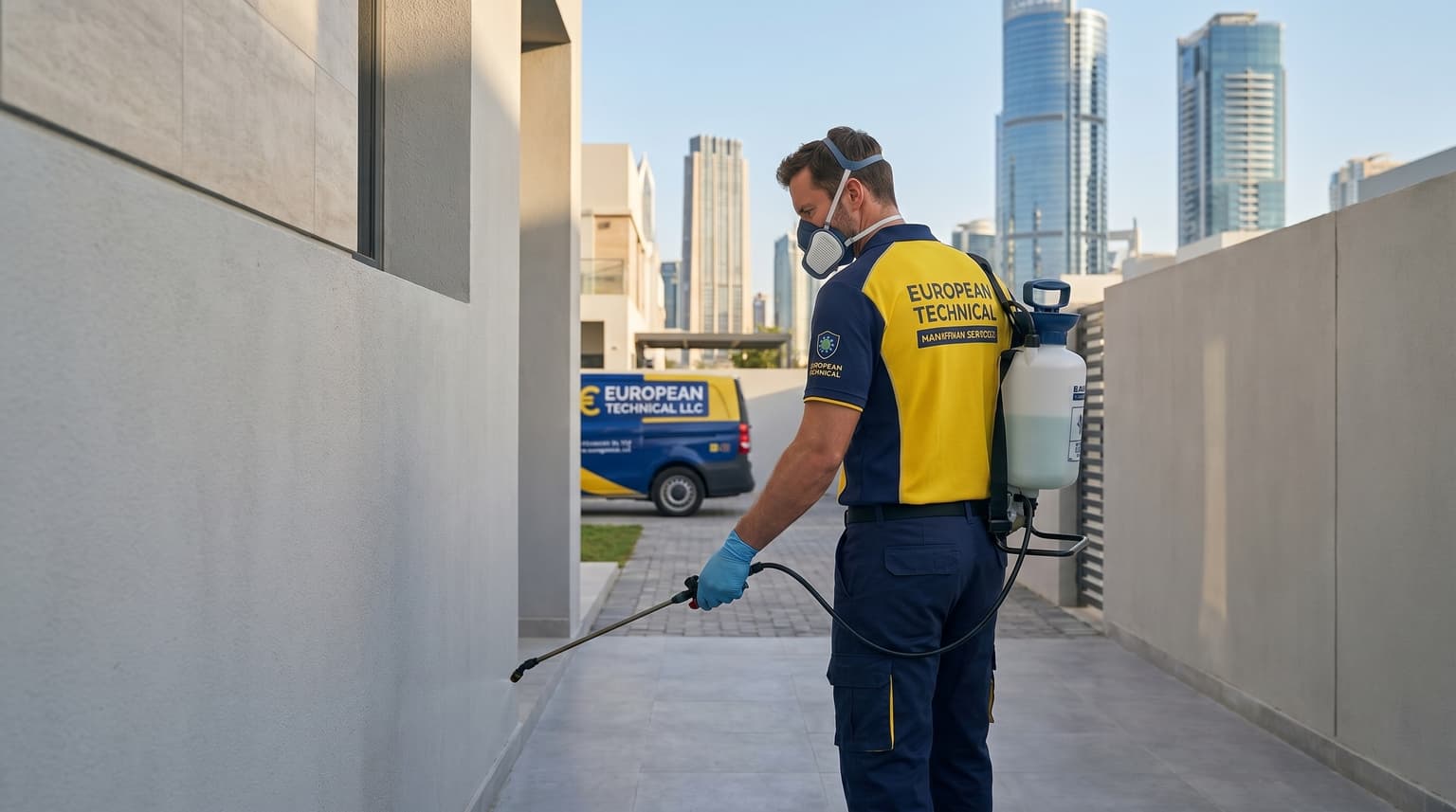
Dubai has a pest problem that rarely gets talked about openly. Year-round warmth, summer humidity, near-constant construction disturbing soil, and a dense mix of residential and food businesses create conditions where pests don't just survive - they flourish. Cockroaches, bedbugs, rodents, ants, and termites show up across all property types, from studio apartments in Deira to large villas in Mohammed Bin Rashid City.
What follows covers the key things worth knowing about pest control services in Dubai: which pests are most common, what treatment actually involves, current market pricing, and how to pick a company that solves the problem rather than cycling through repeat visits indefinitely.
Common Pests in Dubai Homes and What Drives Them
Cockroaches are the most widespread pest complaint in Dubai. German cockroaches favour kitchens and bathrooms while American cockroaches enter through drains and sewage infrastructure. Both species reproduce fast, are nocturnal, and spread bacteria across food surfaces. Spotting one in daylight usually means a significant infestation is already established behind walls or under appliances.
Bedbugs have risen steadily across Dubai, partly because of high resident turnover and frequent international travel. These insects travel in luggage, clothing, and second-hand furniture. Hygiene has nothing to do with it - bedbugs feed on blood and will move into clean, well-maintained properties without hesitation. Watch for dark spots on mattress seams, unexplained itchy bites, and a faint sweet odour in rooms that are heavily infested.
Rodents are active across older residential areas including Deira, Satwa, and parts of Bur Dubai, as well as in newer communities where construction disturbs established nesting sites. Gnawing damage to wiring, contaminated food stores, and scratching sounds in walls or ceilings overnight are the clearest signs.
Ants - particularly pharaoh ants and ghost ants - enter through gaps around window frames, utility penetrations, and silicone sealant that has started to fail. Sugar, food residue, and moisture sources attract foragers indoors, and colonies from outside can send workers into a property at any time of year.
Termites do the most structural damage of any pest in Dubai, and they do it without obvious signs until the damage is already severe. Subterranean termites are the dominant local species, targeting timber, door frames, and wooden furniture. Mud tunnels running up walls, hollow-sounding timber when tapped, and discarded wings near window sills are all signals worth acting on quickly.
Flies and mosquitoes peak between May and October. Heat and humidity together create ideal breeding conditions, and standing water in plant saucers, blocked drains, or untreated pools produces a new generation of mosquitoes within days. Communal bins and exposed waste areas are the main draw for flies looking to move indoors.
What Dubai Municipality Requires
Pest control in Dubai operates under Dubai Municipality guidelines. Commercial properties - restaurants, food stores, and retail outlets - must maintain regular pest control records as part of their operating licences. Residential properties carry no equivalent legal obligation, though landlords and property managers of multi-unit buildings frequently arrange routine treatments to protect the building and meet tenant expectations.
Residential tenants should review their contracts carefully. Most agreements place responsibility for minor pest issues on the tenant during the tenancy, with the landlord responsible for pre-tenancy treatment. Knowing which applies before a problem develops avoids disputes later.
Types of Pest Control Treatment
Different pests require different approaches, and understanding the options makes it easier to assess whether a quoted treatment is appropriate for your situation.
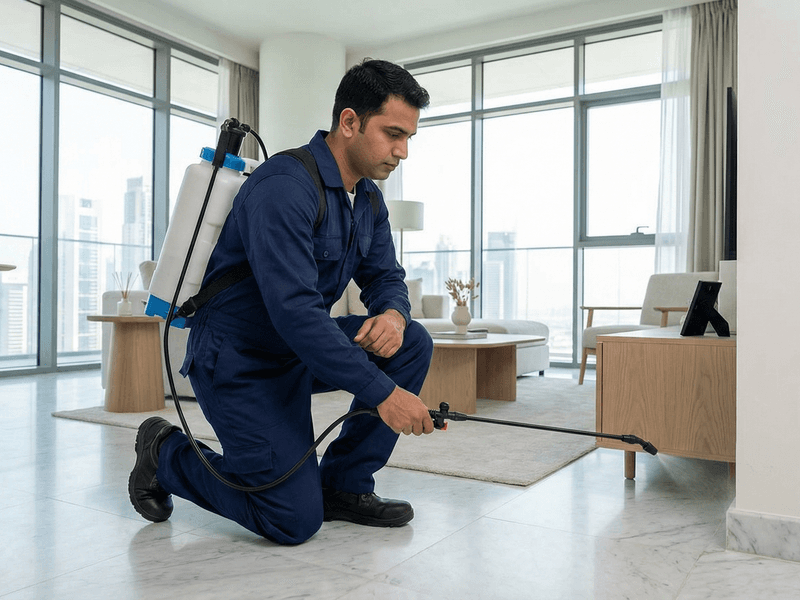
Spray treatment (residual insecticide) is the standard method for cockroach and ant infestations. A licensed technician applies product to skirtings, under appliances, inside cabinets, and around entry points. Effective for moderate infestations, though occupants must vacate for two to four hours afterwards.
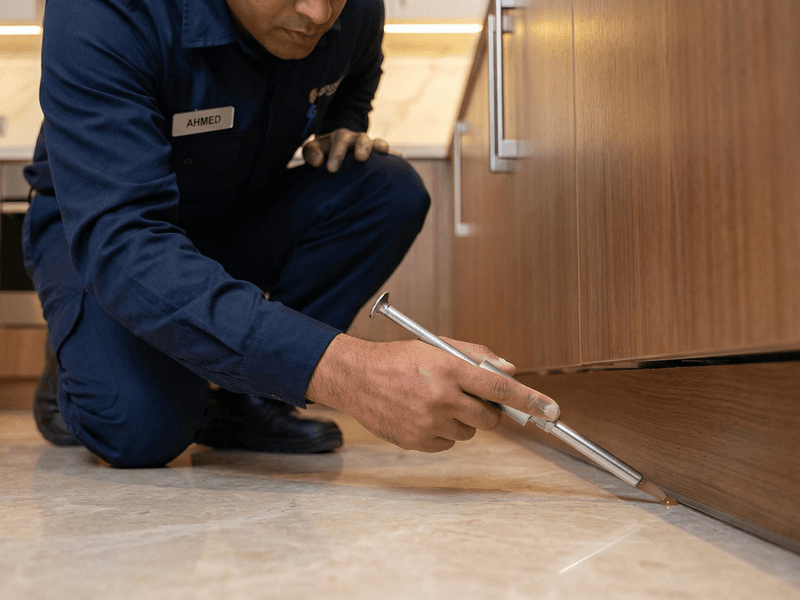
Gel baiting works better than spray in kitchens and food preparation areas. Applied in small dots inside cabinets and around appliances, the bait is carried back to the colony by cockroaches, reaching populations hidden behind walls and in voids. No need to vacate, and surfaces stay clear of residue.
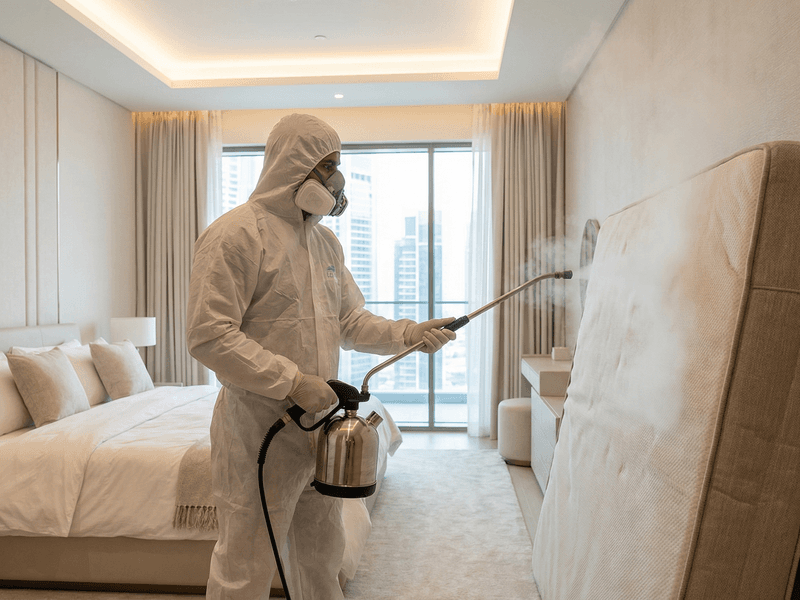
Heat treatment is the most reliable method for bedbugs. Specialist equipment raises the room to 55-60°C for several hours, killing insects and eggs at every life stage without chemicals. Costlier than spray approaches, but it avoids the chemical resistance issues that some bedbug populations have developed.
Fumigation covers severe termite infestations and some stored product pest problems. The property is sealed and a fumigant gas introduced. Residents vacate for 24 to 72 hours. Residential properties rarely need this level of intervention unless the infestation is structural and widespread.
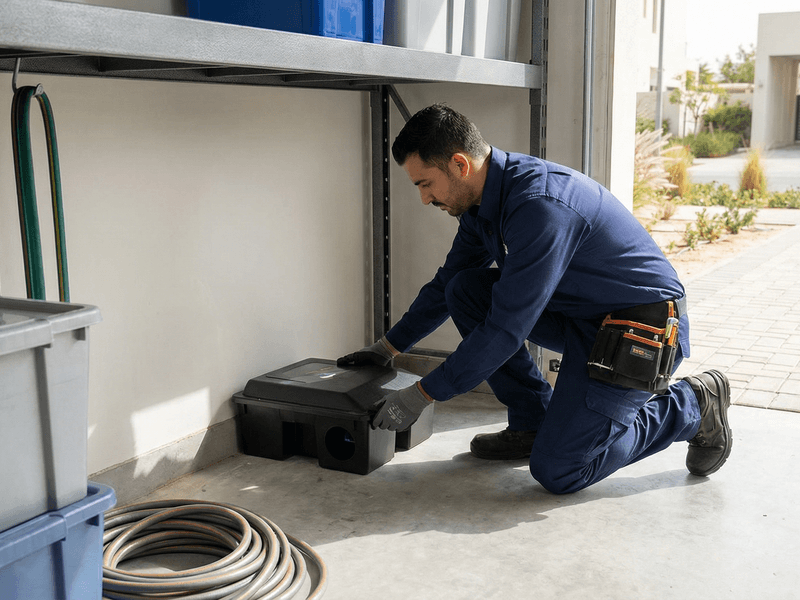
Rodent control combines tamper-resistant bait stations, mechanical traps, and entry point sealing. One visit is rarely sufficient - managing rodents properly requires follow-up to assess bait uptake and confirm access points have been closed off.
Preventive programmes - monthly or quarterly spray visits - are common in older residential areas and buildings with known pest pressure from surrounding properties. The goal is preventing infestations from establishing rather than treating them after the fact.
How Much Does Pest Control Cost in Dubai?
Prices vary by treatment type, property size, and pest species. These are realistic current market rates:
| Service | Approximate Cost (AED) | --- | --- | Studio apartment - general spray treatment | AED 150 to 250 | 1-2 bedroom apartment - general spray | AED 200 to 350 | Villa - general spray treatment | AED 350 to 600 | Bedbug heat treatment (per room) | AED 800 to 1,500 | Bedbug chemical treatment (full apartment) | AED 500 to 900 | Termite treatment (per room or per linear metre) | AED 500 to 2,000+ | Monthly preventive programme (apartment) | AED 100 to 200/visit | Rodent control (initial visit + setup) | AED 300 to 600 |
|---|
Annual maintenance contracts covering quarterly or bi-monthly pest control are offered by most Dubai companies and typically reduce per-visit cost by 20 to 30 per cent compared to one-off bookings.
Choosing a Pest Control Company in Dubai
Dubai Municipality licensing is the baseline. Every legally operating pest control company must hold a valid licence, and technicians must be certified to handle the pesticides they apply. Asking for the licence number takes 30 seconds and eliminates a lot of risk.
Product transparency matters too. Reputable operators use chemicals registered with the UAE Ministry of Climate Change and Environment and can name the active ingredients without hesitation. Safety data sheets should be available on request.
Price is a useful signal. Jobs quoted at AED 50 to 80 for a full apartment almost clearly involve diluted product, skipped treatment areas, or uncertified labour. Spend that little and the infestation will be back within weeks.
A warranty period tells you whether a company stands behind its work. Thirty to ninety days with a free follow-up if the problem returns is standard practise among established Dubai operators.
For cockroach problems specifically, ask whether gel baiting is part of the approach. Any company that insists on spray-only treatment for kitchen infestations without discussing gel baiting isn't tailoring their method to your situation.
When to Call European Technical
Our pest control team operates across all Dubai areas - from apartments in Discovery Gardens and International City to larger villas in Jumeirah and Al Barsha. All technicians hold valid Dubai Municipality certifications, and we use products registered with UAE authorities.
We're the right call when:
- You've had recurring pest problems despite previous treatments
- You're moving into a new property and want a clean start
- A bedbug issue has been identified and you need heat treatment
- Termite activity has been found and requires urgent assessment
- You want a preventive programme to manage pest pressure year-round
Every job begins with a full property inspection to confirm what's present before any treatment starts. Call +971 58 544 1160 or message us on WhatsApp to arrange an assessment.
Frequently Asked Questions
How long do I need to stay out of the property after spray treatment? Two to four hours is standard for most insecticide spray treatments. Some products require longer - your technician will confirm the specific re-entry time for the product being used. Pets should be kept away for the same period, and fish tanks should be covered and filters switched off during treatment.
Will one treatment be enough? For many cockroach and ant infestations, a single thorough treatment combined with gel baiting provides lasting control. Bedbugs and termites nearly always require at least two visits. Rodent problems require ongoing management until entry points are fully sealed. Your technician will give a realistic assessment after the initial inspection.
What can I do to reduce the chances of pests coming back? Seal gaps around pipes, cable penetrations, and window frames with silicone. Store food in sealed containers. Fix any plumbing drips - even small moisture sources attract cockroaches and ants. Clear standing water from plant saucers and balconies. Take rubbish out daily during summer months.
Is pest control safe for children and pets? Modern gel bait products used by professional operators carry very low toxicity for mammals. Spray treatments require the standard re-entry period. Heat treatment for bedbugs involves no chemicals at all. A professional technician will advise on precautions specific to the treatment being carried out.
My neighbour has a cockroach problem. Will it spread to me? Cockroaches move through shared infrastructure - particularly drainage and utility ducts in apartment buildings. If a neighbouring unit has a significant infestation, there's a real risk of spread. A preventive spray along entry points, drains, and skirtings is a reasonable step while the neighbouring infestation is being addressed.
Deal with pest problems early and they stay manageable. Leave them, and they compound fast. Book a pest control inspection with European Technical today, or see our full pest control services for ongoing protection options.
Published by the European Technical Team