Termite Treatment Dubai: A Complete Guide to Protecting Your Property
If you have ever spotted tiny mud tubes running up a wall, or discovered hollow-sounding timber where there should be solid wood, termites may already be at work in your property. In Dubai, where humidity, sand and warm temperatures create ideal conditions for subterranean colonies, termite damage can go undetected for months , until a wall panel crumbles or a skirting board gives way underfoot.
This guide explains how to identify a termite problem, what treatment options exist, how much you should expect to pay, and when to call a licensed pest control company rather than attempt a DIY fix.
Why Termites Are a Serious Problem in Dubai Properties
Dubai's climate is one of the most favourable environments on earth for the subterranean termite, Coptotermes gestroi , the species responsible for the vast majority of structural damage in the UAE. Colonies nest underground and travel through soil and mud tubes to reach cellulose-based materials: timber, cardboard, skirting boards, door frames, built-in wardrobes, and even paper files left on the floor.
What makes termites especially damaging is their silent operation. Unlike cockroaches or rodents, termites leave almost no surface evidence until the infestation is advanced. A colony of 300,000 workers can consume up to three grams of wood per day, and a large colony can damage structural timber in as little as six months.
Common areas at risk in Dubai villas and apartments include:
- Ground-floor skirting boards and door frames , soil contact points
- Bathroom and kitchen cabinetry , moisture encourages colony spread
- Roof spaces and false ceilings , dark, undisturbed wood
- Built-in wardrobes and storage rooms , rarely inspected for long periods
- Garden structures and pergolas , direct soil-to-timber contact
Warning Signs: How to Tell if You Have Termites
Spotting an infestation early limits the damage and reduces treatment cost significantly. Look out for:
Mud tubes , Small pencil-width tunnels of soil and saliva on walls, pipes, or foundations. These are the termites' highways between their underground nest and their food source.
Hollow or damaged wood , Tap wooden skirting boards, door frames, or furniture with a screwdriver handle. A hollow sound suggests the interior has been eaten away.
Discarded wings , After a swarm, termites shed their wings near window sills, doorways, and light fittings. A pile of tiny translucent wings is a clear warning sign.
Bubbling or blistered paintwork , Moisture from termite activity can cause paint to bubble or peel, often mistaken for a water leak.
Fine sawdust-like droppings , These may appear around timber furniture or skirting boards.
If you notice any of these signs, arrange a professional inspection promptly. Do not disturb mud tubes or exposed workings before treatment , this causes the colony to relocate deeper into the structure.
Termite Treatment Options in Dubai
1. Soil Barrier Treatment (Most Common)
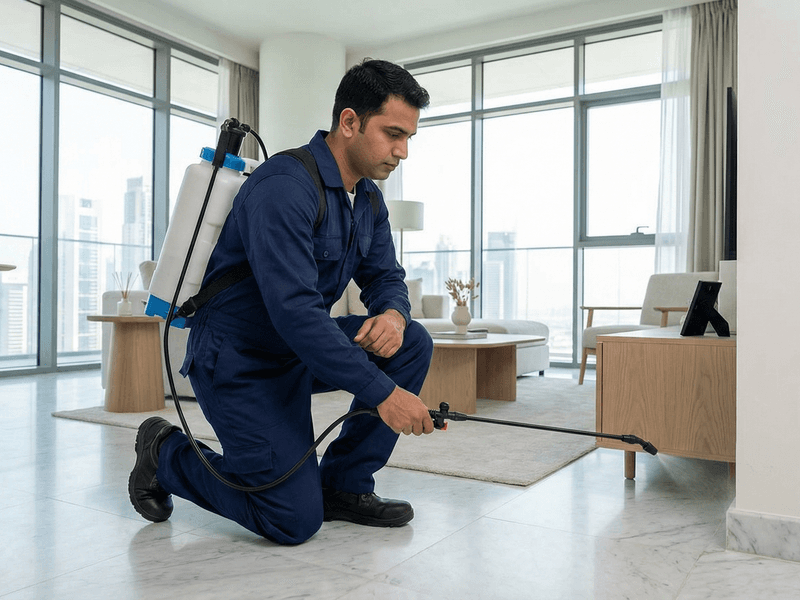
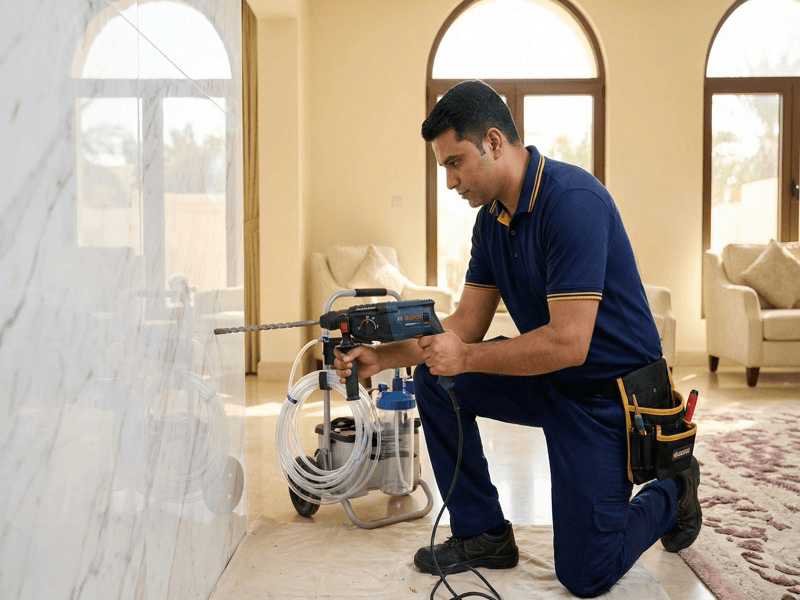
A licensed technician drills small holes in the concrete slab around the perimeter of the property and injects a termiticide solution , typically imidacloprid or fipronil , into the soil beneath. This creates a chemical barrier that termites must pass through, eliminating foragers before they reach the structure.
Best for: Villas, townhouses, ground-floor apartments, and any property with a concrete slab foundation.
Approximate cost in Dubai: AED 800 to AED 2,500 for a standard villa, depending on floor area and compound layout.
Treatment duration: The chemical barrier remains effective for five to eight years, after which reapplication is recommended.
2. Baiting Systems
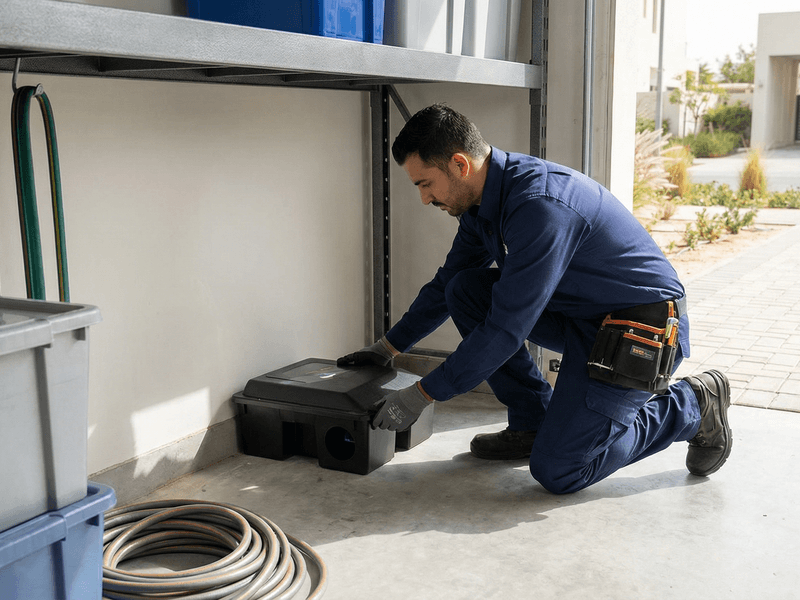
Plastic bait stations containing cellulose laced with slow-acting insect growth regulators are installed at intervals around the property perimeter. Termites feed on the bait and carry it back to the colony, eventually eliminating the queen and collapsing the nest.
Best for: Properties where drilling is not feasible (heritage buildings, tiled terraces) or as a monitoring system post-treatment.
Approximate cost in Dubai: AED 1,500 to AED 4,000 for installation plus quarterly monitoring visits.
3. Localised Foam or Direct Injection
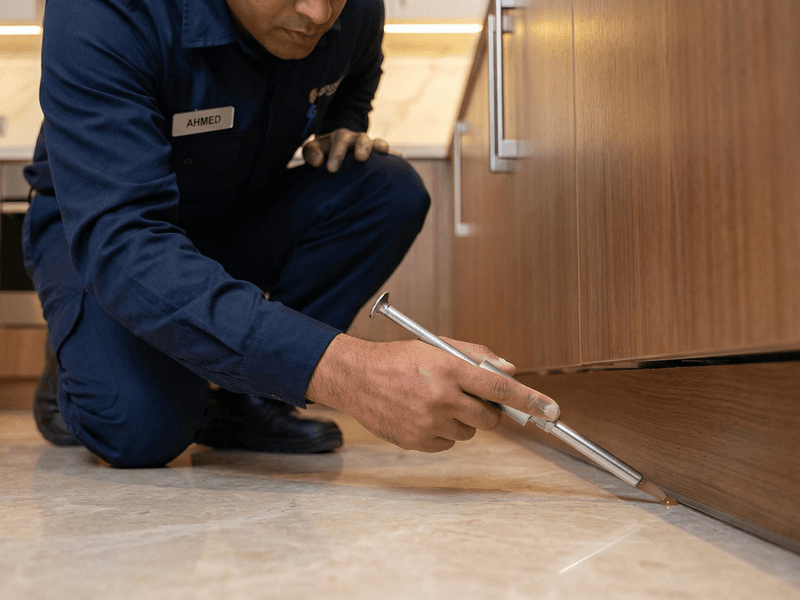
For isolated infestations , a single affected skirting run or a built-in wardrobe , a technician can inject foam termiticide directly into the cavity, eliminating the active colony.
Best for: Apartments or properties where soil treatment is not practical.
Approximate cost in Dubai: AED 400 to AED 900 per affected area.
4. Fumigation
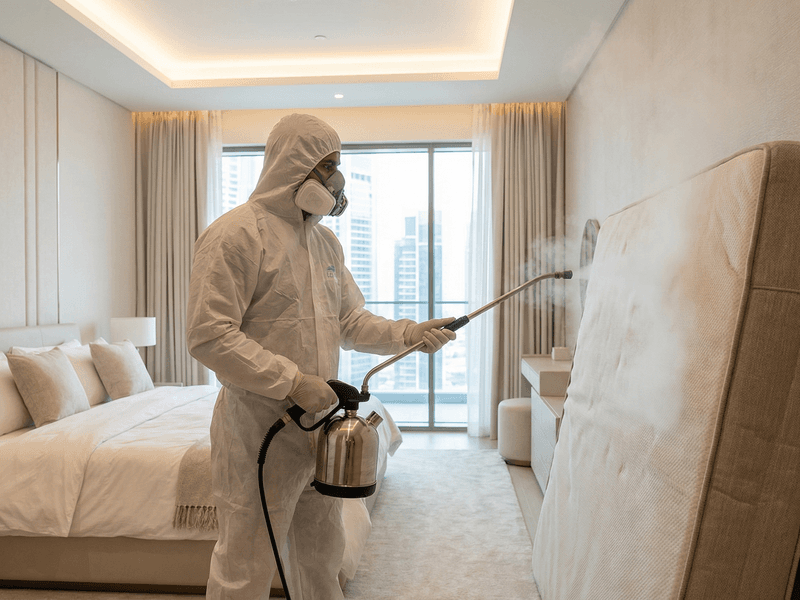
Whole-structure fumigation using sulfuryl fluoride is reserved for severe infestations where multiple areas are affected simultaneously. The property must be vacated for 24 to 48 hours.
Best for: Large infestations in furnished properties where colony spread is extensive.
Approximate cost in Dubai: AED 3,000 to AED 8,000 depending on property size.
How Much Does Termite Treatment Cost in Dubai?
| Treatment Type | Typical Range (AED) | Duration |
|---|---|---|
| Soil barrier (apartment) | 600 , 1,200 | 5, 8 years |
| Soil barrier (villa) | 800 , 2,500 | 5, 8 years |
| Bait stations (initial) | 1,500 , 4,000 | Ongoing monitoring |
| Localised foam injection | 400 , 900 | Single event |
| Full fumigation | 3,000 , 8,000 | Single event |
Prices vary by company, compound access, and the extent of the infestation. Always request a written quotation after the initial inspection, and confirm whether the price includes a guarantee period with free retreatment.
Pre-Treatment and Post-Treatment: What to Expect
Before treatment:
- Clear access to skirting boards, built-in furniture, and any affected areas
- Move food, utensils, and pet bowls away from treated zones
- Follow specific instructions from your pest control technician regarding ventilation
- Soil treatment typically takes two to four hours for an average villa
- You do not need to vacate the property for soil treatment or direct injection
- Fumigation requires full property evacuation
- Avoid watering garden areas adjacent to the treated perimeter for 48 hours
- Keep drainage channels clear , pooled water reduces barrier effectiveness
- Schedule an inspection 30 days after treatment to confirm success
DIY Termite Control: What Works and What Doesn't
Hardware stores in Dubai carry borate-based sprays and surface applications. These can deter termites from exposed timber but have no effect on an established subterranean colony , the nest remains intact underground. DIY methods are appropriate only as a preventive measure on new, untreated timber.
For any active infestation, professional treatment using soil injection or baiting systems is the only reliable solution. Attempting DIY treatment on an active infestation typically delays professional intervention, during which the colony continues to spread.
When to Call European Technical
Call us if you notice any of the warning signs described above, or if:
- A previous soil barrier treatment is more than five years old
- You are moving into a new property and want a pre-tenancy inspection
- You have spotted a swarm of winged insects around lights or window sills in spring
- A neighbour in your villa compound has recently treated for termites (infestations spread through shared soil)
Call us on +971 58 544 1160 or reach us via WhatsApp to book an inspection. We offer same-day response for active infestations.
Frequently Asked Questions
How long does a termite inspection take?
A standard inspection of a two- to three-bedroom villa takes 45 to 60 minutes. The technician checks all accessible timber, skirting boards, door frames, roof spaces, and external foundations. A written report with treatment recommendations is provided after the inspection.
Are termite treatments safe for children and pets?
Soil barrier treatments use low-toxicity products applied below the concrete slab. Once the solution has dried, the treated area poses no risk to residents. Your technician will advise on any specific precautions for your property.
How do I know if the treatment has worked?
A follow-up inspection 30 days after treatment checks for any new mud tube activity or continued wood damage. European Technical includes a 12-month guarantee with all soil barrier treatments , if termites return during this period, we retreat at no additional charge.
Can termites come back after treatment?
A well-applied soil barrier eliminates the active colony and deters new colonies from crossing into the treated zone. Baiting systems require regular monitoring to catch any new activity early. No treatment offers a permanent, lifetime guarantee, which is why we recommend periodic inspections every two to three years.
Do I need to treat the whole building or just the affected area?
For subterranean termites, localised treatment rarely eliminates the problem because the colony nest is underground and often extends well beyond the affected room. A whole-perimeter soil barrier is the most effective approach for villas and ground-floor properties.
Protect Your Property Before Termites Take Hold
Termite damage in Dubai can run to tens of thousands of dirhams in structural repairs , far more than the cost of a preventive treatment or a prompt response to an early warning sign. Whether you have spotted mud tubes, discovered hollow timber, or simply want peace of mind before renting or purchasing a property, European Technical's licensed pest control team is ready to help.
Book an inspection today or call +971 58 544 1160 , available seven days a week across Dubai.