How Often Should You Clean Your Water Tank in Dubai?
Clean, safe water is something every Dubai household relies on. Yet the tank sitting on your roof or buried beside your villa quietly stores every drop you drink, cook with, and bathe in. Most residents never give it a second thought until the water tastes odd, smells stale, or a family member falls ill.
Water tanks are not fit-and-forget systems. Even sealed tanks eventually fall victim to sediment, algae, and bacteria. Dubai's extreme heat and humidity accelerate the problem. So how often should you actually clean your water tank? The short answer for most villas is every six months. The longer answer depends on your tank size, location, usage, and whether the tank is exposed to direct sunlight.
This guide breaks down the legal requirements, the practical factors that change your cleaning schedule, and what happens if you skip it.
The Legal Requirement: Dubai Municipality By-Law No. 11 (2003)
Let us start with the rulebook. Dubai Municipality By-Law No. 11 of 2003 mandates that all residential properties must have their water tanks cleaned at a minimum of every six months. This is not a suggestion. It is a legal requirement designed to protect public health.
The by-law applies to every residential property in Dubai, whether you live in a studio apartment in Business Bay or a four-bedroom villa in Arabian Ranches. If your property has a water storage tank, it falls under this regulation.
For landlords and property managers, compliance is particularly important. A tenant who discovers their water tank has not been cleaned in over a year has grounds to raise a maintenance complaint. In shared buildings, the owners association or building management typically handles tank cleaning as part of communal maintenance. For standalone villas and townhouses, the responsibility falls directly on the owner or tenant, depending on the tenancy agreement.
The minimum frequency stated in the by-law is once every six months. However, Dubai Municipality prefers more frequent cleaning where conditions warrant it. Many professional maintenance companies recommend biannual cleaning as a baseline, with quarterly cleaning for tanks that face specific challenges.
Factors That Affect How Often Your Water Tank Needs Cleaning
Not every tank wears at the same rate. A 2,000-litre tank tucked under a shaded roof in JVC will behave very differently from a 5,000-litre tank baking in direct sunlight on a villa roof in Arabian Ranches. Here are the key factors that determine your ideal cleaning frequency.
Tank Size
Size matters. A 2,000-litre tank typically needs cleaning every six months. That is the standard schedule for most Dubai villas and smaller properties. The water turnover is relatively quick, and sediment does not accumulate as fast.
Tanks of 5,000 litres or more tell a different story. Larger tanks hold more water for longer periods, which means sediment has more time to settle and bacteria has more opportunity to grow. For these tanks, quarterly cleaning is advisable. This is particularly relevant for larger villas in communities like Arabian Ranches, The Springs, or Palm Jumeirah, where big households demand high-capacity storage.
Sunlight Exposure
Dubai's sun is relentless. From May to September, rooftop temperatures can exceed 50 degrees Celsius. If your water tank is exposed to direct sunlight, the warmth inside the tank creates ideal conditions for algae growth and bacterial proliferation.
Shaded tanks or those installed indoors fare better. They stay cooler and are less prone to biological contamination. If your tank sits on an exposed roof with no shading structure, consider quarterly cleaning regardless of its size.
Water Usage Patterns
How quickly your household cycles through water affects tank cleanliness. A family of six in a five-bedroom villa will empty and refill their tank far more frequently than a couple in a two-bedroom apartment. High turnover means less stagnation, which means slower bacterial growth.
Conversely, if you travel frequently or own a holiday home that sits empty for weeks, your water stagnates. Stagnant water is a breeding ground for bacteria. Properties in Dubai Marina and Downtown that serve as second homes should be cleaned before each occupancy period, or at minimum every six months regardless of usage.
Tank Material and Age
Older tanks, particularly those made from lower-grade plastic or fibreglass, degrade over time. Micro-cracks form, seals weaken, and contaminants find their way in. If your tank is more than eight to ten years old, more frequent inspection and cleaning is wise.
Modern polyethylene and GRP (glass reinforced plastic) tanks are more durable, but they still require regular maintenance. The material affects how algae adheres to interior surfaces and how easily the tank can be cleaned.
Industrial and Commercial Tanks
Industrial water tanks that store water for processes like cooling or irrigation require a different schedule. These tanks typically need cleaning every three to six months, depending on the application and water source. If you manage a commercial property in Business Bay or an industrial facility in Al Quoz, consult your maintenance provider for a tailored schedule.
What Happens When You Do Not Clean Your Water Tank
Neglecting water tank cleaning is not simply a cosmetic issue. The consequences build up slowly and silently until they become serious.
Health Risks
Contaminated water tanks pose direct health risks to anyone consuming or bathing in the water. Bacteria such as Legionella, E. coli, and other pathogens thrive in warm, stagnant water with sediment buildup. In Dubai's climate, where tank water can reach tepid temperatures, the risk is amplified.
Children, elderly residents, and anyone with a compromised immune system are particularly vulnerable. Symptoms of waterborne illness range from mild stomach upset to more serious gastrointestinal infections.
Water Quality Deterioration
Even before bacteria reach dangerous levels, you will notice changes in water quality. The water may develop an unpleasant taste or odour. You might see discolouration, particularly a brownish or greenish tint caused by sediment and algae. Soap may not lather properly, and your skin might feel dry or irritated after showering.
These are warning signs. If you notice any of them, schedule a cleaning immediately rather than waiting for your next routine appointment.
Damage to Plumbing and Appliances
Sediment from a dirty tank does not stay in the tank. It travels through your pipes and into your appliances. Over time, this sediment clogs showerheads, taps, washing machine inlet filters, and water heaters. The cost of replacing a corroded water heater or descaling pipework far exceeds the cost of regular tank cleaning.
Hard water is already a known issue in Dubai. When you combine mineral-rich hard water with a neglected tank, the scale buildup accelerates. Your geyser works harder, consumes more electricity, and has a shorter lifespan.
Foul Odours
A dirty tank often announces itself through smell. If your bathroom or kitchen water smells musty, earthy, or sulphurous, the tank is likely the culprit. This is particularly common in villas where the tank has been left uncleaned for over a year.
The Cleaning Process: What Professional Tank Cleaning Involves
Understanding what happens during a professional cleaning helps you appreciate why it is worth hiring specialists rather than attempting a DIY approach.
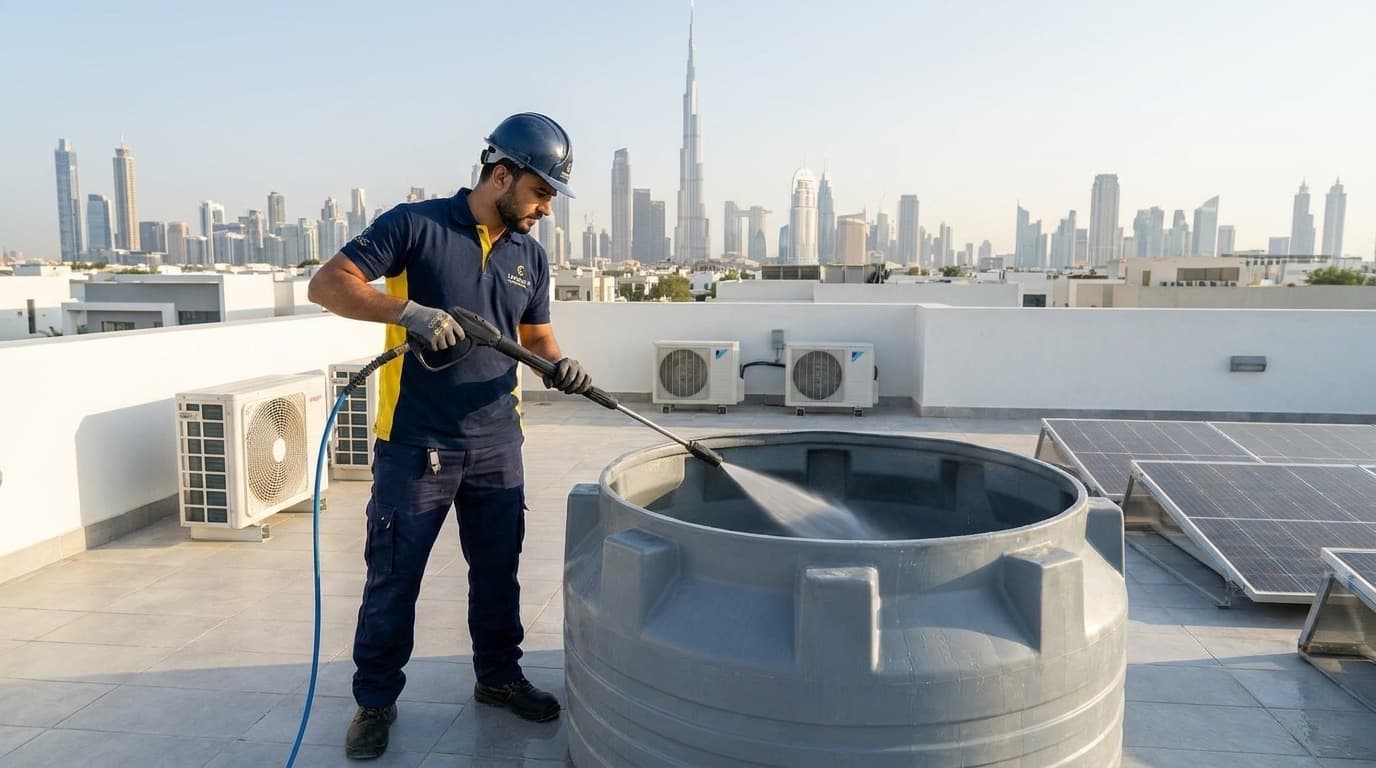
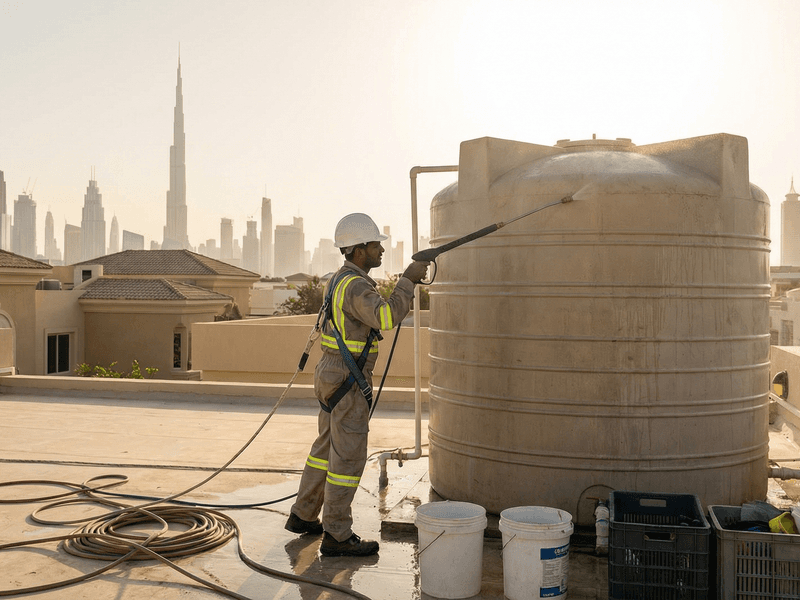
A proper water tank cleaning service follows a structured process. First, the technician drains the tank completely. This allows them to inspect the interior for cracks, algae growth, and sediment accumulation. They then manually scrub the interior walls and floor using food-safe cleaning agents. High-pressure water jets remove stubborn residue and biofilm.
After scrubbing, the tank is rinsed thoroughly. A disinfection stage follows, typically using chlorine or an approved sanitising solution. The tank is then rinsed again to remove all traces of the disinfectant. Finally, the tank is refilled and the water is tested for quality before being declared safe for use.
The entire process takes between two and four hours for a standard residential tank. For larger tanks or heavily contaminated ones, it can take longer.
Professional cleaning companies in Dubai should provide a service report documenting the condition of the tank, the cleaning agents used, and the results of water quality tests. Keep this report for your records, particularly if you are a landlord.
Practical Scheduling for Dubai Properties
Different property types in Dubai have different needs. Here is a practical breakdown.
Apartments in Marina, Downtown, and Business Bay
Most apartments rely on building-level water tanks managed by the building management or owners association. Individual unit owners rarely have separate tanks. If you own or manage an apartment, confirm with your building management that communal tank cleaning is happening every six months as required. Request the service report if you have concerns.
Villas in JVC, Arabian Ranches, and The Springs
Villas typically have individual tanks, usually ranging from 2,000 to 5,000 litres. For a standard 2,000-litre tank, schedule cleaning every six months. For larger tanks or those in direct sunlight, move to a quarterly schedule.
The best times to clean are spring (March to April) and autumn (October to November). Avoid the peak summer months if possible, as water demand is highest then and the heat makes the job more uncomfortable for technicians.
Holiday Homes and Investment Properties
If your property sits empty for extended periods, water stagnates in the tank. Schedule a cleaning before each long occupancy period. At minimum, clean the tank every six months even if the property is unoccupied, because stagnant water degrades faster than water in regular use.
The Cost of Neglect Versus the Cost of Maintenance
A standard residential water tank cleaning in Dubai typically costs between AED 250 and AED 600, depending on tank size, accessibility, and the level of contamination. Larger tanks or those requiring more intensive cleaning will cost more.
Compare that to the cost of replacing a water heater damaged by sediment buildup, which can run into thousands of dirhams. Or consider the medical costs and lost workdays from a waterborne illness affecting your family. Regular cleaning is a small investment that prevents far larger expenses down the line.
For property owners managing multiple units, an annual maintenance contract bundles water tank cleaning with other essential services like AC servicing, plumbing checks, and electrical inspections. This ensures nothing falls through the cracks and often works out more cost-effective than booking individual services.
Signs Your Water Tank Needs Cleaning Sooner Than Scheduled
Even with a regular schedule, certain signs indicate your tank needs attention immediately.
If the water from your taps has changed colour, particularly to a brownish or yellowish tint, sediment has likely built up to a significant level. A noticeable smell from the water, whether musty, metallic, or sulphurous, is another red flag. If anyone in your household experiences unexplained stomach upset or skin irritation, the water supply should be investigated.
Low water pressure can also point to a tank issue. Sediment blocking the outlet pipe restricts flow and signals that the tank is overdue for cleaning.
Do not wait for your next scheduled appointment if you notice any of these signs. Call a professional immediately.
Keeping Your Water Tank Between Professional Cleanings
While professional cleaning is essential, you can take steps between appointments to maintain water quality.
Ensure the tank lid is always sealed tightly. Open or loose lids allow dust, insects, and debris to enter. Check the lid periodically, especially after storms or high winds.
Inspect the area around the tank for signs of leakage or moisture. Damp patches on walls or ceilings near the tank can indicate a slow leak, which introduces contaminants.
If your property has a water filtration system, replace the filters according to the manufacturer's schedule. A clogged filter reduces water quality and puts extra strain on your plumbing system.
For minor repairs such as fixing a loose lid, replacing a worn seal, or patching a small crack, our handyman team can handle these quickly before they become bigger problems.
Choosing the Right Service Provider
Dubai has no shortage of companies offering water tank cleaning, but not all deliver the same standard. Look for a provider that is licensed by Dubai Municipality and uses food-safe, approved cleaning agents. Ask about their process, the duration, and whether they provide a written service report.
A reputable company will not object to these questions. They will welcome them as a sign of an informed customer.
European Technical provides professional cleaning services for water tanks across Dubai, from apartments in the Marina to villas in Arabian Ranches. Our technicians follow a thorough process and provide documentation after every job. We also offer plumbing inspections to check for sediment damage in your pipework and water heaters.
FAQ
How often should I clean my water tank in Dubai?
Dubai Municipality By-Law No. 11 of 2003 requires water tank cleaning at least every six months for all residential properties. For most villas with a standard 2,000-litre tank, biannual cleaning is sufficient. Larger tanks of 5,000 litres or more, or tanks exposed to direct sunlight, may need quarterly cleaning every three months.
Is water tank cleaning a legal requirement in Dubai?
Yes. Dubai Municipality By-Law No. 11 (2003) mandates that all residential properties must have their water tanks cleaned at a minimum of every six months. This applies to villas, apartments with individual tanks, and commercial properties. Non-compliance can result in fines and poses health risks to occupants.
What are the signs that my water tank needs cleaning?
Common signs include discoloured water (brownish or yellowish tint), unusual taste or odour, low water pressure, and unexplained skin irritation or stomach upset among household members. If you notice any of these, schedule a professional cleaning immediately rather than waiting for your next routine appointment.
How long does water tank cleaning take?
A standard residential water tank cleaning typically takes between two and four hours, depending on tank size and the level of contamination. The process includes draining, scrubbing, high-pressure rinsing, disinfection, and a final rinse before refilling. Larger tanks or heavily soiled tanks may take longer.
Can I clean my water tank myself?
It is not recommended. Professional cleaning involves specialised equipment, food-safe disinfectants, and water quality testing that most homeowners do not have access to. Additionally, working inside a water tank carries safety risks. Dubai Municipality requires cleaning to be carried out by approved service providers.
Does an annual maintenance contract include water tank cleaning?
Many annual maintenance contracts do include water tank cleaning as part of a broader package. These contracts typically bundle AC servicing, plumbing checks, electrical inspections, and tank cleaning into a single annual fee. This ensures compliance with Dubai Municipality requirements and often costs less than booking each service separately.