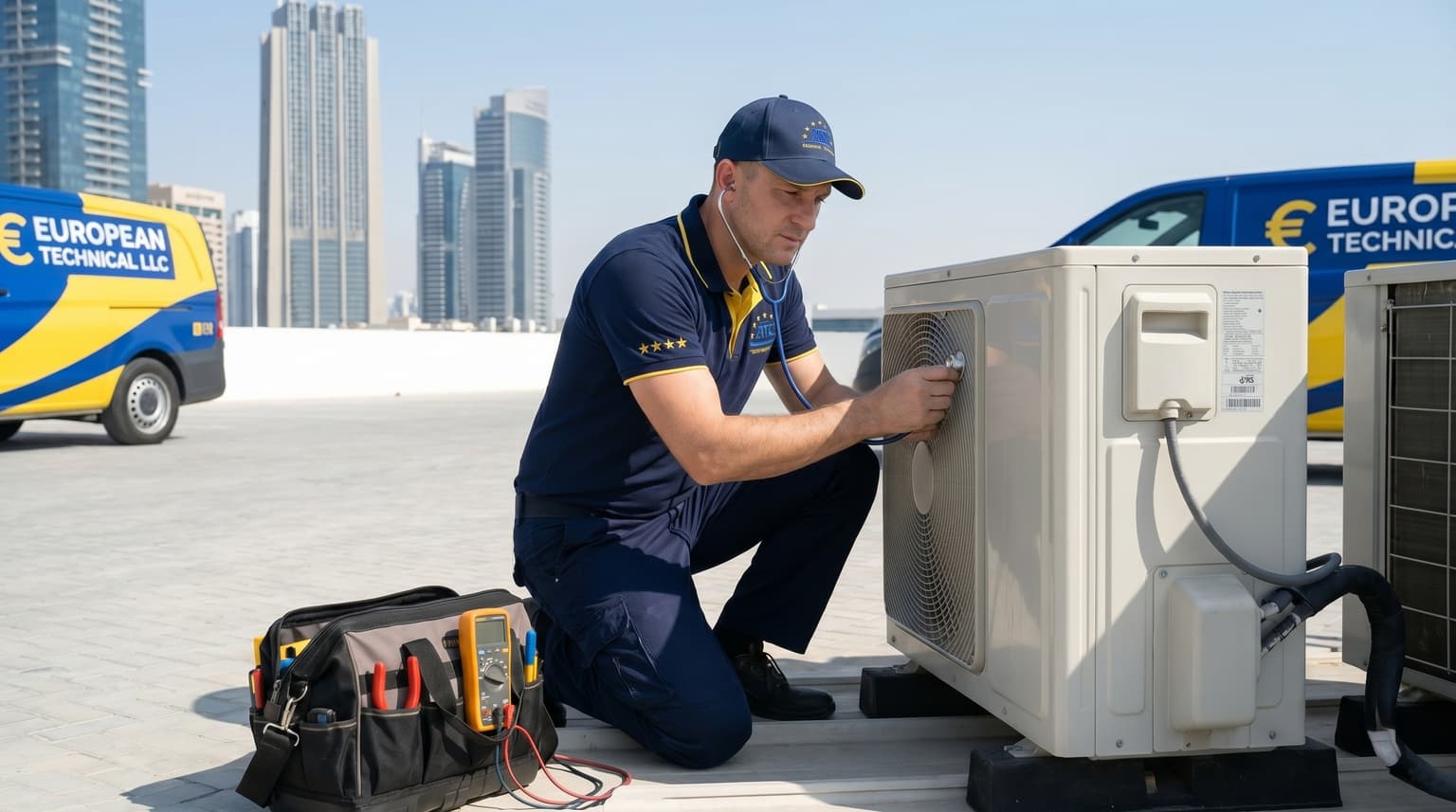
AC Making Noise in Dubai? What Each Sound Means
Your air conditioning system should produce a steady, low hum while it runs. Rattling, banging, hissing, clicking, or squealing are all signs worth taking seriously. In Dubai, ignoring unusual AC sounds tends to lead to larger repair bills and, sometimes, complete system failure during the hottest months.
Below is a breakdown of what the most common AC noises indicate, which ones you can cheque yourself, and when to bring in an engineer.
Why AC Noise Diagnosis Matters in Dubai
The extreme climate here means AC systems work harder and for longer than units in most other countries. A split AC in a Dubai apartment may run 10 to 12 hours a day during summer, and a ducted villa system can run almost continuously from May through September. That operating intensity accelerates wear on every moving part, from the fan motor to the compressor.
Problems that would go unnoticed in a milder climate become obvious fast here. A bearing starting to fail produces a grinding noise that worsens over weeks. Refrigerant leaking creates a hissing that eventually strips the unit of its cooling capacity. Catching these early saves the repair cost and avoids the misery of a breakdown in 45-degree heat.
The Most Common AC Noises and What They Mean
Rattling or Clanking
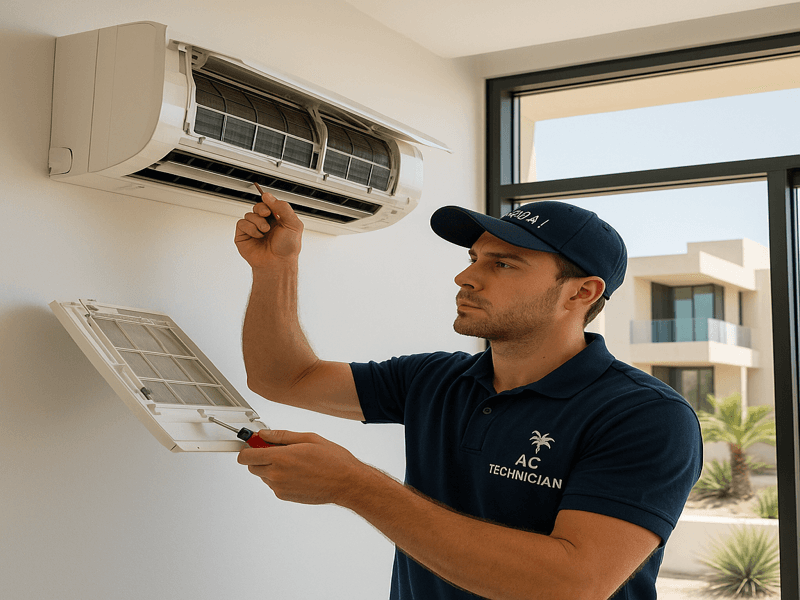
Loose panels or screws: The most common cause of rattling is a loose cover panel or a screw that has vibrated free over time. This is particularly common in older split AC units and can usually be fixed by tightening the casing. cheque the front cover, the side panels, and the mounting bracket if you can safely access it.
Debris in the outdoor unit: Rattling from the outdoor compressor unit, especially after windy weather, often means a small stone, leaf, or piece of debris has entered the unit and is being hit by the fan blade. Switch the system off and cheque the outdoor unit for visible debris. Do not run the unit with debris inside, as the fan blade can be damaged.
Loose fan blade: If the rattling is internal and rhythmic, matching the fan speed, a fan blade may have worked loose or become unbalanced due to dust buildup. This requires a technician to inspect and rebalance or replace the blade.
Loose refrigerant pipes: Pipes that connect the indoor and outdoor units pass through the wall and are sometimes not secured properly at installation. Over time, vibration causes them to knock against the wall or surrounding structure. This is more of an annoyance than a mechanical fault, but securing the pipes properly prevents longer-term vibration damage.
Banging or Thudding
A loud bang or repeated thudding from the outdoor unit is one of the more serious noises and should prompt you to switch off the system immediately.
Broken or bent fan blade: A fan blade that has fractured or become severely bent will bang against the casing on every rotation. Running the unit risks damaging the casing, the motor, and nearby components.
Compressor failure: A loud banging from the compressor, particularly on startup, can indicate internal compressor damage. Compressor replacement is the most expensive AC repair, sometimes costing more than a new unit. Catching this early, before the compressor fully seizes, can save the system.
Loose or broken mounting: If the outdoor unit itself has come partially loose from its wall bracket or rooftop mount, it can thud against the wall under vibration. cheque that the mounting bolts are secure.
Hissing or Bubbling
Refrigerant leak: A hissing sound from the indoor unit, particularly near the refrigerant pipes, is a strong indicator of a refrigerant leak. A bubbling or gurgling variation of this sound suggests the leak is more significant and air is entering the refrigerant circuit. Both require professional attention. Running an AC with low refrigerant stresses the compressor and can cause it to fail.
High-pressure refrigerant release: A brief hissing when the unit shuts off is sometimes normal, as pressure equalises in the refrigerant circuit. A continuous hiss while running is not normal.
Air duct leak: In ducted systems, hissing can also come from a split or disconnected section of ductwork, which is losing conditioned air into ceiling voids rather than into the room. This reduces efficiency and, over time, can cause moisture damage in the ceiling cavity.
Squealing or Screeching
Fan motor bearing failure: A high-pitched squeal from either the indoor fan or the outdoor fan motor is almost always a bearing on its way out. This is a progressive fault. The noise will worsen over time and eventually the motor will seize. Bearing replacement or motor replacement is relatively straightforward and inexpensive compared to compressor work, but it needs to be done before the motor burns out.
Belt-driven systems: Older ducted AC systems sometimes use belt-driven fans rather than direct-drive motors. A worn or misaligned belt produces a squeal similar to a car's fan belt. These systems are less common in newer Dubai properties but are still found in older villas and commercial buildings.
Clicking
Normal startup clicking: A single click when the system starts or stops is normal. The compressor relay clicks as it engages.
Repeated clicking that won't stop: If the unit clicks repeatedly on startup but does not start properly, the issue is usually with the start capacitor or the relay. The capacitor gives the compressor motor the initial electrical boost it needs to start. A failing capacitor means the motor tries repeatedly to start, clicks each time, and fails. This is a common fault in Dubai, particularly at the start of summer when units are first heavily loaded after months of lighter use.
Clicking from inside walls: Clicking or ticking from inside the walls or ceiling of a ducted system is usually thermal expansion of the ductwork as it heats and cools. This is normal and not a cause for concern unless accompanied by a loss of airflow.
Buzzing
Electrical fault: A buzzing sound from the indoor or outdoor unit can indicate an electrical issue, including a loose connection, a failing capacitor, or a faulty relay. Electrical buzzing should always be investigated rather than ignored.
Dirty coils: Heavily contaminated evaporator coils can cause the refrigerant to behave abnormally, sometimes producing a buzzing or humming that is louder than normal operation. Coil cleaning is part of a routine AC service.
Loose components: Panels, grilles, or internal components that are slightly loose can buzz at the AC's operating frequency without fully rattling.
What You Can Safely cheque Yourself
Before calling a technician, there are a few things worth checking:
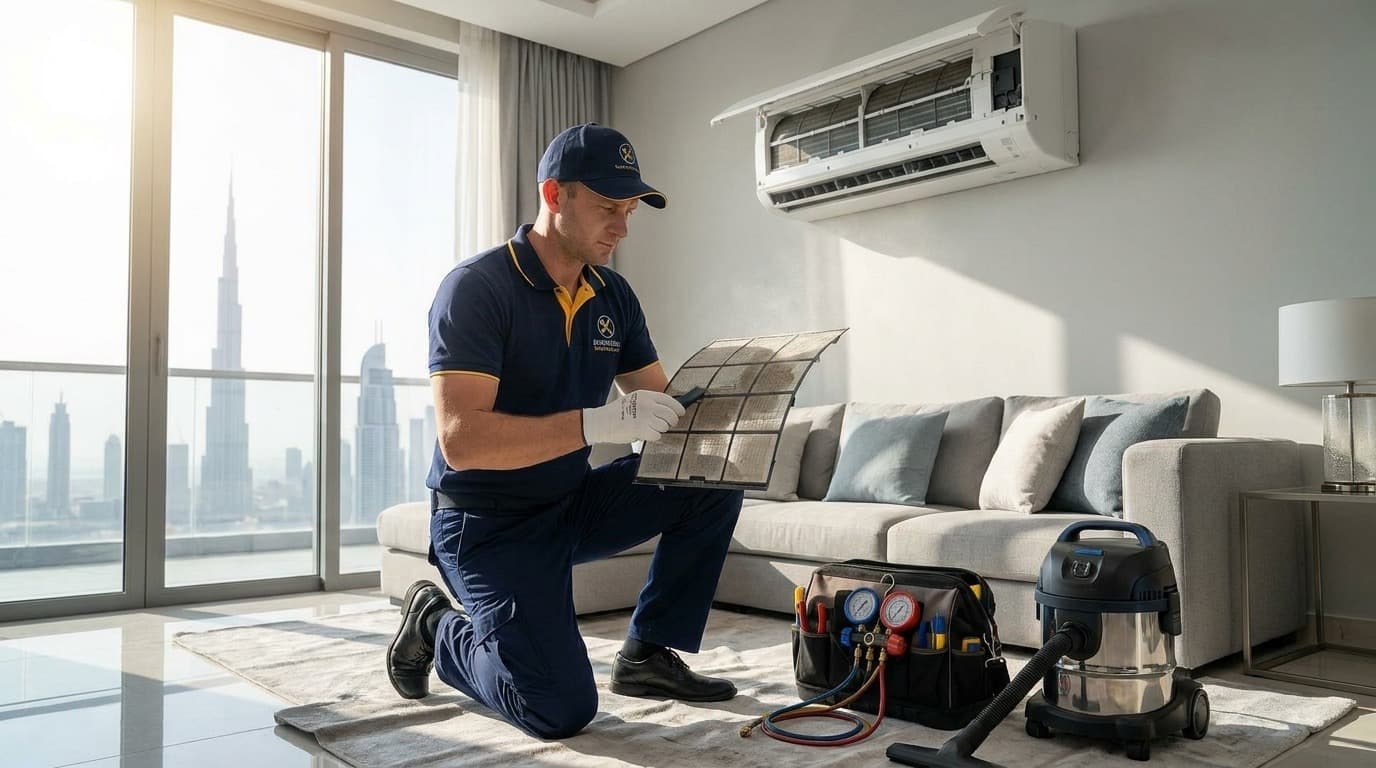
Clean or replace the filter. A clogged filter restricts airflow and can cause the unit to produce unusual sounds as it struggles to pull air through. In Dubai, filters should be cleaned every two to four weeks during heavy use periods.
cheque for debris around the outdoor unit. Clear any leaves, sand, or dirt from around the outdoor compressor unit and cheque that the fan area is free of obstructions.
Tighten visible loose panels. If the front cover of the indoor unit is slightly loose, pressing it back into place or tightening any accessible screws may resolve rattling.
cheque that the unit is level. A split AC indoor unit that has shifted slightly on its mounting bracket may vibrate against the wall. This is especially common after cleaning or filter changes where the cover has not been refitted properly.
If none of these steps resolves the noise, or if the sound suggests a mechanical or refrigerant issue, call a technician.
Noises That Require Immediate Attention
Some sounds mean: switch off now, call an engineer today.
Running the system through any of these risks turning a moderate repair into a compressor replacement.
AC Noise and Dubai's Summer: Timing Matters
Many AC noise problems show up in May and June, when units face heavy load for the first time after spring. A capacitor that scraped through winter will often fail in the first hot week. Bearings that ran quietly at 60% load get noisy at full throttle.
March or April is the right time to catch these, during a pre-summer service. A technician spots failing components before they fail under load. That's cheaper and far less disruptive than an emergency call-out in July.
When to Call European Technical
European Technical's AC engineers cover all major Dubai communities, including Jumeirah Village Circle, Dubai Marina, Downtown Dubai, Business Bay, Mirdif, Arabian Ranches, and Al Barsha.
Call us when your AC is making any noise that is new, getting louder, or accompanied by reduced cooling, a burning smell, or tripped breakers.
We carry out full AC servicing, fault diagnosis, compressor assessments, refrigerant checks, and motor and capacitor replacement. If the noise turns out to be a simple fix, we will tell you and price it accordingly.
Phone: +971 58 544 1160 WhatsApp: /whatsapp Book online: https://europeantechnical.ae/book
For more information, see our AC services or learn about Annual Maintenance Contracts that keep your system serviced on schedule.
Frequently Asked Questions
Is it normal for a new AC to make noise? Some noise during the first few days of operation is normal as components settle. A faint clicking on startup and shutdown is standard. Persistent rattling, squealing, or banging from a new unit suggests a loose component from installation or a fault with the unit itself, and the installer should be called back.
My AC makes a loud noise only on startup. What's the problem? A loud startup noise, particularly banging or a laboured grinding sound, most commonly points to a failing start capacitor. The capacitor provides the initial boost to get the compressor motor running. A weak capacitor makes the motor struggle to start, which is both noisy and damaging to the compressor over time.
How much does it cost to fix a noisy AC in Dubai? The cost depends entirely on the cause. A filter clean or panel tighten costs nothing. A capacitor replacement typically costs AED 150 to AED 350 including labour. A fan motor replacement runs from AED 300 to AED 600. Compressor repairs or replacements are significantly more, from AED 1,500 to AED 3,500 or higher for large systems. Getting a diagnosis early keeps you at the lower end of that range.
Can I use my AC if it's making a hissing sound? A brief hiss when the unit stops is usually normal. A continuous hiss while running suggests a refrigerant leak and the unit should be turned off until inspected. Running with a refrigerant leak stresses the compressor and will eventually cause it to fail, turning a leak repair into a compressor replacement.
How often should a Dubai AC be serviced to prevent noise problems? Twice a year is the recommended frequency for most Dubai properties: once before summer (March to April) and once mid-season (July to August) for heavily used systems. Units on an Annual Maintenance Contract get scheduled servicing automatically, which catches developing faults before they become noise problems or breakdowns.
Get the Noise Sorted Before It Gets Worse
AC noises rarely fix themselves. What starts as a minor rattle or occasional squeal typically progresses to a fault that affects performance, or causes a breakdown entirely. In a Dubai summer, that is the worst possible timing.
Call European Technical for a diagnosis and let our engineers identify what your AC is telling you.
Phone: +971 58 544 1160 WhatsApp: /whatsapp Book: https://europeantechnical.ae/book
See also: AC Services Dubai | AC Maintenance Contracts | Emergency AC Repair