AC Not Cooling in Dubai: Causes, Fixes and When to Call a Technician
When your AC is not cooling in Dubai during the summer months, you need it sorted fast. Temperatures regularly exceed 45°C, making a functioning air conditioner essential rather than a luxury. This guide explains why your AC may be blowing warm or lukewarm air, what you can safely cheque yourself, and when professional repair is the right call.
Why Is My AC Running But Not Cooling?
An air conditioner that runs continuously without dropping the room temperature is one of the most common complaints we receive. Several issues can cause this:
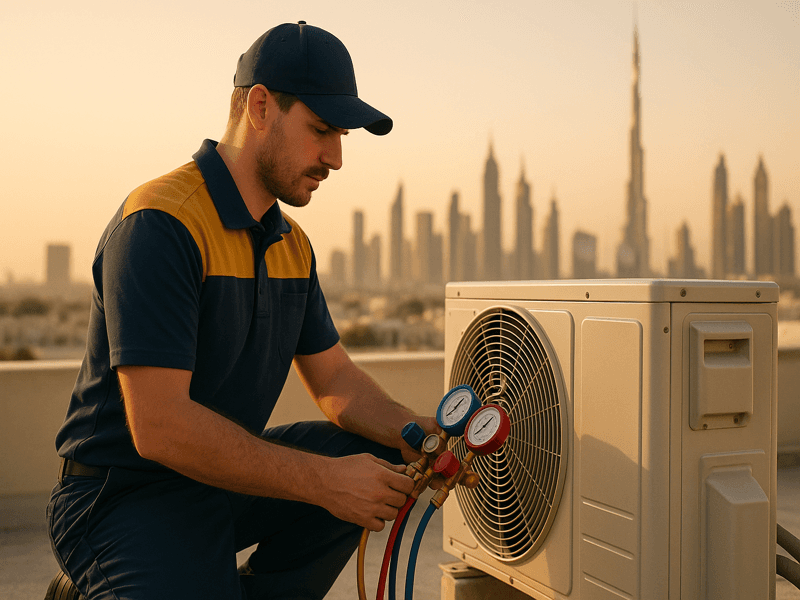
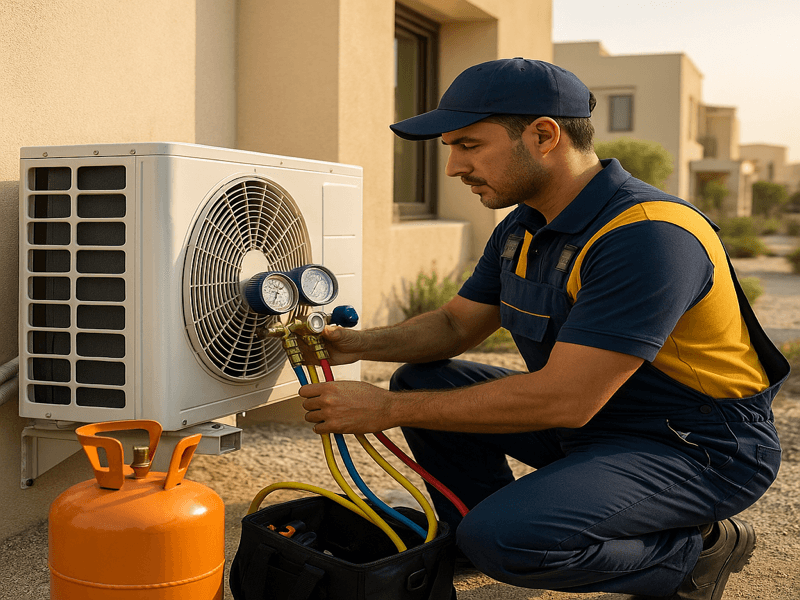
- Low refrigerant (gas) charge: Refrigerant is the substance that absorbs heat from your room. If the system has leaked or was undercharged, it cannot cool effectively. You may also notice ice forming on the copper pipes outside.
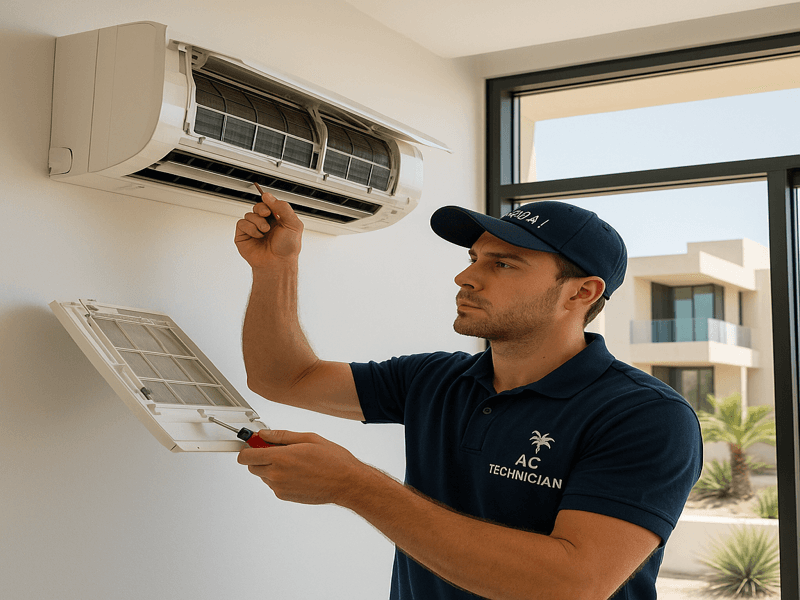
- Dirty air filter: A clogged filter restricts airflow over the evaporator coil, reducing cooling capacity significantly. Dubai’s dusty environment means filters should be cleaned every two to four weeks.
- Blocked condenser unit: The outdoor unit dissipates heat to the outside air. If it is covered in dust, sandstorm debris, or vegetation is growing too close, it cannot release heat efficiently.
- Faulty compressor: The compressor is the heart of your AC system. A failing compressor produces a clicking or humming sound and fails to pressurise the refrigerant circuit.
- Incorrect thermostat setting: Sometimes the simplest explanation is correct. Confirm the thermostat is set to “cool” mode and the set temperature is lower than the current room temperature.
Common Signs Your AC Needs Attention
Beyond blowing warm air, watch for these warning signs:
- The unit cycles on and off every few minutes (short-cycling)
- Ice or frost forming on the indoor or outdoor unit
- Unusual smells, particularly musty or burnt odours
- Higher than normal electricity bills without a change in usage
- Water dripping from the indoor unit onto walls or floors
Each of these signals a specific fault. Short-cycling often indicates a refrigerant problem or oversized unit. Ice on pipes points to low refrigerant or severely restricted airflow. Burnt smells suggest an electrical issue that needs immediate professional attention.
What You Can cheque Before Calling a Technician
Before booking a service call, run through this quick checklist:
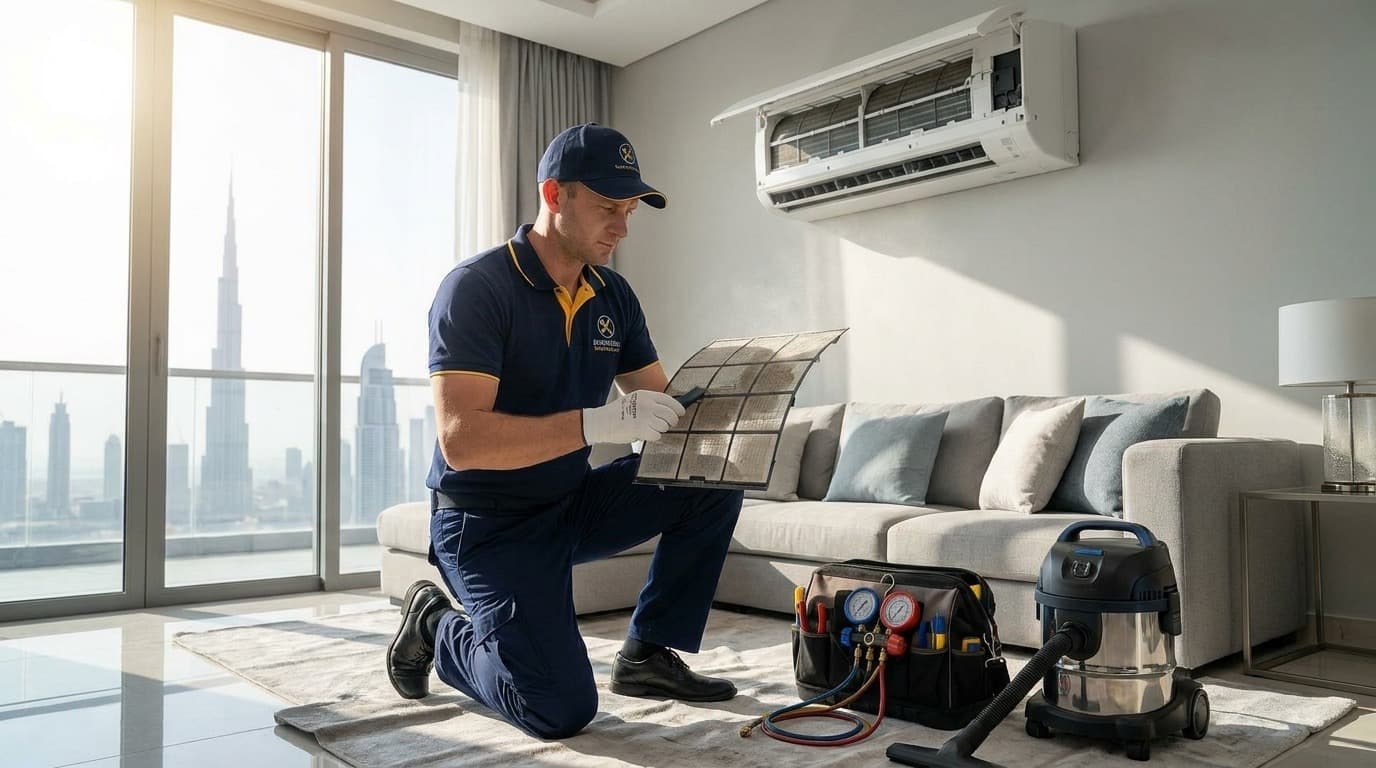
- cheque the air filter: Locate the filter behind the indoor unit grille. If it is grey with accumulated dust, clean it under running water and allow it to dry fully before replacing.
- cheque the thermostat: Ensure it is on “cool”, the fan is set to “auto”, and the temperature set point is below the current reading.
- Inspect the outdoor unit: Look for debris, sand accumulation, or anything blocking airflow around the condenser. Clear a minimum of half a metre of clear space around all sides.
- cheque the circuit breaker: A tripped breaker will cut power to the outdoor unit, leaving the indoor fan running but producing no cooling. Reset any tripped breakers and see if that resolves the issue.
- Close doors and windows: An undersized unit or one with a partial refrigerant loss will struggle more when external heat gain is high. Seal up the room and see if performance improves.
If none of these steps restore cooling, the fault is almost definitely internal and requires a certified technician with the proper tools and refrigerant handling certification.
AC Not Cooling After Sandstorm: What to Do
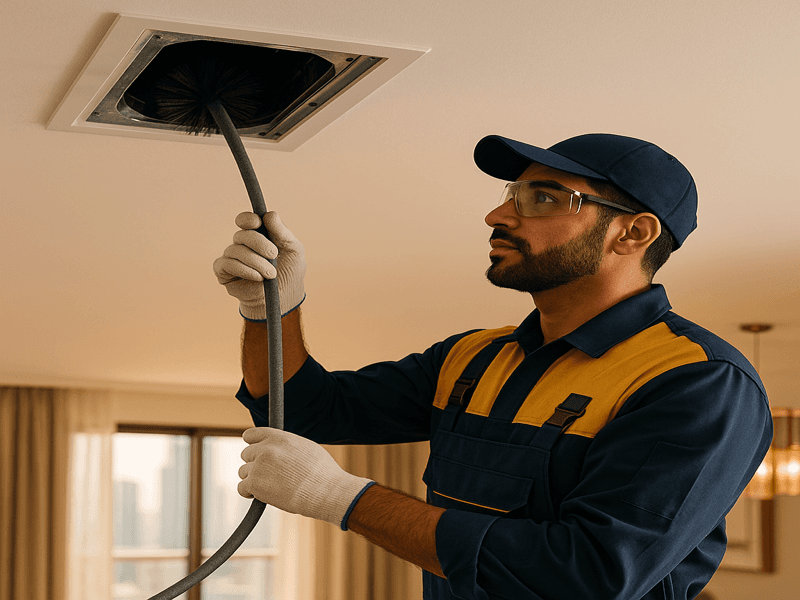
Dubai’s frequent sandstorms accelerate wear on air conditioning systems. After a heavy sandstorm, fine particles penetrate both indoor and outdoor units. The condenser fins on the outdoor unit become coated, dramatically reducing heat rejection. The evaporator coil indoors can also accumulate dust, reducing airflow.
After a sandstorm, switch off the AC for 30 minutes, clean the air filter, and wipe down the outdoor unit louvres with a damp cloth if accessible and safe to do so. If cooling remains poor, book a full service which includes chemical cleaning of the coils.
Refrigerant Top-Up vs. Full System Service
Many residents request a quick “gas top-up” when their AC stops cooling. While adding refrigerant can restore performance temporarily, it does not fix the underlying leak. Refrigerant in a sealed system does not get “used up” during normal operation. If the level is low, there is a leak somewhere in the system.
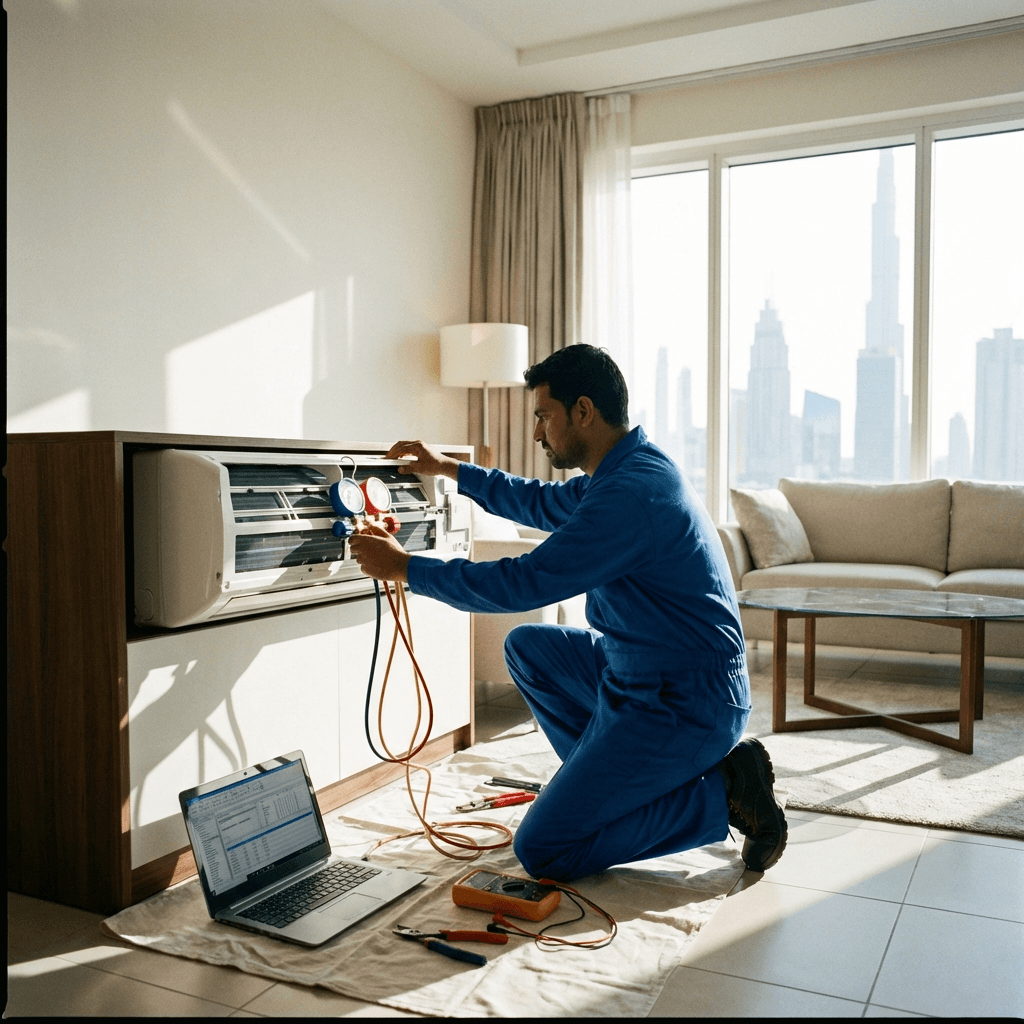
A proper repair involves leak detection using electronic sniffers or UV dye, fixing the source of the leak, evacuating the system to remove moisture, and recharging to the manufacturer’s specification. Simply topping up refrigerant without addressing the leak is a short-term fix that wastes money and harms the environment.
Typical cost for a full gas recharge service in Dubai ranges from AED 300 to AED 600 depending on the unit type and refrigerant grade (R22, R32, or R410A).
When to Call European Technical
Contact us immediately if:
- Your AC is completely failing to cool and outside temperatures are above 40°C
- You notice a burning smell or hear loud grinding or banging noises
- Ice is forming on any part of the unit
- Your electricity bills have spiked without explanation
- The unit is over ten years old and performance has gradually declined
Our AC repair and maintenance team operates across Dubai with same-day appointments available in most areas. We carry common refrigerants and spare parts on our vans, meaning most repairs are completed in a single visit.
Frequently Asked Questions
Why does my AC cool for a while then stop?
This is called short-cycling. It usually indicates a refrigerant problem, a dirty filter causing the unit to overheat, or a faulty thermistor. A technician can diagnose the exact cause within a short inspection.
How much does AC repair cost in Dubai?
A standard diagnostic visit and minor repair (e.g., cleaning, thermostat reset) typically costs AED 150 to AED 300. Gas recharge services run AED 300 to AED 600. Major repairs such as compressor replacement can range from AED 800 to AED 2,500 depending on the brand and unit capacity.
Can I add refrigerant myself?
No. Handling refrigerants requires certified equipment and training. In the UAE, DIY refrigerant handling is also not commercially available. Always use a licensed technician.
How long should an AC unit last in Dubai?
With proper annual servicing, a quality split AC unit should last 10 to 15 years in Dubai. Neglected units often fail within 5 to 7 years due to the extreme operating conditions.
Should I repair or replace my old AC?
If repair costs exceed 50% of the price of a new unit of equivalent capacity, replacement is generally the better value. Units older than 10 years that require compressor replacement should almost always be replaced. See our AC repair vs replacement guide for a full breakdown.
Conclusion
An AC not cooling in Dubai is a time-sensitive problem. Start with the quick checks outlined above, and if the issue persists, call a qualified technician. Delaying repairs in summer heat is not only uncomfortable but can cause further damage to the system and higher energy bills.
European Technical provides fast, reliable AC repair services across Dubai. Call us or book online for a same-day diagnosis.
Need Help? Contact European Technical Today
Our experienced technicians are available 7 days a week across Dubai. Whether you need a quick repair or a full service, we are here to help.
- Call us: +971 58 544 1160 (toll-free)
- WhatsApp: Send us a message
- Book online: Schedule a visit