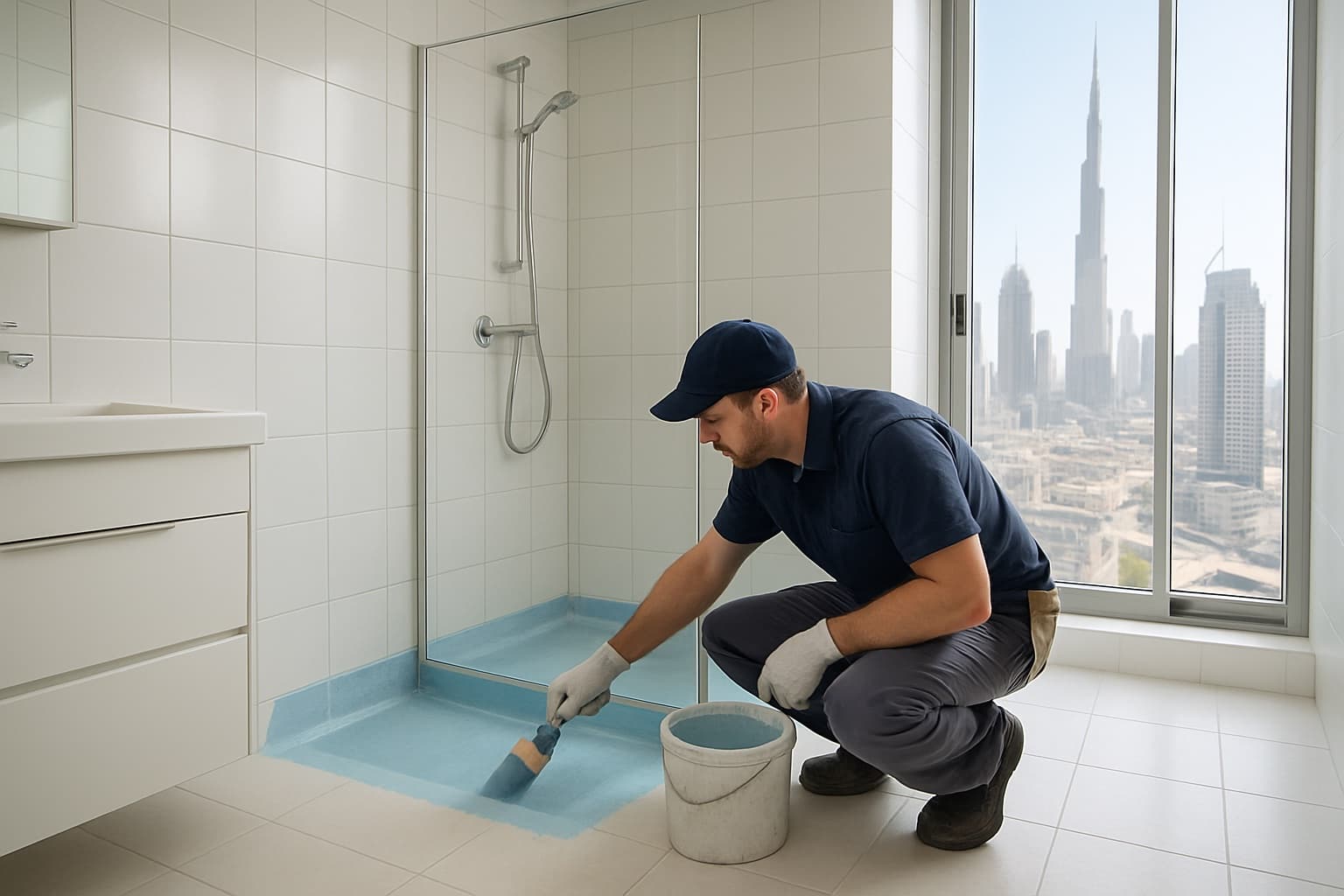
Why Bathroom Waterproofing Matters in Dubai
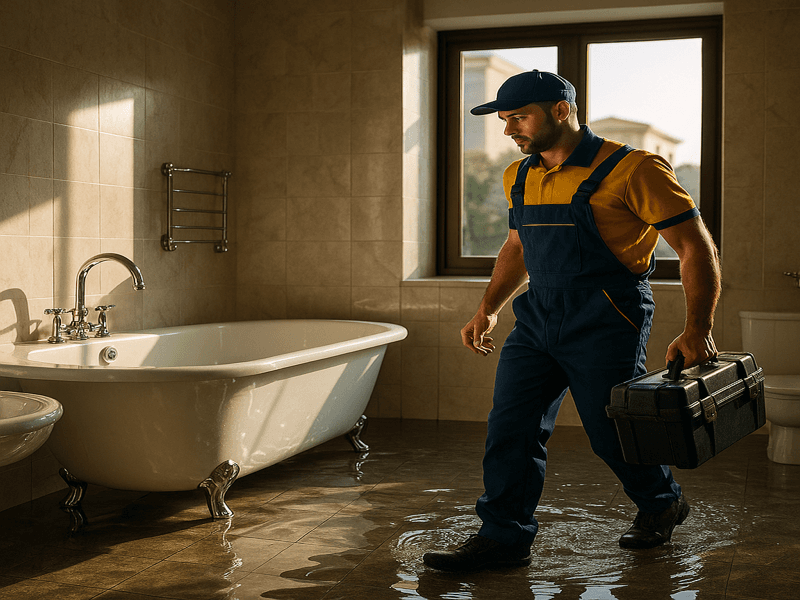
Dubai's climate puts bathrooms under constant pressure. High humidity, frequent shower use, and building settlement in sandy soil all conspire to break down waterproof membranes faster than in temperate climates. When that protective barrier fails, water seeps into concrete slabs, corrodes rebar, and causes mould growth that spreads behind tiles long before you spot a stain on the ceiling below.
a cosmetic issue. Left unchecked, it weakens the structure, triggers disputes with neighbours in multi-unit buildings, and can violate Dubai Municipality building codes. This guide covers the warning signs, repair methods, realistic costs, and prevention strategies every Dubai property owner should know.
How Bathroom Waterproofing Works
Every properly built bathroom in Dubai starts with a waterproof membrane applied to the concrete slab and lower walls before tiling. The membrane - typically a liquid-applied polyurethane, cementitious coating, or bituminous sheet - creates an unbroken barrier that directs water toward the floor drain rather than into the structure.
Key components of a bathroom waterproofing system include:
- Floor membrane: Covers the entire slab, turned up at least 150mm on walls
- Wall membrane: Applied to the full height of shower areas and at least 1.2m around other wet zones
- Corner reinforcement: Fabric tape embedded in membrane at wall-floor junctions
- Drain flashing: Sealed connection between the membrane and floor drain body
- Tile grout and silicone: The first line of defence that keeps bulk water off the membrane
When any layer fails - cracked grout, degraded silicone, membrane puncture - water finds the path of least resistance downward.
Signs Your Bathroom Waterproofing Has Failed
Step 1: cheque for Visible Water Stains
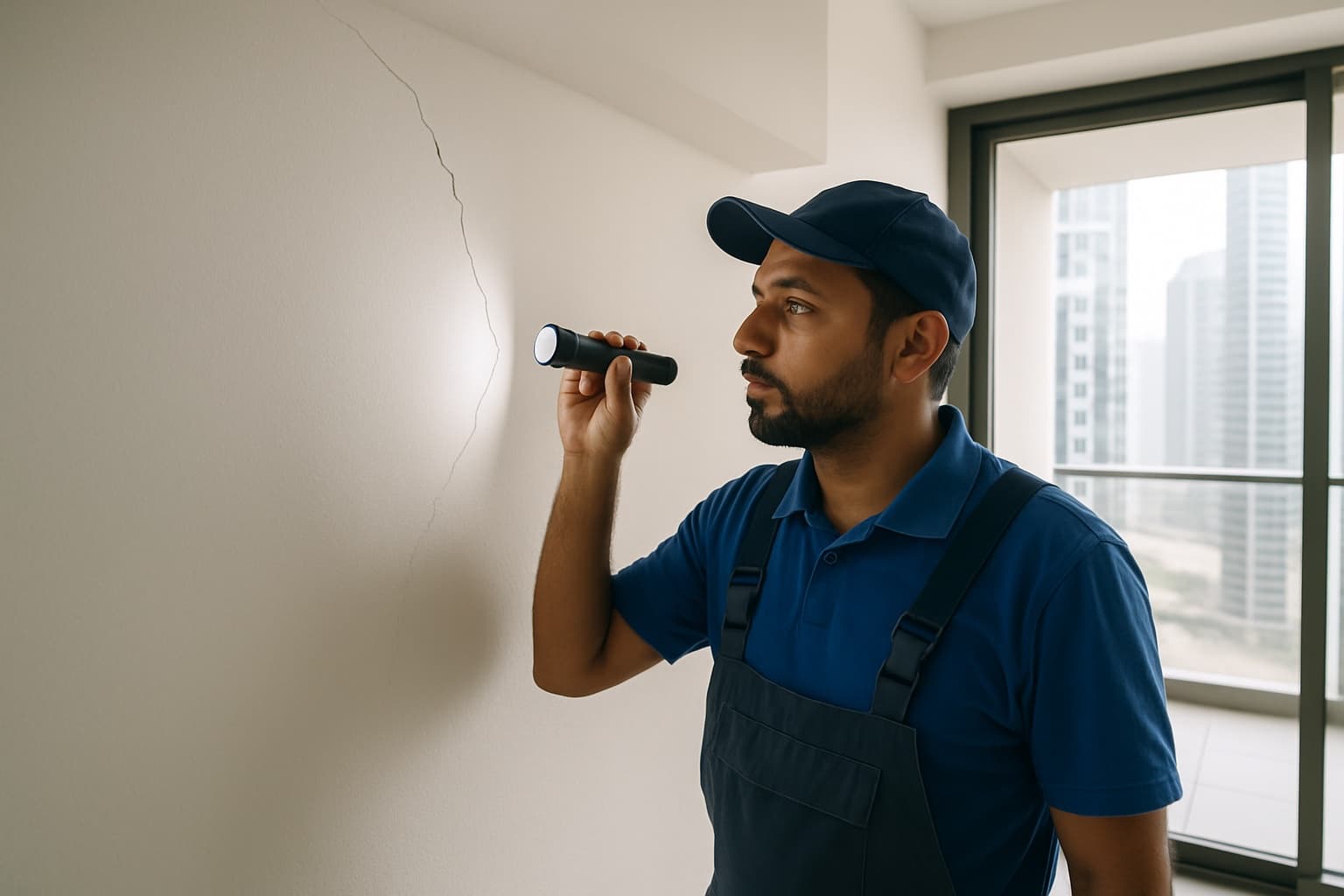
The most obvious sign is a brown or yellowish stain on the ceiling directly below a bathroom. In apartments across Dubai Marina and Downtown, this triggers immediate neighbour complaints and potential RERA involvement. Water stains grow slowly, which means the leak has usually been active for weeks before it becomes visible.
Step 2: Inspect Grout and Silicone Joints
Run your finger along every grout line in the shower area and around the base of the toilet. Crumbling, discoloured, or missing grout is an open invitation for water to reach the membrane. cheque silicone sealant around the bathtub rim, shower tray edges, and where tiles meet sanitary fixtures. In Dubai's heat, silicone degrades faster - expect to replace it every three to five years.
Step 3: Look for Loose or Hollow Tiles
Tap tiles with your knuckle. A hollow sound means the adhesive bond has broken, often because water got behind the tile and dissolved the cement. Loose tiles on the shower floor are a serious red flag - they suggest the membrane below may be compromised.
Step 4: cheque for Musty Odours and Mould
A persistent damp smell in a bathroom that appears clean points to hidden moisture. Black mould around the base of walls, behind the toilet, or at the shower threshold indicates water is reaching areas where it shouldn't be. Dubai's humidity accelerates mould growth dramatically once moisture enters the wall cavity.
Step 5: Monitor Your DEWA Water Bill
An unexplained rise in water consumption sometimes indicates a concealed leak from a failed waterproof joint on a supply line within the wet area. Compare your DEWA bills month over month - a slow bathroom leak can waste hundreds of litres daily.
Common Causes of Waterproofing Failure in Dubai
Understanding why waterproofing fails helps you prevent it. The most frequent causes our technicians at European Technical encounter across Dubai properties include:
- Poor original installation: Rushed construction during boom periods sometimes meant membranes were applied too thin, without proper curing time, or with inadequate overlap at joints
- Building settlement: Dubai's sandy substrate causes gradual settlement that cracks rigid membranes, particularly at wall-floor junctions in villas built on reclaimed land such as Palm Jumeirah
- Deteriorated grout and silicone: UV exposure through bathroom windows and thermal cycling break down sealants faster in the Gulf climate
- Renovation damage: Tile replacement or plumbing modifications that puncture the existing membrane without re-waterproofing
- Blocked floor drains: Standing water on the shower floor increases hydrostatic pressure against the membrane, forcing water through hairline cracks
- Age: Even well-installed waterproofing has a lifespan of 10 to 15 years in Dubai conditions
Bathroom Waterproofing Repair Methods
Localised Grout and Silicone Repair
If the membrane is intact but water is reaching it through failed surface sealants, re-grouting and re-siliconing can resolve the problem. This involves raking out old grout, applying new epoxy or cementitious grout, and replacing all silicone joints. Cost: AED 500 to AED 1,500 depending on bathroom size.
Injection Waterproofing
For pinpoint leaks where removing tiles is impractical, polyurethane injection can seal the breach from the underside. A technician drills small holes in the ceiling below and injects expanding resin that fills cracks in the slab. This works for isolated failures but doesn't address widespread membrane degradation. Cost: AED 1,500 to AED 4,000.
Full Membrane Replacement
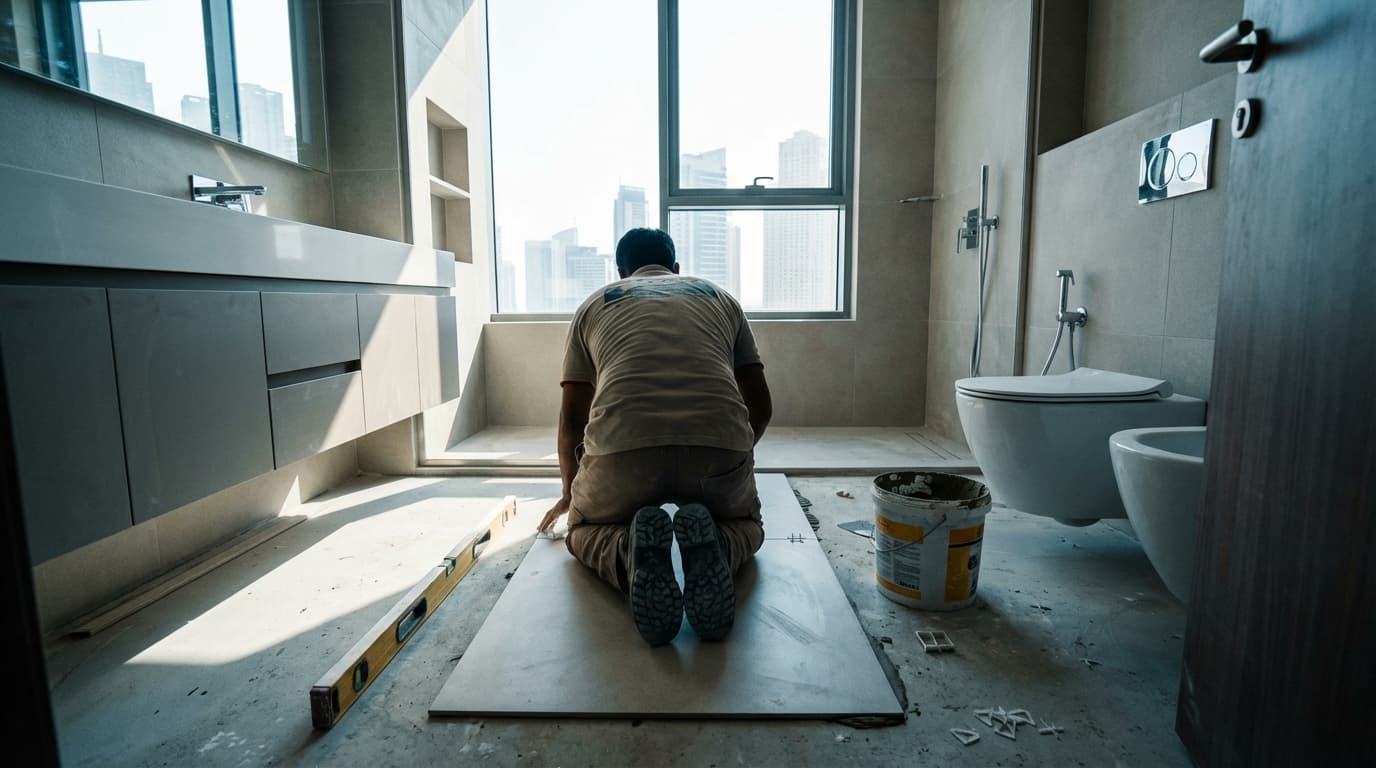
When waterproofing has failed broadly - common in bathrooms over 10 years old - the only reliable fix is to strip all tiles, remove the old membrane down to the concrete, and apply a new waterproofing system before re-tiling. This is the most disruptive but also the most durable solution. Cost: AED 8,000 to AED 20,000 depending on bathroom size and tile selection.
Topical Waterproof Coatings
Some products claim to waterproof over existing tiles. These spray-on or brush-on coatings can buy time for minor issues, but they rarely provide a permanent solution because they can't seal beneath tiles where the real failure occurs. Cost: AED 300 to AED 800 for materials, though professional application adds labour.
Repair Cost Breakdown for Dubai Properties
Waterproofing costs vary significantly based on the repair scope and property type. What property owners across Dubai should budget for:
- Studio or 1-bed apartment bathroom: Full re-waterproofing including tiles - AED 10,000 to AED 15,000
- Villa master bathroom: Full re-waterproofing including tiles - AED 15,000 to AED 25,000
- Grout and silicone refresh only: AED 500 to AED 1,500
- Emergency leak repair (injection): AED 1,500 to AED 4,000
- Mould remediation (if extensive): AED 2,000 to AED 5,000 additional
These figures include labour, materials, and standard ceramic tiles. Premium tiles, underfloor heating, or custom fixtures will increase costs. European Technical provides detailed quotations with itemised breakdowns before any work begins, so there are no surprises.
Prevention: How to Protect Your Bathroom Waterproofing
Prevention is always cheaper than repair. These practical steps extend the life of your bathroom waterproofing in Dubai's demanding conditions:
- Maintain grout annually: Inspect all grout lines every 12 months. Re-grout any cracked or missing sections promptly
- Replace silicone every 3 to 5 years: Even if it looks fine, silicone becomes less flexible over time. Preventive replacement costs a fraction of leak repair
- Keep drains clear: Hair and soap buildup creates standing water. Clean shower drains monthly
- Use the exhaust fan: Run bathroom ventilation for at least 15 minutes after every shower to reduce humidity
- Fix dripping taps immediately: A slow drip concentrates water in one spot, accelerating localised membrane failure
- Schedule professional inspections: A waterproofing inspection every two years catches problems early - well before they cause structural damage or neighbour disputes
When to Call a Professional
Some waterproofing issues require immediate professional attention. Contact a specialist if you notice:
- Water stains appearing on the ceiling below your bathroom
- Multiple tiles becoming loose simultaneously
- Persistent damp smell despite good ventilation
- Visible mould growth that returns after cleaning
- A neighbour reporting water damage linked to your property
- Cracking in the bathroom floor slab
European Technical's maintenance team handles waterproofing inspections and repairs across Dubai, from apartments in Business Bay to villas in Mirdif. Our technicians carry thermal imaging equipment that can detect moisture behind tiles without destructive testing, saving you the cost and mess of unnecessary tile removal.
Frequently Asked Questions
How long does bathroom waterproofing last in Dubai?
A properly installed waterproof membrane typically lasts 10 to 15 years in Dubai conditions. But, the surface sealants - grout and silicone - need maintenance every 3 to 5 years to prevent water from bypassing the membrane. Buildings on reclaimed land or those that experience settlement may see shorter membrane lifespans.
Is bathroom waterproofing covered by Dubai building warranties?
New properties in Dubai carry a structural warranty under RERA regulations, and waterproofing defects within the warranty period should be covered by the developer. But, warranty claims require documented evidence that the failure wasn't caused by owner modifications. Keep records of any bathroom renovations.
Can I waterproof my bathroom without removing tiles?
Topical coatings and injection methods can address minor or localised failures without tile removal. For widespread membrane failure, tile removal is necessary to achieve a durable repair. A professional inspection can determine which approach suits your situation.
How long does a full bathroom re-waterproofing take?
Including tile removal, membrane application, curing, and re-tiling, a full bathroom re-waterproofing takes 5 to 8 working days. The membrane itself needs 24 to 48 hours to cure before tiling can begin. Plan for the bathroom to be out of service for roughly one week.
Who is responsible for waterproofing repairs in a Dubai apartment?
In owned apartments, the unit owner is responsible for maintaining waterproofing within their unit. If a waterproofing failure in your bathroom causes damage to a neighbour's unit below, you may be liable for their repair costs as well. Prompt repair limits both structural damage and financial exposure.
Book a Waterproofing Inspection
If you suspect a waterproofing failure in your bathroom - or simply want before Dubai's humid summer months - European Technical offers professional waterproofing inspections with thermal imaging. Call 800-REPAIR (800-737247) or +971 4 847 8388 to schedule an assessment.