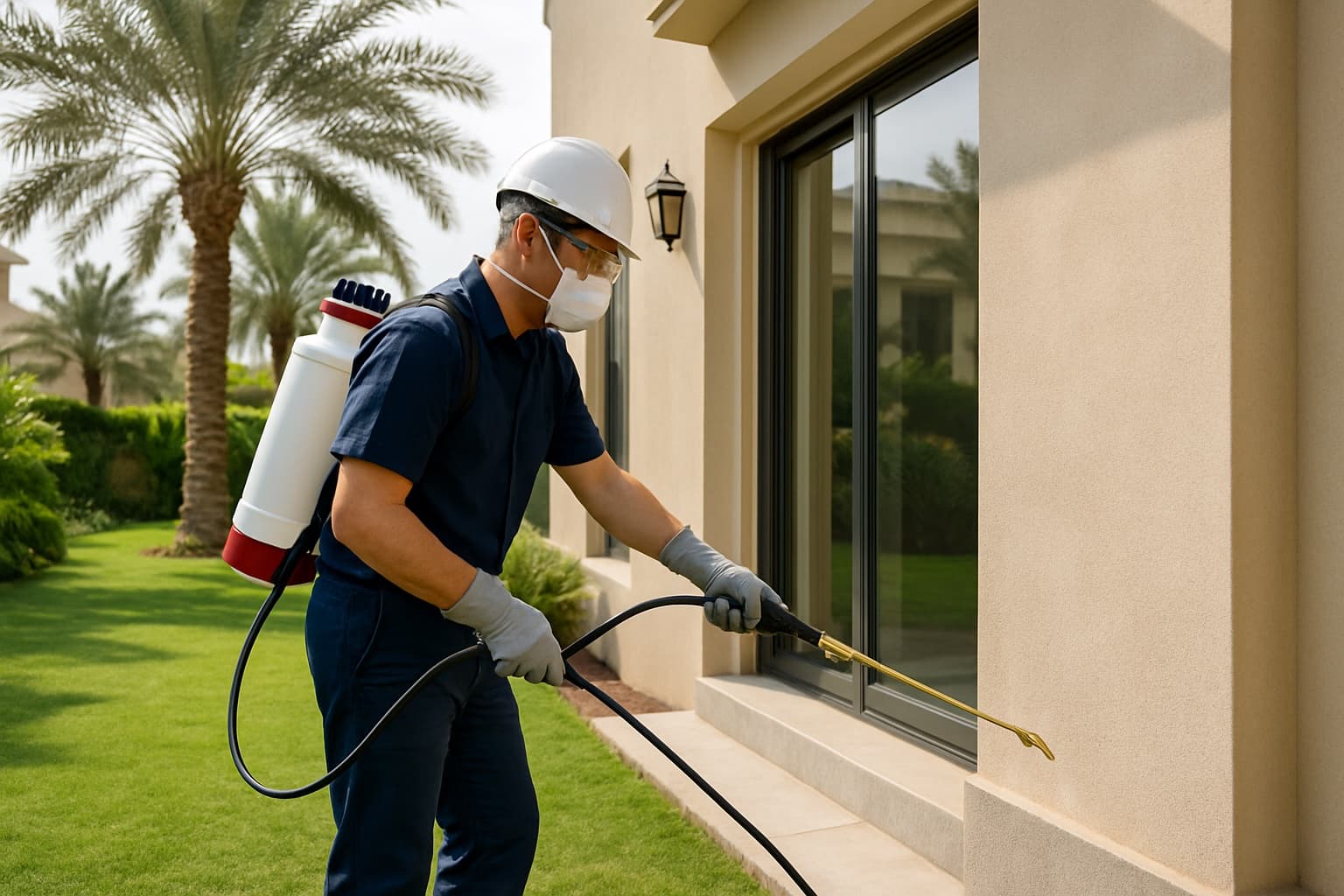
Why Outdoor Pest Control Matters for Dubai Villas
Most pest problems inside a Dubai villa start outside. Cockroaches breed in garden irrigation boxes, termites build colonies in soil against foundation walls, and mosquitoes multiply in any standing water from pool equipment to blocked roof drains. Treating the interior while ignoring the outdoor perimeter is like bailing water without plugging the hole.
Villa communities across Dubai - from Arabian Ranches and The Springs to Damac Hills and Al Furjan - share a common challenge: well-kept gardens, pools, and outdoor living areas create ideal habitats for pests that eventually find their way indoors. This guide focuses specifically on outdoor prevention strategies for gardens, pools, and perimeter treatment that reduce indoor pest pressure by cutting off the supply at the source.
The Pests That Target Dubai Villa Exteriors
German and American Cockroaches
Both species thrive in Dubai's warm climate. American cockroaches (the large, dark brown ones) prefer outdoor habitats - irrigation valve boxes, garden sheds, metre cupboards, and drainage access points. They migrate indoors during extreme heat or when populations outgrow their outdoor habitat. German cockroaches (smaller, light brown) typically enter through grocery deliveries or from neighbouring properties but establish satellite colonies in outdoor kitchen areas and BBQ zones.
Subterranean Termites
Dubai's sandy soil is perfect for subterranean termites, which build underground colonies that can contain millions of individuals. They reach buildings through soil contact - foundation walls, garden beds against the house, wooden garden furniture sitting on soil, and even through expansion joints in the slab. Annual termite damage in UAE properties runs into millions of dirhams collectively.
Mosquitoes
With Dubai Municipality's strict monitoring and fines for mosquito breeding sites, outdoor mosquito control isn't optional - it's a compliance requirement. Mosquitoes breed in any stagnant water: blocked gutters, pool covers, plant saucers, bird baths, unused fountains, irrigation system leaks, and accumulated rainwater in garden equipment. A single overlooked water source can produce hundreds of mosquitoes weekly.
Ants
Several ant species are active in Dubai gardens, including fire ants and crazy ants. They're mostly a nuisance outdoors, but certain species damage electrical wiring, irrigation systems, and AC outdoor units by nesting inside equipment housings. Large ant colonies undermine pavers and garden paths.
Rodents
Rats and mice use garden vegetation, compost areas, and gaps in boundary walls to establish themselves near villas before entering through service openings, pipe penetrations, or garage doors. Properties near construction sites or vacant plots face higher rodent pressure.
Garden Pest Prevention
Step 1: Manage Irrigation and Standing Water
Inspect your entire irrigation system monthly. Leaking drip lines, broken sprinkler heads, and overwatering create damp patches that attract cockroaches, mosquitoes, and soil-dwelling pests. Fix leaks immediately and adjust irrigation schedules so the soil dries between watering cycles.
Walk the garden after your irrigation runs and note any areas where water pools. These low spots need re-grading or drainage correction. cheque irrigation valve boxes for accumulated water - these are prime cockroach nesting sites across every Dubai villa community.
Step 2: Maintain Vegetation Clearance
Keep all shrubs, hedges, and tree branches trimmed at least 30cm away from the villa's exterior walls. Vegetation touching the building creates a pest highway from garden to interior - insects walk along branches directly onto walls and through gaps around windows and AC pipe penetrations.
Remove dead plant material, fallen leaves, and garden debris regularly. Decomposing organic matter feeds pest populations. Keep mulch depth under 5cm near the foundation and avoid organic mulch directly against the building - use gravel or decorative stone in a 30cm band around the perimeter.
Step 3: Secure Garden Storage and Equipment
Garden sheds, storage boxes, and unused equipment give shelter for cockroaches and rodents. Keep storage areas clean and organised. Raise stored items off the ground on shelving. Seal gaps in shed walls and doors. Store pet food in airtight containers and clean up after barbecues - food residue in outdoor kitchens attracts pests within hours.
Pool Area Pest Prevention
Step 1: Eliminate Mosquito Breeding Around the Pool
The pool itself isn't a mosquito breeding ground - chlorinated, circulating water won't support larvae. The problem areas are around the pool: pump room sumps, overflow channels that don't drain properly, pool covers that collect rainwater, water features with stagnant zones, and planter beds with inadequate drainage near the pool deck.
cheque the pool equipment room monthly. Sumps, filter housings, and backwash drainage areas often hold stagnant water that nobody notices. Ensure all drainage in the pool area flows freely to the sewer connection rather than pooling.
Step 2: Manage Lighting to Reduce Insect Attraction
Standard white outdoor lights attract flying insects to the pool area, which in turn attracts the predators that feed on them. Replace pool area lighting with warm yellow or sodium vapour bulbs that attract fewer insects. Position bright lights away from seating areas, using them to draw insects to the garden perimeter instead.
Step 3: Seal Equipment Housings
Pool pump housings, filter enclosures, and electrical cabinets in the pool area give warm, sheltered nesting sites for cockroaches, ants, and even rodents. Seal cable entry points with silicone or expanding foam. Install mesh covers on ventilation openings. Inspect equipment housings during routine pool maintenance.
Perimeter Treatment: Your First Line of Defence
Step 1: Establish a Chemical Barrier
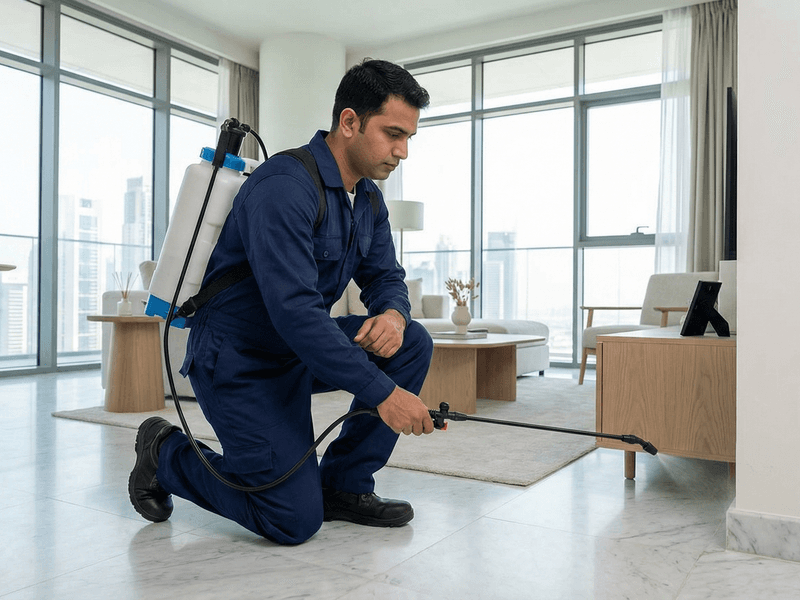
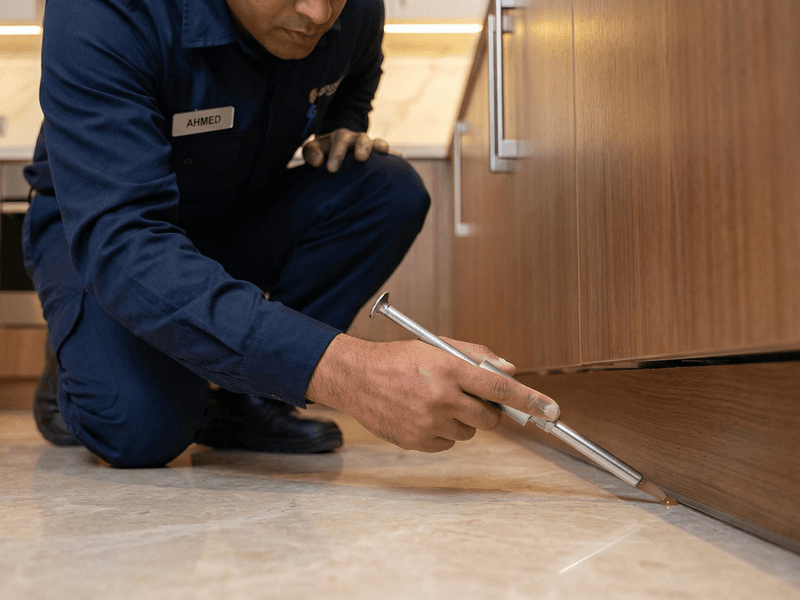
Professional perimeter treatment involves applying a residual insecticide in a continuous band around the villa's foundation - typically 1 metre up the wall and 1 metre out from the base across the ground. This barrier kills or repels crawling insects before they reach entry points. Effective products include bifenthrin, deltamethrin, and fipronil-based formulations applied by licenced pest control operators.
In Dubai's climate, perimeter treatments need renewal every 60-90 days due to UV degradation and irrigation washout. Quarterly treatments maintain consistent protection year-round.
Step 2: Seal Entry Points
Walk the exterior of your villa and seal every gap you find:
- Gaps around AC pipe penetrations through exterior walls
- Spaces under exterior doors (install door sweeps)
- Cracks in the foundation wall
- Gaps around utility metre boxes
- Openings where cables or pipes enter the building
- Weep holes in masonry (cover with fine mesh, don't seal completely)
- Garage door seals - replace if torn or missing
A cockroach can fit through a gap of just 1.5mm. Thorough sealing significantly reduces the number of pests that bypass your perimeter treatment.
Step 3: Install Rodent Stations
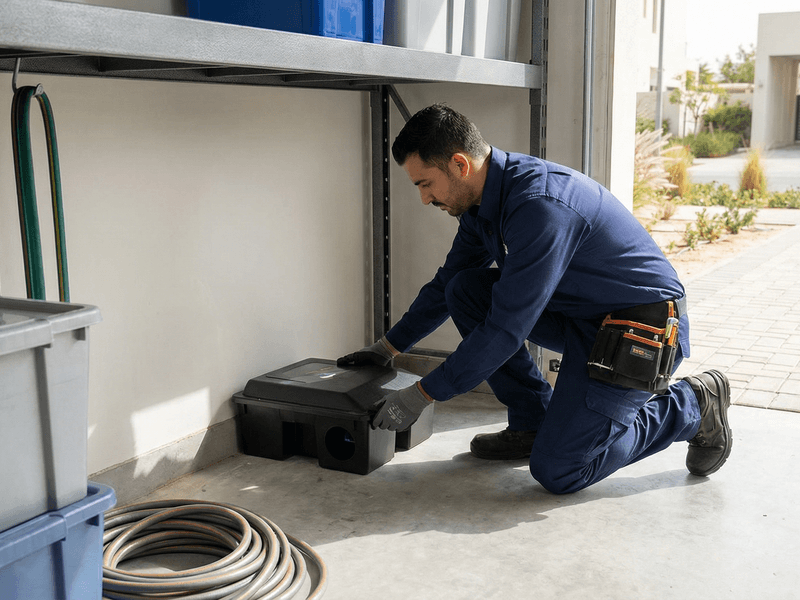
Tamper-resistant bait stations placed along the boundary wall and near entry points give ongoing rodent control. These locked boxes hold bait that rodents consume before they reach the building. Position stations every 10-15 metres along the property boundary, near gates, and adjacent to any gap in the boundary wall. cheque and refresh bait monthly.
Step 4: Set up a Termite Monitoring System
For villas in termite-prone areas (most of Dubai qualifies), in-ground termite monitoring stations give early detection. These are installed in a ring around the property at 3-metre intervals. A pest control technician inspects them quarterly, looking for termite activity. If termites are detected, the monitoring station converts to a baiting station that eliminates the colony. This is far less disruptive and costly than treating an active termite infestation in the building.
Seasonal Pest Calendar for Dubai Villas
- January - February: Lowest pest pressure. Good time for preventive perimeter treatment and termite monitoring installation
- March - April: Pest activity increases sharply as temperatures rise. Mosquito season begins with any spring rain. First major cockroach migration indoors starts
- May - August: Peak season for all pests. Monthly perimeter treatments recommended. Mosquito control critical. Termite swarming season (flying termites emerging from mature colonies)
- September - October: Continued high activity. Second wave of pest pressure as temperatures moderate but remain warm
- November - December: Activity decreases. Final perimeter treatment before winter maintains protection during the cooler months
Cost of Professional Outdoor Pest Prevention
- Quarterly perimeter treatment (standard villa): AED 400 to AED 800 per visit
- Annual outdoor pest control contract: AED 1,500 to AED 3,500 (4 visits plus emergency callouts)
- Termite monitoring system installation: AED 3,000 to AED 8,000 depending on property size
- Mosquito treatment (garden fogging): AED 300 to AED 600 per treatment
- Rodent bait station programme: AED 200 to AED 500 per quarter
- Complete outdoor pest programme (everything above): AED 4,000 to AED 8,000 annually
European Technical provides customised outdoor pest prevention programmes for Dubai villas. Our technicians assess your property's specific risk factors - proximity to open land, garden size, pool configuration, construction gaps - and design a treatment schedule that addresses your actual pest pressure rather than applying a one-size-fits-all approach.
Frequently Asked Questions
Is outdoor pest control safe for children and pets?
Professional-grade products applied correctly pose minimal risk to children and pets once dry (typically 2-4 hours after application). Gel baits used in bait stations are contained and tamper-resistant. Discuss any specific concerns with your pest control provider before treatment - they can adjust product selection for households with young children or pets that spend time in the garden.
How often should I treat the perimeter of my Dubai villa?
Quarterly treatments (every 3 months) give reliable year-round protection. During peak season (April through September), some properties benefit from bi-monthly treatments, particularly villas near construction sites, vacant land, or with extensive gardens.
Can I do perimeter pest treatment myself?
Consumer-grade products available in supermarkets and hardware stores are significantly less effective than professional formulations. More importantly, Dubai Municipality requires pest control services to be performed by licenced operators for commercial properties and recommends it for residential. licenced operators use products that aren't available to consumers and have the training to apply them safely and effectively.
My neighbour doesn't treat their property. Will my treatment still work?
Your perimeter treatment still protects your property, but untreated neighbouring plots do increase pest pressure. You may need more frequent treatments or additional bait stations along the shared boundary. Community-wide pest control programmes (managed by villa community associations) are the most effective approach in communal settings.
Do I still need indoor pest control if I treat outdoors?
Outdoor treatment significantly reduces indoor pest populations but doesn't eliminate the need for indoor monitoring. Some pests enter through means that outdoor treatment can't address - in grocery bags, delivery boxes, or through shared building services in semi-detached villas. A combined indoor-outdoor programme gives the best results.
Get Your Villa's Outdoor Pest Assessment
European Technical's pest control team inspects Dubai villas to identify specific outdoor pest risks and recommend targeted treatments. Call 800-REPAIR (800-737247) or +971 4 847 8388 to schedule your property assessment before peak pest season hits.