Cracked Walls and Ceilings in Dubai: A Common Problem
Walk through any residential community in Dubai - from Jumeirah Village Circle to Al Barsha - and you'll find homeowners concerned about cracks running through walls and ceilings. Some are harmless surface blemishes caused by paint shrinkage. Others signal deeper problems that threaten the building's structural integrity. Telling the difference matters, because cosmetic repairs cost a few hundred dirhams while structural work can run into tens of thousands.
This guide breaks down the types of cracks found in Dubai properties, explains what causes them, and walks you through when to grab filler paste versus when to call an engineer.
Types of Wall and Ceiling Cracks
Hairline Cracks (Under 1mm Wide)
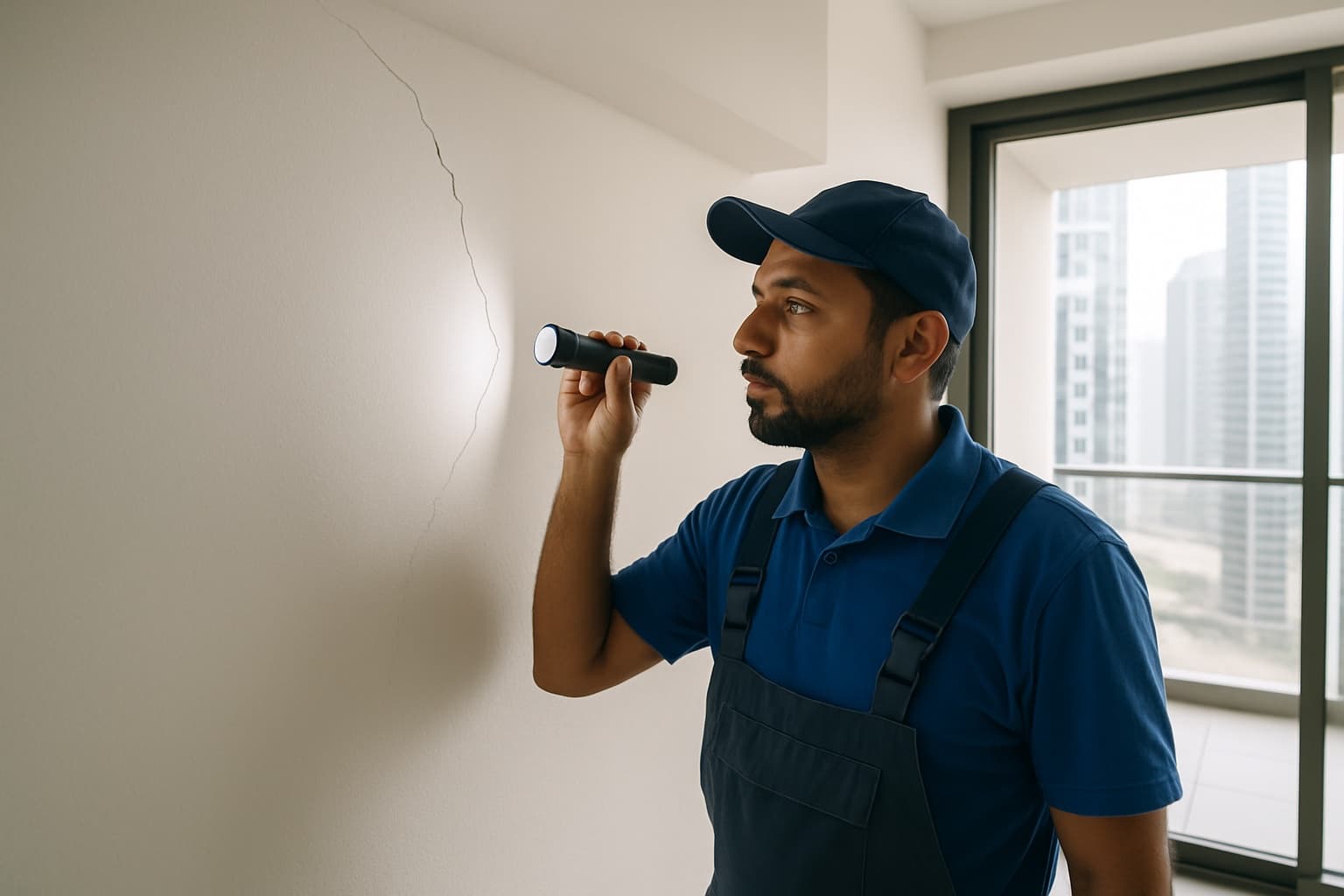
These thin, shallow cracks appear in paint or plaster surfaces. They're the most common type in Dubai homes and usually result from normal settlement, thermal expansion, or paint drying too fast in low humidity. Hairline cracks rarely indicate structural problems and are straightforward to repair.
Straight Vertical or Horizontal Cracks Along Joints
Cracks that follow a straight line along the junction between a wall and ceiling, or between two walls, typically form where different building materials meet. Concrete columns meet block walls, gypsum boards meet plastered surfaces - each material expands and contracts at different rates in Dubai's temperature swings from 15°C winter nights to 50°C summer afternoons.
Diagonal Cracks From Window or Door Corners
Cracks running at roughly 45 degrees from the corners of windows and doors can indicate differential settlement - meaning one part of the building is sinking faster than another. These deserve closer attention, particularly in villas built on sand or reclaimed land areas like Dubai South and parts of Dubailand.
Wide Cracks (Over 3mm) or Cracks That Grow
Any crack wider than 3mm, or one that you measure as getting bigger over weeks, is a structural concern. These suggest foundation movement, overloaded beams, or corroding reinforcement steel. In multi-storey buildings across areas like Business Bay and Dubai Marina - where towers settled rapidly after construction - these require immediate professional assessment.
Map Cracking or Crazing on Concrete Surfaces
A network of fine interconnected cracks on exposed concrete (car park ceilings, balcony soffits) usually indicates surface shrinkage during curing. While not immediately dangerous, map cracking allows moisture to reach the reinforcement steel, causing corrosion over time - a serious concern in Dubai's humid coastal climate.
What Causes Cracks in Dubai Properties
Dubai's building environment creates conditions that accelerate crack formation. The main culprits include:
- Thermal movement: Daily temperature swings of 15-20°C cause building materials to expand and contract. Over years, this cyclic stress cracks plaster and paint at stress concentration points
- Building settlement: Dubai's sandy substrate compresses under building weight. Most settlement happens in the first 5 years, but properties on reclaimed land or near the coast can continue settling for longer
- Concrete shrinkage: Concrete loses moisture as it cures, shrinking slightly. If curing was too fast (common in Dubai's hot climate), shrinkage cracks form
- Vibration from construction: With Dubai's continuous development, piling and excavation work near existing buildings transmits vibrations that can crack plaster and open existing micro-fractures
- Plumbing leaks: Water from concealed pipe leaks softens plaster from behind, causing it to crack and eventually delaminate. This is particularly common in older buildings where galvanised pipes have corroded
- Poor construction materials: Some buildings constructed during rapid development phases used substandard plaster mixes or inadequate reinforcement, making cracks appear sooner
How to Assess a Crack: Step-by-Step
Step 1: Measure the Width
Use a ruler or crack width gauge (available from hardware stores in Al Quoz). Record the measurement. Cracks under 1mm are almost always cosmetic. Between 1mm and 3mm, they need monitoring. Over 3mm warrants professional inspection.
Step 2: Track Whether It's Growing
Place a small piece of tape across the crack and date it. Check weekly. If the tape tears, the crack is active and growing. You can also mark both ends of the crack with pencil and date - if it extends beyond your marks, it's progressing. Monitor for at least four weeks before deciding on repair.
Step 3: Check Both Sides of the Wall
If a crack shows on the interior wall, check the corresponding exterior wall for matching cracks. Cracks visible on both sides of a load-bearing wall suggest the full thickness is compromised, which is more serious than a surface-only plaster crack.
Step 4: Look for Associated Symptoms
Structural cracks rarely appear alone. Check for doors or windows that stick or won't close properly, uneven floors (roll a marble), gaps between the wall and floor/ceiling, and any signs of water ingress near the crack.
Step 5: Identify the Load Path
Determine whether the cracked wall is load-bearing or a partition. Load-bearing walls carry the weight of floors above - cracks in these are more concerning than cracks in lightweight partition walls. If you're unsure, assume it's load-bearing and get professional advice.
Cosmetic Crack Repair Methods
For non-structural cracks, these repair methods restore the wall's appearance:
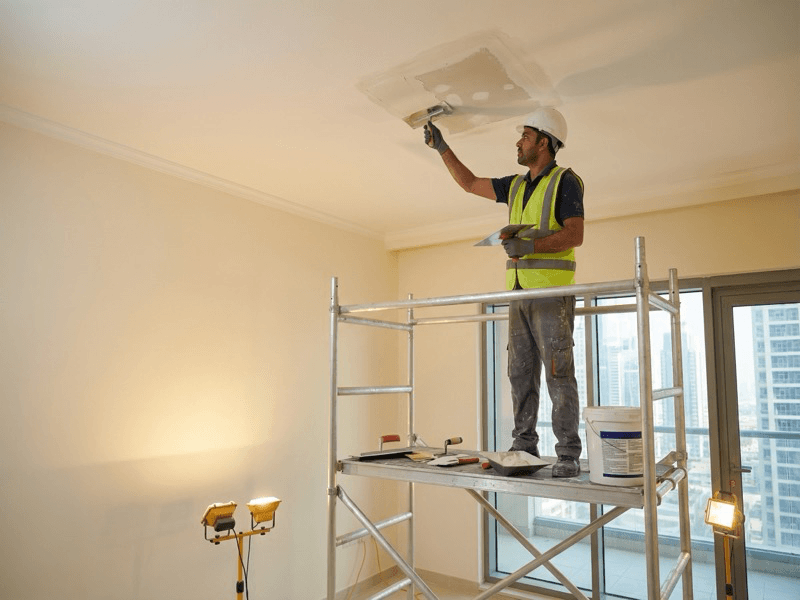
- Filler and repaint: Scrape out loose material, apply acrylic or gypsum filler, sand smooth, prime, and paint. Best for hairline cracks in plaster. Materials cost: AED 50-150
- Flexible sealant: For cracks at material junctions (where walls meet ceilings), use a paintable flexible sealant that accommodates ongoing movement. This prevents the crack from returning as quickly. Materials cost: AED 30-80
- Fibre mesh tape and skim coat: For recurring cracks, embed self-adhesive fibre mesh tape over the crack, then skim with joint compound. The mesh distributes stress across a wider area. Materials cost: AED 80-200
- Full skim coat: When a wall has extensive fine cracking, a full skim coat of plaster over the entire surface provides a fresh, uniform finish. Labour cost: AED 15-25 per square metre
Structural Crack Repair Methods
Structural repairs should always involve a qualified engineer. Common approaches used in Dubai include:
- Epoxy injection: For structural concrete cracks, low-viscosity epoxy is injected under pressure to restore the concrete's load-carrying capacity. Cost: AED 200-500 per linear metre
- Carbon fibre reinforcement: Carbon fibre plates or wraps bonded to the concrete surface add tensile strength across the crack. Used for beams and columns. Cost: AED 500-1,500 per square metre
- Steel stitching: Metal staples or helical bars are inserted across the crack in masonry walls to reconnect the separated sections. Cost: AED 300-800 per staple installation
- Underpinning: If foundation settlement is causing cracks, underpinning strengthens and deepens the foundation. This is major work costing AED 50,000 and upward, but it's sometimes necessary for villas experiencing ongoing settlement
Cost Guide for Crack Repair in Dubai
- Cosmetic crack repair (per room): AED 300 to AED 1,500 including materials and paint
- Joint and junction crack repair (per bathroom/kitchen): AED 500 to AED 2,000
- Structural engineer inspection: AED 1,500 to AED 5,000 depending on property size
- Structural epoxy injection: AED 3,000 to AED 15,000 depending on scope
- Foundation repair: AED 50,000+ (rare but necessary in extreme cases)
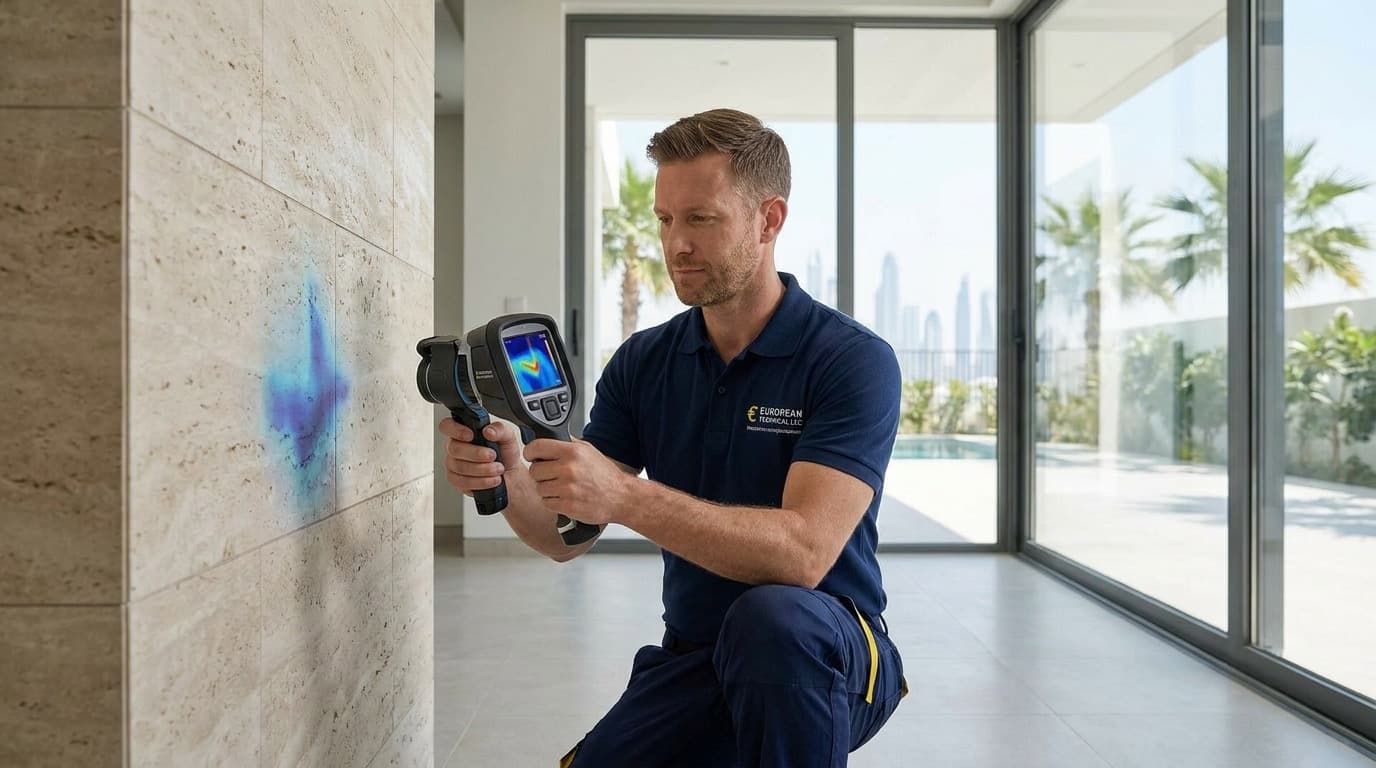
European Technical provides crack assessment services across Dubai. Our maintenance team evaluates whether cracks are cosmetic or structural and recommends the appropriate repair approach - saving you from overspending on unnecessary structural work or underspending on a crack that needed proper attention.
Preventing Cracks in Dubai Properties
- Maintain consistent indoor temperature: Avoid extreme AC temperature swings. Keep your thermostat within a 4-5°C range rather than switching between 18°C and 28°C
- Seal expansion joints: Buildings have expansion joints designed to absorb movement. Make sure these aren't painted over or filled with rigid material
- Fix leaks promptly: Water damage weakens plaster and mortar, making cracks more likely and harder to repair permanently
- Use flexible finishes: When repainting, choose elastomeric or flexible paint formulations that stretch slightly with thermal movement rather than cracking
- Commission periodic inspections: Annual property inspections catch developing cracks early, before they become expensive structural problems
Frequently Asked Questions
Are cracks normal in new Dubai buildings?
Yes, minor settlement and shrinkage cracks are common in buildings less than 5 years old. Most hairline cracks in new properties are cosmetic and stabilise within the first few years. If you're within the developer's warranty period (typically 1 year for finishes, 10 years for structure under RERA), report cracks in writing for warranty claims.
Should I worry about cracks after nearby construction work?
Construction vibration can cause new cracks or widen existing ones. Document any cracks with dated photos before nearby construction starts. If new cracks appear during adjacent construction, report them to the contractor and your building management. Dubai Municipality requires contractors to conduct pre-construction surveys of neighbouring buildings for exactly this reason.
Can I repair structural cracks myself?
No. Structural cracks require professional assessment and repair by qualified engineers. Cosmetic covering of a structural crack hides the problem without fixing it, and the crack will continue to grow. DIY cosmetic repairs are fine for hairline surface cracks only.
How do I know if a ceiling crack is from the apartment above leaking?
Water-related ceiling cracks usually appear with brown staining, bubbling paint, or soft/damp plaster around the crack. The crack pattern often follows a random path rather than the straight lines typical of settlement cracks. If you suspect a leak from above, contact your building management and the unit owner above you immediately.
Do crack repairs come with a guarantee?
Reputable repair contractors offer a workmanship guarantee, typically 6-12 months for cosmetic repairs and longer for structural work. European Technical provides a written guarantee on all crack repair work, covering both materials and labour.
Get a Professional Crack Assessment
Not sure whether that crack in your villa or apartment wall is something to worry about? European Technical's maintenance team provides honest assessments across all Dubai areas. We'll tell you if it's a simple filler job or something that needs engineering attention. Call 800-REPAIR (800-737247) or +971 4 847 8388 to arrange a visit.