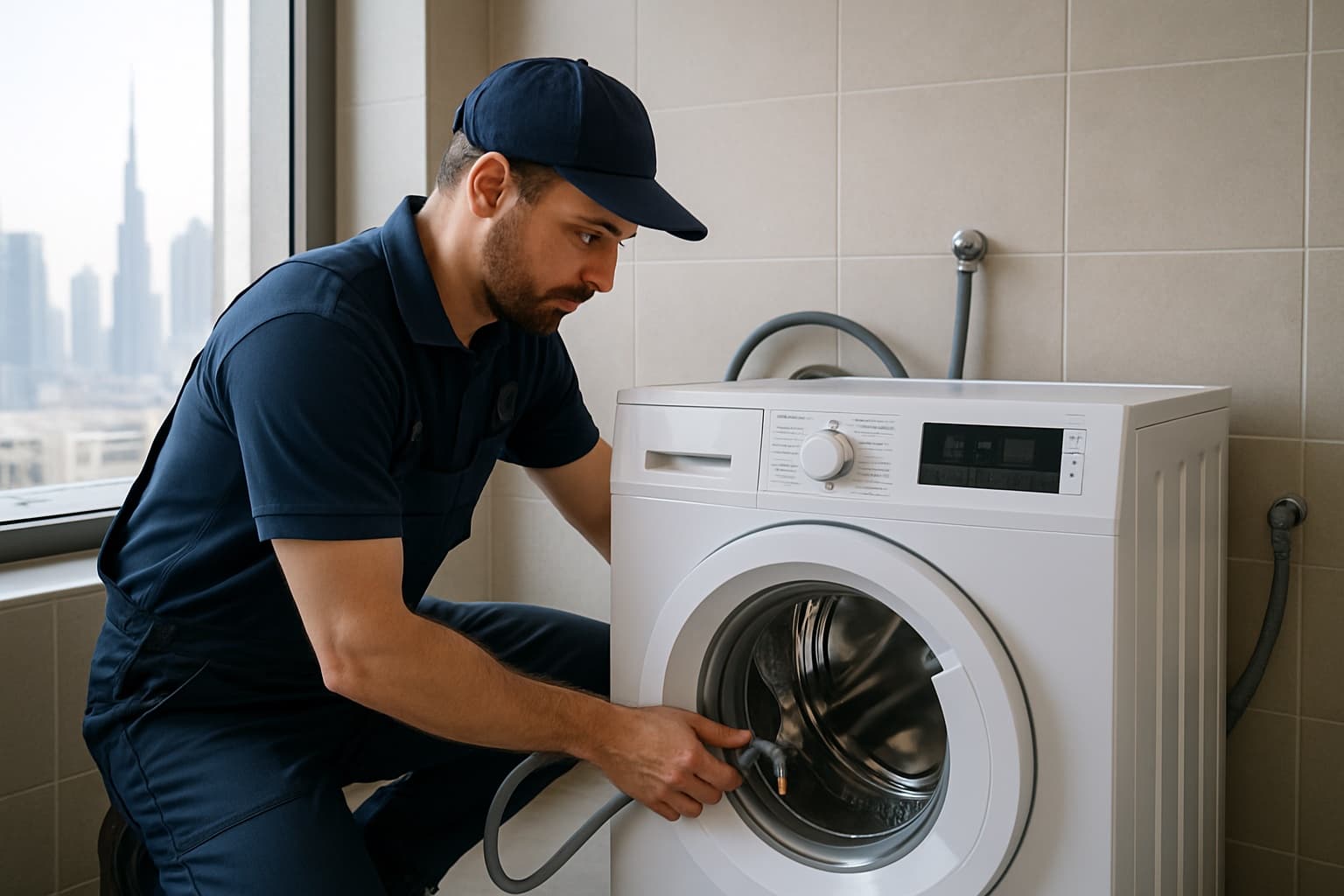
Getting a Washing Machine Installed Right in Dubai
Buying a washing machine in Dubai is the easy part. Getting it properly connected to your apartment or villa's plumbing, drainage, and electrical systems - without flooding the laundry room or tripping the circuit breaker - that's where things get complicated. Dubai properties vary wildly in their utility room configurations, from spacious villa laundry rooms with dedicated plumbing to cramped apartment closets where the washer shares space with the water heater.
This guide covers everything you need to cheque before installation day, what to expect from a professional setup, and the mistakes that lead to leaks, electrical faults, and warranty-voiding damage.
Before You Buy: Checking Your Field and Connections
Step 1: Measure the Installation Field
Don't trust the "standard" dimensions printed in brochures. Grab a tape measure and record the exact width, depth, and height available. Account for door clearance if the machine sits in a closet. In many Dubai apartments - particularly studios and one-beds in JVC, Sports City, and International City - the laundry space is tight enough that even 2cm makes the difference between a machine that fits and one that blocks the door.
Key measurements to take:
- Width of the space (allow 2-3cm on each side for airflow)
- Depth from wall to front edge (include space for hoses behind)
- Height to any shelf or countertop above
- Door opening width if the space is enclosed
Step 2: Locate Your Water Supply Points
Look for the hot and cold water shut-off valves near the intended washing machine location. Most Dubai apartments have dedicated laundry taps - typically chrome angle valves with blue (cold) and red (hot) handles. If your property only has a cold water supply to the laundry, you can still install any washing machine - modern machines with built-in heaters only need cold water input.
cheque that the valves actually work. Turn them off and on. Corroded or seized valves should be replaced before installation, not discovered on the day your new machine arrives.
Step 3: cheque the Drainage Setup
Your washing machine needs a standpipe drain - a vertical pipe (usually 40-50mm diameter) that the drain hose feeds into. The standpipe should sit 60-90cm above floor level. Some Dubai apartments have a floor drain instead, which works but increases the risk of backflow and odour unless a proper P-trap connection is made.
If you're replacing an old machine, note how the current drain hose connects. If there's no existing drainage point, a plumber will need to install one - budget AED 300-600 for new drainage plumbing.
Step 4: Verify the Electrical Supply
Dubai apartments and villas use 220-240V, 50Hz power - compatible with most washing machines sold in the UAE and Europe. cheque these electrical requirements:
- Dedicated circuit: Washing machines should have their own circuit breaker (16A minimum) in the distribution board. Sharing a circuit with a dryer or water heater risks overloads
- Socket type: UAE uses BS 1363 (three-pin British) sockets. Most machines sold locally come with the correct plug. If importing a machine from elsewhere, you'll need a proper rewired plug, not an adapter
- Earth connection: Verify the socket has a working earth. Use a socket tester (AED 25-40 from any hardware store) to confirm
- DEWA compliance: Any new electrical work must comply with DEWA regulations and should be done by a licensed electrician
Installation Process: What Happens on the Day
Step 1: Remove Transit Bolts
Every new washing machine ships with transit bolts that lock the drum in place during transport. Forgetting to remove them is the single most common installation error - the machine will vibrate excessively, damage the drum bearings, and void your warranty. There are typically 3-4 bolts on the rear panel. Keep them in case you move the machine later.
Step 2: Level the Machine
Washing machines must sit perfectly level for the drum to spin without excessive vibration. This is particularly important in Dubai where many apartment floors have subtle slopes designed for bathroom drainage that extend into adjacent laundry areas.
Use a spirit level on top of the machine. Adjust the four feet by screwing them in or out. Lock each foot with its lock nut once level is achieved. An unlevel machine walks across the floor during the spin cycle and puts uneven stress on bearings - a leading cause of early mechanical failure.
Step 3: Connect the Water Supply
Attach the inlet hose(s) to the machine's inlet valve(s) and the wall taps. Hand-tighten the connections, then give them a quarter turn with pliers. Don't overtighten - you'll crack the plastic fittings. Turn on the water supply and cheque for drips at both ends. Use rubber washers inside the hose connectors to seal properly.
If your machine has both hot and cold inlets but you only have cold water supply, cap the hot inlet or use a Y-splitter from the cold supply. Running a dual-inlet machine on cold only won't damage it - the machine's internal heater handles water temperature.
Step 4: Connect the Drain Hose
Insert the drain hose into the standpipe, making sure it forms a high loop (above the machine's water level) before dropping down. This high loop prevents dirty water from siphoning back into the machine. Secure the hose so it can't pop out during the pump cycle - a drain hose that escapes floods the laundry room in under a minute.
Don't push the drain hose too far into the standpipe. Leave an air gap at the top to prevent siphoning. The hose tip should sit 10-15cm inside the pipe, no more.
Step 5: Plug In and Test
With all connections made, plug the machine in and run an empty test cycle on a hot wash. Watch for:
- Leaks at any water connection point
- The drain hose staying secure during the pump phase
- Vibration level during spin (some vibration is normal, but the machine shouldn't walk or bang)
- The circuit breaker staying on throughout the cycle
- Proper drainage - water should flow away without backing up
Common Installation Mistakes in Dubai
After years of washing machine installations across Dubai, European Technical's appliance team sees the same problems repeat:
- Transit bolts left in: Causes drum damage within weeks. Always count the bolts against the manual's specification
- Using universal adapters for the plug: Cheap adapters lose their earth connection, creating a safety hazard. Get the plug professionally fitted instead
- Drain hose pushed directly into floor drain: Without a proper standpipe or P-trap, sewer gases enter the laundry room and water can backflow during building drainage surges
- Sharing circuits with the dryer: Running a washer and dryer on the same circuit trips the breaker mid-cycle. Each appliance needs its own dedicated 16A circuit
- No anti-flood protection: In apartments, a washing machine leak can cause thousands of dirhams in damage to the unit below. Install an anti-flood device (AED 150-300) on the water inlet
- Ignoring the water pressure: Dubai water pressure varies by area and building height. Machines in penthouses or upper floors of older buildings may need a booster pump if water pressure drops below 1 bar
Cost of Professional Washing Machine Installation in Dubai
- Standard installation (connect to existing plumbing and electrical): AED 150 to AED 350
- Installation with new drainage plumbing: AED 400 to AED 800
- Installation with new electrical circuit: AED 500 to AED 1,200
- Stacking kit installation (washer-dryer column): AED 200 to AED 400 additional
- Old machine removal and disposal: AED 100 to AED 250
- Anti-flood device supply and fit: AED 200 to AED 400
Many appliance retailers in Dubai offer "free installation" that covers only the most basic connection. If your property needs plumbing modifications or electrical work, the delivery team will typically refuse and tell you to hire a technician. Better to arrange proper installation upfront than to discover issues with a half-connected machine.
Washer-Dryer Combos vs Separate Units
Field constraints in Dubai apartments push many residents toward washer-dryer combo units. What to consider:
- Space savings: A combo unit occupies one appliance footprint instead of two (or a stacked pair)
- Installation simplicity: One set of connections instead of two
- Drying performance: Combo units use condensation drying, which is slower and less effective than a separate vented or heat-pump dryer
- Capacity trade-off: You can usually wash 8-10kg but only dry 5-6kg in the same machine, requiring split loads for drying
- Reliability: More complex machines with more failure points
For villa laundry rooms with adequate space, separate machines give better performance and last longer. For tight apartment installations, a quality combo unit from brands like Bosch, Samsung, or LG is a practical compromise.
Frequently Asked Questions
Can I install a washing machine myself in Dubai?
If you're connecting to existing, working plumbing and electrical points, DIY installation is straightforward - follow the machine's manual carefully and don't forget the transit bolts. If any new plumbing or electrical work is needed, hire a licensed professional. DEWA requires electrical modifications to be done by certified electricians.
Do I need a permit to install a washing machine in my Dubai apartment?
No permit is needed for standard washing machine installation. If you're modifying plumbing or electrical systems (adding new circuits or drainage points), the work should comply with Dubai Municipality building codes. In some freehold buildings, your building management may require approval for plumbing modifications.
Why does my washing machine vibrate excessively after installation?
The three most common causes are: transit bolts still in place, machine not levelled properly, or the floor surface too slippery. cheque all three before calling for service. Anti-vibration pads (AED 50-100 for a set of four) placed under each foot can also help on tile floors.
How do I connect a European washing machine to Dubai power?
Most European machines work perfectly on Dubai's 220-240V/50Hz supply. You just need the correct BS 1363 plug, which an electrician can fit for AED 30-50. Never use travel adapters as a permanent solution - they're a fire risk for high-power appliances.
What brand of washing machine works best in Dubai conditions?
Dubai's hard water puts extra stress on washing machine components. Brands with good local service networks - Bosch, Siemens, Samsung, and LG - are the most practical choices. Their parts are readily available, and warranty service is straightforward through UAE distributors. European Technical services all major brands across Dubai.
Book a Professional Installation
Whether you've bought a new machine online, picked one up from a retailer, or need to reconnect after a move, European Technical handles washing machine installations across Dubai. Our technicians carry the fittings, tools, and anti-flood devices needed for a proper setup. Call 800-REPAIR (800-737247) or +971 4 847 8388 to book.