Why Dubai Humidity Ruins Ordinary Paint
Dubai presents a unique challenge for painted surfaces. From May through September, temperatures regularly exceed 40°C and humidity levels remain persistently high. This combination places enormous stress on interior and exterior walls alike. Ordinary paint simply cannot cope.
Moisture affects walls in two distinct ways. First, there is the water you can see: splashes in bathrooms, cooking splatter in kitchens, and condensation running down windows. Second, and more insidiously, there is water vapour you cannot see. Steam from hot showers soaks into paint films and drywall, gradually breaking down the coating from within. In areas with weak ventilation, the paint is effectively asked to do a fan's job. It cannot.
The result is familiar to many Dubai residents. Paint begins to blister and peel. Dark patches of mildew appear in corners. Walls develop a tacky feel. In properties across JVC, Dubai Marina, and Business Bay, these problems surface repeatedly in bathrooms, kitchens, and laundry rooms. The good news is that choosing the correct paint system can change the entire experience of maintaining that space.
This guide covers the best paints and finishes for high-moisture spaces in Dubai homes. We will look at specific paint types, which finishes work where, and how proper preparation ensures your investment lasts.
Acrylic Latex Paint: Your Everyday Warrior
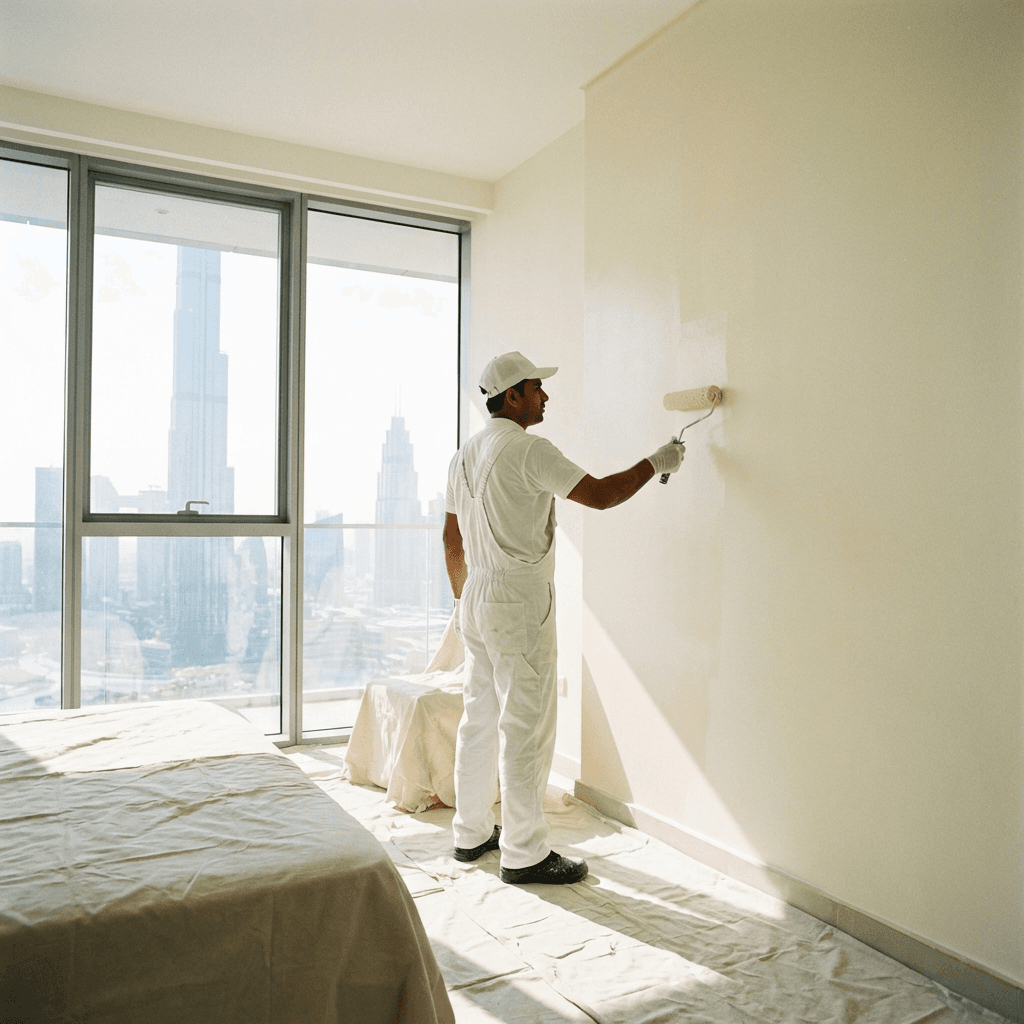
For most interior walls in Dubai apartments and villas, high-quality acrylic latex paint is the foundation of a durable finish. The key word here is quality. Budget paints may save you a few dirhams per litre, but they will not withstand the humid conditions that Dubai experiences for much of the year. Cheap paints and finishes fail quickly in high-moisture spaces, leading to costly repairs or full repainting far sooner than necessary.
100% acrylic paint is resistant to humidity, mildew, and the fading caused by intense UAE sunlight. This makes it suitable not only for general living spaces but also for exterior walls exposed to the elements. Vinyl acrylic paints are also available and conventionally used for exterior applications, but pure 100% acrylic formulations offer superior performance in Dubai's demanding climate.
For bathrooms and kitchens specifically, look for acrylic latex paints formulated for these spaces. These products typically include additives that resist mildew growth and are designed to tolerate repeated exposure to moisture. A quality acrylic latex paint designed for kitchens and baths, paired with the correct sheen and proper surface preparation, forms the backbone of a long-lasting finish.
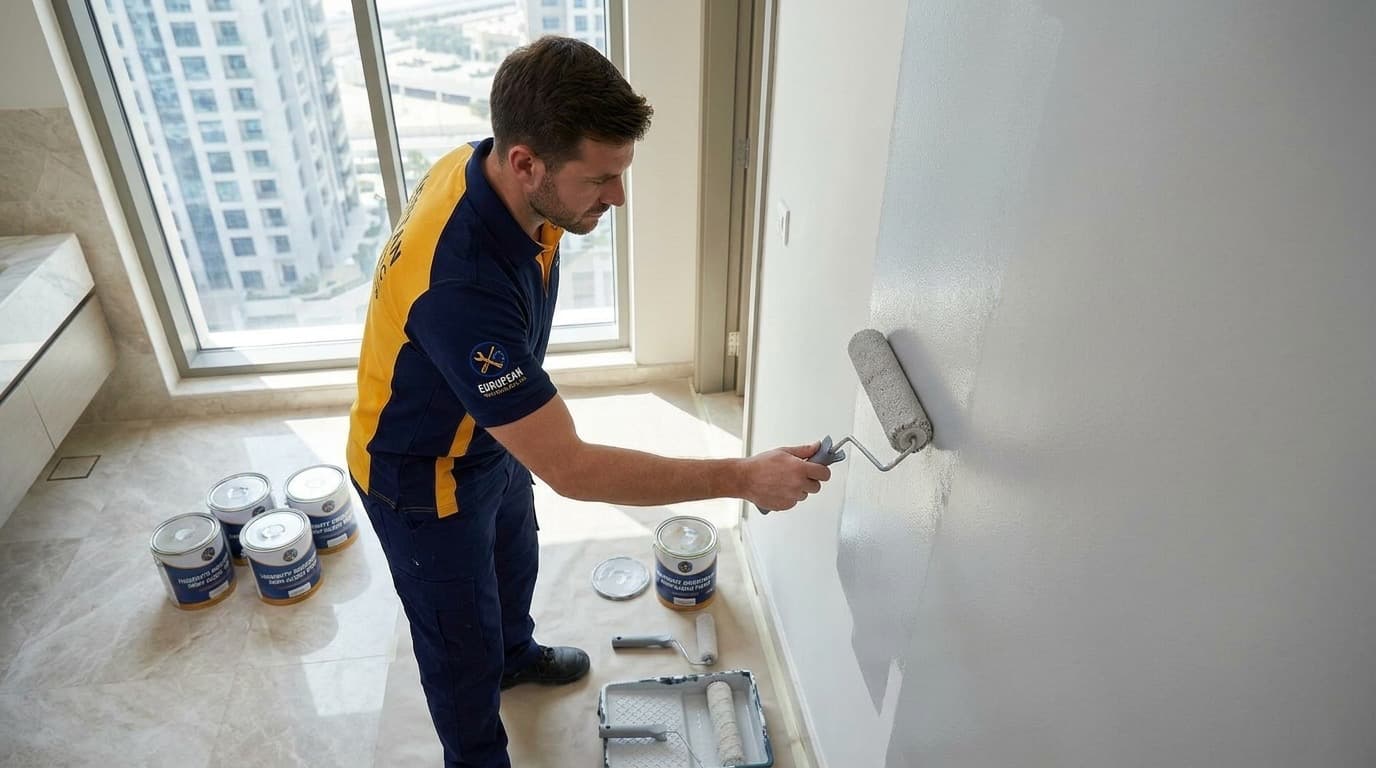
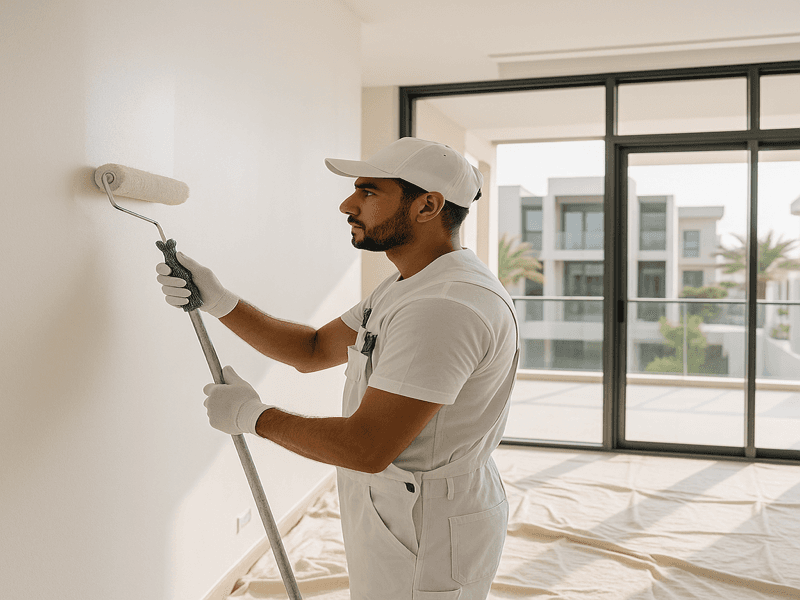
Professional application matters as much as the product itself. At European Technical, our painting service includes thorough surface preparation, correct priming, and application techniques suited to Dubai's conditions. This attention to detail is what separates a finish that lasts five months from one that lasts five years.
Anti-Microbial Paint: Mould's Worst Enemy
Dubai's humidity creates an ideal environment for mould and mildew. Bathrooms, kitchens, and laundry rooms are particularly vulnerable, especially in properties where air conditioning is switched off for extended periods or where ventilation is inadequate. Mould is not merely a cosmetic problem. It can affect indoor air quality and trigger respiratory issues, particularly for children and those with allergies.
Anti-microbial paint contains active ingredients that inhibit the growth of mould and mildew on the paint surface itself. These paints are specifically engineered for high-moisture environments and are an excellent choice for bathrooms, kitchens, and any wall that regularly encounters condensation.
In areas like Dubai Marina and Downtown, where many apartments have compact bathrooms with limited natural ventilation, anti-microbial paint provides an additional layer of protection. However, it is important to understand what this paint can and cannot do. Anti-microbial paint will not stop mildew if moisture is trapped behind the wall or if there is a concealed leak. It treats the symptom, not the cause. If you notice persistent mould returning after repainting, you likely have an underlying issue that requires investigation by a professional.
This is where a holistic approach to property maintenance becomes valuable. Our handyman team can assess ventilation, check for hidden leaks, and repair damaged drywall before any painting begins. Addressing the root cause of moisture ensures that your new paint performs as intended.
Epoxy Paint: The Industrial-Strength Shield
When standard paints are not sufficient, epoxy paint offers industrial-strength moisture resistance. Epoxy is a two-part system that creates an exceptionally hard, impermeable surface. It is the paint equivalent of armour plating.
In Dubai homes, epoxy paint is most commonly used in garages, utility rooms, and commercial kitchen environments. It is also an excellent choice for areas that experience frequent and direct water contact, such as the lower portions of bathroom walls in wet zones or plant rooms in larger villas. Arabian Ranches and other villa communities often have utility and storage areas where epoxy paint provides superior protection compared to conventional alternatives.
Epoxy paint has a distinctive appearance. It typically dries to a high-gloss finish and has a slightly plastic-like look. This makes it less suitable for living areas or bedrooms where a softer aesthetic is preferred. However, for purely functional spaces where moisture resistance is the priority, nothing else matches its durability.
Application of epoxy paint requires experience. The two components must be mixed in precise ratios and applied within a specific working time. Surface preparation is critical, and curing conditions must be controlled. This is not a product for casual DIY application. Professional painters with experience working in Dubai's climate can ensure the coating adheres properly and achieves its full performance characteristics.
Choosing the Right Paint Finish for High-Moisture Areas
Selecting the correct paint type is only half the equation. The finish, or sheen, is equally important. Paint finish refers to how glossy the dried surface appears, and it directly affects the paint's ability to resist moisture.
The fundamental principle is simple. Shiny finishes are less permeable than flat or eggshell paints. A higher gloss value means a harder, more moisture-resistant surface that is also easier to clean. This is why glossier finishes are recommended for high-moisture areas.
Satin Finish
Satin is one of the best paint finishes for bathrooms and is frequently recommended as the best interior paint for bathroom walls. It offers a subtle sheen that is softer than semi-gloss but still provides good moisture resistance. Satin finishes are versatile enough for bathroom walls, kitchen walls, and corridors where occasional cleaning is needed. For many Dubai apartments, satin is the default choice for living areas that are not exposed to direct water but still experience elevated humidity.
Semi-Gloss Finish
Semi-gloss paint offers a higher level of shine and moisture resistance than satin. It is recommended for high-moisture areas and is particularly well suited to bathroom walls, kitchen walls near sinks and stoves, and trim work throughout the home. The harder surface is more resistant to scrubbing, which is useful in kitchens where grease and food splatter require regular cleaning. Semi-gloss is also a practical choice for window frames and doors that may be exposed to condensation.
High-Gloss Finish
High-gloss paint provides the maximum level of moisture resistance. It creates a very hard, very shiny surface that is virtually impervious to water. High-gloss is typically reserved for specific applications such as kitchen cabinets, bathroom cabinets, doors, and trim. It is rarely used on large wall surfaces because the high shine can be visually overwhelming and will highlight every surface imperfection. However, in commercial kitchens or utility areas where function takes priority over aesthetics, high-gloss paint on walls can be justified.
Flat and Eggshell Finishes
Flat and eggshell finishes have low gloss values. They are more permeable than shinier alternatives, meaning they absorb moisture rather than repelling it. These finishes are best suited to low-humidity areas such as bedrooms, living rooms, and ceilings. Using flat paint in a bathroom or kitchen is a common mistake that leads to rapid deterioration, staining, and mould growth. If you are repainting a bathroom that currently has flat paint, switching to satin or semi-gloss should be your first change.
Even the best paint cannot compensate for poor ventilation. In Dubai's climate, air conditioning plays a central role in managing indoor humidity. When AC units are running, they remove moisture from the air and help maintain conditions that allow paint to perform well. When AC is switched off, humidity rises rapidly, particularly in enclosed rooms.
Bathrooms require mechanical ventilation in the form of an extractor fan. If your bathroom has a window, opening it after showering helps, but a fan is more reliable and effective. Kitchen extractor hoods serve a similar function, removing both moisture and cooking residues that can degrade paint over time.
In properties where ventilation is genuinely inadequate, consider addressing this before investing in repainting. Installing or upgrading an extractor fan is a straightforward job for a qualified technician. The cost is modest compared to the cost of repeatedly repainting walls that fail due to trapped moisture.
Regular AC maintenance also plays a role. Clogged filters and dirty coils reduce the system's ability to dehumidify indoor air. Many painting problems in Dubai homes can be traced back to air conditioning that is not functioning efficiently. A well-maintained AC system protects your painted surfaces by keeping indoor humidity at manageable levels. This is one reason why an annual maintenance contract that covers both AC servicing and general property maintenance is a wise investment for Dubai property owners.
Surface Preparation: The Step That Determines Success
No discussion of painting in humid environments is complete without addressing preparation. Surface preparation accounts for the majority of a painting project's success or failure. In Dubai's climate, this is particularly true.
Before any new paint is applied, existing mould and mildew must be treated and removed. Simply painting over mould will not solve the problem. The growth will continue beneath the new coating and eventually show through. Affected areas should be cleaned with a fungicidal solution, allowed to dry completely, and then assessed for any underlying damage.
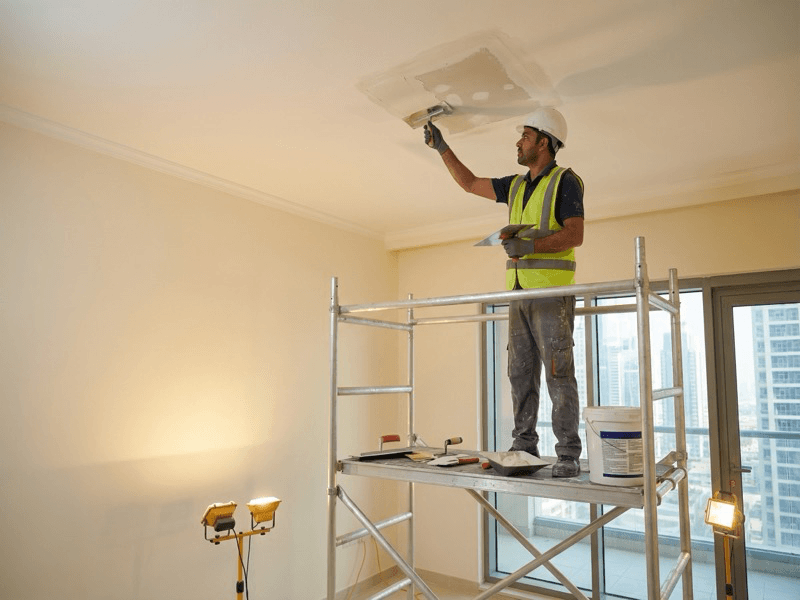
Cracks, holes, and damaged drywall must be repaired. In bathrooms and kitchens, water damage to drywall is common. Soft or crumbling sections should be cut out and replaced. Skimming and sanding create a smooth surface for the new paint to adhere to.
Primer is the next critical step. A quality primer designed for high-moisture areas creates a bond between the surface and the topcoat. It also provides an additional barrier against moisture penetration. Skipping primer to save time or cost is a false economy that almost always results in premature paint failure.
Finally, the surface must be dry before painting begins. In Dubai's humid conditions, this can take longer than expected. Painting over a damp surface traps moisture within the wall, which will cause the new paint to blister and peel. Professional painters use moisture meters to confirm that surfaces are ready for coating.
Cost Considerations for Dubai Painting Projects
Painting costs in Dubai vary based on several factors: the size of the space, the type of paint selected, the extent of preparation required, and the condition of existing surfaces. As a general guide, expect to pay more for premium paints formulated for high-moisture areas. The price difference between budget and quality paint is modest compared to the cost of labour and the cost of redoing a failed paint job.
For a typical one-bedroom apartment in areas like JVC or Business Bay, repainting a bathroom and kitchen with quality moisture-resistant paint generally falls within a range of AED 800 to AED 2,000, depending on preparation needs and the specific products used. Larger projects, such as repainting an entire villa in Arabian Ranches, will naturally cost more and should be assessed on site.
Investing in quality paint and professional application saves money over time. A well-executed paint job using the right products can last five to seven years even in Dubai's challenging climate. A poorly executed job using cheap paint may need attention within twelve months.
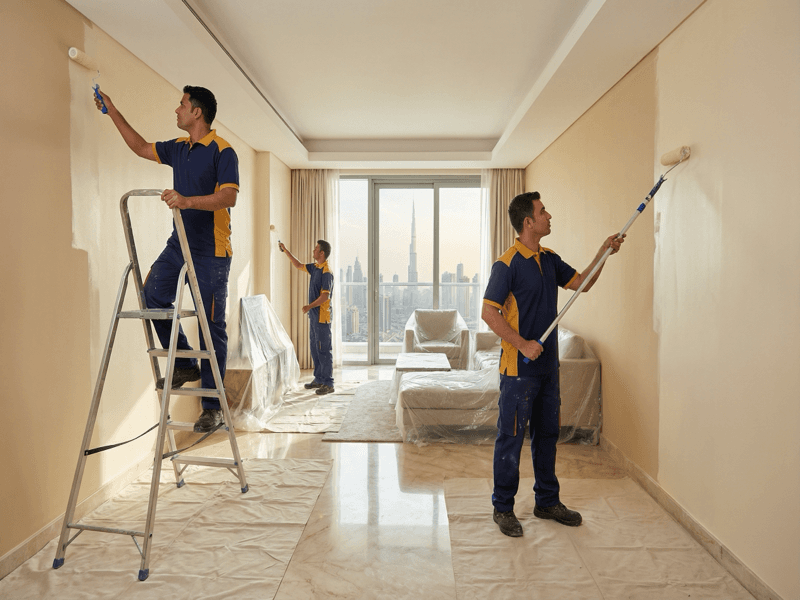
For landlords and property managers overseeing multiple units, the economics are clear. Spending slightly more upfront on the correct paint system reduces maintenance calls, tenant complaints, and turnover costs. Our interior painting services are designed to deliver this kind of long-term value.
Common Painting Mistakes in Dubai Homes
Several recurring mistakes undermine painting projects in Dubai. Recognising these helps property owners make informed decisions.
Using flat paint in bathrooms is the most frequent error. Flat paint absorbs moisture, making it unsuitable for any space where humidity is elevated. The second is failing to address underlying moisture issues before repainting. If there is a leak behind the wall, no paint will solve the problem. The third is inadequate ventilation. Even with the best paint, a bathroom with no extractor fan will eventually develop mould and paint failure.
A fourth mistake is painting over surfaces that have not been properly cleaned and prepared. Grease in kitchens, soap scum in bathrooms, and general grime all prevent paint from adhering correctly. The fifth is ignoring the impact of AC usage. Properties that are left unoccupied for weeks with the air conditioning switched off experience rapid humidity buildup that can damage painted surfaces.
FAQ
What is the best paint for humid bathrooms in Dubai?
The best paint for a high-humidity bathroom in Dubai is a high-quality acrylic latex paint formulated specifically for kitchens and baths, applied in a satin or semi-gloss finish. These finishes are less permeable than flat or eggshell paints, meaning they resist moisture penetration more effectively. Anti-microbial additives provide additional protection against mould growth.
Can I use regular wall paint in my Dubai kitchen?
Regular flat wall paint is not recommended for Dubai kitchens. Cooking generates steam, grease, and heat, all of which degrade standard paint quickly. Use a satin or semi-gloss acrylic latex paint designed for high-moisture areas. Semi-gloss is particularly suitable for areas near the stove and sink because it can withstand regular cleaning.
How long does paint last in Dubai's humid climate?
With proper surface preparation, quality paint, and adequate ventilation, a well-executed paint job can last five to seven years in Dubai. Bathrooms and kitchens may require attention sooner if ventilation is poor or if the AC is frequently switched off. Budget paints applied without proper preparation may fail within twelve months.
Does anti-microbial paint completely prevent mould?
Anti-microbial paint inhibits mould and mildew growth on the painted surface, but it does not eliminate the underlying causes of mould. If moisture is trapped behind the wall, if there is a plumbing leak, or if ventilation is inadequate, mould can still develop. Anti-microbial paint should be part of a broader moisture management strategy that includes proper ventilation and prompt repair of leaks.
Should I choose satin or semi-gloss for my bathroom walls?
Both satin and semi-gloss are suitable for bathroom walls. Satin offers a softer appearance and is often preferred for larger wall surfaces. Semi-gloss provides a higher level of moisture resistance and is easier to clean, making it ideal for areas that receive direct water splashes. Many homeowners choose satin for the main walls and semi-gloss for trim, doors, and areas immediately around showers and basins.
Is epoxy paint suitable for residential bathrooms?
Epoxy paint is generally reserved for industrial or highly functional spaces rather than residential bathrooms. It provides excellent moisture resistance but has a distinctive high-gloss appearance that most homeowners find too clinical for living spaces. For residential bathrooms, high-quality acrylic latex paint in a satin or semi-gloss finish is the more appropriate choice. Epoxy may be considered for garage walls, plant rooms, or utility areas in larger villas.