Why Dubai Homes Need Repainting More Often Than You Might Think
If you have lived in Dubai for a few years, you already know the climate does not forgive paintwork. Summer temperatures that push past 45°C, high humidity along the coast in areas like Dubai Marina and Jumeirah, and relentless UV exposure all break down paint faster than in milder countries. Interior walls in Arabian Ranches or JVC cope reasonably well, but exterior walls, balconies and shaded northern faces that trap moisture take a beating.
As a general rule, most villa exteriors in Dubai need a fresh coat of paint every three to five years. Interior walls usually last a little longer, but a repaint every two to three years is a sensible benchmark for villas, especially in areas exposed to sand, salt air and thermal expansion. If your walls already show visible wear, peeling, bubbling or discolouration, do not wait for the calendar to tell you it is time. Those are the signals that moisture has got under the paint film or the binder has degraded, and the longer you leave it, the more surface preparation the job will need.
Regular maintenance genuinely extends paint life. A quick wash-down of exterior walls once or twice a year, prompt touch-ups on hairline cracks, and repainting small problem areas before they spread can add years between full repaints. That is one reason many landlords and property managers in Dubai bundle painting into an annual maintenance contract, so inspections catch faults early rather than after the rainy season has done its worst.
When Is the Right Time to Book Painting Services in Dubai?
Timing matters more here than in most cities. The comfortable window for exterior painting in Dubai runs roughly from October to April, when humidity drops and surfaces are not too hot to hold paint properly. Painting a west-facing exterior wall in July is largely a waste of money: paint applied to a scorching surface can blister within days, and rapid solvent evaporation prevents proper film formation.
That said, interior painting can be carried out year-round because most Dubai homes run air conditioning continuously. With the AC set to a steady temperature, paint dries evenly and you avoid the humidity problems that affect bathrooms and kitchens in particular.
Book when you notice any of the following:
- Fading or chalky patches on exterior walls, especially on sun-facing elevations
- Peeling, flaking or bubbling paint, which usually points to moisture trapped behind the film
- Hairline cracks around window frames, cornices and expansion joints
- Water staining after rain or an AC condensate leak
- Discolouration and dullness that no amount of cleaning will lift
If you are preparing a property for new tenants, painting is also one of the fastest ways to lift rental value. A freshly painted apartment in Business Bay or Downtown shows dramatically better at viewings, and the cost is modest relative to the impression it creates. Our painting team regularly carries out turnaround work for landlords between tenancies, often completing a one-bedroom apartment within a few days.
What Professional Painting in Dubai Actually Involves
A proper painting job is mostly preparation. Any contractor who arrives with brushes and tins and starts rolling within the hour is cutting corners you will pay for later. Here is what a professional job should include.
Inspection and surface assessment
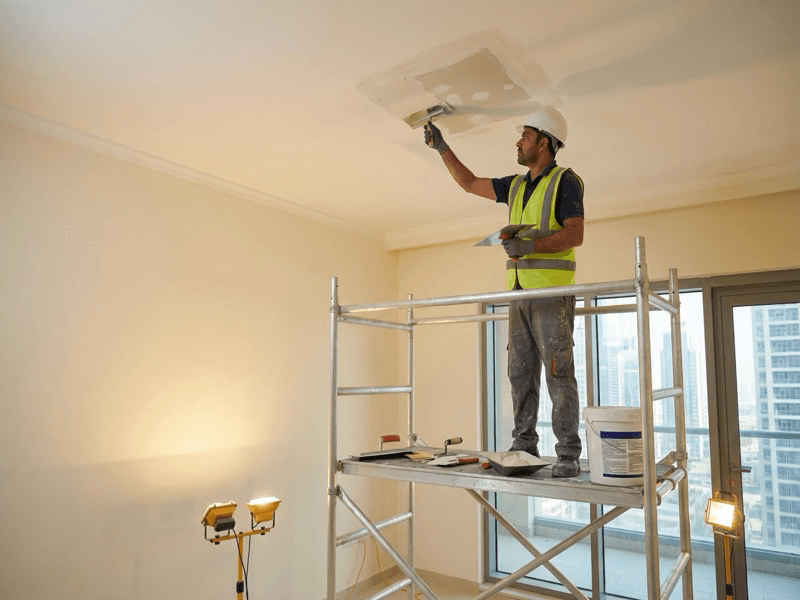
The team should first walk the property with you, marking cracks, damp patches, hollow-sounding plaster and previous paint failures. In Dubai villas, hairline cracks around beam lines and above door frames are extremely common because thermal movement opens and closes joints through the seasons. These need to be raked out, filled with flexible filler and allowed to cure before any primer goes on.
Protection and preparation
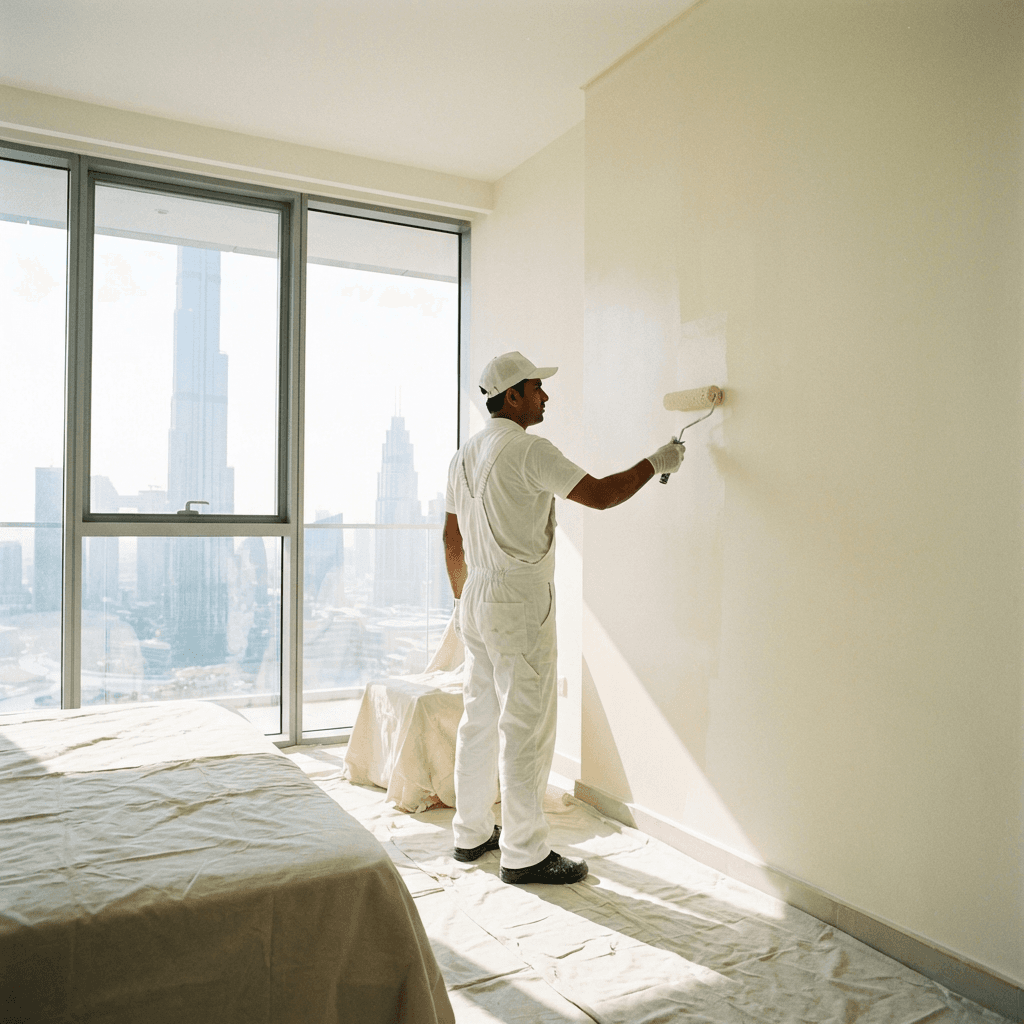
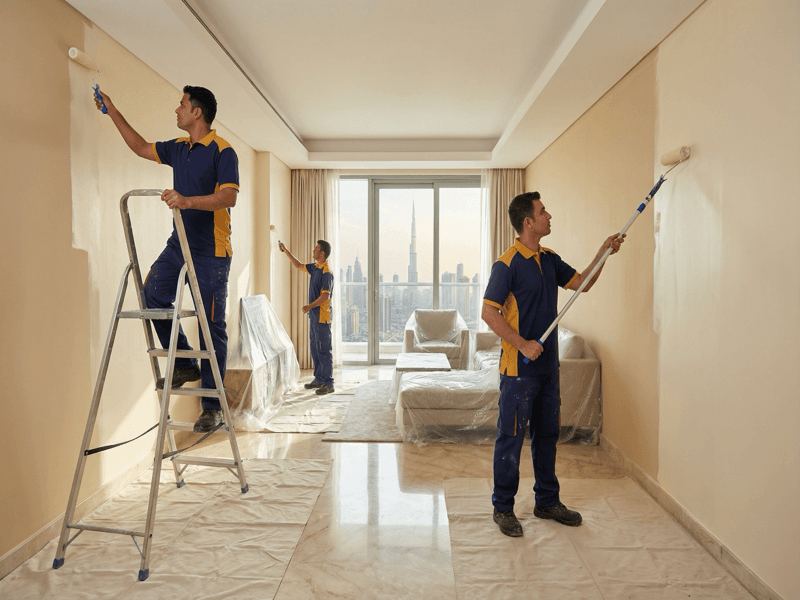
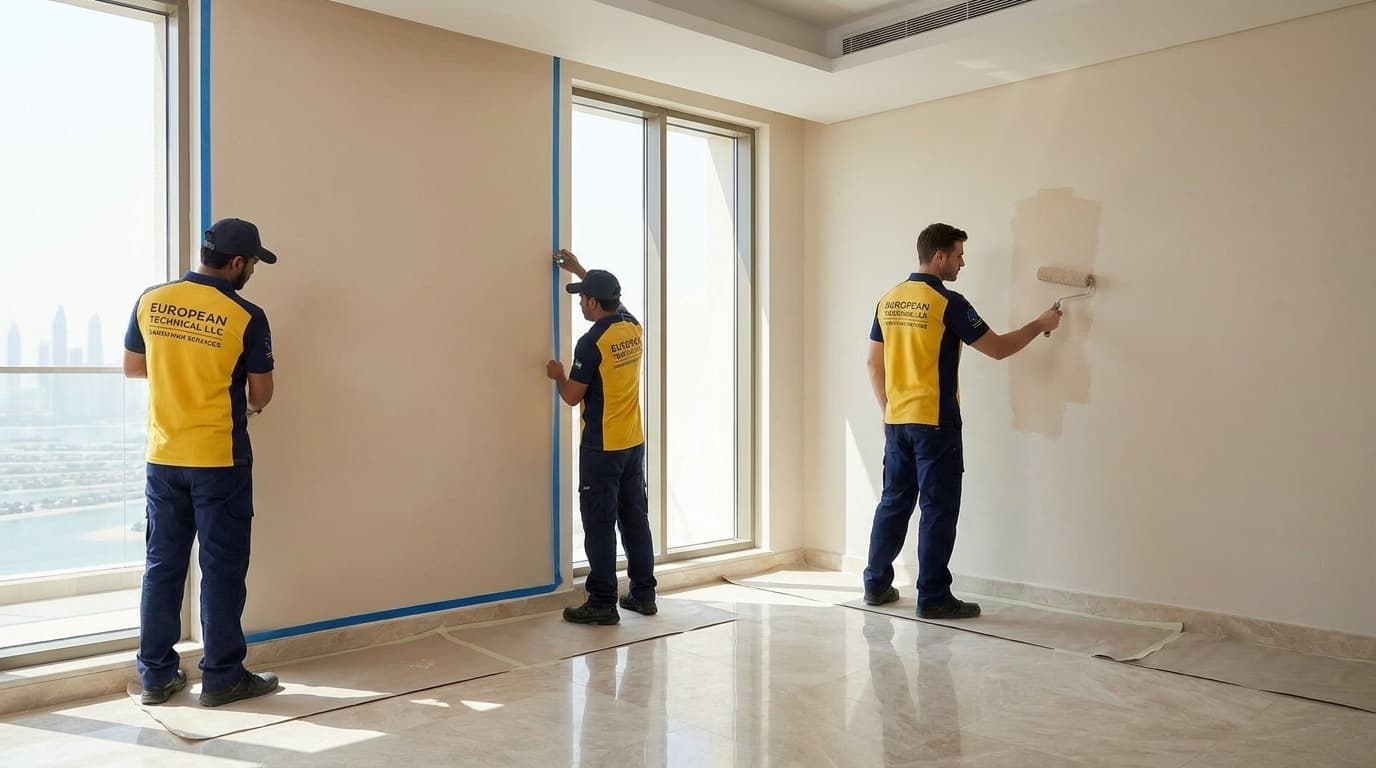
Floors, furniture, switches, door hardware and fittings should be masked with painters' tape and sheeting. Furniture is moved or covered completely. Skirting, sockets and light fittings are masked off. It sounds obvious, but sloppy masking is the single most common complaint we hear about cheap painting jobs.
Repair before paint
Wall crack repair before painting is essential, not optional. Filling cracks and smoothing the surface ensures the topcoat goes onto a sound base. Skipping this stage means the new paint simply follows the old faults, and within months the cracks ghost back through the finish.
Priming and painting
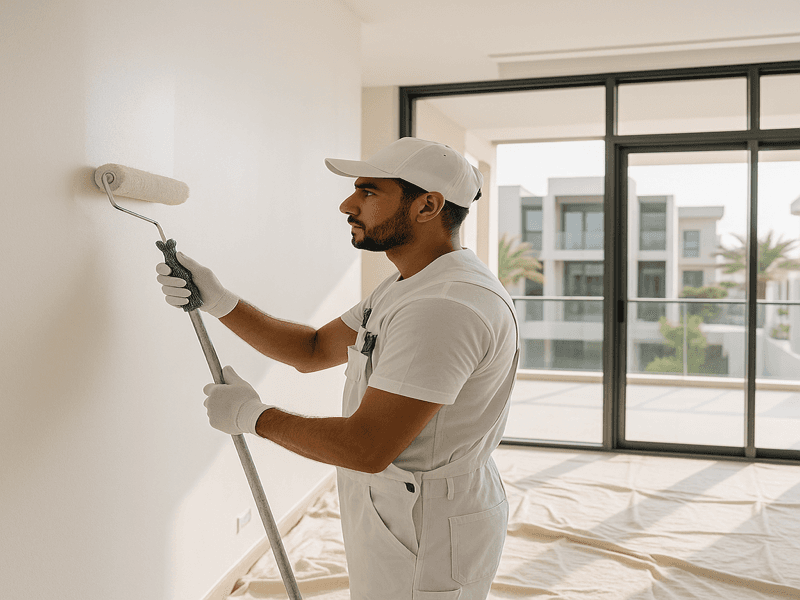
For interiors, a good quality primer followed by two coats of emulsion is standard. For exteriors, we use paints formulated for high UV and salt exposure, applied after the substrate has dried fully. If paint has bubbled, the defective areas must be scraped back, the surface dried completely, and only then recoated. Painting over a damp surface in a hurry is the most common cause of repeat blistering in Dubai bathrooms and shaded exteriors.
Colour selection
Choosing colours with professional guidance saves a lot of regret. Light tones reflect heat and suit smaller Dubai apartments, while feature walls in deeper shades work well in larger villas with generous natural light. Our team advises on finishes too: matt hides imperfections but marks easily, while a scrubbable low-sheen emulsion is the practical choice for hallways and children's rooms.
Permits and Regulations for Exterior Painting
This catches many villa owners by surprise. Exterior painting in Dubai is not simply a matter of hiring a contractor. Because the external appearance of buildings affects the look of the surrounding community, regulations require approvals before this kind of work is carried out. For villa exteriors, particularly where scaffolding is involved, you may need a painting and maintenance permit from authorities such as the Dubai Development Authority or Dubai Municipality, depending on where your property sits and which free zone or master developer governs it.
Community management in estates like Arabian Ranches, Springs and Meadows may also have their own NOC requirements and approved colour palettes. A licensed contractor will handle this paperwork for you as part of the service. Always confirm before work starts that your contractor is licensed and insured; unlicensed operators cannot obtain permits, which leaves you exposed if anything goes wrong.
DIY Versus Hiring Professional Painters
You can paint a room yourself, and plenty of residents do. But consider what a professional brings beyond a steady hand: the right materials for this climate, scaffolding and access equipment for stairwells and villa facades, crack repair skills, dust containment, and the speed that comes from doing it daily. A professional team also knows how Dubai's humidity affects drying times between coats, which is where most DIY jobs in this city go wrong.
There is also the disruption factor. Painting an entire villa yourself means weeks of evenings and weekends. A professional crew can typically complete a three-bedroom villa interior in under a week, working room by room so you can keep living in the house. If your project also involves odd repairs, door adjustments, shelving or snagging work, our handyman service can be bundled into the same visit, which usually works out cheaper than booking trades separately.
Choosing a Painting Contractor in Dubai
Ask any prospective contractor these questions before you commit:
1. Are you licensed and insured to work in Dubai, and can you arrange permits for exterior work?
2. What surface preparation is included in the quote, and how are cracks and damp treated?
3. Which paint brands and grades will be used, and are they suited to exterior UV exposure?
4. How many coats are included, and what is the warranty on workmanship?
5. Who handles furniture moving, masking and post-job cleaning?
6. Can you provide references from similar properties in my community?
A detailed written quotation protects both sides. Beware of quotes that seem unusually cheap; they almost always mean fewer preparation stages, thinner paint or a single coat where two are needed. For a realistic sense of costs before you enquire, our guide to painting prices in Dubai explains what typically drives a quote up or down. Property owners planning longer-term upkeep may also find that an annual maintenance contract covering painting, AC servicing and minor repairs offers better value than ad hoc call-outs.
FAQ
How often should I repaint my villa in Dubai?
Most villa exteriors in Dubai need a fresh coat every three to five years, while interiors are typically repainted every two to three years because of the harsh climate. If your walls show peeling, bubbling or visible discolouration, repaint sooner regardless of age. Regular cleaning and prompt crack repair extend the interval between full repaints.
Do I need a permit to paint the exterior of my villa in Dubai?
Often, yes. Exterior painting may require a painting and maintenance permit from authorities such as the Dubai Development Authority or Dubai Municipality, especially where scaffolding is involved. Community management in master communities may also require an NOC and approved colours. A licensed contractor will arrange this for you.
Why is paint bubbling or peeling on my walls?
Bubbling and peeling almost always mean moisture has become trapped behind the paint film, or the surface was damp when painted. In Dubai, humidity, AC condensate leaks and shaded exterior walls are common causes. The fix is to scrape the bubbled areas back, let the surface dry completely, repair the source of moisture, prime and recoat.
When is the best time of year to paint in Dubai?
October to April is the ideal window for exterior painting, when temperatures and humidity are lower. Interior painting can be done year-round because air conditioning keeps conditions stable, though good ventilation while painting is still important.
Can I live in my home while it is being painted?
Yes. Professional crews work room by room, containing dust with sheeting and masking, so most families stay in the property throughout. A typical villa interior can be completed within about a week, with each room out of use for only a day or two.
Should I repair cracks before painting?
Absolutely. Crack repair before painting is essential for a lasting finish. Hairline cracks are very common in Dubai villas due to thermal movement, and filling them properly prevents them from reappearing through the new paint, as well as protecting the wall structure beneath.