Why Circuit Breakers Trip So Often in Dubai Homes
If you live in Dubai, chances are you have experienced the frustration of a circuit breaker that trips at the worst possible moment. The AC is running, the washing machine is mid-cycle, someone has just switched on the kettle, and suddenly the power in part of your apartment cuts out. Again.
You are not alone. In Dubai's demanding climate, electrical issues are common, and a constantly tripping breaker is one of the most frequent complaints our electrical team receives from residents across the Marina, JVC, Downtown, Business Bay and the villas of Arabian Ranches. The good news is that a tripping breaker is doing exactly what it was designed to do: protecting your home. The bad news is that frequent tripping can signal serious safety hazards, including fire risks and equipment damage, so it should never be ignored.
This guide explains the real reasons breakers trip in Dubai homes, what it costs to fix common electrical problems, and when you should stop resetting the switch and call a licensed electrician instead.
What a Circuit Breaker Actually Does
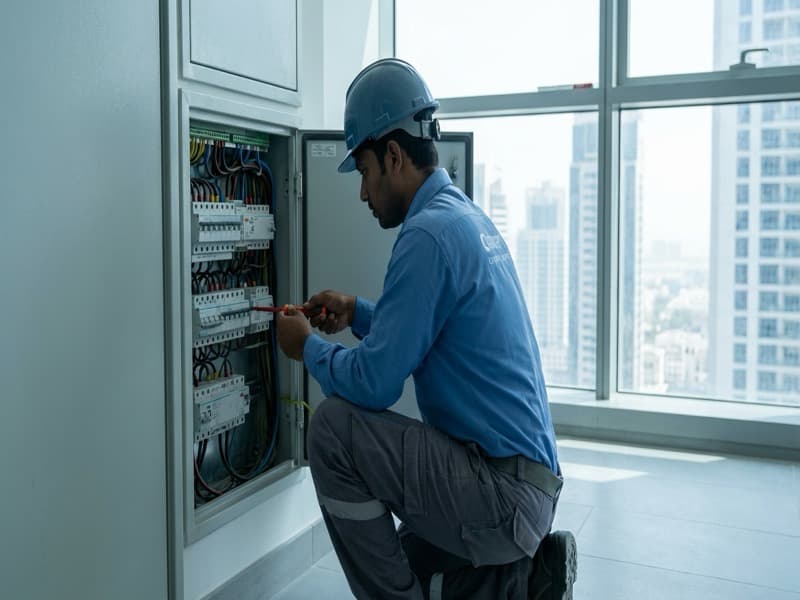
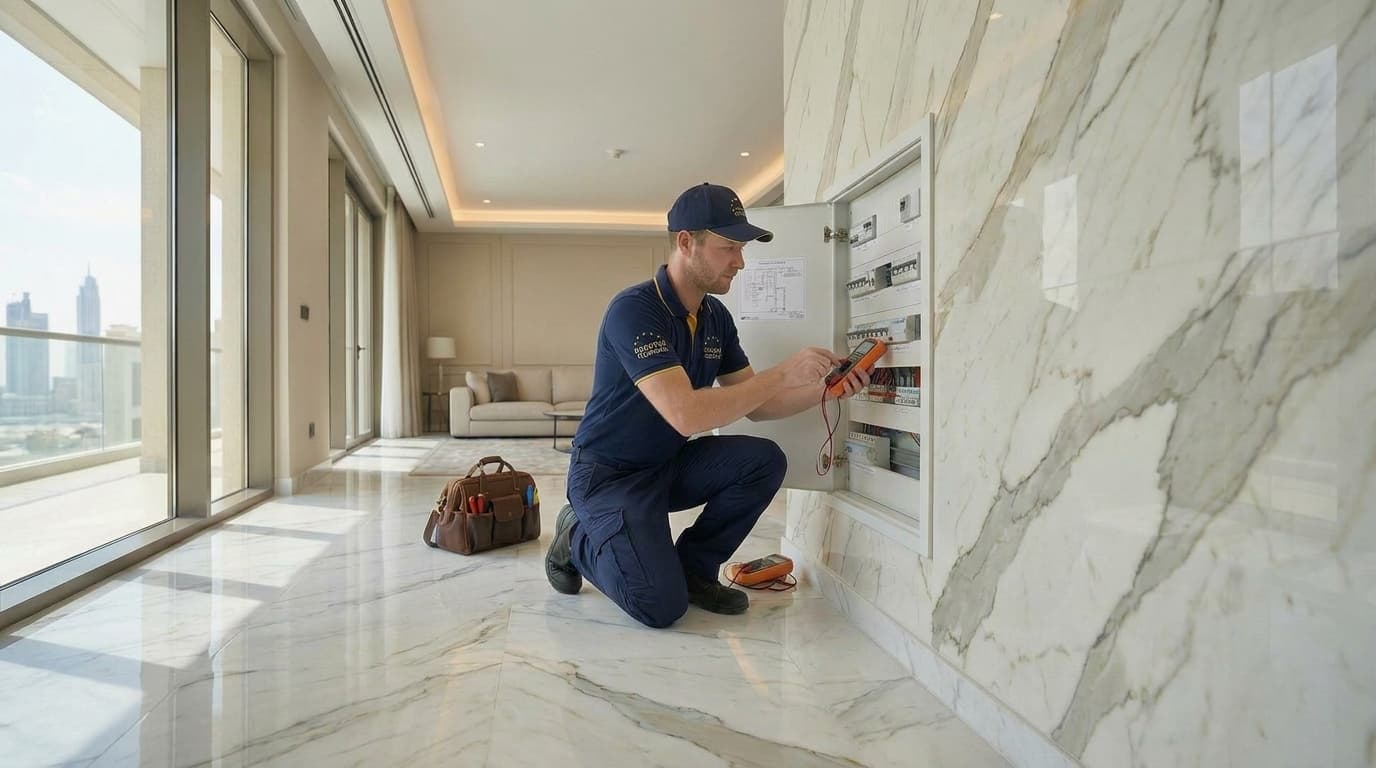
A circuit breaker is a safety device sitting in your electrical panel (often called the DB box, or distribution board, in Dubai apartments). Its job is simple: it monitors the current flowing through a circuit and cuts the power the instant that current exceeds a safe level.
Without it, excess current would heat up the wiring behind your walls until insulation melts, sparks fly, or worse. So when your breaker trips, it is not malfunctioning. It is telling you something. The question is what.
The Main Causes of a Repeatedly Tripping Breaker
1. An Overloaded Circuit: The Most Common Cause in Dubai
An overloaded circuit is by far the most frequent reason for a tripping breaker in Dubai homes. This happens when the demand for electricity exceeds the circuit's capacity. When you plug too many appliances into a single circuit, the wiring heats up, and the breaker trips to prevent damage.
Dubai summers make this dramatically worse. From May through October, air conditioners run almost non-stop. Add a refrigerator, a water heater, and perhaps an EV charger, and you can easily exceed what a single circuit was designed to handle. In older apartments in areas like Deira or Al Barsha, where electrical panels were sized decades before modern appliance loads existed, overloads are especially common.
The fix is often straightforward: redistribute high-wattage appliances across different circuits, or ask an electrician to assess whether your panel needs an additional circuit.
2. Short Circuits
A short circuit occurs when the live wire comes into contact with the neutral wire, the ground wire, or any metal surface. This contact creates a low-resistance path for the current, causing an excessive flow of electricity and triggering the breaker instantly.
Short circuits are typically caused by damaged wires, loose connections, or faulty appliances. Unlike an overload, which may build up over minutes, a short circuit trips the breaker the moment the affected circuit is switched on. This is a genuine safety concern and needs professional diagnosis.
3. Ground Faults
A ground fault happens when current leaks to earth through water or damaged insulation. Given the humidity in coastal areas like Dubai Marina and JBR, and the condensation that forms around AC units and bathrooms, ground faults are not rare here. Like short circuits, they can indicate damaged wiring and should be inspected by a licensed electrician.
4. Faulty Appliances
Sometimes the problem is not your wiring at all. A single faulty appliance, perhaps an ageing washing machine, a water heater with a failing element, or a fridge with damaged wiring, can trip the breaker every time it runs. A useful test: unplug everything on the affected circuit, then reconnect appliances one at a time. If the breaker trips when a particular appliance is plugged in, you have found your culprit.
5. Ageing Wiring and Electrical Panels
Dubai has plenty of older properties, from established villa communities to apartment towers built in the 1990s and early 2000s. Damaged wiring or ageing electrical panels in older properties can cause frequent tripping. Breakers themselves can also wear out over time. If a breaker is worn out or simply too old, it may trip even when there is no real fault, or worse, fail to trip when it should. Either way, an ageing panel deserves a professional assessment.
6. Loose Connections and Heat
Loose connections generate heat, and heat generates more resistance, creating a cycle that eventually trips the breaker or damages the terminal. This is particularly relevant in Dubai, where ambient temperatures inside electrical panels can be high, especially in plant rooms and villas where panels are not air-conditioned.
7. The "AC Reality": Compressor Issues
Air conditioning compressors draw a large surge of current when they start. If a compressor is ageing or struggling, often because it is working harder than it should in 45-degree heat, that startup surge can trip the breaker. If your breaker trips every time the AC kicks in, the compressor or its capacitor may be the issue rather than your general wiring.
8. Water Ingress
Water and electricity do not mix. Water ingress around outdoor sockets, pump rooms, or appliances in humid environments can cause ground faults and repeated tripping. This is common in villas with garden lighting and in apartments where bathroom or kitchen waterproofing has deteriorated.
Is It Safe to Keep Resetting a Tripped Breaker?
This is the question we hear most often, and the honest answer is: once or twice, yes, provided you investigate the cause. Repeatedly, no.
If a breaker trips, resetting it once after unplugging a suspected appliance is reasonable. But if the same breaker trips again, something is wrong, and each reset is gambling with your home's safety.
The most important safety advice we can give is this: never disable or bypass a tripping breaker. Some people are tempted to hold a breaker in the ON position or replace it with a higher-rated one to stop the nuisance. This removes critical protection and dramatically increases fire risk. The breaker is not the problem. The fault is the problem.
What Electrical Work Costs in Dubai
Electrical work in Dubai is more affordable than many residents expect, particularly for standard jobs.
Light installation in Dubai typically ranges from AED 150 to AED 500, depending on the type of lights and the complexity of the installation. LED conversion work is generally quoted between AED 50 and AED 200 per fixture, while chandelier installation typically starts from around AED 80 to AED 120 or more, depending on the size and weight of the fitting and the access equipment required.
Diagnostic work for a tripping breaker is usually charged as a call-out or inspection fee, with the repair quoted once the cause is identified. Because the root cause varies so much, from a simple appliance fault to a full panel replacement, an on-site assessment is the only way to price the job accurately. At European Technical, we always provide transparent pricing before any work begins, so you know exactly what you are paying for.
For landlords and property owners, an annual maintenance contract is often the most cost-effective way to keep on top of electrical issues. Regular inspections catch loose connections, ageing breakers and overloaded circuits before they become emergency call-outs, which is particularly valuable for tenanted properties where a small fault can escalate quickly.
How to Reduce Breaker Trips in Your Dubai Home
A few practical habits make a real difference:
- Spread high-wattage appliances across different circuits rather than plugging everything into one area of the kitchen or utility room.
- Avoid running the washing machine, water heater and multiple AC units on the same circuit at peak times.
- Book AC servicing before summer. A well-maintained compressor draws less current at startup.
- Have your DB box inspected if your property is more than ten years old, or if you have added significant new loads such as an EV charger.
- Never bypass or up-rate a breaker yourself. If a breaker cannot handle your household's demand, the circuit needs professional attention.
If you are unsure, a handyman visit can handle minor jobs like replacing damaged sockets or fittings, while anything involving the DB box, wiring or persistent tripping should always go to a licensed electrician. For broader property needs, our home maintenance services cover everything from plumbing to painting under one roof.
When to Call a Licensed Electrician Immediately
Some situations should never wait. Call a licensed electrician straight away if:
- The breaker trips immediately every time you reset it.
- You notice a burning smell, scorch marks or discolouration around sockets or the DB box.
- A breaker feels hot to the touch.
- You see sparks or hear buzzing from outlets or switches.
- Multiple circuits are tripping at once.
Any of these could indicate a short circuit, a ground fault or heat damage that carries a genuine fire risk. In a city where air conditioning runs for most of the year and electrical loads are high, these warning signs deserve immediate attention.
FAQ
Why does my circuit breaker keep tripping in summer in Dubai?
The most common cause is an overloaded circuit. During Dubai's summer months, air conditioners, refrigerators, water heaters and other high-wattage appliances often run simultaneously, exceeding the circuit's capacity. The wiring heats up and the breaker trips to protect your home. Redistributing appliances across circuits usually helps, but repeated tripping should be inspected by a licensed electrician.
Is it safe to keep resetting a tripped circuit breaker?
Resetting a tripped breaker once, after unplugging a suspected appliance, is generally fine. However, repeatedly resetting a breaker that keeps tripping is unsafe, because the underlying fault remains and each reset carries a risk. Critically, you should never disable or bypass a tripping breaker. This removes essential protection and significantly increases fire risk. Always address the root cause.
How do I know if the problem is a faulty appliance rather than my wiring?
Unplug everything on the affected circuit, reset the breaker, then reconnect appliances one at a time. If the breaker trips when a particular appliance is plugged in or switched on, that appliance is likely faulty and should be repaired or replaced. If the breaker trips with nothing plugged in, the fault is likely in the wiring, connections or the breaker itself, and you need an electrician.
What does light installation cost in Dubai?
Light installation in Dubai typically ranges from AED 150 to AED 500, depending on the type of lights and the complexity of the installation. LED conversions are generally quoted from AED 50 to AED 200 per fixture, and chandelier installation usually starts from around AED 80 to AED 120 or more depending on the job. European Technical provides transparent, competitive pricing with a free quote before work begins.
Can an old electrical panel cause frequent breaker tripping?
Yes. Ageing electrical panels and damaged wiring in older Dubai properties are a common cause of frequent tripping. Breakers can also wear out over time, tripping unnecessarily or failing to trip when needed. If your property is more than ten years old, or if you have added new loads such as an EV charger, a professional panel inspection is strongly recommended.
Should I replace a tripping breaker with a higher-rated one?
No. Never replace a breaker with a higher-rated one or bypass it to stop nuisance tripping. The breaker rating is matched to the wiring it protects. Up-rating it removes that protection and creates a serious fire hazard. If a circuit cannot handle your household's demand, the correct solution is to have a licensed electrician redistribute loads or install an additional circuit.