Why Circuit Breakers Trip in Dubai Homes
If you live in Dubai, chances are you have experienced the frustration of a circuit breaker tripping at the worst possible moment. Maybe the power cuts out just as the AC kicks in during a July afternoon. Perhaps the breaker trips every time you switch on the kettle and the microwave together. Or maybe you wake up to find the fridge has been off all night because something tripped the distribution board while you slept.
Circuit breakers, specifically miniature circuit breakers or MCBs, are designed to protect your home. They cut the power when something goes wrong, preventing damage to appliances, wiring, and most importantly, preventing electrical fires. A tripping breaker is not a nuisance to ignore. It is a warning sign that something in your electrical system needs attention.
In Dubai, the combination of intense summer heat, high humidity in coastal areas, older wiring in buildings constructed in the early 2000s, and the sheer number of high-wattage appliances we rely on daily creates a perfect storm for electrical faults. Whether you live in a studio in JVC, a one-bedroom in Discovery Gardens, or a villa in Arabian Ranches, understanding why your breaker trips can help you decide whether it is a simple fix or something that requires a professional electrical inspection.
This guide walks through the most common causes of breaker tripping in Dubai homes, the specific environmental factors that make things worse here, and what you should do about it.
The Most Common Causes of Tripped Breakers
Overloaded Circuits
This is the number one cause of tripped breakers in Dubai. Full stop. An overload happens when the demand for electricity on a single circuit exceeds what that circuit is designed to handle. In smaller apartments, particularly in areas like JVC or Discovery Gardens, kitchen appliances frequently share the same circuit. You plug in the electric kettle, switch on the toaster, and someone else turns on the microwave. The breaker trips because the combined load is more than the circuit can safely carry.
Dubai households use many energy-intensive appliances on a daily basis. Electric kettles, air fryers, hairdryers, toasters, and space heaters during the short winter months all draw significant current. In older villas not originally designed for modern electrical loads, you might find an air conditioner, a microwave, a water heater, and even an EV charger all running on the same circuit. That is a recipe for repeated tripping.
Signs of an overloaded circuit include flickering lights, warm outlets or cords, and breakers that trip repeatedly when multiple appliances are running at the same time. The urgency level here is medium. It is not immediately dangerous, but it indicates your circuits are under more strain than they should be.
Short Circuits
A short circuit is more serious than an overload. It occurs when a live wire comes into contact with a neutral wire, causing a surge of electricity that the breaker shuts down immediately. This can be caused by damaged wiring, loose connections, or faulty appliances where the wires inside have degraded or been pinched.
The signs of a short circuit are hard to miss. You might notice a burning smell near an outlet, scorch marks on sockets or wires, or the breaker trips the instant you plug something in. If you see any of these signs, stop using that outlet immediately and call an electrician. Short circuits carry a high urgency level because they can result in sparks, smoke, or even fire.
Ground Faults
A ground fault happens when a live wire comes into contact with a grounded part of the system, such as a metal outlet box or the earth wire. This is particularly relevant in Dubai because of the humidity. Moisture can enter sockets and junction boxes, creating a path for current to flow where it should not. Ground faults cause the breaker to trip as a safety measure.
Ground faults are common in bathrooms, kitchens, and outdoor areas where water and moisture are present. If your breaker trips when you use an appliance near water, or during periods of high humidity, a ground fault is a likely culprit.
Arc Faults
Arc faults are among the most dangerous electrical problems in any home. They occur when damaged wires hidden inside walls create arcing, which is essentially electricity jumping across a gap. This can happen when insulation degrades, nails or screws have pierced wires during renovations, or rodents have chewed through cabling.
Arc faults are particularly concerning because they can start fires inside wall cavities where you cannot see them. Standard MCBs do not always detect arc faults, which is why arc fault circuit interrupters or AFCIs are recommended in modern installations. If you live in an older Dubai building that has not had its electrical system upgraded in a decade or more, arc faults are a real possibility.
Dubai-Specific Factors That Make Breaker Tripping Worse
Summer Heat and Air Conditioning Loads
AC units are the most common cause of MCB trips in Dubai homes. During the peak summer months, when temperatures regularly exceed 40 degrees Celsius, air conditioning compressors work harder than at any other time of year. The high start-up current, combined with the sustained load of running for hours on end, puts consistent pressure on the circuit.
A failing compressor, a wiring fault within the AC unit itself, or an undersized circuit breaker can all cause tripping. If your breaker trips when the AC kicks in, or trips after the AC has been running for a while, you need to have both the AC unit and the circuit checked. This is not something to diagnose yourself.
The relationship between heat and electrical systems goes beyond just the AC. Heat affects the breakers themselves. Excess heat reaching the lowest current-rated MCBs can cause them to trip even when the electrical load is within normal limits. In Dubai's summer, distribution boards located in hot areas such as utility cupboards without ventilation can experience nuisance tripping simply because the ambient temperature is too high.
Coastal Humidity and Moisture Ingress
If you live in Dubai Marina, JBR, or any coastal area, humidity is a constant factor. Dubai's coastal humidity causes condensation inside distribution boards, sockets, and junction boxes. Over time, this moisture corrodes connections and creates unintended paths for electricity, leading to ground faults and short circuits.
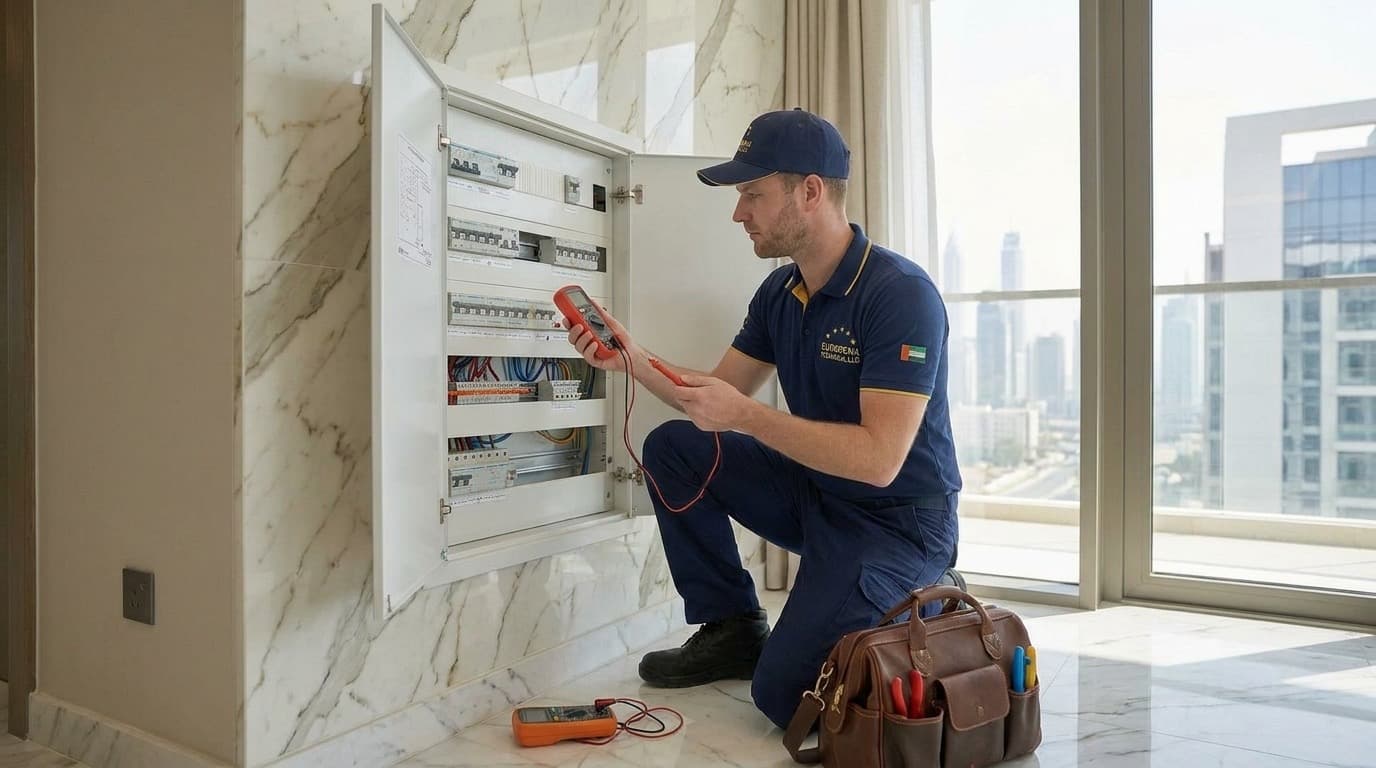
Moisture in the distribution board is a problem that many residents never think about until the breaker starts tripping for no apparent reason. If the breaker trips with nothing plugged in, the fault could be in the wiring inside the walls or ceiling, or it could be moisture-related corrosion in the distribution board itself. Either way, this requires a qualified electrician to investigate.
Hard Water and Water Heater Failures
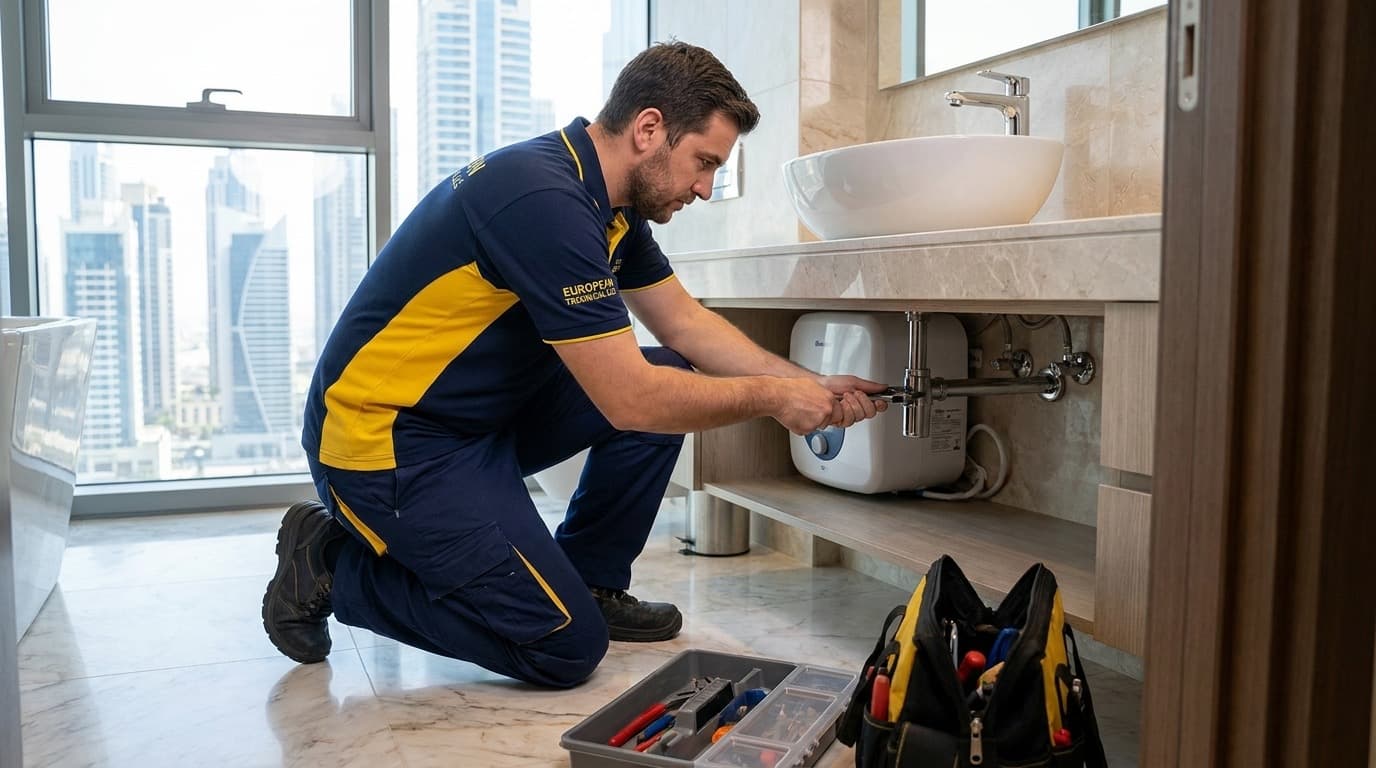
Dubai's water is desalinated and contains minerals that lead to scale buildup over time. In your water heater, often called a geyser in this region, this scale coats the heating element. Eventually, the element can crack, allowing water to come into contact with the electrical components inside. When that happens, the breaker trips immediately.
This is a common problem in Dubai villas and apartments alike. If your breaker trips when the water heater is switched on, or if you notice the water is not getting as hot as it used to, the heating element may have failed. A plumber can replace the element, but an electrician should verify the circuit is safe before the new element is powered up. European Technical offers both plumbing and electrical services, so this type of cross-trade issue can be handled in a single visit.
Older Wiring in Early 2000s Buildings
Many Dubai apartment buildings, particularly those built in the early 2000s, have wiring that has been carrying load for fifteen or twenty years. Insulation degrades in the heat, connections loosen at junction points, and circuits that handled the load fine for years suddenly start tripping. This is especially common in older buildings in areas like Bur Dubai, Deira, and some of the earlier developments along Sheikh Zayed Road.
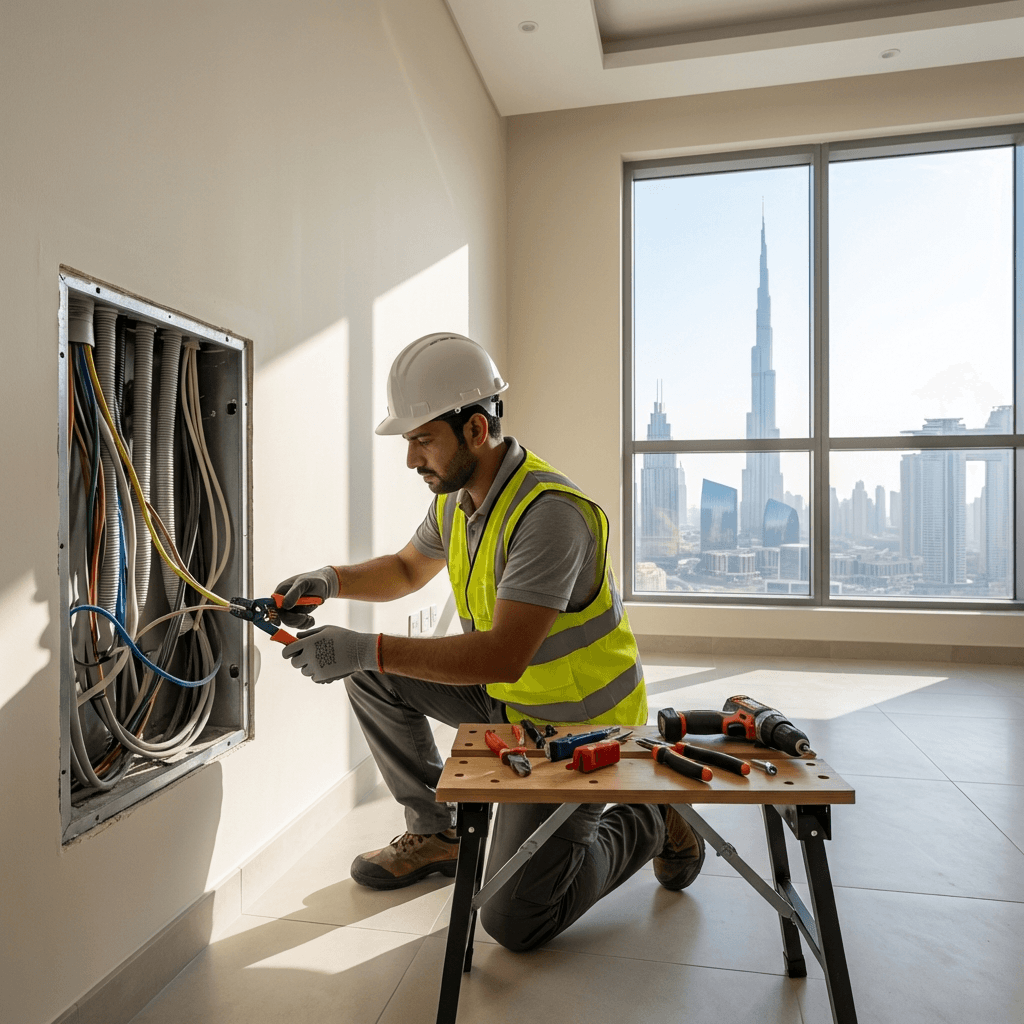
If you live in an older building and are experiencing frequent breaker trips, the wiring itself may be the problem. Adding modern high-draw appliances to a circuit that was designed for a different era of electrical usage creates exactly the kind of overload and degradation that leads to faults.
What to Do When Your Breaker Trips
Step 1: Identify the Pattern
The first thing to do when your breaker trips is to pay attention to the pattern. Does it trip when multiple appliances are running at once? That points to an overload. Does it trip the moment you plug in a specific appliance? That suggests a short circuit or a faulty appliance. Does it trip when the AC starts up? That could be a compressor issue or an undersized breaker. Does it trip with nothing plugged in? The fault is likely in the fixed wiring.
Step 2: Unplug and Reset
Unplug everything on the affected circuit. Switch the breaker to the off position, then back to the on position. If the breaker stays on, plug in appliances one at a time. If the breaker trips when you plug in a specific appliance, that appliance is likely faulty and should be replaced or repaired. If the breaker trips with nothing plugged in, you have a wiring fault and need to call an electrician.
Step 3: Know When to Stop
If the breaker trips repeatedly, do not keep resetting it. Every time a breaker trips, it is telling you something is wrong. Resetting it repeatedly without fixing the underlying problem can cause damage to the breaker itself and creates a fire risk. If you have tried unplugging everything and the breaker still trips, or if you notice any burning smell, scorch marks, or heat coming from outlets or the distribution board, stop and call a professional immediately.
Step 4: Call a Qualified Electrician
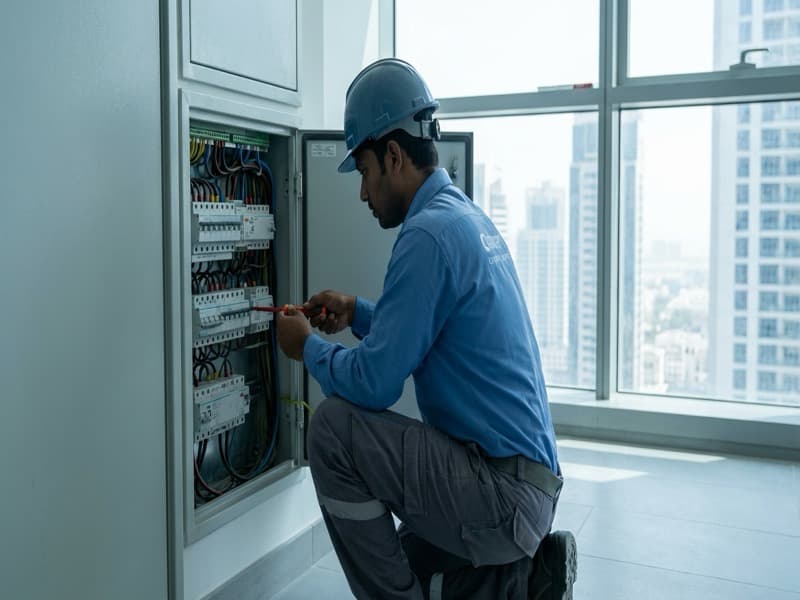
For persistent tripping, burning smells, scorch marks, or any fault you cannot identify, call a qualified electrician. Attempting to fix electrical faults yourself is dangerous and can make the problem worse. A professional electrician can perform proper fault finding, test the circuit, identify the root cause, and carry out repairs safely.
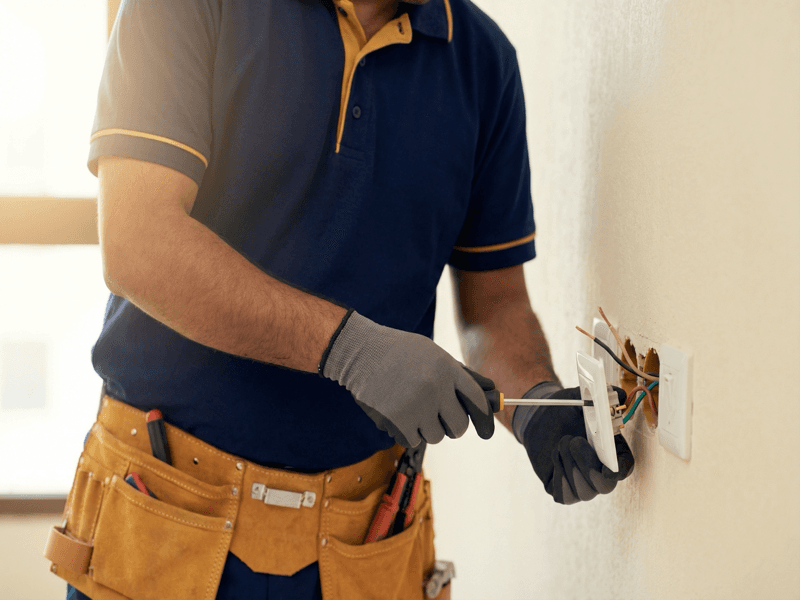
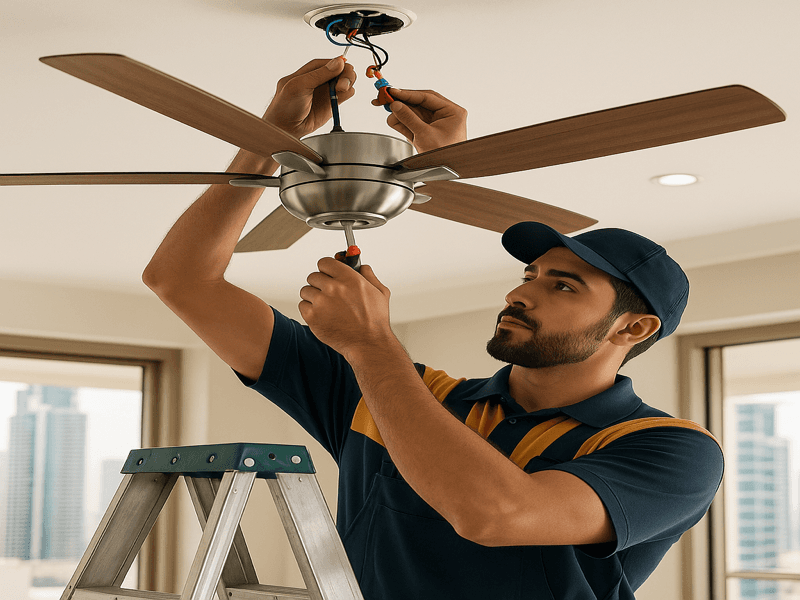
European Technical's electrical team covers all of Dubai, from Marina to Mirdif, and can respond quickly to tripping breaker issues. For non-urgent electrical repairs such as replacing a damaged socket or installing a new light fitting, our handyman service can also help.
Preventing Breaker Trips Before They Happen
Prevention is always better than cure, especially with electrical systems. Here are practical steps you can take to reduce the likelihood of breaker trips in your Dubai home.
First, avoid running multiple high-wattage appliances on the same circuit at the same time. If your kettle, toaster, and microwave are all on the same circuit, use them sequentially rather than simultaneously. This is particularly important in smaller apartments where kitchen circuits may not have been designed for modern appliance loads.
Second, have your AC unit serviced regularly. AC servicing keeps the compressor healthy, identifies wiring faults within the unit before they cause breaker trips, and ensures the unit is running efficiently. In Dubai's climate, AC servicing should be done at least twice a year, before and during the peak summer period.
Third, consider an annual maintenance contract that covers both AC and electrical systems. This ensures regular inspections catch potential problems before they become emergencies. An AMC is particularly valuable for villa owners in areas like Arabian Ranches, The Springs, and The Meadows, where multiple AC units and larger electrical systems mean more potential points of failure.
Fourth, if you live in an older building, consider having the electrical system inspected. A professional inspection can identify degraded wiring, loose connections, and undersized breakers before they cause problems. DEWA requires contractors to inspect and test electrical installations, and regular inspections every two years are recommended for industrial and commercial installations. While residential inspections are not mandated on the same schedule, the same principle applies. Regular checks keep your home safe.
Fifth, address water heater scale buildup before it causes a failure. Flushing the water heater periodically and replacing the heating element as part of routine maintenance can prevent the element from cracking and causing a breaker trip. This is a simple job for a plumber but one that many Dubai residents overlook until it is too late.
Understanding the Cost of Electrical Fault Finding in Dubai
One of the most common questions we receive is about the cost of electrical fault finding. The cost depends on the complexity of the problem and the time required to diagnose it.
A basic call-out for an electrician in Dubai typically starts from around AED 150 to AED 250 for the first hour, which covers diagnosis of simple issues such as identifying a faulty appliance or resetting a tripped breaker. More complex fault finding, such as tracing a wiring fault inside walls or investigating moisture in a distribution board, can take several hours and may cost between AED 350 and AED 600.
If the fault requires parts to be replaced, such as a new MCB, a replacement socket, or a section of wiring, the cost increases accordingly. A replacement MCB might cost AED 80 to AED 150 plus labour. Rewiring a section of circuit or replacing a damaged distribution board is a larger job that requires a quote based on the specific scope of work.
The key point is this. Electrical faults do not get cheaper to fix over time. A loose connection that causes occasional tripping today can become a short circuit or a fire tomorrow. Addressing the problem early is always the more cost-effective choice.
For homeowners and landlords managing multiple properties, an annual maintenance contract spreads the cost of maintenance across the year and includes priority response for emergencies. This is a practical option for anyone managing property in Dubai, whether it is a single apartment in Business Bay or a portfolio of villas in Dubai Hills.
FAQ
Why does my circuit breaker trip when the AC turns on?
Air conditioning units draw a high start-up current, especially during Dubai's summer when compressors work at maximum capacity. If the breaker is undersized for the AC load, the compressor is failing, or there is a wiring fault within the AC unit, the breaker will trip. You should have both the AC unit and the electrical circuit inspected by qualified technicians to identify the exact cause.
Is a tripping circuit breaker dangerous?
A tripping breaker is not itself dangerous. In fact, it is doing its job by cutting power when something is wrong. However, the underlying cause of the tripping can be dangerous. Short circuits, ground faults, and arc faults can all lead to electrical fires if left unaddressed. If your breaker trips repeatedly, or if you notice burning smells, scorch marks, or heat from outlets, treat it as urgent and call an electrician immediately.
How much does electrical fault finding cost in Dubai?
Basic electrical fault finding in Dubai typically starts from around AED 150 to AED 250 for the first hour. More complex investigations involving fixed wiring faults or distribution board issues can cost between AED 350 and AED 600. If parts need replacing, the cost increases based on the components required. European Technical provides transparent pricing and will give you a clear quote before any work begins.
Can I fix a tripping breaker myself?
You can safely reset a breaker by switching it fully off and then back on, and you can unplug appliances to test whether one of them is causing the trip. However, you should not attempt to open the distribution board, replace breakers, or investigate wiring faults yourself. Electrical work in Dubai must be carried out by a qualified electrician. Attempting DIY electrical repairs is dangerous and can void insurance coverage.
Why does my breaker trip even when nothing is plugged in?
If the breaker trips with nothing plugged in, the fault is in the fixed wiring inside the walls or ceiling, or in the distribution board itself. Common causes include degraded insulation in older buildings, loose connections at junction points, moisture ingress from coastal humidity, or arc faults from damaged wires. This type of fault requires a professional electrician to trace and repair.
How often should I have my electrical system inspected in Dubai?
For residential properties, an electrical inspection every two to three years is recommended, particularly in older buildings. For commercial and industrial installations, DEWA requires inspections every two years. If you experience frequent breaker trips, burning smells, or flickering lights, you should arrange an inspection immediately regardless of when the last one was done. An annual maintenance contract that includes electrical checks is a practical way to stay on top of this.