Why Bathroom Silicone Goes Mouldy in Dubai
If you have lived in Dubai for more than one summer, you have almost certainly seen it. The neat white bead of silicone around your bath or shower tray slowly turns grey, then speckled black, until no amount of scrubbing brings it back. It is one of the most common complaints our technicians hear when they visit apartments in Dubai Marina, JVC and Business Bay, and it is not a sign that you are cleaning badly.
The culprit is Dubai's climate. Bathrooms here are naturally damp spaces, and the combination of hot showers, limited ventilation in many apartment layouts and the Gulf's persistent humidity creates conditions that mould spores absolutely love. Silicone sealant is designed to resist this, but only up to a point. Every sanitary silicone contains mould preventatives mixed into the product. Over time, exposure to constant moisture and humidity degrades those additives. The sealant itself also begins to break down, developing microscopic pores that trap soap scum and moisture. Those pores become an ideal breeding ground for mould spores, which multiply deep within the bead rather than just on the surface.
This is why mouldy silicone is so stubborn. What you see on the surface is often only part of the problem.
Why Cleaning Mouldy Silicone Is Rarely Enough
The instinctive response is to reach for bleach and a scrubbing brush. There is no shortage of online tutorials showing homeowners soaking tissue paper in bleach, pressing it onto the sealant and leaving it for hours before washing it down. These methods can genuinely improve the appearance of the sealant, and for light surface staining they sometimes buy you a few more months.
The catch is that mould often penetrates deep into the silicone. Once spores have established themselves inside those microscopic pores, cleaning the surface does not remove the colony underneath. The staining returns within weeks, sometimes days, because the root of the problem is still living inside the bead. At that point, replacement is the only lasting fix.
There is a practical warning worth adding here too. Old, degraded silicone does not just look untidy. Once the seal has lost its integrity, water can seep into gaps where it should not be. In Dubai apartments, that means water finding its way behind tiles, under shower trays and into the substrate, where it can cause damage you cannot see until it becomes expensive. If you live in a tower in Downtown Dubai or Business Bay, a slow leak from a degraded bathroom seal can eventually affect the unit below, and that turns a small maintenance job into a negotiation with your neighbours and building management.
So the honest advice is this: if bleach and cleaning have stopped working, stop repeating the cycle. Have the old silicone professionally removed and replaced.
What Professional Silicone Replacement Involves
A proper silicone caulking job is more than running a new bead over the old one. In fact, applying new silicone over degraded old sealant is one of the fastest ways to waste money, because the new bead bonds to a failing surface and the mould underneath keeps spreading.
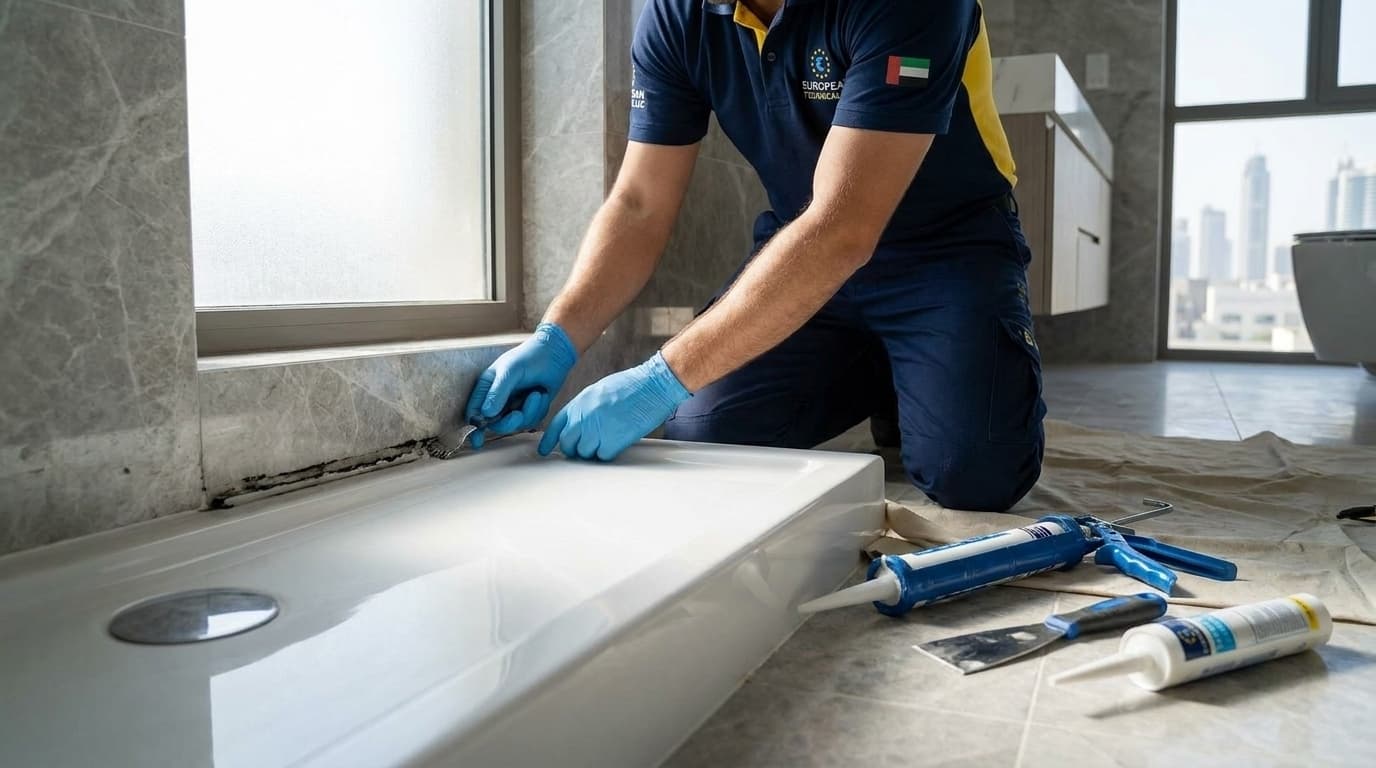
A professional job follows a clear sequence. First, the technician removes all the old silicone completely, using the correct tools to cut the bead out without scratching tiles, sanitaryware or acrylic trays. Second, the exposed joint is cleaned and treated for mould, addressing the residue and spores left behind in the gap. Third, the area is allowed to dry properly, which matters enormously in Dubai's humidity. Applying silicone to a damp joint traps moisture inside and sets up the exact failure you are trying to prevent. Finally, a fresh bead of quality sanitary silicone is applied tooled to a clean, even finish, then left to cure before the shower or bath is used again.
Our handyman team carries out this work across Dubai regularly, from studio apartments in JVC to large family villas in Arabian Ranches. It is a small job in scope, but it protects a big part of your home. If the mould has appeared because of a slow leak rather than humidity alone, we will flag it, and our plumbing team can trace and repair the source before any new sealant goes on. Sealing over an active leak simply hides the problem.
Choosing the Right Mould-Resistant Silicone
Not all sealants are created equal, and this is where many DIY replacements go wrong. Standard silicone sealant does not prevent mould. Only mould-resistant bathroom sealant containing specialised additives can slow or inhibit mould growth. The silicone itself provides the waterproof, flexible seal; the anti-mould additives do the hygienic work, and those additives vary enormously between budget products and professional-grade sanitary silicones.
There are also two main cure types worth understanding. Acetoxy-cure silicones are the familiar vinegar-smelling products widely available in hardware shops. They bond well to non-porous surfaces like glass and ceramic and are common in general bathroom use. Neutral-cure silicones cure without the acidic by-product, making them more suitable for sensitive substrates such as natural stone, mirrored surfaces and some metals, where acetoxy products can cause staining or corrosion. For most standard bathroom applications around baths, showers and basins, a mould-resistant sanitary silicone of the appropriate cure type is the professional choice for long-term hygiene in wet areas.
When we replace sealant for clients, we use mould-resistant sanitary silicones with anti-mould additives specifically because Dubai's humidity punishes ordinary products. A cheap bead from a corner shop might look identical on day one, but within a year in a Marina apartment bathroom with a window that never opens, the difference becomes obvious.
Silicone Caulking Costs in Dubai: 2026 Benchmark
So what should you expect to pay? For 2026, an indicative benchmark for silicone caulking work in Dubai is AED 150 to 700 or more, depending on the scope of the job. That range covers typical bathroom, kitchen and shower sealing work, but the final figure depends on several variables.
The first is the extent of old sealant removal. Raking out a single shower tray is a different job from stripping every joint in a large family bathroom. The second is mould treatment. Heavily affected joints need proper cleaning and treatment before new sealant can be applied, which adds time. The third is the length of the joints and the number of areas involved. Sealing around one bath is quick; sealing a bathroom, a separate shower enclosure, the kitchen sink splashback and a balcony door in the same visit is a longer job with more material.
Location matters too. Kitchens and balconies are common add-ons in Dubai homes, and balcony sealing in particular exposes silicone to intense UV and temperature swings, which silicone handles well as a material but which still demand a quality product applied correctly.
When comparing quotes, make sure each one covers the same details: which rooms are included, whether old sealant removal and mould cleaning are part of the price, and which product will be used. A quote that looks cheap because it skips the removal and treatment stage is not a bargain; it is a temporary cosmetic fix.
For landlords and property owners managing multiple units, recurring jobs like this are one reason an annual maintenance contract often makes financial sense. Scheduled inspections catch degraded sealant before water gets behind it, and bundled maintenance pricing is generally more predictable than one-off emergency callouts. You can also read more about our broader bathroom and kitchen services on our site.
Preventing Mould From Coming Back
Replacement fixes the problem, but a few habits will extend the life of your new sealant considerably. Run the extractor fan during and after every shower, and leave it on for ten to fifteen minutes afterwards. In apartments where the bathroom has no window, the fan is the only moisture exit. Squeegee the shower screen and tray after use; it takes thirty seconds and removes the standing water film that feeds mould. Leave the shower door or curtain partially open between uses so air can circulate. And if you notice the sealant starting to discolour in one spot, act early. Surface-level cleaning at the first sign of staining is far more effective than waiting until the mould has taken hold inside the bead.
Even with perfect habits, no silicone lasts forever. The mould preventatives in even the best sanitary silicone degrade over time, and in Dubai's climate that process is simply faster than in drier parts of the world. Plan on inspecting your bathroom joints every year or so, and treat replacement as routine maintenance rather than a failure.
FAQ
Why does mould grow on silicone sealant in Dubai bathrooms?
Dubai bathrooms are naturally damp spaces with high humidity. Silicone sealants contain mould preventatives, but these chemicals degrade over time. As the sealant breaks down, it develops microscopic pores that trap soap scum and moisture, giving mould spores the ideal environment to multiply.
Can I just clean the mouldy silicone instead of replacing it?
Cleaning can improve the appearance, and bleach-soaking methods sometimes work on light surface staining. However, mould often penetrates deep into the sealant, so surface cleaning rarely removes the colony inside the bead. If the staining keeps returning, replacement is the only lasting solution.
How much does silicone caulking cost in Dubai in 2026?
An indicative benchmark is AED 150 to 700 or more, depending on the scope. Old silicone removal, mould cleaning, long joint runs and multiple wet areas such as a bathroom, kitchen and balcony all increase the quote. Always compare quotes that cover the same scope of work.
What type of silicone should I use in a Dubai bathroom?
Use a mould-resistant sanitary silicone containing anti-mould additives. Standard silicone does not prevent mould on its own. For natural stone or sensitive surfaces, a neutral-cure product is preferable; for typical ceramic and glass surfaces around baths and showers, a quality acetoxy-cure sanitary silicone with mould inhibitors is common.
How long does new bathroom silicone last in Dubai's climate?
There is no fixed figure, because it depends on ventilation, usage and product quality, but even the best sanitary silicones see their mould preventatives degrade over time, and Dubai's humidity accelerates this. Inspecting your bathroom joints yearly and acting at the first sign of discolouration will get the longest life from any sealant.
Can mouldy silicone cause leaks or water damage?
Yes. Once old sealant degrades, water can seep into gaps where it should not go, reaching behind tiles and under shower trays. In Dubai apartment towers this can eventually affect neighbouring units, so it is worth replacing degraded sealant promptly rather than waiting for visible damage.