How Often Should a Dubai Villa Have Pest Control?
Most villa owners in Dubai should schedule professional pest control every quarter. That means four visits a year, spaced roughly three months apart. This frequency is widely recommended because it aligns with the lifecycle of common household pests in the UAE and accounts for the environmental pressures that make Dubai homes so vulnerable to infestation.
Quarterly treatments create a continuous barrier. Pests like cockroaches, ants, and rodents breed rapidly in warm climates. A single treatment kills the adults you can see, but eggs and nymphs survive hidden in cracks, wall cavities, and drainage points. By the time you notice new activity, a fresh generation has already established itself. Quarterly visits break that cycle. Technicians can apply residual treatments before the next wave matures, and they can inspect for early signs of new entry points that may have opened since the last visit.
For some properties, quarterly is the minimum. Villas with large gardens, private pools, or proximity to green spaces may benefit from more frequent attention. The same applies to older properties where sealing and structural integrity have degraded over time. If you live near a park, a golf course, or an active construction site, you are exposed to more pest pressure than someone in a mid-floor apartment with no outdoor space.
An annual maintenance contract is the most practical way to keep to a quarterly schedule. It bundles your pest control visits with other essential maintenance tasks, so nothing falls through the cracks. You get predictable costs, scheduled visits, and a single point of contact for your property's upkeep.
Why Dubai's Climate and Construction Make Villas Vulnerable
Dubai's climate is the primary reason pest control frequency matters so much here. The combination of extreme summer heat and high humidity creates ideal breeding conditions for a wide range of pests. Cockroaches thrive in warm, moist environments. Ants forage indoors when outdoor conditions become too harsh. Rodents seek shelter in air-conditioned spaces when temperatures soar. Mosquitoes breed in any standing water they can find, from garden irrigation runoff to poorly drained balcony areas.
The heat also drives pests indoors. During peak summer months, when temperatures regularly exceed 45 degrees, pests that normally live outdoors move into villas seeking cooler conditions and water sources. Your AC condensation line, kitchen sink, and bathroom drains all provide the moisture pests need to survive. Once inside, they reproduce quickly because the indoor environment is climate-controlled and stable year-round.
Construction activity is the other major factor. Dubai has seen enormous development over the past decade, and communities like Dubai Hills Estate, JVC, and Business Bay continue to expand. New construction disrupts existing pest habitats. When a plot next to your villa is cleared for building, the rodents, insects, and spiders that lived there do not simply disappear. They move to the nearest sheltered environment, which is often your home.
Even completed properties carry pest risks from the construction phase. Many villas and townhouses handed over between 2018 and 2024 still have construction debris in wall cavities, unsealed drainage points, and gaps around utility penetrations. These voids provide perfect nesting sites for rodents and harbourage for insects. Until they are properly sealed, pests will continue to exploit them.
Landscaping adds another layer of risk. Communities with lush greenery, parks, and golf courses are desirable for residents, but they are equally attractive to pests. Irrigation systems create damp soil conditions that support ant colonies and provide drinking water for rodents. Ornamental plants can harbour spiders and caterpillars. Lawns with poor drainage develop standing water zones where mosquitoes breed. Dubai Hills Park and Dubai Hills Golf Club are examples of features that enhance a community but also increase pest pressure on surrounding properties.
Dubai Municipality recognises these challenges and supports effective pest control programmes through its Public Health Pest Control Section. The municipality promotes Integrated Pest Management, an approach that combines monitoring, prevention, and targeted treatment to limit the survival and reproduction of disease-transmitting pests such as mosquitoes, flies, and rodents. This framework underpins the work that licensed pest control companies carry out across the emirate.
Common Pest Control Mistakes Dubai Villa Owners Make
Many villa owners in Dubai unknowingly undermine their own pest control efforts. The result is recurring infestations, higher costs, and unnecessary frustration. Understanding these mistakes helps you get more value from each treatment and maintain a genuinely pest-free home.
The most significant mistake is failing to schedule regular inspections. Many owners call a pest control company only when they see a pest, by which point the infestation is already established. Reactive treatment costs more, takes longer to resolve, and often requires stronger chemicals than preventive maintenance. Quarterly inspections catch problems early, when a simple targeted treatment is enough.
Another common error is treating pest control as a one-off task rather than an ongoing programme. A single spray treatment will kill visible pests, but it does nothing to prevent reinfestation from neighbouring properties, garden areas, or unsealed entry points. Pest control works best as a sustained effort, with each visit building on the last. Technicians become familiar with your property, note recurring trouble spots, and adjust their approach over time.
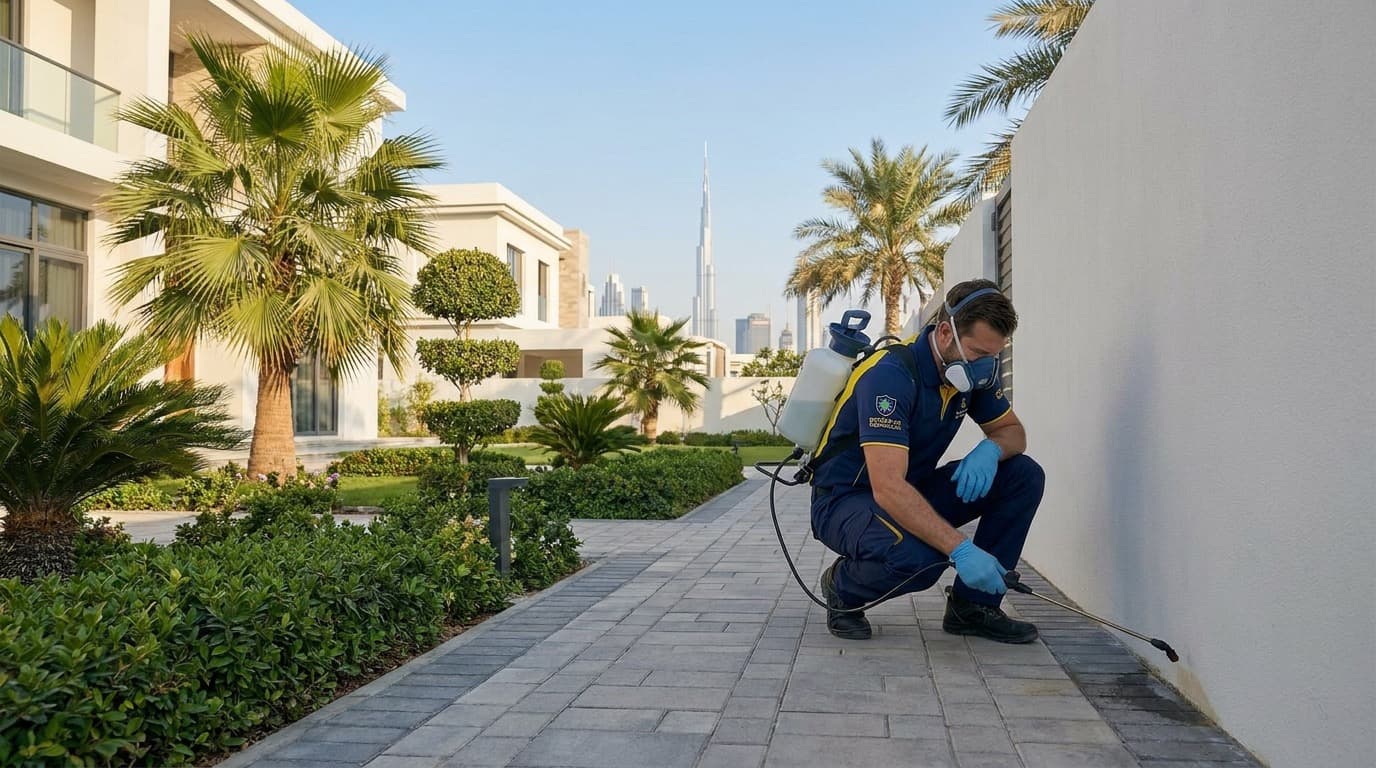
Neglecting the outdoor environment is also a frequent misstep. Villa owners focus on the interior and forget that most pests originate outside. Gardens, planters, drainage channels, and bin storage areas all need attention. Overgrown shrubs provide shelter for rodents. Fallen fruit attracts flies and wasps. Clogged gutters collect water and breed mosquitoes. A thorough pest control visit should always include the perimeter of the property and any outdoor areas where pests might establish themselves before moving indoors.
Some owners also make the mistake of choosing unlicensed providers to save money. Dubai Municipality requires pest control companies to meet specific standards and use approved products. Unlicensed operators may use banned substances, apply incorrect dosages, or skip essential safety steps. This puts your family, pets, and household staff at risk and can leave residue that is ineffective or harmful. Always verify that your provider is licensed and uses Dubai Municipality-approved products.
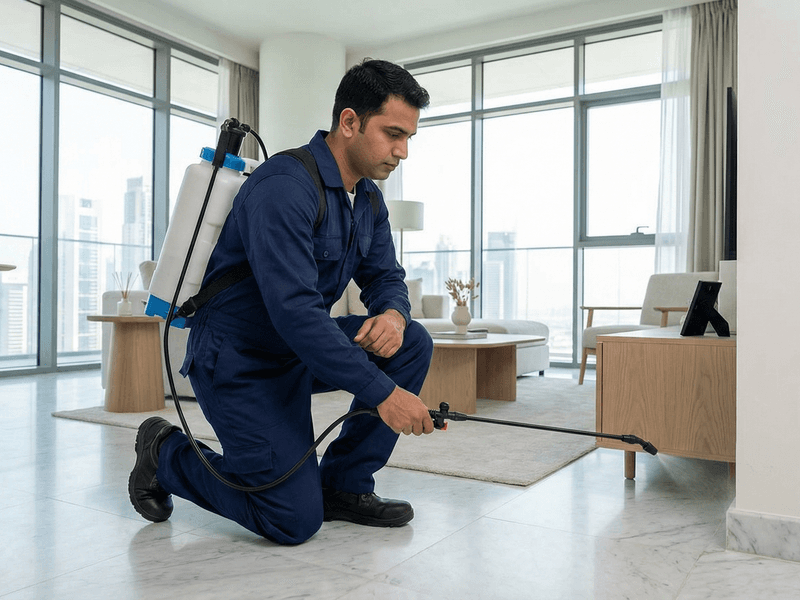
Failing to prepare the property before treatment is another issue. Technicians need access to baseboards, under sinks, behind appliances, and into storage areas. If those spaces are cluttered or inaccessible, the treatment will be incomplete. Clear the areas to be treated, cover food preparation surfaces, and make sure someone is available to grant access to all rooms and outdoor spaces.
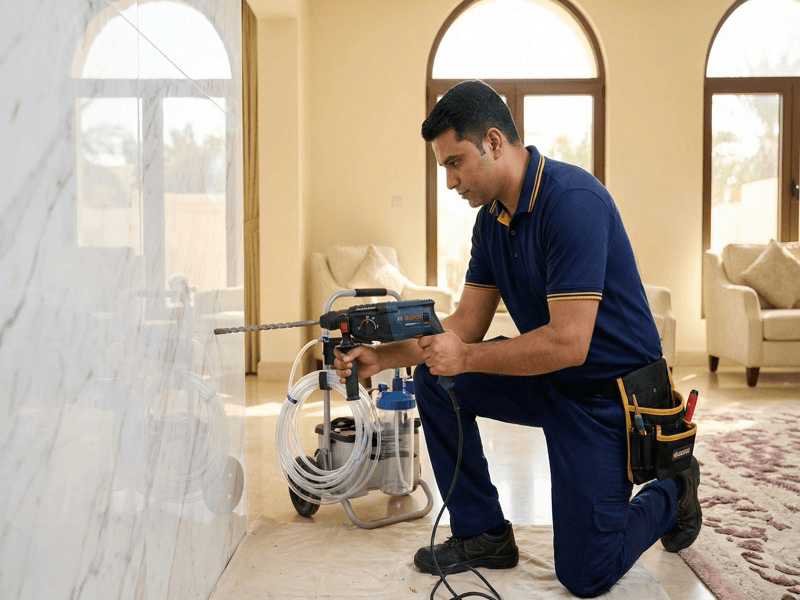
Finally, ignoring the structural issues that allow pests to enter is a mistake that no amount of chemical treatment will fix. Gaps under doors, cracks in walls, unsealed pipe penetrations, and open drainage points are open invitations. A good pest control technician will identify these vulnerabilities during their visit, but fixing them often requires a handyman to seal gaps, repair screens, and install door sweeps. Combining pest control with general maintenance is far more effective than relying on chemicals alone.
What Influences the Cost of Villa Pest Control in Dubai
The cost of pest control for a Dubai villa depends on several factors. Understanding these helps you budget appropriately and compare quotes from different providers.
Property size is the most obvious factor. A three-bedroom townhouse in Jumeirah Park will cost less to treat than a five-bedroom standalone villa in Arabian Ranches. Larger properties have more surface area to treat, more entry points to inspect, and more time required per visit. Prices for general pest control in Dubai typically start from around AED 250 for a standard villa treatment, though costs vary based on the provider, the scope of work, and the specific pests involved.
The type of treatment also affects price. General pest control covers common pests like cockroaches, ants, and spiders in a single visit. It is broader and therefore often more expensive than a targeted treatment for a single pest type. However, it provides better value because it addresses multiple threats at once. Specific pest treatments, such as for bed bugs or termites, require specialised products and techniques. Termite treatment in particular may require a detailed assessment of the infestation extent before a quote can be provided.
The frequency of treatment influences your overall spend. One-off visits are priced higher per visit than contracted services. If you commit to a quarterly schedule through a maintenance plan, the per-visit cost is typically lower, and you benefit from regular inspections that prevent costly infestations. Over a year, this approach is usually more economical than calling for emergency treatments whenever a problem arises.
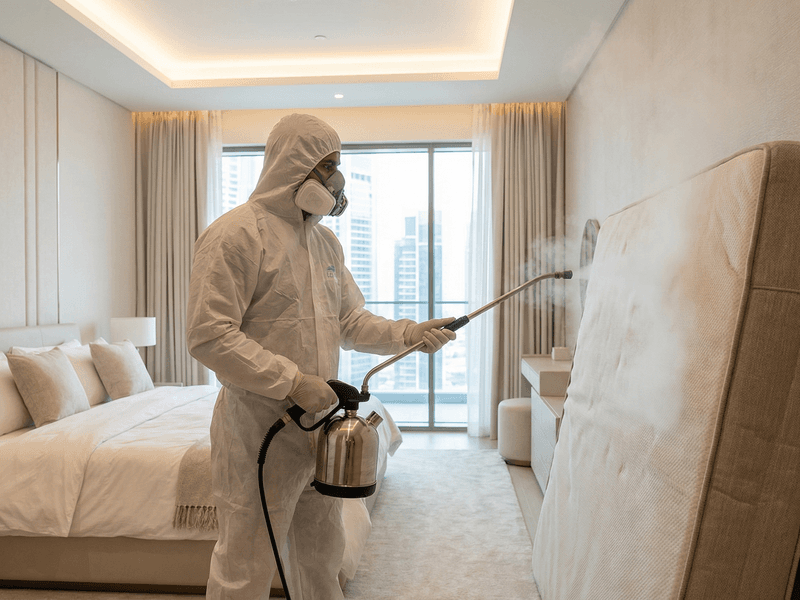
The severity of any existing infestation also plays a role. A preventive quarterly visit is straightforward and quick. An established infestation may require multiple visits, follow-up treatments, and more intensive application methods. Bed bugs, for example, often need two or three treatments spaced weeks apart to fully eliminate, because eggs survive the initial treatment and hatch afterwards.
Additional services can be bundled with pest control for better value. Many villa owners combine pest control with cleaning services, particularly water tank cleaning. This makes sense because pests are attracted to water sources, and a dirty or contaminated water tank can be a breeding ground for insects and bacteria. Addressing both at the same time ensures your water supply is clean and your property is less attractive to pests.
Signs Your Villa Needs Pest Control Sooner Than Scheduled
Even with a quarterly schedule, you should watch for signs that indicate a problem developing between visits. Acting quickly prevents a minor issue from becoming a major infestation.
Droppings are one of the clearest signs. Rodent droppings are small, dark, and often found in kitchen cupboards, under sinks, or along baseboards. Cockroach droppings resemble black pepper grains and may appear in corners or behind appliances. If you notice droppings, schedule a visit rather than waiting for the next quarterly appointment.
Gnaw marks on food packaging, wiring, or wooden structures indicate rodent activity. Rats and mice chew constantly to keep their teeth trimmed, and they will damage food containers, electrical cables, and even furniture. This is not just a pest issue but a safety concern, as damaged wiring can create fire risks.
Unusual smells can signal a hidden infestation. A musty, oily odour may indicate a large cockroach population. A sharp, ammonia-like smell can come from rodent urine. If you notice persistent odours you cannot explain, have a technician inspect the property.
Live sightings during the day are a red flag. Cockroaches and rodents are primarily nocturnal. If you see them during daylight hours, the population has grown large enough that they are being forced out of hiding to find food and water. This means the infestation is already significant.
Greasy smear marks along walls and baseboards are caused by rodents travelling the same routes repeatedly. Their fur leaves dark marks on surfaces they brush against. These trails help technicians identify entry points and nesting areas.
If you notice any of these signs, contact your pest control provider and request an interim visit. Most companies offering an annual maintenance contract include emergency call-outs between scheduled visits, so you do not pay extra for urgent attention.
Preparing Your Villa for a Pest Control Visit
Proper preparation makes each treatment more effective. A few simple steps before the technician arrives will ensure the visit is thorough and the results last longer.
Clear clutter from baseboards, under beds, and behind kitchen appliances. Technicians need to apply treatment along the edges of rooms where pests travel. If those areas are blocked, the treatment will be incomplete. Move furniture slightly away from walls where possible, and clear items from the floor of storage rooms and wardrobes.
Cover or remove food, utensils, and food preparation surfaces. While Dubai Municipality-approved products are safe when used correctly, you do not want residue on surfaces where you prepare meals. Store open food in sealed containers or in the refrigerator.
Ensure access to all areas of the property. Unlock storage rooms, utility cupboards, and maids' rooms. Make sure the technician can reach the garden, perimeter walls, and any outbuildings. If you have a covered parking area or carport, that should also be accessible.
Arrange for pets and children to be away from treatment areas during the visit and for the recommended re-entry period afterwards. Most modern treatments dry within a few hours, but your technician will advise on specific waiting times based on the products used.
Inform the technician of any specific concerns or sightings. If you have noticed pests in a particular room, heard scratching in the ceiling, or seen ant trails in the garden, share this information. It helps the technician focus their inspection and target the treatment effectively.
FAQ
How often should I schedule pest control for my Dubai villa?
Quarterly pest control is the standard recommendation for Dubai villas. This means four professional visits per year, spaced approximately three months apart. Quarterly treatments maintain a protective barrier against pests and align with the breeding cycles of common household pests in the UAE. Villas with large gardens, private pools, or proximity to parks and construction sites may need more frequent attention.
Is quarterly pest control enough during Dubai's summer months?
For most villas, quarterly treatments provide sufficient protection through summer. However, summer is peak pest season in Dubai because extreme heat drives insects and rodents indoors. If you notice increased pest activity between scheduled visits, contact your provider for an interim treatment. Properties near green spaces or water features may benefit from additional visits during June, July, and August.
Are pest control treatments safe for pets and children?
Dubai Municipality-approved pest control products are safe when applied by licensed professionals according to the label instructions. Technicians will advise you on any precautions to take, such as keeping pets and children away from treated areas until surfaces are dry. Always inform your pest control provider about pets in the home so they can select appropriate products and application methods.
What pests are most common in Dubai villas?
The most common pests in Dubai villas are cockroaches, ants, rodents (rats and mice), mosquitoes, and bed bugs. The specific pests affecting your property depend on factors like location, garden size, proximity to construction, and the age of the building. Coastal areas like Dubai Marina may see more humidity-loving pests, while inland communities like Arabian Ranches may have more issues with garden pests and rodents.
Can I do pest control myself instead of hiring a professional?
DIY pest control products are available in Dubai and can help with minor, isolated issues. However, they are not a substitute for professional treatment. Over-the-counter products typically address visible pests but do not tackle the source of the infestation or prevent re-entry. Professional technicians have access to commercial-grade products, specialised equipment, and the training to identify and treat the root causes of pest problems in villa environments.
Does an annual maintenance contract include pest control?
Many annual maintenance contracts in Dubai include pest control as part of a broader property maintenance package. These contracts typically cover quarterly pest control visits along with AC servicing, plumbing checks, electrical inspections, and general handyman work. Bundling pest control with other maintenance tasks is cost-effective and ensures your property receives consistent attention throughout the year.