Why Plumbing Maintenance Matters More in Dubai Than Almost Anywhere Else
Living in Dubai puts your plumbing under a unique kind of stress. Between the intense summer heat, the hard mineral content in the water supply, and the sheer number of us living in high-rise towers across Dubai Marina, JVC, Business Bay and Downtown, the pipes behind your walls work harder than most people realise. Add Dubai's humidity to the mix and you have an environment where small problems escalate quickly if they are ignored.
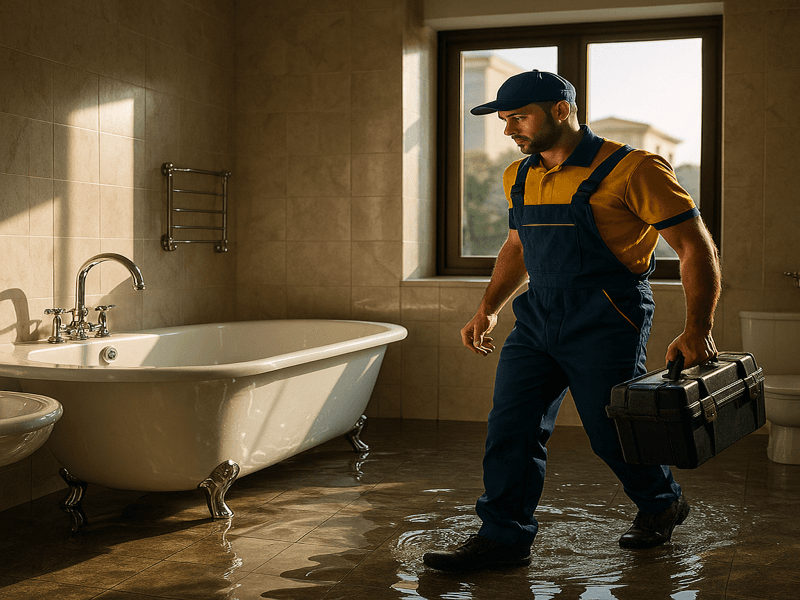
A single dripping faucet can waste up to 3,000 gallons of water a year. That is not just an environmental concern; it shows up directly on your DEWA bill, month after month. And unlike a villa owner in Arabian Ranches who can often trace a leak to a pipe they can physically reach, apartment dwellers face a trickier situation. Pipes run behind walls, through ceilings and between floors, which means a slow leak in your bathroom may already be staining your downstairs neighbour's ceiling before you notice anything at all.
That interconnectedness is worth dwelling on. In a tower, your plumbing troubles can affect your neighbours and theirs can affect you. A blocked toilet on the fifth floor can cause a backup several floors down. This shared vulnerability is exactly why preventive maintenance, rather than reactive repairs, is the approach we recommend to every homeowner and tenant we work with.
The Most Common Plumbing Problems in Dubai Homes
Low Water Pressure
Low water pressure is one of the most frequent complaints we receive, particularly from residents of high-rise buildings in Dubai Marina, Business Bay and across the older towers in Deira and Bur Dubai. It makes showering frustrating, slows down cleaning tasks and can even affect washing machines. The causes vary: sometimes it is a build-up of sediment or mineral scale inside the pipes, sometimes corrosion, and sometimes it is simply the way water is delivered from the main source to the upper floors of a tall building.
If you notice a sudden drop in pressure rather than a gradual one, that points to a partial blockage or a leak somewhere in the line rather than a general supply issue. Check whether the pressure is low at every tap or just one fixture. If it is only one, the problem is likely a clogged aerator, which is a five-minute fix. If the whole apartment is affected, it is time to call a professional plumbing service.
Leaky Faucets and Fixtures
Leaky faucets rank among the most common plumbing issues in Dubai apartments, and the culprit is usually a worn rubber washer, a deteriorated O-ring or mineral build-up from our notoriously hard water. Constant exposure to water pressure gradually degrades these small components until water starts flowing around them instead of through them.
The good news is that most dripping taps are inexpensive to repair. The bad news is that most people postpone the repair for months. During that time, an unseen leak can quietly damage floors, walls, cabinets and furnishings. If you spot water staining under a sink or a warped cabinet base, you have already waited too long.
Clogged Drains and Toilets
Clogged drains are arguably the biggest plumbing headache in Dubai. Kitchen sinks typically clog because of grease, oils and fats that stick to the inside of the pipes, combined with soap scum and food particles. Bathroom drains collect hair and soap residue. Toilets clog when paper and other inappropriate items accumulate in the drain line, and in some cases the real cause is a broken sewer line further down the system.
The warning signs are consistent: water draining slowly from the shower, the kitchen sink gurgling, or a toilet that needs two flushes. Address slow drainage early, because a partial blockage is far easier to clear than a complete one.
Rusty or Dirty Water
Discoloured water from your taps usually points to pipe corrosion somewhere in the building's supply system. It is more common in older buildings, and while it is sometimes a temporary issue after DEWA maintenance work in the area, persistent discolouration deserves professional attention.
Practical Maintenance Tips You Can Start Today
Flush Your Drains Regularly
Once a week, run hot water and a generous squirt of dishwashing liquid down each drain, then follow with more hot water. This simple routine breaks down grease and soap scum before it hardens into a proper blockage. It costs nothing and takes two minutes.
Use Drain Screens Everywhere
A mesh drain screen in the shower catches hair before it enters the pipe. A basket strainer in the kitchen sink catches food particles. These inexpensive accessories prevent the two most common causes of bathroom and kitchen blockages respectively.
Be Careful What You Flush
Only water and toilet paper should ever go down a toilet. Wet wipes, even those labelled flushable, are a leading cause of blockages in Dubai apartment buildings, and the resulting backup can affect multiple units, not just yours.
Know When to Use a Plunger and When to Stop
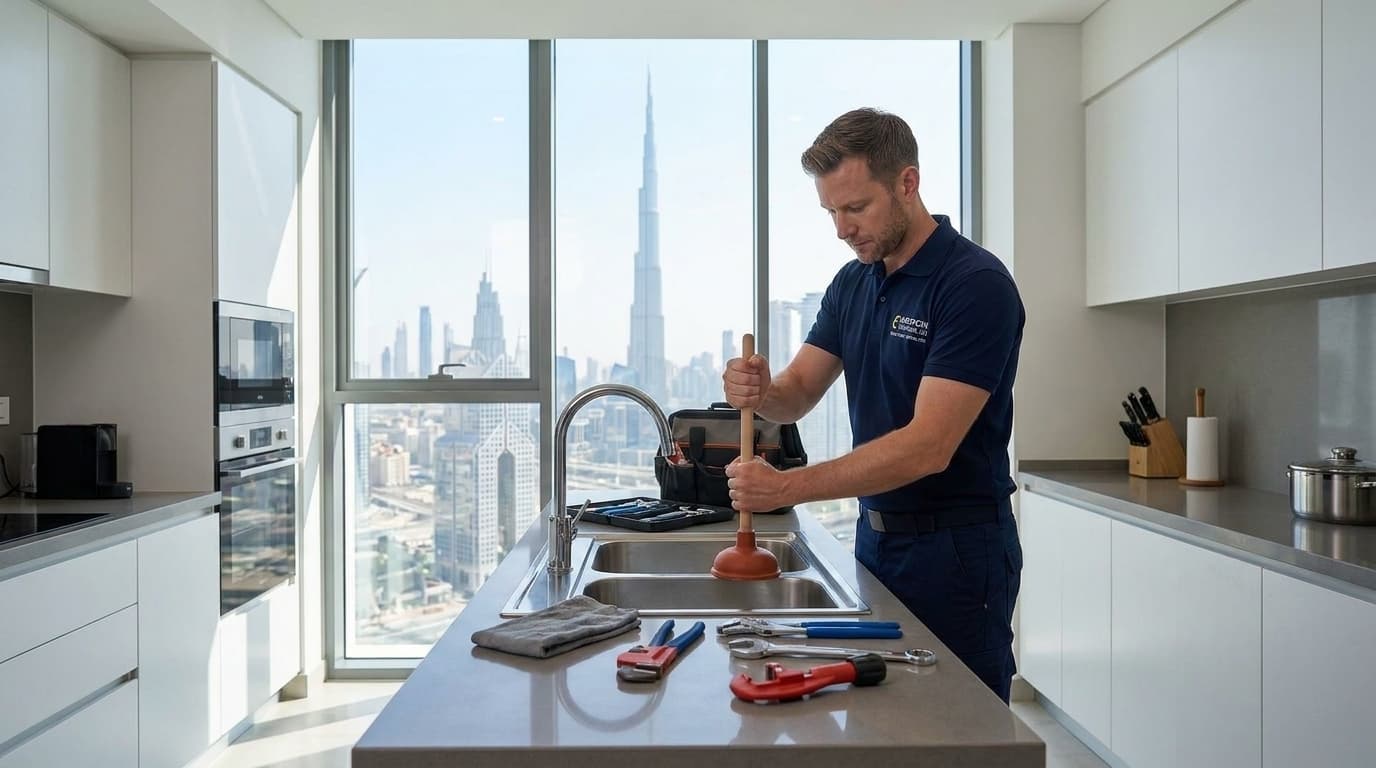
For a slow drain, a plunger is often your first and best tool. Create a good seal and use steady, rhythmic pressure. If two or three sessions do not clear the blockage, do not keep going. Repeated aggressive plunging can damage older pipe joints, and if the blockage sits deep in a shared riser, no amount of household effort will shift it.
Think Twice Before Reaching for Chemical Cleaners
Chemical drain cleaners should be a last resort, not a first response. They can damage pipe fittings, especially in older buildings, and they rarely clear a deep or grease-based blockage properly. For severe blockages, professional drain cleaning with high-pressure jetting clears the pipe safely and completely without eating away at the plumbing.
Inspect Under Sinks Monthly
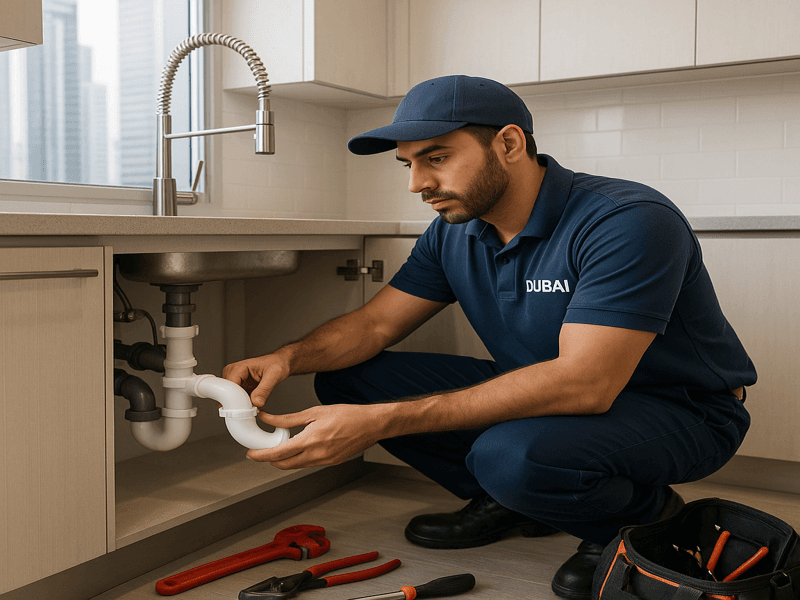
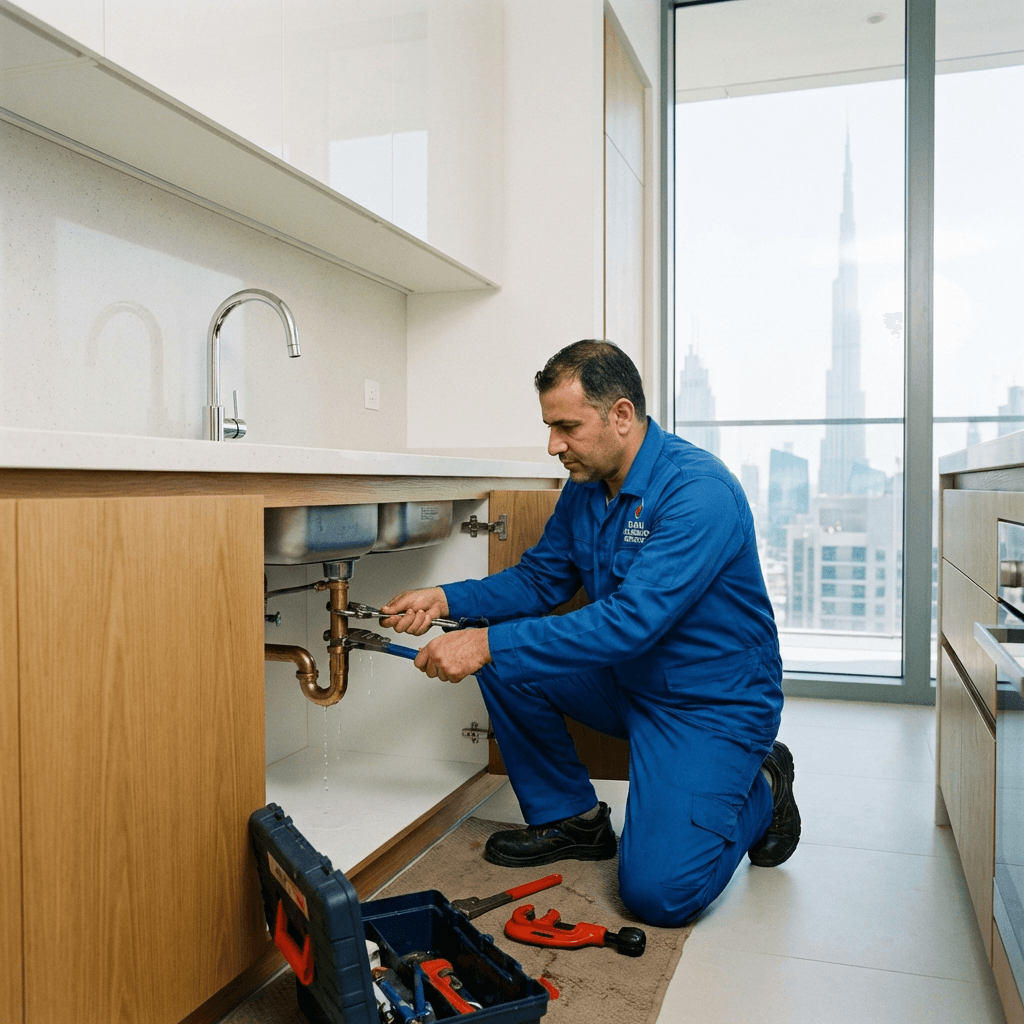
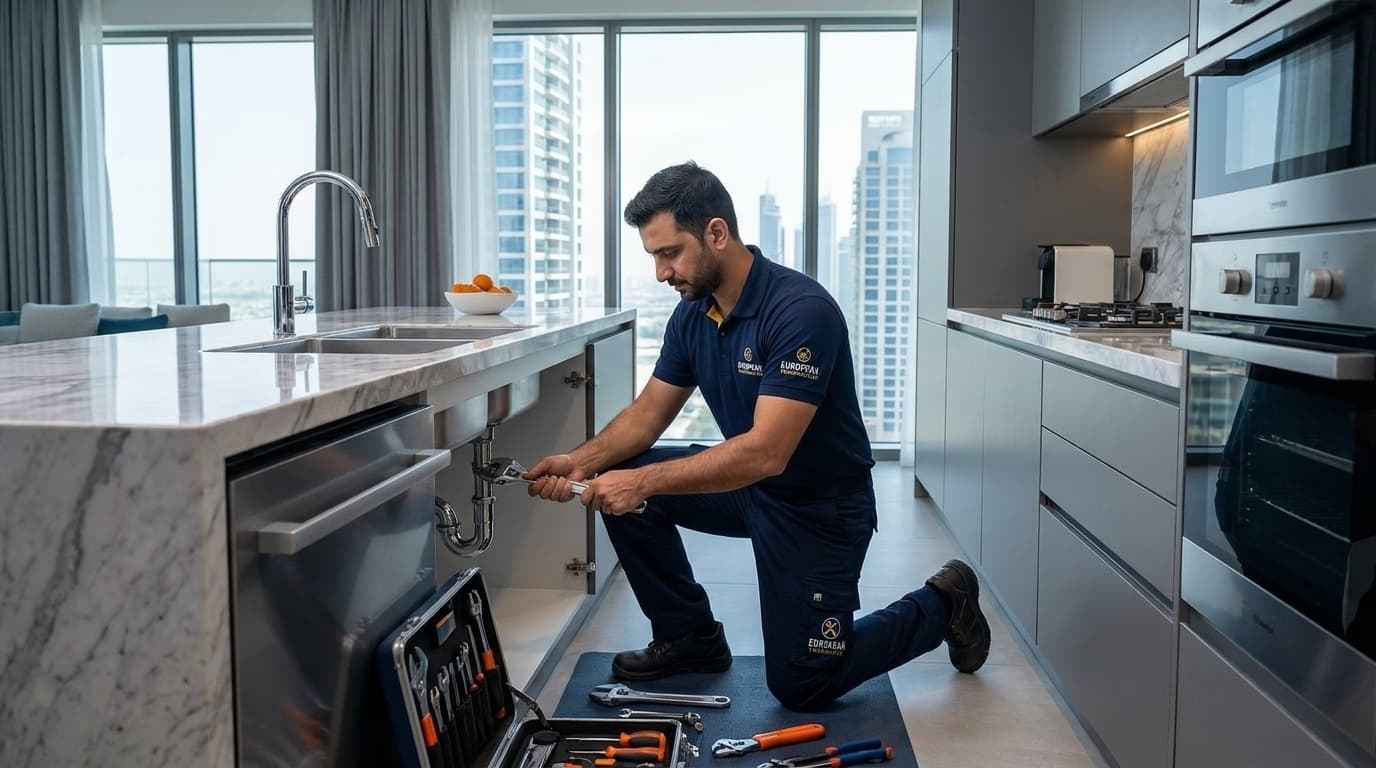
Once a month, open the cabinet doors under your kitchen and bathroom sinks and check for dampness, staining, mould smell or warped wood. Small supply-line leaks are easy to fix when caught early and ruinous when ignored. If you are not comfortable tightening a fitting yourself, a handyman visit can sort out minor leaks, loose fittings and dripping taps in a single appointment.
Replace Washers and O-Rings Promptly
Because Dubai's hard water accelerates wear on washers and O-rings, inspect the internal components of your taps every year or so. Replacing a washer costs a few dirhams. Replacing a bathroom cabinet ruined by an ignored leak costs a great deal more.
The High-Rise Factor: Why Apartment Plumbing Is Different
Apartment plumbing troubleshooting is genuinely more complicated than villa plumbing, for two structural reasons.
First, access is limited. Pipes run behind tiled walls, under raised floors and through shared risers. What looks like a simple leak may require opening a wall panel, and doing that without professional guidance risks damaging waterproofing, which is a far more serious problem in a bathroom.
Second, responsibility is shared. In most Dubai buildings, the pipes within your apartment are your responsibility (or your landlord's, if you rent), while the risers and main lines belong to the building. This means coordinating with building maintenance is sometimes necessary, and a professional plumber who understands how Dubai's building management structures work will save you significant time and frustration.
This is also why we always recommend that landlords and property owners consider an annual maintenance contract. With scheduled inspections, small issues like a worn washer or a slow drain are caught and fixed before they become an emergency call-out at 11pm, and your property is protected between tenancies. For tenants, reporting problems promptly to your landlord or building management is the single most useful thing you can do; a drip reported today is a five-minute repair, while the same drip reported in six months may have damaged the unit below.
When to Call a Professional Rather Than DIY
Some jobs are well within reach of a careful homeowner: replacing a tap washer, clearing a simple sink trap, fitting a drain screen. Others are not. Call a licensed plumber in Dubai when:
- Water pressure drops suddenly across the whole apartment
- A drain remains blocked after basic home methods
- You notice water staining on a ceiling or wall with no obvious source
- A toilet repeatedly clogs or backs up
- Water from the taps is discoloured or smells unpleasant
- You suspect a leak behind a wall or under flooring
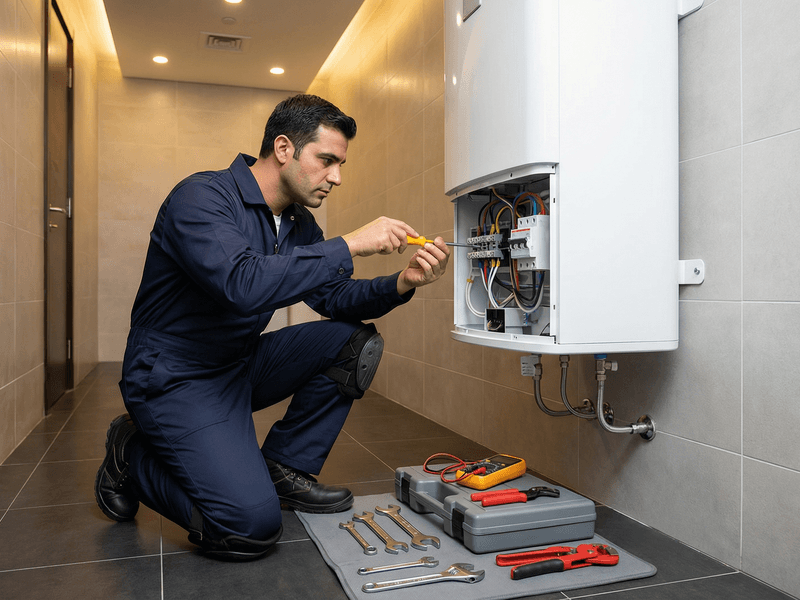
These symptoms point to problems inside walls or within shared building infrastructure, where guesswork causes damage. A professional with the right detection equipment locates a leak without demolishing your bathroom, and drain jetting clears deep blockages that no household chemical will touch. If you are dealing with recurring issues across multiple units in a building you manage, our plumbing services page covers the full range of commercial and residential work we handle across Dubai.
FAQ
Why is my water pressure so low in my Dubai apartment?
Low water pressure in Dubai high-rises is usually caused by mineral build-up or sediment inside the pipes, corrosion, or the way water is delivered from the main supply to upper floors. If only one tap is affected, try cleaning the aerator. If the whole apartment has low pressure, contact a licensed plumber, as the cause may sit in the building's shared lines.
How much water does a dripping faucet actually waste?
A dripping faucet can waste up to 3,000 gallons of water per year, which noticeably increases your DEWA bill. The cause is typically a worn washer, a deteriorated O-ring or mineral build-up from hard water, and in most cases the repair is quick and inexpensive.
What is the best way to clear a blocked kitchen sink in Dubai?
Start by running hot water and dishwashing liquid down the drain, then use a plunger to clear the pipe. Kitchen sinks usually clog from grease, oils, fats, soap scum and food particles. If the blockage persists, avoid repeated use of chemical drain cleaners and call a professional maintenance company, which can use drain jetting to clear the pipe safely.
Can I use chemical drain cleaners on any blockage?
Chemical cleaners should be a last resort. They can damage pipe fittings, particularly in older Dubai buildings, and they often fail to clear deep or grease-based blockages. Professional drain cleaning methods such as high-pressure jetting are safer for your pipes and far more effective.
Who is responsible for plumbing repairs in a Dubai apartment building?
Generally, the pipes within your individual apartment are the responsibility of the owner or tenant's landlord, while shared risers and main lines belong to the building. Because responsibility is shared and pipes are often hidden behind walls, it is best to report problems promptly to your landlord or building management and use a licensed plumber for anything beyond simple fixes.
How often should I have my apartment's plumbing checked?
A yearly professional inspection is a sensible baseline for Dubai homes, given the hard water and heavy usage. Landlords and property managers often benefit from an annual maintenance contract, which includes scheduled checks that catch worn washers, slow drains and small leaks before they turn into costly emergency repairs.