Why Villa Kitchens in Dubai Need Special Attention
A villa kitchen renovation in Dubai is a different proposition from refreshing an apartment in the Marina or a studio in JVC. Villas in communities such as Arabian Ranches, The Springs, Al Barsha and Mudon tend to have larger kitchens, more extensive cabinetry, and more wet areas than apartment dwellers ever see. That means more silicone joints, more plumbing runs, more grout lines and, frankly, more places for Dubai's climate to do its damage.
The single biggest enemy of a Dubai kitchen finish is moisture. Between coastal humidity, summer temperatures that regularly push past 45°C, and air conditioning that creates constant condensation cycles, moisture has a way of finding every weak point in your kitchen. Most mould problems in Dubai homes come down to one thing: moisture with nowhere to go. A slow leak under the sink, condensation behind the fridge, or an extractor fan that cannot keep pace with the climate. It is common, and it is fixable, but it needs to be handled properly rather than ignored.
That matters when you are planning a renovation budget for 2026. If you spend AED 40,000 on new cabinetry and worktops but skip the small finishing details, the silicone around your sink and splashback will be the first thing to fail. And failed silicone does not just look untidy. It lets water seep into places it should never reach, causing mould, damage to cabinet carcasses, and eventually damage to the villa structure itself.
Where the Money Goes: Understanding Your 2026 Renovation Budget
Every villa kitchen renovation is priced on its own scope, but the main cost blocks are consistent across Dubai. Here is how to think about them before you collect quotes.
Cabinetry and worktops
This is usually the largest line item. Full replacement of kitchen units in a typical three or four-bedroom villa runs into the tens of thousands of dirhams, depending on whether you choose stock units, semi-custom, or fully bespoke joinery. Many villa owners in Arabian Ranches and Dubai Land opt instead to reface or repaint existing carcasses and replace only the doors and worktops, which can cut the cabinetry budget significantly while still transforming the look of the room.
Plumbing relocation and upgrades
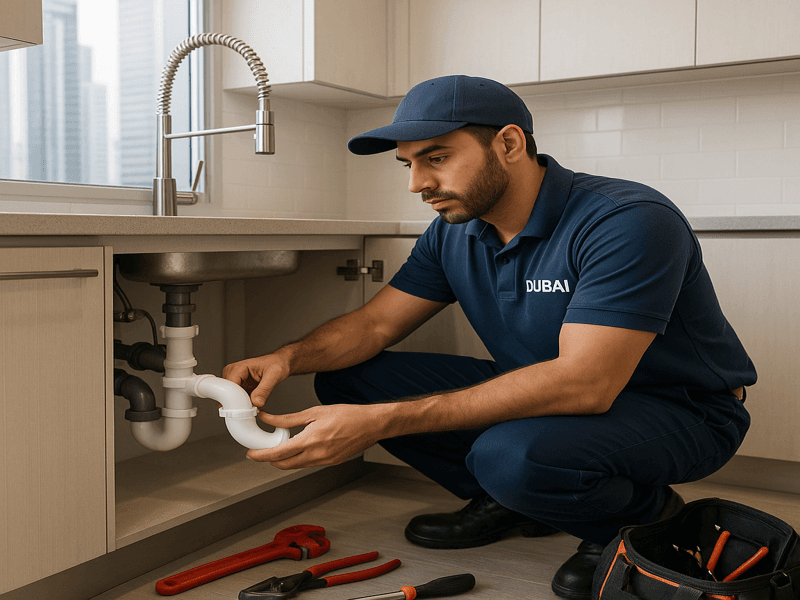
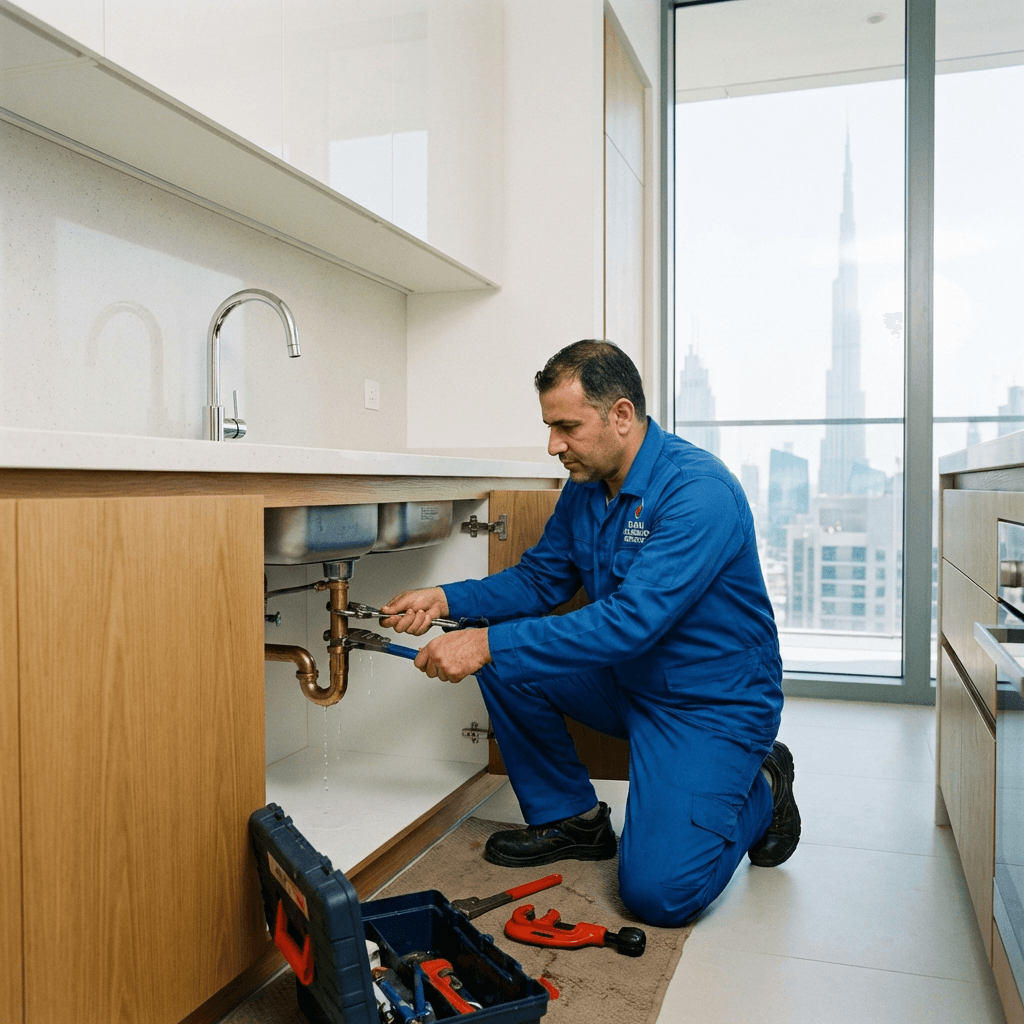
Moving a sink, installing a dishwasher where there was none, or upgrading to a filtered water system all involve plumbing work. In villas, plumbing runs are longer and often pass through walls shared with other wet rooms, so access and labour take longer than in an apartment. Get this scoped early. A plumbing issue discovered mid-renovation will blow your timeline and your budget.
Finishing: tiling, painting and sealing
This is the block most owners underestimate. Tiling a large villa kitchen splashback, repainting walls that have absorbed years of cooking oils, and resealing every wet joint adds up. Yet it is also the block that determines how the renovation looks in two years' time, not just on handover day.
The small jobs that protect the big ones
Silicone caulking is the classic example. An indicative 2026 benchmark for silicone caulking work in Dubai is AED 150 to 700 or more for many bathroom, kitchen or shower jobs. Old silicone removal, mould cleaning, long joint runs and multiple wet areas can all push the quote higher. Against a five-figure renovation budget, that is a rounding error. But skipping it, or accepting a cheap acetoxy silicone where a premium sanitary silicone is needed, is one of the most common reasons a freshly renovated kitchen starts to look tired within a year.
The Silicone Question: The Detail That Decides Your Kitchen's Future
If there is one finishing element Dubai villa owners should understand before renovating, it is silicone sealant. It is not glamorous. It is rarely on the mood board. But it is the waterproof barrier around your sink, worktop joints, splashback edges and anywhere tiles meet the counter.
Mould grows on silicone sealant in Dubai kitchens and bathrooms because of the high humidity and damp conditions, which create an ideal environment for mould spores. Sealants often contain mould preventatives, but these chemicals degrade over time. As the sealant breaks down, it develops microscopic pores that trap soap scum, grease and moisture, which further promotes mould growth. In a villa kitchen, where cooking steam meets AC-cooled surfaces, this cycle accelerates.
Why cleaning mouldy silicone rarely works
It is tempting to scrub black spots off the sealant with bleach and call it solved. The problem is that mould penetrates deep into the silicone. Surface cleaning may improve appearances for a few weeks, but it does not address the root cause. The mould is living inside the sealant, not just on it. Some homeowners try the bleach-soaked tissue method, leaving bleach in contact with the sealant for hours before washing it down. This can make the sealant look like new for a while, but the underlying degradation continues, and the mould returns.
The reliable solution is removal and replacement. Old sealant is stripped out completely, the joint is cleaned and treated, and a fresh mould-resistant sanitary silicone is applied. Premium sanitary silicones provide the best defence against the UAE climate. Products such as Pattex SF525 Kitchen and Bath Premium Silicone Sealant, a mould-resistant sanitary sealant designed for showers, toilets and tiles, retail in Dubai for around AED 25 for a 280ml cartridge, which gives you a sense of how affordable the right material is compared with the labour of redoing it twice.
Choosing the right sealant for a villa kitchen
Not all sealants are equal, and the local market carries a wide range. At the premium end you have sanitary antimould sealants engineered specifically for bathroom and kitchen sealing, typically priced around AED 50 per cartridge in Dubai. Mid-range options include general bonding and sealing silicones at roughly AED 24 to AED 49. At the budget end, acrylic sealants sell for as little as AED 14. Acrylic has its place for indoor decorative joints, but it does not belong around a kitchen sink or behind a hob where steam and water are constant. For wet areas in a villa kitchen, always specify a premium sanitary silicone with antimould properties.
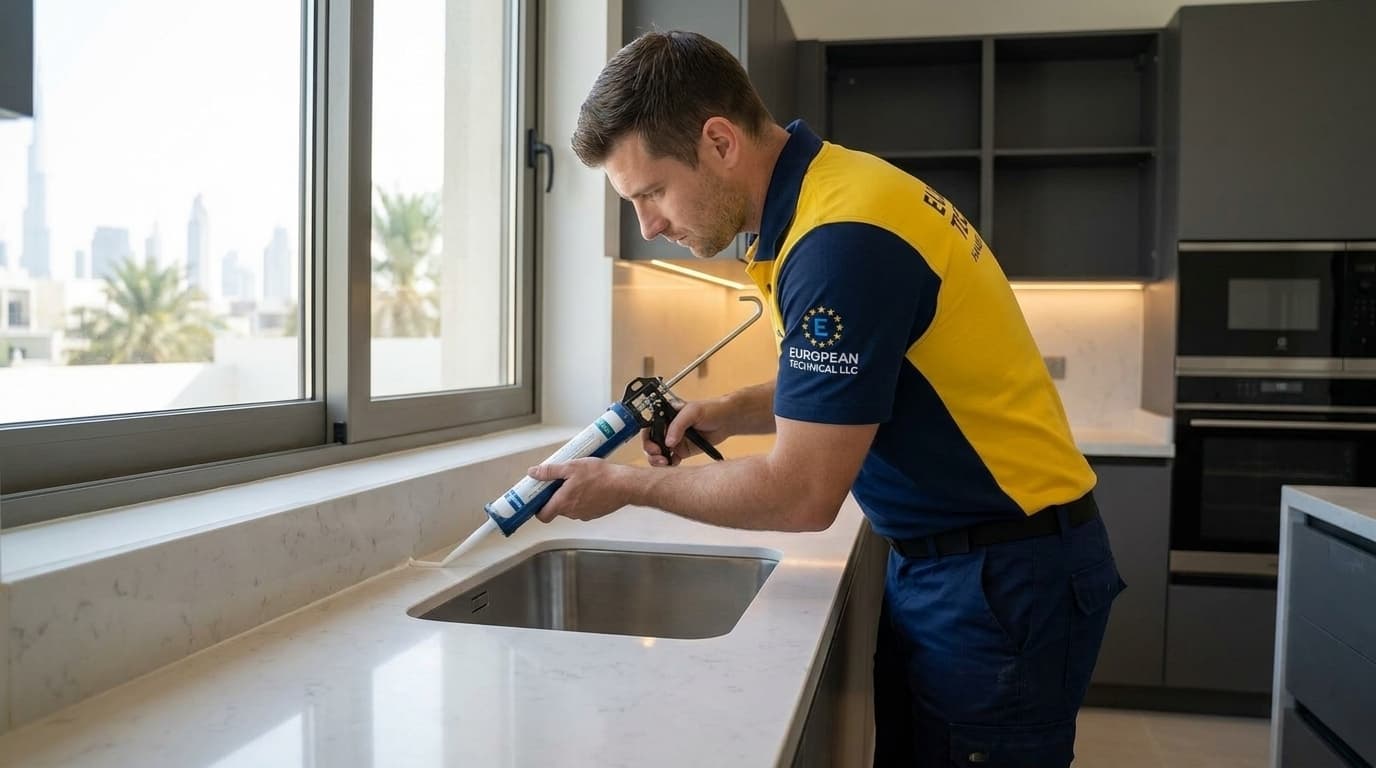
A professional handyman can remove old sealant, treat any underlying mould, and apply a clean, waterproof finish that protects your kitchen from leaks, mould and long-term damage. Small job, big difference.
Planning the Renovation: A Practical Sequence for Villa Owners
Renovations go best when the order of works is right. Here is the sequence we recommend for villa kitchens in Dubai.