Why Electrical Maintenance Matters More in Dubai Than Almost Anywhere Else
If you own or rent a property in Dubai, whether it is a studio in JVC or a villa in Arabian Ranches, your electrical system works harder than you might think. Air conditioning runs for much of the year. Humidity along the Marina and Palm Jumeirah creeps into switchgear, sockets and junction boxes. Summer temperatures push cables, breakers and DB boards to their limits. A system that was perfectly sound when the building was handed over can quietly deteriorate over a few seasons of continuous cooling load.
That is why electrical maintenance in Dubai is not just about fixing things when they break. It is about staying safe, staying compliant with DEWA regulations, and avoiding the kind of small faults that turn into expensive emergencies. This guide walks you through what the 2026 regulatory picture looks like, what DEWA actually requires from property owners, and how to build a practical maintenance routine for your home or rental property.
What DEWA Actually Requires: The Regulatory Baseline
The Dubai Electricity and Water Authority sets the minimum standards for the design, installation, inspection and maintenance of all electrical systems in Dubai. The core document is DEWA's Regulations for Electrical Installations, originally issued in 1997 and superseded by the 2017 Edition, which has since been incorporated into the Dubai Building Code with ongoing updates. The stated objective is straightforward: to safeguard persons and property from hazards arising from the use of electricity.
The key principles every Dubai property owner should know:
- Certified professionals only. DEWA requires certified electrical engineers and contractors to prepare drawings and conduct inspections. Installations must be carried out by approved contractors with licensed electricians.
- Approval before energisation. All electrical installations and equipment must be subject to DEWA's inspection, testing and final approval before the electric supply is connected. This applies to new installations, modifications, renovations and solar additions alike.
- Drawings submitted in advance. Drawings must be submitted and approved by DEWA before work commences.
- Standards for materials. Materials, equipment and workmanship must meet the standards set out in the regulations. Equipment must be suitable for DEWA's nominal supply of 220/380V at 50Hz.
- A focus on earthing. The regulations include detailed inspection and testing requirements, including verification of earthing arrangements and metering equipment.
The regulations also prioritise energy efficiency and integration with modern systems such as solar PV. If you are considering rooftop panels on a villa in Arabian Ranches or a townhouse in Dubailand, the rules are specific: inverters and modules must be on DEWA's approved list, DC isolators must be lockable and IEC 60947-3 compliant, an annual inspection by an approved contractor is required, and excess power generated is credited through net metering.
The Paperwork: Documents You Need for DEWA Connections and Approvals
One of the most common reasons projects stall in Dubai is not the physical work. It is the paperwork. DEWA's own guidance is blunt about this: incomplete or incorrect documents are a common cause of delays.
For a new connection or a significant electrical modification, expect to assemble:
- Title Deed or Tenancy Contract as proof of ownership or tenancy of the property
- A No Objection Certificate (NOC) from the developer or landlord for new connections
- A Building Completion Certificate confirming the build has been completed
- Approved drawings prepared by certified electrical engineers
The practical advice from DEWA and from contractors who deal with the authority daily is consistent:
1. Start early. Begin preparing your documents and electrical plans well before your project completion date.
2. Use certified professionals. Engage certified electrical engineers and contractors to prepare your drawings and conduct inspections.
3. Double-check documentation. A missing NOC or an outdated drawing set can add weeks.
4. Stay updated. DEWA periodically updates its requirements, and issues technical notifications regularly. Always verify you have the latest information before submitting.
The good news is that most of this can now be done online through the DEWA website or the Build in Dubai app, and DEWA's stated delivery time for a building NOC is two working days. LV design approval and inspection requests are initiated online, with LV inspection triggered once the electrical installation and wiring on site is complete.
What a DEWA Inspection Actually Covers
It helps to know what an inspector is looking at, because it tells you what to maintain. DEWA's inspection regime covers electrical intake equipment, including the main or service cable, main earthing arrangements, metering cabling and metering equipment. It also covers automatic disconnection of supply, meaning the main earthing and bonding arrangements.
Inspectors verify:
- The presence of an installation earth electrode arrangement
- The adequacy of earthing conductor size
- The adequacy of earthing conductor connections
Where further detailed inspection is needed, including partial dismantling of equipment, this is carried out as agreed with DEWA. The regulations also address power quality concerns such as temporary power frequency overvoltages, transient overvoltages, supply voltage unbalance, harmonic voltage, interharmonic voltage and mains signalling voltage, which matter particularly in buildings with heavy AC loads and variable speed drives.
There is also a construction-to-permanent transition worth knowing about. When construction is completed, DEWA disconnects the construction power supply after the first permanent supply inspection. The contractor must then re-terminate the cable into the MCCB for the permanent connection. If you are handing over a new build or a major renovation, make sure your contractor has this sequenced properly, because a gap between construction supply disconnection and permanent connection means a property with no power.
A Practical Maintenance Routine for Dubai Homes and Rentals
Regulation is one thing. Day-to-day reliability is another. Here is a sensible routine for a typical Dubai apartment or villa.
Twice a Year: The Core Check
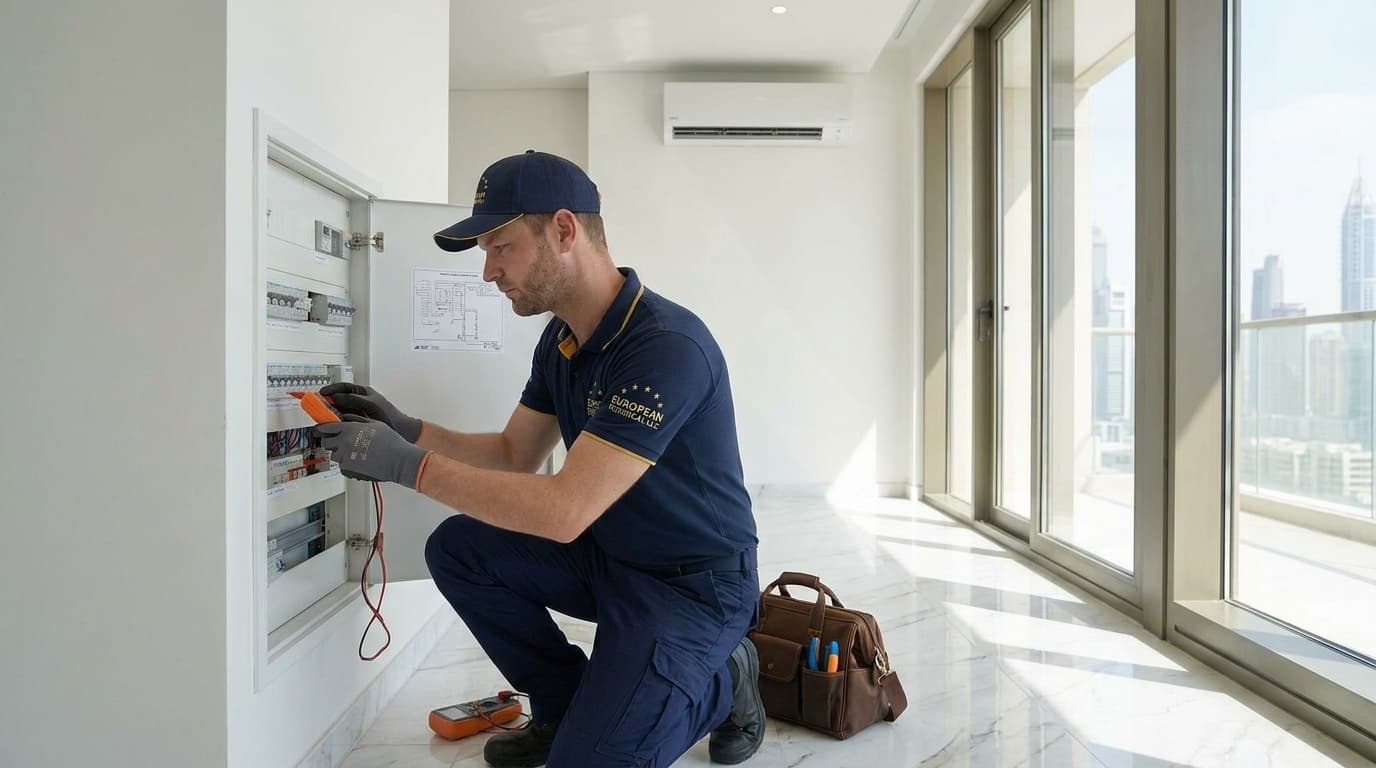
Dubai's cooling season is long, so treat your electrical system a bit like your AC: it deserves professional attention before the heavy load arrives. A qualified electrical technician should:
- Inspect the distribution board for signs of heat damage, scorching or tripped breakers that will not reset
- Check and tighten connections, which loosen over time with thermal cycling
- Test residual current devices (RCDs) using the test button and a proper instrument
- Verify earthing continuity at sockets, particularly in kitchens, bathrooms and outdoor areas
- Look for moisture ingress around outdoor sockets and garden lighting, a common issue in villas with irrigation systems
Things You Can Check Yourself
You do not need a licence to be observant. Watch for flickering lights, warm switch plates, burning smells near the DB, or sockets that only work if you wiggle the plug. If a breaker trips repeatedly, do not keep resetting it. That is a fault asking to be investigated, not ignored.
Avoid overloading circuits by spreading appliances across outlets rather than running everything through one extension lead behind the TV unit. Use quality wiring and accessories approved by Dubai Municipality. Cheap accessories bought online are a false economy in a climate that punishes marginal components.
Villas and Older Buildings Need Extra Attention
If you own an older villa in areas like Al Barsha, Jumeirah or Mirdif, or an apartment in one of Dubai's earlier towers, the installation may predate recent updates to the regulations. Earthing arrangements in particular should be verified by a professional. A handyman visit can also catch the smaller issues, such as loose socket faceplates, damaged light fittings and degraded outdoor cabling, before they become electrical faults.
Landlords and Property Managers
If you rent out property in Business Bay, Downtown or the Marina, you have a duty of care to tenants, and an electrical fault that causes a fire or injury is a serious liability. Many landlords in Dubai fold electrical checks into an annual maintenance contract, which bundles scheduled inspections of the electrical system, AC, plumbing and other services into predictable annual visits. It is a sensible approach for anyone managing multiple units, and it means faults are found on your schedule rather than at midnight during a tenant's emergency call.
For a sense of cost, a routine electrical inspection and minor repairs in Dubai typically run from around AED 250 to AED 500 depending on the property size, while DB replacement or rewiring work is quoted case by case after assessment. Solar PV owners should budget for the mandatory annual inspection by an approved contractor as part of their system's operating cost.
Common Violations and How to Avoid Them
DEWA and Dubai authorities impose strict penalties for non-compliance. The violations we see most often in the field include:
- Unlicensed individuals carrying out electrical work. Beyond the legal risk, unlicensed work is rarely insured and frequently dangerous.
- Modifications made without drawings or DEWA approval, particularly in commercial fit-outs and villa extensions.
- Substandard or non-approved equipment, especially in solar installations where inverters and modules must come from DEWA's approved list.
- Missing or inadequate earthing, which is one of the first things an inspector checks.
- Overloaded circuits from years of informal additions, such as extension leads run permanently to outbuildings and maid's rooms.
The fix for all of these is the same: use DEWA-approved contractors, keep your documentation in order, and maintain the system proactively rather than reactively. If you are unsure whether past work at your property was done properly, a professional inspection is the fastest way to find out. Our AC maintenance and electrical teams frequently uncover electrical issues during routine visits, because heavy cooling loads and electrical health are closely linked in Dubai homes.
FAQ
Do I need DEWA approval for minor electrical work in my Dubai home?
Small repairs and like-for-like replacements, such as changing a socket or light fitting, do not require DEWA approval. However, new installations, modifications, renovations and solar additions must be carried out by a DEWA-approved contractor and pass DEWA inspection before energisation. Drawings must be submitted and approved by DEWA before this type of work commences.
Who is legally allowed to carry out electrical work in Dubai?
DEWA requires certified electrical engineers and contractors to prepare drawings and conduct inspections, and installations must be done by approved contractors with licensed electricians. Using an unlicensed individual puts you at risk of penalties, voided insurance and unsafe work.
What documents do I need for a new DEWA connection?
You will typically need a Title Deed or Tenancy Contract proving ownership or tenancy, a No Objection Certificate (NOC) from the developer or landlord, a Building Completion Certificate for completed builds, and approved electrical drawings. Incomplete or incorrect documents are a common cause of delays, so prepare them well before your project completion date.
How often should electrical systems in Dubai homes be inspected?
For a residential property, a professional inspection once or twice a year is sensible, ideally before the peak summer cooling season. Solar PV systems require an annual inspection by an approved contractor under DEWA rules. Older buildings and villas should also have earthing arrangements verified periodically.
What does a DEWA electrical inspection cover?
DEWA inspections cover electrical intake equipment such as the main or service cable, main earthing arrangements, metering cabling and metering equipment, plus the automatic disconnection of supply, including the presence of an installation earth electrode arrangement and the adequacy of earthing conductor size and connections. Further detailed inspection, including partial dismantling of equipment, may be carried out as agreed with DEWA.
Can I install solar panels on my Dubai villa?
Yes, but the system must use inverters and modules from DEWA's approved list, DC isolators must be lockable and IEC 60947-3 compliant, and the installation must be carried out by a DEWA-approved contractor and pass inspection before connection. An annual inspection by an approved contractor is required, and excess power is credited through net metering.